

创作上传
VIP
收藏下载
登录 | 注册有礼
查看完整案例



收藏

下载

分享
你可能还喜欢
换一换
博物馆馆长Hilla von Rebay寻找一个“精神的圣殿”,用来容纳Solomon R. Guggenheim博物馆日益增多的现代艺术收藏。她在1943年给Frank Lloyd Wright写信说:“我需要一个斗士、一个太空爱好者、一个创造者、一个测试者和一个智者——我现在正在读你的三本书,它给我的感觉是没有其他人能做到的。”Wright在纽约从未接受过任何重要的委托,他发誓他的创作将“使这座建筑和这幅画成为一曲从未间断的、美妙的交响乐,这在艺术界是前所未有的。
Museum director Hilla von Rebay searched for a "spiritual sanctuary" to house the Solomon R. Guggenheim museum's growing collection of modern art. "I need a fighter, a space enthusiast, a creator, a tester and a sage -- I'm reading three of your books right now and it gives me the feeling that no one else can do it," she wrote to Frank Lloyd Wright in 1943. Wright, who never received a major commission in New York, vowed that his work would "make this building and this painting a continuous and wonderful symphony, unprecedented in the art world.
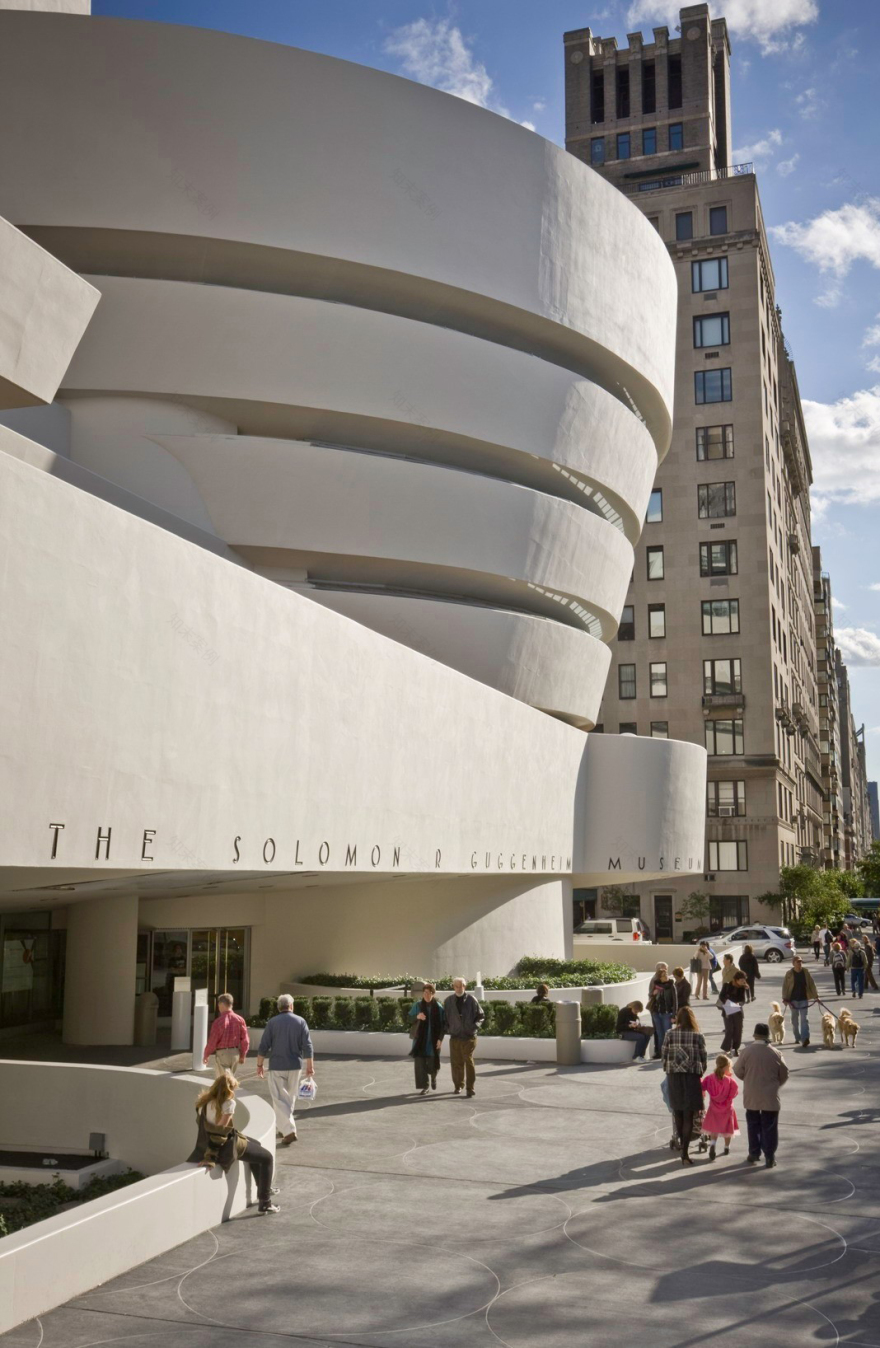
很少有建筑能像Guggenheim博物馆那样引发如此激烈的争议。与周围典型的曼哈顿矩形建筑形成鲜明对比的是,Wright的博物馆就像一条白色的丝带,卷曲成一个圆柱形的堆栈,并不断变宽,螺旋上升到玻璃天花板。Wright大胆地宣称,他的博物馆将使附近的大都会艺术博物馆“看起来像一个新教谷仓”,他的有机建筑“纯种”摒弃了传统的博物馆设计。
Few buildings have generated as much controversy as the Guggenheim. In stark contrast to the surrounding Manhattan rectangles, Wright's museum is like a white ribbon, coiled into a cylindrical stack that widens and spirals up to the glass ceiling. Wright boldly declared that his museum would make the nearby Metropolitan Museum of Art "look like a Protestant barn," and that his organic building, "purebloods," ditched traditional museum designs.
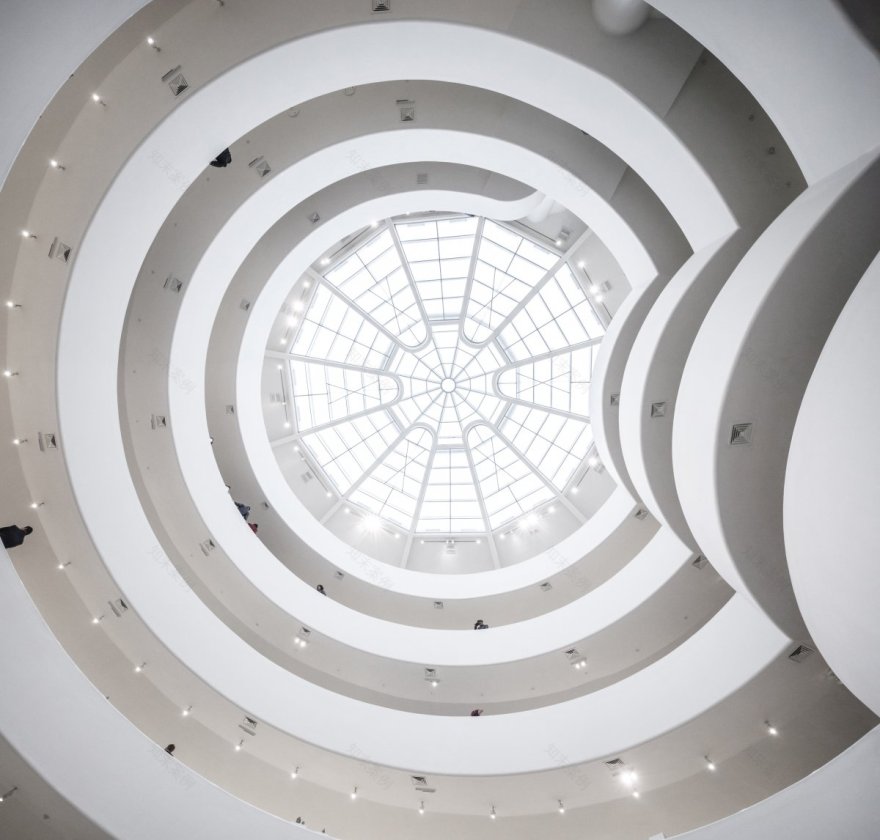
一个强烈的电影般的螺旋坡道从地面缓缓上升到顶部的天窗。Wright的设计被当代评论家斥为“洗衣机”、“模仿蜂巢”和“巨大的抽水马桶”,甚至受到了前卫艺术家的谴责,他们声称这样的建筑会与艺术品竞争。最终,Guggenheim将博物馆建筑从保守的束缚中解放出来。Wright的博物馆在塑造欣赏艺术的体验方面发挥了积极作用,并树立了一个强有力的先例,现代博物馆至今仍深深感激。
An intense movie-like spiral ramp slowly rises from the ground to the skylight at the top. Wright's designs have been denounced by contemporary critics as "washing machines", "imitation beehives" and "giant flush toilets", and even by avant-garde artists who claim that such buildings compete with art. In the end, Guggenheim freed museum architecture from its conservative shackles. Wright's museums played an active role in shaping the experience of art appreciation and set a powerful precedent that modern museums are deeply grateful to today.







 7
72015/02/05 23:26:42
312020/09/09 00:00:00
82020/06/08 00:00:00
南京喵熊网络科技有限公司 苏ICP备18050492号-4知末 © 2018—2020 . All photos and trademark graphics are copyrighted by their owners.增值电信业务经营许可证(ICP)苏B2-20201444 苏公网安备 32011302321234号
苏公网安备 32011302321234号客服
消息
收藏
下载
最近