

创作上传
VIP
收藏下载
登录 | 注册有礼
查看完整案例

收藏

下载

分享

翻译
Architects:Stereo Architektur
Year :2021
Photographs :Daisuke Hirabayashi
Lead Architects :Jonathan Hermann, Claudio Meletta, Martin Risch, Henrik Mansson
Electrical Planning :Elektro Brodbeck AG
Building Physics :Grolimund und Partner AG
Building Services Engineer :Ingenieurbüro Markus Stolz
Civil Engineer :WAM Planer und Ingenieure AG
Energy :Grolimund und Partner AG
Client : Genossenschaft Mietshäuser Syndikat, Basel
Timber Engineer : Indermühle Bauingenieure
Fire Protection : Indermühle Bauingenieure
City : Basel
Country : Switzerland


Architecture challenged by the present. The project does not begin with a typical building programme or a set of technical specifications, but with a vision of communal living and our aspiration to create forward-looking and environmentally sustainable architecture. It also begins with an opportunity - a small-scale urban development that makes participatory urban development possible. And it begins as part of a political cooperative movement that understands housing as a basic need and not as an object of speculation.

We embrace that our role as architects is extended by these pre-conditions. The questions become broader, the involvement deeper. New thematic fields open up and are pursued over a longer period of time. In the architectural implementation, we can draw from the multifaceted nature of the content. This provides the project with depth and makes it full of life.

A collective project from the very beginning. At the origin of house Abakus lies a vision of urban housing, and community. The future inhabitants and the architects are involved all along, while the cooperative Mietshäuser Syndikat Basel provides the institutional framework. In a triangle of future inhabitants, architects, and cooperatives, the project is being developed as a response to an open call issued by the Habitat Foundation.

Set on a former industrial site, small-scale building plots around a shared courtyard encourage small groups of people to participate in urban development. The initiators of house Abakus continuously develop the concept while taking a stand on current ecological, social, and housing policy issues. This leads to the following main ideas, ultimately finding a physical shape in the actual architecture.

• Inhabitants should be able to stay in their home, even if their family situation changes and their demand for space evolves. Accordingly, the size of the housing units should be easily adaptable with no need for construction work.
• Cooperative housing should be affordable and accessible and thus open to a broad spectrum of people. Not only families and couples, but also singles, students, and refugees should be able to find a home in the house.
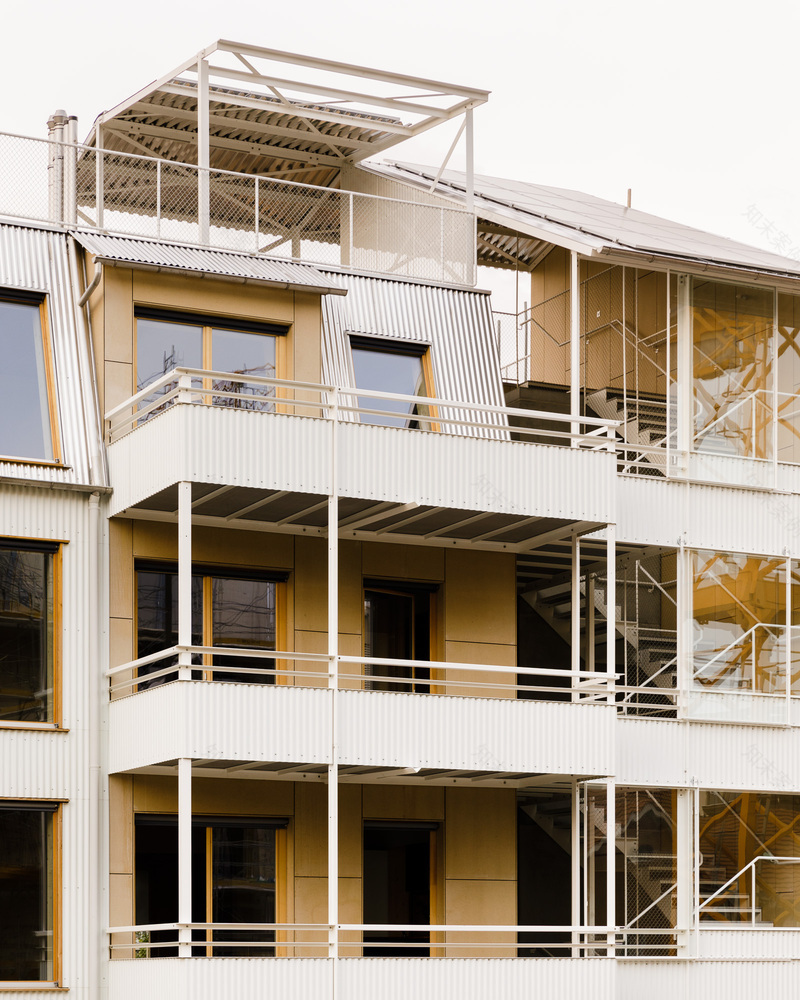
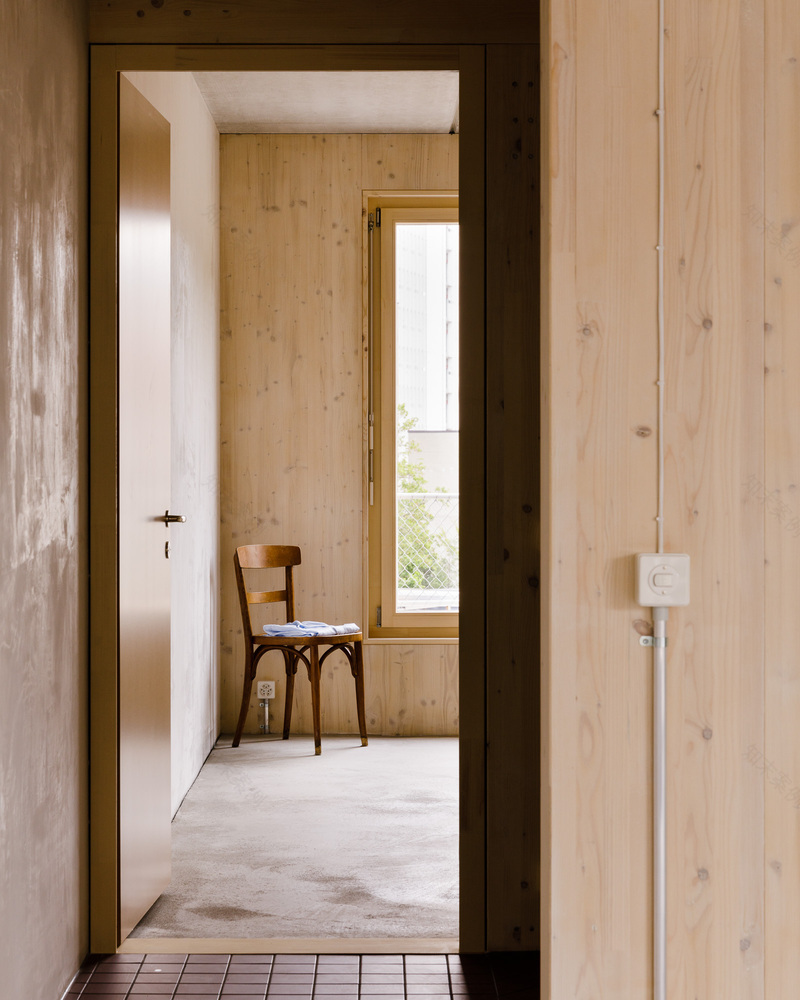
• The house should be designed climate-friendly and straightforward. It therefore will be carried out as a timber construction and at the same time be reduced to the essentials.
• Outdoor spaces are shared living spaces. They are all connected and serve to benefit both people and biodiversity.


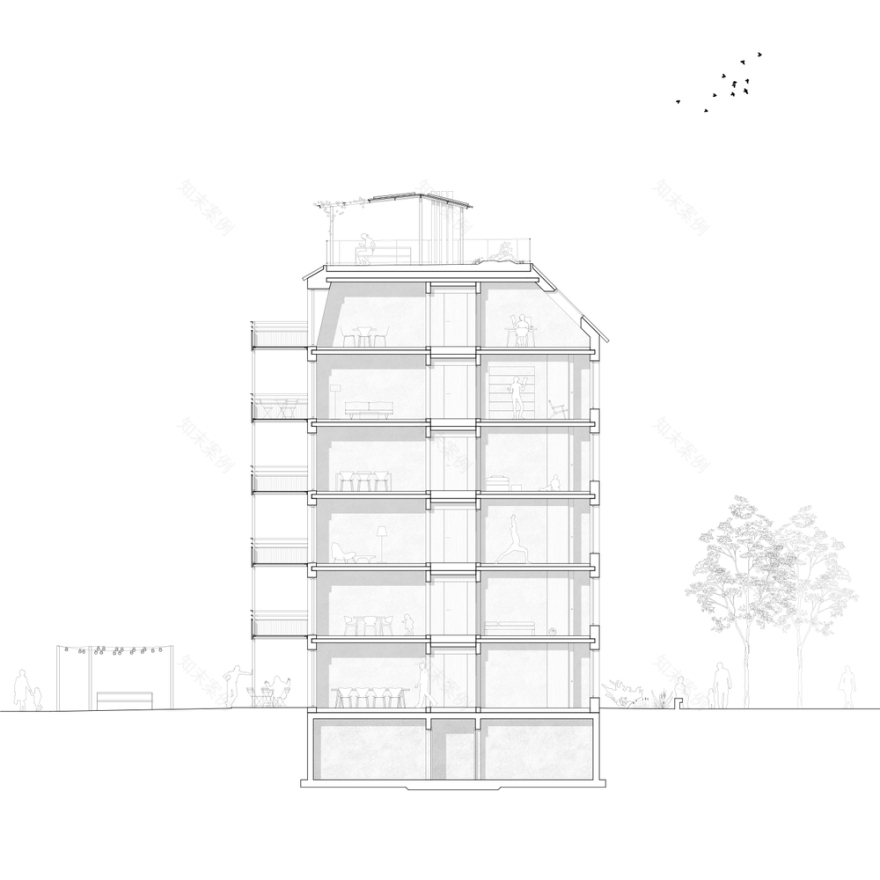
Combining ways of living creates greater benefits for all. In order to allow for flexibility in the residential units and thus avoid the need to hoard living space, two different forms of living to complement each other in the building: On the one hand, horizontally expandable core flats, and on the other hand, a vertically organised flat-sharing community. The core flats offer a long-term perspective for groups of two or more people. The flat-share offers a place for people who from experience can rarely enjoy the benefits of cooperative housing, such as students or refugees. At the same time, their natural fluctuation periodically offers the opportunity to adjust the sizes of the core flats, for example, if an additional children’s room is needed. This way, a 3.5- room flat can be expanded up to a 5.5-room flat, while the flat-share can consist of up to 10 single rooms. However, the boundaries between the living forms are not static but can blur and overlap across the different rooms and floors.


In this way, the two forms of living are mutually beneficial, allowing flexibility, creating accessible living space, accommodating a variety of living situations, and promoting social mixing. Last but not least, this creates a strong sense of identification and pleasant warmth of interpersonal relations.

▼项目更多图片





南京喵熊网络科技有限公司 苏ICP备18050492号-4知末 © 2018—2020 . All photos and trademark graphics are copyrighted by their owners.增值电信业务经营许可证(ICP)苏B2-20201444 苏公网安备 32011302321234号
苏公网安备 32011302321234号客服
消息
收藏
下载
最近