

创作上传
VIP
收藏下载
登录 | 注册有礼
查看完整案例

收藏

下载

分享

翻译
Architects:Maribel Moreno Cantillo, Álvaro Bohórquez Rivero
Area :1050 m²
Year :2018
Manufacturers : AutoDesk, Mitsubishi Electric, Adobe Systems Incorporated, Argos, Exiplast, Toto, Trimble Navigation, VentanarAutoDesk
Developer : Universidad de los Andes, Embajada del Japón
Management And Auditing : Payc
Structural Calculation : CNI Ingenieros.
Interior Design : Monastral. SAS
Lighting Design : MTS Consultoría
Electric Design : Serticol.SA
Hidraulic Design : IHC Ingenieros. SAS
Foundation And Structure : Madoc SAS
Construction : Páez Casas Ingenieros. SAS
City : Bogotá
Country : Colombia


Japanese culture (a collectivist society), gives absolute priority to the collective over the individual, and for this, it has a language of basic behaviour patterns that helps to understand social relations between groups or between groups and individuals, fundamentally based on respect. This code is summarized in the dichotomy, or the concept, "uchi-soto".
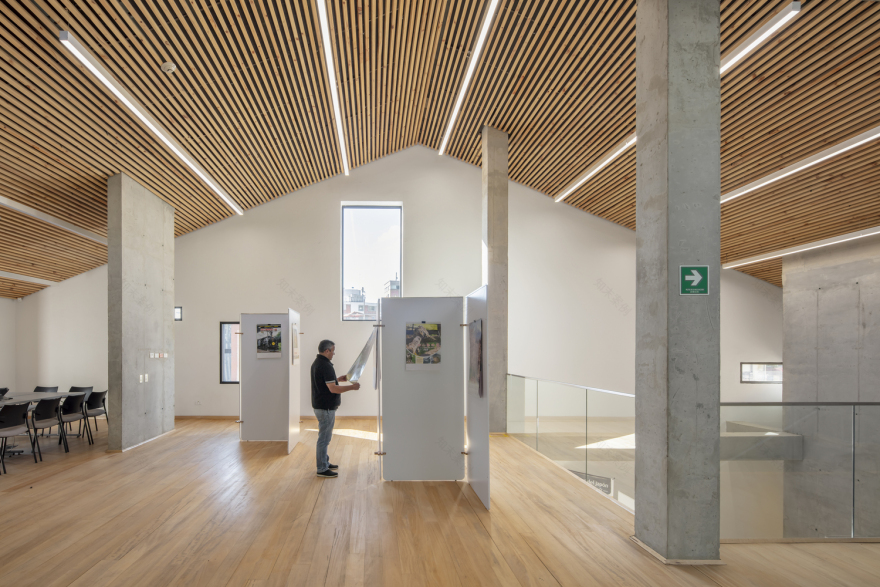

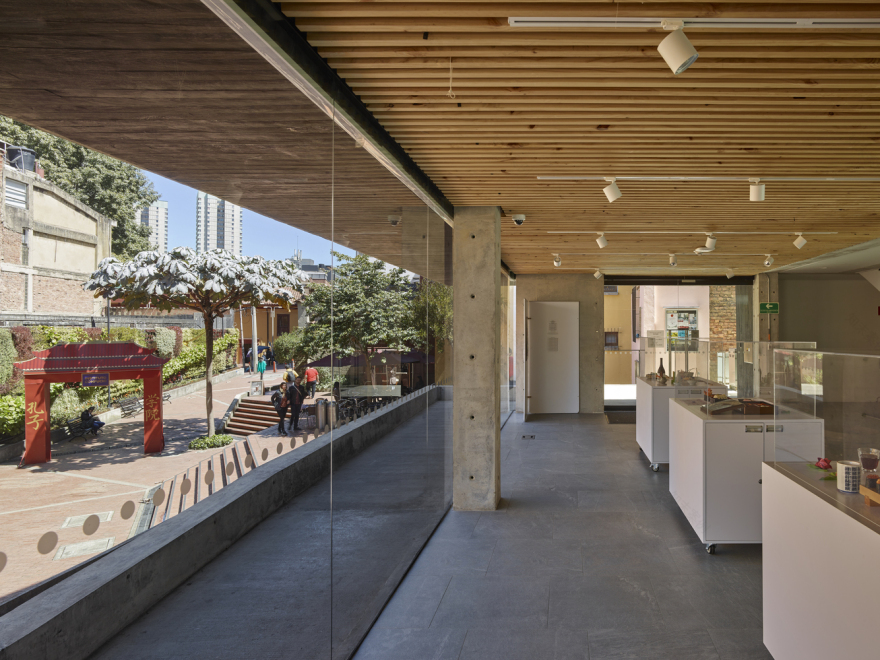
The uchi, which could be interpreted literally as "inside", represents the closest social circle, which includes layers from the family, close friends, the company etc, thus understanding the family as the embryo of the Japanese social code and the primary element of the uchi.
The soto, which could be literally interpreted as "outside", represents those groups or individuals that are not within the close circle, but with whom there is or could be a relationship or link.


Thus, the uchi-soto is not a negation or a border, but on the contrary, it constitutes a link and at the same time a communication code.
Two concepts or patterns emerge in parallel from the uchi-soto dichotomy, known as the tatemae-honne, where the tatemae (literally the facade) represents what must be projected outwards, for which there are clear restrictions, and the honne, represents those relationship patterns whose freedom is exercised only within the uchi group.


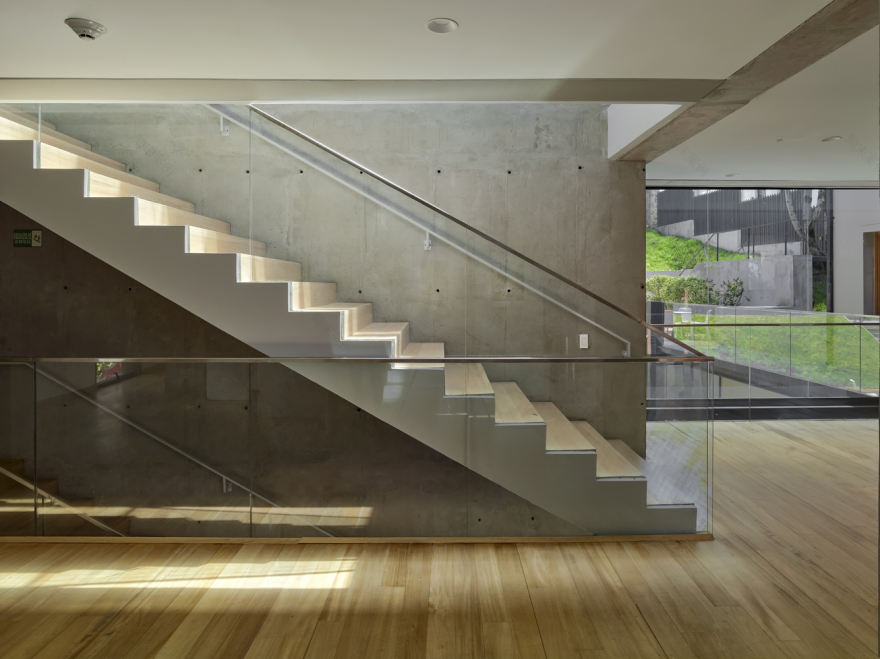
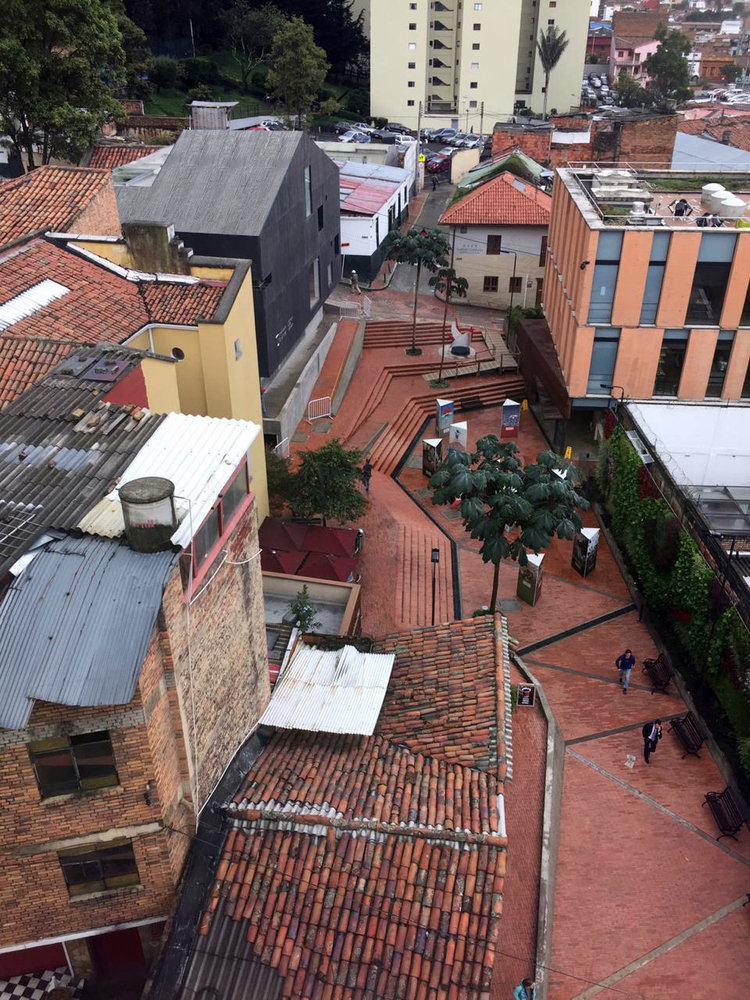
The architecture of the Center for the Japanese Culture is governed by these concepts, on the one hand, the uchi-soto is manifested in a succession of spaces with different attributes and categories that go from the most public - the square, to the most private - the garden, controlling the degree of enclosure, transparency and connection with the exterior, producing its own spatiality for the family (miuchi), and another for the individual (wathasi).
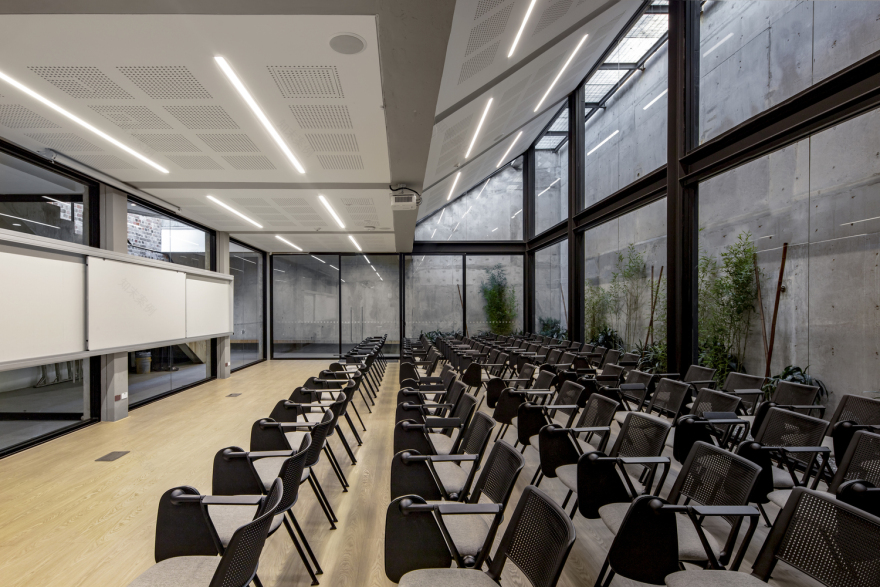
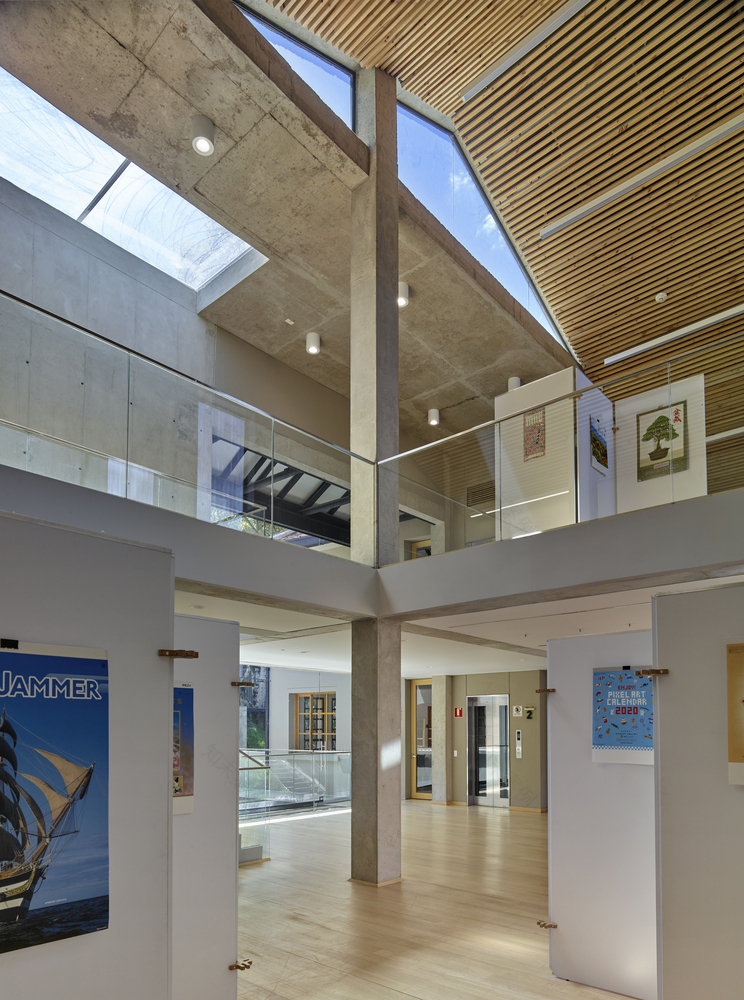
On the other hand, the tatemae-honne, is produced by projecting outwards a condition of solidity and transparency typical of Japanese culture, represented by a large solid black block that is delicately pooled on glass and whose texture of charred wood evokes techniques of Japanese ancestral constructions, which contrasts with the interior where a warm atmosphere is experienced from the handling of light to the treatment of materials.


▼项目更多图片






南京喵熊网络科技有限公司 苏ICP备18050492号-4知末 © 2018—2020 . All photos and trademark graphics are copyrighted by their owners.增值电信业务经营许可证(ICP)苏B2-20201444 苏公网安备 32011302321234号
苏公网安备 32011302321234号客服
消息
收藏
下载
最近