

创作上传
VIP
收藏下载
登录 | 注册有礼
查看完整案例



收藏

下载

分享

翻译


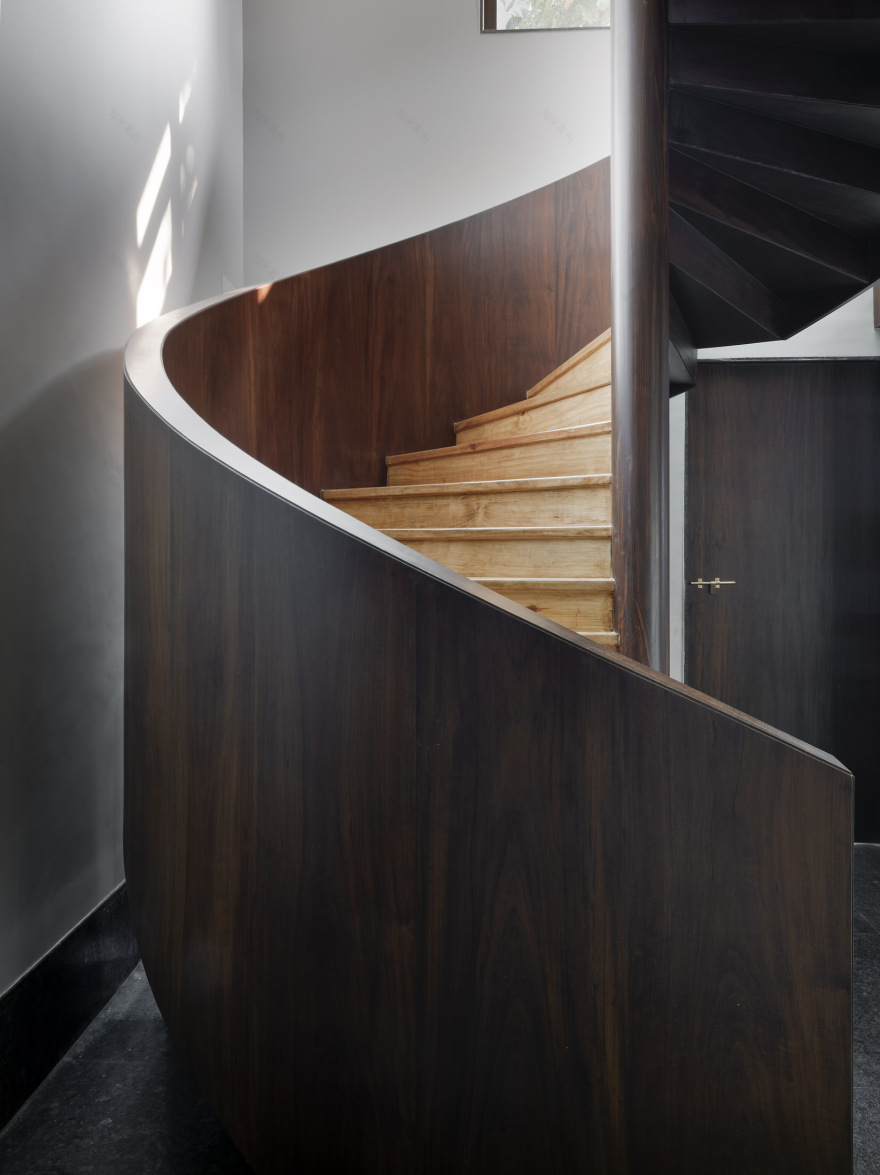
In the midst of building their 185-square-metre home in a village near Pune, India, the client approached Karan Darda Architecture (KrDA). Their job was relatively simple—take the client’s nostalgic memories from their childhood home, and engrain its threads into this one. And so the House of the Serene Past started to take shape.
“The client wanted this house to be a place for relaxation, where his family could come and enjoy holidays or weekends, referencing his childhood traditional Maharashtrian home,” Karan Darda notes. “We decided our design would be something which would connect him back to the roots of a traditional house,” which KrDA explored through a contemporary Indian design lens.
At this stage, you’re probably wondering—what makes a house Maharastrian? Aside from the aroma of mustard seeds and curry leaves wafting from their kitchens, Maharastrian homes are typified by stone walls, wooden staircases and open chowks (internal courtyards). KrDA’s design response references many contemporary interpretations of these typical features.


KrDA took the traditional wooden stair and placed it centre stage. The teak stair is bent and pulled up through two levels, unravelling through the core of the home. It retains the materiality of traditional staircases found in Maharastrian homes, but creates a sense of ornament through quite a modern manner. It becomes something monolithic, sculptural and object-like—it’s quite exciting.
In the absence of a chowk, KrDA placed a large void in the centre of the home, funnelling light through the two stories—very much like a chowk would. Dancing around the unravelling stair, the light becomes a playful element in the heart of the home.
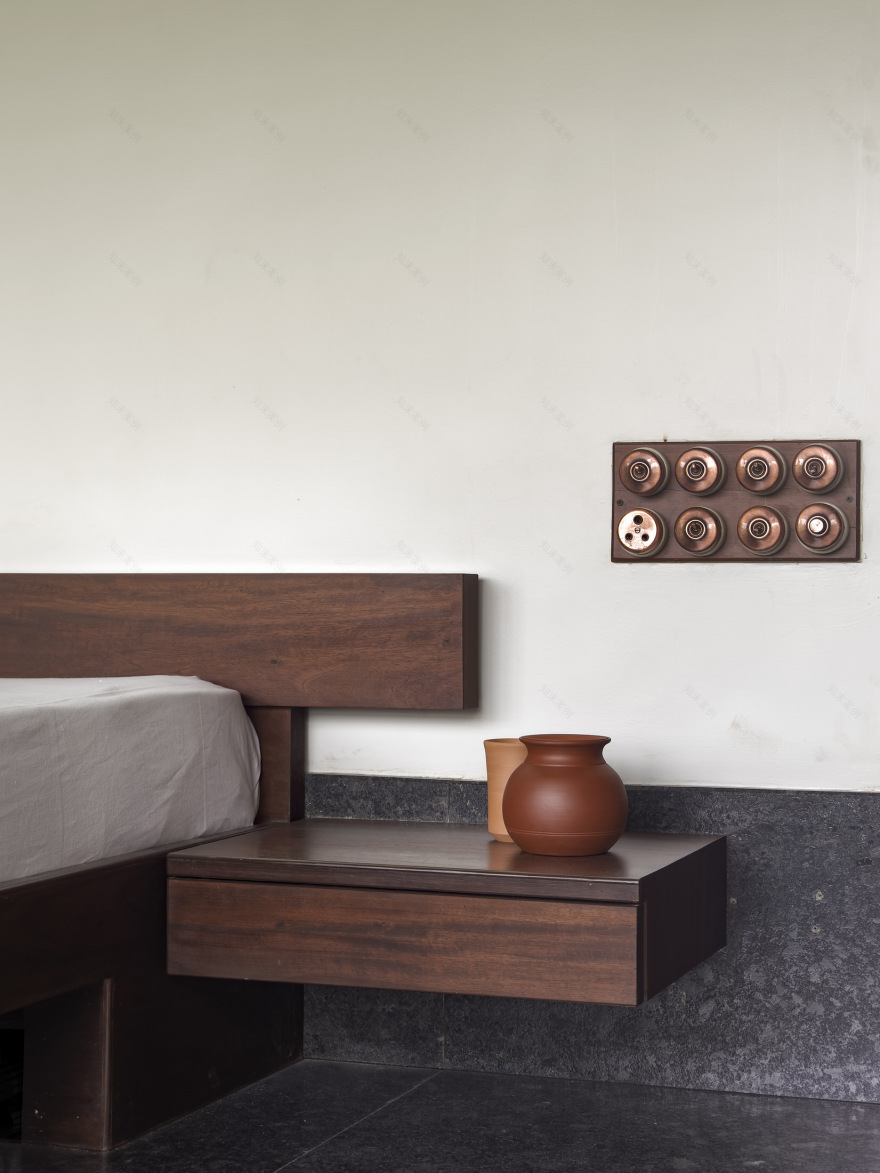
While embracing stone throughout the exterior of the build, perhaps the most visually consistent element inside this home is the black granite flooring wrapping up the walls, and framing the doors and windows. The key here is consistency. Every room has this detail. It’s one that binds this home together, and also creates a sense of connection across the interior, no matter where you are.


Many of the bold gestures and strong materiality are offset by a calm softness, brought in through upholstery and dressings. The windows, lined with bamboo blinds, present what Karan refers to as “a meditative quality”. Views from windows placed at various heights provide soft outlooks to foliage beyond.
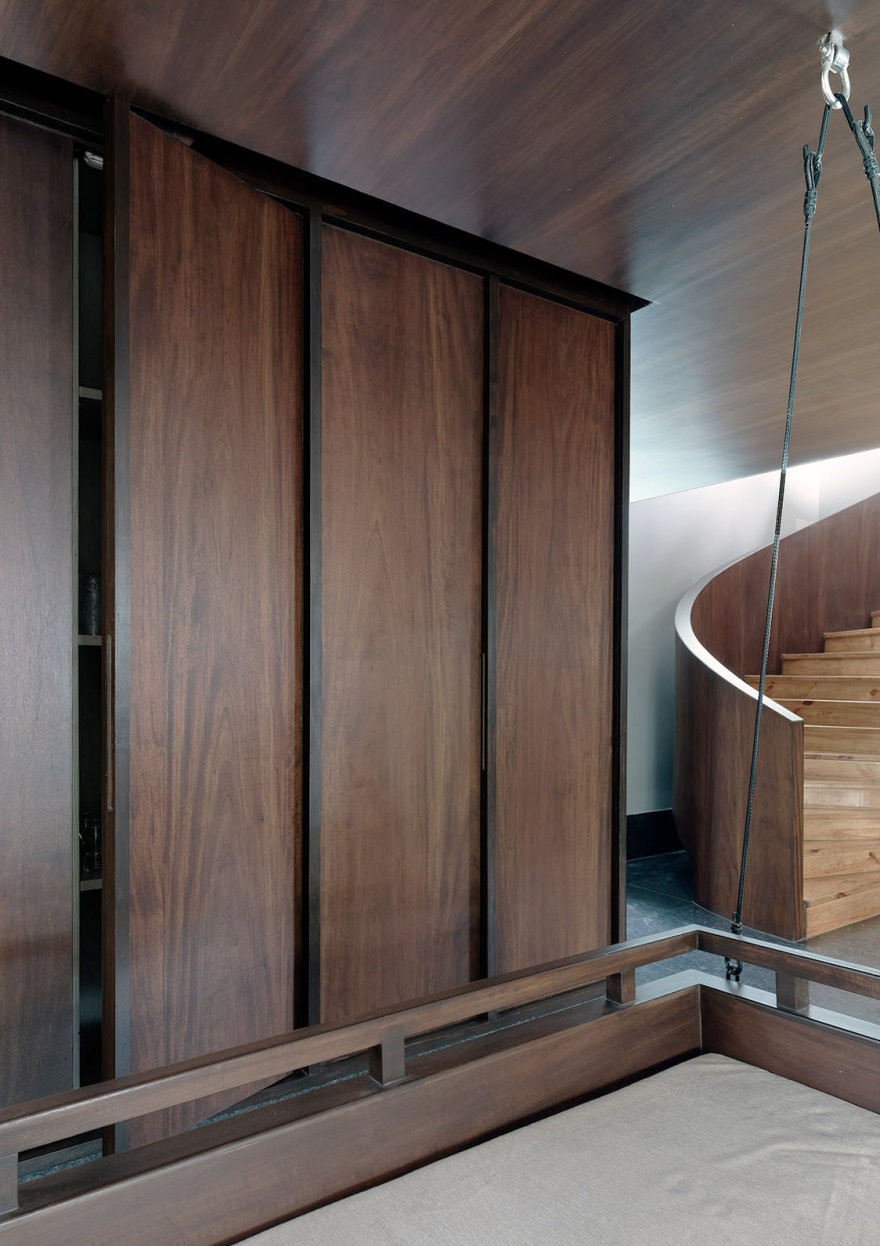
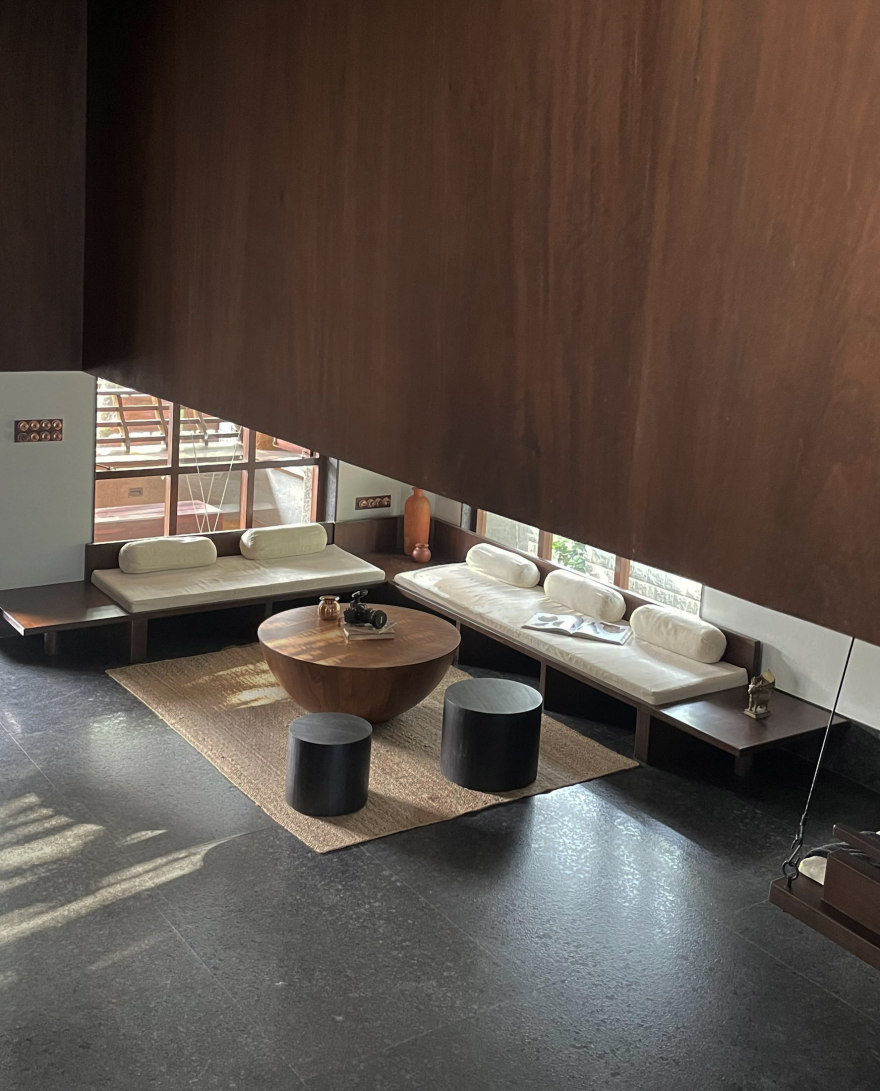
Feeling pretty relaxed already, right? We haven’t even got to the living area. This key room is split into two parts and presents two traditional comforts found in Indian homes—the divan and the jhula. A sunken portion of the lounge is lined with a traditional divan at its perimeter. It is a place to relax, but not the type of lounging done on a couch. A divan forces you to take your shoes off. Then kick those legs up and recline. To lean back on your elbows and enjoy that hot cup of chai. And of course, to chat with the person swinging on the jhula—the second element KrDA built into this traditional setting. A lounge-like swing, jhulas are typically built from timber, and suspended from high ceilings. Constructed out of the same timber as the joinery, wall and ceiling panelling beyond, this jhula is no sore thumb in this contemporary Maharashtrian home.
[Images courtesy of Karan Darda Architects. Photography by Hemant Patil.]
▼项目更多图片






南京喵熊网络科技有限公司 苏ICP备18050492号-4知末 © 2018—2020 . All photos and trademark graphics are copyrighted by their owners.增值电信业务经营许可证(ICP)苏B2-20201444 苏公网安备 32011302321234号
苏公网安备 32011302321234号客服
消息
收藏
下载
最近