

创作上传
VIP
收藏下载
登录 | 注册有礼
查看完整案例

收藏

下载

分享

翻译
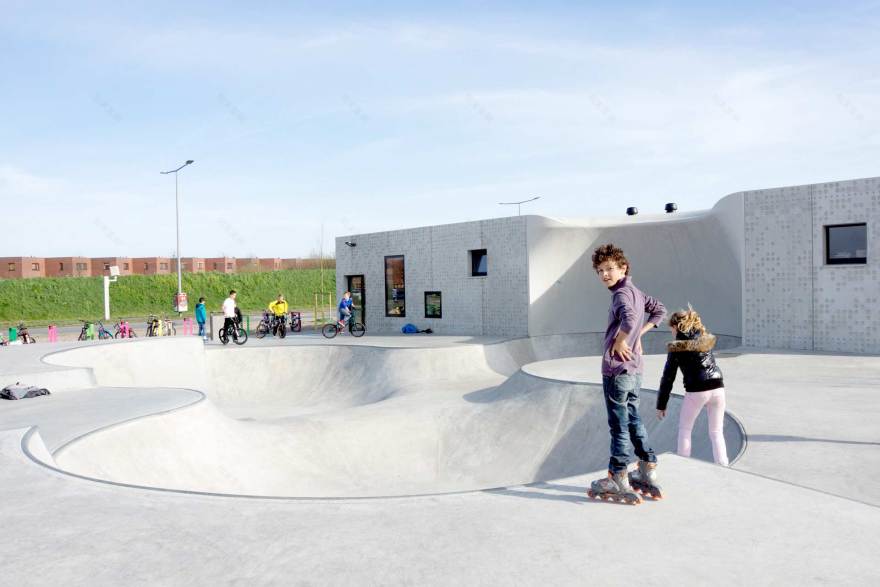
Carve: ‘Kavel K’ is situated on a triangular plot, boxed in by a railwaytrack and a connecting road. It is a skating, sports- and youth facility which attracts a wide range of user groups. The public space and the building are designed as a unity; the facade and the skate-cradle even ‘melt together’. Kavel K is one of the three skate facilities that were originally planned in the urban layout plans for Leidschenveen-Ypenburg, which started in the 90s. The location is a typical surplus space; the tapered terrain is wedged between a railway track and a connecting road, at the edge of one of the largest Vinex-neighbourhoods in the Netherlands. Previously, only skating was planned here, but because of demographic changes the need for a youth centre grew; the young families that moved here now have adolescent children.

© Carve
© Carve

© Carve

© Carve

© Carve

© Carve

© Carve

© Carve

© Carve

© Carve

© Carve

© Carve

© Carve

© Carve

© Carve

© Carve

© Carve

© Carve

© Carve

© Carve
© Carve

© Carve
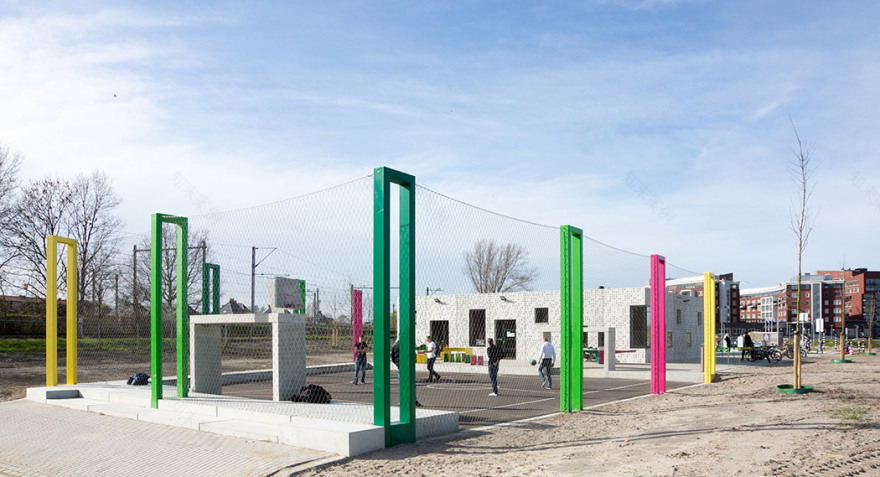
Carve was asked to design both the amenities and the building. We thought it to be of great importance to create a building that presents itself as one with its surroundings, both visually and functionally. But how can skating, sports and a youth centre designed in such a way as to create a whole? The small strip of land is divided into three zones: skating, youth centre and sports. By positioning the youth centre in the middle of the zone, a front- and backside are created, between which the building forms the hub. The entry zone is flanked by the skate facility, which is elevated half a meter above ground. By raising the skating area, a sitting edge is created along the entry zone. Furthermore, by raising the skating, the entrance can be reached without being hindered by skaters. As a contrast to the front, the multifunctional sportscourt in the back is sunken and its edges can be used for activities.
The facade and the integration of the skating facility are an essential part of the design. The cradle – an eyecatcher at the front side – is integrated into the facade. By doing so, the facade and skatepool become one entity.
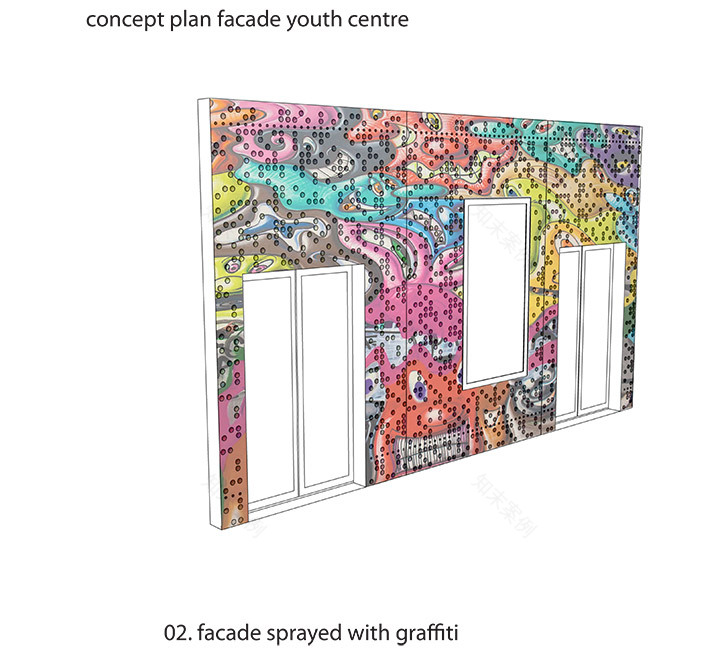
A second principle was the knowledge that it is inevitable that the facade will be sprayed with graffiti. Instead of seeing this as a problem, the design anticipates on this. The facade consists of large concrete elements, in which a ‘braille pattern’ is pressed. The graffiti can be removed, but remains visible in the recessed circles. As a result, the facade turns into a canvas, in which an everchanging colour pattern reflects the history.
A third principle was the flexibility in use of the building, and especially its floor plan. The interior was designed in collaboration with the future users, and was kept robust and simple. Core and floor were designed in a contrasting colour, the walls lined with durable underlayment panels. Large sliding doors around the core create the possibility to divide the space in various ways. In addition, the building features an entrance at both the skating and sports side. Currently, only one entrance is open, but in the future both can be used. In doing so, different user groups can enjoy the facility independently from each other; skaters, youth at risk, Moroccan mothers that get typing lessons and sporting adolescents.
Originally, Kavel K was designed as one entity. Unfortunately, part of what we wanted to achieve in the use of the facility, was rejected in the implementation phase. From the Final Design phase onwards, the project was divided into ‘the building’ and ‘outdoor space’ – with two different clients. This resulted in a continuous struggle on the demarcation line between the building and the exterior space. Without any consultation, the client made changes in the design of the interior of the building. The large sliding doors were replaced by standard doors, and the walls have been traditionally plastered. This was not motivated by budgetary reasons – all changes are ‘budget neutral’, but resulted in a building which is much less flexible in use.
Despite this flaw, Kavel K is eagerly being used. The unique combination of outdoor activities and building created the possibility to not primarily focus on the youth at risk, but also to serve youngsters that normally don’t need any guidance and support. The youth centre accommodates youth workers who can serve the district from here. The greatest merit of Kavel K, however, is the relaxed mix of diverse user and age groups, catalysing positive activity on the edge of this young district.
Design: Carve (Elger Blitz, Mark van der Eng, Emma Kaul, Thomas Tiel Groenestege, Thijs van der Zouwen)
Design: 2010 – 2012
Completion: February 2014
Client: Municipality of The Hague
Technical assistance building: HTV
Technical assistance preliminary design phase: Kees Kalisvaart
Area total facility: 1650 m2
Area building: 200 m2
Area skate facility: 680 m2
Area sportsground: 260 m2
Contractor building: Schouten BV
Contractor public space: Van Vliet BV
Total costs: € 600.000,-
photography: Marleen Beek, courtesy Carve
南京喵熊网络科技有限公司 苏ICP备18050492号-4知末 © 2018—2020 . All photos and trademark graphics are copyrighted by their owners.增值电信业务经营许可证(ICP)苏B2-20201444 苏公网安备 32011302321234号
苏公网安备 32011302321234号客服
消息
收藏
下载
最近