

创作上传
VIP
收藏下载
登录 | 注册有礼
查看完整案例

收藏

下载

分享

翻译

P Landscape Co., Ltd. The 137 Pillars House, formerly known as Baan Borneo, is a 30-suite boutique hotel property located on the banks of Chiang Mai’s Mae Ping River in Northern Thailand. The center of the property carefully preserves historic 19th century architecture which is surrounded by the site’s oldest guardians, a few native trees that existed on the site before it was rediscovered for renovation as a hotel property. Since its opening in late 2012, the project has won multiple accolades for its transformation into a boutique hotel with a complete host of modern luxuries. Yet through careful planning and landscape design, the property still maintains its historic value and old-world charm.
The concept for the landscape at 137 Pillars House took inspiration from the site’s cultural and architectural heritage. Here, distinct features of the colonial Lanna (ancient Northern Kingdom) design style, such as motifs, construction materials and techniques, as well as the ambience and scale of this period reflect their personality on a refined, contemporary canvas. Thus, the design takes cues from the existing artwork, language, and colors, as the intangible resources and site orientation, contextual conditions, existing architecture and vegetation as the more perceptible guiding tools.
Increased development around the site plot and competition with luxury hotels in the region meant that the project needed to also be economically sustainable. However, it was decided by the Client that the true value of the project lay in preserving its historic value, therefore, the property comprises a mere thirty keys within two-story architecture that echoes the existing look and feel of the existing structures.
Transformation of the main teak house meant also devising methods to maintain its longevity. Due to the neglect of the site and frequent flooding, the structural base of the structure had started to disintegrate with humidity and pest infestation. Therefore, after much study and review a decision was taken to raise the original teak house on stilts, allowing for area under the house to remain clear and allow for water permeation (through gravel beds) and maintain air flow and ventilation to ease the humid conditions that were harmful to the wood structure. Based on the architectural layout, the main structure would house the gallery, library, bar, as well as main dining areas for the project.
In addition to augmenting the aesthetic nature of this heritage hotel, the landscape weaves a narrative through the planting and material palette as the guests travel back in time. A stepped open deck under the existing Indian rubber tree was introduced to tie the concept at the heart of site. By creating a central open space around which the buildings and activities are clustered, the landscape layout resonates the character of a traditional village, which invites the guest to interact within and protects this vulnerable enclave from increased development in the vicinity.

Exquisite colonial Lanna architectural details and large existing trees give the hotel entrance a unique and welcoming atmosphere.
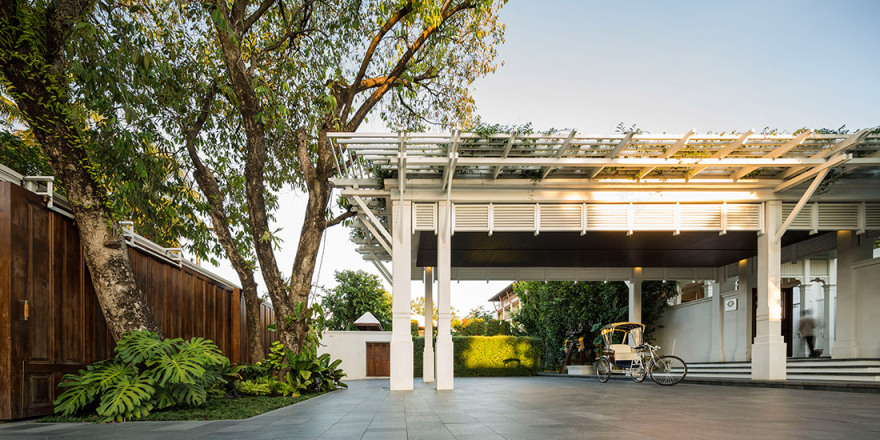
Existing trees preserved within the drop-off courtyard become the primary features viewed from the reception lobby.

In this view of the welcome court, vertical planting screens (on the left) protect views into the private guest suites zone.

Attention to traditional Thai decorative elements and motifs found in the heritage building as well as the use of ‘poon mak’ or local Thai artisan cement mix is highlighted in the details.

The raised central courtyard forms the central open space at the heart of the site.

The central open space was raised to meet the elevated levels of the original teak house (pictured in the center).

Various terraces create niches for outdoor seating amidst the shaded and tranquil central gardens.
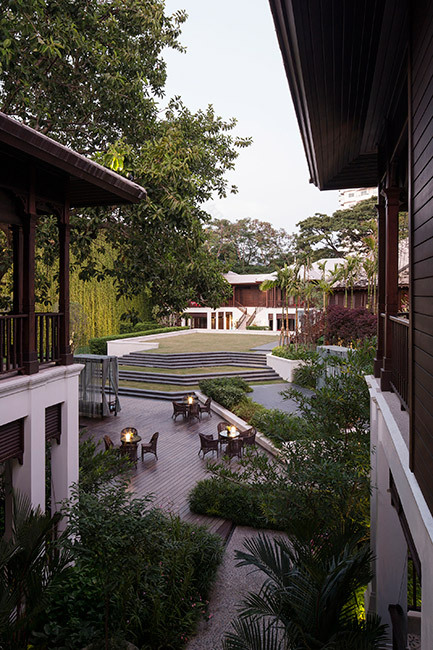
Enclosed spaces giving the sense of exclusiveness are created by low two-story architecture that maintains the old-world ambience and character of the original teak heritage house.

The lotus pond emphasizes a traditional Thai garden feature, while the reflecting surfaces lend as sense of lightness and contemporary design.
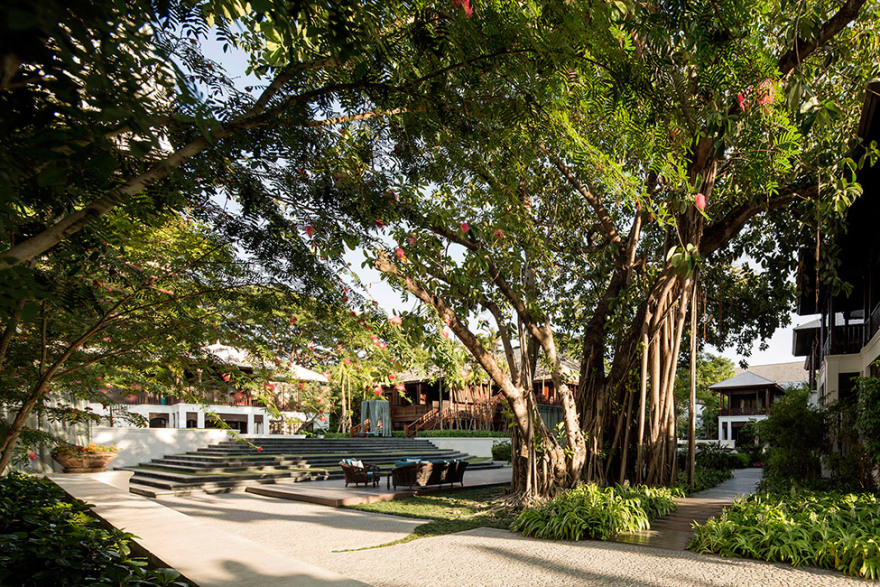
The well-preserved existing large banyan tree forms the heart of the central open space.
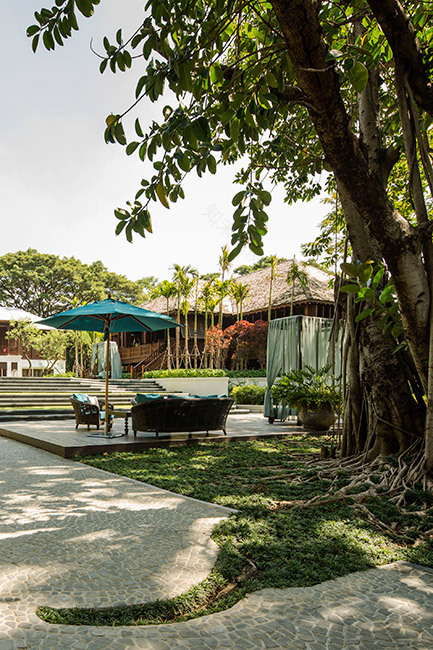
Tree preservation and protection are taken into design consideration such as the highlighting of the surface roots of the banyan tree.
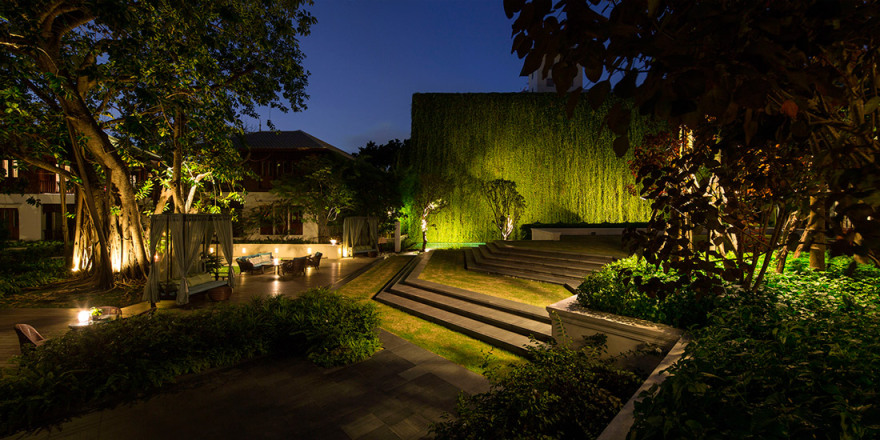
The courtyard at night uses night lighting to create a mysterious and romantic atmosphere.

The swimming Pool with privacy and serenity created by the back of elevated courtyard and a 15-meter green wall.

The dramatic green wall was conceptualized as a vertical screen protecting views from surrounding developments.
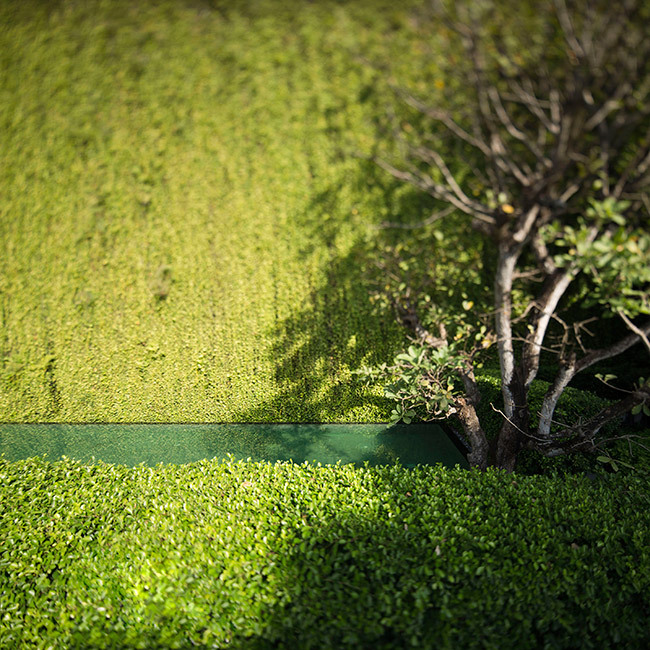
Using a single native plant type, the living green wall has become one of the most memorable features of the project.
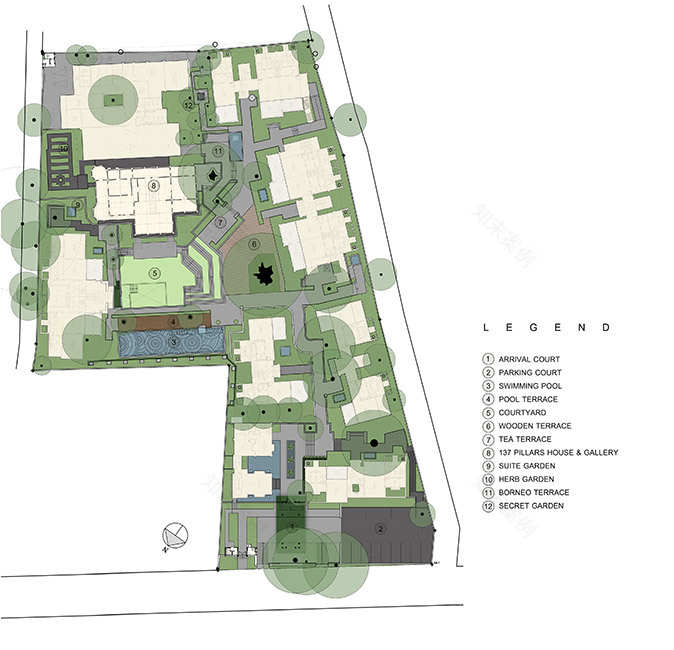
The Master Plan highlights the continuity of open spaces as well as the many preserved large trees on site.
Project name: 137 Pillars House
Type: Boutique Hotel
Location: Chiang Mai, Thailand
Completion: 2012
Landscape area: 1830 sqm.
Landscape Architect: P Landscape Co., Ltd.
Photographer: Wison Tungthunya W Worksapce
南京喵熊网络科技有限公司 苏ICP备18050492号-4知末 © 2018—2020 . All photos and trademark graphics are copyrighted by their owners.增值电信业务经营许可证(ICP)苏B2-20201444 苏公网安备 32011302321234号
苏公网安备 32011302321234号客服
消息
收藏
下载
最近