

创作上传
VIP
收藏下载
登录 | 注册有礼
查看完整案例

收藏

下载

分享

翻译
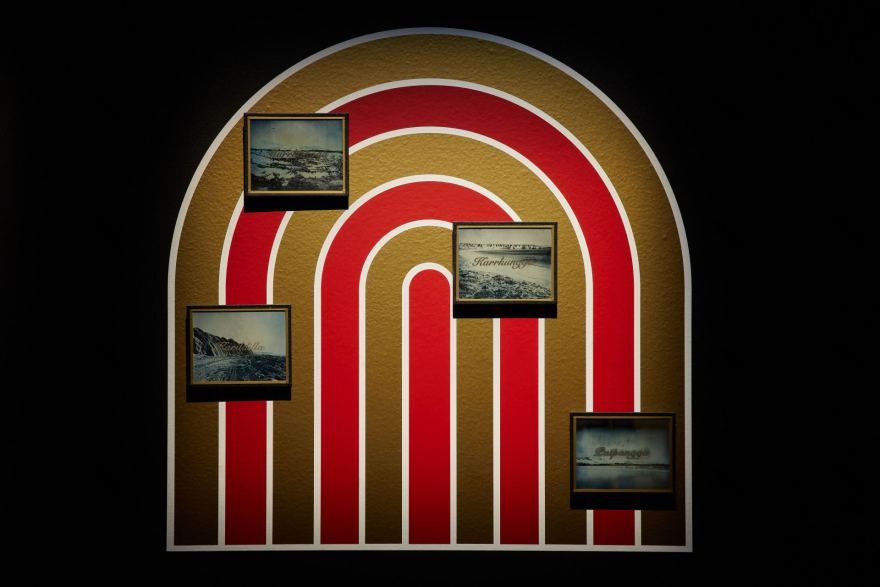
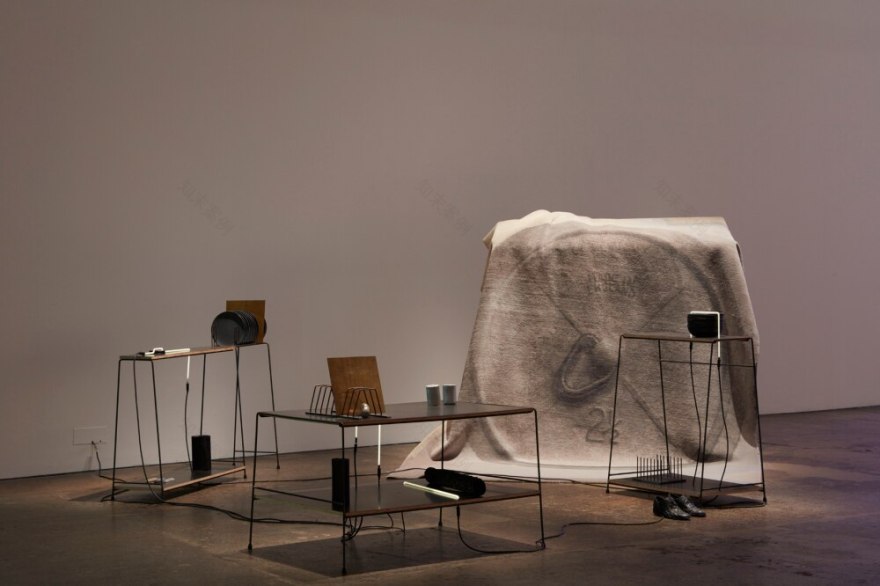
Darren Sylvester, ‘Psychic’s house’, 2021. ‘The National 2021: New Australian Art’, Carriageworks. Image credit: Zan Wimberley.As far as blockbusters go,The National 2021: New Australian Artis hard to beat. The biennial exhibition, which has run in 2017, 2019 and 2021, is spread across three of Sydney’s biggest cultural institutions—the Art Gallery of NSW, The Museum of Contemporary Art and Carriageworks—and is designed to highlight the very best in Australian contemporary art. This year is particularly noteworthy, for being both the final event of the series and the first in our post-lockdown world. This year, 39 artists, collectives and collaboratives have been commissioned to create work that’s a response to the world we live in.Obviously a project of this size and scope has many moving parts, and it’s a lot to do with the work of the 2021 curators: Matt Cox and Erin Vink from AGNSW, Abigail Moncrieff from Carriageworks and Rachel Kent from the MCA. Below, we asked the four curators from the MCA, AGNSW and Carriageworks to select and explain a few of their highlights in their own words.Lisa Sammut, ’A stellate habit’ 2021, mixed-media installation, HD video, installation dimensions variable. Courtesy the artist © the artist. Image credit: AGNSW, Felicity JenkinsThe National 2021at the Art Gallery of NSW, by co-curators Matt Cox and Erin VinkWe all know what it is like to be facing a situation of uncertainty; it is something that we collectively experience while living with Covid-19 in our midst. But what does it mean to be standing on uncertain ground, or to have had one’s relationship to land and Country de-stabilised?While holidaying in Chile, Canberra artistLisa Sammutfound herself standing, facing an earthquake. She watched as the solid ground dematerialised and moved like liquid. Her sense of awe, wonder and horror left a lasting impression on her practice and provoked a series of investigations into the transformative qualities of matter. Her mixed-media installation,A stellate habit,2021, presents a landscape that is equally terrestrial and out of this world. Large, fantastical rock shapes sit like mountain peaks, interspersed with floating circular reflective forms that shed light and cast shadow, much like the moon as it orbits earth, providing a mesmerising model of earth’s relationship to the universe. Using simple analogue manipulation,A stellate habitanimates ‘still life’ compositions and offers an invitation to be swayed by the enchantment of the unknown.James Tylor, ’We Call This Place...Kaurna Yarta’ 2020 engraved daguerreotype photographs, vinyl, installation dimensions variable. Courtesy the artist and Vivien Anderson Gallery, Narrm (Melbourne) © the artist. Image credit: AGNSW, Felicity JenkinsCanberra artistJames Tylor, coming from a very different perspective, interrogates the colonial process of capturing people and land through photography with his new workWe Call This Place… Kaurna Yarta2020. The 25-part series is a way to reconnect and reaffirm his connection to his home Country, Kaurna Yarta, belonging to the Kaurna people in South Australia. His daguerreotypes trace the contours and cultural sites of the Kaurna nation as it stretches from Witawartingga (Cape Jervis) in the south to Murrkauwi (Crystal Brook) in the north, passing through the site of an ochre pit created by Yuru, the Serpent creator. Engraved on each image in Warra Kaurna language are with the original language place names of his Country. In walking Country to make these images, in speaking the names of Country, and by engraving them onto the images, Tylor reaffirms his relationships to land that always was and always will be, Kaurna Yarta.Justin Shoulder, ’AEON†: TITAN ARUM’ 2021, mixed-media installation, stereo sound, live work, installation dimensions variable Courtesy the artist and Insite Arts, Narrm (Melbourne) © the artist. Image credit: AGNSW, Felicity JenkinsFor Sydney artistJustin Shoulder, the aposematisms, or colourful warning signs exhibited by some plants, and the vibrant extravagances of blossoming flowers and carnivorous plants possess a dangerous and seductive allure. In his new work,AEON†: TITAN ARUM2021, they also signal the potentially life-threatening power of ‘nature’ when not treated with caution and respect. His installation of light-filled, soft organic forms immersed in sound brings forth images of both the primordial ooze and the colourful carnival. This is not a dystopic version of a post-apocalyptic world, but rather an imaginative rendering of an alternative, parallel but also intersecting world, that reveals and revels in the possibilities of a queering diasporic community. Shoulder breaks down the definitions between culture and nature, between human life and plant forms, between the density of rock and the weightlessness of light, offering a view of this world as destabilised and uncertain but not without joy and hope.Michelle Nikou, ‘no sound of water. Behind him the hot dogs, split and drizzled’, 2021. Installation view ‘The National 2021: New Australian Art’, Carriageworks. Image credit: Zan Wimberley.The National 2021at Carriageworks by curator Abigail MoncrieffTo encounter a work byMichelle Nikouis to experience alchemy in everyday life. Her installations and sculptures invite reflections on subjects as broad as the environment, politics, consumption, poetry and art history, at the same time evoking our own memories and lived experiences. A large-scale monochromatic rug is a ‘floppy canvas’—a depiction of a sink plug draped in and around industrial styled racks that are either empty or holding cast ceramic plates and elements fabricated from burnt wood and neon. Tender and familiar objects, such as bars of chocolate and tin cans, interspersed within this stripped wasteland landscape, are rendered empty, complicated and divided.Mitch Cairns, ‘Self-Portrait as an Autumnal Low’ 2021. Installation view ‘The National 2021: New Australian Art’, Carriageworks. Image credit: Zan Wimberley.Made from February 2020 until March 2021,Mitch Cairns’ three paintings and text works reflect uncertainty and anxiety in the face of a changing world. Domestic in setting and psychological and intuitive in context, the paintings utilise his now familiar layered and refracted style of painting. Texts from Cairns’ most recent publication,Selected Scuffs, are presented on the back of an oversized chair—an object without function, too big to sit on. For Cairns, it works as a framing device for a series of texts printed on A4 paper, which will be rotated throughout the duration of the exhibition. The paintings and texts, two related streams of his practice, are presented here together for the first time; anchored by a brick wall built by Cairns, his father and friends.Darren Sylvester, ‘Burning candle’ 2021. Installation view ‘The National 2021: New Australian Art’, Carriageworks. Photo credit Zan Wimberley.ForThe National 2021at Carriageworks,Darren Sylvesterhas made three sculptural interventions into the gallery. Recessed into the walls are windows with text and symbols advertising psychic services—stars, moon, crystal ball and candle burn bright like neon emojis. Sylvester sees the gallery as an oversized street, like a film set that a viewer will stroll, recognising the windows from afar as somewhat realistic, their artifice writ large up close. Each window represents an upside-down world, the window as vortex and portal to be looked at and looked through. We are not outside looking in, but inside looking further in. Once inside, what we will find? Possibility and aspiration on the one hand, a gaping abyss of false promises on the other.Maree Clarke, ‘Photograph of Jacob’, 2020; Photograph of Aaron, 2020; installation view, The National 2021: New Australian Art, Museum of Contemporary Art Australia, photograph mounted on dibond, image courtesy and © the artist, Image credit: Anna KučeraThe National 2021at the Museum of Contemporary Art, by curator Rachel KentMaree Clarkepresents a series of artworks based on body adornments made from kangaroo teeth, echidna quills and river reeds, alongside two photographs of her nephews and collaborators wearing the necklaces. Kangaroo tooth body adornments were traditionally presented to individuals as a sign of welcome and safe passage on Country. The process of creating a kangaroo tooth necklace is incredibly labour-intensive: removing the sinew and teeth, preparing the leather, mixing the ochre and wattle resin, and finally, binding the teeth with sinew string.Mehwish Iqbal, ‘Assemblage of a Fragmented Landscape’, 2020, installation view, The National 2021: New Australian Art, Museum of Contemporary Art Australia, silk screen, etching, collagraph, drawing, hand embroidery, 24K silver leaf on paper, image courtesy and © the artist, Image credit: Anna KučeraMehwish Iqbal’s artworks trace the ebb and flow of humanity across the globe. Trained as a painter in Pakistan, Iqbal migrated to Dubai, then Australia to pursue graduate studies in printmaking. Her hugely ambitious installationGrey Wall(2020-21) comprises 50,000 human silhouettes made from hand-cut paper and painted with three layers of wash. The same yet different, they retain traces of individuality despite their massed presence.Betty Kuntiwa Pumani, ‘Antara’, 2020, installation view, The National 2021: New Australian Art, Museum of Contemporary Art Australia, Sydney, synthetic polymer paint on linen, image courtesy and © the artist, Image credit: Anna KučeraBetty Kuntiwa Pumani’s ten-metre-long painting reveals a vast, shimmering landscape of red earth, bright blue waterholes and stippled white tobacco flowers. It represents Antara, her mother’s country in the Anangu Pitjantjatjara Yankunytjatjara (APY) Lands in the north west of South Australia, and Tjukurpa storylines centred on maku: the witchetty grub. At the core of Pumani’s painting practice is the deep connection of family, going back generations, to the land.






南京喵熊网络科技有限公司 苏ICP备18050492号-4知末 © 2018—2020 . All photos and trademark graphics are copyrighted by their owners.增值电信业务经营许可证(ICP)苏B2-20201444 苏公网安备 32011302321234号
苏公网安备 32011302321234号客服
消息
收藏
下载
最近