

创作上传
VIP
收藏下载
登录 | 注册有礼
查看完整案例

收藏

下载

分享

翻译
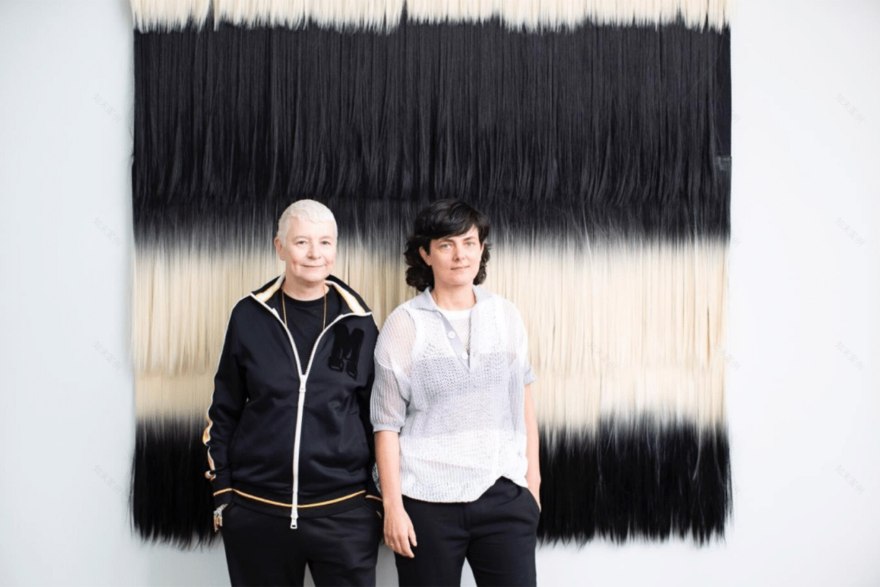
Image:Curator Felicitas Thun-Hohensteinand (left) and artist Renate Bertlmann. Credit: Irina GavrichThe Venice Biennale has been running for well over a century, but it is only in this, it’s 58th edition, that its central exhibition has achieved an equal balance of male and female artists. As with so many things, the upper end of theartworld has long been a boys’ club. As well as the central exhibition, there are excitingfemale artistsrepresenting their countries in the national pavilions, among them Larissa Sansour for Denmark, Kris Lemsalu for Estonia, and Inci Eviner forTurkey. There’s no shortage of eminent female curators taking the reins either: Katerina Gregos, director of a number of biennials in her own right, is here in charge of the Croatian presentation; and writer and filmmaker Nana Oforiatta Ayim is heading up Ghana’s first-ever pavilion.Of the 87 national pavilions at this year’s Biennale, there are 17 female curator-and-artist pairings, among them teams from Saudi Arabia, Germany and Argentina. Why do we need to celebrate them? Because it’s taken a long struggle against entrenched prejudice for them to get there. Less than a decade ago, Georg Baselitz (who will be honoured in Venice this year with a retrospective at the Gallerie dell’Accademia) explained away the absence of women artists at the top end of the market: “Women don’t paint very well. It’s a fact.” Thankfully, the art world is now changing, even if Baselitz isn’t.Image: Artist Angelica Mesiti. Credit: Zan WimberleyAUSTRALIACurator Juliana Engberg on working with artist Angelica Mesiti, who creates enveloping film installations exploring non-verbal communication“I first encountered Angelica’s workRapture(2009) in Sydney. Not long after that, she was invited by the Australian Centre for Contemporary Art, where I was artistic director, to make a new work. Angelica came along to discuss the concept of what becameCitizens Band(2012) and for me it was immediately compelling. The work, as she described it, was full of humanity, of grappling with life at the margins, and importantly about a way of communicating that was through music and performative gestures. A universal set of diaspora languages that were non-verbal. The work had clear philosophical dimensions and in the context of much Australian work, which has a tendency towards analytic coolness, I found Angelica’s work to be intellectually rigorous, yet vividly emotional, both melancholic and optimistic in aesthetic. Her sense of empathy for those displaced between language and belonging continues to be a hallmark of her practice and these attributes again feature in her recent works –Mother Tongue(2017) and nowASSEMBLYfor the Biennale in Venice. InASSEMBLY, Angelica explores the need we have as a society to come together. Angelica sees our immediate situation as being one of crisis – the fracturing and failing of democracy, the intolerance of ‘the other’. Through a process of translations, using poetry and music as metaphors, Angelica has created a work that grows upon itself to create a polyphonic world in which we might see the individual and the collective uniting to evolve the next sequence of democracy. A world shaped by listening and imagination emerging from the exuberant voices and actions of next generations.”Juliana Engberg is a curator and writer based in Melbourne. She has been director and commissioner of the European Capital of Culture Aarhus 2017; artistic director of the 19th Biennale of Sydney; artistic director at the Australian Centre for Contemporary Art; curator of the visual arts programmes of the Edinburgh, Melbourne and Adelaide International Festivals; and artistic director of the Melbourne International Biennial.Image: Austria Pavillion. Credit: Sophie ThunAUSTRIACurator Felicitas Thun-Hohenstein on encountering artist Renate Bertlmann’s works exploring sexuality and eroticism“In 2002, Austrian artists Carola Dertnig and Stefanie Seybold curated a groundbreaking exhibition on the feminist and queer Viennese performance scene,Let’s Twist Again, which featured photos of Renate Bertlmann’s performancePregnant Bride in Wheelchair(1978). I was completely swept away by the conceptual and aesthetic thoroughness and radicality of her work. We have entertained a very productive collaboration for many years now. The deeper I get the chance to dive into her artistic universe, the more I am fascinated by her permanent, unconditional urge to trace her thirst for knowledge and explore it through every medium, technique and material available. Her obsessive exploration of body image directly addresses the sociopolitics of popular culture. Her work offers countless opportunity for future research. It is not only about gender, but about something existential that includes spirit, soul and body, as well as the condition of our environment and our planet. This range of topics was anchored in her work at a very early stage. What gives Bertlmann a special status today is the fact that, from the very beginning, she has been researching a pleasurably uncharted territory with her body analyses and prosthetic body extensions, which explore sexual subjectivity. As early as the 1970s, she was investigating queer and posthumanist perspectives. This approach is the best prerequisite for building bridges and makes her a role model for a new generation of young artists. Renate is the artist we need today.”Felicitas Thun-Hohenstein is professor at the Academy of Fine Arts in Vienna, and the curator of exhibitions includingSynchronicity, Cairo Biennale 11 (2008) andDeep Water Horizon, San Diego University Art Gallery, UCSD (2010).Image: Curator Martha Kirszenbaum (left) and artist Laure Prouvost. Credit: Alexandre GuirkingerFRANCECurator Martha Kirszenbaum has worked with artist Laure Prouvost on a film and installation set within her surreal, fantastical and pun-riddled universe“I remember seeing Laure’s work for the first time in 2012: it was in a project space in Paris called Shanaynay. I was shocked by her attention to detail in that show, and I held her in my mind as someone that I wanted to work with. When I became director of Fahrenheit in LA, I knew I wanted her for a project. I think LA was a great backdrop for her to develop her film practice: it was a very DIY project, and we had a great time together. For the first time, she created more of a narrative film, staged with a group of teenagers in downtown LA. The film she has made for Venice has a bit the same character – it depicts a road trip from the outskirts of Paris to the north, where Laure is actually from, to the Palais Idéal du Facteur Cheval [an eccentric monument in the South of France, created by a postman between 1879 and 1912], Marseille and eventually to Venice.Laure really explores France in the project; we meet 12 characters along the road and there’s a kind of surrealist and escapist narrative; she plays the game of national representation and subverts it. The attention to language in Laure’s work is very important: she’s always in-between languages. I’m also interested in the attention she devotes to her surrounding environment. The strength of her practice is to be an incredible filmmaker and to use her film as an element within an entire installation. In Venice, we use the metaphor of the octopus, which has a soft belly, and its brain and senses in its tentacles: there’s the film at the centre, and then like the tentacles, there is a display of objects and performances that surround it. I’m very glad they chose Laure for Venice – and I think she really fought for me to be the curator. I’m the daughter of a Polish immigrant and lived in the US most of my professional life, and she has lived outside of France since she was 18 and doesn’t have a particularly French CV: we’re both somewhat both inside and outside of the French system and the art scene. She’s the third woman artist ever to represent France at the Biennale; we’re the first-ever young female team, and we’re very excited about it.”Martha Kirszenbaum is a curator and writer based in Paris and Los Angeles. She founded and directed Fahrenheit, an exhibition space and residency programme in Los Angeles, which ran from 2014 to 2017.Image:Untitledby Cathy Wilkes. Credit: Cristiano CorteUNITED KINGDOMImage: Curator Dr Zoe Whitley. Credit: James Gifford-MeadCurator Zoé Whitley has developed a literary-minded relationship with artist Cathy Wilkes, whose sculptural installations mix art and the everyday“Thinking back, I’d have encountered Cathy’s work for my very first time in a group show in New York in the summer of 2007.(We Are) Pro Choicewas exhibited with the David Zwirner gallery; the title spoke to me clearly and the object arrangements left me utterly confounded. I didn’t know the artist at all then. Over time, I’ve come to understand that Cathy’s artworks aren’t intended to be tell-all confessional. Those pangs of sadness or the traces of something left behind that come through in dried-out flowers or dirty bowls connect us through senses that we can all relate to. That shared sense of loss, of not having all the answers, the distances between us despite shared experiences, feels very relevant to the destabilising times we find ourselves in. While working together, Cathy and I exchanged book titles and poems – she even sent me some texts by Norwegian playwright Jon Fosse. Poetry and prose helped establish a common language between us.Senior curator at London’s Hayward Gallery, Dr Zoe Whitley previously held a senior position at Tate Modern where she co-curatedSoul of a Nation: Art in the Age of Black Power, an exhibition that has gone on to tour various venues around the USA to extraordinary acclaim.Image: Eva Rothschild. Credit: Getty ImagesIRELANDCurator Mary Cremin has worked with sculptor Eva Rothschild, whose deceptive play with materials includes classical columns moulded from corrugated cardboard and soft sculptures upholstered in brick-patterned cloth“There is a really strong history and tradition of female sculptors in Ireland and Eva is one of the leaders of her generation, nationally and internationally. It was at a solo exhibition at Dublin’s Douglas Hyde Gallery in 2005 that I first encountered her work, followed by her 2009 pieceCold Cornersin the Duveen Galleries at Tate Britain. That piece demonstrated her dexterity in working with materials and scale: there was an explosive sensibility to how it inhabited the Tate’s neoclassical space that resonated with me.There is a generosity to Eva’s work in how she thinks about the viewer and how the work responds to the space. Her use of materials is bold and authoritative, which has come with experience. The title of her work for Venice –The Shrinking Universe– refers to the scientific notion that the universe is shrinking, not expanding, and alludes to how the world of our contemporary experience has contracted through travel and communication. Eva’s precisely considered elements in the exhibition highlight the fragmentation and uncertainty we experience in contemporary society, producing an environment in which viewers must choose to be either actively present as subjects themselves within the work, or to be standing outside as detached observers of the whole.The exhibition has been a collaborative process all the way through: it is quite an involved project and you have to work closely together. It is important that we have a shared vision for what we want the pavilion to achieve: we’ve developed a dynamic working and personal relationship.”Mary Cremin is director of Void Gallery in Derry-Londonderry and part of the Visual Arts Programme for Galway 2020, European Capital of Culture.Image: Artist Zahrah Al Ghamdi. Credit: SuppliedSAUDI ARABIACurator Eiman Elgibreen on artist Zahrah Al Ghamdi, whose work uses techniques of hand-making to critically engage with cultural heritage and architectural traditionsI first saw Zahrah Al Ghamdi’s work when she participated at Jeddah Art Week a few years ago. She had just finished her PhD. I was impressed that she presented a site-specific work inspired by her memories of her village, and yes, her work has got even better with the passing years. It brings craftsmanship back to the making of art, which is something that has been missing a lot lately, plus it captures the essence of traditional Saudi culture in a very contemporary way. We have been working hand in hand during the installation process. Her work is fragile; therefore, we can only trust a limited amount of people to help us install it.”Dr Eiman Elgibreen is an artist, and a lecturer in art history at the Princess Nourah University in Riyadh. She is curator of Zahrah Al Ghamdi’s exhibition at the Saudi Arabian pavilion at the 58thVenice Biennale.Image: Charlotte Prodger. Credit: Emile HolbaSCOTLANDLinsey Young on working with Charlotte Prodger, winner of the last Turner Prize for her film workBridgit“When I first saw Charlotte’s work at the Centre for Contemporary Arts Glasgow in 2012, it was one of those very rare moments as a curator when you immediately fall for an artist and their work – I felt such an affinity with it. I introduced myself and we stayed in touch, becoming friends and working on a couple of shows together, including the Turner Prize, which I’ve curated since 2016. It’s the job of my team and I to give Charlotte as much space and time as possible, but her process is very generous and amongst all of the other admin, I’ve flitted in and out of the studio, helped on shoots and sat in on the sound edit. I actually approached Charlotte about Venice in 2014 and 2016 and, happily, last year she said yes. Showing her work here feels particularly relevant this year – the questions of identity, power, class and land ownership that she explores in the work are, I feel, very pertinent to the UK at this moment in time.”Since 2016, Linsey Young has been Curator of Contemporary British Art at Tate Britain, where she is Lead Curator for the Turner Prize.Image: Renate Lorenz (left) and Pauline Boudry. Credit: Pro Helvetia /Keystone /Gaëtan BallySWITZERLANDCurator Charlotte Laubard on the artist duo Pauline Boudry / Renate Lorenz, whose film installations feature disconcerting performances related to gender and identity“I sawNormal Work(2007), the first film installation that they created as a duo. It presents the performer Werner Hirsch interpreting photographic portraits of Hannah Cullwick, a domestic worker in Victorian London whose disguised portrayals challenged sexual, social and racial hierarchies. I was struck by how little we know about the history of transgenderism, since it remained a repressed social fact for so long. I also realised how much identity is a construct, components of which have to be performed and repeated extensively in order to exist. This is a major contribution to their work: uncovering the fiction behind the identity politics in order to find new narratives and allow more space for equality and difference. We are living in an era of unprecedented withdrawals. Identity has become the knot around which tendencies to reject difference are aggregated. Hate speech and the stigmatisation of others have not had such a prominent place in public debate since the 1930s. It is a question of responsibility to show such work today, as it can shake normative representations.”Charlotte Laubard is professor of visual arts at HEAD, Geneva School of Art and Design, and artistic director of the LiveInYourHead space in Geneva. From 2006 to 2013 she was director of CAPC, Musée d’Art Contemporain de Bordeaux.




南京喵熊网络科技有限公司 苏ICP备18050492号-4知末 © 2018—2020 . All photos and trademark graphics are copyrighted by their owners.增值电信业务经营许可证(ICP)苏B2-20201444 苏公网安备 32011302321234号
苏公网安备 32011302321234号客服
消息
收藏
下载
最近