

创作上传
VIP
收藏下载
登录 | 注册有礼
查看完整案例

收藏

下载

分享
村子
Village
黄涌村是珠三角腹地典型的新村子,蜿蜒而来的水道让人期待一种岭南水乡的风貌,但事实上河涌上游两公里外才是更符合人们想象的传统村落,有晚清的石桥和祠堂,而航拍图中场地所在的黄涌村,却使我们置身于另一种实践语境,我们在初步了解中很难描述它,也许可以用“野”和“模糊”来形容:这个村子本身是有生命力的,有人口,有生活,但作为新村子,它没有祠堂这类岭南传统村落的要素,目之所及多是铁皮与瓷砖,和与之相应的务实的小商贩气息。这种模糊弥漫在珠三角的乡间,它从市井的生活中产生,又反作用于这里的生活。模糊没什么不好,但模糊可能导致主体性的缺失。
▼集市外观,清晨开市,external view of the market in the dawn ©吴嗣铭

Huangchong Village is a typical newly-built village, in the central region of the Pearl River Delta in Guangdong, China. A typical Lingnan village might be expected with the winding waterways. But as a matter of fact, two kilometers away from the upstream of the river, there is a traditional village that is more consistent with general imagination, covering stone bridges and ancestral halls in the late Qing Dynasty. And the place in the aerial photo is called Huangchong Village, where it exposes us to another practical context. It is a place difficult to describe in terms of preliminary understanding. Probably, it can be described as “wild” and “vague” place: It is a vital village filled with people and daily life. As a new village without the elements of traditional Lingnan villages, such as ancestral halls, iron sheets and tiles are major compositions, paired with the pragmatic atmosphere of small businesses. The ambiguity pervaded in the countryside of the Pearl River Delta is emerged from the street life and reacted upon the life here, which might lead to a loss of identity, though it is not a derogatory term.
▼黄涌村航拍,aerial view of the Huangchong Village

▼集市隐藏在村庄中,market hidden in the village ©吴嗣铭

集市
The Market
市集是村中心的一个三角形空地,早上六点摊主们开档,至接近中午休息,下午凉快时又开档,至夜晚十点收档。卖的有衣服,水果,干货,厨具,电动车,凉茶,凉席等等,北侧是村里的菜市场,东侧是篮球场和村礼堂,西侧是村委和小公园,南侧是幼儿园,这样的位置使得村民们每天都会因为各种原因路过这个三角形地带。
The market is an open triangular space in the center of the village, in which the stall owners start their business at six o’clock in the morning, rest at noon, and then start the business again in the afternoon when it is pleasantly cool till 10 p.m. A variety of merchandise such as clothes, fruits, dried goods, kitchen utensils, electric bikes, herbal tea, and mats, etc. are sold in the market. A basketball court and a village auditorium are in the east of the market, with a village committee and a small park in the west and a kindergarten in the south . In such a central location, villagers pass by the triangular area every day for various reasons.
▼项目区位,project location ©多重建筑

▼三角地周边建筑,buildings surrounding the triangular site ©多重建筑
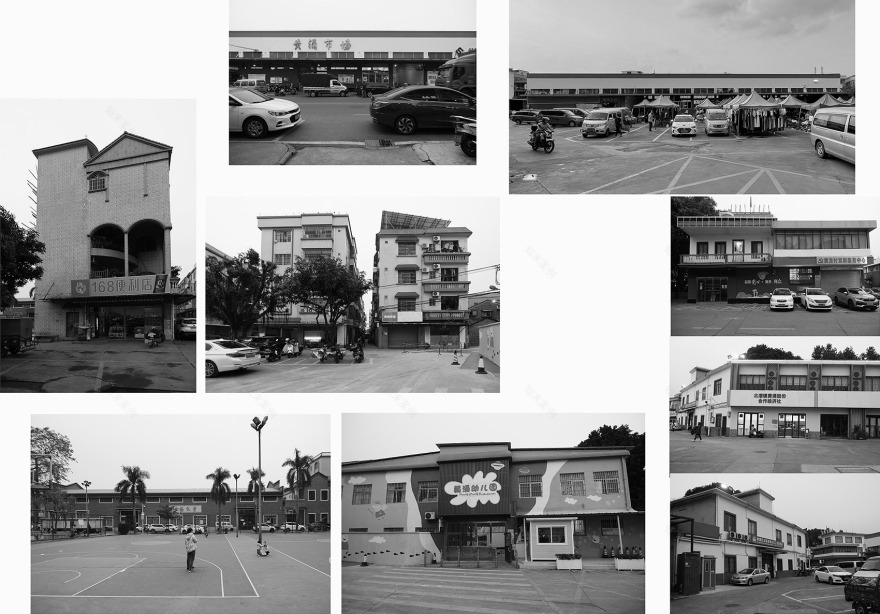
村里的黄涌工业区曾生活着大量的外地打工青年,那时的黄涌集市可谓热闹,后来工业区升级改造,目前仍是工地,人流下降,市集生意也不如以往,新市集的需求应运而生。
A large number of young migrant workers lived in the Huangchong Industrial Zone in the village, making the hustle and bustle of the Huangchong Market. Then, doing business in the market was not as good as before for people flowing out of the village after the upgraded industrial zone, which is still a construction site. The demand for a new market emerged as the times require.
▼三角地与集市,the triangular site and the market ©吴嗣铭

▼从村委大路看向集市,view to the market from the Cunwei Road ©吴嗣铭

棚子与主体性
Sheds and Identity
对三角地的观察带给我的是:对外部的塑造要比对内部的塑造更重要,因为外部可以直接和“模糊的周遭”相碰撞叠加,成为:市集+民居+菜市场+篮球场+幼儿园+水果摊+等等,其结果若控制的好,将有可能产生附近的人对黄涌村新的认知,甚至是长年累月结出的归属感。外部关系的塑造意味着这座建筑将多多少少带有一些精神含义,这也正是在对“新村子”的观察中,我们认为这类村子所缺失的东西。因此,我们开始期待这块不停被村民的双脚们接触的地面,加上一个合适却又稍显意外的构筑物,能在周遭环境里慢慢长出一种主体性。
From the observation of the triangular, we realized that the external form was more important than that of the internal, for the exterior can be directly impacted and superimposed with the “vague surroundings”, blending in market + residential house + food market + basketball court + kindergarten + fruit stalls + etc. With well-controlled results, people nearby will gain a new understanding of Huangchong Village, and even a sense of belonging for years. The form of external relations, in some degree, indicated that the building is embedded with some spiritual meanings, which is exactly the missing part in this type of village, according to our observation of the “newly built village”. At this point, we began to expect to construct a suitable but a bit surprising building on that piece of ground where is passing by constantly by villagers and to slowly develop a kind of identity in the surrounding environment.
▼屋顶、柱子和摊位,roof, column and the stalls ©吴嗣铭

▼从黄涌礼堂看向集市,view to the market from the Huangchong Hall ©吴嗣铭

▼水果摊位看向弧形顶棚,view to the curved roof from the fruit stalls ©吴嗣铭

▼菜市场看向集市,view to the market from the vegetable market ©吴嗣铭

六条路
Six Paths
这块三角地最让我爱不释手的是它有诸多抵达路径。抵达路径的质量与微妙性,决定了村中漫游的日常体验。因而我们设想着一种最简单且对称的体量,这样能在村中不同的路径和距离上,体验到对这个单一之物的独到观察,这种独到观察会是个人的,瞬间的。对于生活在这里的人,我希望这种独到观察能够产生些“源于模糊高于模糊”的体验。
▼建筑间通向集市的道路,road toward the market between the buildings ©吴嗣铭

▼道路向集市一瞥
a glimpse fo the market from the road ©吴嗣铭

The various paths to the village are what drew me to this triangular area. The quality and subtlety of the access to the village is a decisive factor for the daily experience of wandering around the village. On this basis, a monolithic volume was perceived, so that one could experience a unique, individual and transient observation of the village from different paths at varied distances. Especially for those who live here, such a unique observation can give them an experience featuring “from the ambiguity and above the ambiguity”.
▼傍晚从体育场望向集市,view to the market from the playground in the dusk ©吴嗣铭

▼夜景,night view ©吴嗣铭

▼模型,model ©多重建筑

▼区位图,location ©多重建筑
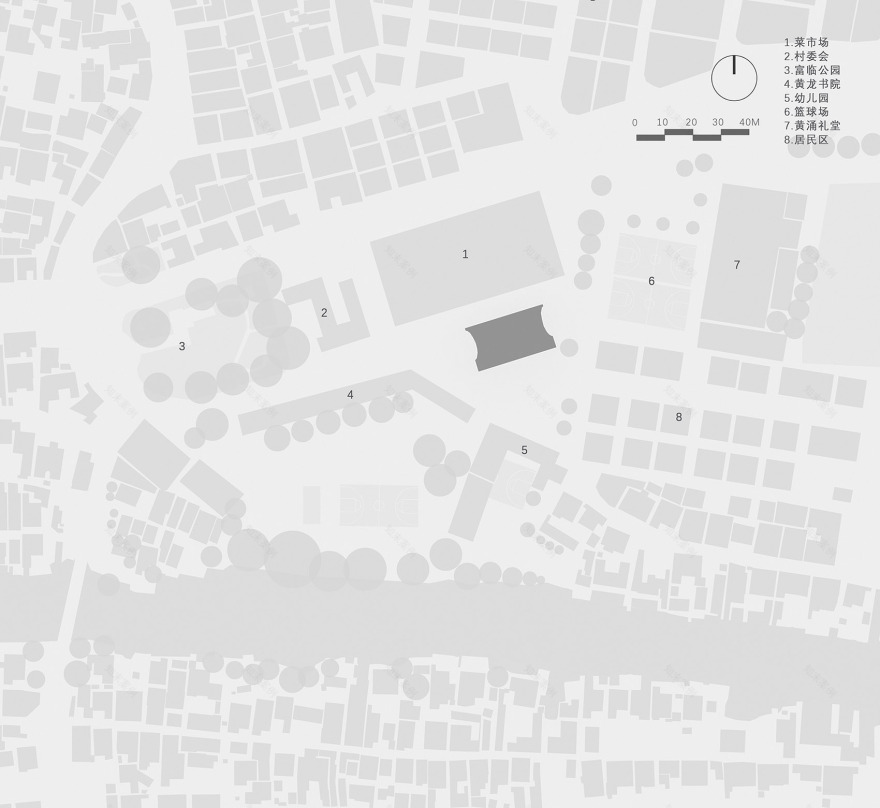
▼总平面图,site plan ©多重建筑
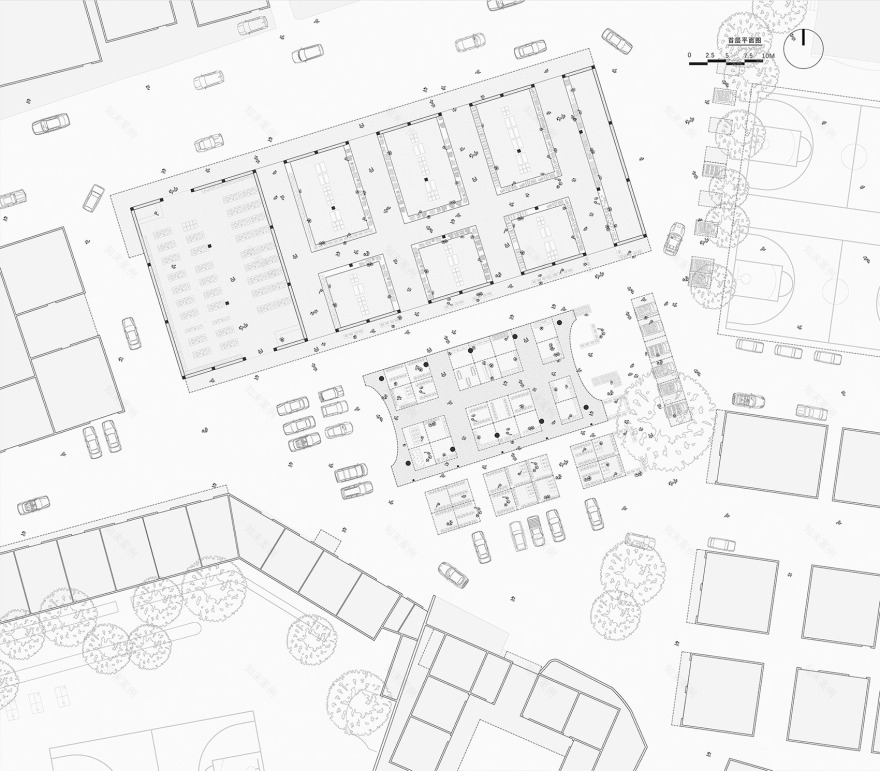
▼平面图,plan ©多重建筑

▼立面图,elevation ©多重建筑

▼剖面图,section ©多重建筑


南京喵熊网络科技有限公司 苏ICP备18050492号-4知末 © 2018—2020 . All photos and trademark graphics are copyrighted by their owners.增值电信业务经营许可证(ICP)苏B2-20201444 苏公网安备 32011302321234号
苏公网安备 32011302321234号客服
消息
收藏
下载
最近