

创作上传
VIP
收藏下载
登录 | 注册有礼
查看完整案例

收藏

下载

分享
罗兴亚文化记忆中心正试图找回她一度失去的社区身份——她通过充满创造性的方式为其子民的精神健康而战。心怀善意,拒绝泛滥于当今世界的“破坏性”设计,这是该项目从最初便坚持的信念。创造新的叙事,将所有人凝聚起来并给予关怀,它并不追求建立某种确定性,而是希望为那些遭受过巨大苦难的人们重新赋予爱的力量。
Rohingya Cultural Memory Centre tries to fight back for the lost identity of her community and to fight for the mental well-being through all the creative ways possible. To hold on to the good practices, and not the evil ones that today’s world is filled with. The building process itself tried to make sure of that from the beginning. To create stories and care that everyone can hold on to. It doesn’t try to create certainty, but the strength of being in love again after the worst nightmares.
▼位于难民营中央的罗兴亚文化记忆中心,RCMC in the camp © Rizvi Hassan

▼鸟瞰,Aerial view© Rizvi Hassan

罗兴亚人的一生充满了变故与不幸,如今他们分散在世界上最大的几处难民营中,动荡不安的生活对他们的文化与价值观念造成了潜移默化的影响,任何即将发生的事情都将改变他们目前所拥有的一切。
尽管面临着各种不安定的因素,罗兴亚人依然保有他们独特的故事、知识与智慧,以及由此而形成的积极和友善的态度。罗兴亚文化记忆中心试图收集、保护和传播这些知识与故事,即便是在极不稳定的境况下,也希望为这些流离失所的社群创造充满善意的生活环境。
The Rohingya community has gone through changes & unsettlements throughout their lives. The current situation, being in the largest refugee camps, has added a bit more uncertainty to their lifestyle, as it has influences on their culture & values. It is the ongoing events that will shape what they have.
Despite of having the unsettlements, they have many stories, knowledge and wisdom that creates positivity and care. ‘Rohingya Cultural Memory Centre’ tries to collect, preserve and spread those knowledge & stories, to create goodwill among displaced communities even in the most unsettled situations.
▼一个疗愈心灵的场所,A place for mental healing© Rizvi Hassan

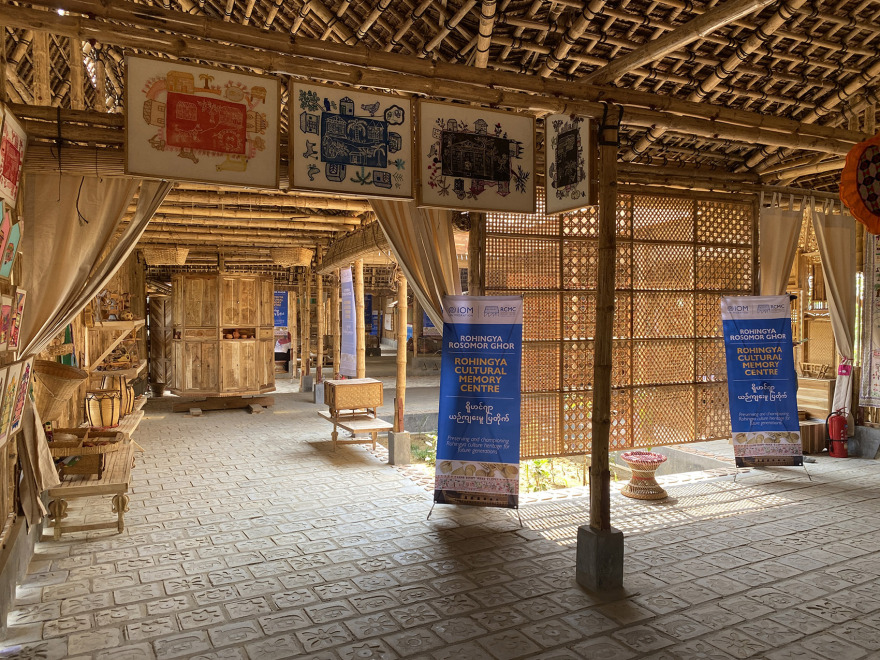
▼社区道路和半户外展示空间,Community Pathway and semi-outdoor exhibition space© Rizvi Hassan
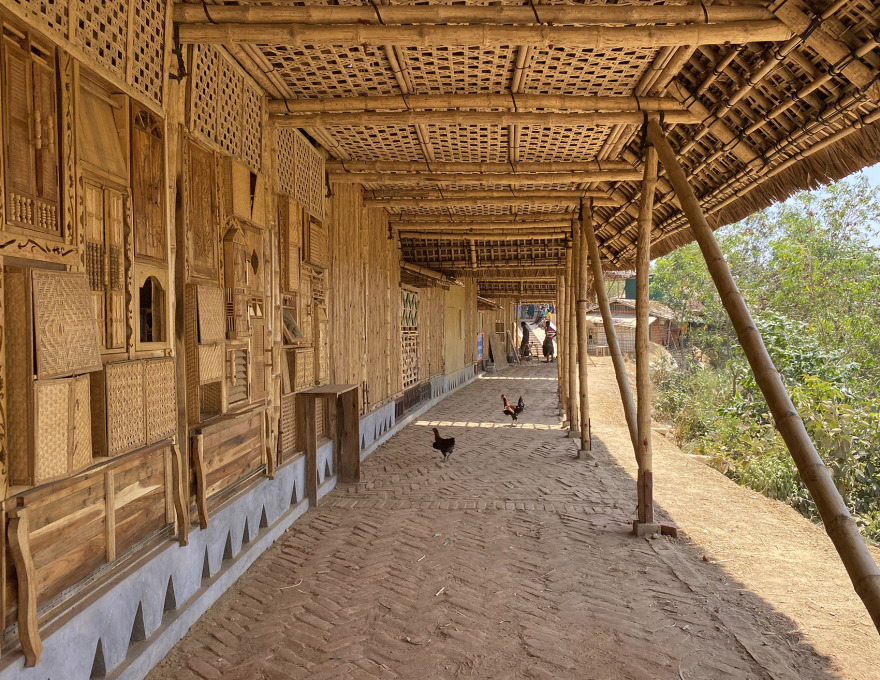
▼立面吸引着人们向屋内张望,The facade creates interest to have a look inside© Rizvi Hassan

▼入口保留了罗兴亚传统建筑的特征,Entry through a traditional Rohingya house© Rizvi Hassan

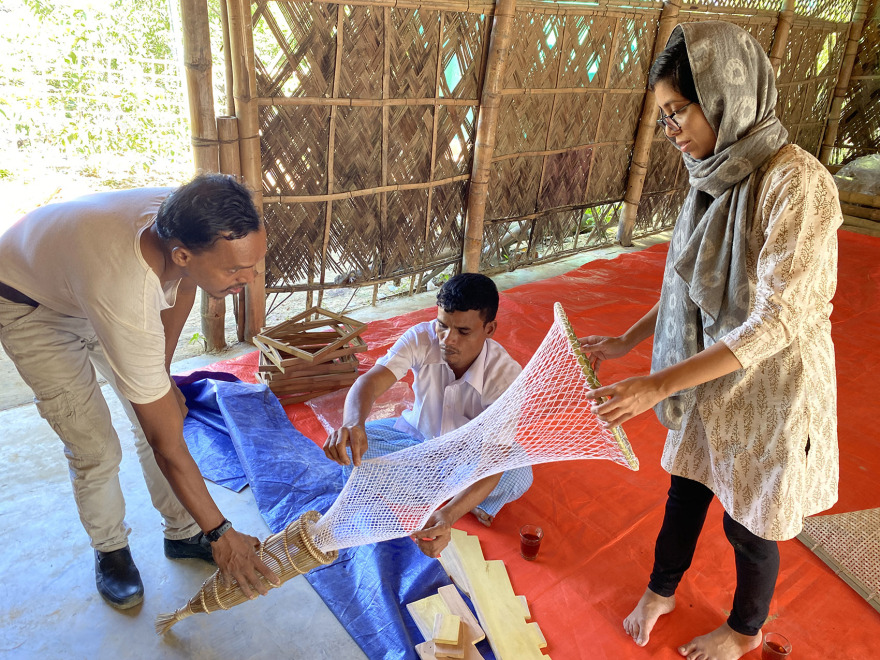
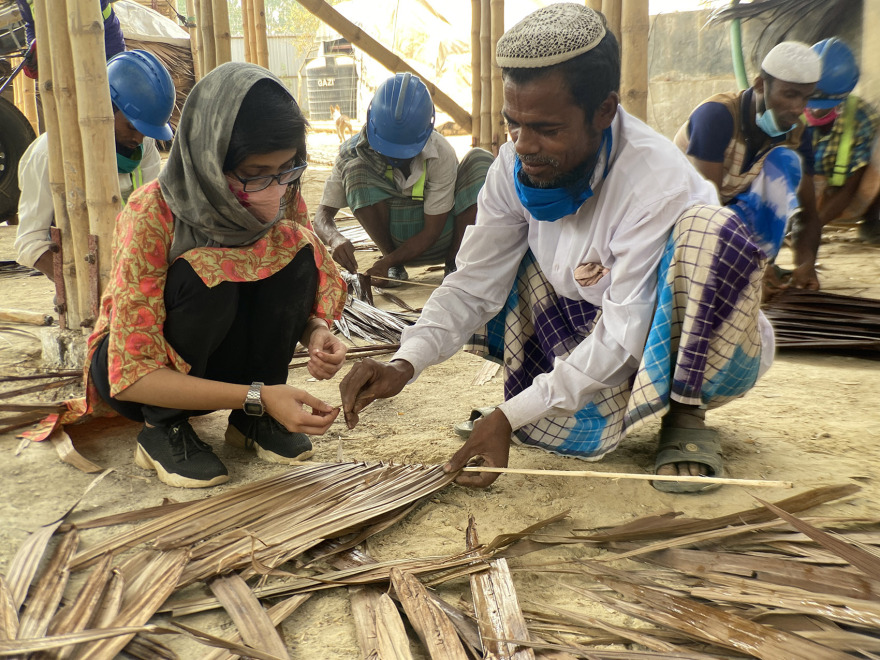
罗兴亚的本地工匠和社区成员带着他们的知识、技术、生活方式与故事来到这里,帮助建筑师制定出适宜的设计方法。用海椰子树叶(om pata/gol pata)打造的屋顶、不同类型的竹编技艺、传统的门窗和家具样式,所有这些成果均是在一个持续的过程中逐步实现的。经验丰富的老工匠们向年轻一代传授他们的技术;年轻人则提出他们独特的想法,为设计带来更多新的可能。
▼以海椰子树叶制作的屋顶,Roofing with Nipa Palm Leaves© Rizvi Hassan


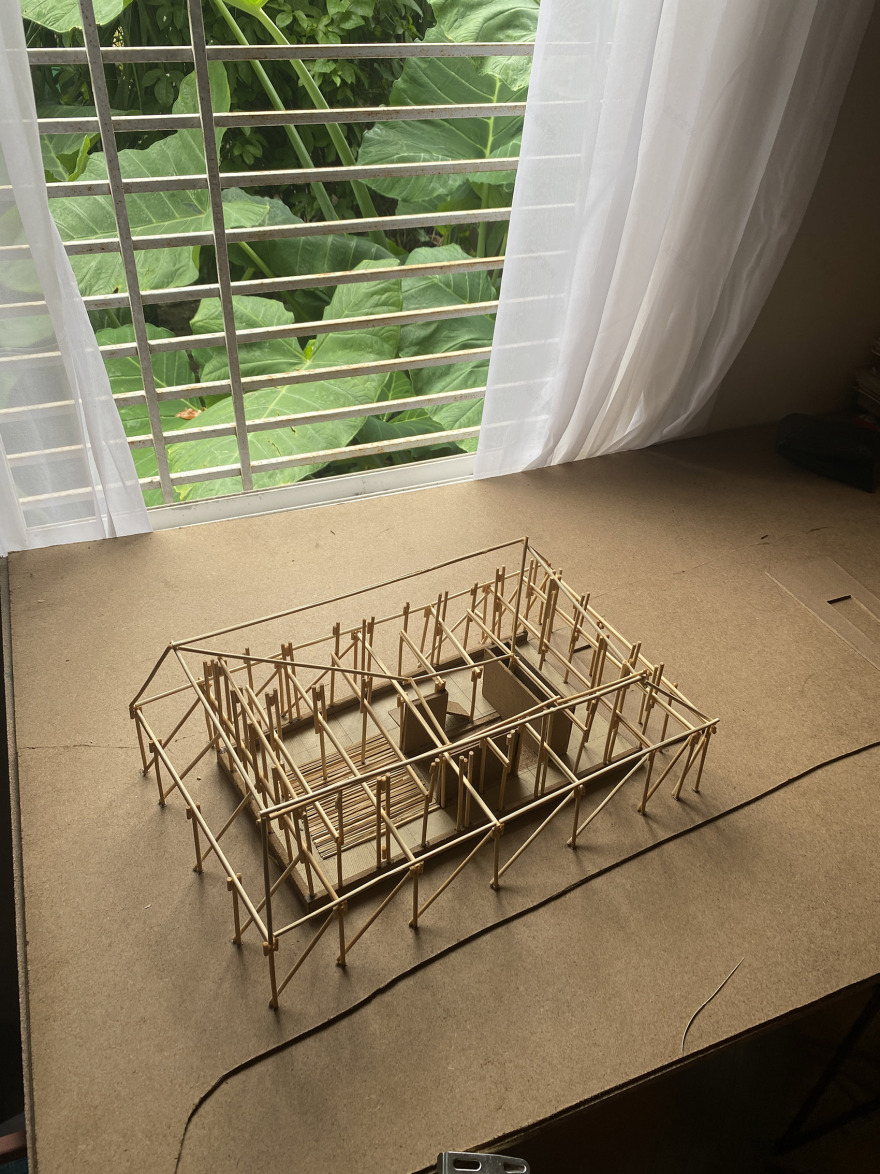
▼模型,Model© Rizvi Hassan

Rohingya artisans and community members came forward with their indigenous knowledge, techniques, ways of lives and stories that helped visualizing an appropriate approach for designing the space. Nipa palm leaf (om pata/gol pata) pallets for roofing, various bamboo weaving techniques, traditional doors-windows-household patterns and all other information resulted in from a continuous process. The elderly artisans who had expertise from years, taught the young generations the techniques that they used to have. While the young Rohingya souls explored new possibilities.
▼庭院带来光线,Light source from the courts© Rizvi Hassan

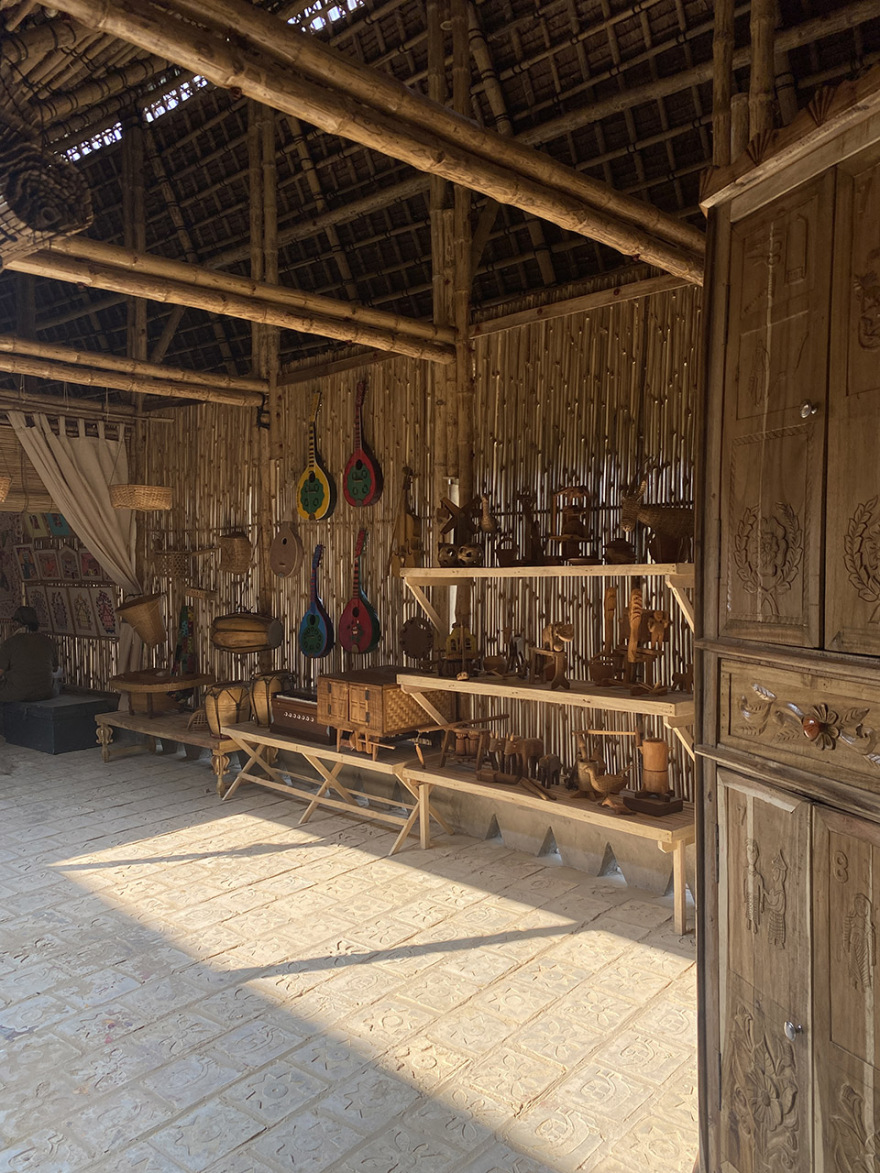
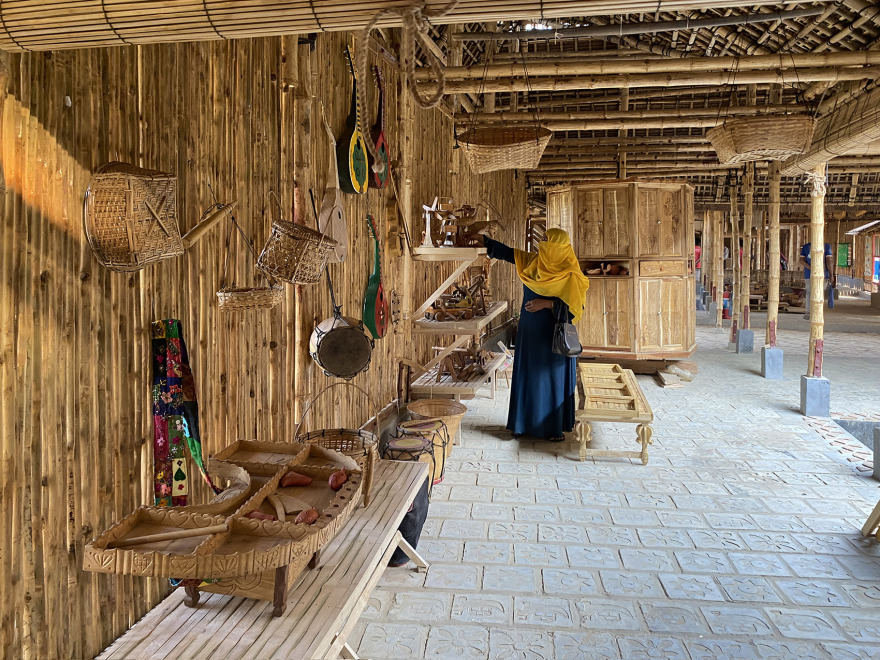
▼家具展厅,Hall for household items© Rizvi Hassan
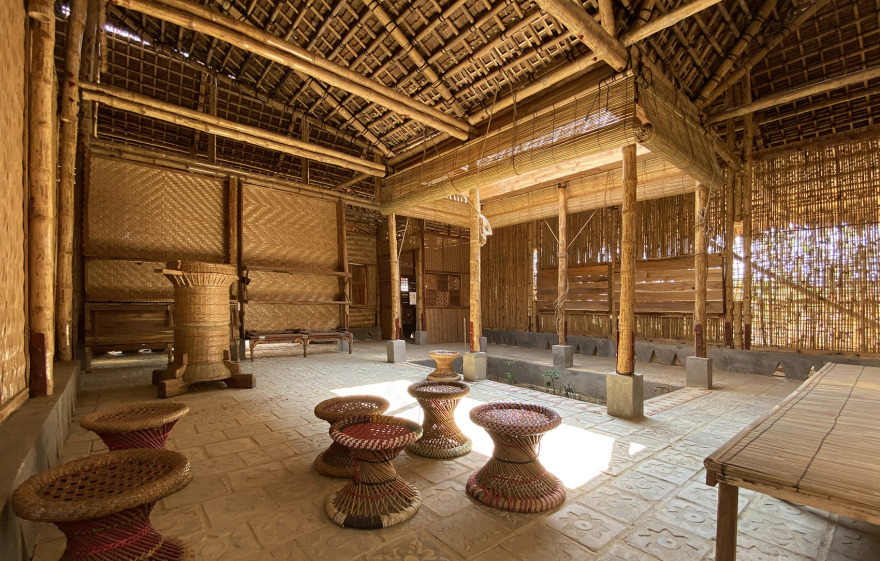
▼放置陶器的大厅,Hall for Pottery items and Waterways© Rizvi Hassan
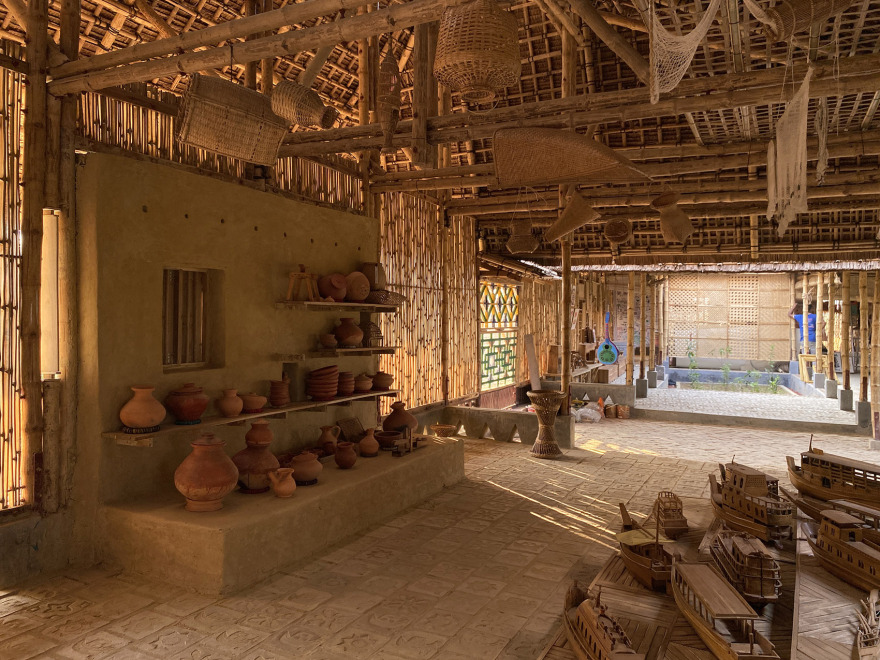
▼由罗兴亚工匠制作的阿拉干船模,Boats of Arakan made by Rohingya Artisans© Rizvi Hassan
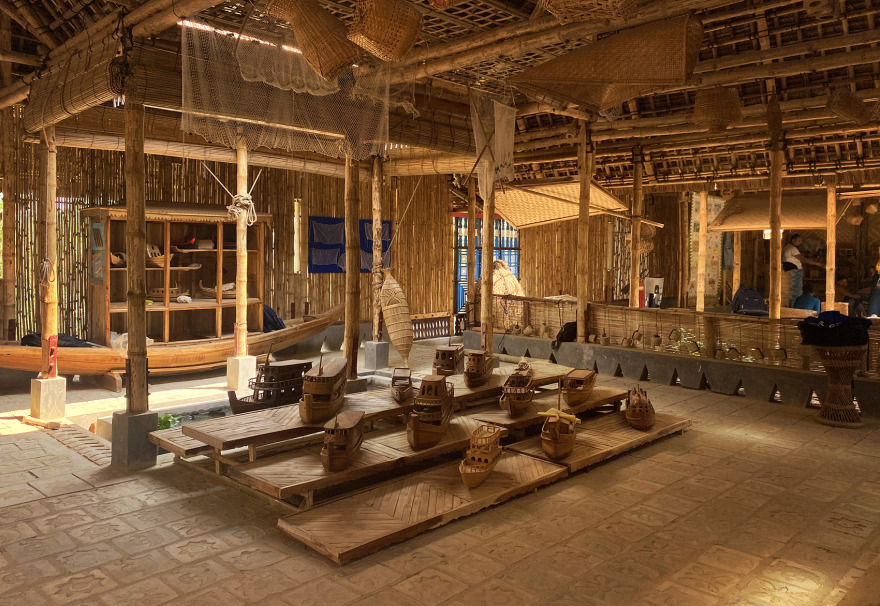
组成空间的每个部分都是经过大量设计会议以及实践研讨会得出的成果。例如,建筑师请工匠们亲自设计一个能够体现他们珍贵记忆的小窗户,由此得以窥见他们幸福记忆中的全部内容:房子、捕鱼、大象、鸟和稻田,所有这些美好的意象如今被汇聚在同一个空间内,传达出记忆与团结的价值。
The elements that composed the space were the outcome of various design sessions and hands-on workshops. For example, artisans were asked to reflect their favorite memory/story through designing a small window. Own houses, fishing, elephants, birds, paddy fields, and all other memories were reflected and now stand together in the centre reflecting a sense of memory and togetherness.
▼庭院边的记忆之窗,Windows of memories beside the courtyard© Rizvi Hassan

▼由工匠制作的记忆之窗,Windows of memories are made by various artisans and are for exhbition always in the community pathway© Rizvi Hassan

▼由带队工匠 Zaber 制作的活动墙壁及其图纸,Flexible wall designed by master artisan Zaber© Rizvi Hassan

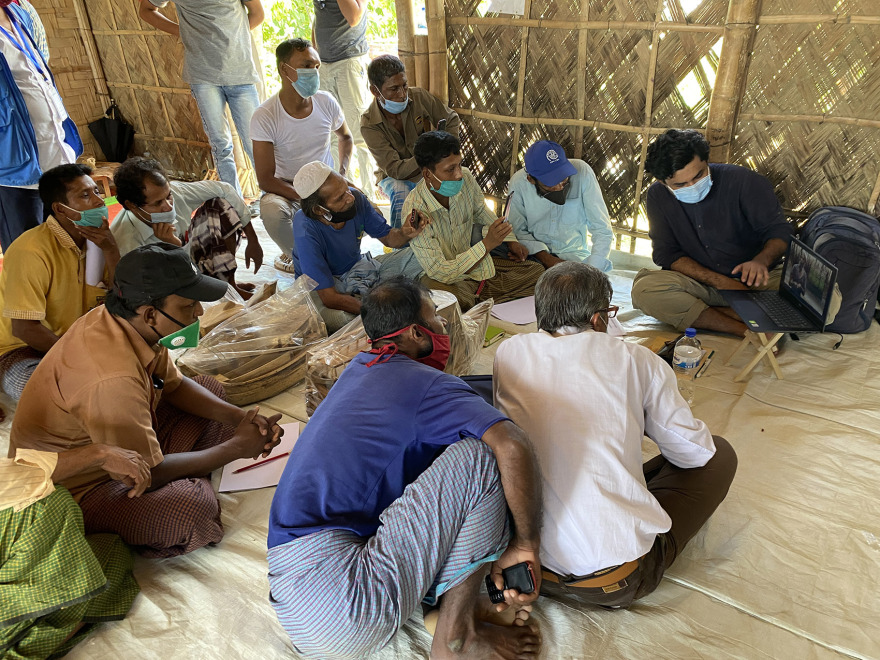
罗兴亚人掌握着丰富的加工天然材料的技术,因此建筑师团队谨慎地选择了合适的材料,以便让工匠们的记忆得到最大程度的发挥。为了打造具有包容性且能够带来愉悦的场所,建筑师鼓励工匠从零开始,自由地进行思考、讨论和创作,在轻松的氛围中逐步完成建筑空间的塑造,这样的过程有助于同时保证建造者与使用者的身心健康。
Since this community has vast skill on natural materials, the materials were selected with caution to have familiar techniques during the construction. To achieve the target of inclusiveness and joyful event, these natural materials created scope to craft the building from scratch. Freedom of thinking and discussion was encouraged during the construction process to ensure mental well-being.
▼由罗兴亚妇女制作的纺织品,Needle works by Rohingya women© Rizvi Hassan


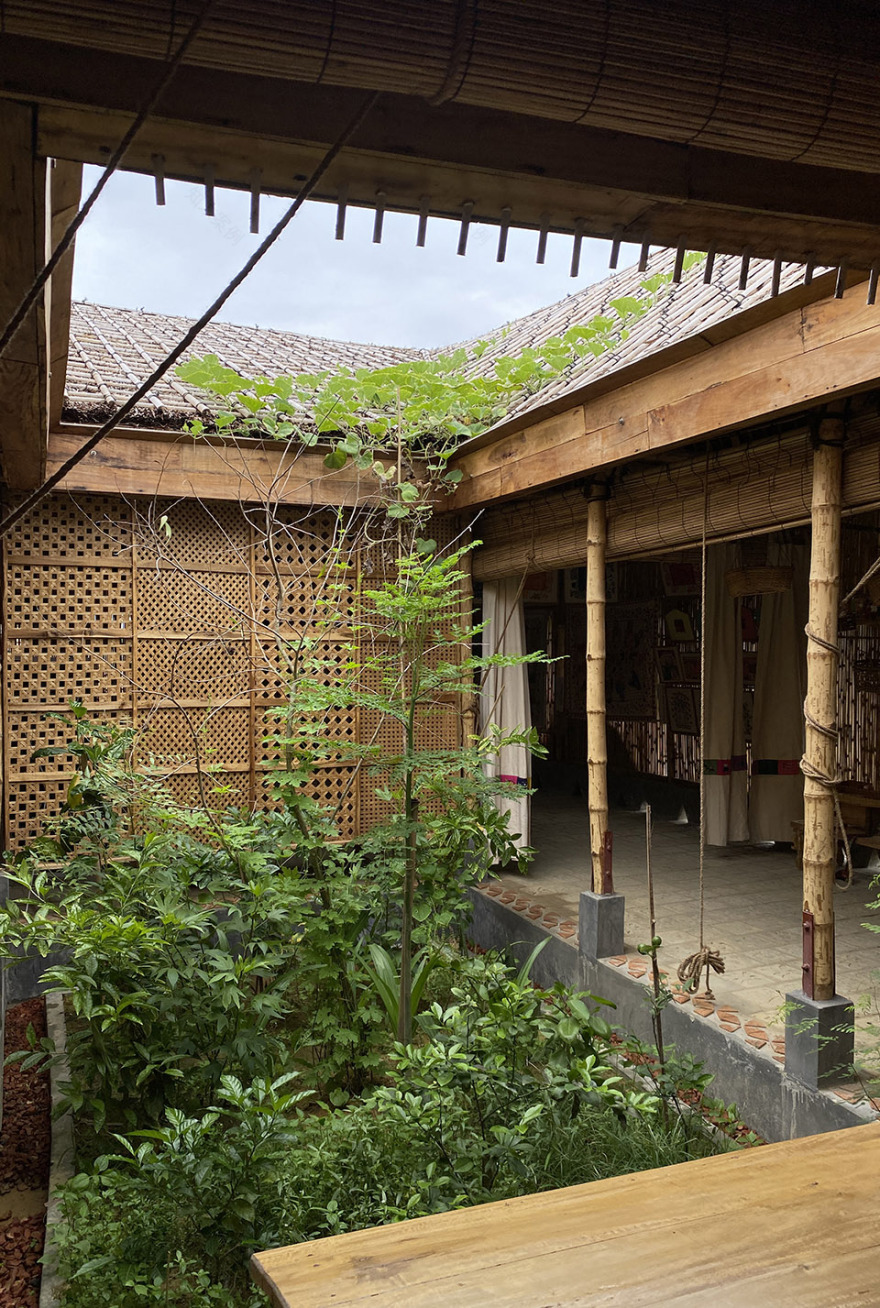
园艺工作也成为了项目中关键性的连接工具。经过讨论,设计团队列举出了具有不同用途的植物,并将它们种植在建筑内部的四个庭院内,例如家庭花园和厨房花园的 Kolkoitta Bor fata、Horo fata、Vaat fata/foni fata、Dhanya morich、Dhei haak、Tara Gachh(柠檬树)和 Jaillya/kodu;水路花园的 Kolmi haak、睡莲和 Fena(Kochuri pana, topa pana, khudi pana);以及疗愈花园具有药用价值的 Gorur roun, Asila/achila gachh, Boraduwa, Arbwa lota, Shushulil lota, Jermoni gachh, Bashuk fata’, Hani fata 和 Halamanik/halahuna 等。
Gardening together worked as a key connecting tool. Various plants were listed through discussions that serve various purposes. And these plants were collected and planted in four different courts within the structures. For the Household/kitchen garden, Kolkoitta Bor fata’, Horo fata’, Vaat fata/foni fata’, Dhanya morich, Dhei haak, Tara Gachh (lemon tree), Jaillya/kodu etc. were selected. For the waterways, Kolmi haak, Water lily. Fena (Kochuri pana, topa pana, khudi pana) etc. were suggested. And for the healing garden, Gorur roun, Asila/achila gachh, Boraduwa, Arbwa lota, Shushulil lota, Jermoni gachh, Bashuk fata’, Hani fata, Halamanik/halahuna etc. were listed as plants with medicinal benefits.
▼疗愈花园,The healing garden© Rizvi Hassan

▼疗愈花园中的药用植物,Medicinal plants in the healing garden in the third hall© Rizvi Hassan

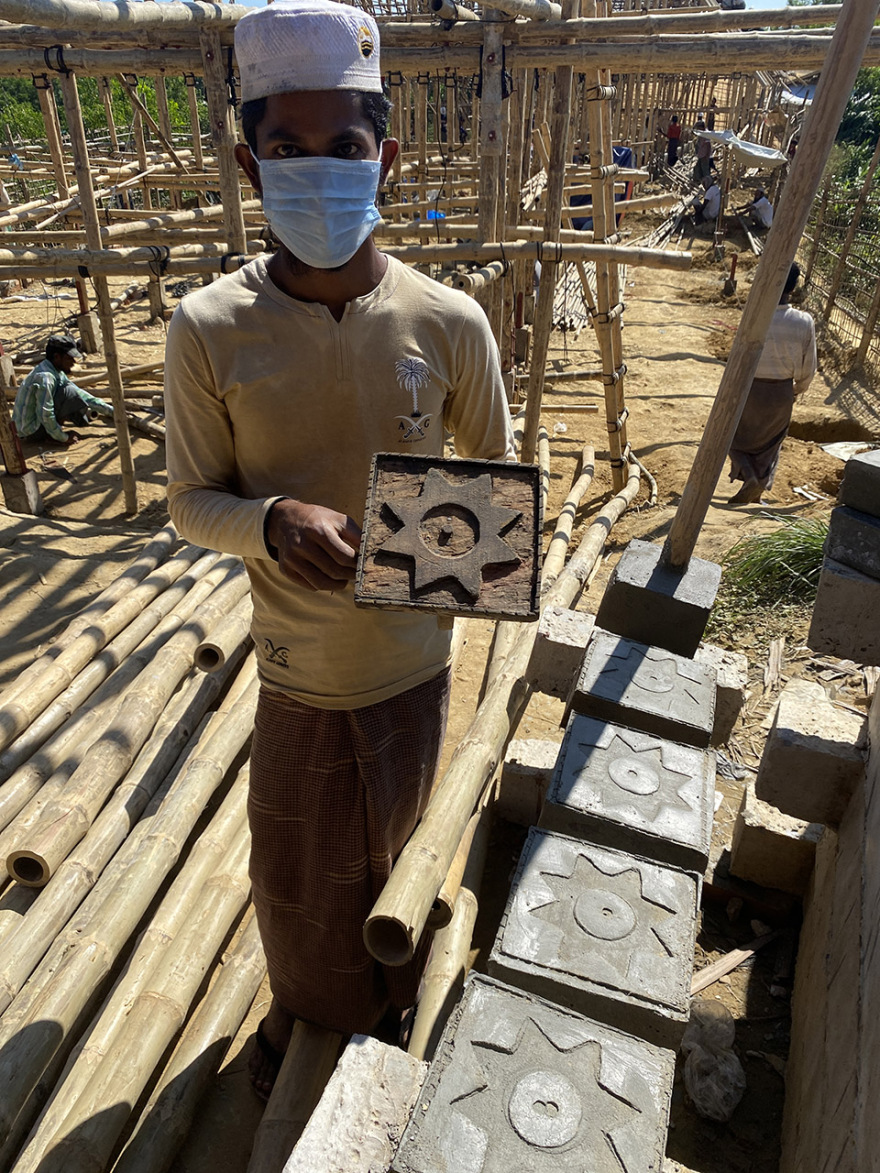
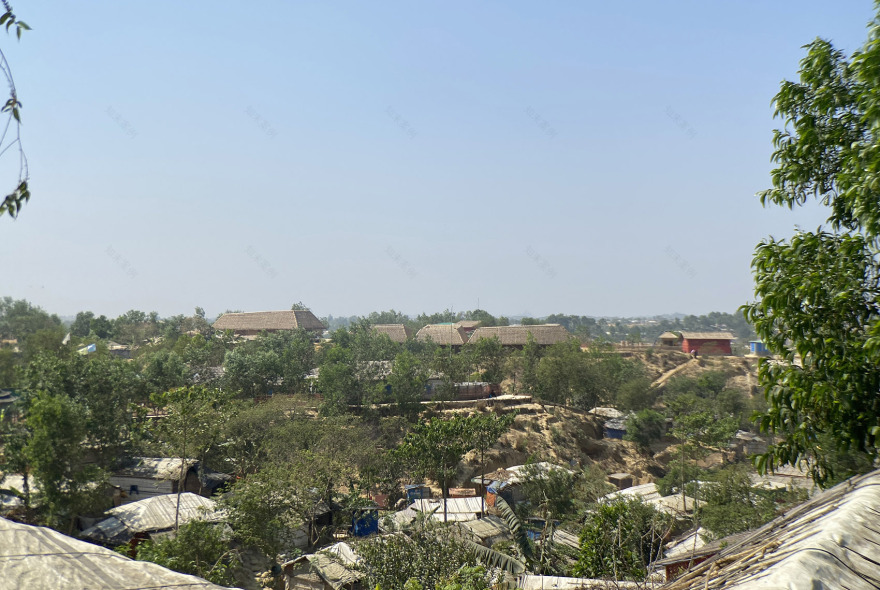
文化记忆中心坐落在难民营中央的山坡顶端。建造过程着重于为临时建筑赋予灵活性,因而使用了易于拆卸的预制立柱、铺地砖块、以及螺母和螺栓等连接件。
The centre is situated on a hill top in the middle of the camp area. The construction ensured flexibility to create a temporary scheme in the camp. Easily removable pre-cast columns, blocks for flooring, nut bolt joints etc. ensures the flexibility of the building.
▼玩具大厅,Hall for toys© Rizvi Hassan

▼故事盒子,Storytelling box designed by artisan Zaber© Rizvi Hassan

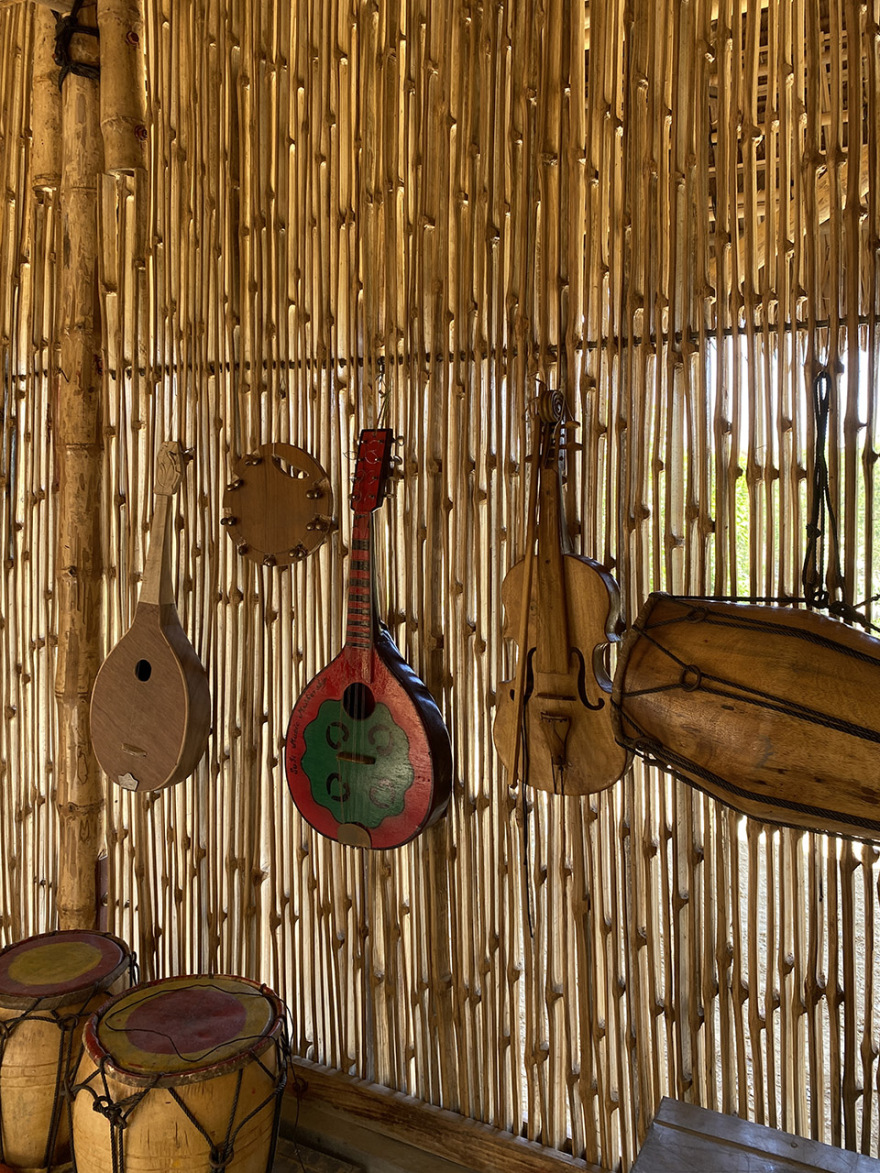
▼乐器和玩具展厅,Music_toys section© Rizvi Hassan

加宽的屋檐能够从垂直和水平方向抵御该地区的大雨,同时也为居民提供了在主厅周围自由活动的空间。四个向中心倾斜的屋顶能够在需要时收集和利用雨水。建筑内部的四个庭院则为内部空间引入了自然光线,同时提供了宁静而开放的户外空间。
The extended shades all-around the structure ensures protection from heavy rain (vertical & horizontal) in this region. It also allows free movement and spaces around the main hall for the community and users, offering more engaging spaces.
The four roofs are designed to catch and utilize rain-water if needed. They also create four courts inside that works as the source of light for the display. These courts also offer a serene ambiance within, that keeps the camp life outside.
▼环绕建筑的屋檐能够抵御雨水,Extended shed all around gives the structure protection from heavy rain in this region© Rizvi Hassan

大厅的竹屏坚固又透气,在确保安全性的同时也为建筑内外建立了视觉上的连接。建筑体量的布局确保了每个大厅之间以及空间内部的通透性,并且有助于使雨水被山丘的土壤更加充分地吸收,从而持续地补充地下水资源。
The strong bamboo screen that creates the hall is perforated, to have breathability of the space. It also ensures security but allows visible connection from outside. The planning of the center ensured enough perforations in-between and within the halls for rain-water to be absorbed by the hill soil. That will help the groundwater to be recharged continuously.
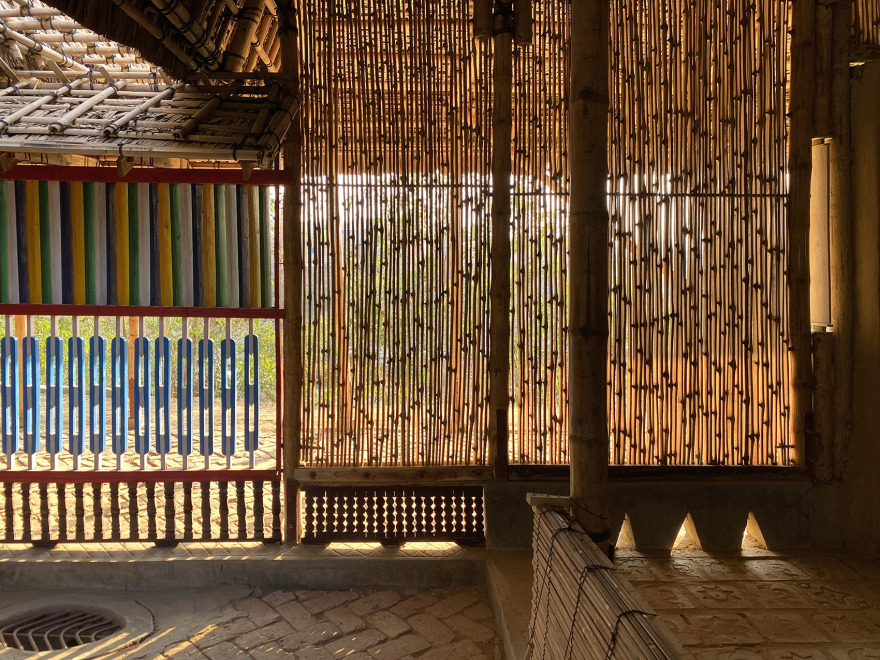
▼竹屏带来微风与光线,Screen allows enough light ventilaiton inside© Rizvi Hassan

▼手工编织的竹屏,Innovative bamboo screen _ Traditional screens by Rohingya Artisans© Rizvi Hassan

▼具有传统特征的屏墙© Rizvi Hassan
Traditional screens by Rohingya Artisans

罗兴亚文化记忆中心的建造凝聚了来自不同人群的知识、技术、劳动与回忆,它是一个可供所有人感怀过去和憧憬未来的幸福场所。尽管这只是一个临时的庇护所,当人们在这里践行善意、互帮互助并彼此予以包容,它便已经将美好的种子种在了每个人的心间。
The making of RCMC has been an event collaborating materials, efforts and memories. Just to have a beautiful place to remember past and present. When there is a place like this, even in this temporary settlement, to practice the good, to learn from each other, the right and wrong, it is a blessing for all of us, to get to be engaged here.
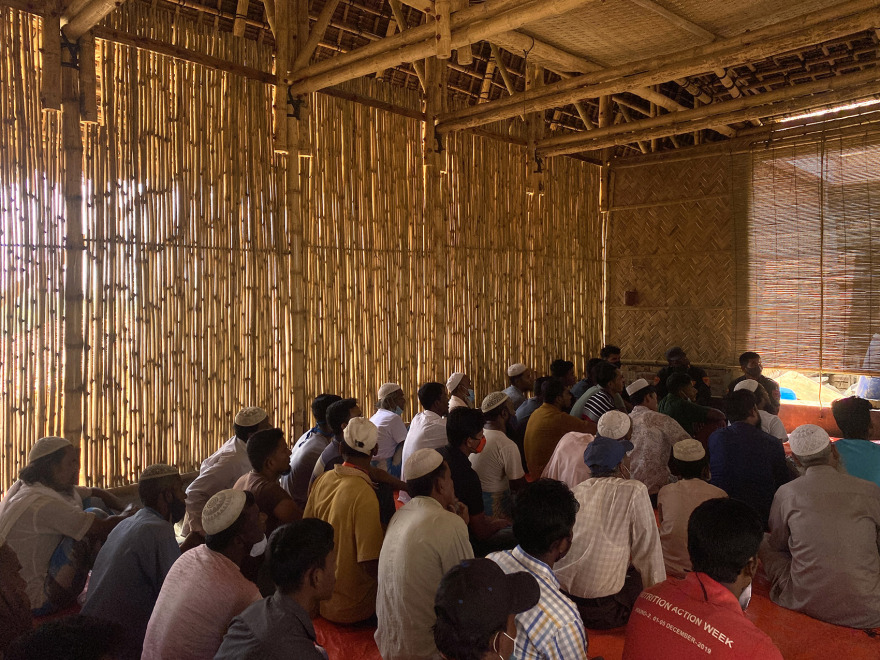
▼一个帮助难民寻回身份认同性的场所,A place for preserving identity of the refugees© Rizvi Hassan

▼来听音乐的孩子们,Children come and go to see, play and enjoy music© Rizvi Hassan

▼平面图,Plan© Rizvi Hassan

▼剖面图,Section© Rizvi Hassan

Design Team: Manuel Marques Pereira, Rizvi Hassan, Khwaja Fatmi, David Palazón, Shahirah Majumdar, James Okello Charles, Nersisian Dmytro, Rezaul Karim, Muhammad Rahul Karim, Hossain Ahammod Masum, Mustafa Kamal, Fouzia Reza, Tazrian Rahman, Sadya Mizan, Fawzia Bhuiyan, Nurul Amin, Mohammad Shibbili, Shofique Islam, Khushi, Shahida Win, Md. Yusuf, Md. Zaber, Nur Ali, Md. Hossain, Md. Faruk, Mohammad Noor, Nurul Islam, Imam Hossain, Ali Johor, Nur Alom, Shahabuddin, Khairul Amin, Soidul Islam, Shamsunnahar, Zakir, Md. Yakub, Rashidullah, Jamal, Idris, Sobur and others.
Construction Team: Rizvi Hassan, Ueda Haruka, Alberto Alcalde, Hasballah, Enayatullah Hemat, Md. Ali Mamun, Abdu Sukkur Bappy, Rafique Uddin, Tonmoy Bhattacharjee, Prantik Chakraborty, Bivuti Bhushon, Clint Kimmel
Client: Rohingya Refugees (Supported by IOM)
Engineering: Md. Ali Mamun, Abdu Sukkur Bappy, Alberto Alcalde, Hasballah
Landscape: Shamsunnahar, Md. Yakub, Mostafa Kamal and others.
Collaborators: IOM (International Organization for Migration) & the Rohingya Community





















南京喵熊网络科技有限公司 苏ICP备18050492号-4知末 © 2018—2020 . All photos and trademark graphics are copyrighted by their owners.增值电信业务经营许可证(ICP)苏B2-20201444 苏公网安备 32011302321234号
苏公网安备 32011302321234号客服
消息
收藏
下载
最近