

创作上传
VIP
收藏下载
登录 | 注册有礼
查看完整案例

收藏

下载

分享
老房子中的公共感
A Sense of Publicness Embodied by an Old House
项目对一栋位于京都的住宅进行了改造。原住宅约有一百年历史,经历了一代代传承、居住。基地中有一座培育多年的茂盛花园,中间是一栋日式二层小住宅。住宅是私人财产,然而由于它已经在这里存在了很长时间,已然成为了许多人生活的一部分。因此,建筑师为其赋予了一种有趣的公共氛围,比起采用开放设计的住宅更加开放和舒适。设计目标是在保留城市和街区所珍视的环境的同时,创造一种新的生活方式。
The project is a renovation of a house in Kyoto originally built around a hundred years ago, inherited and lived in from generation to generation. The site consisted of a rich garden that had been maintained over the years, with a little two-story Japanese style house situated in the center. The house is a private property, yet since it stood in this place for a long time it had essentially become a part of various people’s lives, thus acquiring somewhat of a curious air of publicness that was more open and welcoming than any house with an open design. The aim was to create a new lifestyle while preserving this environment that has been cherished by the city and its neighborhood.
▼建筑近景鸟瞰,closer aerial view of the house ©Yasuhiro Takagi

结构形成新的连接
A Structure that Generates New Connections
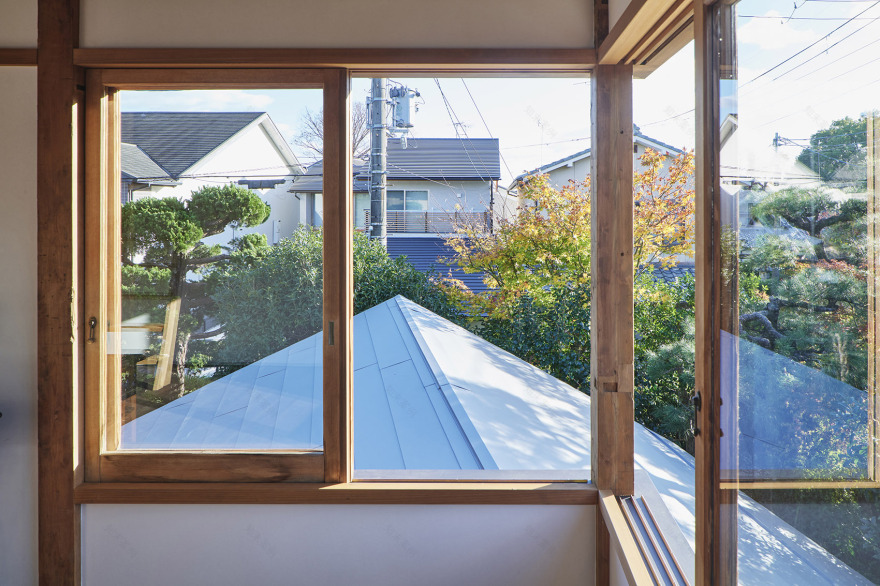
住宅供一对退休夫妇居住,他们希望获得一栋让人们可以聚集的房屋。过去,为了适应生活方式的变化,建筑中扩建了一些侧屋;鉴于此,设计决定新建五个木制侧屋空间,将两层高的主屋围在中间。客厅被桂花树环绕;厨房天花高耸,将自然光带入室内;茶室紧邻日本枫树,如同其附属;明亮的楼梯间充满阳光,书房则可以看到星空;卫生间被柔和的光线穿透。上述五个侧屋空间不仅是连接老屋和花园的界面,也起到新的结构作用,如飞扶壁一般支撑原有的主楼。借此,老建筑一层无需设置抗震墙。这些扩建的侧屋与其说是附加元素,不如说其本身就是一套结构形式,为整栋建筑创造了一种新的开放感觉。
▼鸟瞰,围绕主楼新建五栋侧屋
aerial view, five lean-to spaces constructed around the main building ©Yasuhiro Takagi


The residence is for a retired couple, yet what the clients desired was a house where people could gather. Since the lean-to extensions of the original house had been added and renovated to accommodate changes in lifestyle, the decision was made to newly construct five wooden lean-to spaces, leaving only the two-story main house in the center. Each lean-to is constructed in correspondence to the garden’s environment. A living room surrounded by osmanthus trees, a kitchen with a high ceiling where sunlight enters, a tea room positioned like an annex next to the Japanese maples, a bright staircase filled with light and study with a view of the starry sky, a bathroom permeated by soft rays of light –these five lean-to spaces, while serving as interfaces connecting the old main house with the garden, are also new structures that support the existing main house like flying butresses. As a result, the first floor of the existing main house is relieved from the need for seismic resistant walls. The lean-to extensions that per se would be considered but an additional element, is in itself a structural format that creates a new sense of openness throughout the entire building.
▼侧屋与二层高的主楼,lean-to space to the two-story main house ©Yasuhiro Takagi

▼花园与侧屋,lean-to space and the garden ©Yasuhiro Takagi

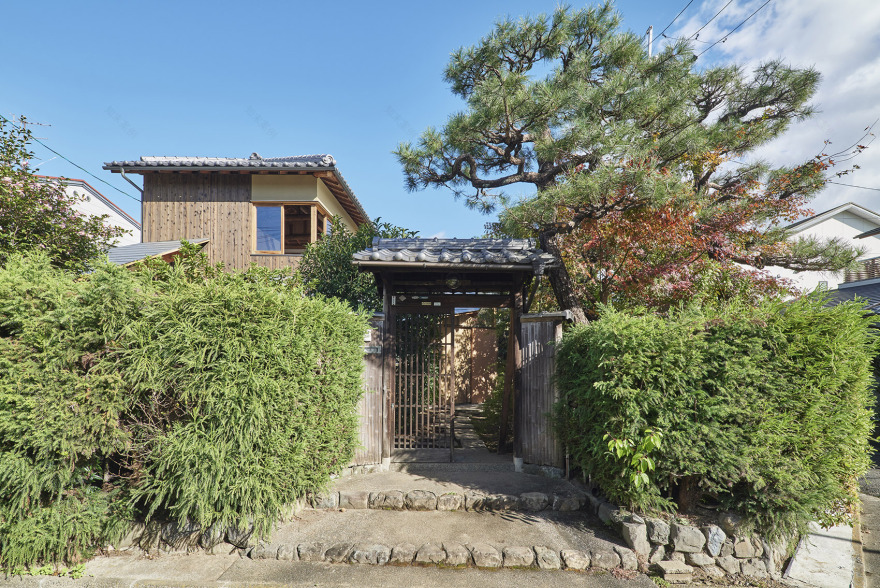
▼入口庭院,entrance garden ©Yasuhiro Takagi
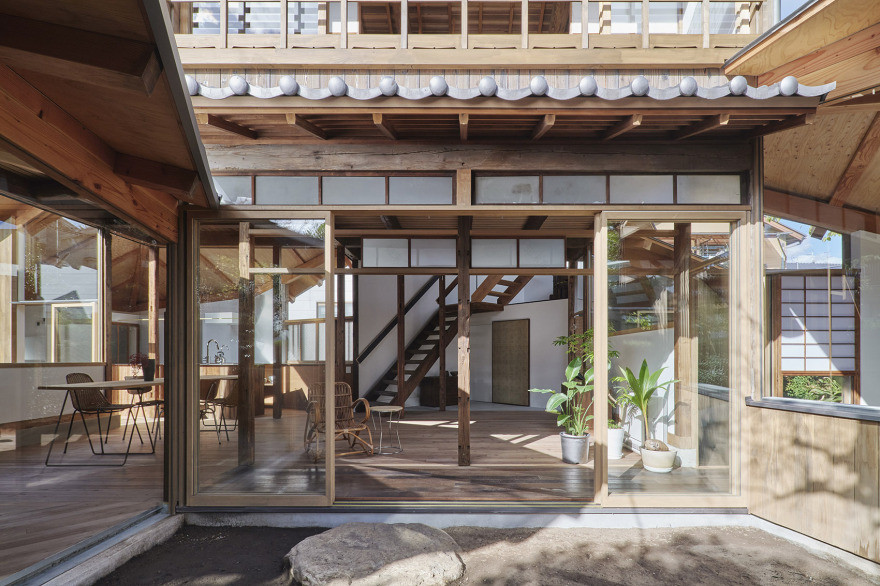

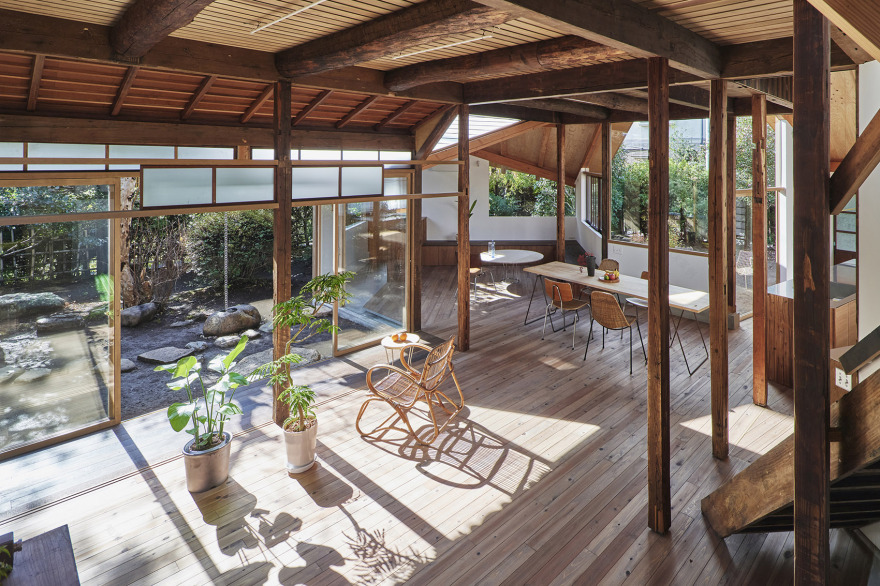
▼客厅和餐厅,living and dining space ©Yasuhiro Takagi

▼被树木环绕的空间,space surrounded by trees ©Yasuhiro Takagi


▼从餐厅看向楼梯间,view to the staircase from the dining space ©Yasuhiro Takagi

▼明亮的楼梯间,staircase filled with light ©Yasuhiro Takagi

▼茶室,tea room ©Yasuhiro Takagi

散布在基地各处的感观碎片
Fragments of Impressions Scatterd Throughout the Site
项目的整个结构包括主屋,新建的侧屋空间以及老花园,设计师在每个场所中使用丰富而精妙的布局,试图消解这一主体结构。旧的楼梯间、门廊和家具被设置在新旧区域之间,突破二者的边界。不仅如此,其他原有的素材,如老的配件、壁龛式邮筒、灯具等被运用在了新建空间;老花园中的石块和树木也被移种到了新花园之中。设计将花园、建筑和家具放在同样重要的位置上,基地上围绕宽敞主楼呈现的环境碎片被重新编排,进而叠合成丰富的层次,贯穿整个空间。举例来说,当你跨过原有的大门,便进入了新建的侧屋;透过侧屋中从旧儿童房移来的配件,你会看到新花园中的一棵杜鹃树;而这棵树木其实来自于过去的空间。通过这样的设计,建筑师相信可以创造出新的连接点,回应不同人对这栋房屋的印象,最终呈现出一种新的“开房住宅”。
▼丰富的空间层次,overlapping layers of impressions in the space ©Yasuhiro Takagi

▼旧构件的使用,old fittings ©Yasuhiro Takagi


▼二层卧室,bedroom on the second floor ©Yasuhiro Takagi

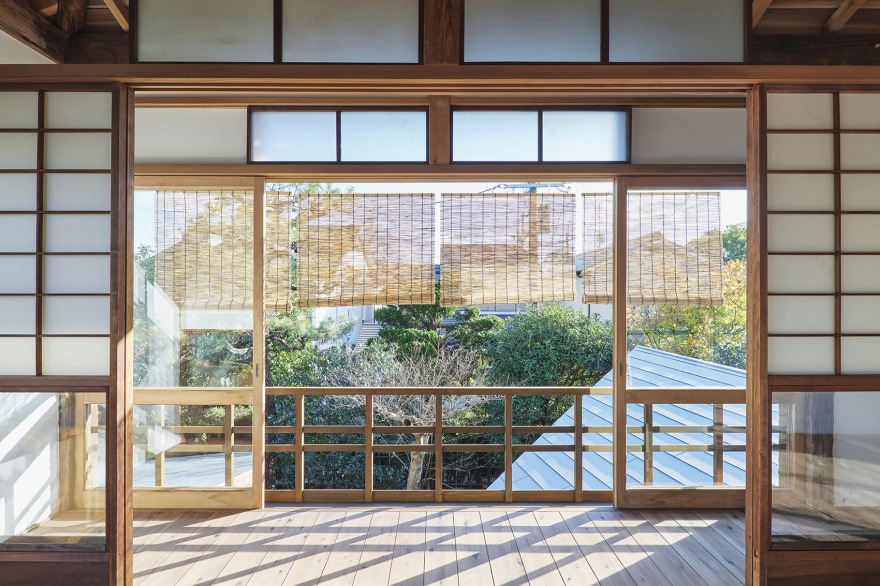
▼从阳台看向花园和侧屋,view to the garden and the lean-to spaces from the balcony ©Yasuhiro Takagi
▼夜景,night view ©Yasuhiro Takagi

▼总平面图,site plan ©Mandai Architects

▼一层平面图,first floor plan ©Mandai Architects

▼二层平面图,second floor plan ©Mandai Architects

▼立面图,elevation ©Mandai Architects

Project Name: Shiiba House
Completion Year: 2021
Site area: 357.73sqm
Building area: 93.50sqm
Total floor area: 131.95sqm
Project Location: Kyoto, Japan
Program / Use / Building Function: Private House
Lead Architects: Motosuke Mansai
Design Team: Masashi Itaya
Collaborators: Structural engineer Kenichi Inoue


南京喵熊网络科技有限公司 苏ICP备18050492号-4知末 © 2018—2020 . All photos and trademark graphics are copyrighted by their owners.增值电信业务经营许可证(ICP)苏B2-20201444 苏公网安备 32011302321234号
苏公网安备 32011302321234号客服
消息
收藏
下载
最近