

创作上传
VIP
收藏下载
登录 | 注册有礼
查看完整案例

收藏

下载

分享
AB+AC Architects设计了一个文化中心,旨在推进通过艺术实现创新和自我疗愈。项目位于里斯本,是一个充满光和自然元素的空间,让人们脱离繁忙的城市日常生活,利用丰富的活动,从运动和艺术合作、到近距离接触国际艺术家,塑造新的、更有意义的连接。
AB+AC Architects design a cultural centre dedicated to promote innovation and self-healing through the arts: a space of light and natural materials where the city of Lisbon is invited to detach temporarily from the urban chaos of everyday life and build new, more meaningful connections, thanks to a variety of activities ranging from movement and artistic co-creation, to immersive experiences with international artists.
▼空间概览,overall view of the space ©Ricardo Oliveira Alves

在第二波新冠疫情的高峰时期,AB+AC Architects受到美国非营利组织Open Hearts的委托,设计了他们的第一家关注精神集中、整体学习和合作创作的体验中心。项目位于一栋十九世纪大楼的一层,地处Bairro Alto历史街区的狭窄街巷中。设计需要将一个阴暗无趣的商业单元转变成一个明亮的空间,唤起使用者内心的平静和积极想法。
In the midst of Covid-19’s second wave, AB+AC Architects is commissioned by the American non-profit organisation, Open Hearts, to design its first experiential centre for conscious gathering, holistic learning and co-creation. The site is located at on the ground floor of a 19th century building in a narrow alley within the historical neighbourhood of Bairro Alto, carrying with it the challenge of turning a dark and inactive commercial unit into a space of light, dedicated to evoke calmness and positive thinking in its users.
▼平面图,plan ©AB+AC Architects

项目的灵感来自于shala这一神圣的概念,该词在梵文里意为家,即人们聚集在一起练习瑜伽、学习和成长的场所。在这个项目里,shala的含义超越了其原始的范畴,被设计师重新诠释成为了一个带有艺术家住宅的公共之家。项目中设置了一系列房间,从沿街的多功能沙龙区到带有开放厨房的宴会区,人们可以获得极为公共的体验;走上楼梯,则进入了私密的露台,地面上铺有火山卵石,空间被茂盛的热带植物环绕。在公共和私密区域之间是一个狭长的休息室,这个超过八米长的空间采用漫射灯光系统,为艺术聚会和个展创造了理想的环境。
The project takes inspiration from the sacred concept of shala – a word that in Sanskrit means home – where people commonly gather to practise yoga, learn and grow. Now the shala expands beyond the initial purpose and is reinterpreted in a communal home with one in-house artist residency. Its layout is thought as a sequence of rooms that flow from a very public experience in proximity to the street with the multi-purpose main saloon to a convivial zone where the open kitchen extends up the stairs into an intimate patio inhabited by tropical plants and paved with volcanic stone pebbles. In between the public and private areas is the lounge, a long and narrow space with a diffuse lighting system that stretches over eight meters and provides an ideal environment for art gatherings and solo exhibitions.
▼多功能沙龙区,multi-purpose saloon ©Ricardo Oliveira Alves

▼带有厨房的宴会区,convivial zone with a kitchen ©Ricardo Oliveira Alves

▼开放厨房,open kitchen ©Ricardo Oliveira Alves

▼从厨房看向沙龙区,view to the saloon from the kitchen ©Ricardo Oliveira Alves

▼从沙龙区看向休息区,view to the lounge from the saloon ©Ricardo Oliveira Alves
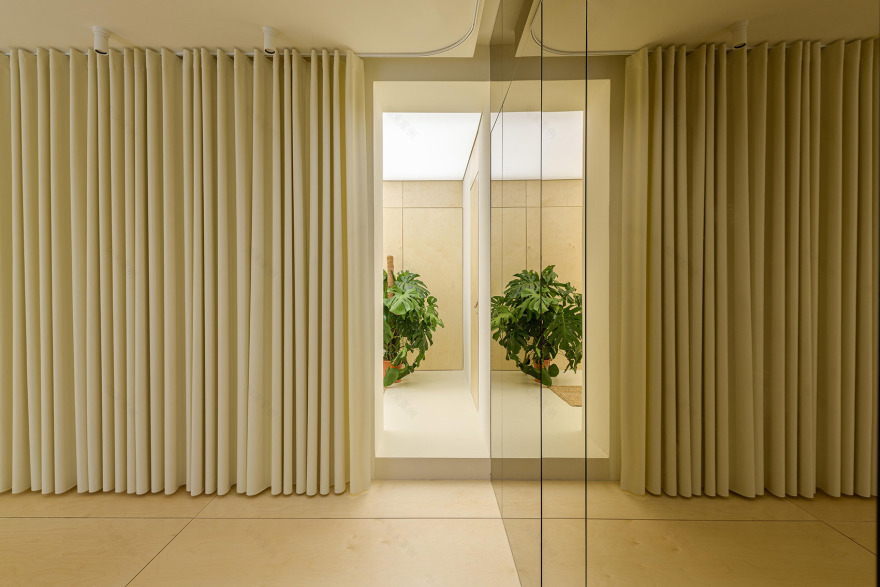
▼可以作为画廊的休息区,lounge which can be used as a gallery ©Ricardo Oliveira Alves


▼私密的露台,intimate patio ©Ricardo Oliveira Alves


为了强调开放平面和从一个空间到另一个空间的连续流线,设计师在门的设计上投入了特别的关注。历史建筑中的石灰石拱门与由桦木制成的富有几何感的现代门洞产生对话。木板后隐藏着通往一居室住宅的入口,Open House可以招待希望在这里创作作品并与社区分享的艺术家居住于此。
To emphasise the open plan and continuous circulation from one space to the other, special attention is given to the design of the thresholds; here the existing limestone arch of the historical building is placed in dialogue with a more contemporary and geometric portal cladded in birch wood. Camouflaged among these panels, is the access to a one-bedroom residency where Open Hearts can host any artist who wishes to produce and share their work with the community.
▼隐藏的住宅区,hidden residency ©Ricardo Oliveira Alves
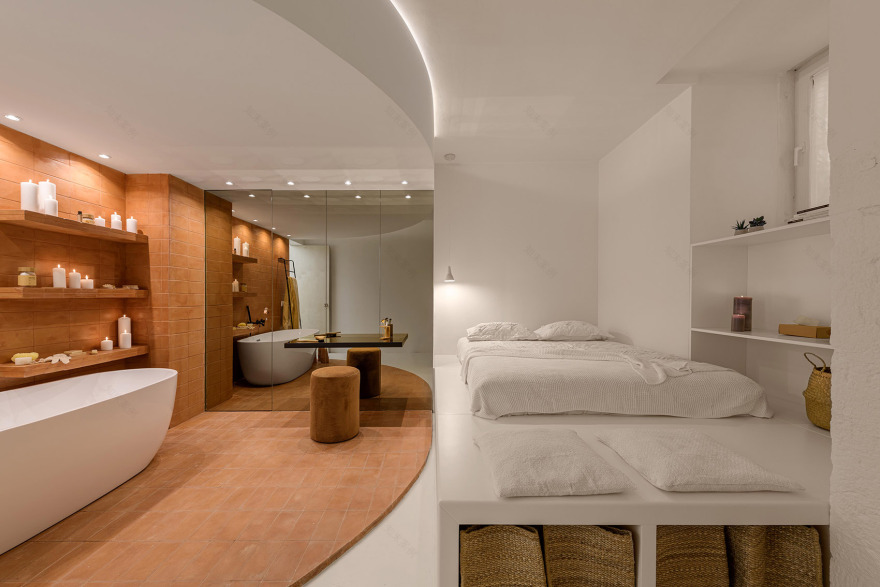
▼卧室一角,corner of the bedroom ©Ricardo Oliveira Alves

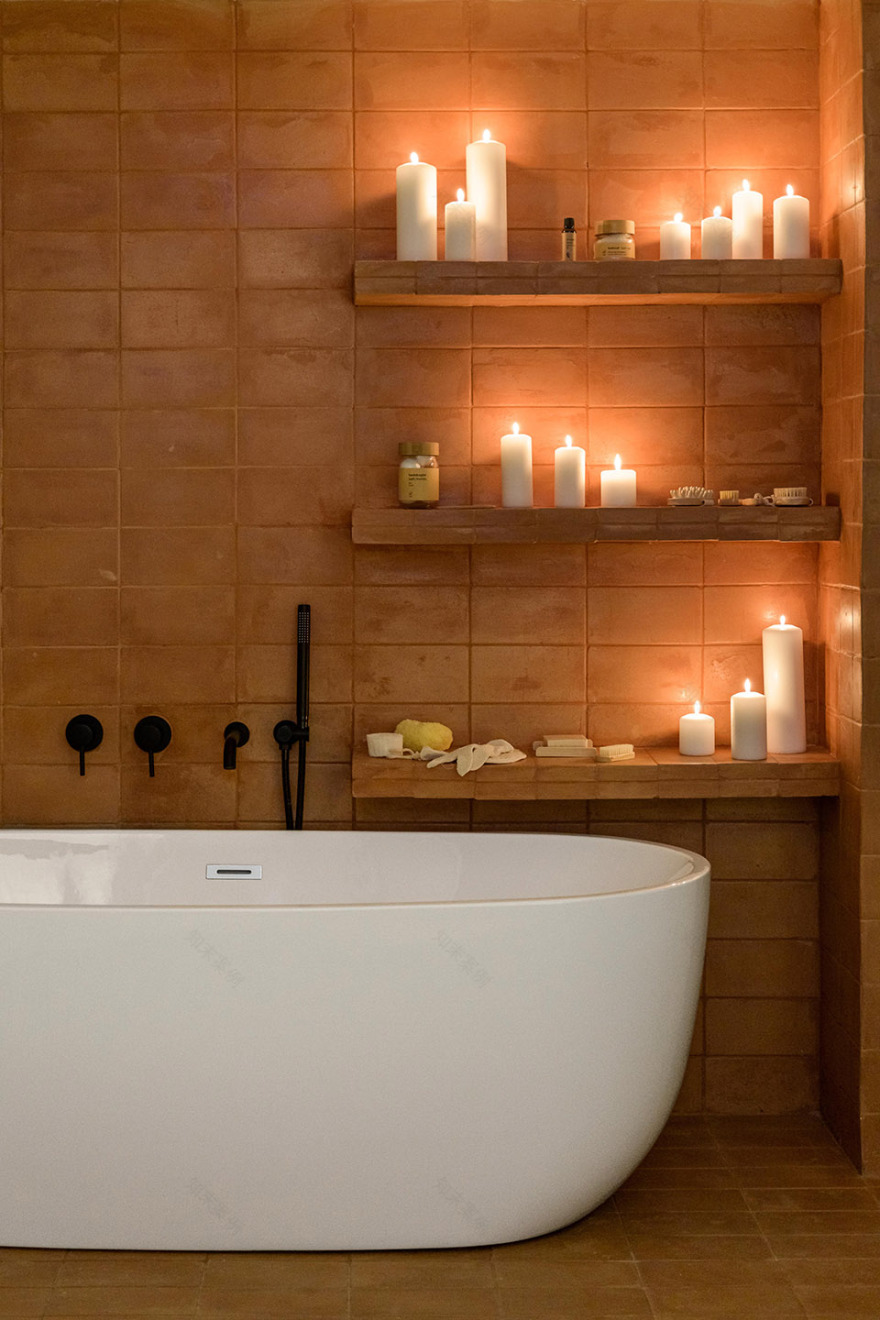
▼通过材料划分的浴室,bathroom defined by materials ©Ricardo Oliveira Alves

▼浴室细部,details of the bathroom ©Ricardo Oliveira Alves

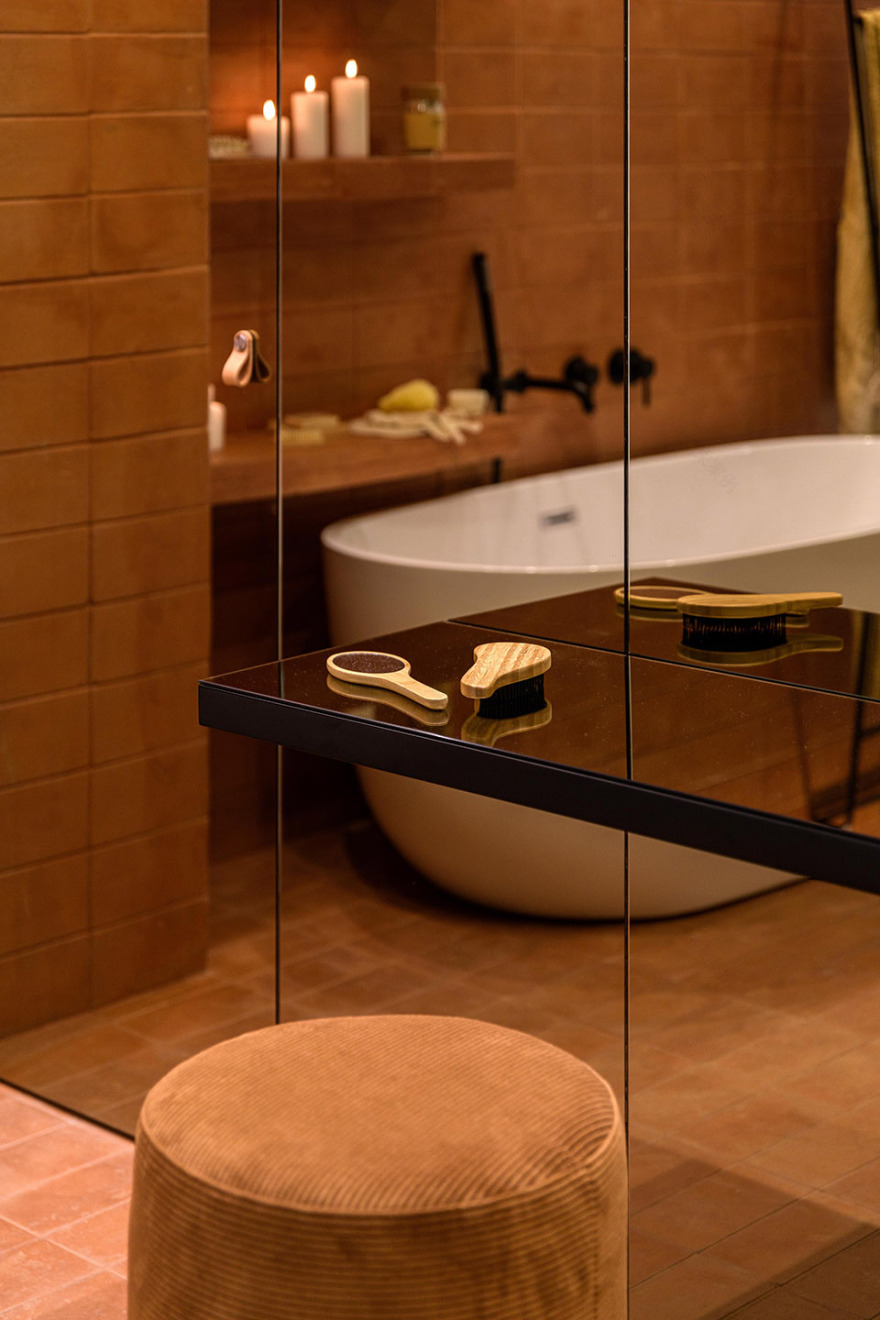
考虑到一整天的使用,中心的布局需要体现灵活性和可变性。因此,设计师设计了隐藏在铜镜墙面后的储藏间,并用连续的灰白色人造皮革窗帘包裹主要沙龙区,使得空间可以被转变成不同样貌,以适应从古典舞、瑜伽和冥想训练、多媒体艺术展,到疗愈学习、一对一指导,再到大型公共对谈等丰富多样的活动需求。
▼不同空间布局,different space layout ©AB+AC Architects

The organisation of the entire centre revolves around the necessity for flexibility and adaptability throughout the day. Therefore, design solutions such as storage compartments hidden behind bronze mirror walls or continuous curtains in off-white vegan leather wrapping the main saloon, enable the centre to transform into multiple configurations suited for a vast array of activities that span from ancient dances, yoga and meditation practices, breath courses, culinary art experiences, creative writing workshops, film screenings, multi-media art exhibitions, therapeutic sessions, one-on-one coaching, public talks at large.
▼灵活可变的空间,flexible space ©Ricardo Oliveira Alves


在这个高速发展的世界中,惊人的科技发现遇上了严重的健康、气候和环境灾害。为了回应这个现状,Open Hearts文化中心的设计将关注点放在了如何更加清醒地塑造我们的居住空间上。作为AB+AC Architects正在进行的研究的一部分,项目使用木材、石材和有机涂料等自然元素,在极简的选择下创造了一个颜色温暖的空间。与上世纪德国“自给住宅”的原则不同,建筑师希望将建筑作为一种工具,通过聪明的设计策略激发简洁而平衡的生活方式,邀请使用者反思什么才是幸福的真正需求。
Conceived as a response to a fast-paced world where amazing technological discoveries are met with severe health, climatic and environmental crises, the design of the Open Hearts cultural centre pivots around the discussion on more conscious ways of building the spaces we inhabit. As part of an on-going research run by AB+AC Architects, the project opted for the use of natural materials like wood, stone and organic paints tied together by the choice of a minimalist, yet warm colour palette. Far from any principle connected to the German existenzminimum of the past century, the architects intend to employ architecture as a tool to stimulate an uncluttered and balanced way of living through smart design solutions that invite the user to reflect on what is truly essential for our well-being.
▼细部,details ©Ricardo Oliveira Alves

Architect: AB+AC Architects
Client: Open Hearts Lisbon
Program: Cultural space
Scope: Interior renovation, furniture design, styling
Area: 120 m²
Year: 2021
Photograph: Ricardo Oliveira Alves


南京喵熊网络科技有限公司 苏ICP备18050492号-4知末 © 2018—2020 . All photos and trademark graphics are copyrighted by their owners.增值电信业务经营许可证(ICP)苏B2-20201444 苏公网安备 32011302321234号
苏公网安备 32011302321234号客服
消息
收藏
下载
最近