

创作上传
VIP
收藏下载
登录 | 注册有礼
查看完整案例

收藏

下载

分享
“庭院是天空流入屋舍的通道,无声无息。”博尔赫斯曾经写下这样的诗句,同样的描述,也适用于“大少普洱茶室”。
“The courtyard is the passage from the sky to the house, silent.” Borges once wrote such a poem, and the same description can be applied to “Tea & Zen Pu’er teahouses “.
▼空间概览,overall view of the space ©王强

茶室位于广州北京路步行街附近的一条老街,红色火山岩的外立面,有态度而又谦逊地伫立在人来人往的街道边。
Tea house is located in an old street near Beijing Road Pedestrian Street in Guangzhou. The facade of red volcanic rock stands on the side of the street with attitude and modesty.
▼项目立面,facade of the project ©王强
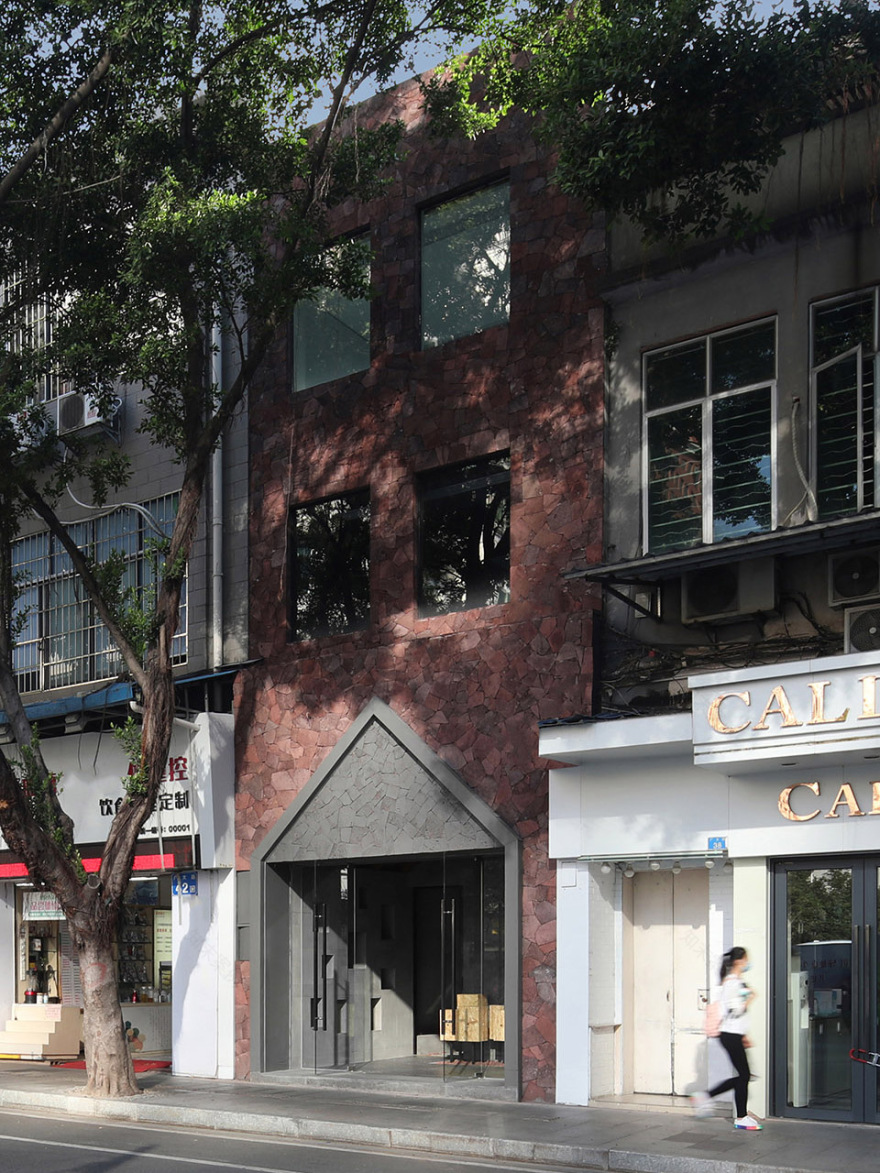

茶室宽4.3米,长20米,高为三层半。两边紧紧挨着两栋房子,只有前后有窗子。在如此狭长的建筑空间里,如何设计光线与空气,又布局合理,成为首要设计重点。
Tea house is 4.3 meters wide, 20 meters long and three and a half stories high. There are two houses next to each other, only the front and back windows. In such a long and narrow building space, how to design light and air, and reasonable layout, has become the primary design focus.
▼剖轴测图,axonometric section ©黑白木设计

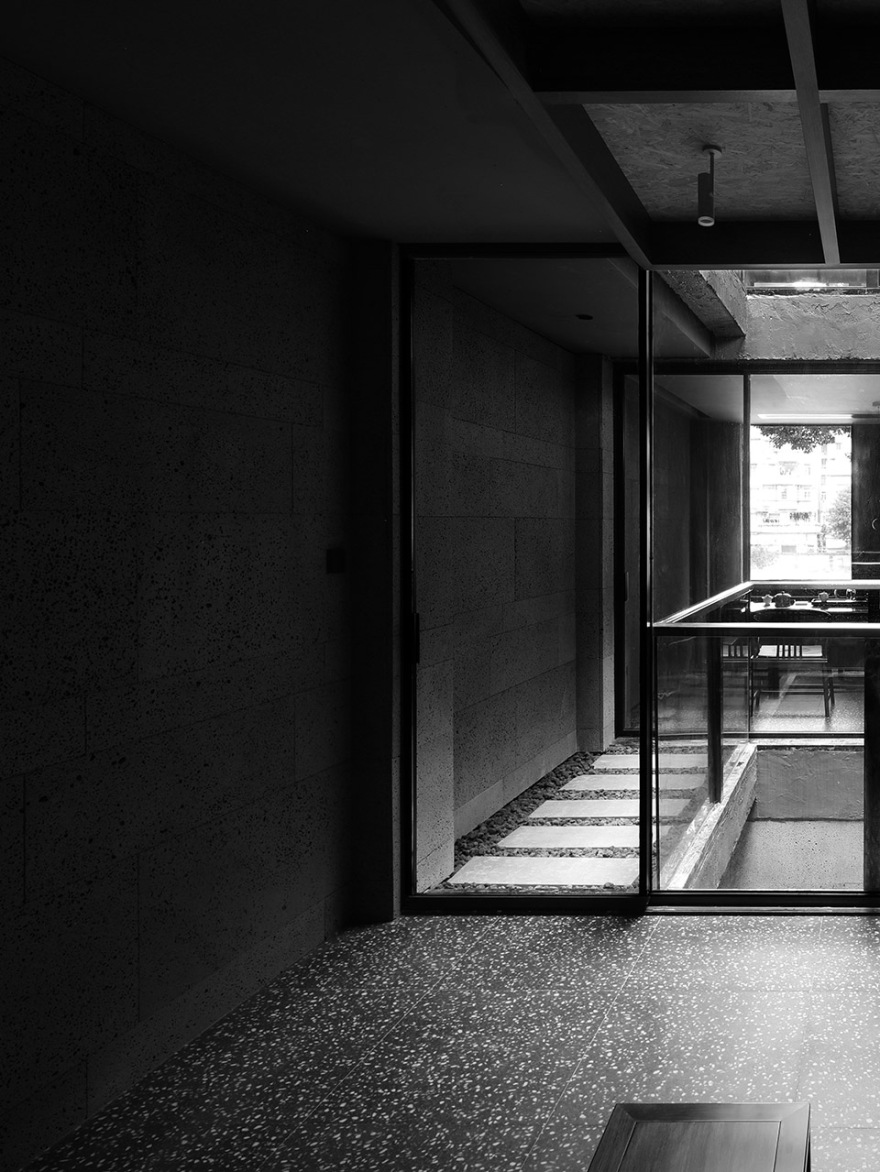
设计师希望设计一种在都市中感受到自然的房子。于是在茶室的1/3处,设计了一个长方形的天井及中庭。中庭两边是通道,让不大的空间也变得流动起来。在这茶室里,可以感受四季的流转和光线的游移,可以体验阳光的普照和雨水的洗礼。
Designers want to design a house that feels natural in the city. So a rectangular patio and atrium were designed at 1 / 3 of the teahouse. There are passageways on both sides of the atrium, which makes the small space flow. In this tea room, you can feel the circulation of the four seasons and the swimming of light, and you can experience the sunshine and the baptism of rain.
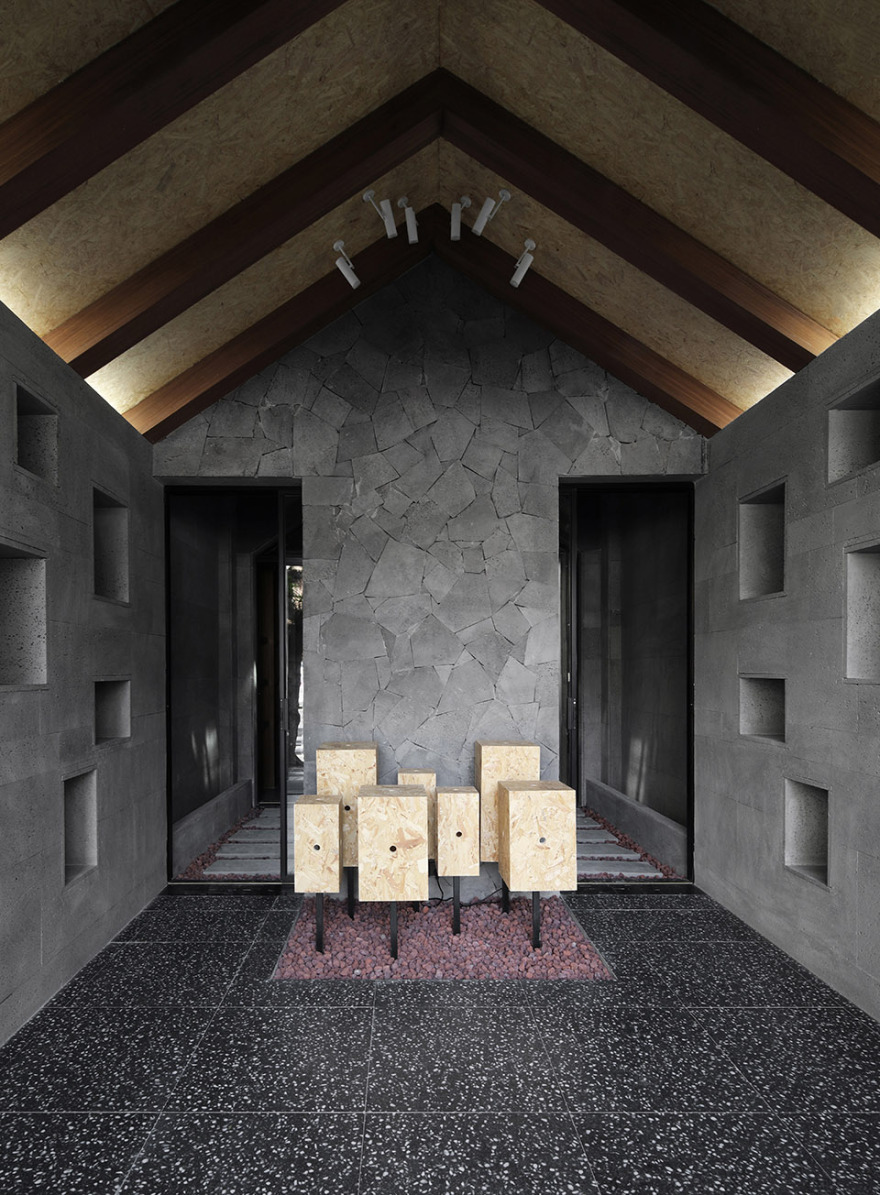
▼入口空间,entrance space ©王强
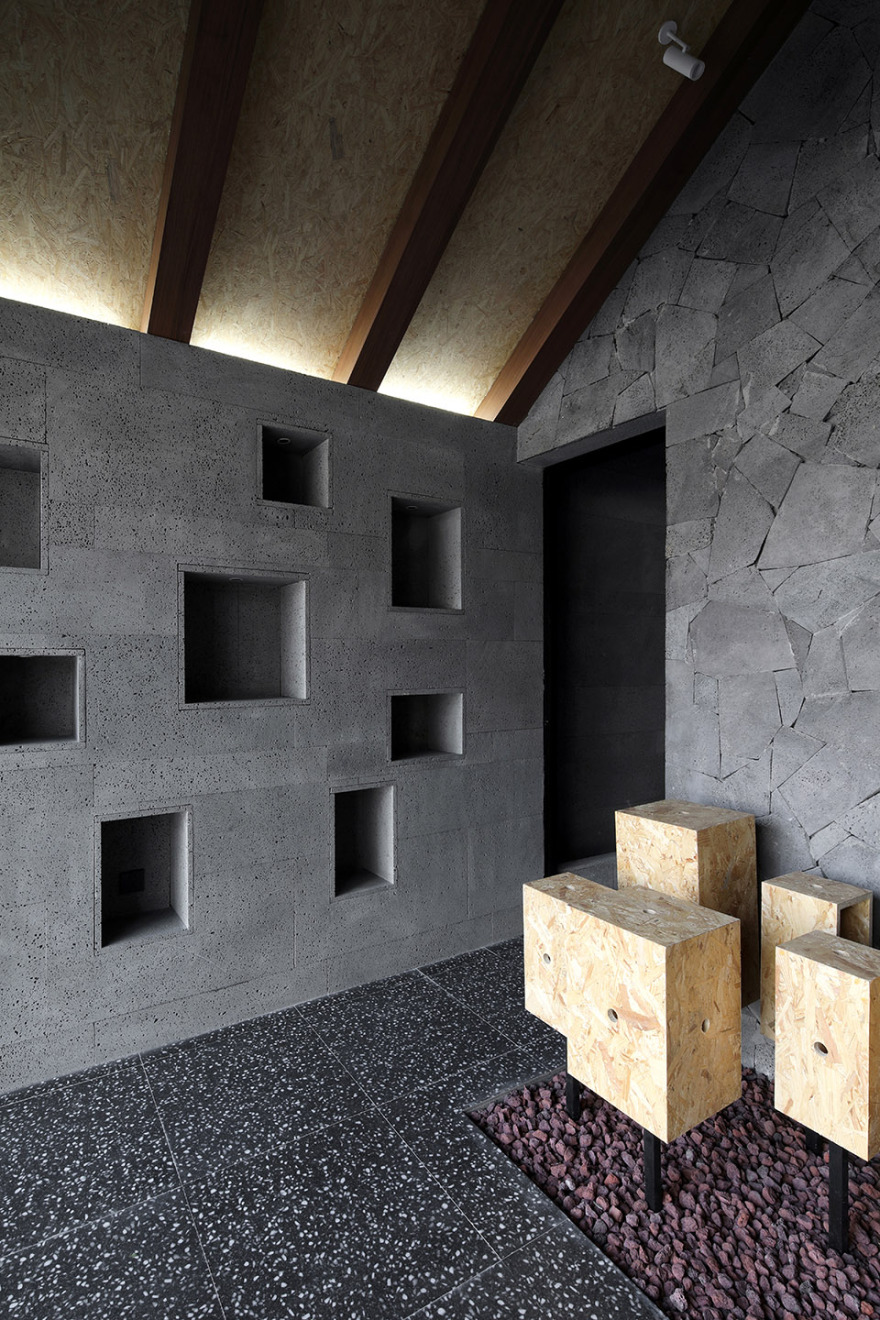
▼天井,两侧是通道,atrium with passageways on both sides ©王强

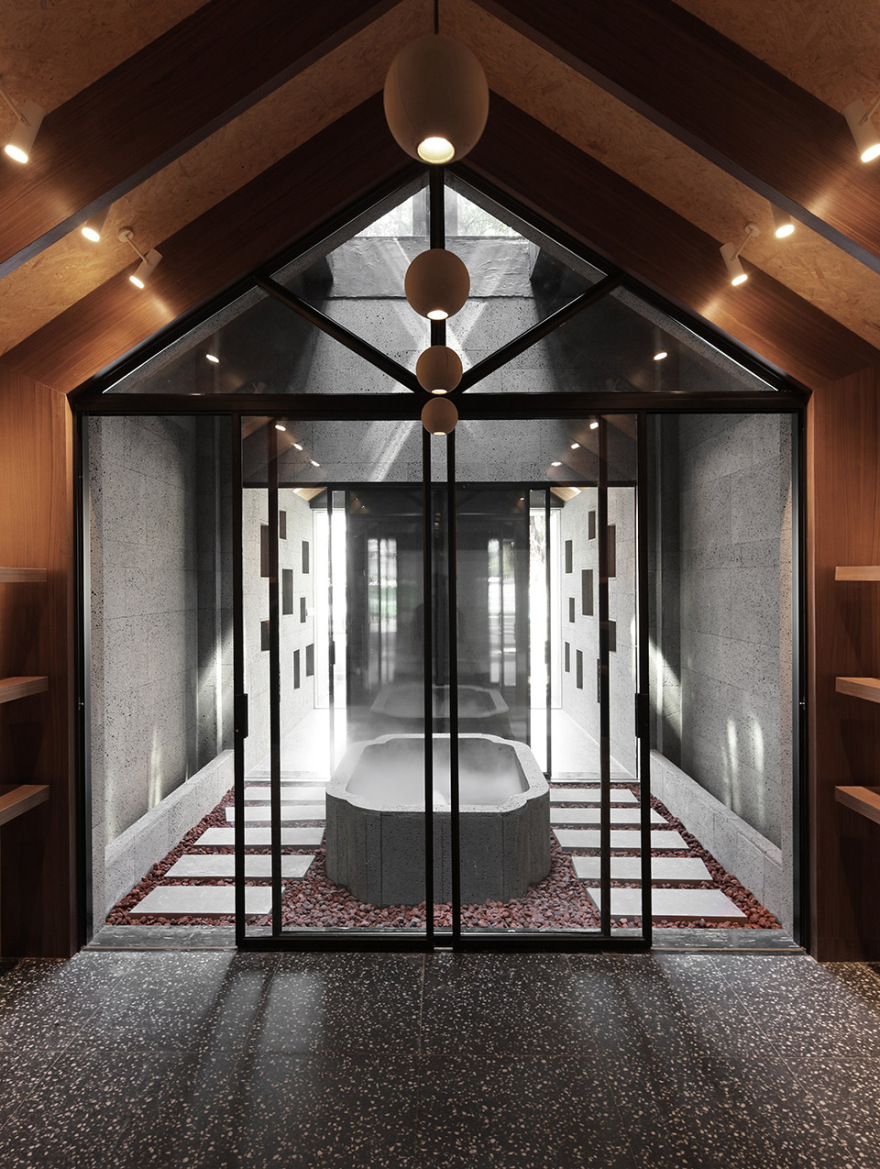
以自然拼贴的形式建造的外立面,融合紫砂壶一样的气质,俨如一个茶壶。三角形屋顶式的开口,从大门一直延伸进整个一层接待空间。而室内采用大量黑色火山岩和水磨石,点缀胡桃木,营造自然质朴的表情。
The facade built in the form of natural collage is like a teapot with the temperament of purple clay pot. The triangular roof opening extends from the gate into the reception space on the first floor. The interior uses a large number of black volcanic rocks and terrazzo, decorated with walnut, to create a natural and simple expression.
▼三角形屋顶式开口,从大门延伸至接待空间,triangular roof opening extends from the gate to the reception space ©王强


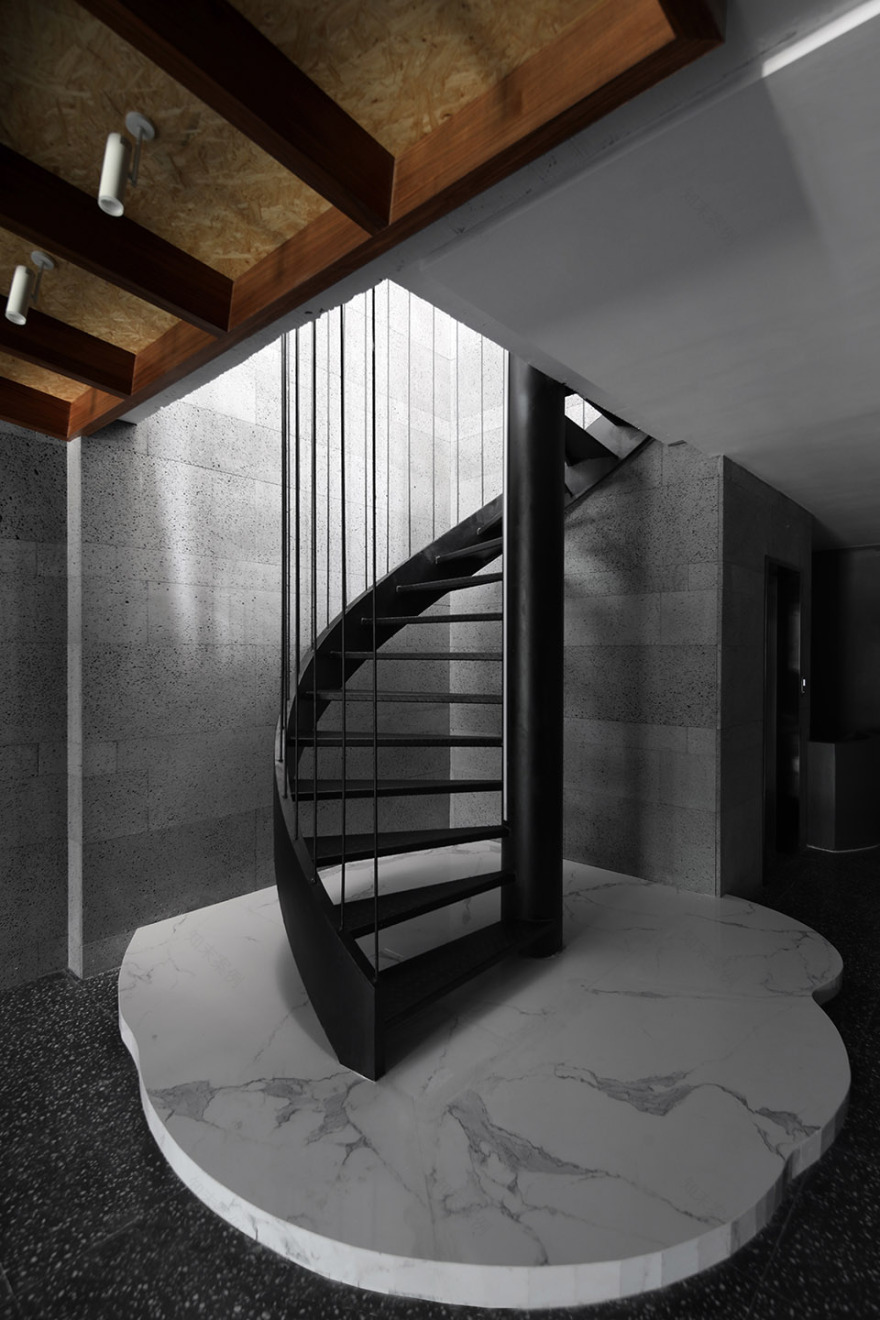
▼接待区通向二层的楼梯,staircase connecting to the second floor ©王强


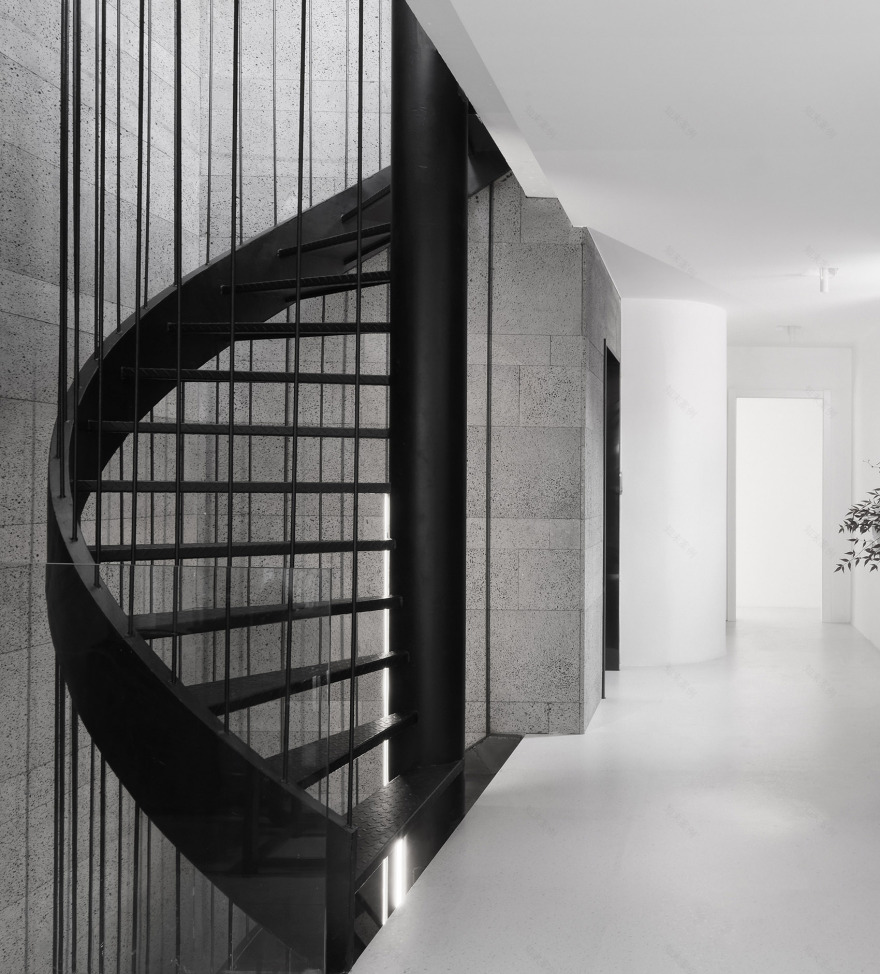
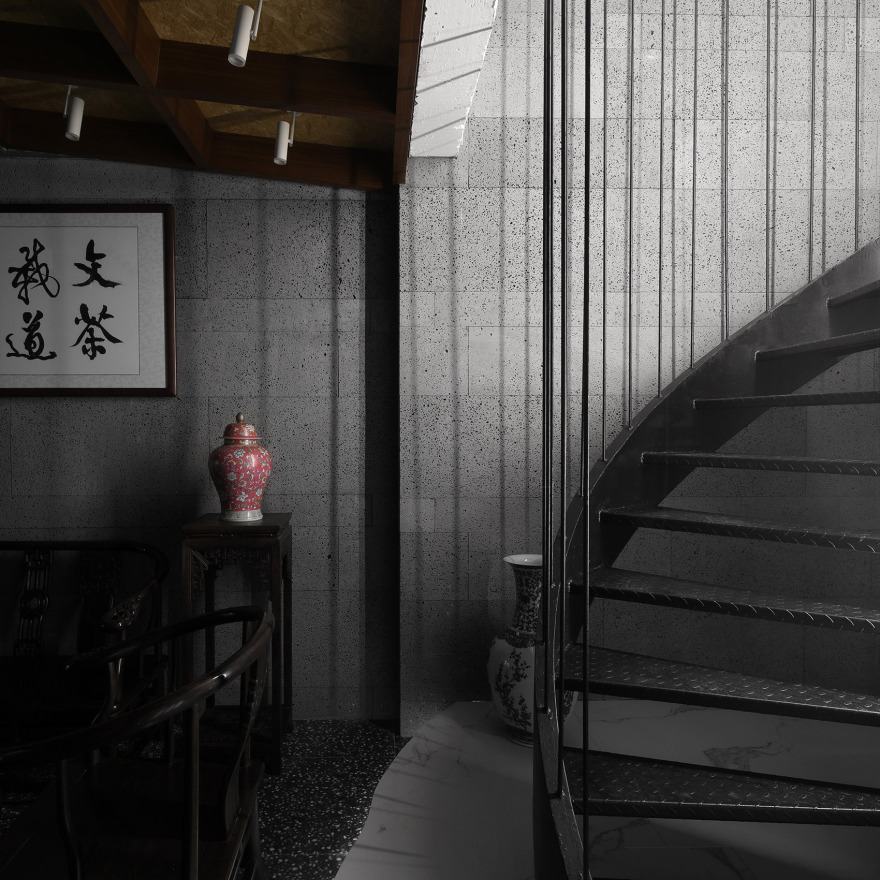
▼连接二层到四层的旋转楼梯,spiral staircase connecting the second floor to the fourth floor ©王强
无论是“琴棋书画诗酒茶”,还是“柴米油盐酱醋茶”,茶从来没有远离中国人。生在广东,茶是故乡街坊再平常不过的日常生活。而讲究喝茶到了极致,便成了“茶道”。空间与时间,水与火候,器具与温度,都是不一样的茶汤滋味。
Whether it’s “music, chess, calligraphy, painting, poetry, wine, tea” or “firewood, rice, oil, salt, soy sauce and vinegar tea”, tea has never been far away from the Chinese people. Born in Guangdong, tea is the most common daily life in the neighborhood of hometown. And pay attention to drinking tea to the extreme, it has become the “tea ceremony.”. Space and time, water and heat, utensils and temperature, are not the same taste of tea.
▼二层茶室,tea room on the second floor ©王强

▼三层茶室,tea room on the third floor ©王强

▼屋顶露台,roof terrace ©王强

道法自然的精神境界与茶虚静、恬淡的品行相契合。茶室实际上并没有这么大,使它显得大的是阴影、对称、漫长的岁月、孤寂和那一杯茶。
The spiritual realm of Taoism is in accordance with the tea’s quiet and tranquil character. The teahouse is not really that big. What makes it look big is the shadow, symmetry, long years, loneliness and the cup of tea.
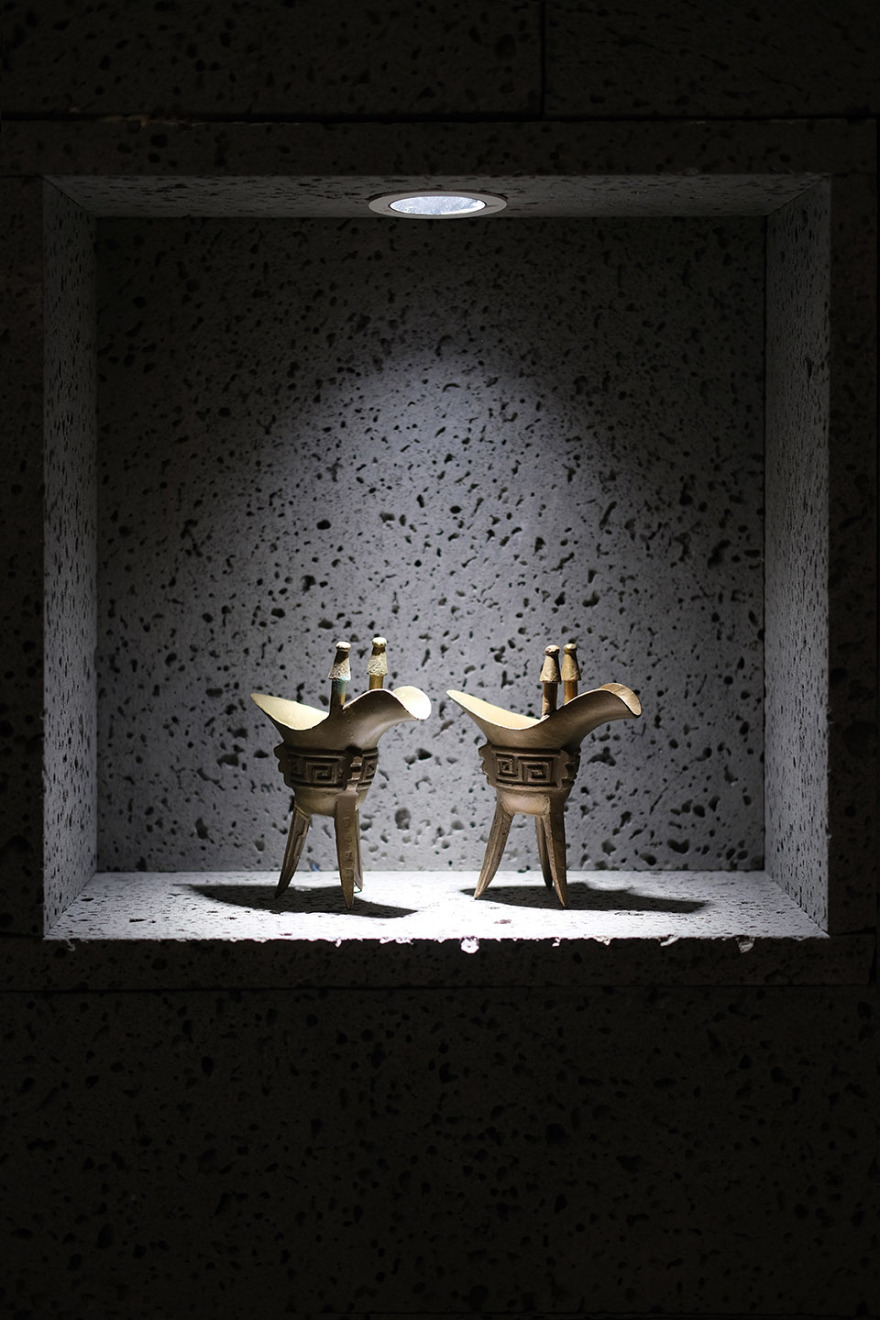
▼细部,details ©王强

设计师通过一些形式有序化,实现了一种秩序。这秩序是他精神的纯创造,他用这些形式强烈的影响我们的意识,激发造型的激情。而创造的协调,在我们心里唤起深刻的共鸣,引起了我们思想和心灵的各种悸动。这时我们感受到了诗意的美。
The designer realizes a kind of order by arranging some forms.This order is the pure creation of his spirit. He uses these forms to strongly influence our consciousness and stimulate the passion of modeling. The coordination of creation arouses deep resonance in our hearts and causes all kinds of palpitations in our minds and hearts. At this time, we feel the beauty of poetry.
▼平面图,plans ©黑白木设计








南京喵熊网络科技有限公司 苏ICP备18050492号-4知末 © 2018—2020 . All photos and trademark graphics are copyrighted by their owners.增值电信业务经营许可证(ICP)苏B2-20201444 苏公网安备 32011302321234号
苏公网安备 32011302321234号客服
消息
收藏
下载
最近