

创作上传
VIP
收藏下载
登录 | 注册有礼
查看完整案例

收藏

下载

分享
乌镇谭家湾遗址是长江下游太湖流域新石器时代早期的马家浜文化遗址之一。几千年的稻作农田恰是场地的印记与符号。如今,互联网时代的媒体已经占据了现代人的生活缝隙,许多文化遗产在现代化媒体的刺激下逐渐淡出人们的视野,丢失本真的一种传承媒介。新技术的充斥似乎无法弥补人们的一些精神空洞,城市喧嚣忙碌的生活与日益严峻的生态环境让人们时常萌生回归原始的冲动。
当我们身临乡野,眼前的这片稻田,就像是原始文化遗产给未来生活的一场奇妙的冲击。时间的长度我们无法感知,稻作文化又呈现出失意的态势。我们希望最终的建筑就像是时间的容器,成为场地与人之间关联的媒介,衍生出时间的维度与在场的记忆。
▼项目外观,external view of the project ©陆伟杰


Featuring the time-honored rice-growing farmland, the Tanjiawan in Wuzhen is regarded as one of the Majiabang cultural sites in the early Neolithic Age in the Taihu Basin on the lower reaches of the Yangtze River. With the emergence of Internet, people’s lives have been inundated with multifarious media messages, thus many cultural heritages have be passed into silence gradually. Modern media, as a new technology for cultural inheritance, seems unable to make up for some spiritual demands of people due to the loss of nature in cultural continuity. The hustle and bustle of the city and the increasingly-severe ecological environment trigger people’s impulsion of returning to the primitive life.
When we are In the countryside, standing in front of the rice fields, it is like a fantastic shock to the future life from the primitive cultural heritage. We can not perceive the length of time, while the rice culture is in the decline stage. It is our hope that the finished building, just like the vessel of time, relates the site with the human beings, with demonstrating the time span and the immemorial memories.
▼建筑与景观,building and landscape ©杨力维

场地意向的驱动
Design vision
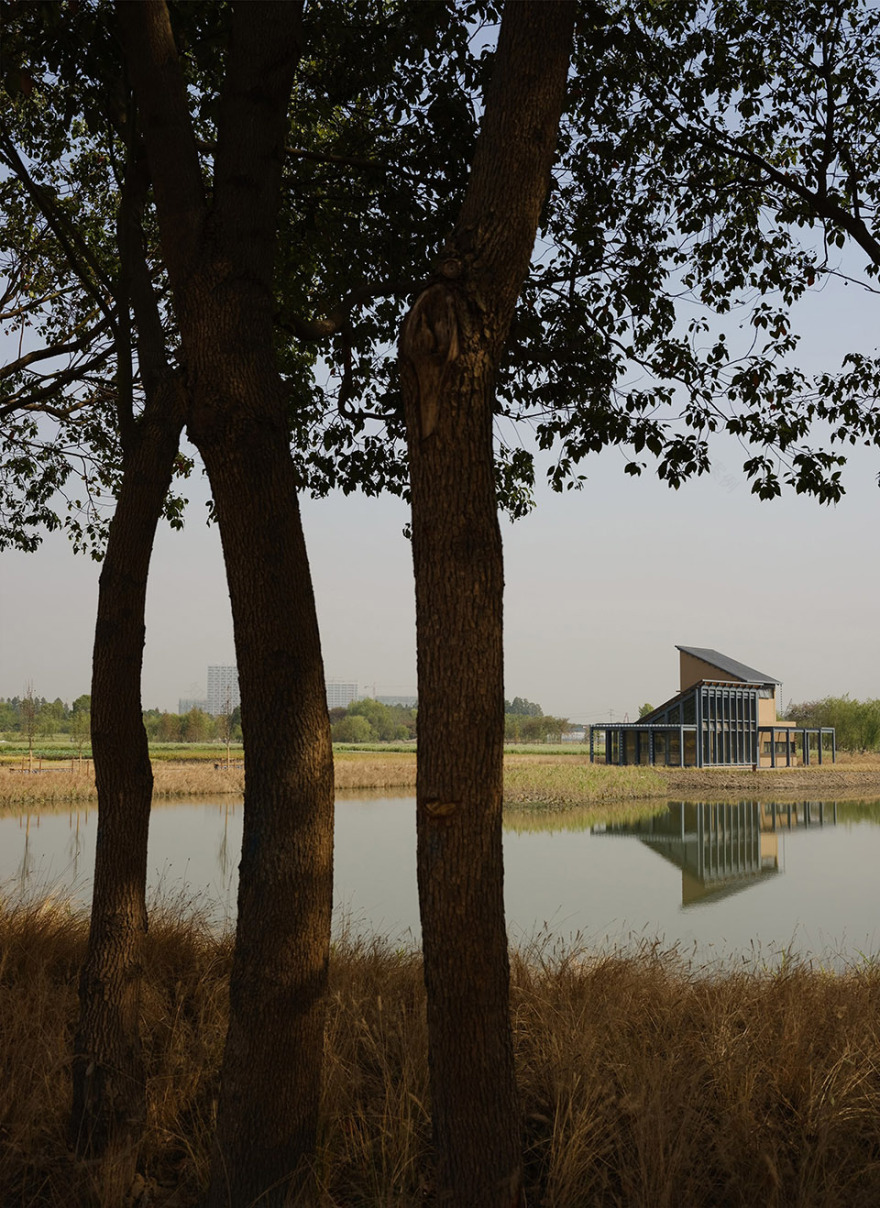
我们的设计初衷其实来自于场地传达的一种意象。成片金黄稻田呈现的旷达感,厚实感似乎保留着一切初生事物给人欢愉的感受。我们希望这个书局置身于周围现代高楼住宅的氛围之外,带着原始的隐喻,以一种冲破千年稻田麦浪的气势成为一个联系过去和现在的打破点。所以,在书局的形式确定过程中,我们作了严谨的推敲和考量。最终呈现反向坡屋顶的形式。书局作为乡村文化公建性质的建筑,坡屋顶就像是乡村聚落的一种符号。在一个没有严格约束,相对自由的宏大稻田场地下,我们希望塑造建筑自身的在场性。建筑最后是有着鲜明性格的,就像田野里的指示灯塔,锐利的冲破出大地,有着强烈感召力的,并且最终得到“点题式的呈现”。
The aspiration of our design actually comes from an image of site. The golden rice fields, stretching as far as the eyes can see, seem to retain a sense of well-being of all primitives. We hope that the bookstore will stand out from the surrounding modern high-rises. With the primitive hint, it will be a milestone stretching back through millennial history, connecting the past with the present. Therefore, in the process of determining the form of the bookstore, we have made a intensive consideration. Finally, we decided the form of reverse sloping roof. As a public building of rural culture, the sloping roof is like a symbol of rural settlement. In a large and relatively-free paddy field without strict restrictions, we planned to shape the presence of the building itself. The architecture, with its own signature, will finally rise abruptly from the ground with a strong appeal just like the indicator, and finally present its theme.
▼形态生成,architecture generation ©东维建筑

另外,从空间意向出发,我们认为书局本身的功能诉求并不是建筑自身。游客来这里了解一段过去的历史,去体验原始的乡间生活。建筑提供一个容纳人行为的场所同时更是一种催化剂,一个纽带,去催化联结场地和人之间的关系。那么如何通过屋顶覆盖去实现这种联系也是我们一开始的出发点。
In addition, from the perspective of space, we believe that the function of the bookstore does not constitute the emphasis of architecture itself. Tourists come here to learn about the past and experience the primitive rural life. The building, while accommodating human beings, is also a catalyst and a link to promote the connection between the site and people. Therefore, how to realize this connection through the roof coverings is also our starting point.
▼稻田中的书局,bookstore in the rice field ©杨力维


▼书局成为联系人与自然的纽带,the bookstore becoming a bridge between people and nature ©杨力维

传统的坡屋顶中间高两侧低的这种形式更多的是带有一种向心,凝聚的意义:日本传统住宅家庭聚集的一个场所,或是中国传统古建大殿中供奉佛像的位置。而在我们的场地中,我们关注的更多是乡野的风景,那些人们耕作、畜牧的最平常的生活场景。这种反向坡屋顶覆盖下的空间有着将人往建筑边界推的能动力,这样人的感官与建筑边界就发生了互动关系。面向周遭环境的面被扩大,人的视野也就变得更加的广阔了。
The traditional sloping roof, which is high in the middle and low on both sides, is more of a centripetal and cohesive meaning: a place where families gather in traditional Japanese houses or a place where Buddhist statues are worshiped in traditional Chinese palaces. On our site, we focused more on the landscape of the countryside, the most common scenes of people farming and ranching. The space covered by the reverse slope roof has a pushing power, so that people’s senses will be able to interact with the building boundary. As the face of the surrounding environment is enlarged, one’s horizon becomes broader.
▼反向坡屋顶加强人与自然的联系,reversed sloped roof enhancing the connection between people and nature ©杨力维

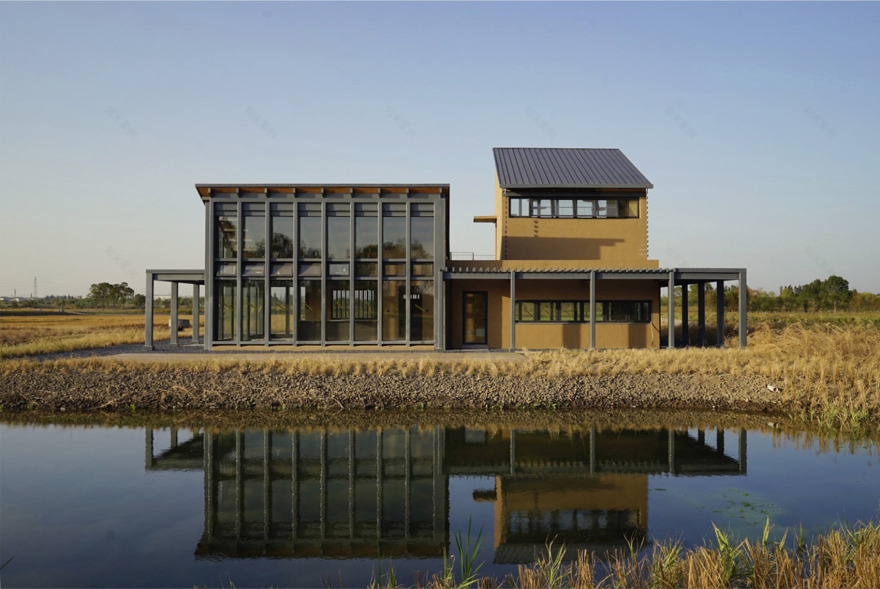
当人们的目光落在建筑外部的环境中,这时,建筑本身就像是现代人了解过去的一个窗口。建筑作为一种本真的物质介质,不是通过戏谑的虚拟游戏式的方式去让人回顾历史文化遗产,而是让人通过放大感官,透过建筑去感受外面部间稻田发生的一系列充满生活气息的景象,从而温柔地唤醒沉睡在这片土地上几千年的失落文化记忆。
When people’s eyes fall on the environment outside the building, the building is then turned into a window for modernist to understand the past. As a kind of real material medium, the architecture does not let people review the historical and cultural heritage through the way of joking and virtual games, but enable people to experience a series of scenes full of vitality in the paddy field outside of the building through the magnified sense organs, so as to refresh the lost cultural memory of thousands of years in this land.
▼人们可以透过建筑感受自然,people could feel the nature through the architecture ©杨力维

简单的建造
Simple construction
在建造层面我们希望最后达到最简单的呈现。这使得我们自然而然联想到洛吉耶的“原始棚屋”。就如场地沉淀几千年的文化一样,建筑作为形式与意义的体量,它的各个部分经历长期的生活与建造的理解,也悄然地变成文化,继而作为一种以形式来理解的要素被记录下来。
At the construction level, the building will be ended up with the simplest presentation, relating to Laugier’s “primitive hut”. Just like the accumulated culture for thousands of years, architecture, as a vehicle of form and meaning, has been quietly transformed into culture after a long period of understanding of life and construction, and then recorded as an element understood in form.
▼简单的钢框架结构,simple structure of steel frame ©上: 杨力维,下:陆伟杰
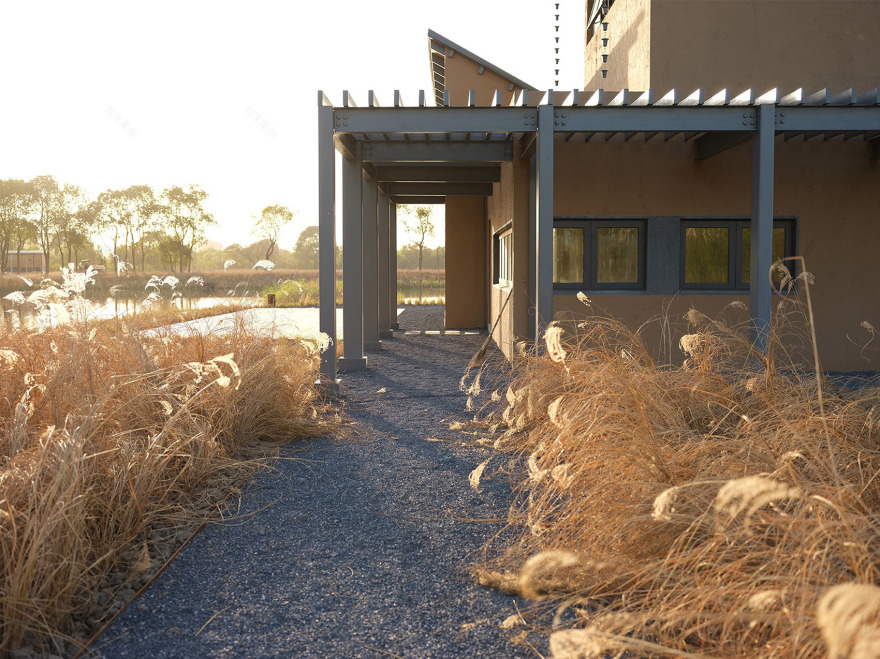

书局最终立面直接呈现出的钢框架体系,它不仅仅是表皮,也是真实的结构。它的关系非常的简单——玻璃的铝框被隐藏在钢构架后侧,外部仅仅看到密排钢柱和玻璃。这种关系最后达到的效果是形式、结构、空间三者的一体化。建筑空间的界面更加纯粹,人的身体在内部空间也可以完全释放,这样才可以将精神回归到乡村稻田风景中。
The bookstore directly presents the steel frame system in final facade, which is not only on the surface, but also in the real structure. The relationship is very simple – the aluminum frame of the glass is hidden behind the steel frame, and only the closely arranged steel columns and glass can be seen from the outside. The final effect of this relationship is the integration of form, structure and space. The interface of the building space is more pure, and the human body can be completely relaxed inside, so that the spirit of the rural rice field can be regained.
▼钢框架结构也体现在室内空间中,steel frame is also showed in the interior space ©陆伟杰
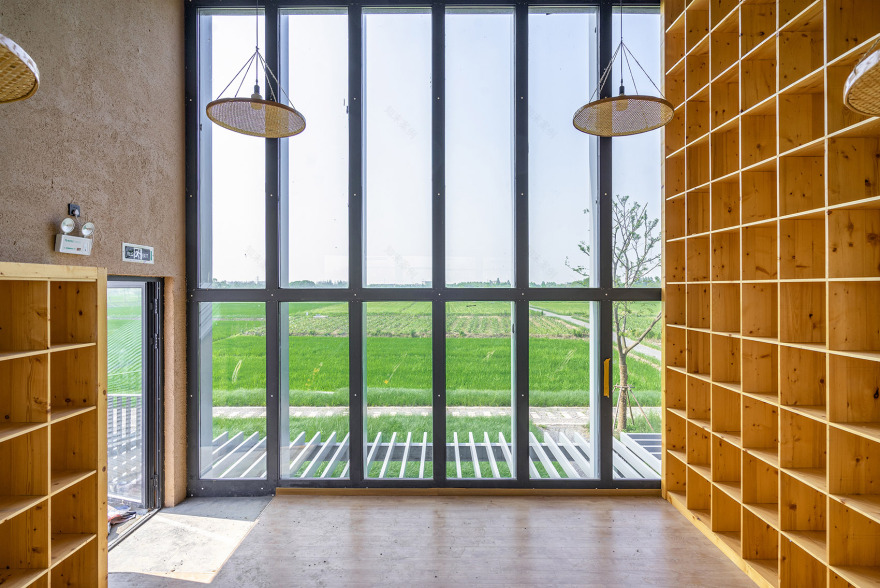
▼纯粹的室内空间,可以更好地享受稻田景观,pure interior space where people could better enjoy the view of the rice field ©陆伟杰

▼细部,details ©杨力维

诗意的呈现
Poetic expression
傍晚时分对岸观望,稻田的金黄也没有白天时分那样闪耀。此时,微黄的灯光从建筑内部一点点渗透出来,晕染开来,也削弱了原本带有尖锐感的模样。周围的一切都沉静下来了,此时的书局就像是一个稻田里的守望者,它守望着水乡孕育的人儿,守望着眼前这片在四季年轮里和人一同生长的稻田。
Looking from the other side in the evening, the golden rice fields do not shine as brightly as they do in the daytime. At this time, the yellowish light penetrates from the interior of the building little by little, blurring and weakening the original sharp look. Everything around was quiet. At this time, the bookstore was like a watchman in the rice field. It was watching for the people born and raised in this waterside village, and watching for the rice field growing together with people in the seasons.
▼夕阳下的书局,bookstore in the dusk ©杨力维
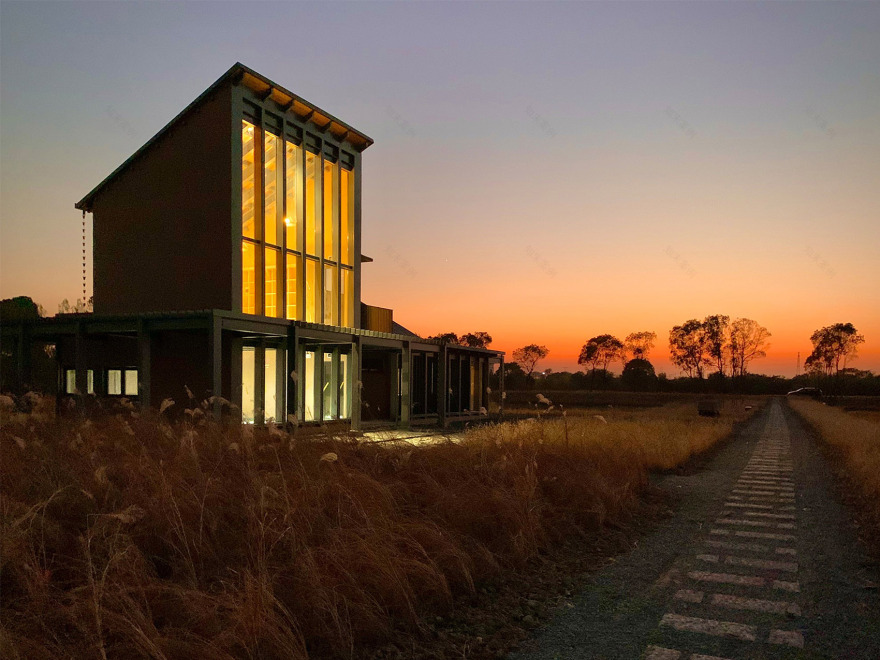
▼夜景,night view ©陆伟杰
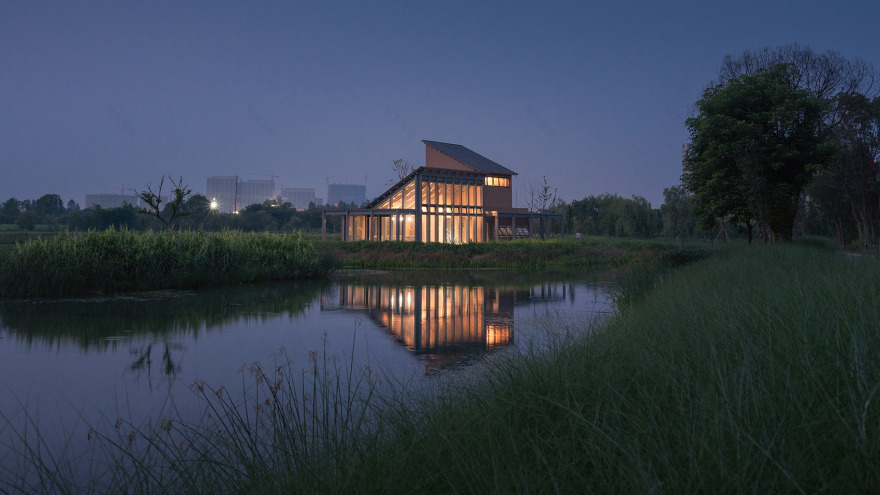
时间的印记被刻在建筑的每个角落,曾经的地方故事也有了真诚的传承者,需要一点一滴地、慢慢地被诉说。
The imprint of time is engraved in every corner of the building, and the building now comes into being a credible inheritor, unveiling the old stories here bit by bit and slowly.
▼一层平面图,first floor plan ©东维建筑

▼屋顶平面图,roof plan ©东维建筑

▼立面图,facade ©东维建筑


▼剖面图,section ©东维建筑



南京喵熊网络科技有限公司 苏ICP备18050492号-4知末 © 2018—2020 . All photos and trademark graphics are copyrighted by their owners.增值电信业务经营许可证(ICP)苏B2-20201444 苏公网安备 32011302321234号
苏公网安备 32011302321234号客服
消息
收藏
下载
最近