

创作上传
VIP
收藏下载
登录 | 注册有礼
查看完整案例

收藏

下载

分享
由建筑事务所Dan Brunn Architecture新近设计的Yojisan日料餐厅位于两侧布满高端商店和大棕榈树的著名的北比弗利大道(North Beverly Drive)上,为其所在环境带来了令人耳目一新的创新感、独特感和现代感。不同于比弗利山庄现有的墨守成规的设计,Yojisan餐厅的室内空间结合着寿司的特色,打造出一种前所未有的观感体验。最终,Yojisan餐厅通过使用传统的日本材料,结合日本文化和生活习惯,创造出一种简单却强有力的视觉冲击效果。
用餐者通过故事和光的叙事性开始了他们对空间的体验。这种微妙的超现实主义始于Yojisan餐厅的外立面——一系列精致的面板限定和细分出餐厅的门面和入口,欢迎着食客进店品尝美味的寿司。乍一看,外立面好像是金属质感的;然而当食客靠近时,他们会发现门牌是由一连串的雪松木板组成的,这些木板无缝排列,形成一了个邀人入店的建筑门牌。餐厅的LOGO印在一块曾用于工业造船的重塑钢板上,通过将入口处的用餐区与LOGO相结合,进一步强调了餐厅入口。
▼餐厅外立面,雪松木板、玻璃入口和印在钢板上的餐厅LOGO邀人入店,the facade made of a succession of cedar planks, the glass entrance and the sign crafted from the steel plane, inviting people to go into the restaurant
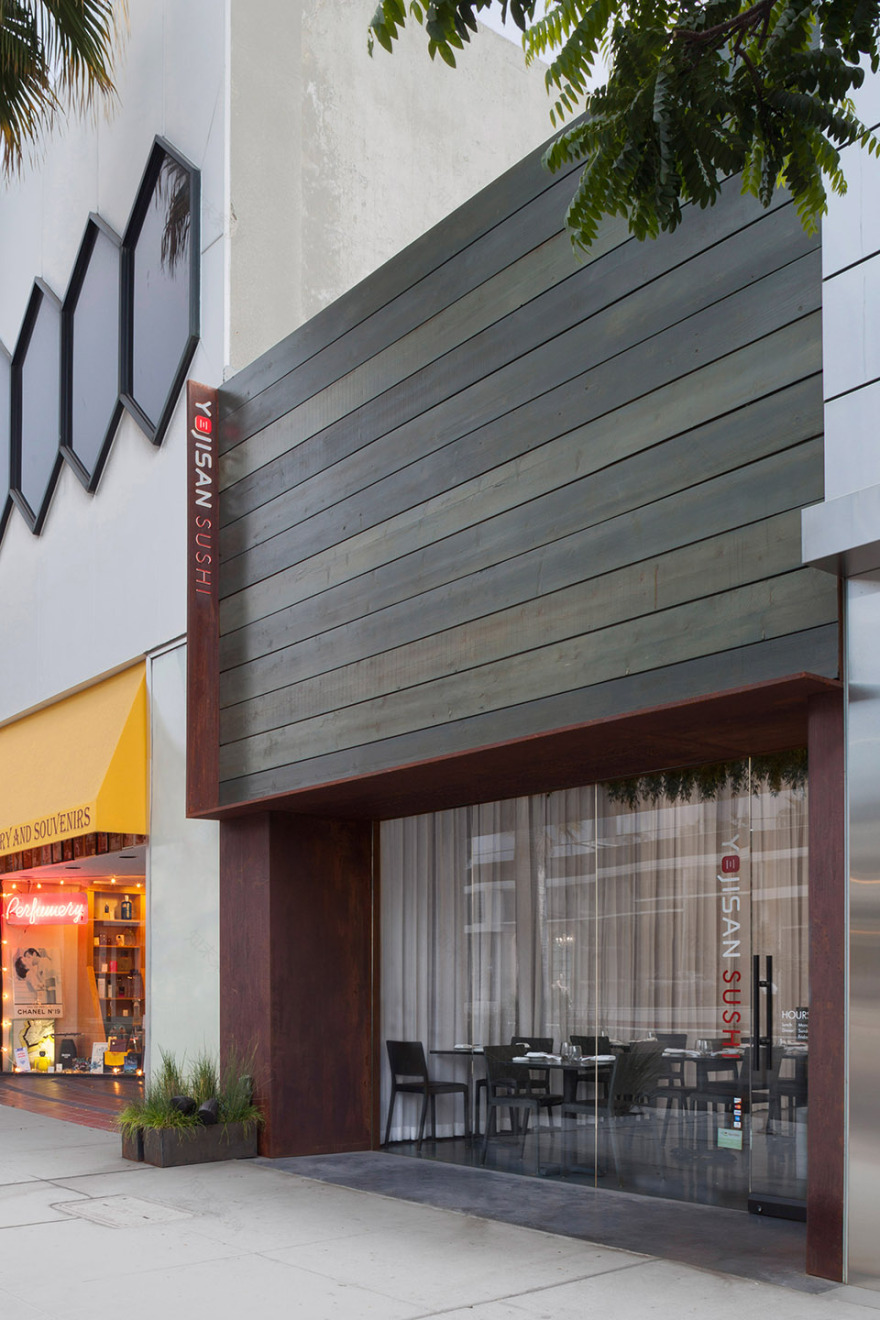
Situated on prominent North Beverly Drive and flanked by high end storefronts and towering palm trees, the newly designed Japanese restaurant introduces a refreshingly whimsical and modern touch to the neighborhood. Instead of pandering to existing Beverly Hills clichés, the approach steps through the looking glass with Yojisan as sushi signifiers are upended. The result is a simple yet substantial visual impact inspired by traditional Japanese materials, culture and lifestyle.
Diners experience Yojisan through a narrative of allusion and light. This subtle surrealism begins with Yojisan’s façade, which beckons guests to enter a threshold subdivided by a series of delicately intersecting planes. At first glance the façade appears as if it were metallic; however, as diners comes closer they are met with a succession of cedar planks that melt seamlessly into a seductively slim signage. The design further synchronizes the entry by framing the outdoor seating space with the sign itself, which is crafted from repurposed steel once used in industrial shipbuilding.
▼餐厅室内全景,overall view of the interior restaurant
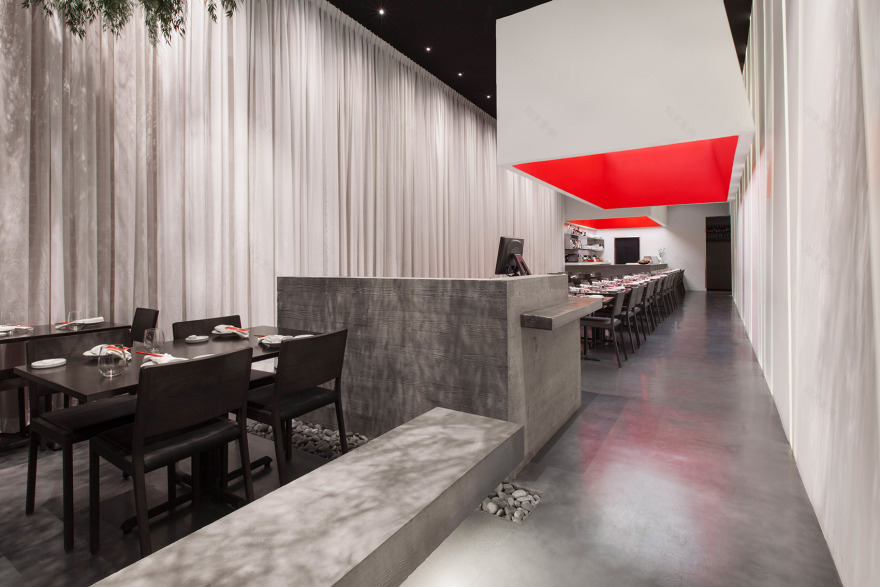
进入餐厅后,食客们便行走在一片由多叶植物覆盖的空间之下,这片绿荫从天花板垂下,配合着顶部的灯光,营造出一种柔和的氛围。这种设计营造出一种梦幻般的日本森林景象,这对于餐厅空间来说是十分特别的。天花板略微倾斜,引导着空间的纵向透视,加强了空间的纵深感。为了平衡室内空间的轻盈感,建筑师在靠近接待收银区和寿司吧台的区域设置了一些具有厚重感的地面元素。接待收银区和吧台区具有极高的活动性,其地面由坚固的再生橡木板和混凝土板组成,营造出一种持久感,呼应了外部空间材料营造出的质朴感。
Upon entering Yojisan, diners walk under a floating carpet of leafy plants that spring from the ceiling and are lit from above. This design simulates a Japanese forest dreamscape unique only to the restaurant. The ceiling is slightly angled to force the perspective towards the back and elongate the space. To counterbalance the lighter design features of the restaurant, there are several grounding elements for diners as they approach the host desk and sushi bar. Comprised of sturdy reclaimed oak wood and board-formed concrete, these areas of high activity are given a sense of permanence and echo the rustic materials of the exterior space.
▼从餐厅入口看向中心用餐区,餐厅入口上方悬浮着由多叶植物组成的绿荫,central dining area view from the entrance, which has a floating carpet of leafy plants that spring from the ceiling

▼入口用餐区细部,天花板上植物的影子落在墙上,营造出动态感,details of the entrance seating area, the shadow of the leafy carpet shoots on the wall, creating a dynamic atmosphere

从接待收银台继续往里走,用餐区的天花板上惊奇地出现了两个巨大的倒扣饭盒状的体量,这两个体量配有反光的红色饰面,不仅突出强调了中心用餐空间,更为其下方的食客们提供了一个充满了温暖光线的用餐环境。在这两个轻巧的悬浮体量之下,是一片配有定制餐桌的用餐区。餐桌通过特殊的烤蓝过程锻造而成,该锻造过程与日本著名的器械工具和餐具的精加工过程类似。
Beyond the host desk, the ceiling unexpectedly makes way for two giant, inverted bento boxes that highlight the central dining areas with a reflective red finish and provide a warm, emanating glow to diners below. Smartly situated underneath these deftly hovering volumes lies a sea of custom designed tables forged through a special process of bluing, similar to the fashioning of famed Japanese tools and cutlery.
▼中心用餐区,其天花板上悬挂着两个配有反光的红色饰面的倒扣饭盒状的体量,the central dining area, above which there are two inverted bento boxes with a reflective red finish, highlighting the central dining areas

▼寿司吧台和中心用餐区,中心用餐区采用定制餐桌,侧墙给人一种穿越光带之感,the sushi bar and the central dining area, the central dining area is equipped with custom designed tables, and the side wall creates a sense of traversing through a field of illuminated stalks
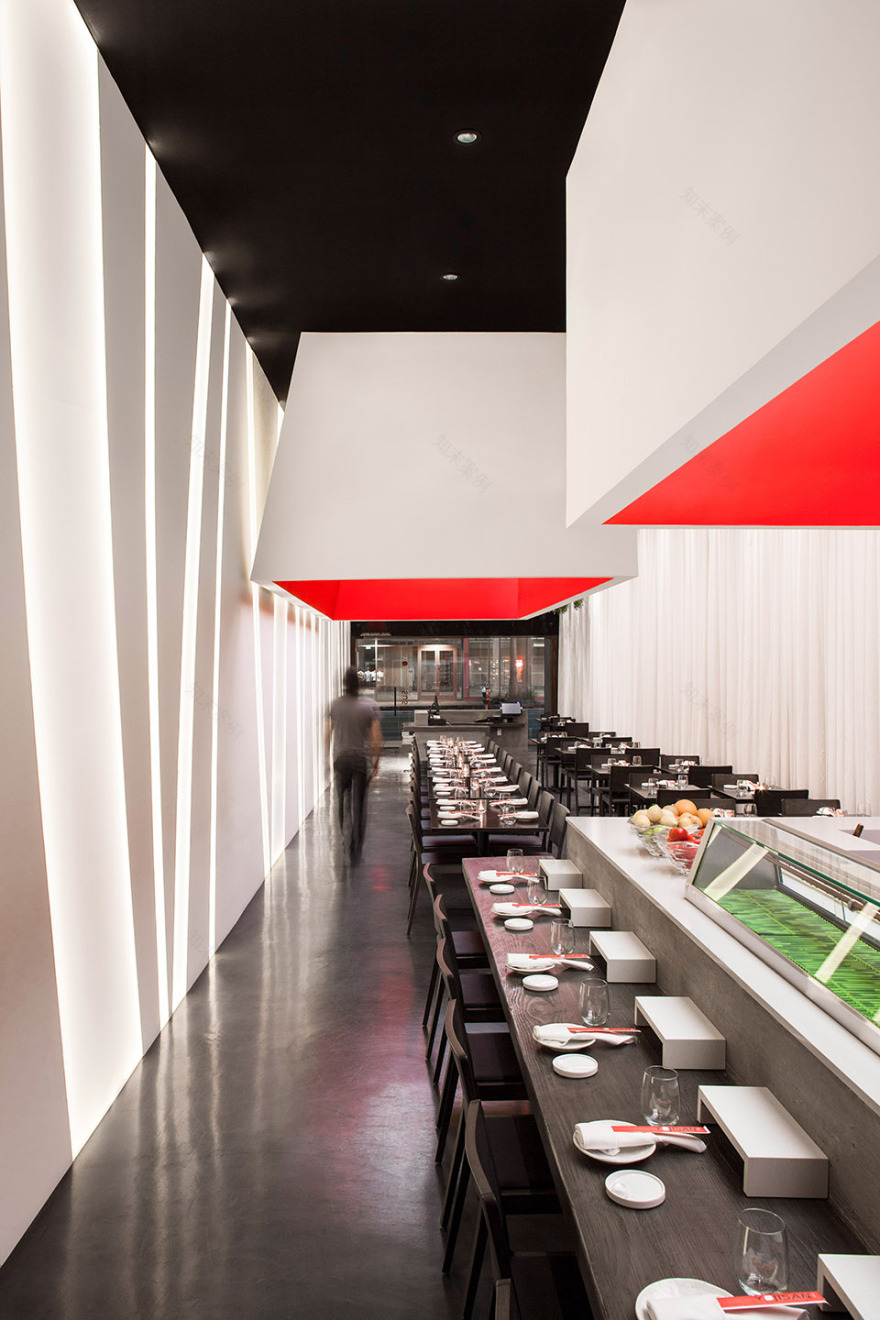
室内餐桌沿着两片各具特色的墙体排列。现有的喷砂面砖墙展现出一种温暖的赤褐色,隐藏在半透明的幕帘之下。这片幕帘不仅可以为室内空间增添一抹柔软的气息,更是一个声音缓冲区。这片砖墙的对面是一片由倾斜的发光面板和一般实体墙面板组成的墙体,入口区域从天花板上垂下的竹叶斑驳的影子映在实体墙面板上,营造出一种动态美感。每一片发光面板都覆有由织物和塑料构成的定制饰面。这面墙为Yojisan餐厅提供了主要交通流线的视觉引导,并通过对一系列负空间的处理,营造出一种穿越光带的空间体验。
As diners are seated along the perimeter of the restaurant, two walls surround them, each with a unique purpose. The existing sandblasted brick wall reveals a warm russet material, which can be seen through a sheer curtain that softens the space and acts as an acoustic buffer. Running opposite this wall is a dramatic array of angled light coves evoking dynamic bamboo shoots that culminate at the ceiling. Each luminescent strand is clad with a custom-formed cloth and plastic composite. This wall provides the main circulation artery for Yojisan and evokes the sensation of traversing through a field of illuminated stalks by playing with negative space.
▼吧台和中心用餐区,两侧的片墙各具特色,the sushi bar and the central dining area surrounded by two walls with each equipped with a unique purpose

▼餐厅一侧墙体,赤褐色的砖墙隐藏在半透明的柔软幕帘之下,one side wall of the restaurant, the russet sandblasted brick is hidden behind a piece of soft curtain

▼餐厅另一侧墙体由发光面板和实体墙交错排列组成,the other side wall of the restaurant consists of luminescent strands and solid wall panels

Yojisan是一间优雅小巧却不失活力和俏皮的餐厅,其室内的空间布局精妙和谐地呼应了日本料理独有的强烈和宁静的元素。
Yojisan is a restaurant that’s elegantly minimal but still celebrates exuberant playfulness. The spatial arrangement echoes the delicate harmony between the strong and silent elements of Japanese cuisine.
▼餐厅吧台区域,the sushi bar
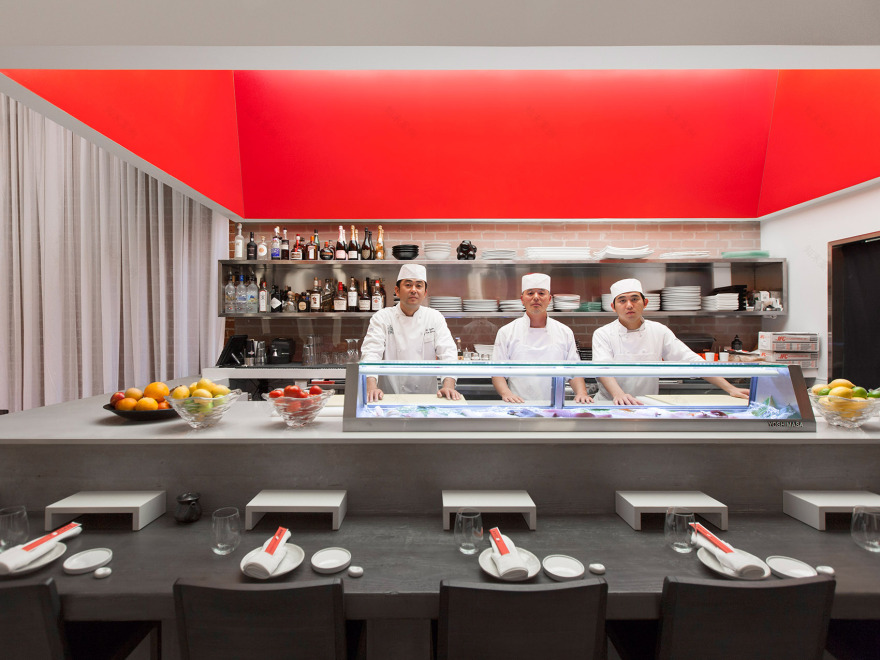
餐厅内部干净的灯光设计不仅反映了厨师最新的食品理念,更不动声色地呼应了室内空间。在这样一个非常有限的空间内,Yojisan为一座传统的城市带来了一场超现实的革命。
Infused into Yojisan is a clean light design that reflects the chef’s streamlined food philosophy and is discreetly resonant. Within a very limited space, Yojisan brings a surreal revolution to a city of tradition.
▼餐厅卫生间,the restroom

Location: Beverly Hills, United States
Project size: 1657
Completion date: 2012
Building levels: 1
南京喵熊网络科技有限公司 苏ICP备18050492号-4知末 © 2018—2020 . All photos and trademark graphics are copyrighted by their owners.增值电信业务经营许可证(ICP)苏B2-20201444 苏公网安备 32011302321234号
苏公网安备 32011302321234号客服
消息
收藏
下载
最近