

创作上传
VIP
收藏下载
登录 | 注册有礼
查看完整案例

收藏

下载

分享
这个展馆是PIK集团(俄罗斯位列前茅的地产开发商)为Picnic “Afisha” 音乐节准备的“露天公寓”项目的一部分。Kolomenskoye公园自2007年起一直作为音乐节的举办场地,位于公园不同区域的突起构筑物是对抽象公寓内房间的象征。该项目是对起居室的重新诠释,起居室是每个公寓内的交流和活动空间,因此项目位于美食广场和主要音乐舞台之间,是音乐节人流最多的地方。这个特定的位置意味着展馆既是一件艺术品也具有明确的实用目的。
This pavilion is a part of a project “Open-Air Flat” organized by PIK Group – a leading real estate developer in Russia – for Picnic “Afisha” music festival. Pop-up structures that symbolized the rooms of an abstract flat were situated in different areas of Kolomenskoye park, where the festival has been taking place since 2007. The object is a reinterpretation of a living room which is a common space for communication and activity in any flat. Not by chance it was situated in one of the most crowded areas of the festival just between food court and main music stage. This specific location implied the pavilion to be an art object as well as having a clear practical purpose.
▼公园中的临时展馆,temporary pavilion at the park
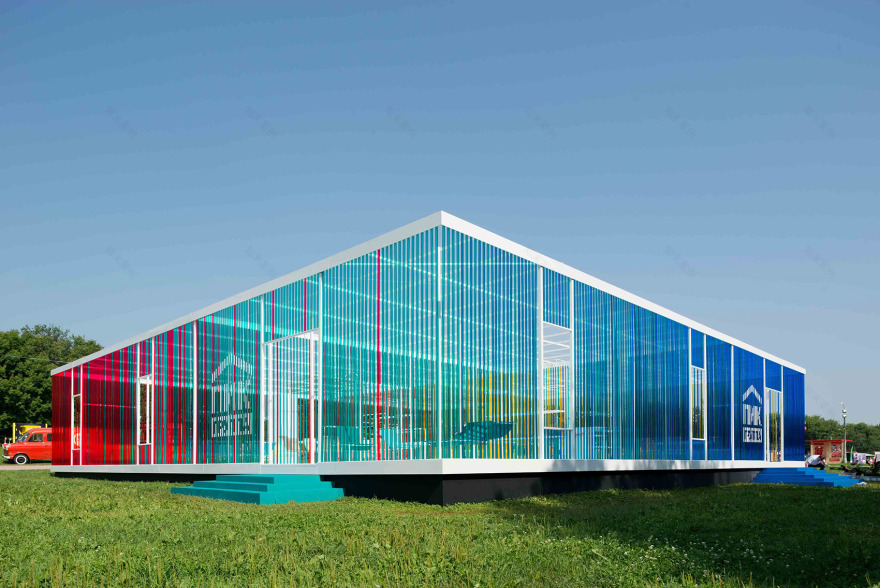
展馆半透明的墙体由彩虹色塑料管构成,这使其在环境中凸显出来。展馆内被分成了不同的隔间,每一个隔间都有独立的结构,它们一同构成了建筑规则的矩形外形。展馆内部被白色金属框架和塑料管组成的不规则网格填充。刻意不均等的分隔塑造了建筑动态、富有表现力的构图,为看似朴素的外形带来轻微地波动变化。坐落在青绿色草坪上,多彩起居室一样的展厅仿佛是CGI景观中突然出现的小差错。
With its semi-transparent walls constructed out of rainbow-colored plastic tubes, the pavilion truly stood out from the surroundings. Inside this building is divided into various compartments. Each of them has a separate and individual structure forming together an accurate rectangular-shaped form filled in with an irregular grid of white metal framework and plastic tubes. Deliberately uneven sections create a dynamic and expressive composition that brings a slight ripple into this seemingly austere shape. Situated on a bright green lawn, the multi-colored living room pavilion can be compared with a glitch effect that had suddenly appeared in a CGI landscape.
▼彩虹色塑料管构成的半透明墙体,semi-transparent walls constructed of rainbow-colored plastic tubes

▼外部为规则的矩形,accurate rectangular-shaped form
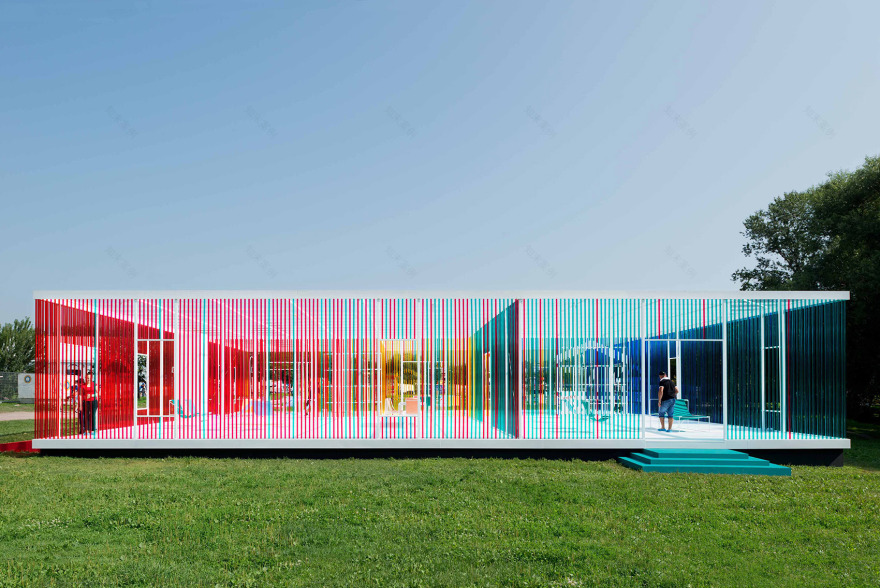
▼内部划分为立面带来波动变化,inner space division brings ripple to the surface

▼内部由白色金属框架和塑料管填充,white metal framework and plastic tubes filled the space

除了出色的设计,展馆也被设计成一个功能齐全的休闲区。每个区域都安装了舒适的扶手椅和躺椅,供前来参加音乐节的人使用。这些家具与咖啡桌、灯具一起构成了建筑的轻质结构。通透的展馆可以让参观者看到音乐节其它地方的活动,甚至可以不用离开场地也能看到主舞台上的演出。除了像起居室,展馆更像是一座能让人想起20世纪经典作品如萨伏伊和范斯沃斯住宅的单层豪宅。建筑内部家具也受到马塞尔·布鲁尔和勒·柯布西耶的标志性设计的启发。尽管深受到现代建筑的影响,展馆在众多国际风格私人住宅中仍独具特点。
Apart from its remarkable design, the pavilion was also meant to be a functional chill out area. Comfortable armchairs and loungers for festival goers had been installed in every section. These pieces of furniture were merged together with coffee tables and lamps into light-weight constructions. Pavilion’s lucidity allowed the visitors to see what was going on in the festival’s other areas and even watching the show on main stage without leaving the space. Despite being a living room, the building is more of a one-story mansion that calls to mind such 20th century classics as Villa Savoye and Farnsworth House. Its furniture is also inspired by the iconic designs of Marcel Breuer and Le Corbusier. Though highly influenced by a modernist architecture, the pavilion offers its very own outlook on the international style private mansions.
▼每个区域安装了舒适的家具,comfortable furnitures are installed in every section

▼家具受马塞尔·布鲁尔和勒柯布西耶的影响,furnitures are influenced by Marcel Breuer and Le Corbusier


极度透明的展馆与菲利普·约翰逊的玻璃住宅和密斯·凡·德罗的范斯沃斯住宅的透明性不同,它的通透像是一块清澈棱镜,等待将一束光线折射为斑斓的彩虹。这种冲突的印象被不规则格框架网格放大,象征着整个建筑的解构和尚未建造的内部布局。这个不断闪烁变化的结构与20世纪60年代的概念建筑小组如建筑电讯派和Superstudio的作品有关:他们都在乌托邦作品中使用网格,认为这是他们实验终极的、永无止境的游戏板。几十年后,网格在科幻小说“cyberspace”的陈词滥调中永垂不朽。在现代且复古未来主义的展馆中使用这种解构图景,是明智巧妙的解决手法。
The extreme transparency of this pavilion is different from that in Philip Johnson’s Glass House or the already mentioned Mies van der Rohe’s Farnsworth House. Its emptiness is an emptiness of a clear prism that is waiting for a ray of light to turn into a rainbow. This ambivalent impression is amplified by an irregular framework grid that symbolizes the result of the building’s total deconstruction as well as a layout of a building that hasn’t been constructed yet. A flickering and always evolving structure relates to the works of 1960s conceptual architecture groups such as Archigram and Superstudio – they both were using grid in their utopian projects considering it an ultimate never-ending game board for their experiments. Few decades later the grid was immortalized in science-fiction cliché of “cyberspace”. Using its deconstructed version in this contemporary yet retro-futuristic pavilion is a smart and elegant solution.
▼通透的建筑,emptiness building


▼展馆细部,pavilion detail

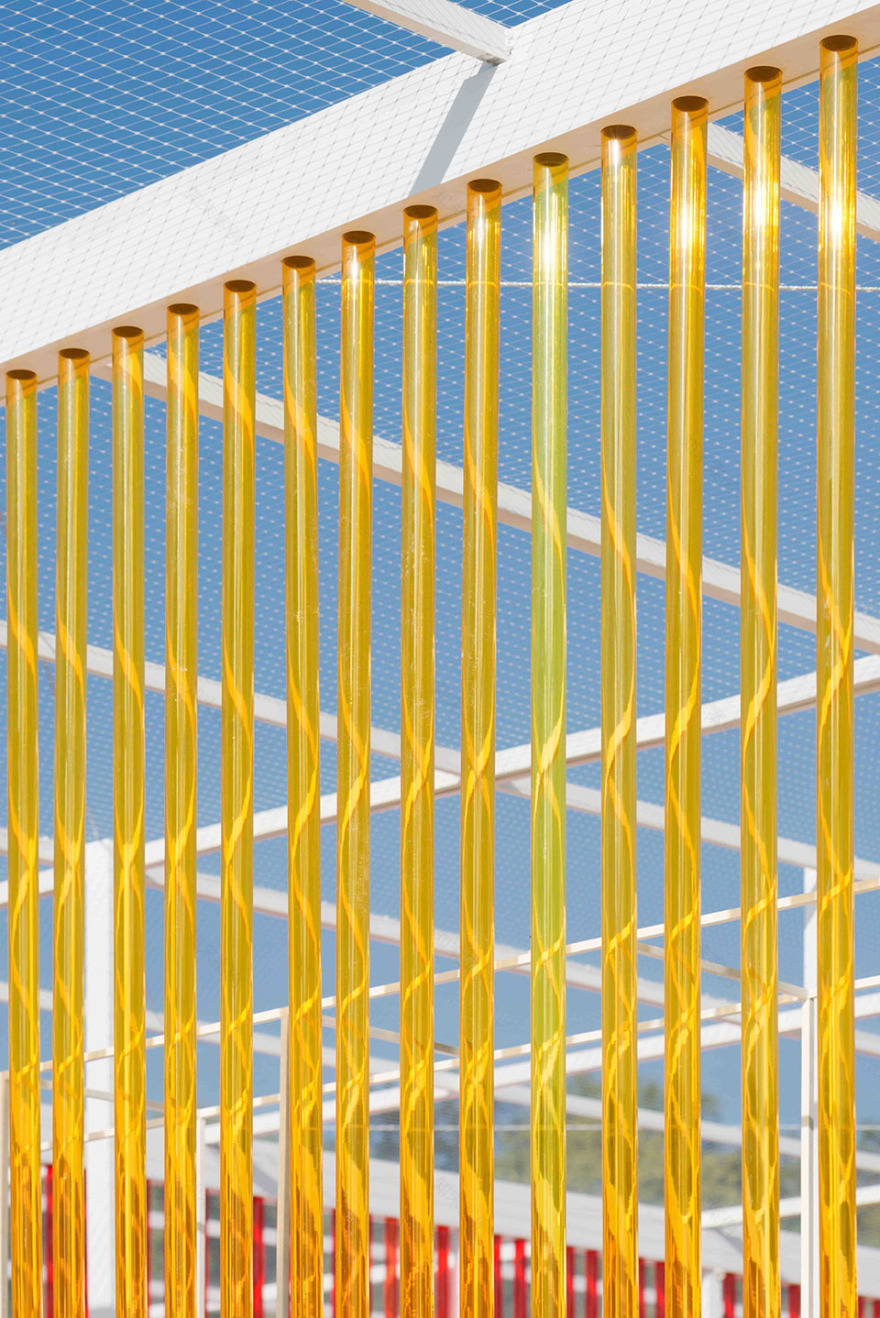
▼塑料管结构体系轴测,axonometric drawing of plastic tubes
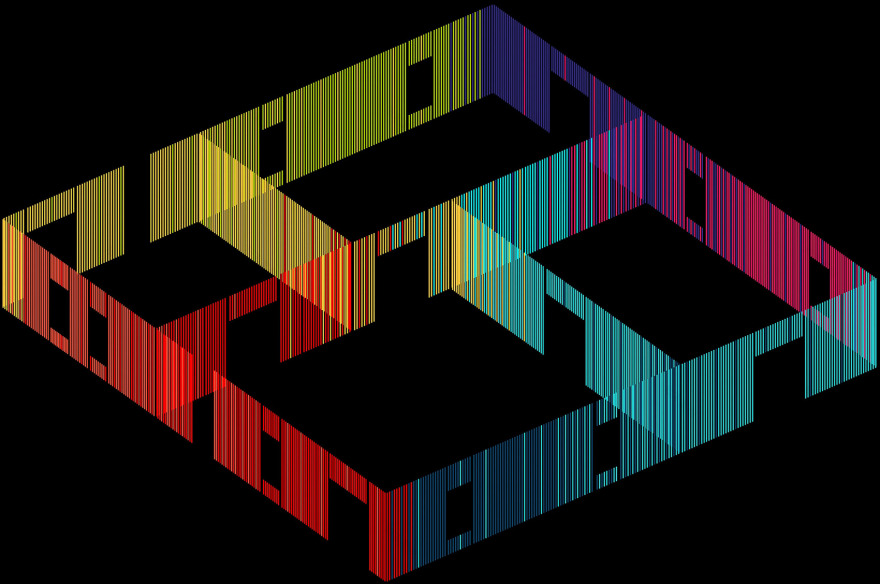
▼立面图解,facade diagram

▼轴测,axonometric drawing

▼平面图,plan

南京喵熊网络科技有限公司 苏ICP备18050492号-4知末 © 2018—2020 . All photos and trademark graphics are copyrighted by their owners.增值电信业务经营许可证(ICP)苏B2-20201444 苏公网安备 32011302321234号
苏公网安备 32011302321234号客服
消息
收藏
下载
最近