

创作上传
VIP
收藏下载
登录 | 注册有礼
查看完整案例

收藏

下载

分享
▼鼠标拖拽开启全景体验,move below to have a panoramic experience
始建于1946年的Gutierrez Soto,是马德里市中心最负盛名的建筑之一。在该项目中,设计师将这栋建筑所配套的车库改造为面包房,咖啡屋和体验式餐厅。空间在原结构基础上,将5米高立面全部打开面向街道景观。
This project transforms the former 1946 garage of Gutierrez Soto’s most significant building, located in the geographical center of Madrid, into an assembly of bakery, café and experimental restaurant. The original volume and structure of the building is recovered, leaving a 5-meter-high space with massive openings onto the streets.
▼咖啡馆外貌,exterior view
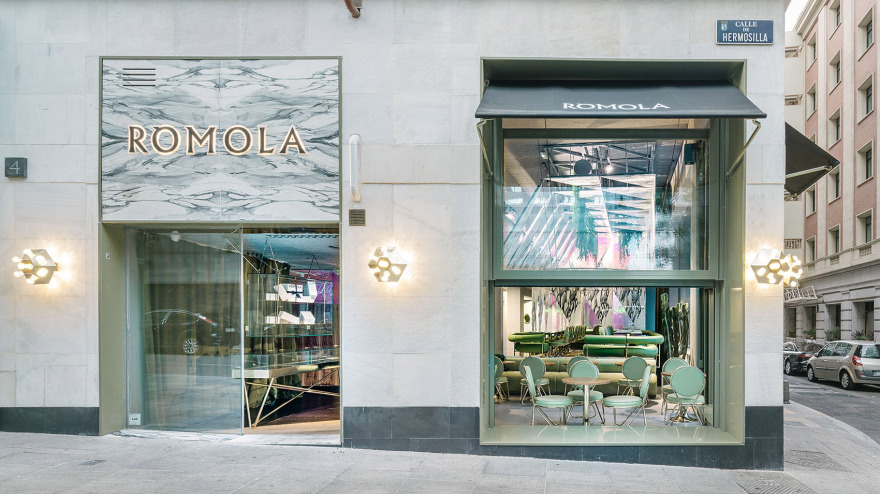

早在2008年开始,马德里的建筑就在朴素的红砖灰瓦下显得平淡无奇。它们被批判为是破旧而独立的商业型建筑,而这种商业型建筑却是临时性的,是某些低收入居民的营生工具。可怕的是,它们正在逐渐入侵着这座美丽的城市。9年间,这一过程将一些材料和人居环境中的大理石,皮革,镀金金属,以及自1960年开始就被视为马德里咖啡厅基本元素的木材镶板工艺品逐渐吞噬。在马德里咖啡厅的发展与演变中,华丽又舒适的空间,和优质与均等的餐饮服务很快转变成为女性居住者和LGBTQ社区中粗犷硬朗的酒吧替代品。该项目既是利用高级大理石及大理石工艺,皮质家具,金属,镀铬材质,稀有木材和清漆工艺打造的咖啡屋。在回应马德里咖啡文化的基础上进行深化,将反对朴素主义的咖啡馆氛围重新引入平淡的社区生活之中。
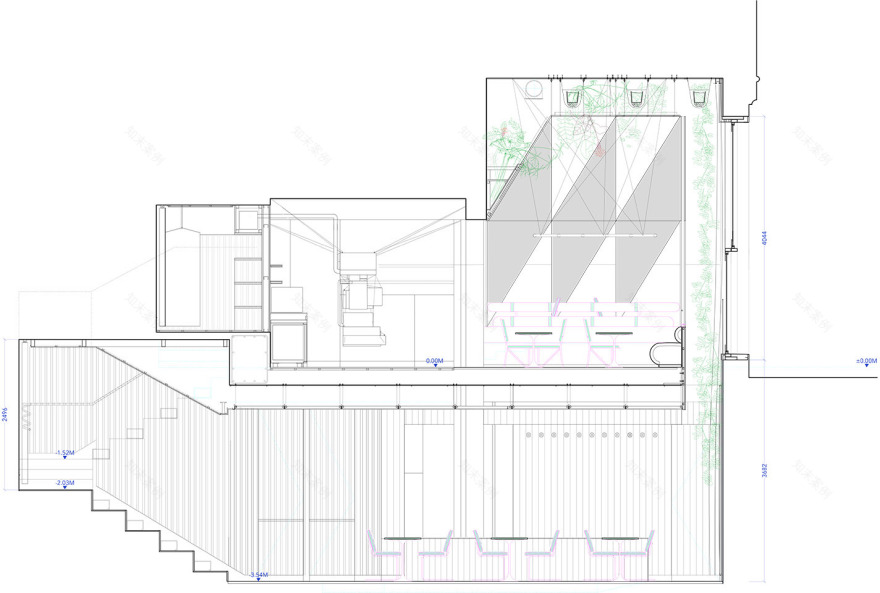
▼结构分析图,structure analysis

Since 2008, architecture in Madrid has suffered the hegemony of austere-looking hydraulic tiles and red ceramic bricks, which are uncritically perceived as old and independent-business oriented, but which paradoxically have become a tool of temporary, low-wage-based labor and corporative franchises and have conducted an unnoticed invasion of the city. Within nine years, this process has marginalized and set close to extinction the whole material and human context of marble, leather, gold-chrome-plated metal, and rare woods paneling craftwork that has, since the 1960s, been the social base in the development of the network of Madrid’s cafeterías: shining, comfortable places where anonymous service is provided and where this service, delivered with equal and standardized courtesy to everyone, has quickly turned them into spaces where women and LGBTQ communities had historically found an alternative to macho bars. This project is the result of a strategy to work with a small number of super-qualified marble manufacturers, leather upholsterers, metal benders and chrome-platers, rare-wood panelers and artisan varnishers behind the material production of Madrid’s cafeterias by taking their capacities a step further: to reintroduce into the city’s ecosystem the counter-austerity dissident space of the cafetería as a resistance to ceramic corporative hegemony.
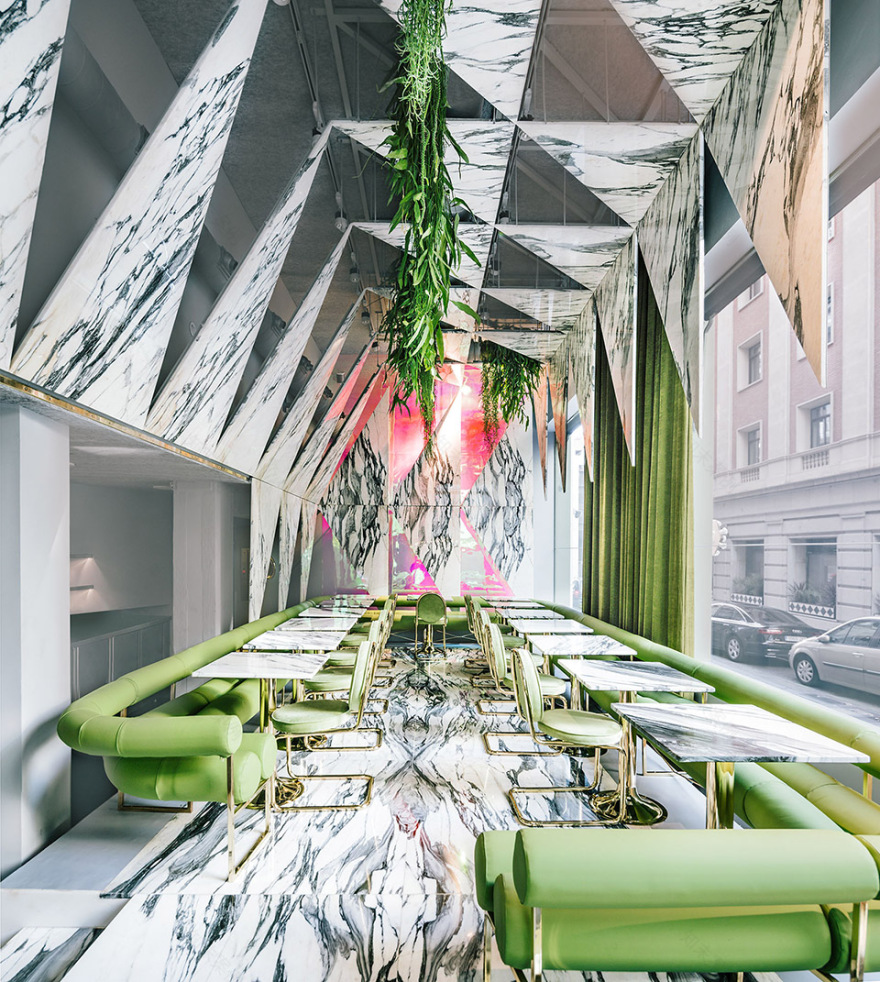
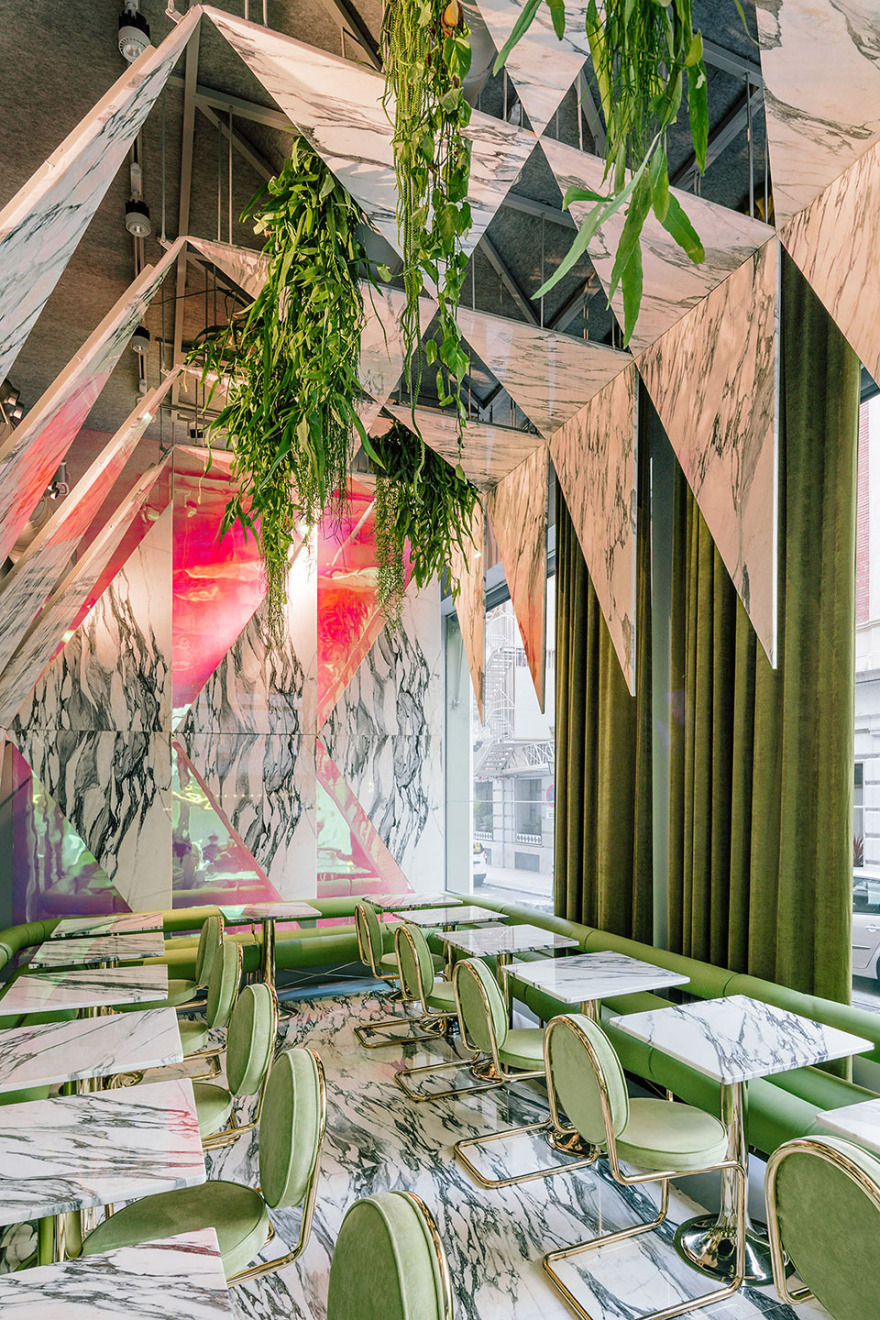
▼由大理石搭建的室内环境,interior designed by marble

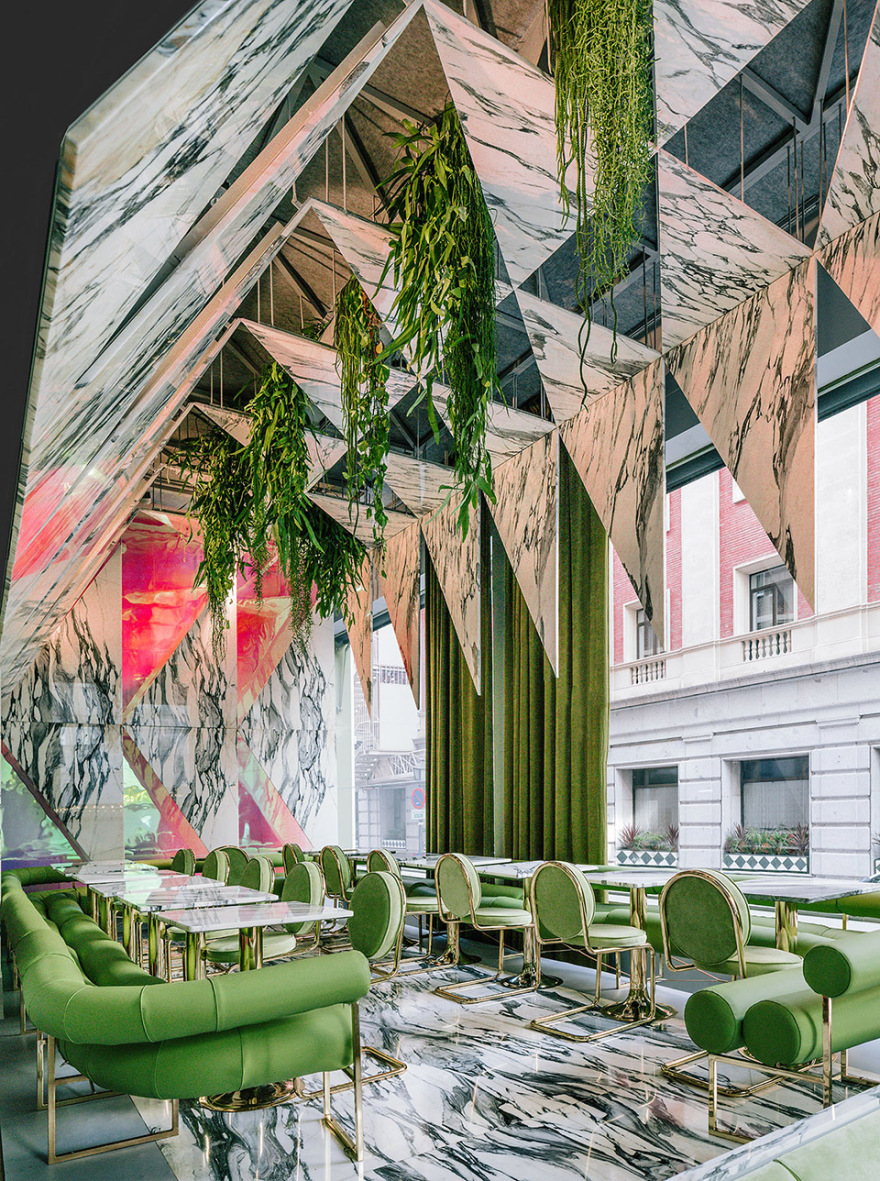


从1990年代到2000年代之间,Novelda小镇成为稀有大理石的跨国交易地点。如今,这座小城大部分遗留下来的来自世界各地的大理石,玛瑙和花岗岩都被视作是那个时代的古董物品,而红砖和液压砖则更像是非本地的外来材料。如此说来,Novelda大理石更像是某种精神象征。而大理石在这里的地位,通过一系列高科技手段如玻璃纤维,拼接工艺等,变得更加与众不同,它不仅抗压,还能抵抗牵引力。在这一系列独特的工程考验中,这些大理石营造了独自站立的帐篷内观。在它们之下,用餐空间在其下按C形排开,为来访者提供舒适的用餐环境。
In the 1990s and 2000s the tiny town of Novelda (Valencia) became the hub for a transnational flow of rare marbles. Now inactive, the town’s extensive pools of accumulated dusty marbles, onyx, and granites from around the world can be seen as an archeology of pre-austerity times. Whereas brick and hydraulic tiles are stock in a discourse of false authenticity, groundness and faked localism; Novelda marbles now embody a refreshingly contingent value. This ungroundness condition of the marbles is registered by a number of technologies attached to it, such as the glass fiver and resin reinforcements, articulated anchoring systems, intended to render marble as a sort of supermarble, capable not only of resisting compression but also traction. In what has been a unique engineering challenge, the project takes this capacity to its limits, by creating a supermarble-made self-standing tent. The tent accommodates the customers’ tables and allows other uses (including cooking) to being organized in a C-shaped periphery around it.
▼大理石工艺细节,detail of the marble


▼装饰细节,details


▼平面图,plan


▼剖面图,section

Credits:
Office for Political Innovation: Laura Mora Vitoria, Roberto González García, Paola Pardo, Víctor Cano Ciborro, Nieves Calvo López, Marina Fernández Ramos, Marta Jarabo Devesa, Danay Kamdar, Pablo Maldonado, Solé Mallol, Valentina Marín, Flavio Martella, Víctor Nouman García, Larissa Reis, Isabel Sánchez del Campo, Belverence Tameau, Borja García Lázaro. Structural Consultancy: Mecanismo. Ingeniería de Estructuras (Juan Rey, Jacinto Ruiz)
Service Design Consultancy: DITEC. Diseño y Tecnología Ingenieros Consultores
Quatity Surveyor: Alfonso Sáenz
Safe & Security Coordinator: José María Gutiérrez
Photography:Miguel de Guzmán y Rocío Romero. Imagen Subliminal





南京喵熊网络科技有限公司 苏ICP备18050492号-4知末 © 2018—2020 . All photos and trademark graphics are copyrighted by their owners.增值电信业务经营许可证(ICP)苏B2-20201444 苏公网安备 32011302321234号
苏公网安备 32011302321234号客服
消息
收藏
下载
最近