

创作上传
VIP
收藏下载
登录 | 注册有礼
查看完整案例

收藏

下载

分享
Lideta市场本应是一座在亚的斯亚贝巴随处可见的购物中心,但是建筑师在对城市现有的购物中心进行调研后发现,这些建筑常用的玻璃幕墙结构造成了室内光照过度以及热环境失衡等问题,给人带来极不舒适的体验。通过研究非洲最大的露天市场Old Mercato,建筑师决定对项目重新进行定位,摒弃传统的有着巨大店面的购物中心形式,设计一座多层现代集市。
The Lideta Mercato was intended to be a shopping mall just like many others in the city of Addis Ababa. A rigorous analysis has identified the main issues of the existing malls in the city, which are commonly built using glazing structures. As a result, the buildings suffer uncomfortable thermal conditions and over-illumination in the interiors. The observation of the Old Mercato, the largest open air market in Africa, was an inspiration to redefine the program of the building, conceiving a multistory contemporary market instead of a conventional shopping mall based on large shops.
▼ 建筑外观,摒弃常用的玻璃幕墙结构,external view of the building without using common glazing structures

建筑体块将基地两侧的平行道路联系在一起,对角线连通,所有出入口都设置在被挖去的两角,为行人提供了方便的行走路线。这条通路一直延伸至建筑中部连接不同楼层的倾斜中庭,每层平面都围绕中庭设置,互不相同。
The carved volume connects two parallel streets that define the plot of the project. This diagonal connection creates a shortcut for pedestrians and concentrates all the entrances of the building. This path extends to the inclined atrium in the middle of the building, where all floors are connected. Around this void, a different layout of small shops is placed in each floor.
▼ 一层平面图,建筑沿对角线设通道,ground floor plan, diagonal connection between two angles

▼ 简洁的弧形入口,the simple curved entrance

为了满足顾客的需求,建筑从底层到六层都设有设有露台吧,以加强人与人之间的联系;停车场和储藏间被设置在了三层地下空间之中。最上两层为休闲娱乐区,其中设有电影院、咖啡厅和休息区等,使购物中心的基本设施更为完善。
To meet the customers´ needs, they are combined with terrace bars from the ground floor to the sixth story, while the parking and storage area is placed on three underground stories. A cinema, coffee shop and lounge area on the two top floors are complementary to the basic facilities of the shopping mall, creating a pleasant zone of entertainment.
▼ 倾斜的中庭,连接不同楼层,inclined atrium connecting different floors

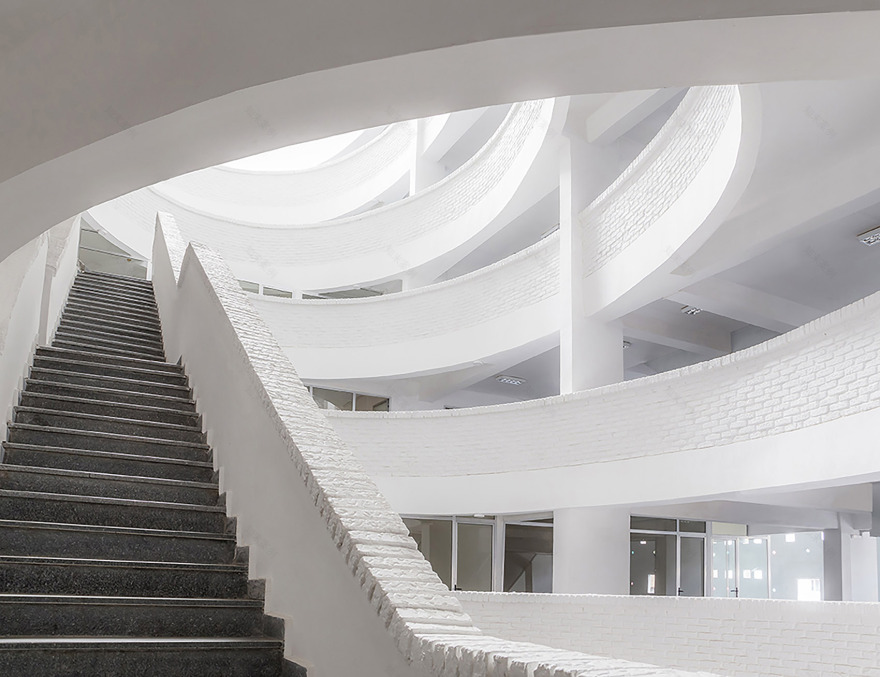
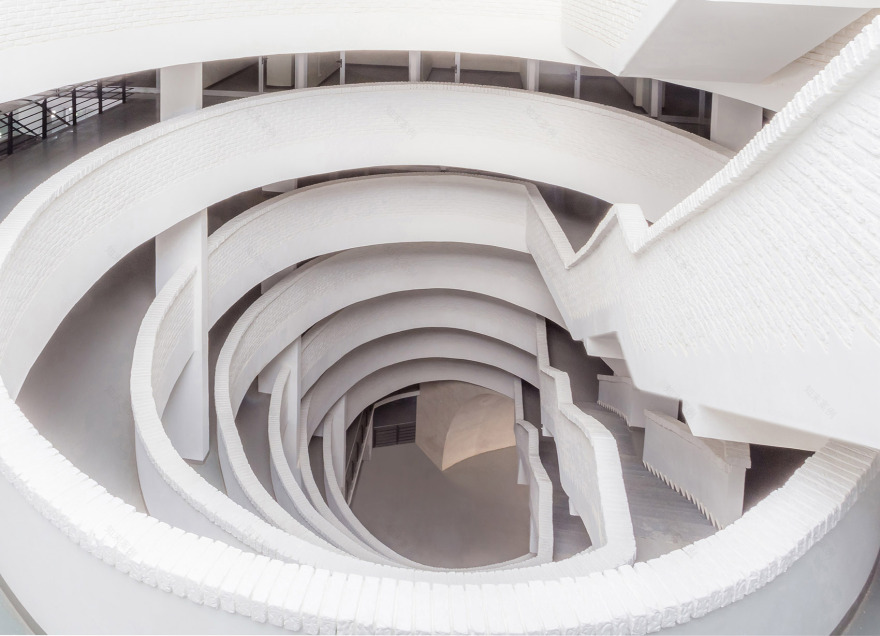
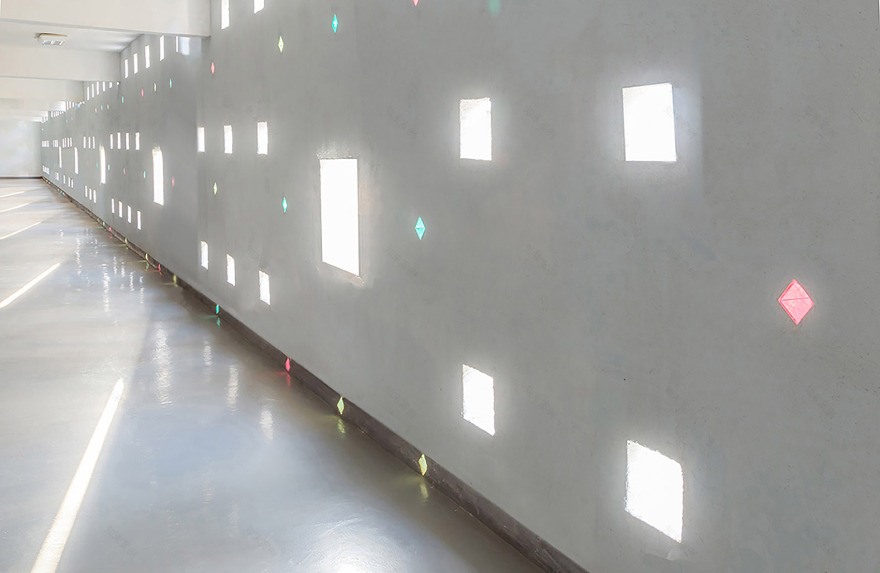
建筑的表皮设计充分考虑了当地气候条件和文化传统,开有小窗的立面可以控制采光和通风,保护室内不受过于强烈的阳光照射。建筑立面通过轻质混凝土预制系统建造,其形状来自于当地纺织品中常见的传统埃塞俄比亚碎片图案。表皮和中庭共同在建筑中形成了被动通风系统,并且控制了建筑内的进光量,创造了一个光照适宜,氛围开放的室内空间。
The skin of the building was designed considering the local climate conditions and traditions. The façade acts as a protection from the sun, controlling the natural light and ventilation in the interior spaces. It was built using a lightweight concrete prefab system, and the shapes come from a traditional Ethiopian fractal pattern commonly found in the local fabrics. The passive ventilation system and controlled natural lightening created between the building´s skin and the interior atrium enables the interior space to have an open-air feeling and balanced illumination.
▼ 参考传统图案的立面,facade referring to the traditional pattern

▼ 以白色为主色调的室内开敞明亮,窗洞在室内投下丰富的光影,open and bright interior in white tones with various shadows created by the facade openings


▼ 窗洞细部,彩色玻璃使图案更为丰富,detail of the openings, colored glass enriches the facade and light

▼ 建筑夜景,灯光在表皮形成传统图案,night view, lighting inside creates traditional patterns on the surface

▼ 表皮和中庭构成的被动通风系统图解,diagram of the passive ventilation system created by the facade and atrium

埃塞俄比亚一直面临着能源短缺这一难题。但是建筑师化困难为机会,在建筑屋顶上设置了圆形光电伞,产生电能的同时提供遮阳,创造了阴凉舒适的娱乐区环境。此外,屋顶上还设置了雨水收集系统,收集的雨水会被储存到地下室的水池中,经过过滤后被用于建筑中的厕所等处。
Constantly ceased power supply is one of the main obstacles Ethiopia is facing. This occurring problem was turned into an opportunity by placing circular shaped photovoltaic umbrellas in the rooftop that create nice shaded entertainment areas. The roof also functions as a rainwater collection system by draining and storing the rainwater in the basement tanks, which later goes through a filtration process to be reused for building´s toilets and taps.
▼ 集水系统和光电系统图解,diagram of the rainwater collection system and photovoltaic system

▼ 二层平面图,first floor plan

▼ 四层平面图,third floor plan

▼ 九层平面图,设有影院和休息区,eighth floor plan with cinema and lounge area

▼ 屋顶平面图,设有光电伞,roof plan with photovoltaic umbrellas

Project: Lideta Mercato
Design: Vilalta Arquitectura / Xavier Vilalta, Carrer de València 359 4-2, 08009 Barcelona, Spain
Director: Xavier Vilalta
Project leader: Maria Rosaria Favoino,
Project team: Joao Medeiros, Miguel Sánchez Enkerlin, Reema Al-Ajlan, Daniel Vaczi
Collaborators: K2N Engineering (structural), Abiy Aberra (mechanical & sanitary)
Client: Flintstone Engineering
Site of the building: Addis Ababa, Ethiopia
Project start: 2010
Completion date: June 2016
Photographs: Gonzalo Guajardo
Total area in square meters: 14,200m2
Facade: PLC – MGO prefabricated façade – Ybel Customized Panels, Yibel Industrial
Interior: PLC – Interior partitions – Ybel FGC Panels, Yibel Industrial
Photovoltaic panels: AE3000
南京喵熊网络科技有限公司 苏ICP备18050492号-4知末 © 2018—2020 . All photos and trademark graphics are copyrighted by their owners.增值电信业务经营许可证(ICP)苏B2-20201444 苏公网安备 32011302321234号
苏公网安备 32011302321234号客服
消息
收藏
下载
最近