

创作上传
VIP
收藏下载
登录 | 注册有礼
查看完整案例

收藏

下载

分享
纽约5:1公寓是MKCA对城市微型住宅设计的一次探讨与实验,390平方英尺的小空间内囊括了社交、工作、休息、更衣与娱乐各种功能所需的全部空间。
The 5:1 Apartment is the latest evolution of MKCA’s work on ultra-functional urban micro housing, containing the functional and spatial elements for living, working, sleeping, dressing, and entertaining within a compact 390 square feet.
▼ 空间功能随着储物空间的移动切换,the spaces exchange as the sliding storage element glides

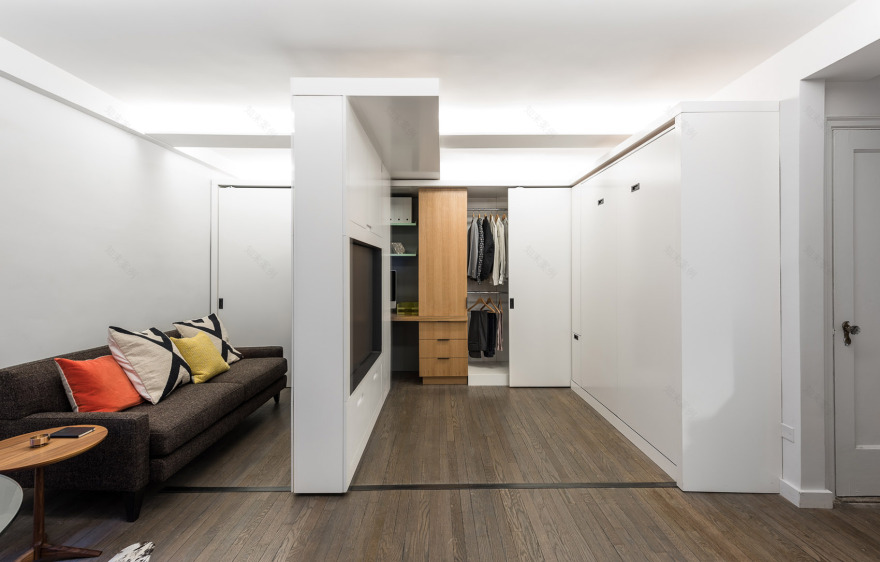
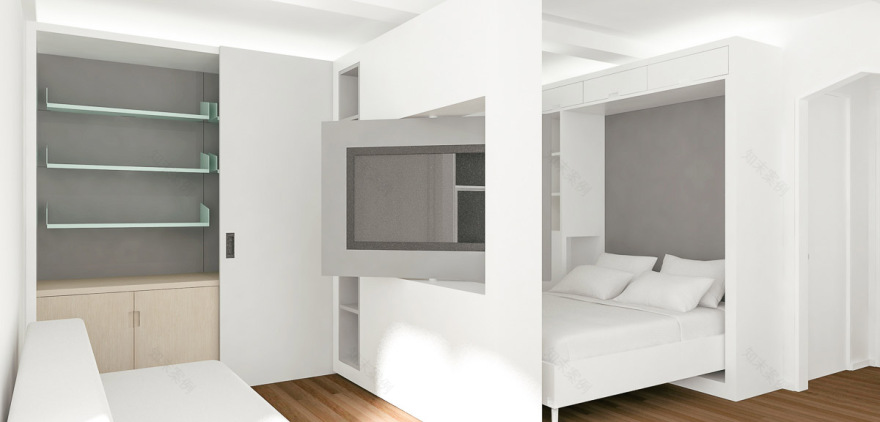
安有滑轨的储物空间可随需要在房间的两侧来回移动,而空间也随之在日夜功能间切换。体量稍稍外移,让隐藏其后的内嵌式衣柜显现出来,形成了一个小小的更衣室。继续向后移动,则创造出一个可以容纳双人床的休息空间。移动体量内置了所有的娱乐影音以及网络设备,同时也提供了储物以及展示的空间。可旋转的电视与音响设备能够同时服务于社交与休息、更衣两个空间。而在床边,内置的床头柜中镶嵌有阅读灯与闹钟。
A motorized sliding storage element glides from one end of the room to the other, revealing and exchanging spaces between daytime and nighttime zones. As the moving volume pulls away from the wall, it reveals a dressing room zone with built-in dresser drawers and clothing storage. Fully extended, the space for a queen-sized fold-down bed is created. The sliding element is powered and cabled for television and audio, and houses all of the audiovisual and networking components of the apartment along with additional storage and display space. A pivoting enclosure with custom speakers allows the television to rotate 180 degrees for viewing from the seating area, or the bed and dressing rooms. A built-in nightstand with power for a reading light and alarm clock is located adjacent to the headboard.
▼ 390平方英尺的小空间囊括了全部所需的功能,the functional and spatial elements is contained within a compact 390 square feet


▼ 五种功能空间模式,5 spatial division

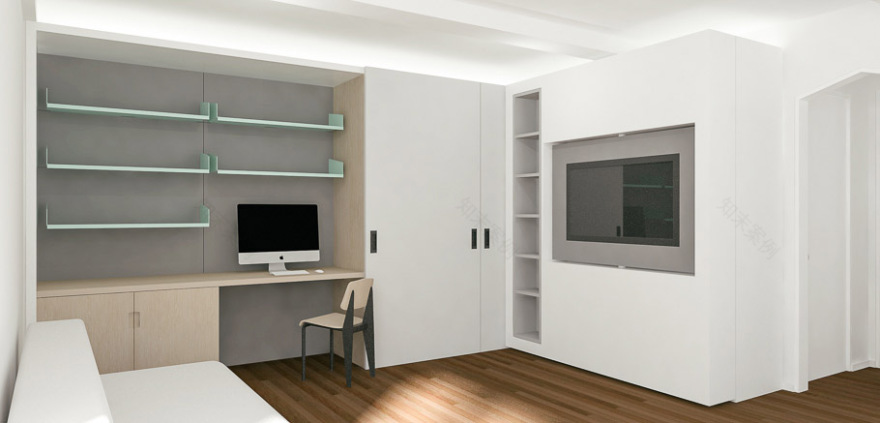
在白天,床铺被折叠收起,将空间让与客厅和工作室。亚光的铁架悬挂在灰色的柜面之上,形成了书架与展示空间。诸如打印机等辅助电子设备被存放在下方的柜子中,而墙边则放着几瓶常备的酒水。两扇柜门可以沿着轨道滑动,让空间在工作室和衣帽间之间转换。在可移动储物空间的后侧,是留给沙发的空间,而在客厅/ 卧室空间的旁边,小巧精致的餐厅可以容纳四人共度时光。
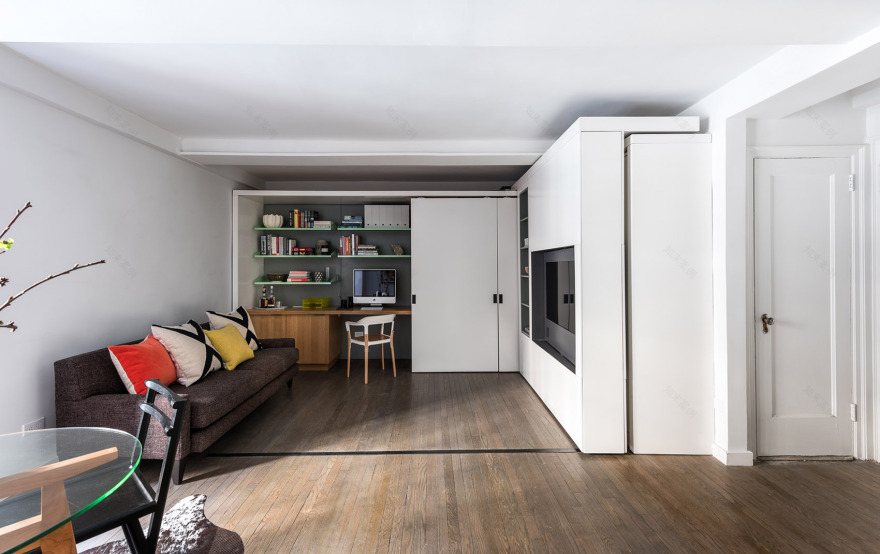
During the day, or when the bed is closed the bedroom space is returned to the living and working spaces of the apartment. Rows of open library and display shelving in powder-coated steel are cantilevered from a lacquered cabinetry wall. Lower cabinets house a printer and other computer peripherals, while an adjacent cabinet is used as a dry bar. A pair of sliding doors reconfigure the unpacked spaces, revealing zones for dressing and storage while masking work zones or vice versa. Space for a full-sized sofa is preserved opposite the television and sliding wall. A dedicated dining area large enough for four was created adjacent to the living room.
▼ 在白天,床铺被折叠收起,将空间让与客厅和工作室,during the day the bedroom space is returned to the living and working spaces
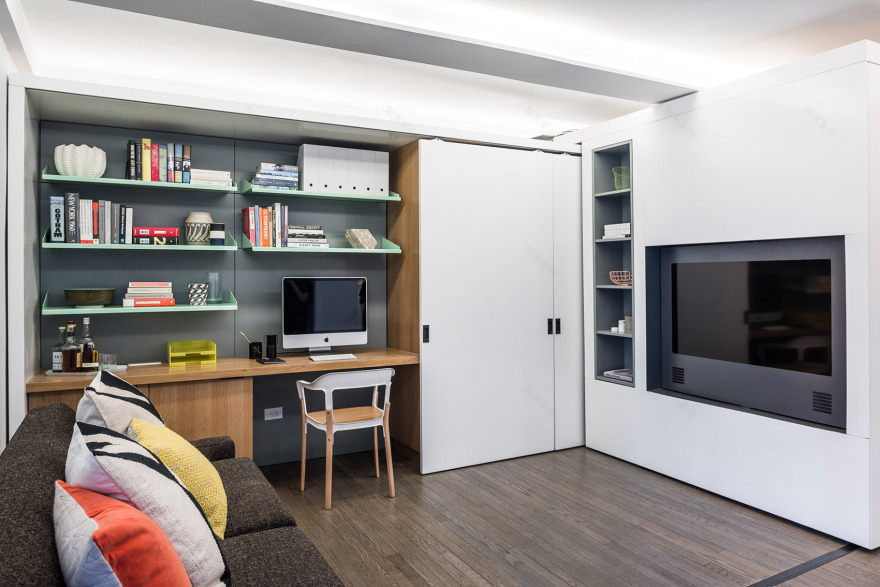
▼ 工作空间,working space
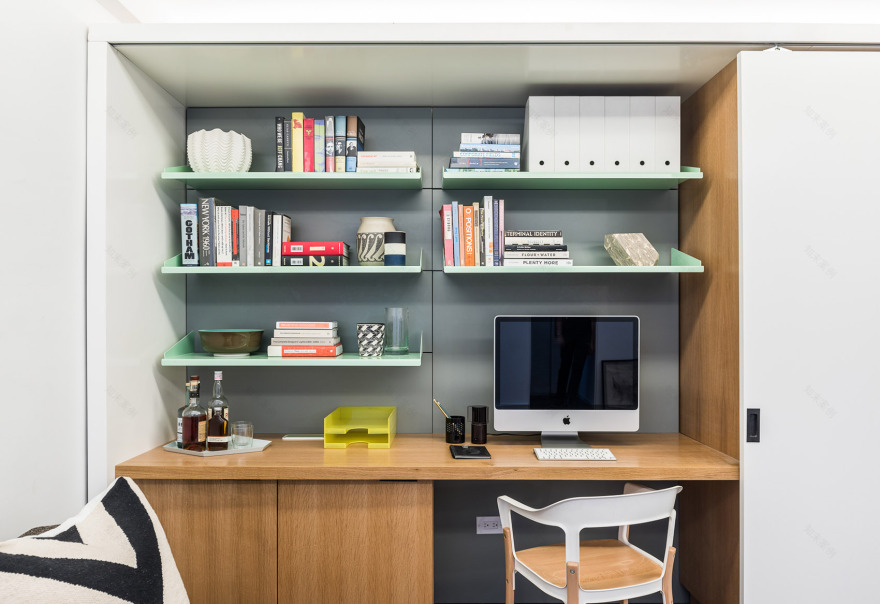
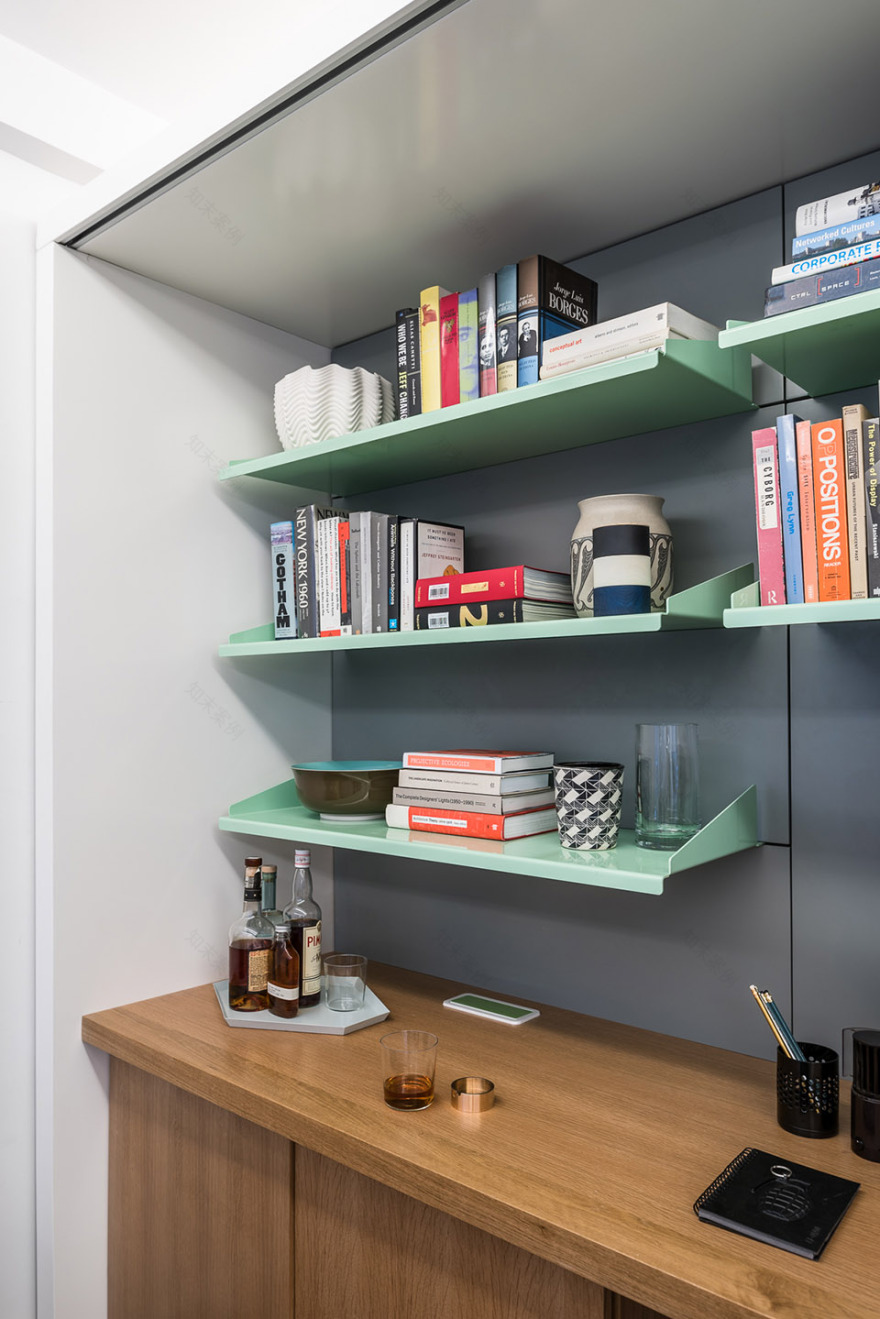
▼ 体量稍稍外移,形成了一个更衣室与小客厅,As the moving volume pulls away from the wall, it reveals a dressing room zone with a small living space


▼ 可容纳四人的小餐厅,a dedicated dining area large enough for four


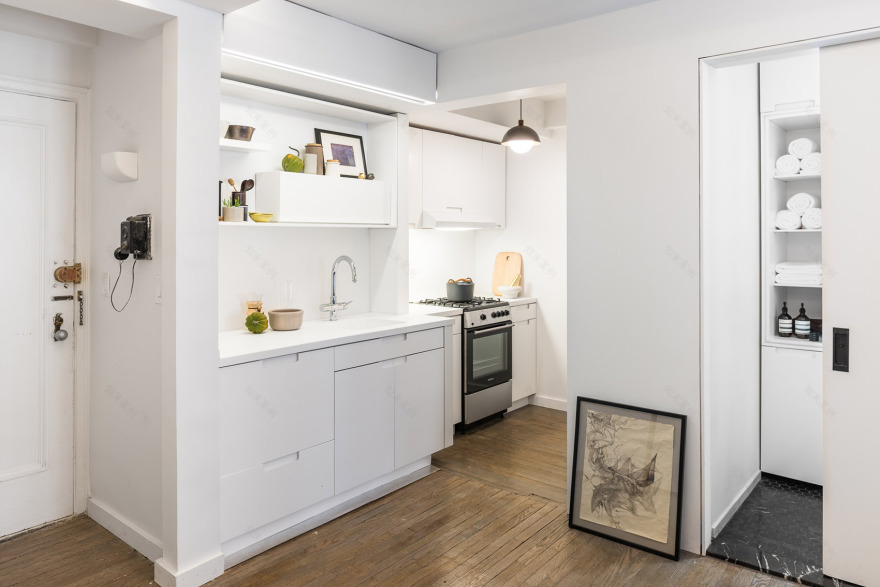
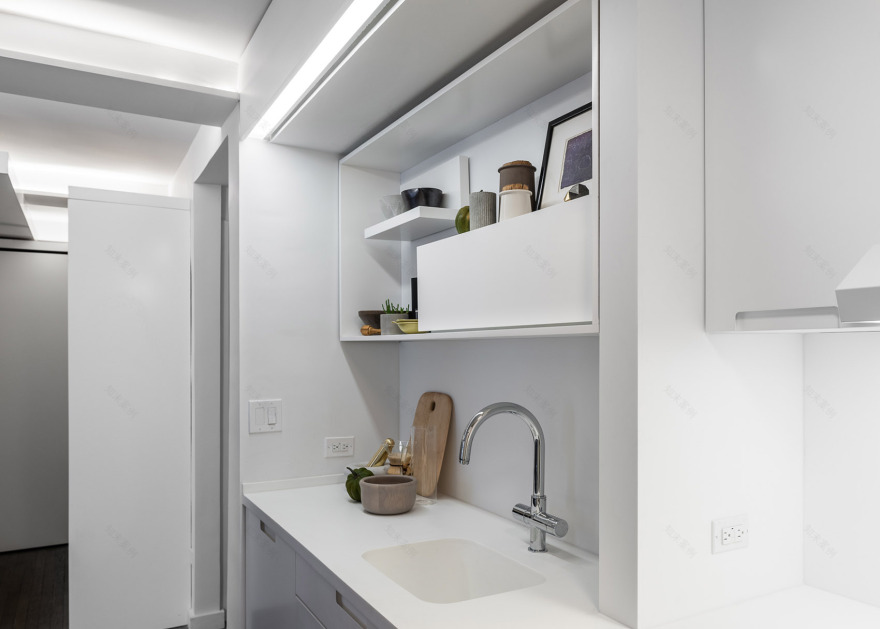
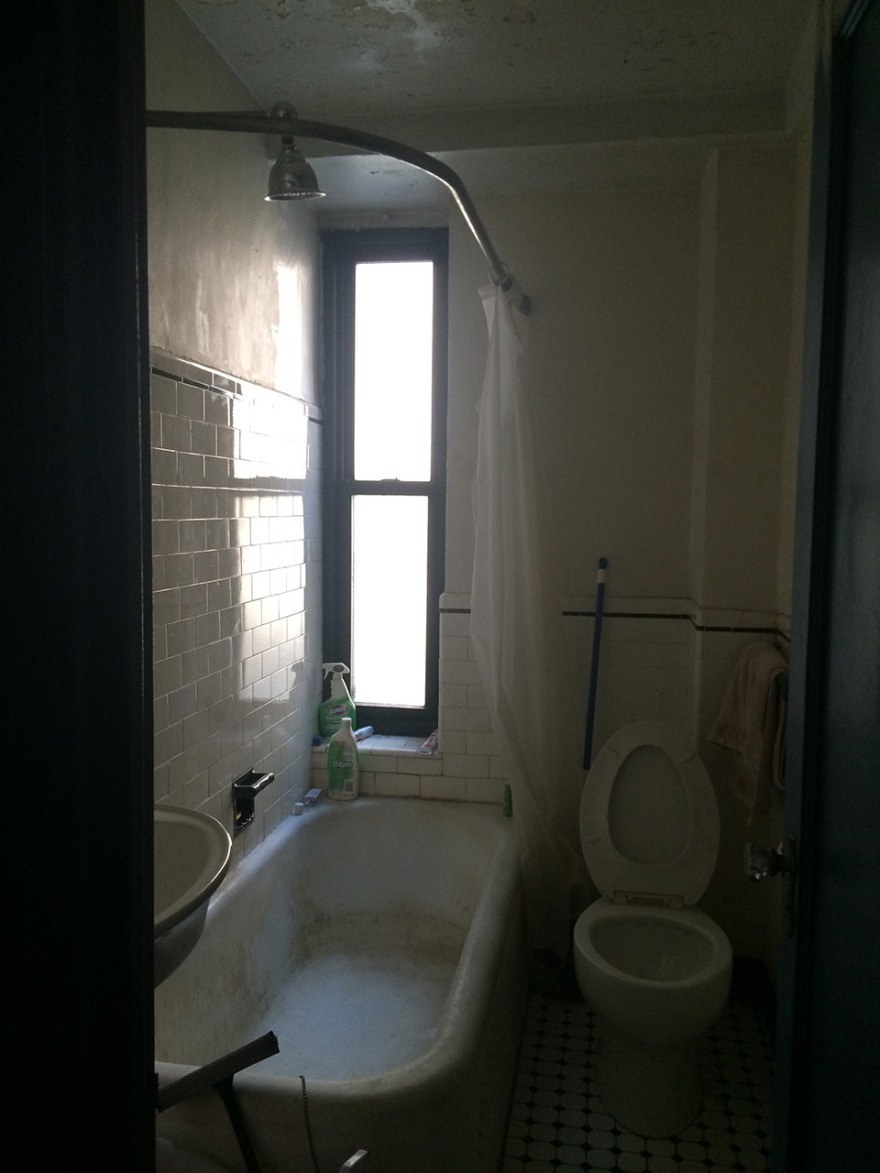
这座位于曼哈顿格拉梅西公园旁,已走过百年时光建筑中的小公寓在MKCA的手下焕然一新。改造后的厨房空间愈显宽敞,简洁的白色整体橱柜中内置了水池,而冰箱和食品存储空间则位于橱柜的对面。浴室被彻底翻修,新增的洗衣 /干衣空间藏于门户,为生活带来了更多便利。LED等待沿着橱柜顶部的凹槽与横梁下部的挡板延伸,照亮了整个室内空间。
Situated in a 1920’s co-op building in the Gramercy Park neighborhood of Manhattan, the apartment was entirely reimagined by MKCA. The existing kitchen was expanded to create more working space. New minimally detailed solid surface counters with integral sink and white lacquered cabinetry with integral pulls were added, along with generous pantry storage and refrigerator. The existing bath was thoroughly renovated and an additional linen and laundry hamper cabinet was added, along with a new pocket door. New LED lighting was added throughout the apartment, in a lighting cove above the cabinetry, and along millwork lighting baffles added to the underside of the existing beams.
▼ 厨房与浴室空间,kitchen and the bathroom

▼ 厨房,kitchen


▼ 浴室,bathroom

MKCA在小尺度变形居住空间的设计中积累下了众多的经验。无论是滑轨、五金件、机动设备还是可移动柜体的内部结构皆为量身定制。狭小的居住空间对于人体工程学、空间的节奏与韵律变化都有着极高的要求,因而能够流畅运转的精巧配件设计至关重要。所有的空间和家具都随着可移动家具位置的变化,功能、空间与流线也在日与夜之间不断切换。
MKCA has developed considerable expertise with transforming and moving architecture, particularly in small residential spaces. The sliding track, hardware, and motorized elements, as well as the internal structure of the moving cabinetry pieces are entirely custom. Sophisticated hardware and components for motion are essential to a project such as this, as is a great sensitivity to the ergonomics, the choreography, and the of use and space in a small apartment. The transactional exchange of space from one use to another and at different times of the day is enabled by the moving elements of the project. Individual spaces and furniture elements were situated in the apartment to favor the intelligent exchange of floor space and to preserve circulation and accessibility of each space in the transition from day to night.
▼ 日与夜的切换,the transition from day to night

PROJECT TEAM
Architecture and Interiors: Michael Chen, Braden Caldwell // MKCA
Photos by Alan Tansey












南京喵熊网络科技有限公司 苏ICP备18050492号-4知末 © 2018—2020 . All photos and trademark graphics are copyrighted by their owners.增值电信业务经营许可证(ICP)苏B2-20201444 苏公网安备 32011302321234号
苏公网安备 32011302321234号客服
消息
收藏
下载
最近