

创作上传
VIP
收藏下载
登录 | 注册有礼
查看完整案例

收藏

下载

分享
项目概况
Resume
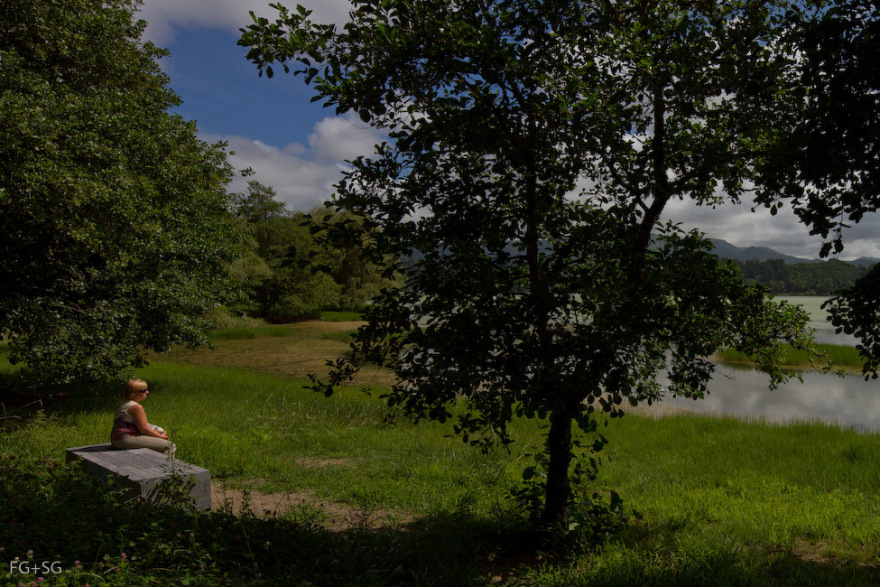
在北大西洋远离大陆的亚速尔群岛上,建筑经过了时间和风雨的冲刷,已渐渐变成了这里自然的另一个特征。在本项目中,建筑师借鉴了这些已烙印在人们记忆深处的形式和材料,简洁轻巧的新建筑体量覆以当地常见的玄武岩片,消无声息地耸立在湖畔的树林之下。
The project intends to evoke the architectural landscape of the Azores, drawing upon the form and material that embed the collective memory of this island and archipelago, that have become, with time, a second nature of this place. Therefore the buildings are archetypal volumes, simple and compact, clad with the local basaltic stone.
▽ 建筑与自然,buildings in nature


Furnas检测与调查中心
The Furnas Monitoring and Investigation Centre
Furnas检测与调查中心是环湖建筑群中体量最大的一座,而一个介于室外和室外之间的中庭空间更让建筑显得分外特别。建筑师在原有梯形体量上进一步进行切割,得出一个三角形的中庭,以及与之相连、对外打开的三角形过渡空间,而建筑室内的种种空间也通过这里显露了出来。这些经过剪切的内部空间也明确了中庭和室内、室外的关系。极富雕塑感的建筑如用一块略经切割的原石,面朝着阳光和湖水。
This building asserts itself as the largest of the group to build around the lagoon. Being the most exceptional building, the Furnas Monitoring and Investigation Centre draws on an intermediate space between exterior and interior – the courtyard. This element results from a subtraction to the volume, cutting it from within the central zone (the vertex of the four roof fields) to the exterior limit of a facade thus enabling access to the interior. This internal courtyard also becomes the point where the main internal compartments are revealed. These spaces, truncated by the subtraction that defines the courtyard maintain all relations between interior/exterior. The building was therefore conceived as a sculpture, as a block of raw matter that is intentionally cut into to capture light and the lagoon itself.
▽ 平面,形态结构和空间演变,plan


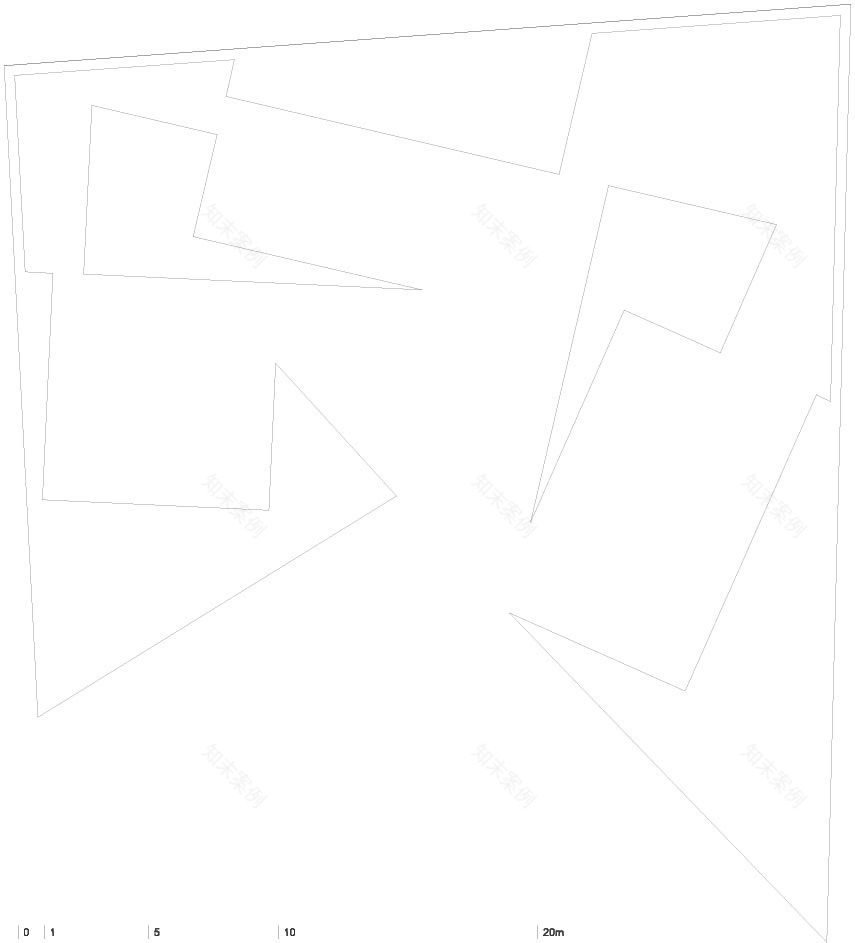


▽ 特征性的中庭连接内外空间,courtyard connecting interior and exterior


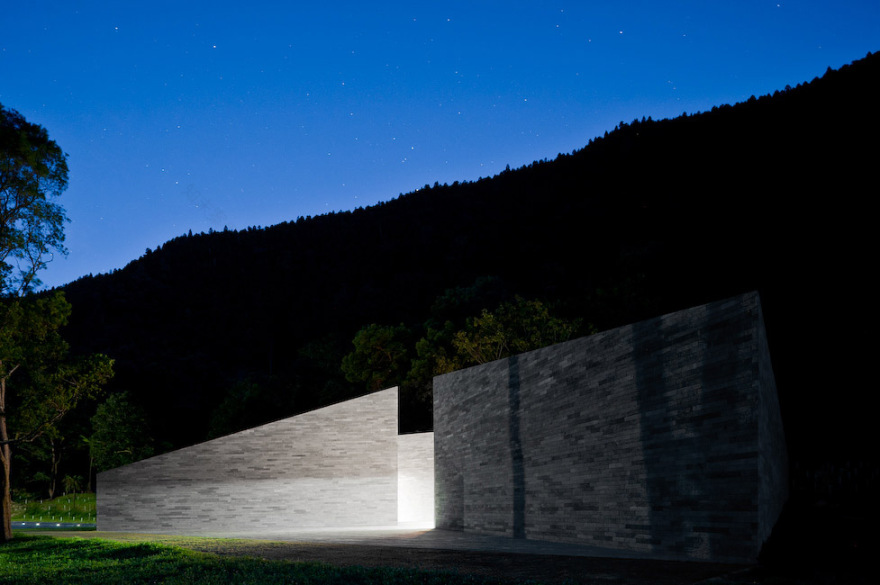
▽ 凌厉的线条极富雕塑感,building was conceived as a sculpture


▽ 内部空间与中庭之间以玻璃幕墙相隔,glazing partitions separate interior and courtyard


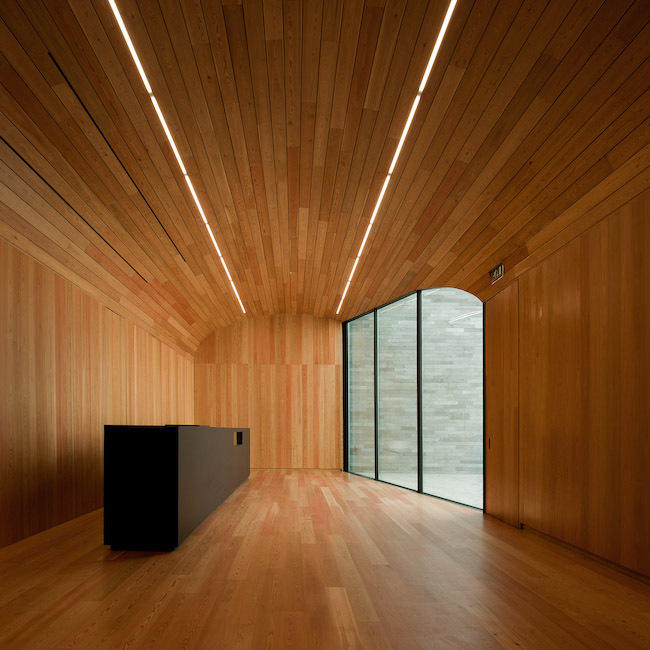
▽ 内部空间,interior


研究人员住所
Accommodation for researchers
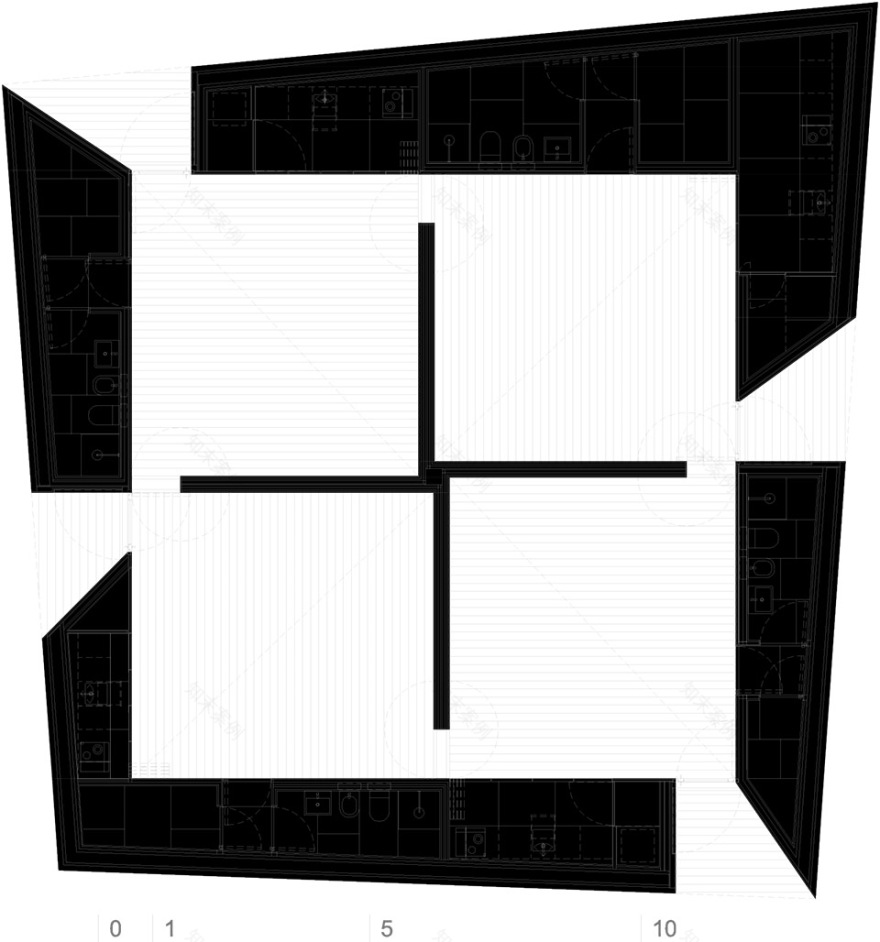
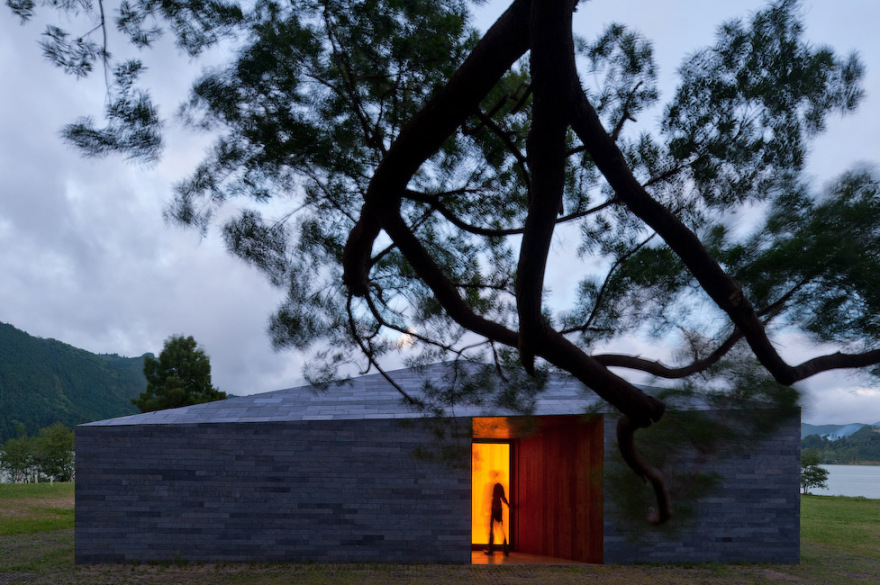
小巧的研究人员临时住所布局紧凑,四坡屋顶下分别是四个居住单元。四个木质体量微微嵌入建筑之中,形成入口,阳光透过其上的玻璃照进室内,带来柔和的自然光线。而由于光照条件的不同,四个内部空间的高度也有着些许的差异。而对自然光照要求较低的厨房、卫生间等服务用房,则背靠着支撑其整个建筑结构的外墙,隐藏在轻盈的木质隔墙之后。
The building for temporary accommodation is a compact volume of four fields compartmentalised into four units. The building is cut in each of the four facades by a wooden threshold that enables the penetration of light and access to each of the accommodation units. There is an established hierarchy of heights between the four spaces related to the solar orientation of each unit. The exterior wall of the building is structural where the necessary infrastructures and services run as oppose to the light interior timber walls.
▽ 平面,形态结构和空间演变,plan


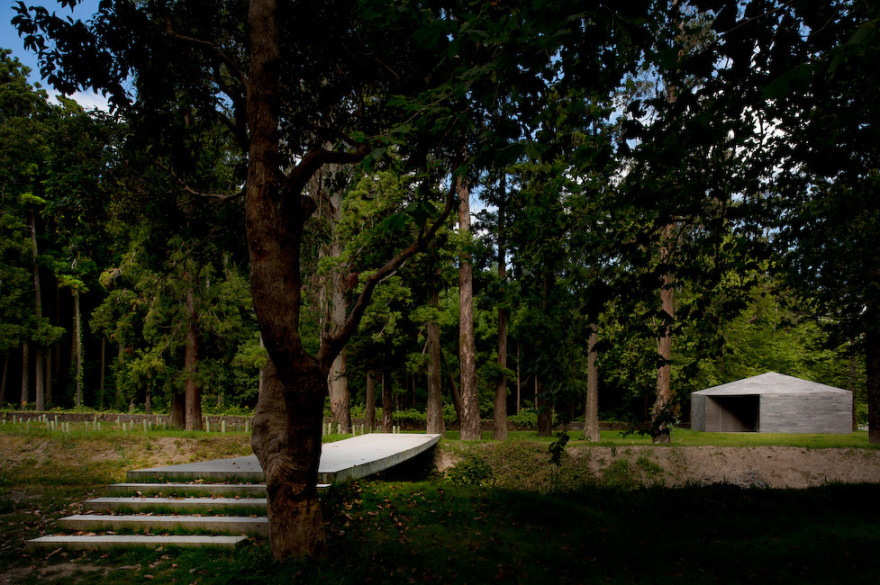
▽ 背靠丛林,面朝湖水的建筑,building in nature


▽ 微嵌入建筑的木质体量形成入口,wooden threshold cut into the façade enables access

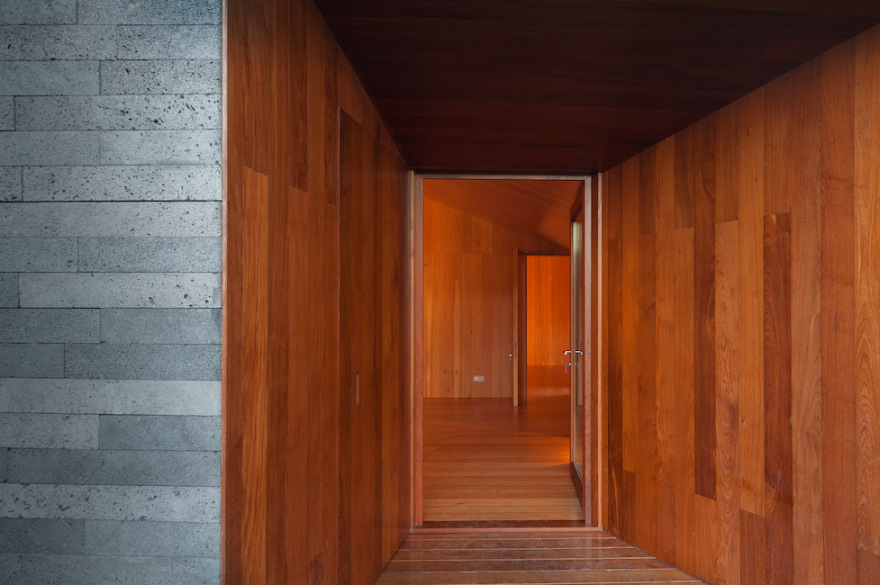
▽ 阳光通过玻璃门进入室内,light shine through the glazing on the door

▽ 隐藏在轻质木隔墙后的服务用房,necessary infrastructures and services run as oppose to the light interior timber walls

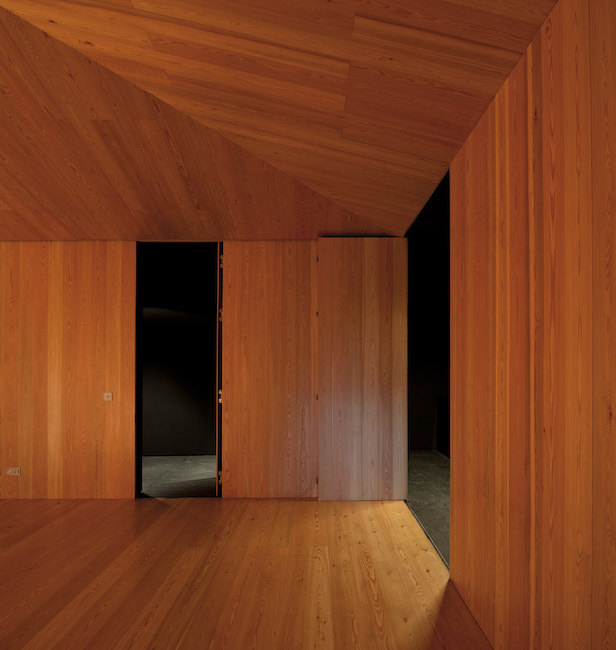
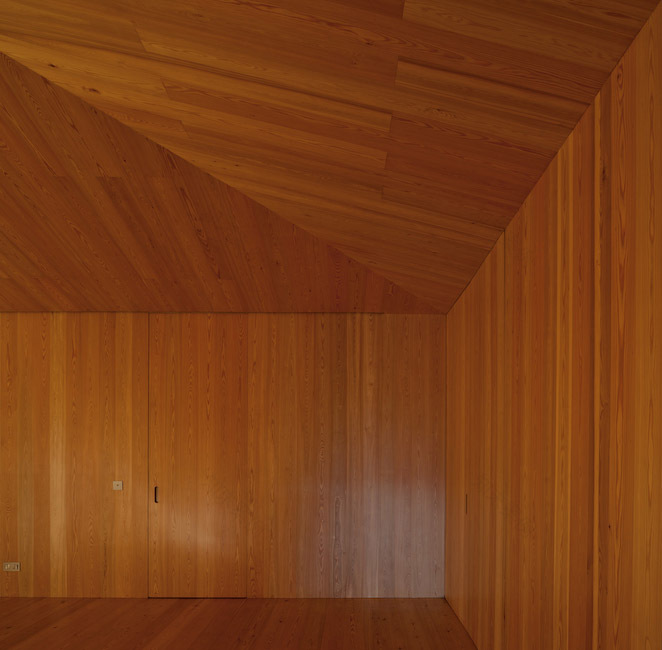
▽ 外部空间,landscape



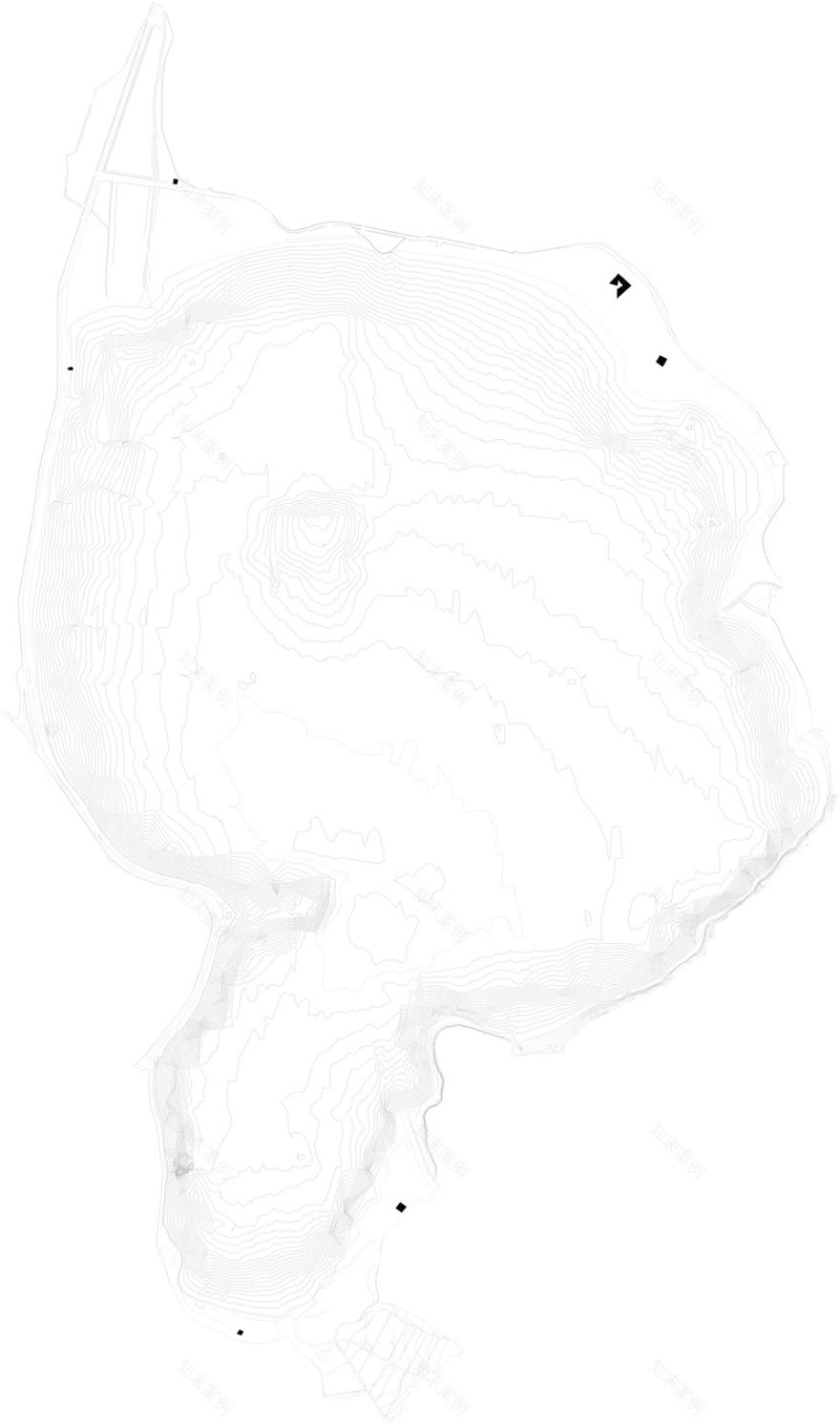
▽ 总平面图( 中部等高线区域为泻湖),site plan
▽ Furnas检测与调查中心剖面,The Furnas Monitoring and Investigation Centre section

▽ Furnas检测与调查中心立面,The Furnas Monitoring and Investigation Centre elevation
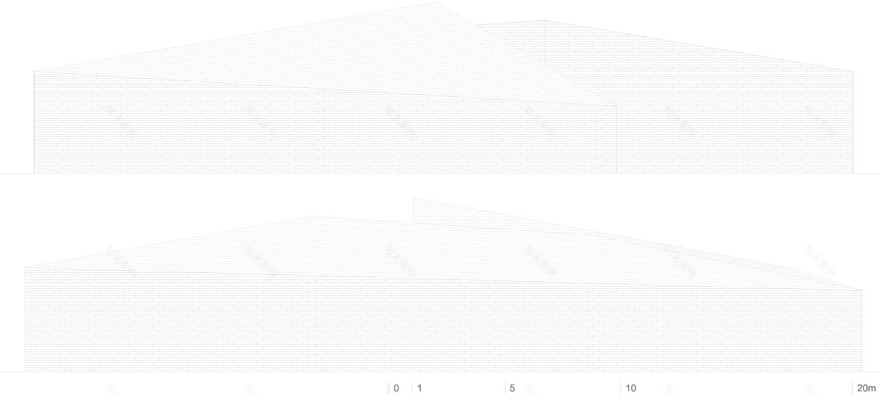
▽ 研究人员住所立面及剖面,Accommodation for researchers elevation and section

▽ 建筑结构,structure

Location: Lagoa das Furnas, S. Miguel, Açores, Portugal
Date of construction: 2008/2010
Authors: Manuel Aires Mateus, Francisco Aires Mateus
Project Leader: Patrícia Marques
Collaborators: Valentino Capelo de Sousa, Mariana Barbosa Mateus, Susana Rodrigues, Joana Simões, Catarina Belo, Francisco Caseiro, Vânia Fernandes, João Caria Lopes
Client: SPRAçores
Engineer: AFAssociados
Landscaping: João Nunes – PROAP
Constructor: Somague
Surface Area: 80.000sqm
Built Area: 1.130sqm
Photos: ©Sergio Guerra + Fernando Guerra




南京喵熊网络科技有限公司 苏ICP备18050492号-4知末 © 2018—2020 . All photos and trademark graphics are copyrighted by their owners.增值电信业务经营许可证(ICP)苏B2-20201444 苏公网安备 32011302321234号
苏公网安备 32011302321234号客服
消息
收藏
下载
最近