

创作上传
VIP
收藏下载
登录 | 注册有礼
查看完整案例

收藏

下载

分享
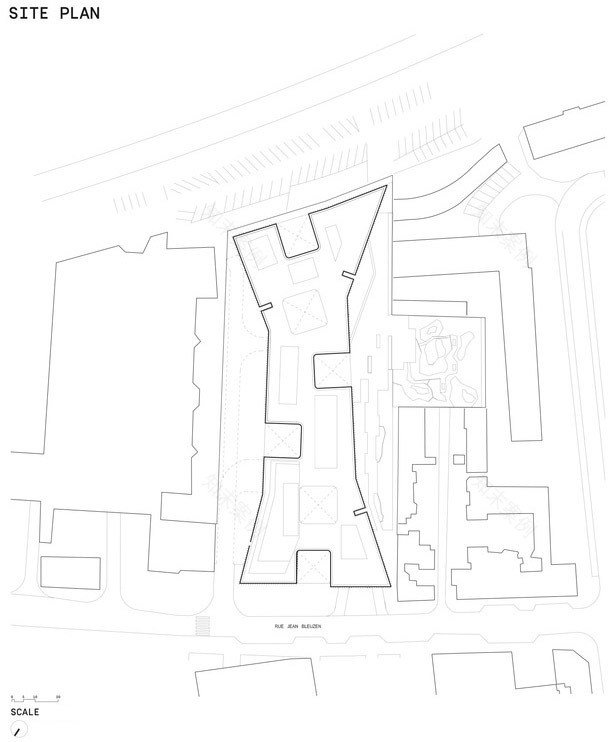
基地的复杂性要求建筑师在设计方案之间对其进行详尽的施工可行性调研。PLU(当地城市发展规划)规定了包括建筑高度、街道走向、临近地块建筑物间距在内的诸多限制条件,为了让建造体量最大化,必须先行了解这些规定。基于这些规定,建筑师设计了最初的模型,并由此发展出多种设计具有适应性的方案,以应对PLU可能发生修订的情况。
调研塑造了方案的基本轮廓:要获得最大的体量,需要建筑跨越北侧Rue Jean Bleuzen街道和南侧铁路线之间的区域。基地分析也显示出需要将周围环境不同的尺度感考虑在内:西侧街道上是鳞次栉比的私人住宅,东侧是一座紧邻的办公建筑,西南角是一组迫近基地轮廓的高层公寓。
The complexity of the site called first of all for a detailed constructibility review. All constraints were modelled on the current PLU (plan local d’urbanisme – local urban development plan) – building heights, street alignments, distances from buildings on neighbouring plots – in order to obtain the greatest possible constructible volume. From this potential form, an initial model was developed, enabling us to define the various design options possible under the current regulations, as well as possible adaptations that could be envisaged in the event of the PLU being revised.
This review established the broad lines of the project with respect to its urban location: the largest volumes are situated facing the street (Rue Jean Bleuzen), to the north, and the railway line, to the south. The site analysis also revealed differences in scale that had to be taken into consideration: to the west, the street frontage abuts private houses, while a neighbouring office building to the east and a number of tall apartment blocks to the south-western are imposing presences on the site perimeter.
▼ 环境,surroundings


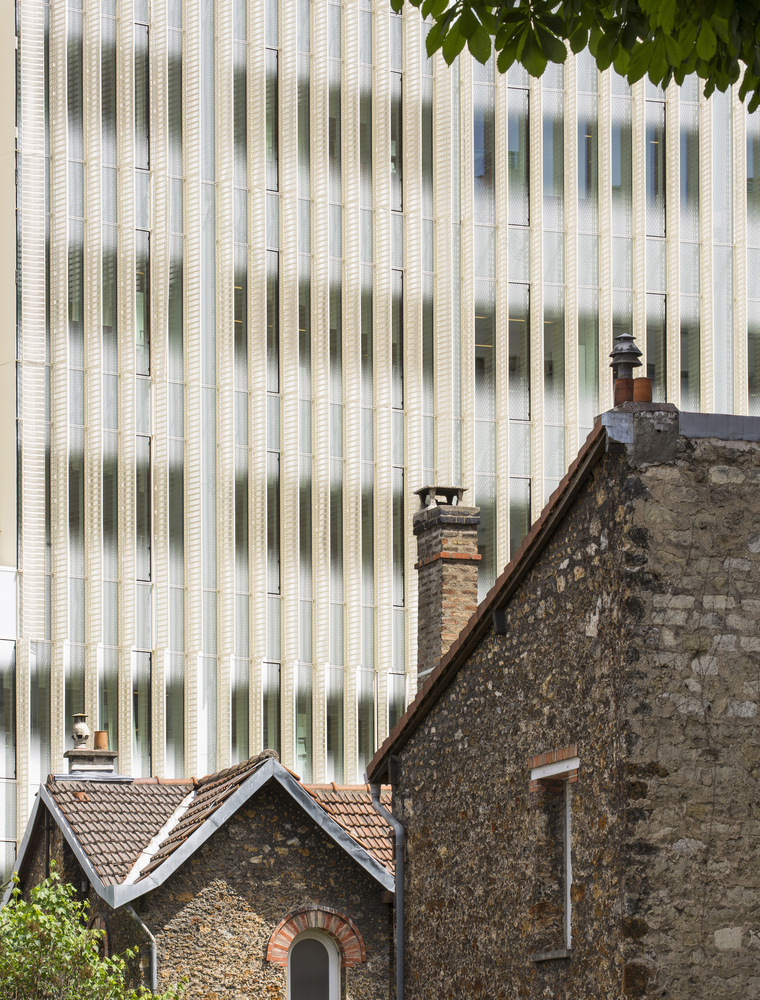

设计中有两点先入为主的要素:其一,基地最引人注目的角度位于西北角,设计师在这里布置主入口和楼前的空地。其二,以此为起点,西立面沿着基地的边界向内侧凹进,塑造出一片开阔的室外活动区:一块迷人的纸沙草花园,其上方是建筑所有的公共区域,包括接待处、展示空间、用餐区等。
Two key choices were very quickly identified. First, as the most visible angle of the site is the north-western corner, this is where the main entrance and esplanade are located. From this corner, the western façade deflects inwards, away from the site boundary, freeing up a generous outdoor area: here, we proposed to create an extraordinary green space, the papyrus garden, on to which all the building’s communal areas, reception spaces, show spaces, dining areas, and so forth, would look out.
▼ 从街道看建筑的主立面,view to the main façade from street


▼ 入口,entrance

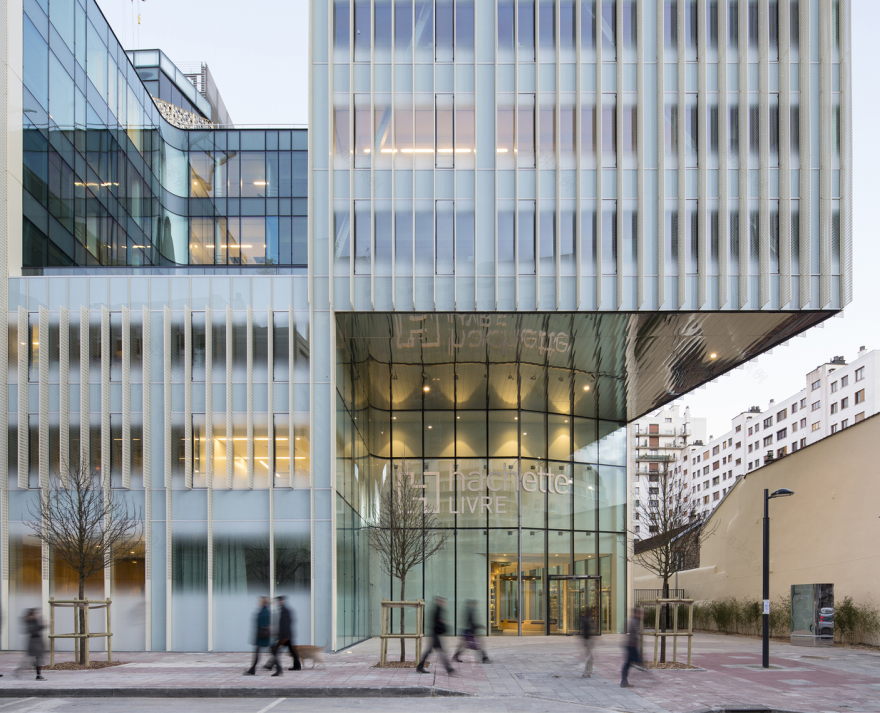
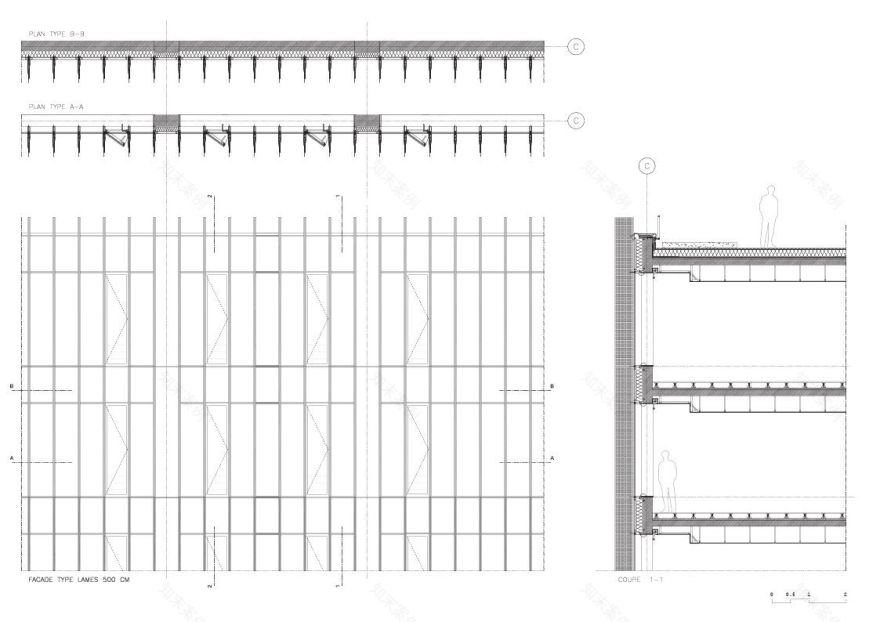
以以上两点为起点,建筑师衍生出多种设计方案,这些方案都力求在符合到城市尺度的同时,将建筑使用者的体验考虑进来。所有的办公室都可以直接采光和观赏室外的景色并形成“居住的封皮”的概念——每个立面都有第二层同建筑等高的竖向遮阳“表皮”。通过这种方式,立面可以被看作独立的单元,同传统办公建筑乏味的外表区别开来,使建筑成为城市的地标。
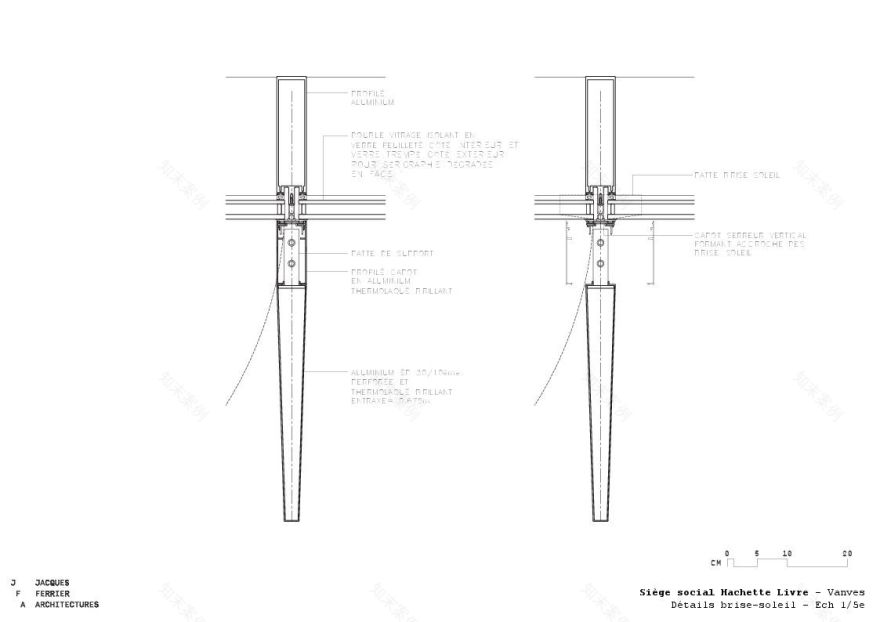
From these starting points, we then developed a number of design options, all of which sought to take into account not only the urban dimension but also the way in which people would work in and use the building. The offices all benefit from direct daylight and outside views, and form what could be regarded as the building’s “inhabited envelope”. All the façades are fitted with a second “skin” in the form of a giant slatted blind, which filters the natural light. In this way, the façades are perceived as independent units, eschewing the mundane appearance of a traditional office building and creating a strong urban architectural image.
▼ 立面表皮设计,second “skin”


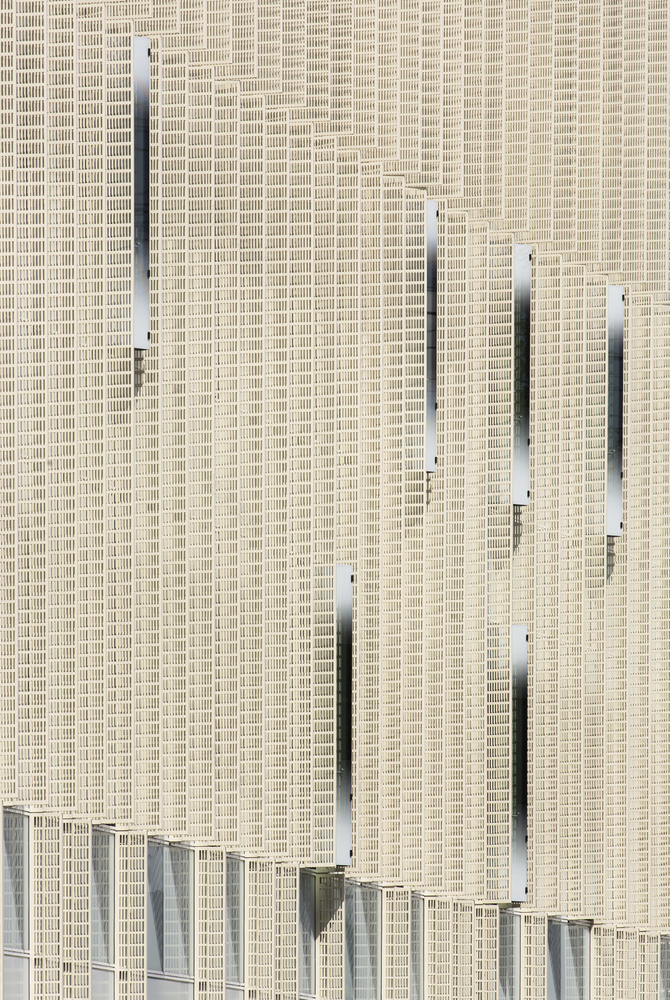

室内中心区域集中了大部分的使用者,是流动空间的重心所在,建筑师将其直接同咖啡厅和餐厅连接起来,使使用者可以观赏到纸沙草花园和附近地区独特的景观。在夏季时节,将地面层直接打开成为室内外联通的空间。花园不仅是一处引人注目的景观,它还同周遭的喧嚣隔离开来,为来到这里的人提供了一片相对静谧的空间。虽然花园为公司所私有,但从街道上仍然能留意到它的存在,吸引经过楼前的来访者通过入口大厅进入这里。
The core zone that concentrates the bulk of user flows forms the centre of gravity of this fluid space, linking it directly with the cafeteria and restaurant, which look out on to the papyrus garden, a unique landscape in the Paris region and an open-air extension of the ground floor in the summer months. This garden, with its curtains of vegetation, not only forms a remarkable landscape but also creates a certain distance from the surrounding environment. While private, the garden is hinted at from the street, and accompanies the visitor from the esplanade through to the entrance hall. It creates a memorable image for outside visitors and the building’s occupants alike.
▼ 夜景,从花园看建筑;night view from garden


在每一楼层的中心,建筑师将使用者流线和其他功能融合进连续流动的空间内。室内环境同传统单调的走廊两侧即是一个个办公室门口的空间形制截然不同。独特的平面设计为多种人流动线提供选择,这也使得集团的各出版室和印刷室得以以灵活多变的排布方式分散在各个楼层。以此形成的开阔的公共场所由凉廊和内院带来有节奏的序列感,把不同的氛围串联在一起,将各具特点的空间封存在同一个建筑表皮之下。
At the heart of each floor, we have combined user flows and all the other functions of the project in a single fluid space. The interior of the building is the polar opposite of a conventional corridor lined with a monotonous array of doors on either side. The unique floor plan allows for a variety of flow options, and consequently also a flexible and adaptable distribution of spaces between the group’s various publishing houses and imprints across each floor. The result is a generous communal space, punctuated by loggias and patios, that links together a series of different atmospheres, encapsulating the individual personalities of the different entities present.
▼ 办公空间,office


▼ 各楼层人流动线示意,user flows on each floor

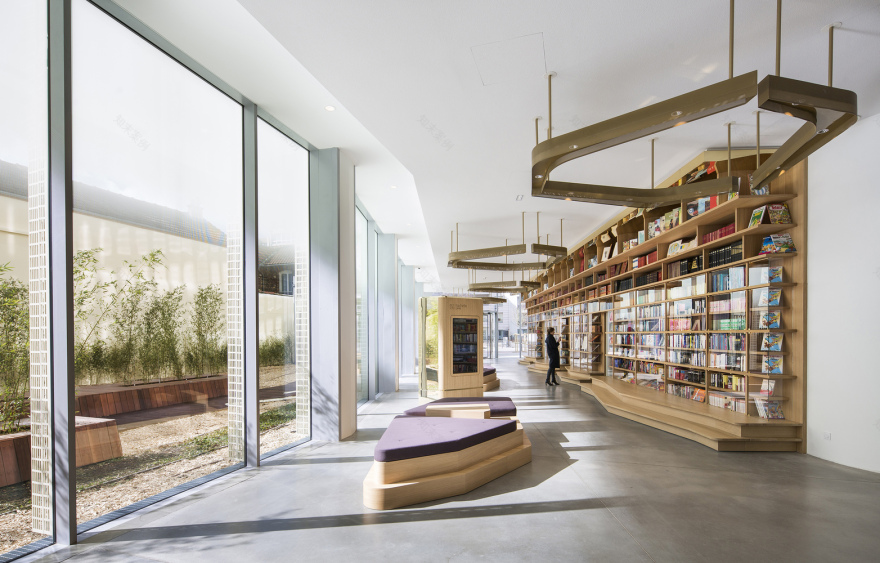
访客真正进入建筑之前需要先通过一条图书展廊,那里展示着公司各出版部门的历史和最近的出版物。离开接待区之后,访客可以通过中心交通核进入上方的楼层。VIP们则被引领前往由展廊空间延展出来的接待室。这里同董事议事厅和会议室相连通,后者比邻咖啡厅和餐厅,可用于举办各种各样的活动。在展廊内,VIP专用的电梯直通顶层,那里设置着另外的会议及用餐空间,在一片纸沙草的包围之中,VIP们可以欣赏近在眼前的开阔美景。
Visitors enter the building via the bookcase gallery, where a number of showcases display recent publications and illustrate the history of the group’s various publishing houses. After leaving the reception area, they can access the upper floors via the central core. VIPs, on the other hand, are led through to the reception gallery, a cosier and more intimate extension of the bookcase gallery. This opens on to the boardroom and a meeting room, which, in conjunction with the adjacent cafeteria and restaurant, can be adapted to accommodate all kinds of events and activities. In the reception gallery, a VIP lift serves the top floor, where the rooftop pavilion, an additional meeting and dining space, is located. It is set in the heart of a second papyrus plantation and boasts views up to the sky, creating a serene, sophisticated reception space.
▼ 图书展廊,bookcase gallery

▼ 咖啡厅/餐厅,cafeteria and restaurant
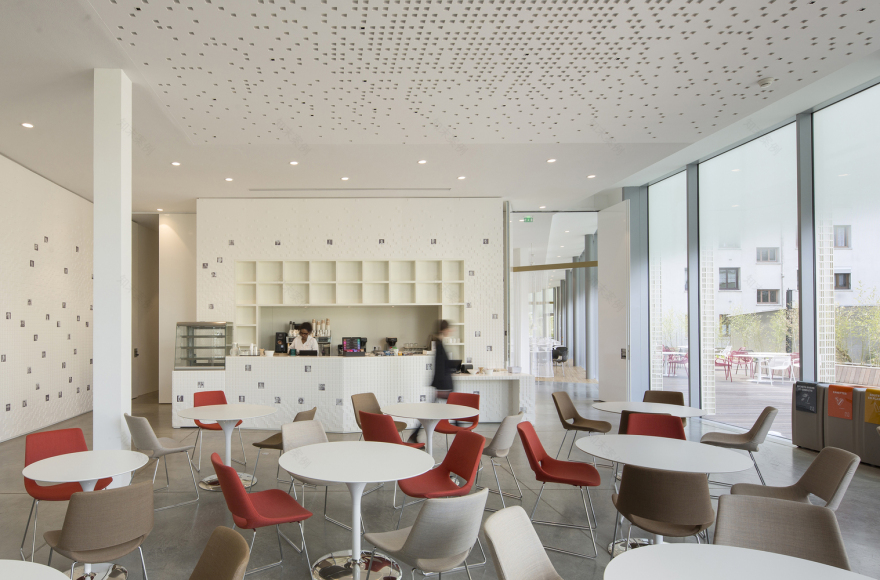

▼ 顶层餐厅,dining area on top floor

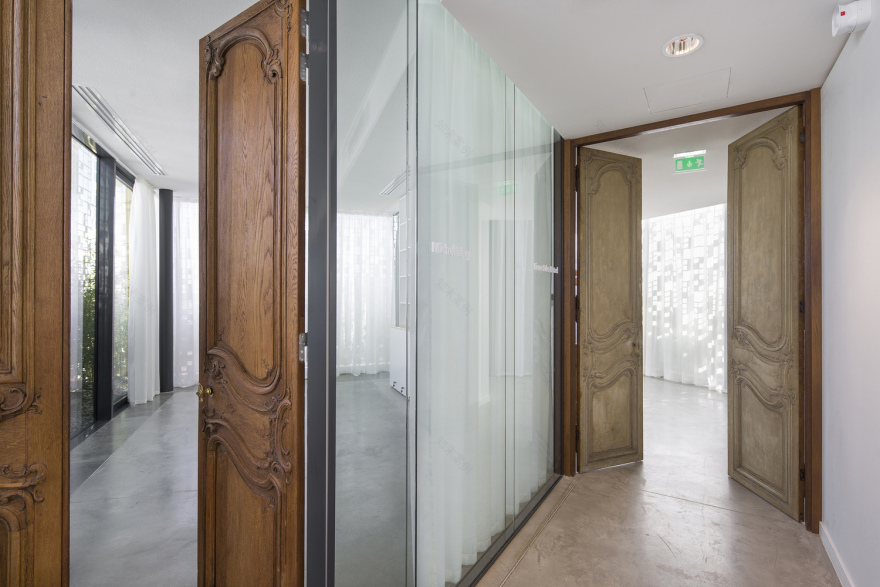
▼ VIP接待室,VIP reception space
▼ 图纸,drawings


Architects: Jacques Ferrier Architectures
Location: Vanves, France
Area: 20700.0 sqm
Project Year: 2014
Photographs: Luc Boegly
Project Manager: StéphaneVigoureux
Rendering Manager: CorentinLespagnol
Project Leader: Adrian Garcin
Landscape: Agence TER
Structure: HDM Ingénierie SA
Fluids, Economist: SOGETI Ingénierie
Acoustics: ORFEA
High Environmental Quality assistance: SOGETI Ingénierie
General Contractor: ABCD




南京喵熊网络科技有限公司 苏ICP备18050492号-4知末 © 2018—2020 . All photos and trademark graphics are copyrighted by their owners.增值电信业务经营许可证(ICP)苏B2-20201444 苏公网安备 32011302321234号
苏公网安备 32011302321234号客服
消息
收藏
下载
最近