

创作上传
VIP
收藏下载
登录 | 注册有礼
查看完整案例



收藏

下载

分享
中国的大环境在改革开放二十几年以来产生了巨大的变化,然而,在北京市郊怀柔区的北沟村却依然保持着一幅旧模样。北沟,顾名思义,是北方村落的一处山沟,因为土地贫瘠,长期被外界和村民所嫌弃。
2005年,北沟村新村委书记上任,目睹北沟村的萧条与荒芜,不甘贫穷落后的他决心带领村民将北沟村建成花园式的新农村。随即于2007年和2015年,为了实现花园农村的梦想,发起了两次《环境革命》。
▼视频,Video ©llLab.
China’s landscape and cities have undergone tremendous transformation in the last few decades. However, the Beigou Village, which is located in the Huairou District and just on the outskirts of Beijing, maintains its traditional historical appearance. The village’s remote location and barren soil has kept this unique site mostly undiscovered by the outside world.
However, in 2005 the secretary of the new village committee of Beigou Village took office and saw great potential. He witnessed the depression and barrenness of Beigou Village and became determined to lead the villagers to build Beigou Village into a garden-like new countryside. Immediately in 2007 and 2015, two “Environmental Revolutions” were launched in order to realize the dream of the garden countryside.
▼项目外观,external view of the project ©存在建筑
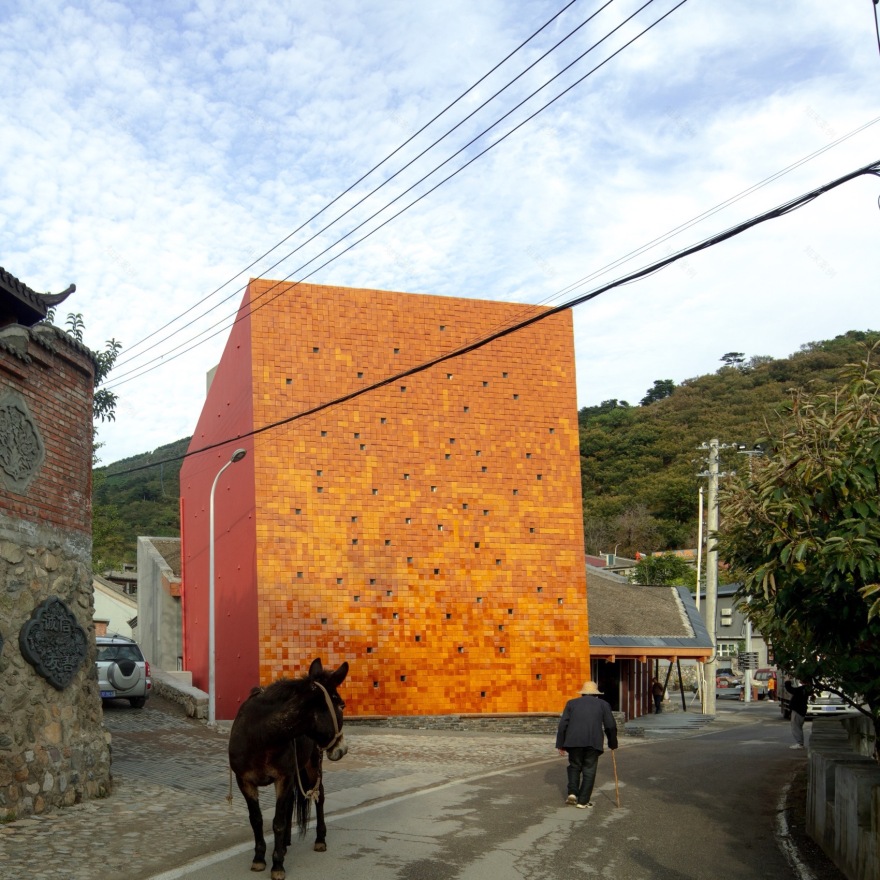
打造环境,打造乡村的环境,仍得从改变村民的思维意识开始试探并实行。环境为了生活,为了乡村与城市之间的生活,状态,意识的逐步平衡,而并非政治目的性的行为,从而在乡村生活环境改善的同时,将城市与乡村之间的意识不平等及心理上的歧视偏见弱化甚至渐渐消除,使两个群体,在不同生活模式的条件下,却能用一种寄托依存的关系,相互融合成为一种新的社会框架。
▼草图与体量生存,sketch and formation diagram ©llLab.

The first step in this transformation was to change the way the villagers felt about the Beigou village. This is, to create a sense of place in the mind of the community.
For many the city and the village represented two very different and opposing conditions. The city meant progress and future while the village was a vestige of a rural past. It was important to change that idea by establishing a new perception of the village rooted in cultural life and its unique sense of place.
A new perspective of the village, where the psychological inequality between the city and the countryside are eliminated. Instead, a new mutual and respectful relation that seeks active growth and integration.
▼由村落远观美术馆,viewing the art museum from the village ©存在建筑
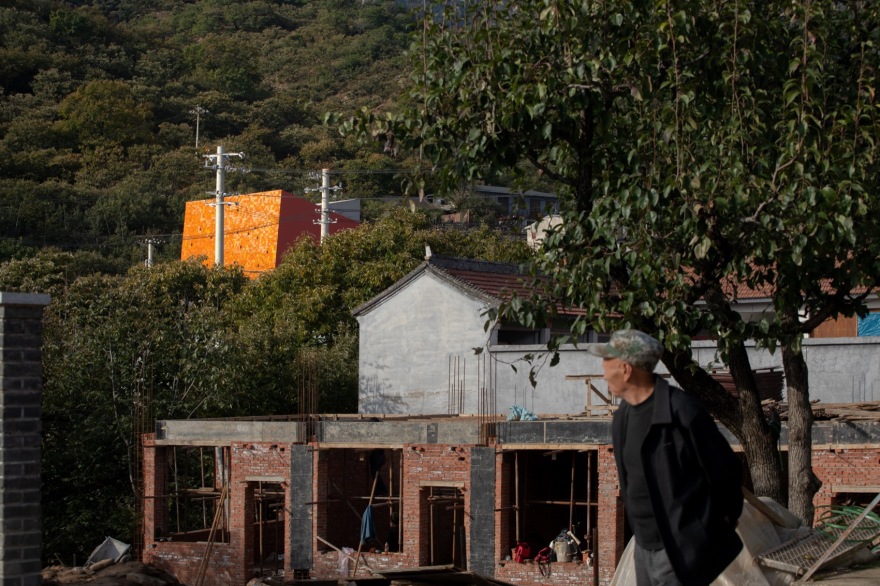
▼街景,street view ©
存在建筑

2007年第一次环境革命开始,以家庭为单位开始传递这样的意识思想,效果并不显著,但也是一个行为的开端,并已经在乡村振兴的动作之下,开始吸引外界的目光。
2008年,废弃的琉璃瓦厂被一对美国夫妇改造成了酒店,并促使开放合作的态度和眼界,开始在环境革命的过程中蔓延生长。
2009年,2049集团来到了北沟村,也开始了对村子一点一滴的扶持和改造。从村民的生活开始进行帮助,与村民沟通并在村民的闲置房与生活模式上进行整合的尝试。于是第二次的环境革命也在这个过程之中渐渐的开始,llLab.叙向建筑设计有幸参与其中,开始了一层层更加深入的改革动作。
▼模型与体量分析,model and analysis diagram ©llLab.
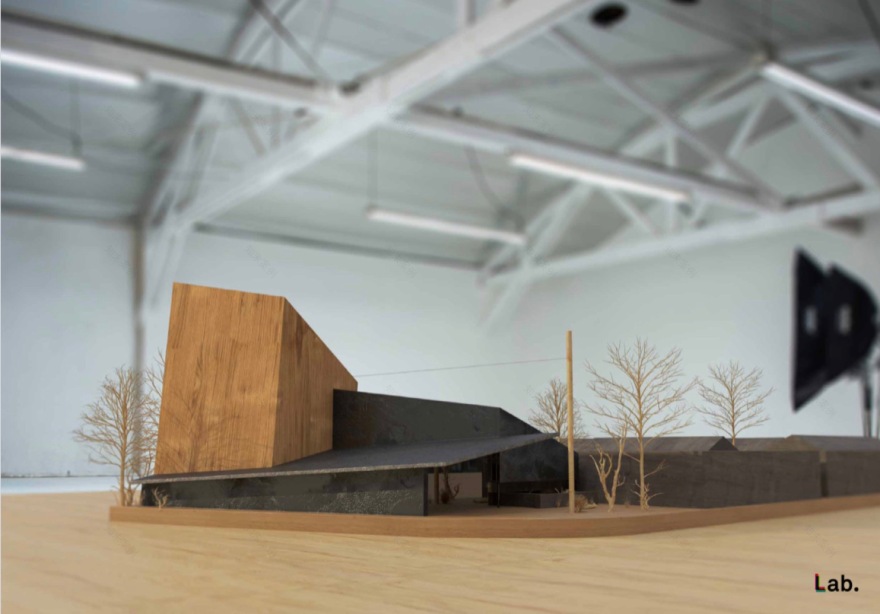

In 2007, when the first environmental interventions began, the residents began to feel different about their village. The effect was not immediate, but it was the beginning of a shift in perception. The success of these initial steps also began to attract outside eyes. Initially perceived as rural revitalization, these small changes were the beginning of something much larger to come.
Gaining momentum, in 2008, the abandoned glazed tile factory was transformed into a hotel by an American couple. The new hotel and their owners had a vision of community development and cooperation. Their attitude and vision began to spread and grow, creating its own form of cultural revolution.
In 2009, the 2049 Group came to Beigou Village and began to support and transform the village bit by bit. Working closely with the community, the 2049 Group began to integrate the villagers’ houses, customs, and traditional trades into their development projects. At this stage, the second set of environmental interventions gradually began.
llLab. was fortunate to join this initiative by participating in it and began a new set of comprehensive design interventions.
▼瓷砖立面,glazed-tile facade ©存在建筑

▼立面近景,closer view of the facade
©存在建筑


▼材料细部,details of the facade ©存在建筑

▼户外区域分析图,analysis diagram ©llLab.

First, the Beigala Nostalgic Station was transformed from a rural farmer’s house kitchen into an old Beijing shabu-shabu, also referred to as a rural living room. At the same time, the former gas station site was redesigned as a village-in-village community. Both projects integrated local typologies, materials and traditional construction methods with a respectfully modern architectural language.
Subsequently, the original tile factory hotel was also renovated. This project was particularly important as it was a key component of the traditions and culture of the Beigou Village and a critical participant in the process of rural development and reform. The project celebrates the tradition of glazed tile making as a cultural component of the villages at the foot of the Great Wall.
▼南立面,south facade ©存在建筑
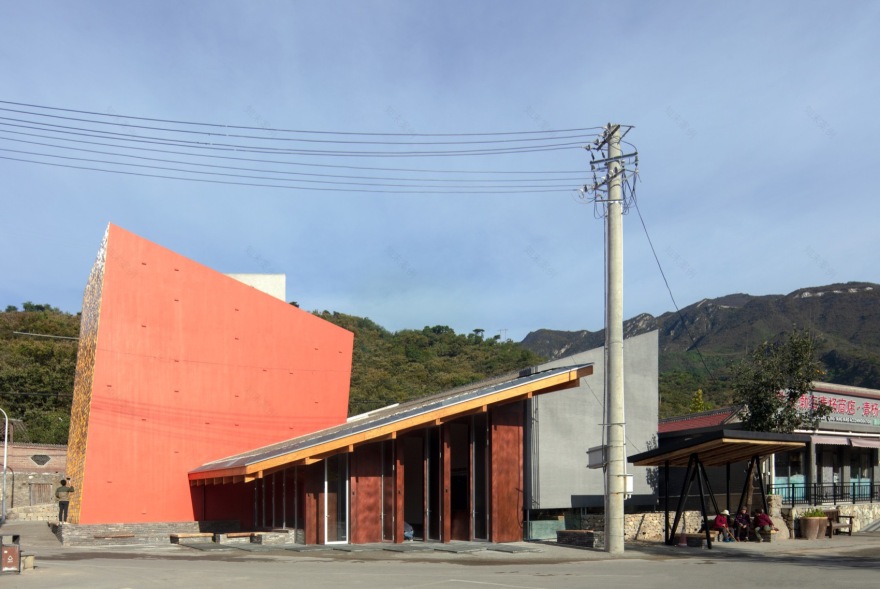
▼南立面以红色涂料为特色,the south facade features red paint ©llLab.

土生土长的北方村落,已经在十几年的环境革命过程中逐渐变化成为与国际意识接轨的先锋村落。
同时,美术馆的概念,已经潜移默化的在不间断的对于乡村振兴,生活融合,社区生活的归纳和讨论之中,逐渐形成。
瓦美术馆,原名北沟乡村艺术建筑美术馆,主意为表达将北沟视为第三故乡,发展乡村,活化乡村,同时使用艺术的表现手法,敢于将乡村形象与城市美学融合的一种先锋的态度。
▼剖透视图,perspective section ©llLab.

The shift from outlier to cultural center has not only affected Beigou but it has also started a new revolution in the neighboring villages in the north.
Over the last ten years, each village has gradually started to pioneer initiatives that celebrate their own unique cultural identity and social character.
The most recent project in Beigou, WAAAM (originally named the Glazed-Tile Art.Architecture Museum), is a testament to the broad and meaningful impact that rural revitalization has brought to the community. The museum is designed to commemorate the pioneering attitude of Beigou.
A daring community that challenged itself with reinventing the concept of the rural village through environmental development, art installations, and architectural interventions.
▼户外座位区,outdoor seating area ©存在建筑

▼社区活动空间,community activity area ©存在建筑
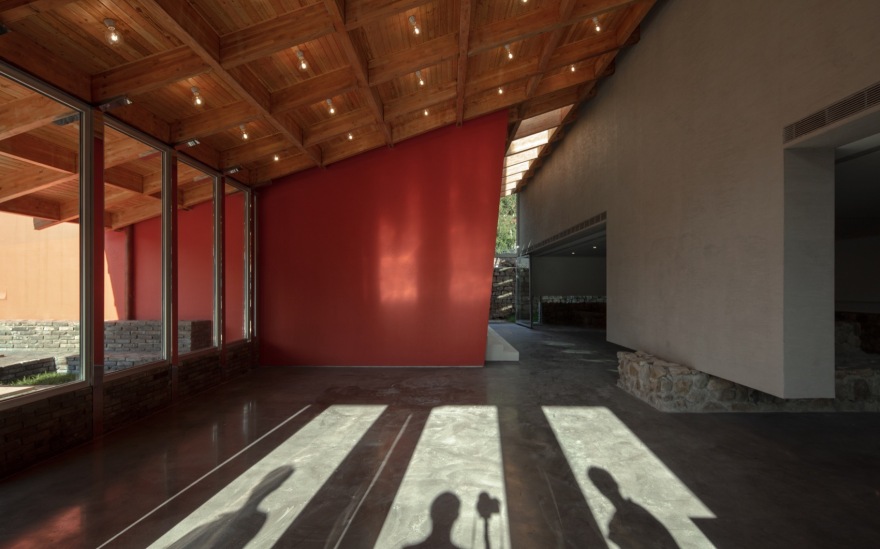

项目本身基于对原址及村民生活的尊重,将艺术的表现与北沟乡村文化,以空间为界面,意识形态作为前提,进行感官上的融合,将视觉感觉的矛盾体结合,并在材料与空间的使用手法上,将演化用一种以文化遗产为基础,以人为动力的变化空间模式,将这股象征新的力量,把北沟视为第三故乡的人群,用憧憬的方式体现出来。
▼剖透视图,perspective section ©llLab.

The concept of the WAAAM museum is based on the history of the site, the villagers’ daily lives and the integration of traditional craft. The building negotiates the duality of the new dynamic sense of place in the village with the different eras, ideologies and cultural generations that have claimed this village as their own before.
▼冥想展览空间,exhibition / meditation area
©存在建筑

▼天窗,skylight ©存在建筑

▼瓷砖立面,glazed tile facade
©存在建筑

建筑及空间的材料,以本地的文化为基础,不同空间,不同时代,不同的群体和意识形态,均敢于就地取材,却用不同的理解和工艺,赋予不同的意境体现方式。
空间的内容,保留当地村民的生活模式,与新空间结合,并用概括的空间使用法,使空间能够沿着时间延伸。
The museum takes a critical approach to local materials by positioning them in a new light, expressing their features in a more artistic and contemporary sensibility. Similarly, the exhibition spaces of the WAAAM mark the radical collision of cultural eras. The space is designed to act as a platform for communication between the permanence of Beigou and the ever-changing avant-garde consciousness of their people. The building records the context of the past, the ambitions of the presents while embracing the uncharted territory of the future.
▼屋顶远观,viewing the top floor at distance ©存在建筑

▼顶层展览空间,top floor exhibition area ©存在建筑

因此,文化成为演变的基石,演变却又融合了当地的文化,不受时间的限制,因为内容本身的演化,也给下一步引导了方向。
北沟乡村建筑艺术美术馆的空间及展示内容,将会是一种勇敢,甚至激进的碰撞,一种固定思维与先锋意识的交流的平台,它记录了过去的脉络,描述了现在的试探,却又引申到了未知的领域。
The building is structured around three thematic interior spaces, titled: “Beigou Memory”, “Beigou Now”, and “Beigou Future”. “Beigou Now”, located near the entrance, welcomes visitors into the museum and includes functional areas such as a cafe, a community activity room, and outdoor rest areas.
▼夜景鸟瞰,aerial view at night ©存在建筑

▼夜景外观,external view of the project at night ©存在建筑


主体建筑方面:
室内部分设置3个主题空间,分为北沟的记忆、北沟的现在、北沟的未来三部分。
“北沟的现在”主题空间位于入口部分,包括咖啡厅、社区活动间、室外休息区等功能区域。
“北沟的记忆”位于原建筑基底位置,设置有北沟历史展览、原址建筑记录、北沟建筑文化等主要展览空间,以及位于二楼的多功能厅,可作为学术报告厅、临时展厅、聚会厅等功能使用。
“北沟的未来”塔楼配有主要的阶梯展览空间,一层的服务功能空间,以及顶楼的长城眺望景观露台等功能。
北沟村的环境革命,原以为会因为这样的改变而画上句号,然而,却发现是个更新的开始。让人期待。
"Beigou Memory" is located at the base of the original historic building and encompasses the main exhibition spaces. This includes the history of Beigou exhibition, a display showcasing the historical records of the original building, and an exhibition on Beigou’s architectural culture. This building also houses the multifunctional hall on the second floor, which can be used as an academic lecture hall, temporary exhibition hall, or meeting hall.
"Beigou Future" tower hosts an exhibition space within its main staircase, a building services space on the first floor, and a terrace overlooking the Great Wall on the top floor.
Beigou Village is now a model for rural China through its pioneering approach to rural development. Combining environmental, cultural, and architectural development as drivers for urban revitalization and social transformation.
▼街道夜景,street view at night ©存在建筑
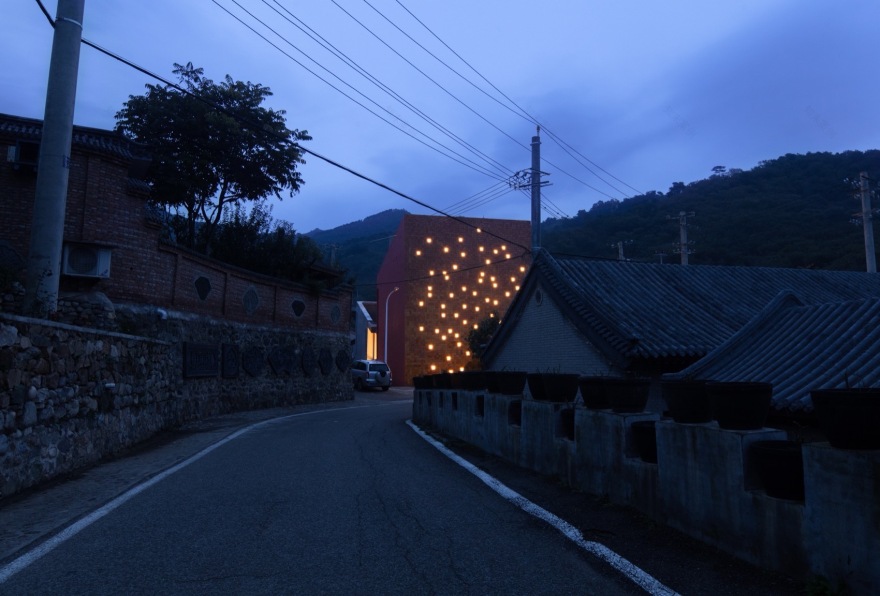

▼南立面夜景,night view of south facade ©存在建筑


▼模型,model ©llLab.
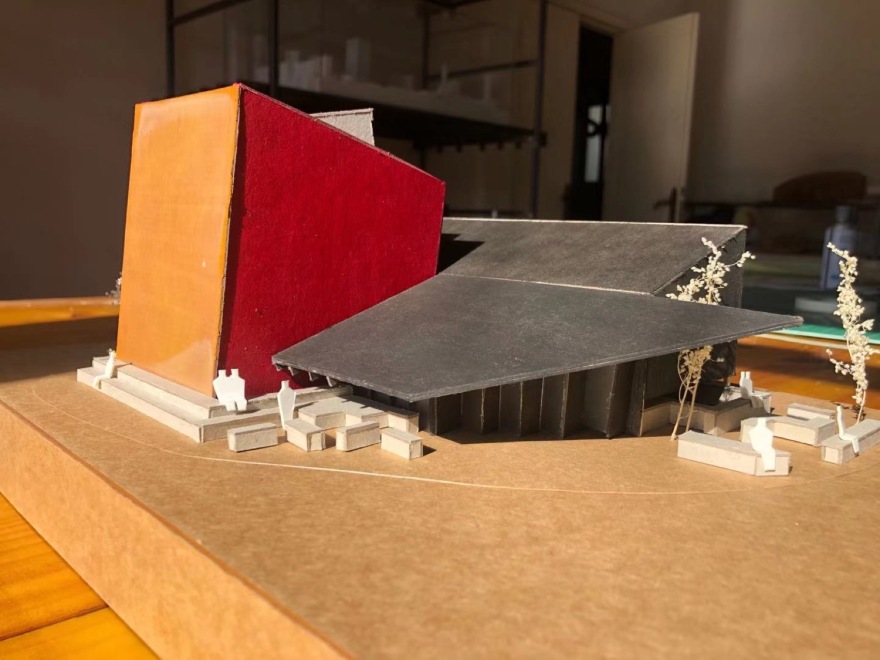


▼瓷砖立面模型,model – the glazed facade side ©llLab.

▼模型 – 户外空间一侧,model – outdoor area side ©llLab.

▼材料实验,experiment of material ©llLab.


▼立面组成实验,facade mokeup ©llLab.

▼总平面图,master plan ©llLab.

▼日常使用场景 – 一层平面图,day to day 1F ©llLab.

▼日常使用场景 – 二层平面图,day to day 2F ©llLab.

▼日常使用场景 – 三层平面图,day to day 3F ©llLab.

▼展览场景 – 一层平面图,exhibition 1F ©llLab.

▼展览场景 – 二层平面图,exhibition 2F ©llLab.

▼走秀场景 – 一层平面图,runway 1F ©llLab.

▼走秀场景 – 二层平面图,runway 2F ©llLab.
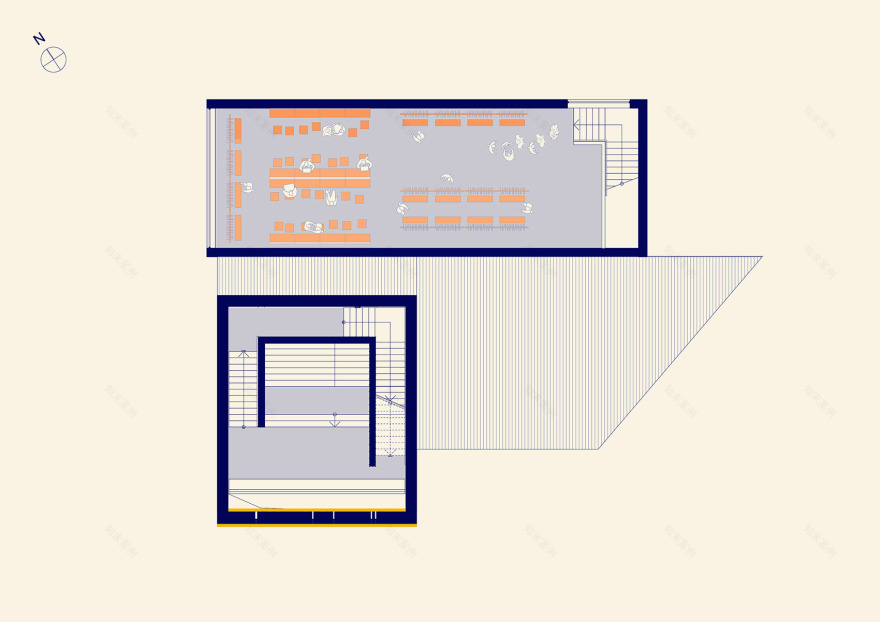
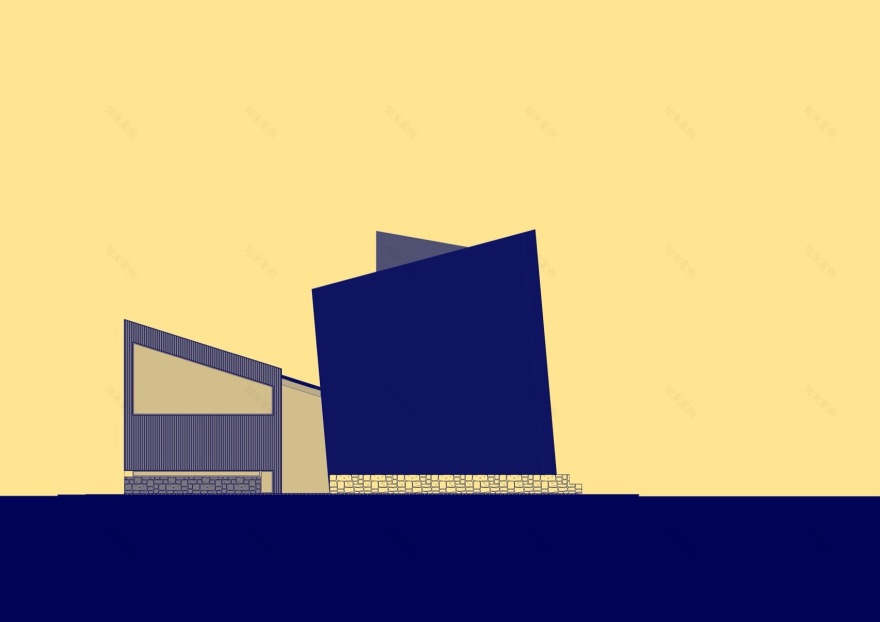
▼立面图,elevations ©llLab.




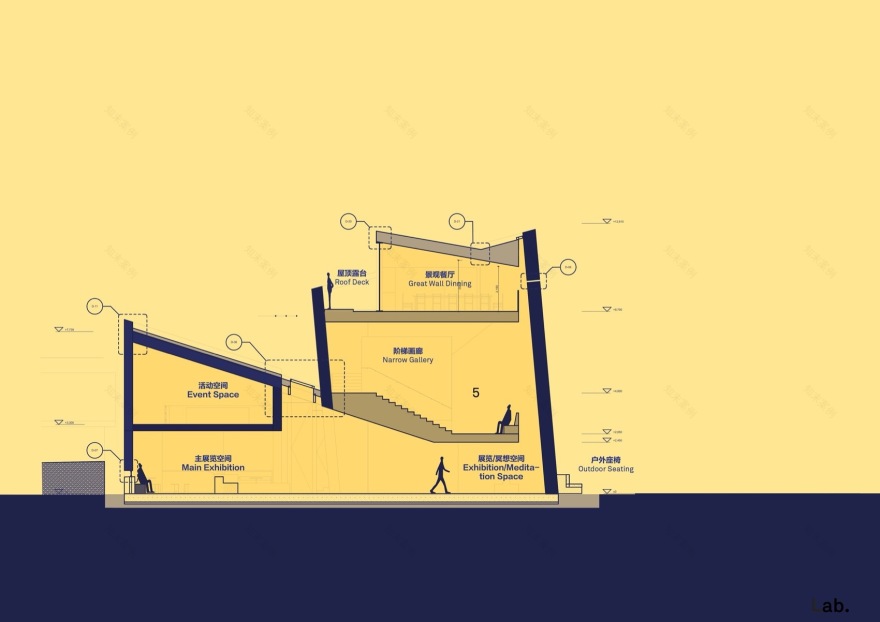
▼剖面图,sections ©llLab.




▼细部详图,construction details ©llLab.


项目地点:北京市怀柔区北沟村
项目基础信息:总建筑面积: 660㎡,占地约: 540㎡,其中建筑占地: 363㎡,庭院占地: 177㎡。
项目时间:2020年9月3日 – 2021年9月30日。
项目阶段:已建。
项目业主方:贰零四玖投资集团。
项目建筑设计:llLab. | 叙向建筑设计。
项目合伙人:刘涵晓, Luis Ricardo。
项目负责人:Henry D’Ath, 赵懿慧。
项目设计团队:尹凌空, 陈霏, 胡乐贤, 严予隽, 刘凌灵, Camilo Espitia。
项目结构设计:栾栌构造设计事务所。
项目工程总包:华装兄弟(北京)装饰工程有限公司。
项目木结构施工:青岛顺兴林木结构工程有限公司。
项目外立面施工:
琉璃瓦立面:北京佟氏建筑材料有限公司。
红墙面立面:佐敦涂料(张家港)有限公司。
建筑摄影:存在建筑
Project Location: Beigou Village, Huairou, Beijing, China
Site Area: 540m2
Total Construction Area: 660m2
Footprint Area: 360m2
Landscape Area: 177m2
Project Timeline: September 3, 2020 – September 30, 2021
Project Status: Built
Project Client: 2049 Investment Group
Architectural Design: llLab.
Project Partners: Hanxiao Liu, Luis Ricardo
Project Lead: Henry D’Ath, Yihui Zhao
Project Team: Lingkong Yin, Fei Chen, Lexian Hu, Yujun Yan, Lingling Liu, Camilo Espitia
Structural Design: lalu partners structure consulting
General Contractor: Huazhuang Brothers Decoration Engineering Company
Timber Construction: Qingdao Shunxing Timber Structure Engineering Co. Ltd.
Project Façade Construction: Glazed-tile Façade: Beijing Tongshi Architectural Materials Co.Ltd.
Red Façade: Jotun Coatings (ZJG) Co. Ltd. – Shanghai
Photography: Arch-Exist Photography
南京喵熊网络科技有限公司 苏ICP备18050492号-4知末 © 2018—2020 . All photos and trademark graphics are copyrighted by their owners.增值电信业务经营许可证(ICP)苏B2-20201444 苏公网安备 32011302321234号
苏公网安备 32011302321234号客服
消息
收藏
下载
最近