

创作上传
VIP
收藏下载
登录 | 注册有礼
查看完整案例

收藏

下载

分享

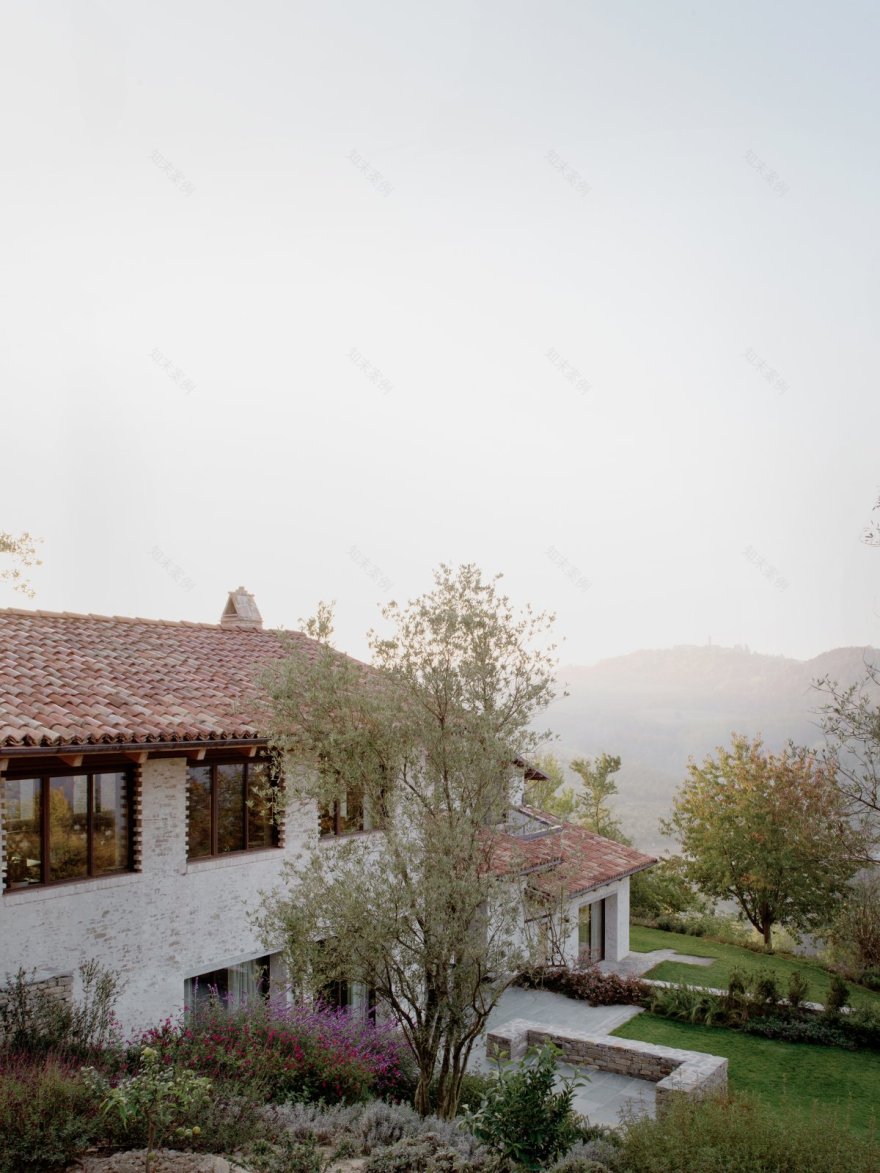





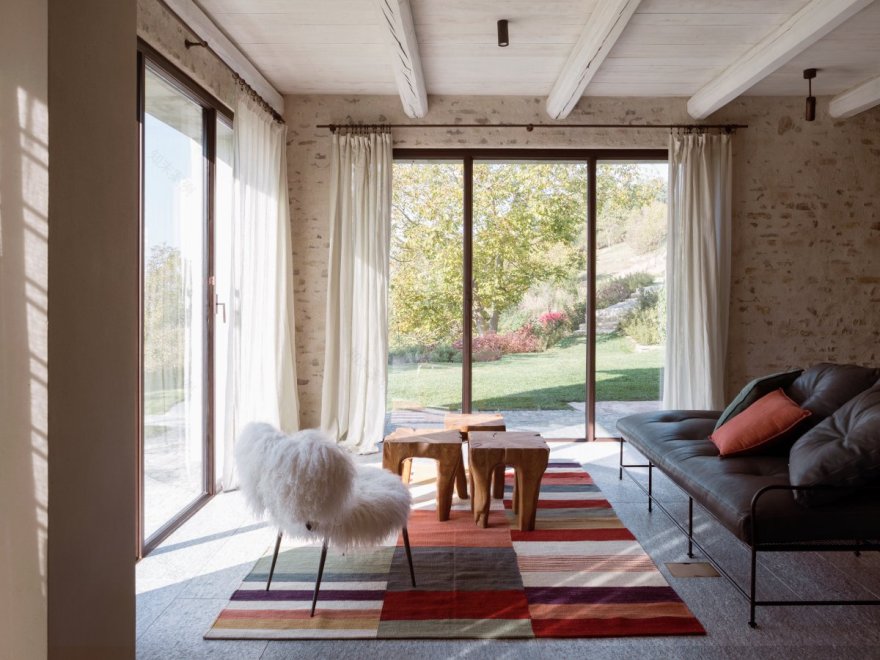


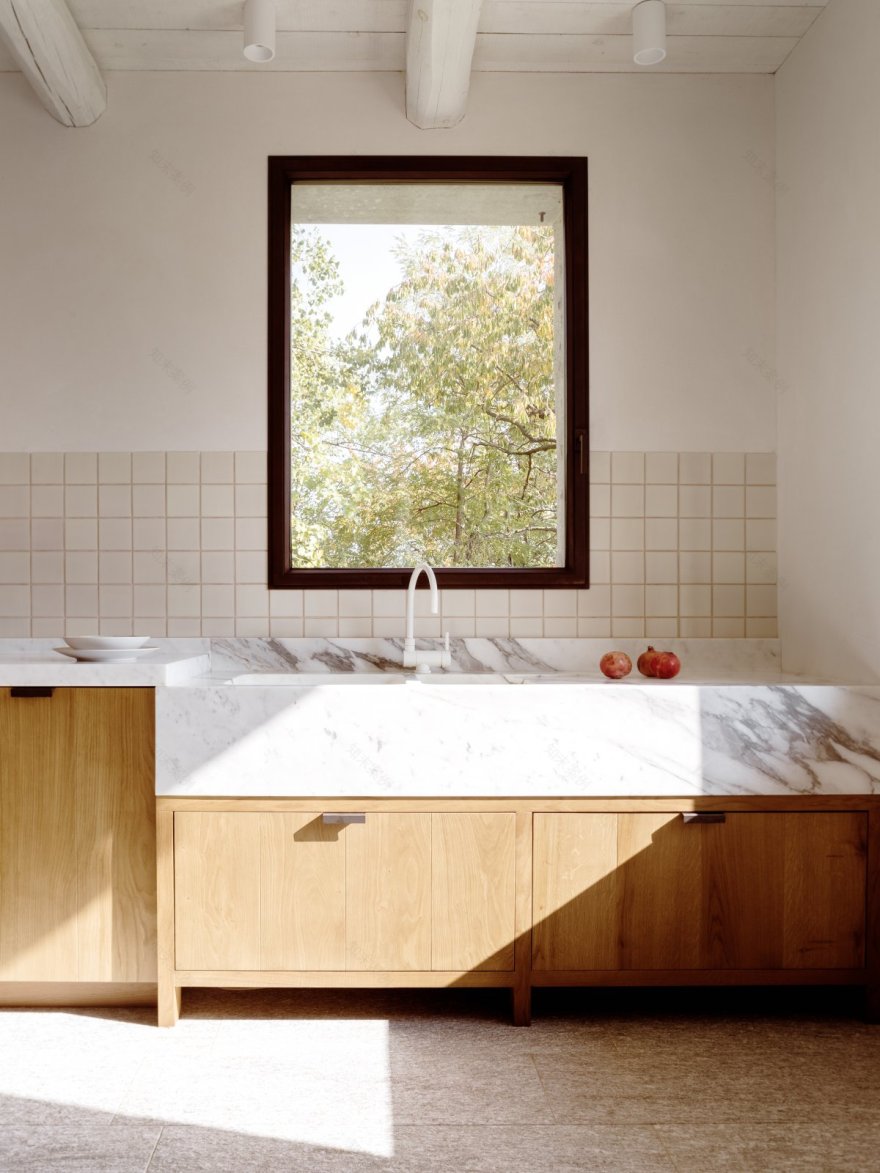


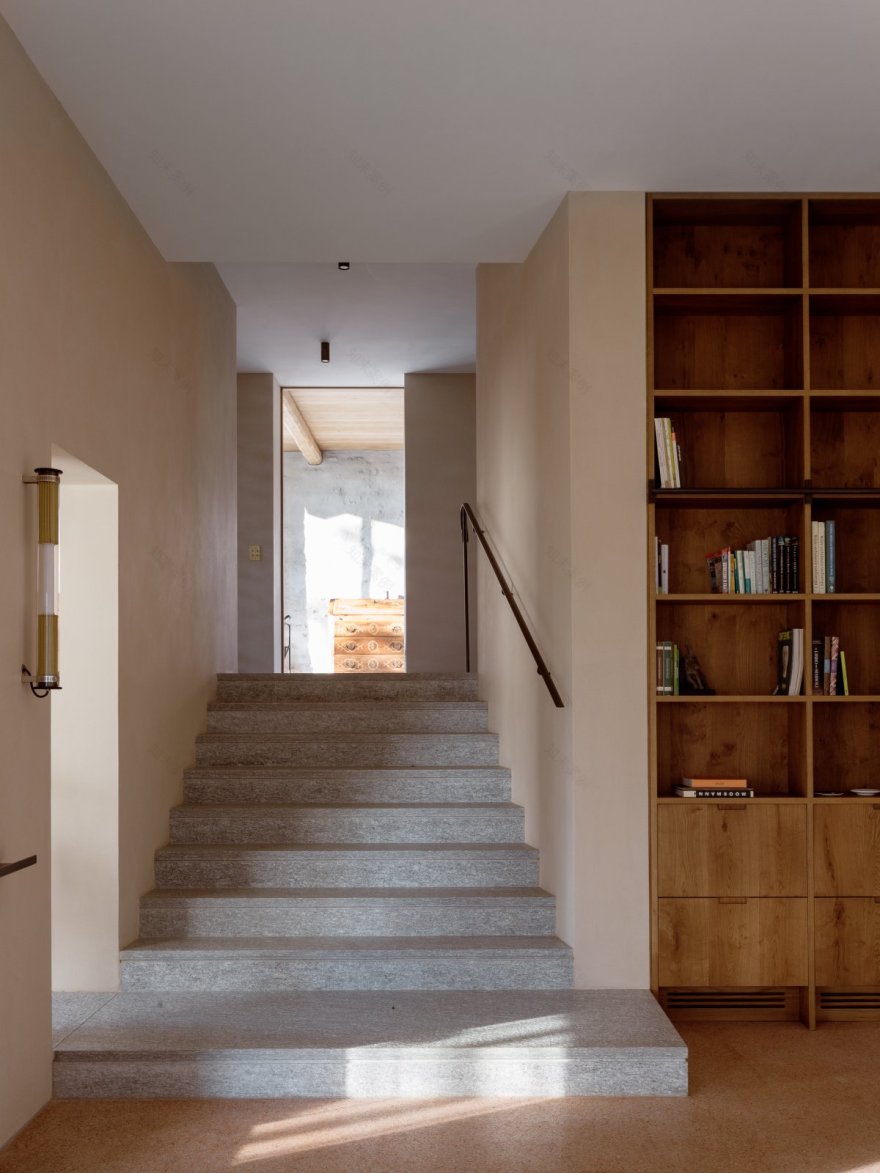


Cascina位于意大利皮埃蒙特地区,是一座拥有200年历史的农庄建筑群,经过翻新后成为住宅和工作室。该翻新项目体现了Jonathan Tuckey Designs在保留原有结构的同时,采用可持续的现代干预方法。最终,这座经过精心修复的前农业建筑焕发出新的家庭特色,让人可以欣赏到覆盖山谷的葡萄园美景。
Cascina is the refurbishment of a 200-year-old historic farmstead complex into a home and studio, located in the Piedmont region of Italy. The renovation is indicative of Jonathan Tuckey Designs approach in retaining original structures whilst implementing sustainable methods of contemporary intervention. The outcome is an exquisitely restored, former agricultural building that has a new-found domestic character to appreciate the sweeping vistas of vineyards that blanket the valley below.
Cascina型建筑是意大利北部皮埃蒙特地区的典型建筑,其特点是具有大型功能性开口的农业建筑,与具有较小开口的住宅建筑紧密相连。可持续发展战略是该项目最重要的目标,项目重新利用了原有的大部分结构,包括石墙、屋顶瓦片和参差不齐、未经锯切的木质屋顶骨架。
The Cascina typology is typical of the Piedmont region of Northern Italy, characterised by an agricultural building with large, functional openings, linked in close proximity to a domestic building with smaller openings. Sustainable strategies were at the forefront of ambition, with the scheme reusing much of the original fabric including stone walls, roof tiling and the gnarled, unsawn timber roof skeleton.
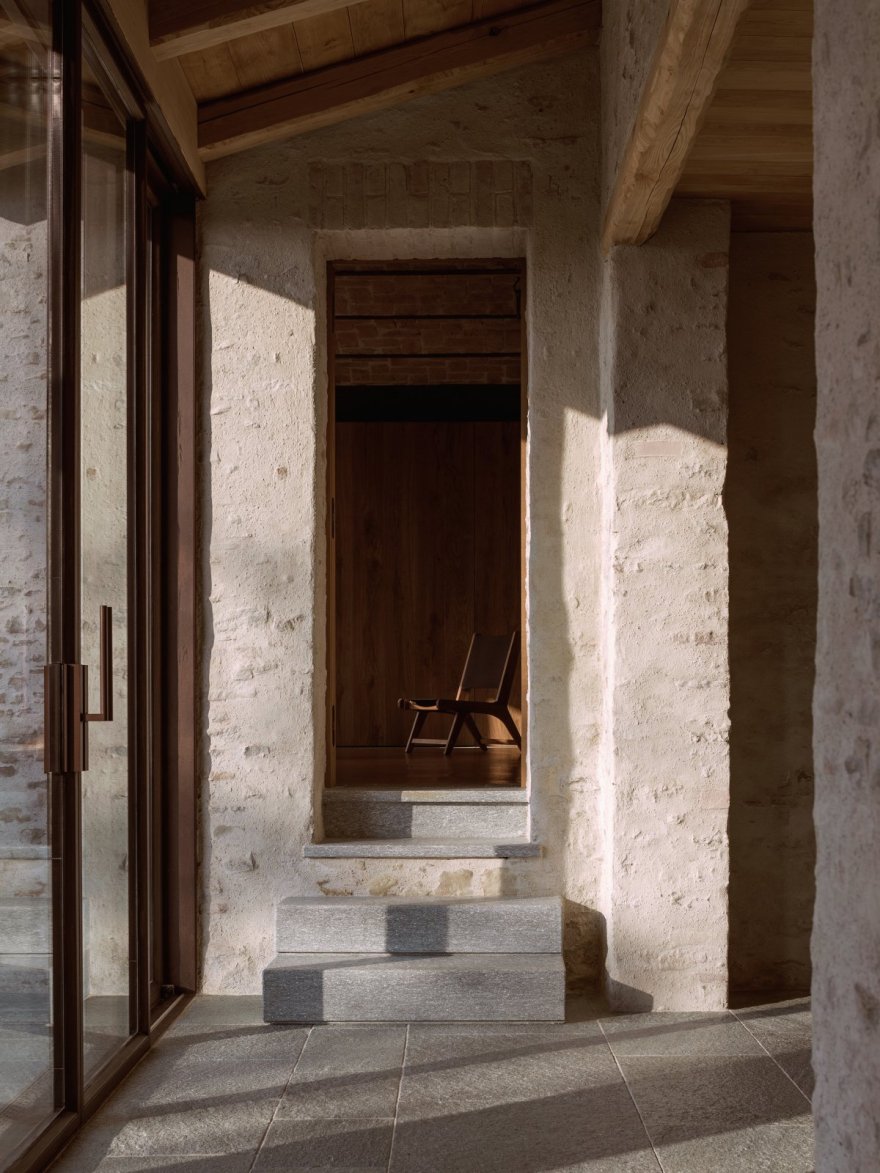
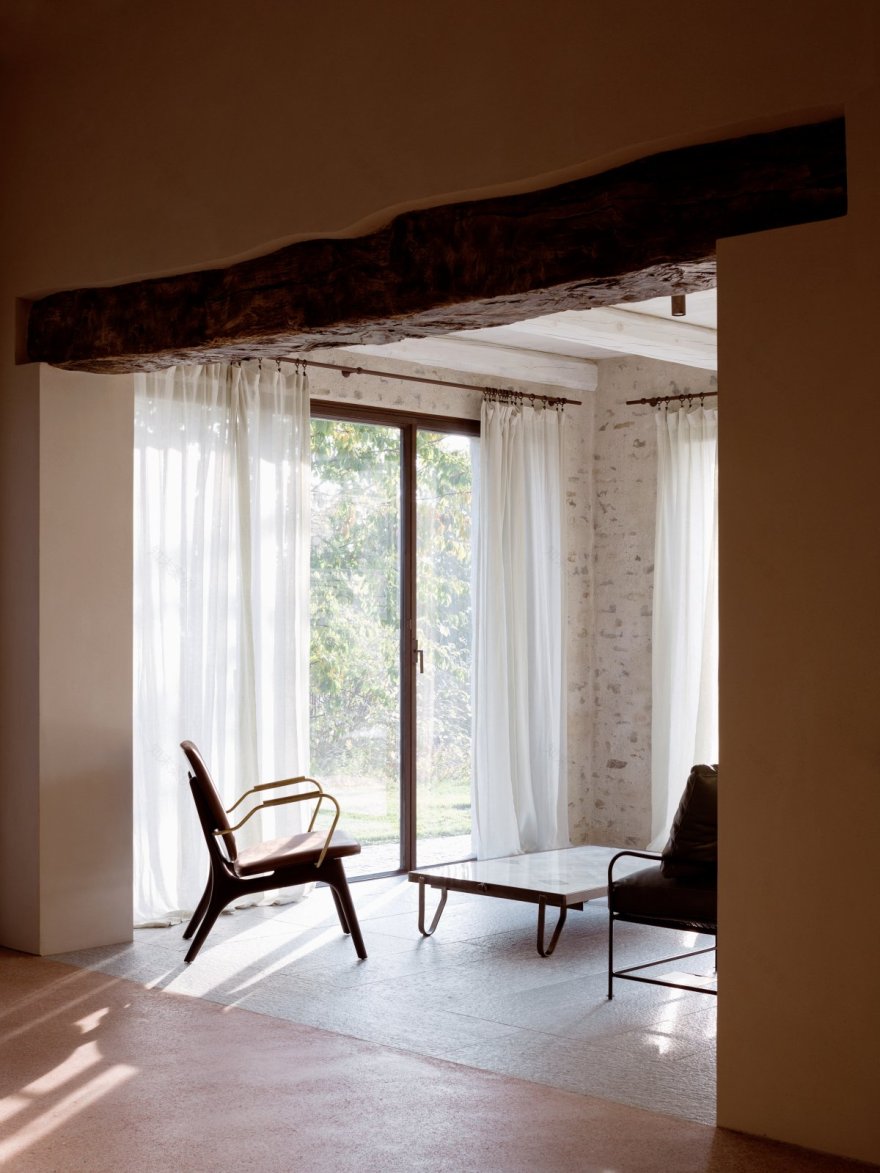
手工制作的石膏的温暖纹理在内部延续了这种触觉语言,与Luserna石材、木材和砖块一起,在整栋房屋中形成了一个强大的材料色调。Cocciopesto地板别出心裁地将新旧材料结合在一起,石灰和沙子的混合物中夹杂着工地上的陶土瓦碎块,从而形成了一种与周围环境相适应的抛光效果。外部百叶窗和细木工板采用了当地的栗木;这种美丽的低碳材料将建筑的所有元素与周围的景观紧密地结合在一起。
The warm texture of the hand-crafted plaster continues this tactile language internally, and alongside Luserna stone, timber, and brick, articulates a robust material palette throughout the house. Cocciopesto flooring inventively binds old and new, with a mix of lime and sand interspersed with crushed fragments of terracotta tiles from the site, resulting in a polished finish aware of its context. Locally sourced chestnut was implemented for external shutters and joinery; a beautiful low-carbon material which binds all the elements of the building inextricably into its landscape.
Cascina的体量坐落在其倾斜的地形中。在入口大厅,经过重新配置的楼梯在不同楼层之间建立了更紧密的联系。上层围绕一个阶梯式双层走廊重新布置,使入口和地面起居空间的天花板高度更加宽敞。这样就形成了一条阶梯状的长廊,与外部的丘陵地形相呼应。
The volumes of Cascina are nestled in its sloping topography. In the entrance hall, a reconfigured stair creates a stronger link between the different levels. The upper floors were rearranged around a stepped double level hallway to accommodate a more generous ceiling height in the entrance and living spaces at ground level. This generates a stepped promenade throughout, that echoes the hilly landscape outside.
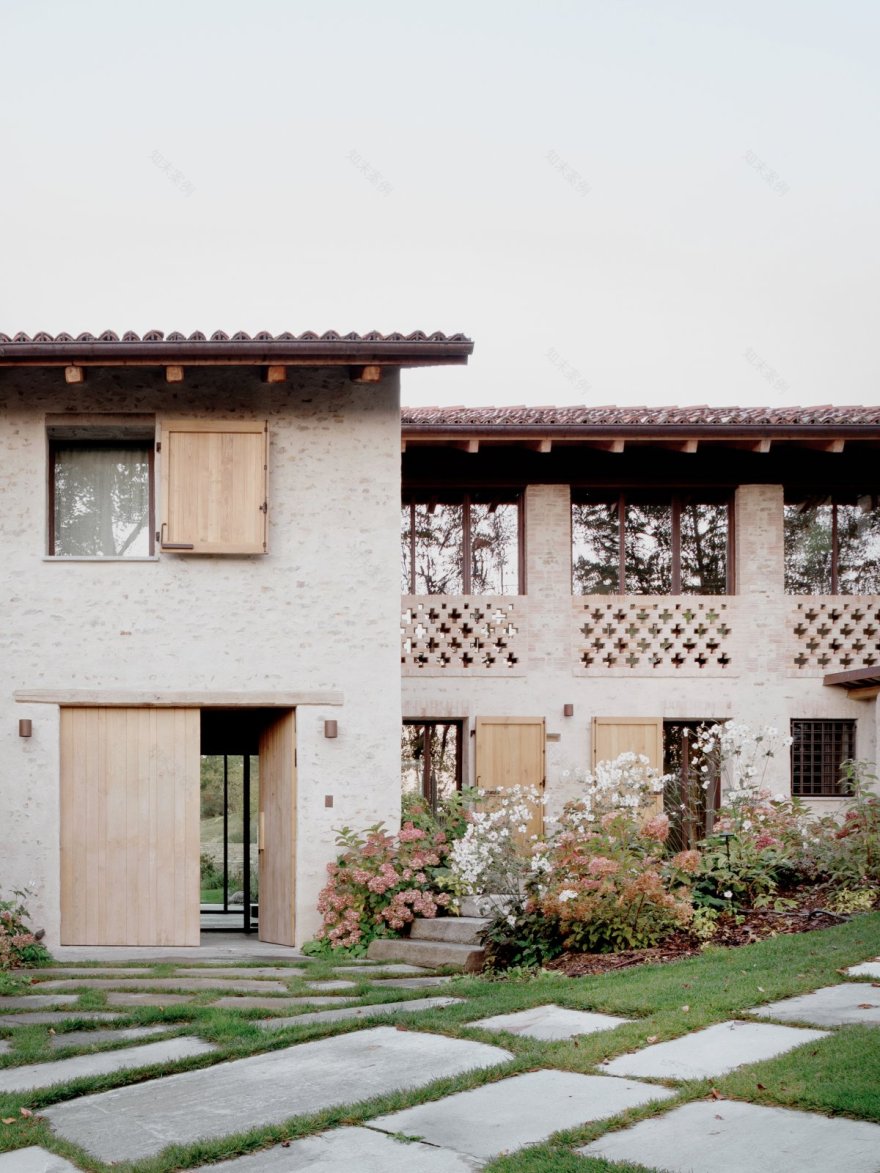
在地面层,开放式起居空间以壁炉为中心,而餐厅则采用古典比例,自然采光充足,南面的景色尽收眼底。厨房位于房屋的尽头,东面采光充足,可以欣赏到林地的美景。两个世纪以来,谷仓和农舍之间的连接部分似乎从未改变过外观,它是砖墙的延续,两端由玻璃门封闭。在主入口的立面上,这条曾经的通道打通了一条通往花园和泳池的景观走廊。
At ground level, the open plan living spaces are centred around the fireplace, while the dining room has classical proportions, with plenty of natural light and views south. Situated at the end of the house, the kitchen has east light and framed views of the woodland. The volume bridging the barn and farmhouse seemingly hasn’t changed appearance in two centuries, treated as a continuation of the brick wall and closed at both ends by glazed doors. On the main entrance elevation, this former passageway opens a view corridor through to the garden and pool beyond.
在一楼,隐藏在砖砌屏风"gelosia "后面的是一条长廊,蜿蜒通向上层的干草棚,这是一个光线充足的工作室,可以俯瞰树梢和阿尔卑斯山的美景。水疗中心位于以前谷仓的地下室,隐蔽在一堵黄褐色的木墙后面,上方是悬浮的原砖拱顶。
At first floor, hidden behind a brick screen‘gelosia’is a gallery that wends its way to the upper floor hayloft, a light filled studio with vistas overlooking treetops and the Alps. The spa occupies the former barn basement, hidden discreetly behind a wall of umber timber, with original brick vaults levitating above.
Interiors:JonathanTuckeyDesign
Photos:FrancescaIóvene
南京喵熊网络科技有限公司 苏ICP备18050492号-4知末 © 2018—2020 . All photos and trademark graphics are copyrighted by their owners.增值电信业务经营许可证(ICP)苏B2-20201444 苏公网安备 32011302321234号
苏公网安备 32011302321234号客服
消息
收藏
下载
最近