

创作上传
VIP
收藏下载
登录 | 注册有礼
查看完整案例

收藏

下载

分享

翻译
Architects:Esch Sintzel Architekten
Area:11100m²
Year:2023
Photographs:Paola Corsini,Philip Heckhausen
Landscape Architecture:Stauffer Roesch AG
Civil Engineering:Aerni + Aerni Ingenieure AG,Aegerter & Bosshardt AG
Building physics:Gartenmann Engineering AG
Acoustics:Gartenmann Engineering AG
Electrical Planning:Edeco AG
Project Leader:Laurent Burnand, Seraina Spycher, Laura Zgraggen
Partner In Charge:Marco Rickenbacher
Team:Nahuel Barroso, Andreas Hasler, Luca Helbling, Witold Kabirov, Xijie Ma, Nadja Moser, Eva-Maria Nufer, Johannes Senn
Color Consulting:Archfarbe, Andrea Burkhard
Construction And Site Management:Proplaning AG, Basel (Team: Maik Sütterlin (site management leader), Dieter Mendes Hall, Armin Schärer, Matteo Andrisano, Johann Mensch, Maria Crespi, Cornelia Lamm (administration), Udo Pfaff (project leader, responsible partner)
Building Services:Bogenschütz AG
Sanitary Planning:Technik im Bau AG
Bim Coordinator:Kaulquappe AG
Signage System:Büro Berrel Gschwind
City:Basel
Country:Switzerland

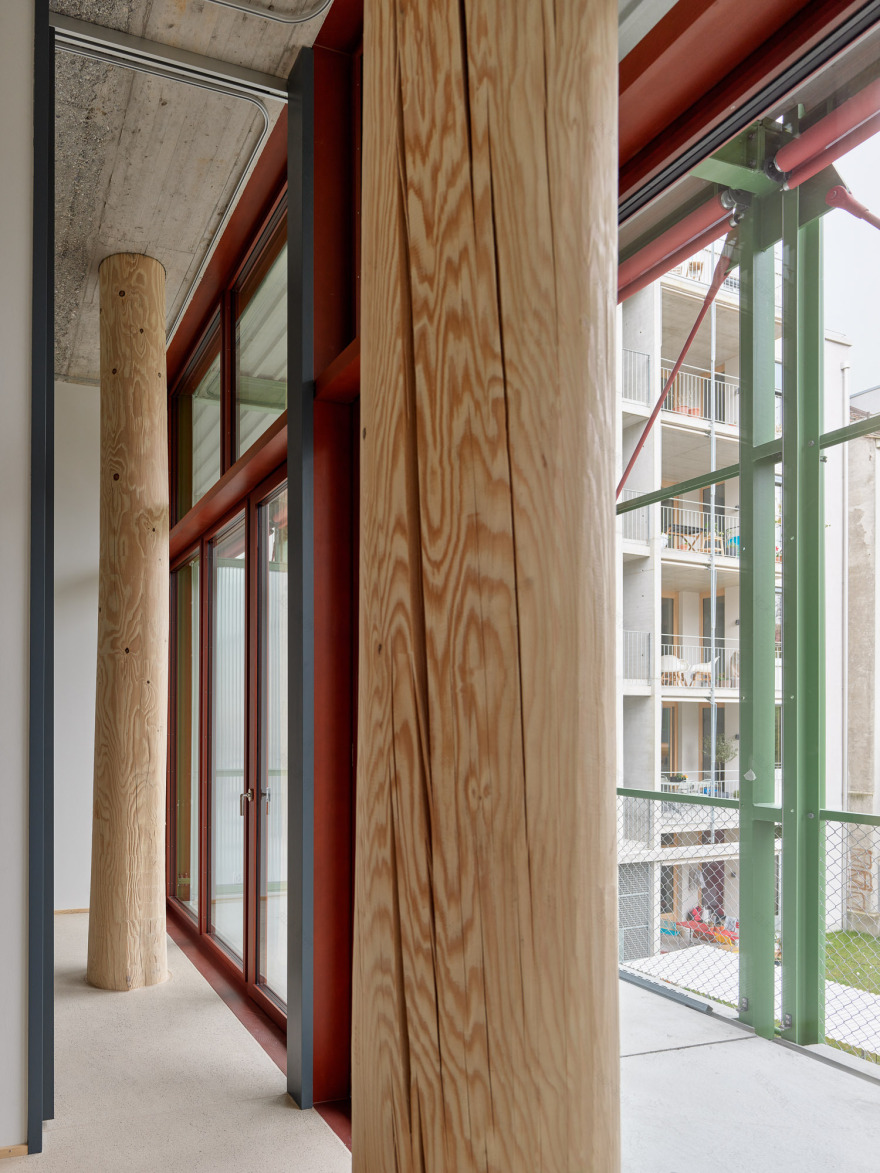
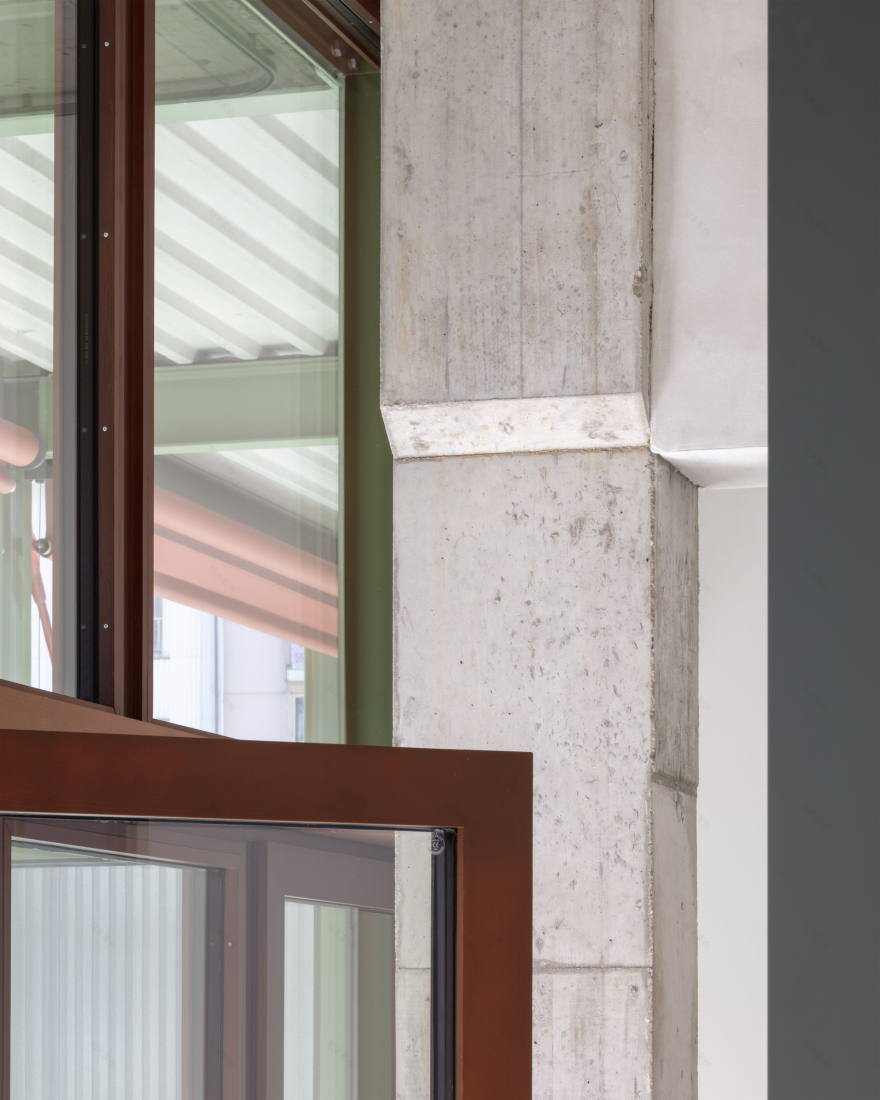
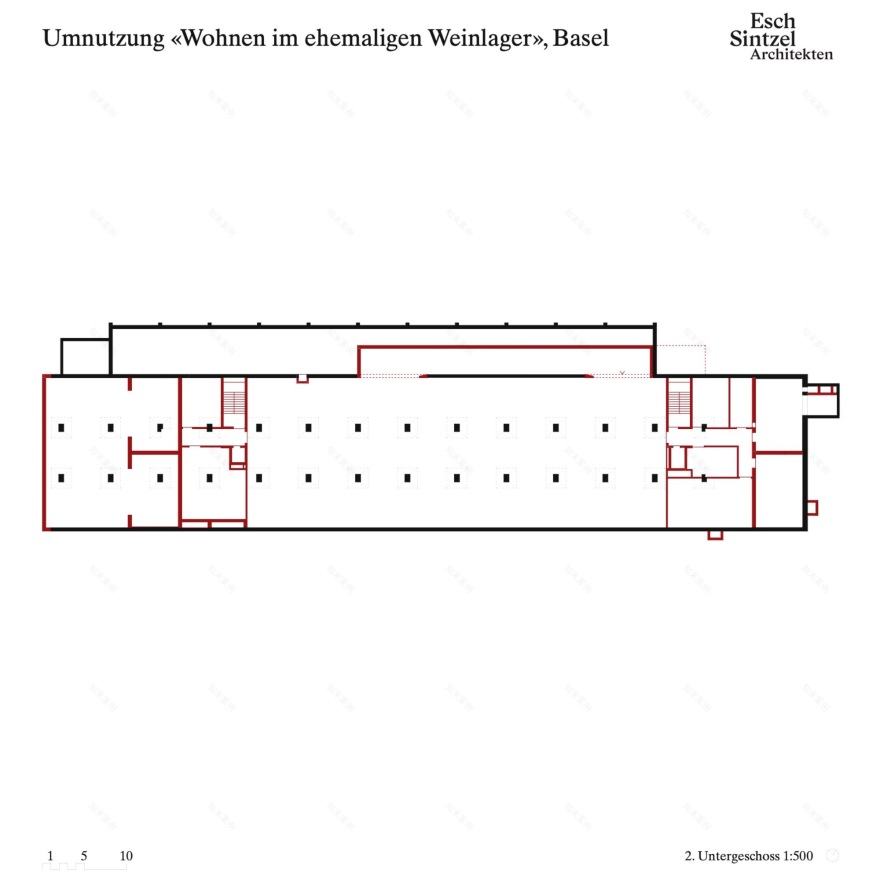
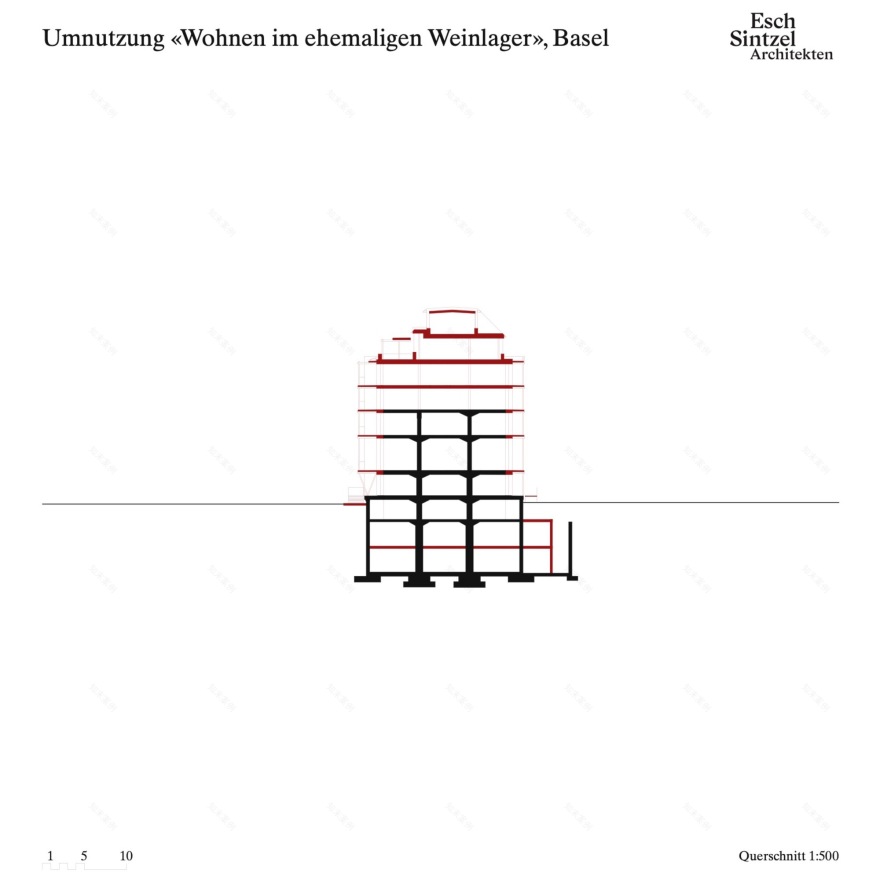
Existing columns as protagonists. The mighty existing columns of the former Coop wine storage in Basel's Lysbüchel neighborhood tell the story of the building's history in an impressive way. They are the most striking elements of the existing structure and form an important design starting point.


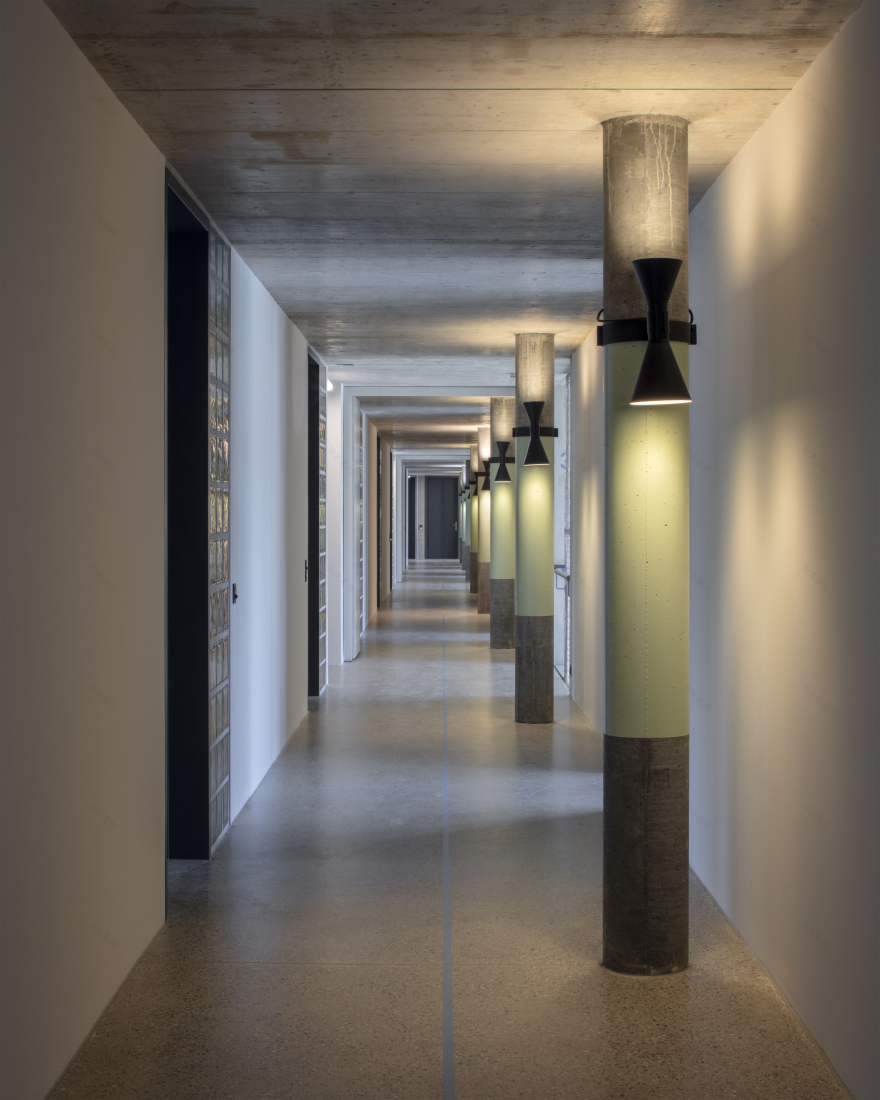
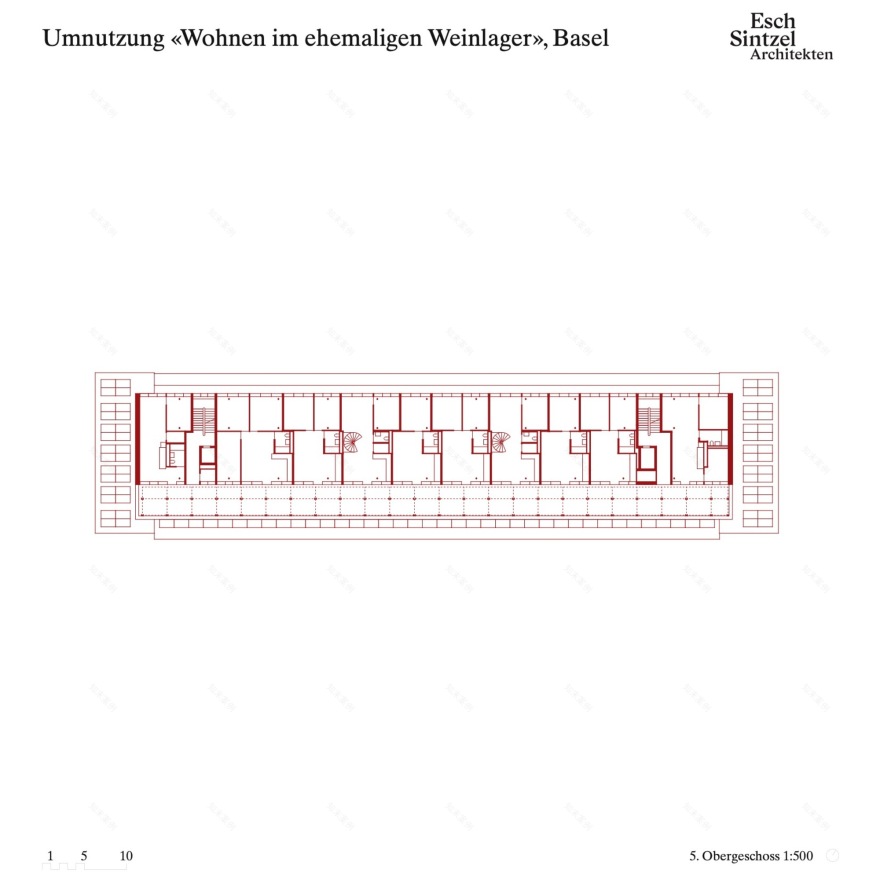
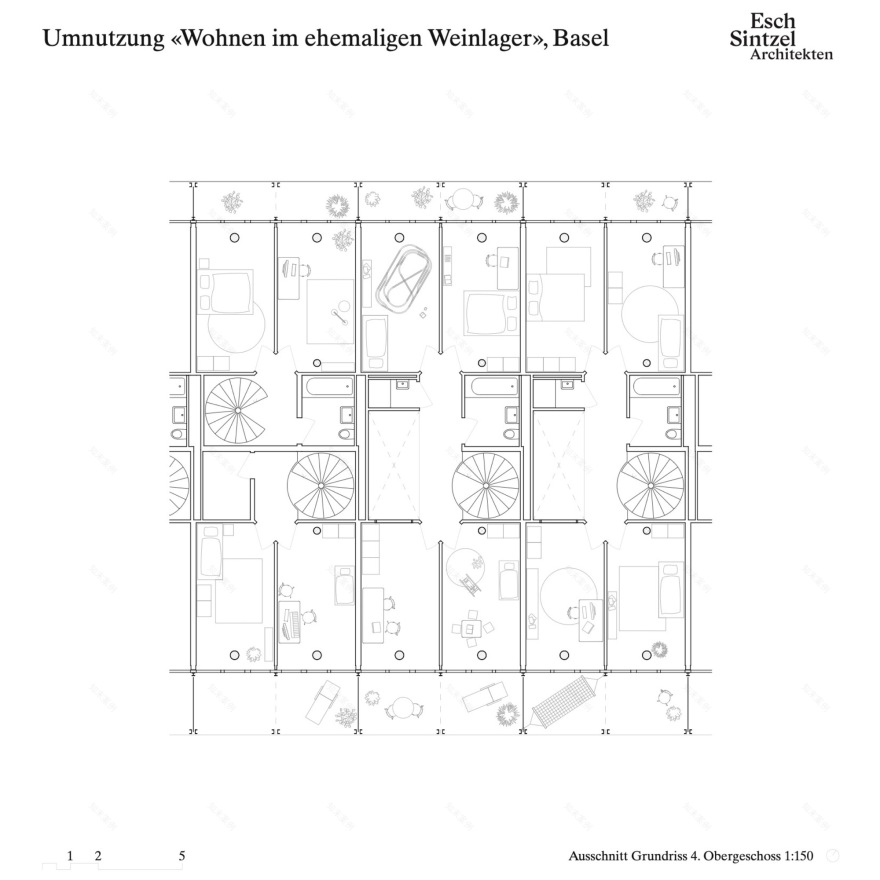
In order to keep their effect tangible despite the small-scale nature of the new residential use, they are exposed and staged in various ways: In the apartments, which span the width of the building, their bulky monumentality is an experience in itself – whereas in the two 'rues intérieures' (internal streets), that run lengthwise through the building, they appear as a sequence.


The city in the house. Thus, the columns also form the starting point for the internal organization of the house: the actual urban development is defined by the existing building - but along the 'rues intérieures', a city within the house takes shape. This internal system not only provides access to the stairwells, the communal rooms, and the laundry rooms, but they also enable a variety of apartment typologies (1.5 to 7.5 room apartments) for all generations and lifestyles.


On the mezzanine floor, the domestic sphere links up with the urban one – here the inner street opens into the transverse entrance halls and invites one into the house via stairs and ramps. The commercial spaces and the café are located at ground level at the heads of the building, directly addressing the city. The network of paths finds its end in the community room and the collective roof terrace.

Ecological responsibility. In addition to the design-defining expressiveness of the existing columns, ecological sustainability also motivates the careful treatment of the existing structure. In this case, 42% of the building's grey energy was saved by continuing to use the old structure. The photovoltaic system and the groundwater heat pump make the building two-thirds self-sufficient in total energy consumption.

Project gallery














Project location
Address:Weinlagerstrasse 11, 4056 Basel, Switzerland
南京喵熊网络科技有限公司 苏ICP备18050492号-4知末 © 2018—2020 . All photos and trademark graphics are copyrighted by their owners.增值电信业务经营许可证(ICP)苏B2-20201444 苏公网安备 32011302321234号
苏公网安备 32011302321234号客服
消息
收藏
下载
最近