

创作上传
VIP
收藏下载
登录 | 注册有礼
查看完整案例



收藏

下载

分享


缘起 Introduction
“摆渡人书场”位于上海市浦东新区,周围是典型的城市居民社区。不同于其他社区活动中心,摆渡人书场有一个用于表演评弹和评书的演出舞台。自2008年落成后,定期有评弹演出,主要服务于周围社区居民,也吸引了来自不同区域的曲艺爱好者。随着城市发展,摆渡人书场因设施老旧、功能变迁,已经不能满足当下居民的生活和观演需求。因此对于原有书场的此次更新和提升,旨在适应居民新的物质和精神文化需求。
The Boatman Theater is located in the Pudong New District of Shanghai, surrounded by typical urban residential communities. Unlike other community activity centers, the Boatman Theater features a performance stage specifically designed for two distinct traditional Chinese performing arts: Pingtan and Pingshu. (Pingtan combines storytelling, dialogue, and singing in Suzhou dialect, often accompanied by traditional string instruments, while Pingshu focuses on storytelling in Mandarin, emphasizing vivid narration and often involving historical themes or classical novels.) Since its establishment in 2008, the Boatman Theater has regularly hosted performances of both arts, catering to the surrounding community residents and attracting enthusiasts from various regions. With urban development, The Boatman Theater, due to its outdated facilities and functional transitions, can no longer meet the contemporary living and viewing needs of the residents. Therefore, the renewal and enhancement of the original venue aim to adapt to the residents’ new material and cultural needs.
▼项目与周边环境概览, overall of the project and surrounding environment ©吴清山

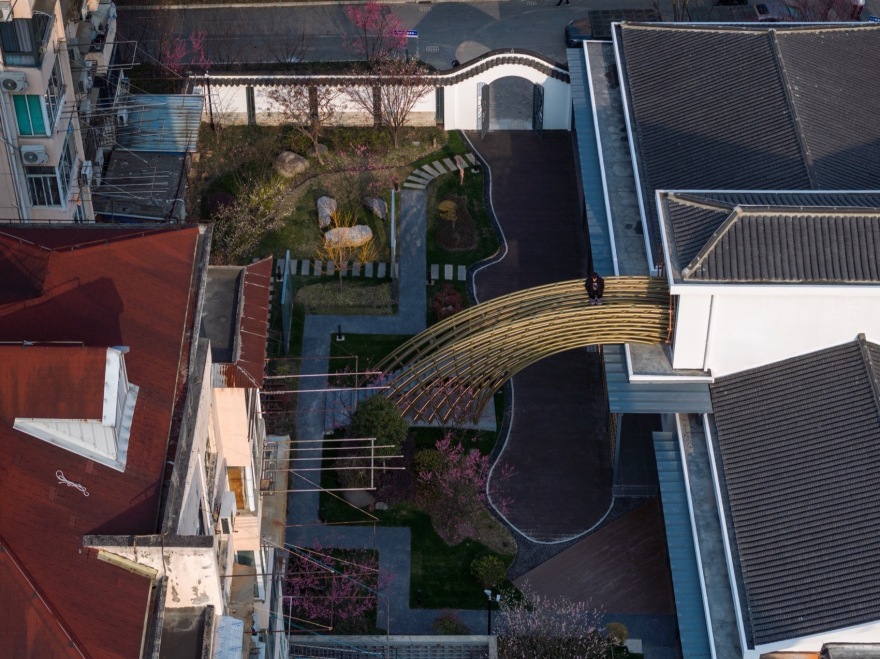
▼鸟瞰图,aerial view ©吴清山

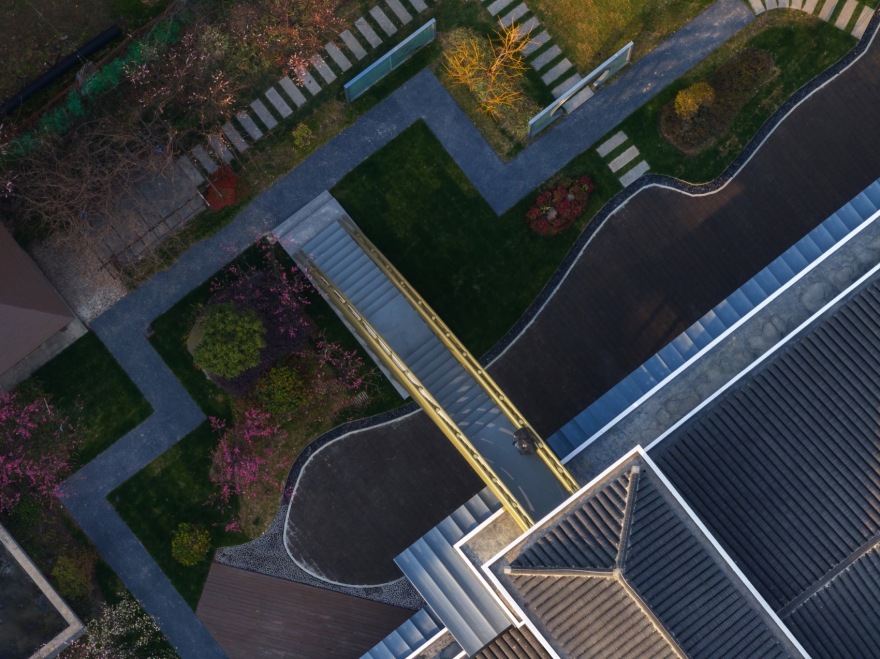
▼顶视图,top view ©吴清山

书场周围居民大多是从黄浦江边老渡口迁移而来,虽然远离了渡口码头,但是留存的历史记忆仍然萦绕。令人惊喜的是,在这样一个完全按照现代新城规划建设的居民社区之中,摆渡人书场所在的梅园,仍然保留着对于江南传统空间的追忆,亭石之间,每当乍暖还寒时,园中梅花盛开,暗香涌动,庭院之中充满传统的气息,是社区居民的精神“后花园”。
▼原状,original state ©来建筑设计工作室

The residents surrounding the theater predominantly hail from the old ferry crossings along the banks of the Huangpu River. Although now distant from the ferry docks, the echoes of historical memory still resonate. Remarkably, within this residential community, entirely envisioned and constructed under modern urban planning principles, Meiyuan, the home of the Boatman Theater, manages to preserve a longing for the traditional spaces of the Jiangnan area. Amidst the pavilions and rocks, as the season transitions from the chill to the warmth of early spring, the garden’s plum trees usher in a flourish of blooms. Their subtle fragrance wafts through the air, filling the courtyard with a profound sense of tradition. This garden becomes a spiritual “secret garden” for the residents, a retreat into the essence of their collective memory.
▼庭院鸟瞰,aerial view of the courtyard ©吴清山

▼鸟瞰图,aerial views ©吴清山

▼顶视图,top view ©吴清山
公共艺术赋能社区旧改 Public Art as a Catalyst for Urban Renewal
此次改造完全保留原有建筑的体量和外观,不做任何扩建和复建。建筑主体为一单层坡屋顶,二层仅有局部40平方的空间。因二层面积小,无法在室内布置楼梯,因此原状二层空间基本处于荒废状态,但是二层视野和景观较好。于是,设计将一个公共艺术装置放在庭院里,成为梅园的景观视觉焦点,同时也是连通上下楼层的公共楼梯。此时,公共艺术不只是城市雕塑,而具有非常重要的使用功能,以一种美学和实用双重介入的方式来激发社区旧改。
▼轴测图,axonometric drawing ©来建筑设计工作室

This renovation project preserves the original building’s size and external appearance, featuring a structure with a single-story sloping roof and a second floor limited to a modest area of 40 square meters. Given the limited space on the second level, installing an indoor staircase was impractical, rendering the area largely unused, despite its appealing views and landscape. To address this, a public art installation was strategically placed in the courtyard, serving as both a visual centerpiece for Meiyuan and a functional staircase linking the floors. Through this initiative, public art evolves beyond mere urban decoration to play a vital role, merging aesthetics and utility to stimulate the revitalization of the community.
▼竹桥透视,the bridge ©吴清山

▼竹桥楼梯,staircase ©吴清山

▼竹桥,the bridge©吴清山

▼构筑物与环境,the structure blended in the environment ©吴清山

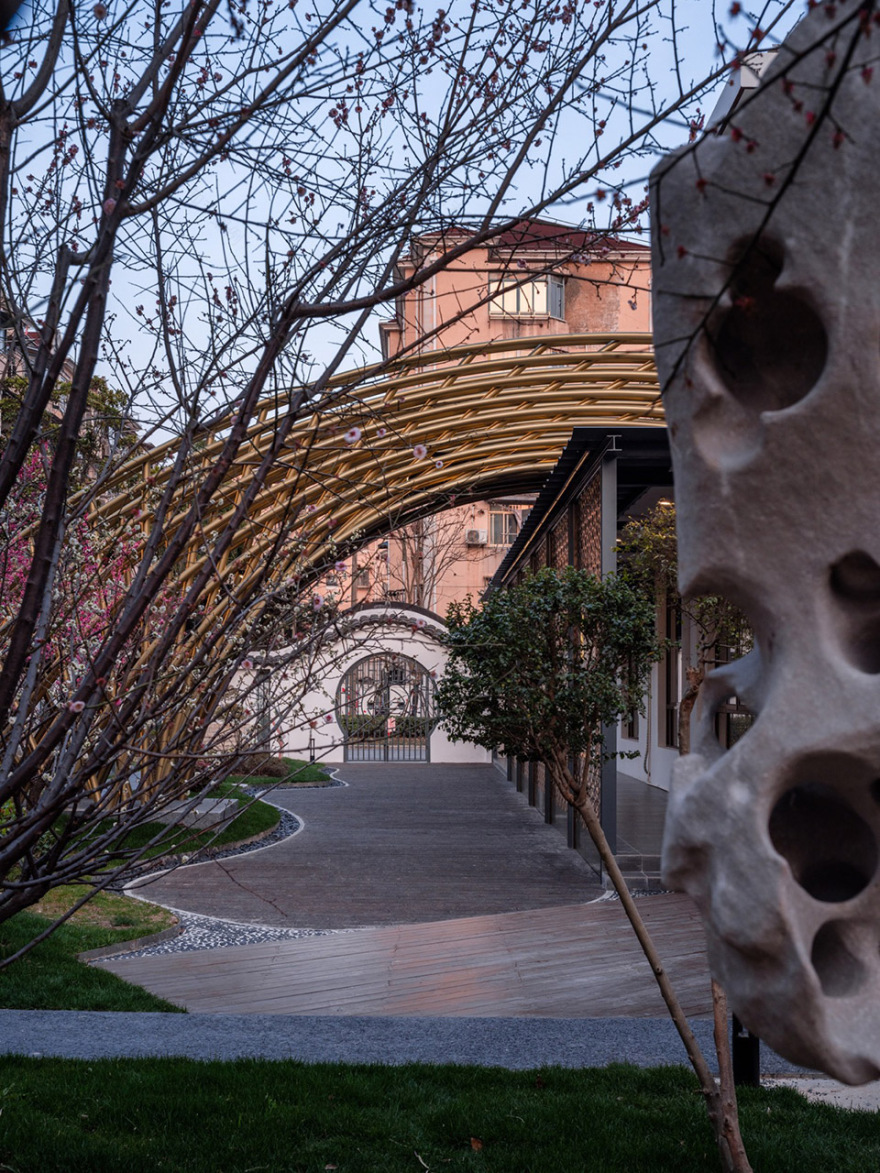
来建筑设计工作室有一个叫做“悬竹”的公共艺术作品,采用竹子作为线条,以一种柔软的姿态介入城市街道,产生一种异质化的情景。在梅园中,我们将这种类竹的半拱桥置入其中,连同地面的流水瓦形成一种“小桥流水”般既熟悉又陌生的情景,熟悉于回忆而陌生于当下。称之为“梅园吐竹”。
▼“悬竹”公共艺术作品, “Bambow“ ©苏圣亮
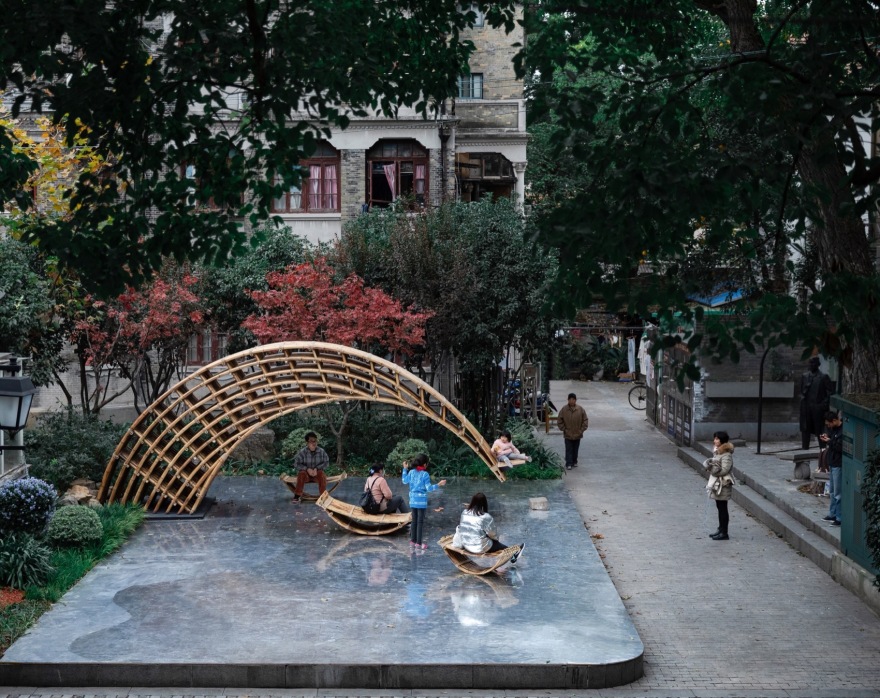
Atelier LAI has crafted a public art piece known as “Bambow,” utilizing bamboo as its primary medium to introduce a soft presence into urban space, creating an otherworldly scene. In Meiyuan, we’ve integrated this bamboo-inspired semi-arch bridge into the landscape, coupled with ground tiles that mimic flowing water, conjuring a scene reminiscent of “little bridge, running stream” – both familiar in memory and alien in the present context. This installation is aptly named “Bambow Garden.”
▼夜景,night view ©吴清山

▼竹桥立面,profile of the bridge ©吴清山

▼竹桥细部,details of the bridge ©吴清山


功能更新 Functionality Upgrade
改造以运营需求为本,在设计之初便经过反复论证。书场空间原本净高较低,缺少服务设施及演员候场区。因此改造重新划分了功能空间,添置了新的设备,使得舞台能够适应更多类型的演出。改造后的摆渡人书场,为老年人和青少年都增加了活动室,并且为不同年龄需求,增设了水吧台,可以制作茶、咖啡等多种饮品,卫生间也增加了适老设施。
▼入口,entrance ©吴清山

▼廊道立面,facade of the veranda ©吴清山

▼廊道,veranda ©吴清山

The renovation focused on operational necessities, carefully considered from the beginning. The Boatman Theater was initially challenged by low ceilings and a lack of necessary service facilities and areas for performers to wait. Therefore, the renovation reconfigured the functional spaces and introduced new equipment, making the stage versatile enough for a variety of performances. Following the renovation, The Boatman Theater has expanded its offerings with activity rooms for both the elderly and the youth. To meet the needs of different age groups, a beverage station has been installed, offering an assortment of drinks, including teas and coffees. Moreover, the restrooms have been upgraded to include features that are more accessible to the elderly.
▼茶室室内,interior view of the tearoom ©吴清山

▼活动室室内,interior view of the event room ©吴清山
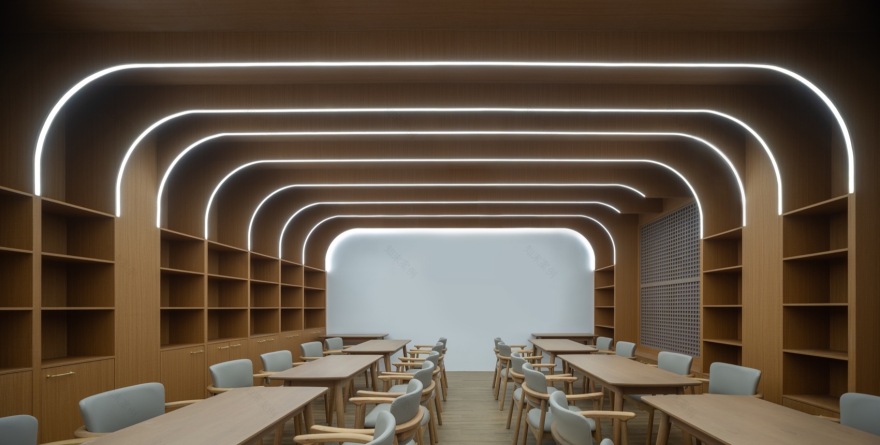
▼书场室内,interior view of the theatre ©吴清山
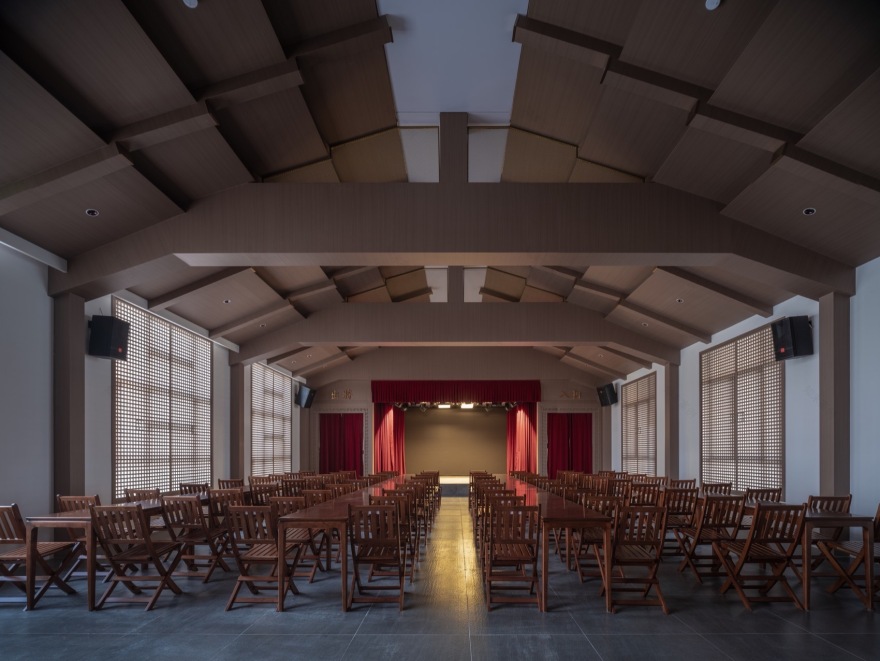
▼剧场,theatre ©吴清山
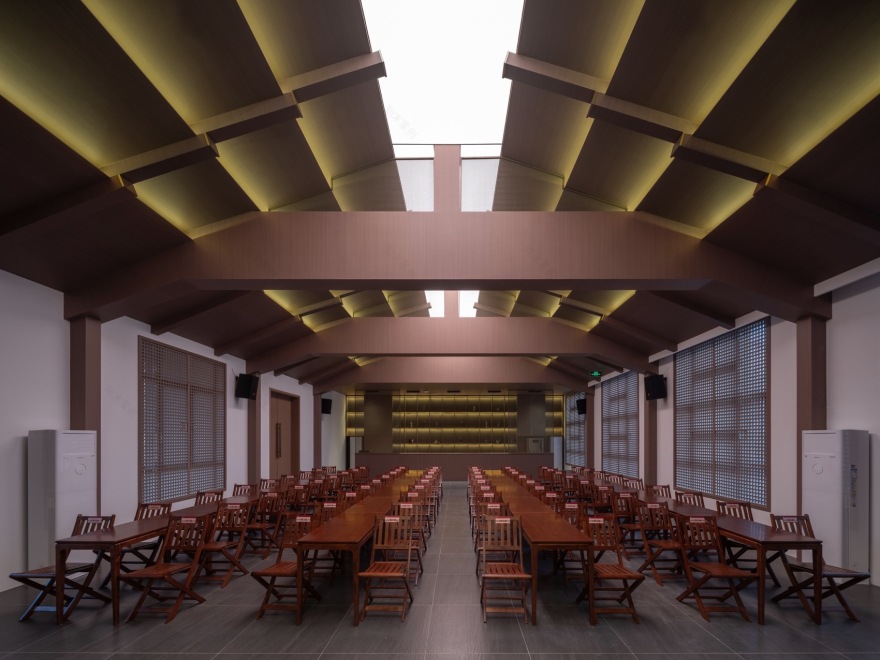
▼剧场细部与活动场景,details of the theatre and the event ©吴清山

结语 Conclusion
江南地区水网密集,“小桥流水”是传统江南的伴生自然的和谐画面,随着城市化和工业化的发展,这种景象也只能成为画中的景象,成为某种乡愁。而在这样的城市街道一角,用一种建造的诗意方式让这种情景呈现。竹桥之上,品茶观景,竹桥之下,曲音流动。
In the Jiangnan area, where waterways weave through the landscape, the scene of “little bridge, running stream” have long stood as harmonious vignettes of nature, emblematic of the region’s tranquility. Yet, as the waves of urbanization and industrialization roll in, these picturesque scenes transition from everyday sights to cherished memories. Within the weave of the city, a corner awakens this age-old vista, infused with the crafted essence of poetry. On the bamboo bridge, one pauses to savor tea and the unfolding view; beneath its arch, the flow of music gently winds.
▼沿街立面夜景,night view of the facade ©吴清山

▼细部夜景,night view of the details ©吴清山

▼施工过程,construction process ©来建筑设计工作室

▼区位图,location ©来建筑设计工作室

▼一层平面图,ground floor plan ©来建筑设计工作室

▼二层平面图,upper floor plan ©来建筑设计工作室

项目名称:梅园吐竹 项目类型:社区中心 地理位置:上海市,浦东新区 设计方:来建筑设计工作室 主持建筑师:马岛 设计团队:王聿宁,刘同强,陈运 结构设计:林壮斌 照明顾问:上海山色照明有限公司 摄影:吴清山 用地面积:1085m² 建筑面积:426m² 设计周期:2023年9月 建设周期:2023年11月-2024年1月
Project Name:bambow garden Topology: Community Center Location: Pudong New District, Shanghai, China Architects: Atelier LAI Architect in charge: Madao Project architect:Wang Yuning,Liu Tongqiang,Chen Yun Structural Consultant: Lin Zhuangbing Illumination Consultant: Shanghai Shanse Lighting Company, Ltd. Photographs: Su Shengliang, Tang ming Site Area: 1085m² Floor Area: 426m² Design Period: 2023.9 Construction Period: 2023.11-2024.1
南京喵熊网络科技有限公司 苏ICP备18050492号-4知末 © 2018—2020 . All photos and trademark graphics are copyrighted by their owners.增值电信业务经营许可证(ICP)苏B2-20201444 苏公网安备 32011302321234号
苏公网安备 32011302321234号客服
消息
收藏
下载
最近