

创作上传
VIP
收藏下载
登录 | 注册有礼
查看完整案例

收藏

下载

分享

翻译
Architects:Chip Studio
Area:135m²
Year:2021
Photographs:Nicolás Provoste C.
Manufacturers:AutoDesk
Lead Architects:Cecibel Gonzalez, Carlos Macas.
Design Team:Cecibel Gonzalez, Carlos Macas, Pablo Pasaca
Engineering:Andrea Zarate
Collaborators:Edy Jaura
City:Malacatos
Country:Ecuador

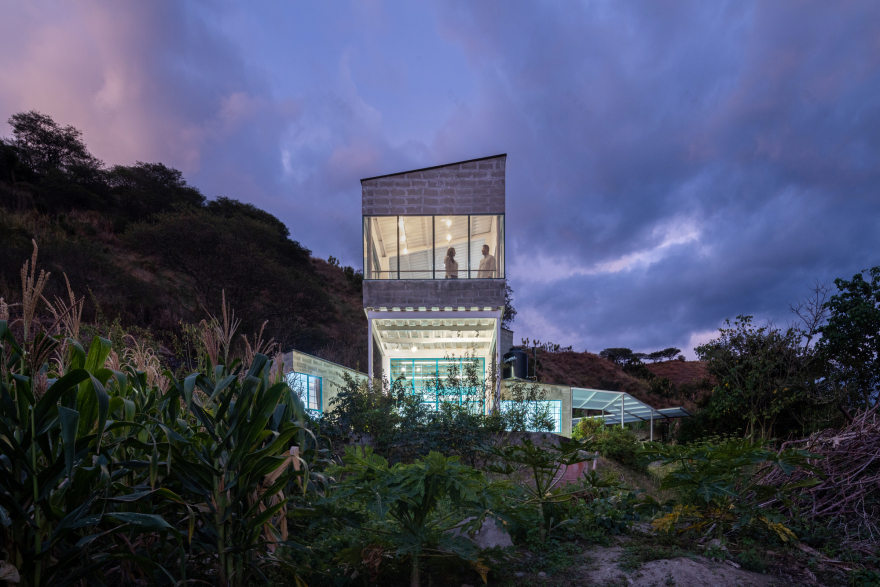
Text description provided by the architects. A rural lot on the outskirts of Loja, with an irregular topography allows the exploration of a composition with volumes of different proportions in a productive rural house based on the logic of production systems and circular economy. The location seeks to blend in, but at the same time to open up to the landscape, therefore, one of the design premises was to establish layers of the landscape according to the routes and pauses that the spatial arrangement of the house allows.

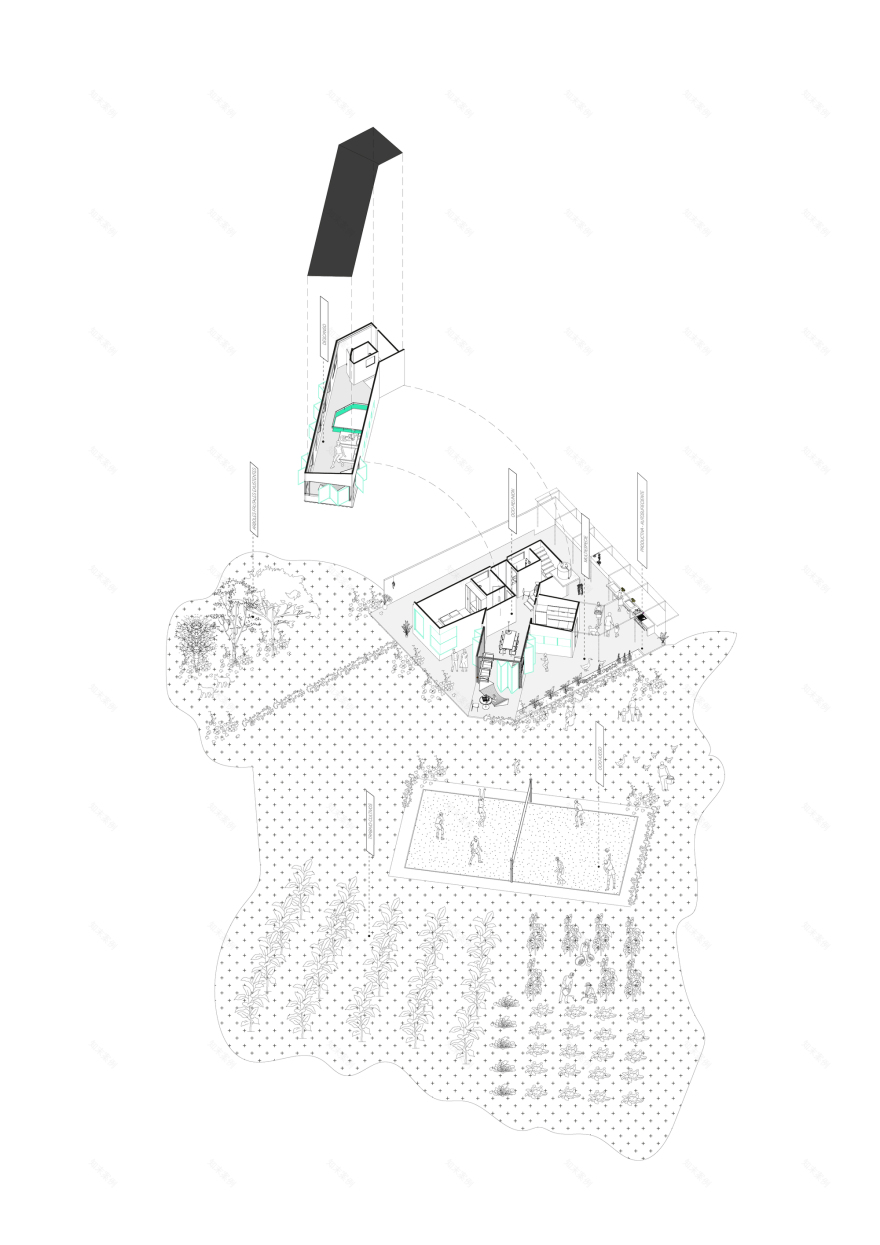
The composition logic of the project is based on geometry, layout, and voids. The geometric operations allow the establishment of programmatic container volumes rotated towards the landscape. The void linked to the portal acts as a pause and a link, and the double height is an approximation of the light. Indeterminacy is used as a strategy to dissolve the limit between the nature of the productive landscape and the object. A house in which its access is not predictable.


The user requirements are resolved at two levels. The parents value the continuous interaction between the inhabitants/family members, the production of their own food, the recycling of resources, as well as enjoy leisure time. Therefore, the work and leisure spaces are arranged in an open way, being an extension of the external natural environment.


The materiality is fundamentally resolved with a steel structure configured in a support grid that adapts to the rotation of the volumes and the lightness of the productive structures. The coverage system is made up of a solid block repetition system that responds to an understanding of the environment directly linked to the rocky substrate of the territory, understanding architecture as structure and as volume.


In short, Free House allows the application of contemporary design strategies that demonstrate social changes toward ways of living such as typological diversity, modernization of forms, and direct dialogue with the landscape without alteration in the face of its versatility and flexibility. It seeks to dematerialize architecture as an object and reduce it to a background element that encourages multispecies activities and ties to happen.
Project gallery




南京喵熊网络科技有限公司 苏ICP备18050492号-4知末 © 2018—2020 . All photos and trademark graphics are copyrighted by their owners.增值电信业务经营许可证(ICP)苏B2-20201444 苏公网安备 32011302321234号
苏公网安备 32011302321234号客服
消息
收藏
下载
最近