

创作上传
VIP
收藏下载
登录 | 注册有礼
查看完整案例

收藏

下载

分享

翻译
Architects:Baracco+Wright Architects
Year:2021
Photographs:Rory Gardiner
Design Team:Louise Wright, Mauro Baracco, Catherine Horwill
Country:Australia

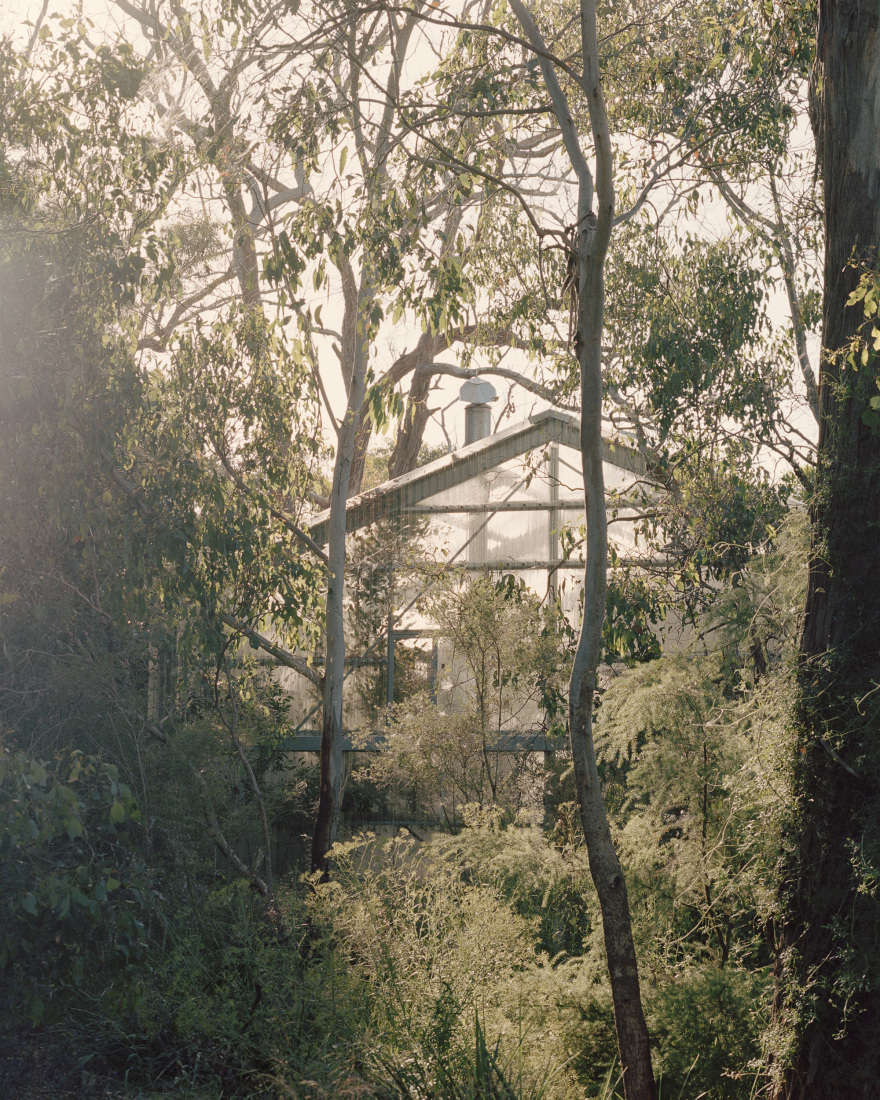
Text description provided by the architects. This experimental and ‘sometimes’ house on Boon Wurrung land was conceived through the inclusion of it in the repair of the site’s ecosystem. Its architecture is one of the relationships that revisit the project of a theory of space, this time in the terms of its physical place and the life supported there. It is made with a mix of industrialized elements (the steel frame) and handmade (timber frame) without concern with itself and its modes of making. The thinnest of physical boundaries (perhaps fabric is thinner), polycarbonate sheet, maintains transparency otherwise displaced by a building for the sustaining of life, rather than architecture’s own terms of the material theory of transparency.

Spatial boundaries are not achieved in usual architectural terms (walls, windows, rooms, ceiling, and floor) but made by the vegetation on either side of the polycarbonate layer, not perhaps quite a wall – but together with the vegetation, an ill-defined wall is made that starts on the inside with the moat-like horizontal boundary achieved through the way the raised floor stops short of the polycarbonate. The raised deck is another expanded threshold this time with the ground – allowing the unsealed ground and its floodwaters to carry through. The window that frames an interior’s relationship with nature is absent. The ontology is almost flat - nature is neither confined to containers nor brought inside. This quality of space is evident in Rory Gardiner’s photographic technique where frames are often replaced by images that fill the view without edges so that it is sometimes unclear if you are looking inside or outside.

The tent has often been a reference for Baracco+Wright and this building could be thought of as a little more than a tent: a deck and raised platform, covered by a transparent 'shed', and the interior perimeter 'verandah' is a garden (and spontaneous vegetation) space and living areas are dynamic yet subtly spatially defined; up, down, under, above. The soil and a natural ground line are maintained and carried through. In the temperate south-eastern Australian climate, one is a little cold and a little hot sometimes but mostly comfortable. The ability to hear the outside is something surprising in this house. Nature is noisy. To hear enables one to locate themselves in space outside your own body.

The story of the natural history of the site drove the decision-making. The site is part of a leftover heavily vegetated corridor in-between cleared grazing land. A historical anomaly, it gives a glimpse into what used to be there, although it too now is mostly altered through domestic gardens, human and (nonnative) animal activity. Small patches of the endemic vegetation remain, mainly tea-tree heath, among mown grass, introduced species, and plants considered invasive weeds. The site connects to its neighboring vegetation and Westernport – a large tidal bay. The road now occupies the position of an ephemeral creek and being downhill, the area can be seasonally wet and dry and can flood. It acts as a compromised wildlife corridor for animals traveling from nearby Gurdies Nature Conservation Reserve to the coast, and perhaps most successfully supports birds.
Project gallery

南京喵熊网络科技有限公司 苏ICP备18050492号-4知末 © 2018—2020 . All photos and trademark graphics are copyrighted by their owners.增值电信业务经营许可证(ICP)苏B2-20201444 苏公网安备 32011302321234号
苏公网安备 32011302321234号客服
消息
收藏
下载
最近