

创作上传
VIP
收藏下载
登录 | 注册有礼
查看完整案例

收藏

下载

分享
孝昌县的小河镇,因小河得名。镇政府就在小河边上,要做一座跨河的小桥、大门和院子。这几件事结合到一起,我们设计了一座似桥非桥、似门非门的门式廊桥,而河水蓄成的湿地成为天然的院墙,用最小的代价提升了镇政府的形象——亲民而自然。
The town of Xiaohe in Xiaochang County is named after the small river running through it. The town government is situated along the banks of this river and plans to construct a small bridge, gate, and courtyard across it. Combining these elements, we have designed a gate-style covered bridge that resembles a bridge yet serves as a gateway, with the river-formed wetlands serving as a natural courtyard wall. This design uplifts the image of the town government in a cost-effective manner, presenting a welcoming and natural environment.
▼项目概览,Overall view © 罗振鸿
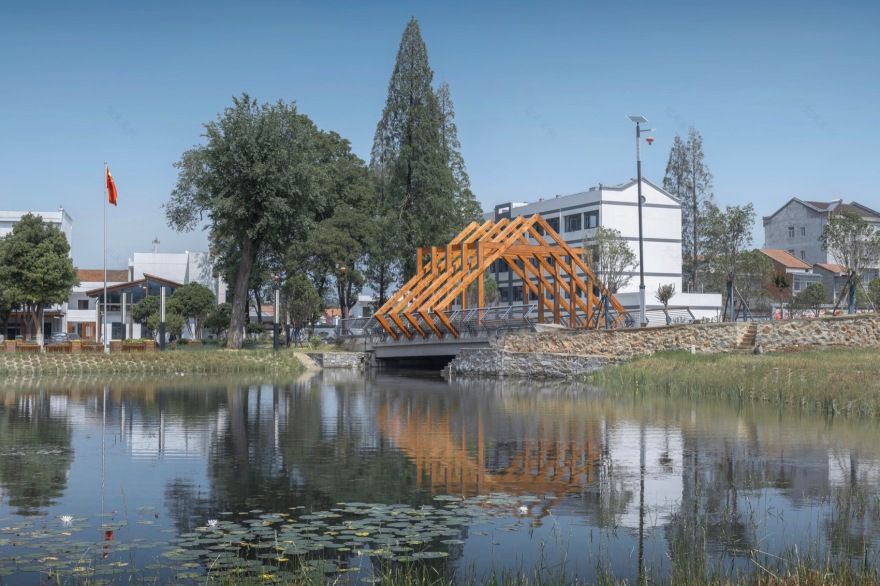
▼跨河小桥,Small bridge across the bridge © 罗振鸿


▼小桥细部,Details of the bridge © 罗振鸿

在团队的建议下,当地决定摈弃传统的“门楼+大院”政府空间格局,转而采用“与自然共生,与居民同享”的模式。政府原本朝向镇上街道,并以一楼大门作为入口,这导致了街道拥堵。通过优化调整,政府现朝向北边农田,并在用地范围边缘设置了水体净化池,再以一座桥作为政府的入口。这样一来,水面周边的景观、桥梁以及政府前坪共同形成了一个供居民休憩的空间。另外,将原本散落在院中的停车位统一设置到东北侧的水边。
Following our advice, the local authorities decided to change the traditional layout of the government compound. Instead of facing the town’s streets, the government building now overlooks the farmland to the north. We also added water purification ponds and a bridge at the compound’s edge, creating a new entrance. This setup not only reduces traffic congestion but also provides a relaxing space for residents. Additionally, we consolidated the scattered parking spaces near the water on the northeast side.
▼入口空间,Entrance © 罗振鸿

▼改造后的食堂,Canteen © 罗振鸿


▼改造后的雨棚,Hall canopy © 罗振鸿


▼雨棚近景,Details of the hall canopy © 罗振鸿

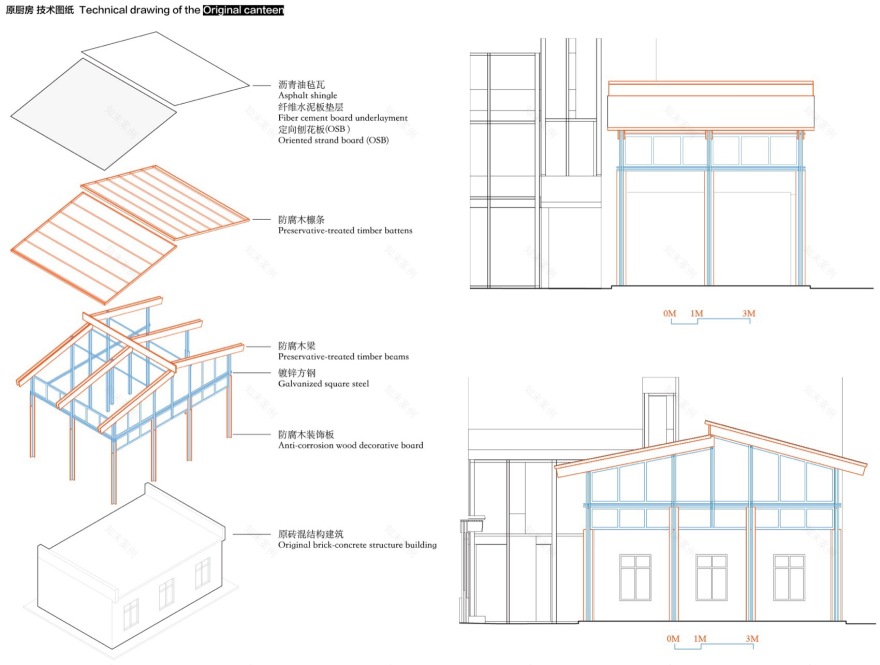
由于成本限制,在环境整治的基础上,重点塑造了桥、原政府雨棚以及原食堂这三个空间。在对古街的测绘和调查过程中,发现居民巧妙地运用钢、铁丝等常见材料来加固腐朽的木柱,支撑挑出的木梁。此外,相邻的民居在立面上看似独立,但背后的结构却是一体成型的。团队将这种经验提炼成设计语言,即建筑外观呈现木质结构,但实际上采用型钢作为支撑,两种材料互为穿插。通过这种做法,镇政府节省了大量的材料与维护成本,同时极大地降低了农村施工队所面临的技术难度。
Due to budget constraints, we focused on revamping three main areas: the bridge, the original government canopy, and the old cafeteria. During the survey of the ancient street, residents showed how they used steel and iron wire to reinforce decaying wooden pillars and beams. The team learned from this and designed the buildings to look like wood but used steel beams for support, saving costs and reducing construction difficulties for rural teams.
▼平面图,plan © 华中科技大学 赵逵教授工作室

▼桥技术图纸,technical drawing of the bridge © 华中科技大学 赵逵教授工作室

▼原厨房技术图纸,technical drawing of the original canteen © 华中科技大学 赵逵教授工作室
▼雨棚技术图纸,technical drawing of the hall canopy © 华中科技大学 赵逵教授工作室

南京喵熊网络科技有限公司 苏ICP备18050492号-4知末 © 2018—2020 . All photos and trademark graphics are copyrighted by their owners.增值电信业务经营许可证(ICP)苏B2-20201444 苏公网安备 32011302321234号
苏公网安备 32011302321234号客服
消息
收藏
下载
最近