

创作上传
VIP
收藏下载
登录 | 注册有礼
查看完整案例

收藏

下载

分享
本项目是URBAN FUTURE DESIGN的办公空间,项目位于佛山顺德,一个绿道傍的临街地铺。办公空间的主要功能区域为:设计办公区、会议空间、管理办公区、休闲空间、茶水空间等,由于临街界面绿化景观采光较好,如何在有限的空间中,形成清晰的区域分隔让每个区域的都有较好视线是设计的主要出发点。
This project represents the office space of URBAN FUTURE DESIGN, situated in Shunde, Foshan, adjacent to a greenway along a street-front shop. The primary functional zones of the office space include the design office area, meeting spaces, management office area, leisure spaces, tea areas, and more. Due to the excellent natural light provided by the greenery along the street frontage, the primary design objective was to create distinct area divisions within the limited space, ensuring optimal sightlines for each area.
▼项目外观,Exterior view © 恩万建筑摄影(左小北)


▼从室外看向开窗,View from outside to the window © 恩万建筑摄影(左小北)

首先,按照空间的使用频次,把场地划分为服务空间和被服务空间,办公区域与会议空间这些长期停留的空间划分为被服务区域,其余空间则为服务空间。同时考虑到场地不规则的现状,没有一个清晰的轴线关系,采用圆形的空间形式或许能更好适应场地,且能让视线的方向性模糊。于是便形成了3个圆形的被服务空间和其余不规则的服务空间。同时家具布置可以围绕圆心旋转布置,使得每个区域的视线具有更多的可能。
To begin with, the site was divided into service spaces and served spaces based on the frequency of usage. Spaces such as the office area and meeting rooms, which have extended occupancy, were categorized as served areas, while the remaining spaces were designated as service spaces. Considering the irregular nature of the site without a clear axis relationship, a circular spatial form was deemed more suitable for the location, allowing for a blurred directional sense of sightlines. This led to the creation of three circular served spaces alongside the remaining irregularly shaped service spaces. Additionally, furniture arrangements could be rotated around the center of these circles, providing more versatile sightlines for each area.
▼主要办公空间,Office area © 恩万建筑摄影(左小北)


▼办公空间细部,Office detials © 恩万建筑摄影(左小北)

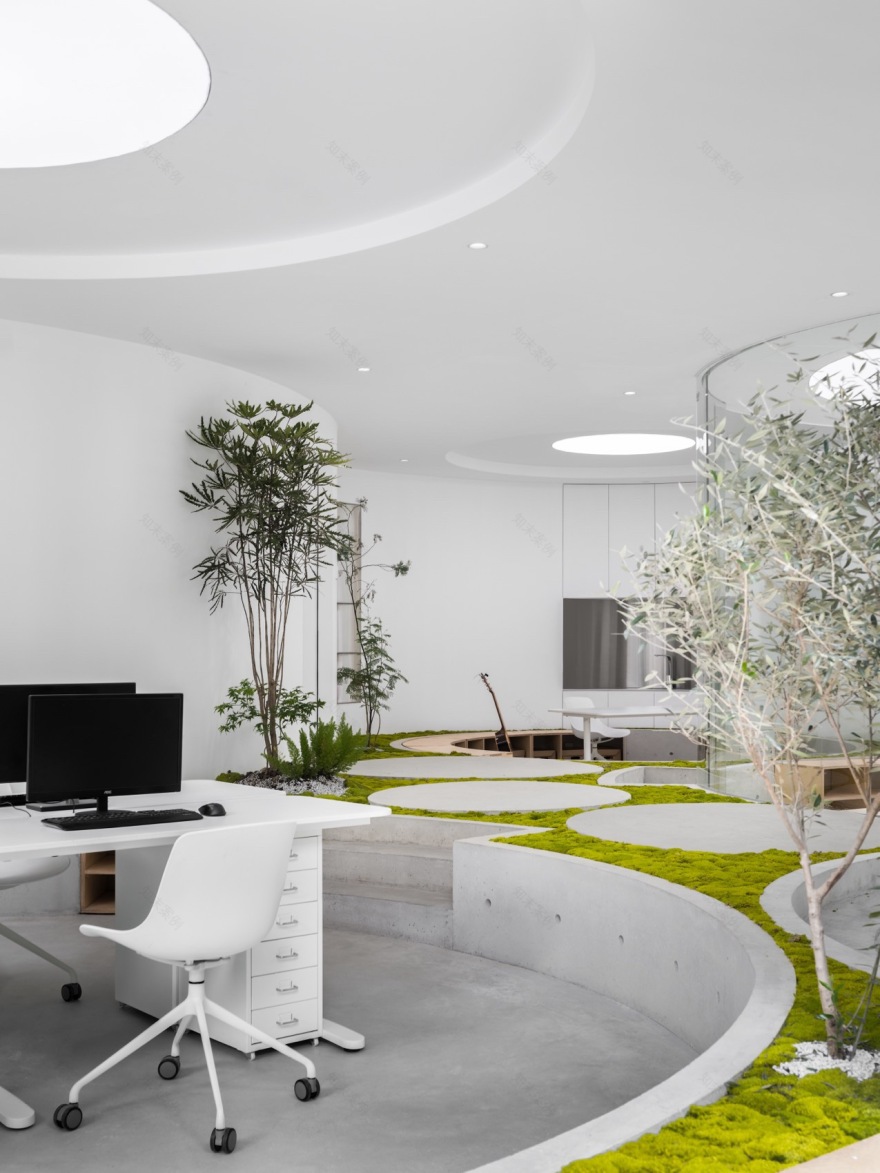
如何有效形成清晰空间的区隔,解决会议空间的独立性需求,且不影响每个区域的看室外景观的视线?考虑到视线和层高较矮的现场因素,“墙的空间”“屋顶的空间”或许都不是合适空间划分手段。于是便有了尝试结合人的空间行为来增加空间区域感受的想法;于是通过抬高服务区域的地面,然后形成被服务区域下沉的错觉,一方面加强了进入区域的形式感,另一方面又不影响办公空间的层高感受和看室外景观的视线感受。同时抬高的高度为适应坐位的高度,让每个边缘都可以随时形成一个自由的休闲区域。
The challenge was to effectively establish clear spatial divisions, meet the independent requirements of the meeting spaces, and maintain unobstructed views of the outdoor scenery from every area. Given the on-site factors of sightlines and relatively low ceiling height, traditional “wall space” or “ceiling space” were deemed inadequate for spatial partitioning. Thus, the concept emerged to enhance spatial area perception through the understanding of human spatial behavior. By elevating the ground level of the service areas and creating the illusion of sunken served areas, the design achieved two objectives: it enhanced the formal sense upon entering these spaces and preserved the perceived height of the office area while maintaining visual connections with the outdoor landscape. The raised level was also adjusted to accommodate seating height, allowing each perimeter to serve as a flexible leisure area.
▼经理办公室,Mannger’s office © 恩万建筑摄影(左小北)
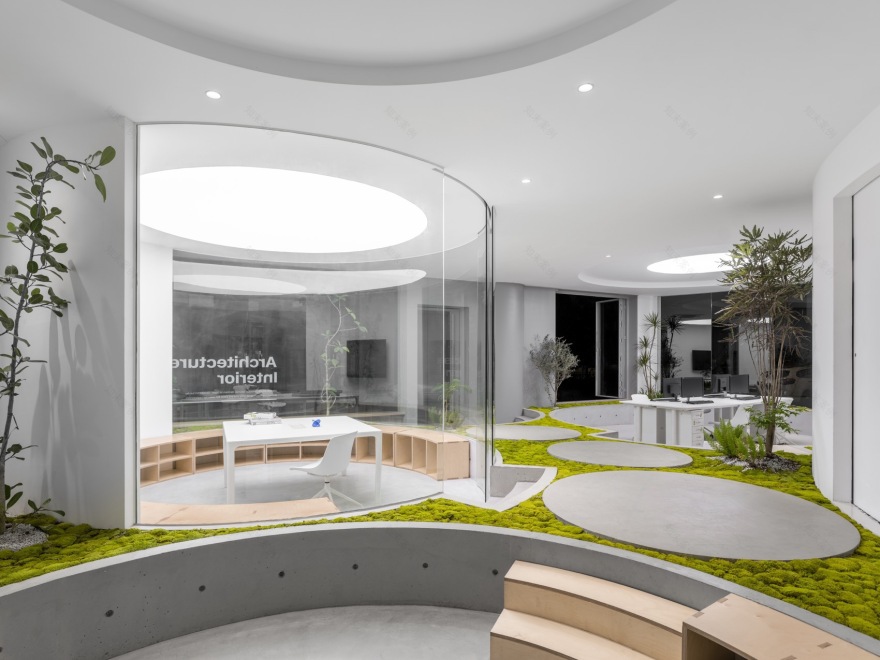

▼服务区域,Served spaces © 恩万建筑摄影(左小北)

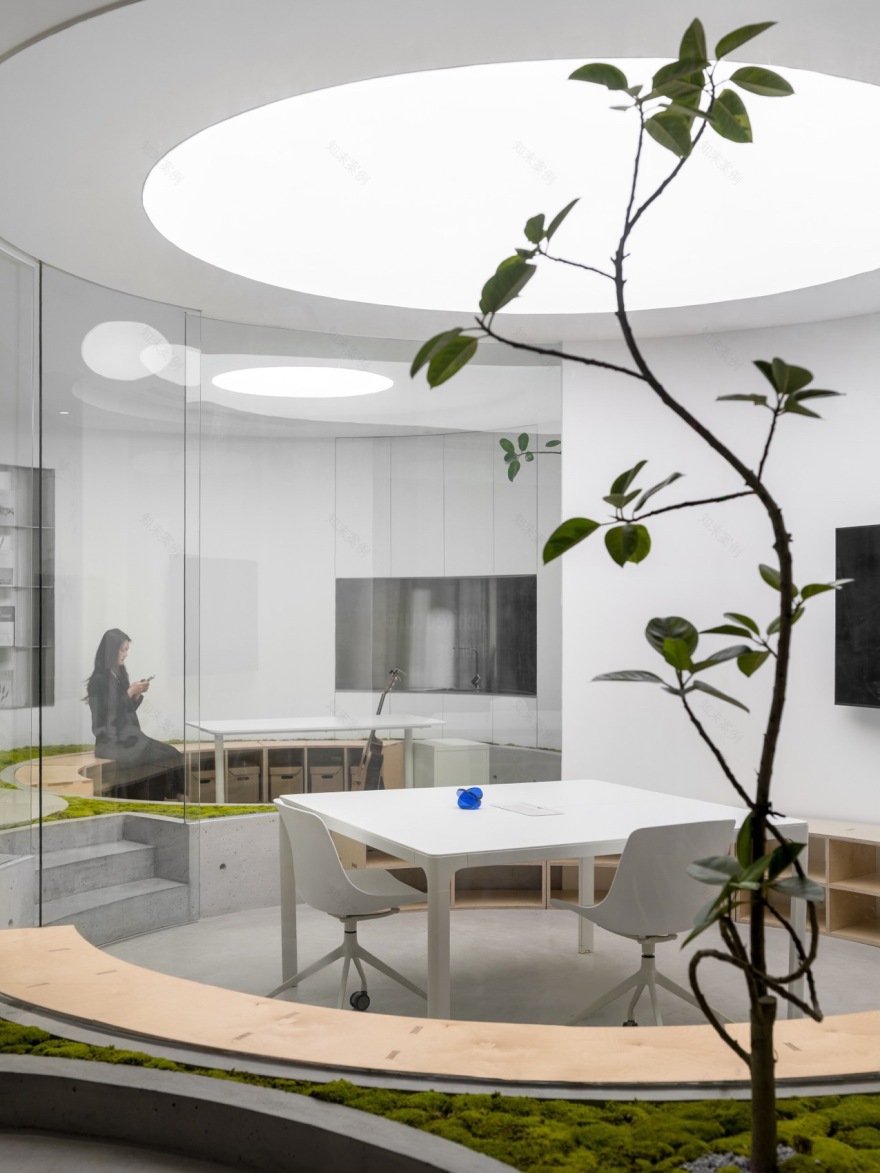

除了通过立面的开启折叠窗的手段来模糊室内外的边界外;透过在通道等区域种满绿植的方式,彷佛又把室外的景观一直延续到室内,形成一种被森林包围的,模糊的室内外感受。除此之外,通过抬高的绿植地面,某程度上也增加了不同区域之间的视线距离感,消除空间狭小的负面感受。
In addition to blurring the indoor-outdoor boundaries through the use of opening folding windows on the facade, filling passages and other areas with lush greenery creates a seamless transition of the outdoor landscape into the indoor environment. This results in an encompassing sensation of being surrounded by a forest, blurring the distinction between the inside and outside. Moreover, the raised greenery ground increases the perceived visual distance between different areas, effectively eliminating any feelings of confinement within the space.
▼室内种满绿植,Indoor green plants © 恩万建筑摄影(左小北)


整个设计的材质运用上,我们采用现浇混凝土、海洋板、不锈钢等简单的材质,配合大面积的留白,把空间主角的让渡给自然。
For the overall design’s material selection, we opted for simple materials such as cast-in-place concrete, marine board, and stainless steel, complemented by extensive whitespace. This approach allows the natural elements to take center stage within the space.
▼其它室内设计细部,Other design details © 恩万建筑摄影(左小北)

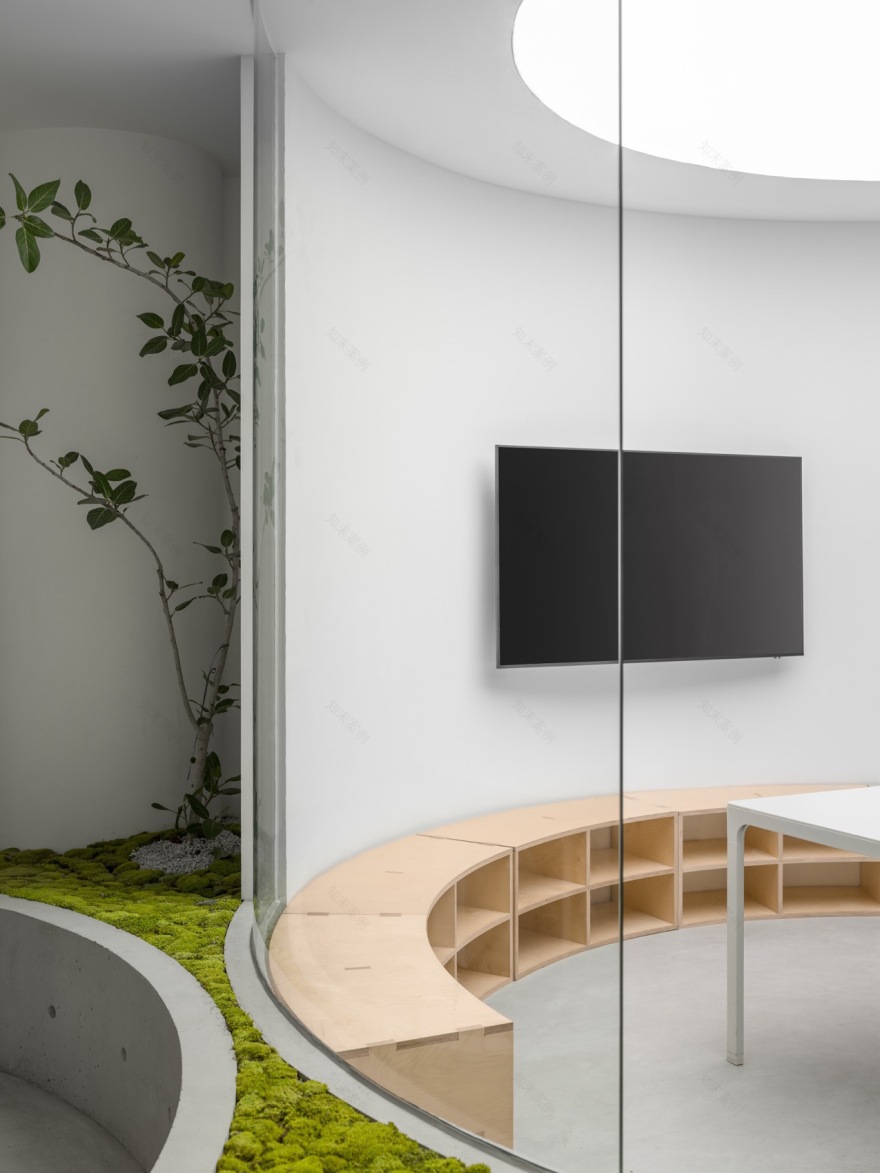
▼材质细部,Material details © GRAYSCALE
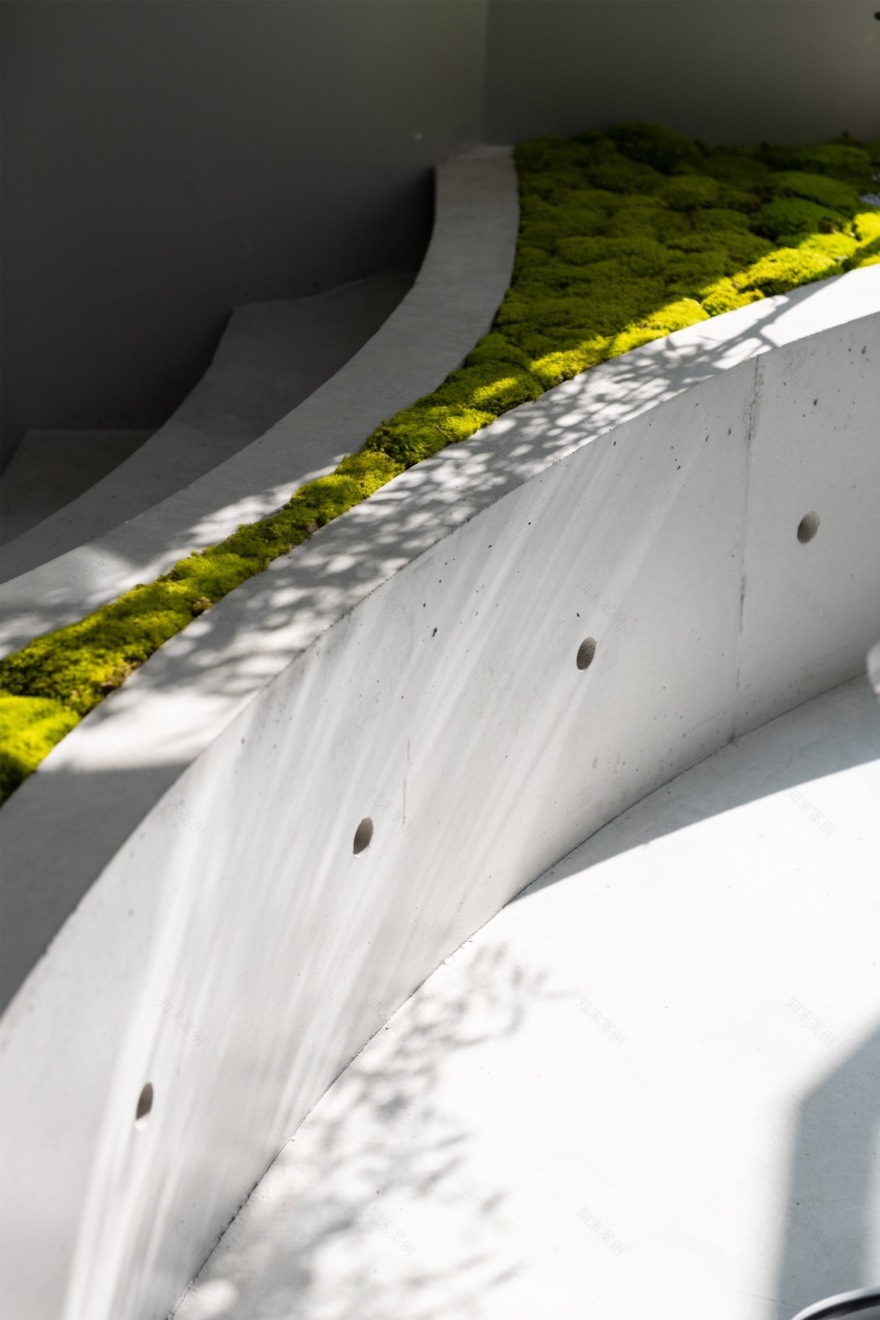

最后,透过这次的实践,引发了对空间必要性的思考,不管是居住空间或是办公空间,使用者保持对空间占有的克制,给自然多留点空间,或许是一种更和谐与未来的共生形态。
Finally, this project has prompted reflections on the necessity of space. Whether for residential or office purposes, maintaining a sense of restraint in space occupation and leaving ample room for nature may well represent a more harmonious and symbiotic form for the future.
▼夜览,Night view © 恩万建筑摄影(左小北)

▼平面图,plan © URBAN FUTURE DESIGN

南京喵熊网络科技有限公司 苏ICP备18050492号-4知末 © 2018—2020 . All photos and trademark graphics are copyrighted by their owners.增值电信业务经营许可证(ICP)苏B2-20201444 苏公网安备 32011302321234号
苏公网安备 32011302321234号客服
消息
收藏
下载
最近