

创作上传
VIP
收藏下载
登录 | 注册有礼
查看完整案例

收藏

下载

分享
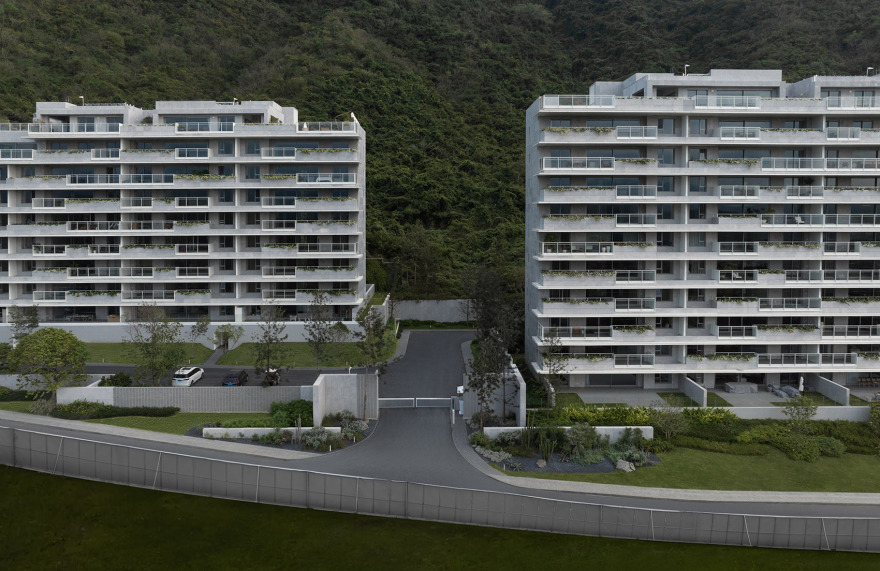
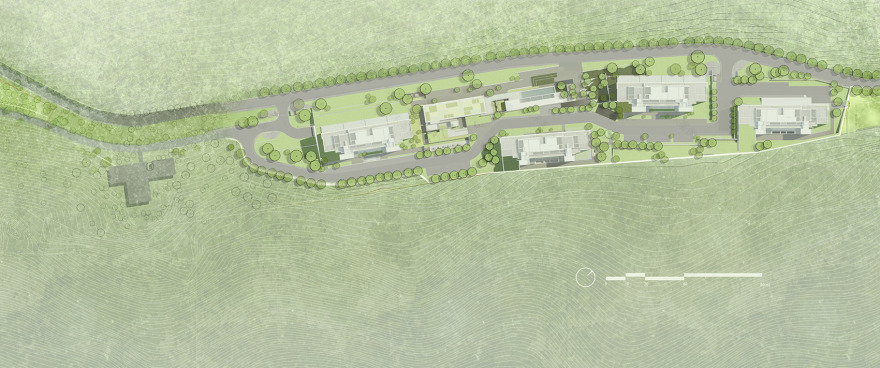
阿那亚三亚公寓是继y hotel和北区之后,纬图在阿那亚三亚项目中呈现的第三个组团。它位于地块北侧山脚,呈细长条形分布,可俯瞰高尔夫球场,依山而建的5栋建筑横向交错,内部存在不同程度高差。
©E-ar TARS
Aranya Sanya Residences is the third area presented by WTD GROUP in the Anaya Sanya project. It is located at the foot of the hill on the north side of the site and is spread out in a slender strip overlooking the golf course, with five buildings horizontally interspersed along the hill, with varying degrees of height difference within.
▼公寓鸟瞰,Ariel view of Sanya Residences ©E-ar TARS


该项目场地是通过对坡向山体的改造而形成,改造山体后,在场地的南侧形成诸多格构挡墙和垂直挡墙,以及一些土壤裸露。修复自然、还原山野,是景观在该项目中较为重要的课题。
▼改造前后对比,before & after©纬图设计
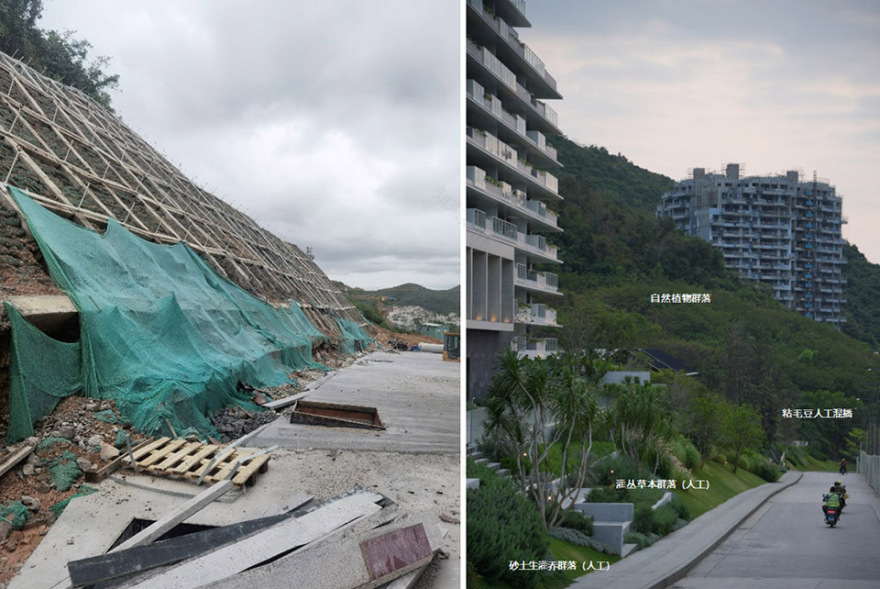
The architectural design of this project was created by cutting the slope of the mountain on the north side, forming many sloping lattice retaining walls and high vertical blocks, with exposed soil layers, which caused a certain degree of damage to the mountain during the construction process. Repairing nature and restoring the mountain is the most important subject for landscape in this project.
▼旨在修复自然的设计, design aims to repair nature ©E-ar TARS

对自然的修复并非盲目的栽种植物、复原土地,需结合在地气候环境、土壤环境、植被特点、树品种类,从大、中、小、微环境综合考虑,还原山体原貌。
The restoration of nature is not blindly planting plants and restoring the land, it needs to be combined with the local climate environment, soil environment, vegetation characteristics, tree species, from the large, medium, small and micro-environmental consideration, to restore the original appearance of the mountain.
▼还原山体原貌,restore the original appearance of the mountain©E-ar TARS


阿那亚三亚是被三虎岭-南下岭及周边山岭包裹挤压形成的狭长山谷,与典型的三亚海边雨林形成天然的微气候差异。背风干燥的气候环境使得土体单薄,质地偏砂质、持水力差,也构成少盐干燥,沙生或砂土生灌乔群落植被特点。
Aranya Sanya is a narrow valley formed by the extrusion of the surrounding package, forming a natural microclimate difference with the typical Sanya seaside rainforest. This climatic environment leads to its thin soil body with sandy texture and poor water holding capacity, which also constitutes a less salty and dry soil characteristic.
▼原始场地土质环境及改造后景观,the original thin soil body and after renovation ©纬图设计

土壤的盐度温度以及海拔直接影响着植物分布状态,从海岸地平线到山林腹地,植物呈现出不同的群类特征,海拔由低及高依次为:沙生草本群落–砂土生灌丛群落–砂土生灌乔群落–热带混交雨林–热带常绿季雨林的逐级分布。
The salinity and temperature of the soil as well as the altitude directly affect the distribution status of the plants, from the coastal horizon to the mountain forests, the plants show different characteristics of groups, the elevation from low to high in order: sandy herbaceous communities – sandy soil scrub communities – sandy soil scrub tree communities – tropical mixed rainforests – tropical evergreen monsoon rainforests in the hierarchical distribution.
▼植被逐级分布,the hierarchical distribution of plants©纬图设计


在大自然物竞天择的法则之下,生物群落会逐渐发生动态变化。一些优胜劣汰的物种会逐渐取代其他物种,而形成新的生物群落和更为稳定的斑块。它们逐渐呈现出混交(多样树种),异龄(不同树龄),疏密(随机密度)的森林景象,这三大特点引领着我们完成该项目景观营造。
Under nature’s law of natural selection, biomes gradually undergo dynamic changes. Some superior and inferior species gradually replace others and form new biomes and more stable patches. They gradually show the characteristics of multi-species, different age and random density, which lead us to complete the landscape design of this project.
▼混交,异龄,疏密的森林景象,the characteristics of multi-species, different age and random density ©E-ar TARS


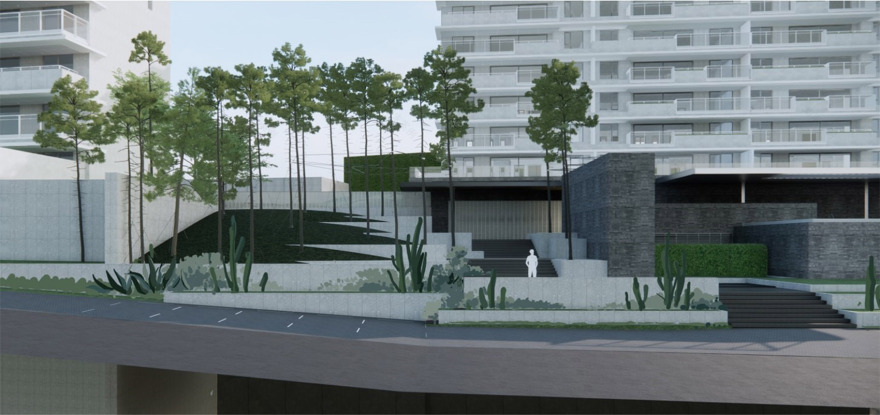
三个入口临街均处在陡峭的斜坡上。这个450m长的横向纵向均为陡坡的景观界面,利用横向灰白低矮挡墙固土,即可增加植物覆土深度,又呼应建筑线条。
▼主入口,main entrance ©E-ar TARS
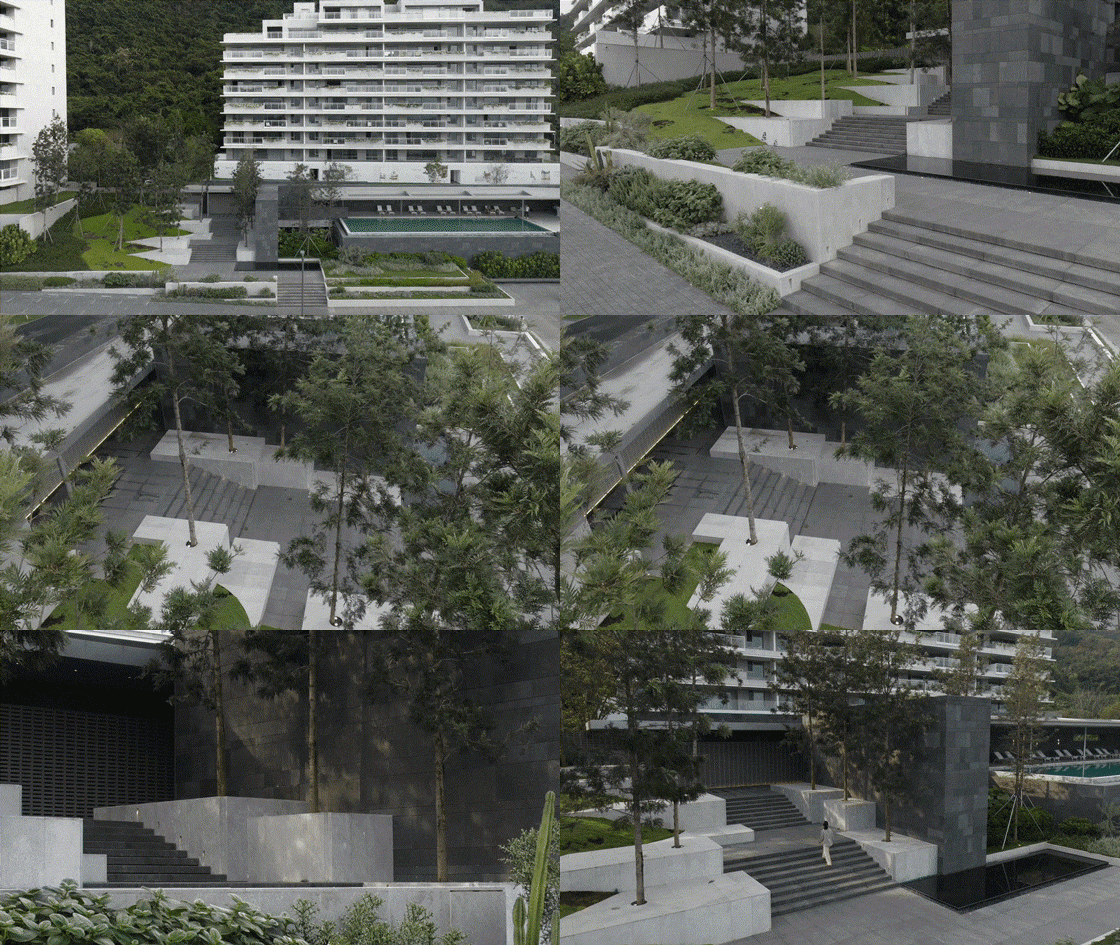
▼日式餐厅入口,restaurant entrance ©E-ar TARS

The three entrances to the street are all on steep slopes. This 450m long landscape interface with steep slopes both horizontally and vertically utilizes horizontal gray and white low retaining walls to consolidate the soil, which increases the depth of overburden and reinforces the soil.
▼景观呼应建筑线条,landscape echoes building lines©E-ar TARS

▼入口处景观,landscape along the entrance ©E-ar TARS


植物设计采用沙生植物&大乔木&小乔木的结合。最底层沙生草本群落灰蓝、灰绿色块交错,叠加出油画般的质地。节水低维护的沙生植物与海南本地速生雨林植物相结合,雨林植物形成浓密厚重的绿色背景。
The plant design utilizes a combination of sandy plants & large trees & small trees. The bottom layer of sandy herbaceous community is interspersed with gray-blue and gray-green blocks, just like an oil painting. Sandy plants are combined with Hainan’s native fast-growing rainforest plants, and the rainforest plants form a dense and heavy green background.
▼植物设计,the plant design©E-ar TARS

中层乔木以暖灰色清新质地的银桦为主,黄花槐、水石榕等小乔点缀其中,构成大小不一的植物斑块。乔木扎根之后根系伸进土壤里,养护成本低,可减少因陡坡所带来的养护不便。部分地被以金莎蔓等草本植物铺地,给了画面留白。
The mid-level trees are dominated by silver birch with a warm gray fresh texture, and small trees such as yellow-flowered acacia and water stone ficus are dotted among them to form patches of plants of different sizes. The root system of the trees reaches into the soil after taking root, which is low maintenance and reduces the inconvenience of maintenance caused by steep slopes. Part of the ground cover is paved with herbaceous plants such as golden salvia, leaving white space in the picture.
▼陡坡植被设计,the plant design by steep slopes©E-ar TARS


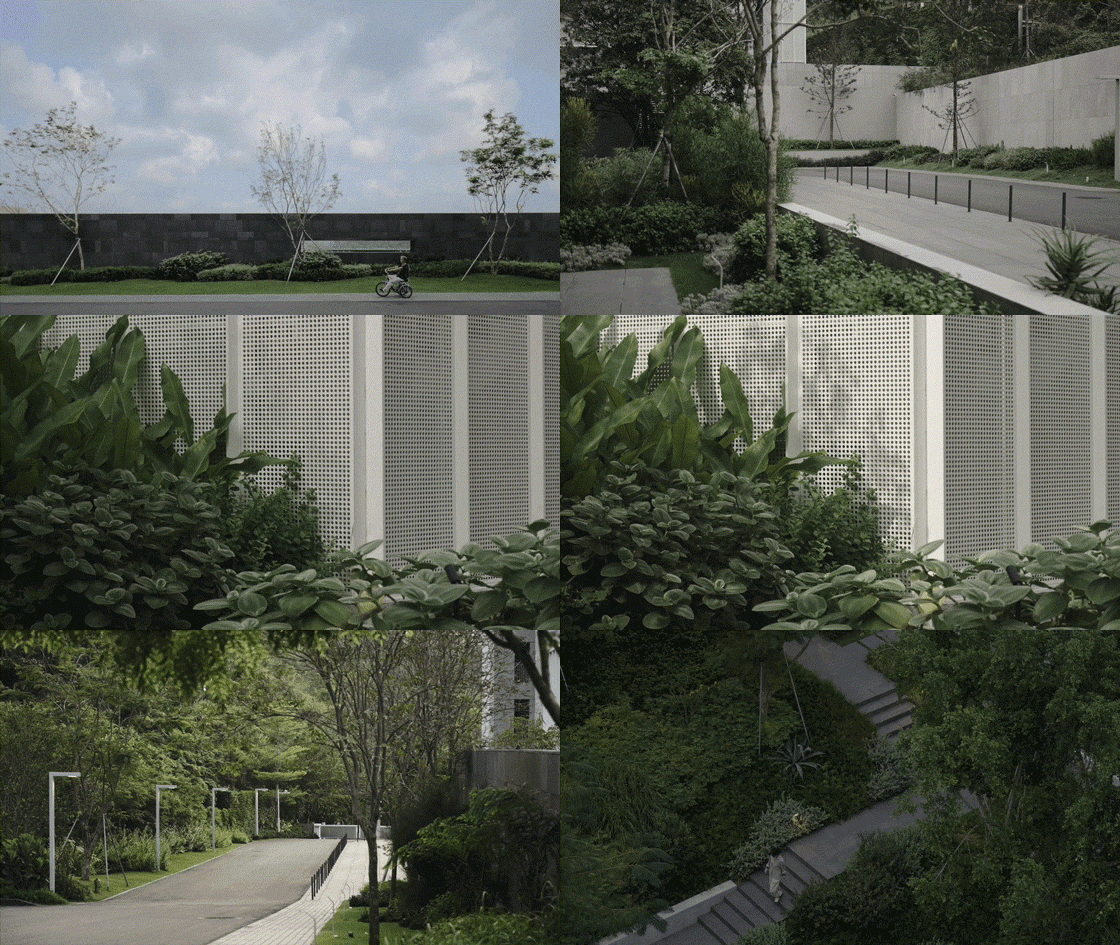
铺地和立面材质色彩与建筑元素一致,灰白的材质,树林与草木,格栅的光影,包裹出一个如度假酒店般惬意、轻松的入口空间。
▼入口处泳池,pool at the entrance ©WTD纬图设计

The material colors of the paving and façade are consistent with the architectural elements, the woods and grasses, the light and shadow of the grille, wrapping up an entrance space with a resort atmosphere.
▼如度假酒店般惬意、轻松的入口空间,an entrance space with a resort atmosphere ©E-ar TARS

▼立面材质与景观结合,integration of façade materials and landscaping ©E-ar TARS


设计根据森林乔灌关系的垂直分布,模拟植物群落的垂直结构去复原山体。先建立种群关系,在注重场地限制条件的基础上,用垂直分布的植物组团密集覆盖地面,以混播的方式种植。
▼垂直分布的植物群落,the vertical structure of plant communit ©E-ar TARS
Based on the vertical distribution of forest tree-irrigation relationship, the designer simulates the vertical structure of plant communities to restore the mountain. The ground is densely covered with vertically distributed plant groups, planted in a mixed-seeded manner.
▼模拟植物群落的垂直结构,simulates the vertical structure of plant communities ©E-ar TARS


乔木树种混合选择主景、副景、矮景等不同年龄、直径的乔木随机密度分散种植。环山而建的房子,最好的景观是自然。在内部结构中,除了建筑入户及四周边界做了立面景墙外,几乎没有硬景“戏份”,设计师以植物为画笔继续描摹,将建筑犹如被安插在山野中。
▼日式餐厅,Japanese restaurant ©WTD纬图设计
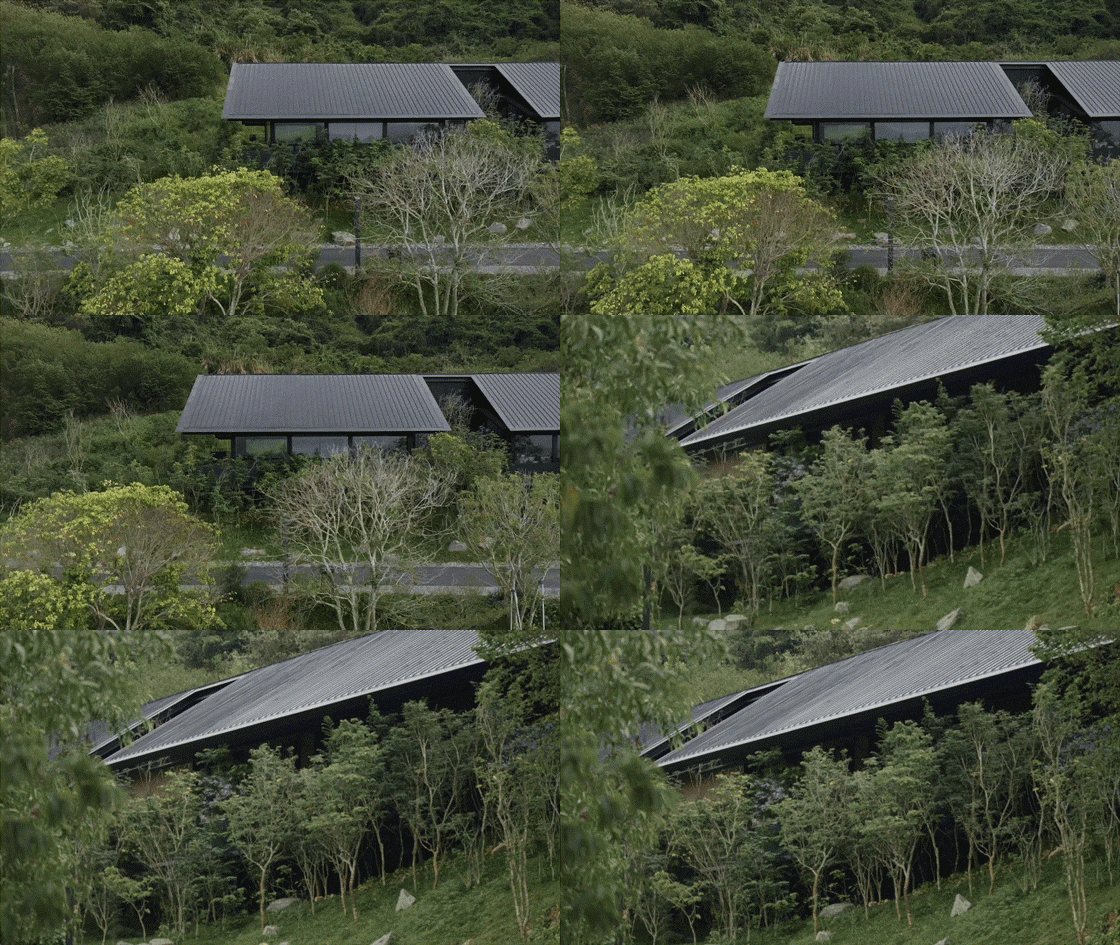
Arborvitae species are mixed to choose the main landscape, secondary landscape, dwarf landscape, etc. Arborvitae of different ages and diameters are planted in random densities in a scattered manner. The best landscape of the house built around the mountain is nature. In the internal structure, in addition to the building entry and the surrounding borders to do the façade view wall, the designer let the plants become the protagonist of the space.
▼自然分布在建筑周围的景观,landscape naturally distributed around the building©E-ar TARS


▼只在边界做了立面景墙,the façade view wall only for the border ©E-ar TARS

▼车库边界的立面景墙,the façade view wall for the garage ©E-ar TARS

舍弃掉常规地产的规整和丰富,园内的树种并不多,设计把更多的“戏份”给了抬头便可见的群山。
There are not many trees in the garden, and the designers gave more of the landscape to the mountains that are visible when you look up.
▼抬头便可见的群山,the mountains that are visible when you look up ©E-ar TARS

松的灰冷调灌木给热辣滚烫的三亚洒下清凉。我们尝试了一些之前在三亚不曾用过的品种,如银毛野牡丹、青叶玉芙蓉、银叶仓鼠等,经过半年的生长,长势喜人。
The fluffy gray and cool-toned shrubs shed coolness to the hot and rolling Sanya. We tried some varieties not used before in Sanya, such as silver-haired wild peony, green-leaved jade hibiscus, and silver-leaved hamamelis, which grew well after six months of growth.
▼植被设计,the plant design ©E-ar TARS


整个社区及周边微环境犹如一个延续周边山岭生态的小型自然保护区,设计取自然的群落搭配方法,在这里建立了小范围的本土植物群落,创造一种自然自发的生态环境,让原有的生境更稳固、持久。
The entire community and the surrounding micro-environment is like a small nature reserve that continues the ecology of the surrounding mountains and ridges. The design takes the natural community mixing method and establishes a small-scale native plant community here, creating a natural spontaneous ecological environment and making the original habitat more solid and lasting.
▼公寓夜景,residence at night ©E-ar TARS


▼公寓入口夜景,entrance for the residence at night ©E-ar TARS
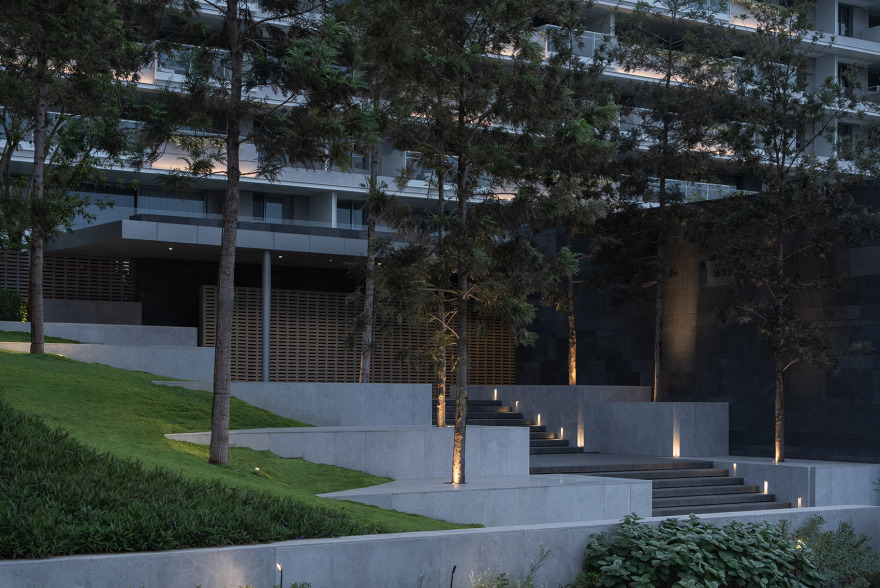
▼入口夜景,entrance at night ©E-ar TARS


▼庭院夜景,courtyard at night ©E-ar TARS

▼餐厅夜景,restaurant at night ©E-ar TARS


▼平面图,plan ©WTD纬图设计
▼渲染图,rendering ©WTD纬图设计

项目信息
项目名称:阿那亚三亚·山之境(东区)
项目地址:三亚市吉阳区森海路
业主单位:阿那亚
业主团队:王磊 周攀 郭祯 符帅帅 黄云
景观设计:WTD纬图设计
设计团队:李卉 张黎 赵冬舸 唐志杨 庹增娜 李理 陈成 刘依琳 张俊杰 游守悦 童征 宋照兵 胡晓梅 吴永攀 张书桢王利如
景观施工:海南兴源景观工程有限公司
建筑设计:上海建言建筑设计有限公司
森海·四葉餐厅设计团队:PLAT ASIA 郑东贤工作室
景观面积:37292㎡
建成时间:2024.01
Project Name: Aranya Sanya
Project Address: Senhai Road, Jiyang District, Sanya City
Owner: Aranya
Owner’s Team: Wang Lei, Zhou Pan, Guo Zhen, Fu Shuaishuai, Huang Yun
Landscape Design: WTD GROUP
Landscape Design Team: Li Hui, Zhang Li, Zhao Dongge, Tang Zhiyang, Tou Zenna, Li Li, Chen Cheng, Liu Yilin, Zhang Junjie, You Shouyue, Tong Zheng, Song Zhaobing, Hu Xiaomei, Wu Yongpan, Zhang Shuzhen, Wang Liru
Landscape Construction: Hainan Xingyuan Landscape Engineering Co.
Architectural Design: Shanghai Jianyin Architectural Design Co.
SENHAI Restaurant Design Team: PLAT ASIA Zheng Dongxian Studio
Landscape area: 37,292 square meters
Completion time: 2024.01
Photography/Video: E-ar TARS


南京喵熊网络科技有限公司 苏ICP备18050492号-4知末 © 2018—2020 . All photos and trademark graphics are copyrighted by their owners.增值电信业务经营许可证(ICP)苏B2-20201444 苏公网安备 32011302321234号
苏公网安备 32011302321234号客服
消息
收藏
下载
最近