

创作上传
VIP
收藏下载
登录 | 注册有礼
查看完整案例

收藏

下载

分享
位于瑞士Uster的Krämeracker中学始建于1957年,由两座教学楼和一座临时结构组成,后扩建为两栋新的教学楼和额外的室外空间。长条形的教学楼和中学教学楼平行,学生从加高一层的入口处进入楼内。新的体育馆位于旧体育馆的对面,四栋建筑呈棋盘式陈列,有效地塑造了多种多样的室外空间和宽敞的休息区。由此形成的建筑群组成了校园网络,可提供视觉参考和远景。为了将新的建筑融入原有的住宅区域,设计刻意维持了较低的建筑高度。细微的纵向和横向体量变化建立了与周边环境的空间关系。室外空间的设计参考了周围环境中典型的景观元素。 由石子铺成的小路连接着地毯般的田野,发挥特殊的用途。入口前的地板强调了内部镶嵌的马赛克瓷砖。
The ensemble of the Krämeracker secondary school in Uster, built in 1957, consisted of two buildings along with a provisional structure and was expanded to include two new buildings and additional outdoor spaces. The elongated school building is situated parallel to the secondary school building and has the pupils enter via the head of the building that is raised by one floor. The new gymnasium is located opposite the existing gymnasiums, so that the four building volumes are arranged in a chessboard-like pattern, effectively shaping the different outdoor spaces and a spacious recess area. The resulting ensemble forms a network of school buildings that allows for visual references and vistas. In order to integrate the new buildings into the existing residential area, the buildings are kept low. Fine vertical and horizontal volume shifts establish spatial relationships with the neighborhood. The design of the outdoor spaces references typical landscape elements of the surroundings. Carpet-like fields connected by stone-paved paths take on specific uses. Floor inlays in front of the entrances announce the theme of the mosaics inside.
▼项目概览,overview of the project©Kuster Frey

▼建筑街景,street view of the building ©Kuster Frey

共用的空间位于教学楼的的顶层,包括宽敞的门厅,图书馆,专用教室和通往屋顶花园的老师办公室。长条形的建筑内部,一层为幼儿园和课后托管中心,上层的教室群可以借助折叠墙来进行不同的组合。该系统以横跨房间的构造结构为最小元素。这些元素——教室,小组活动室,学习花园和到达区——都可以通过可折叠墙来部分连通。从最基础的形式开始,每个群组包括三个教室和两个小组活动室以及相应的学习花园和到达区,由于所有组群都有单独的疏散通道,因此可自由适应各种用途。
▼平面布局,plan layout ©Boltshauser Architekten
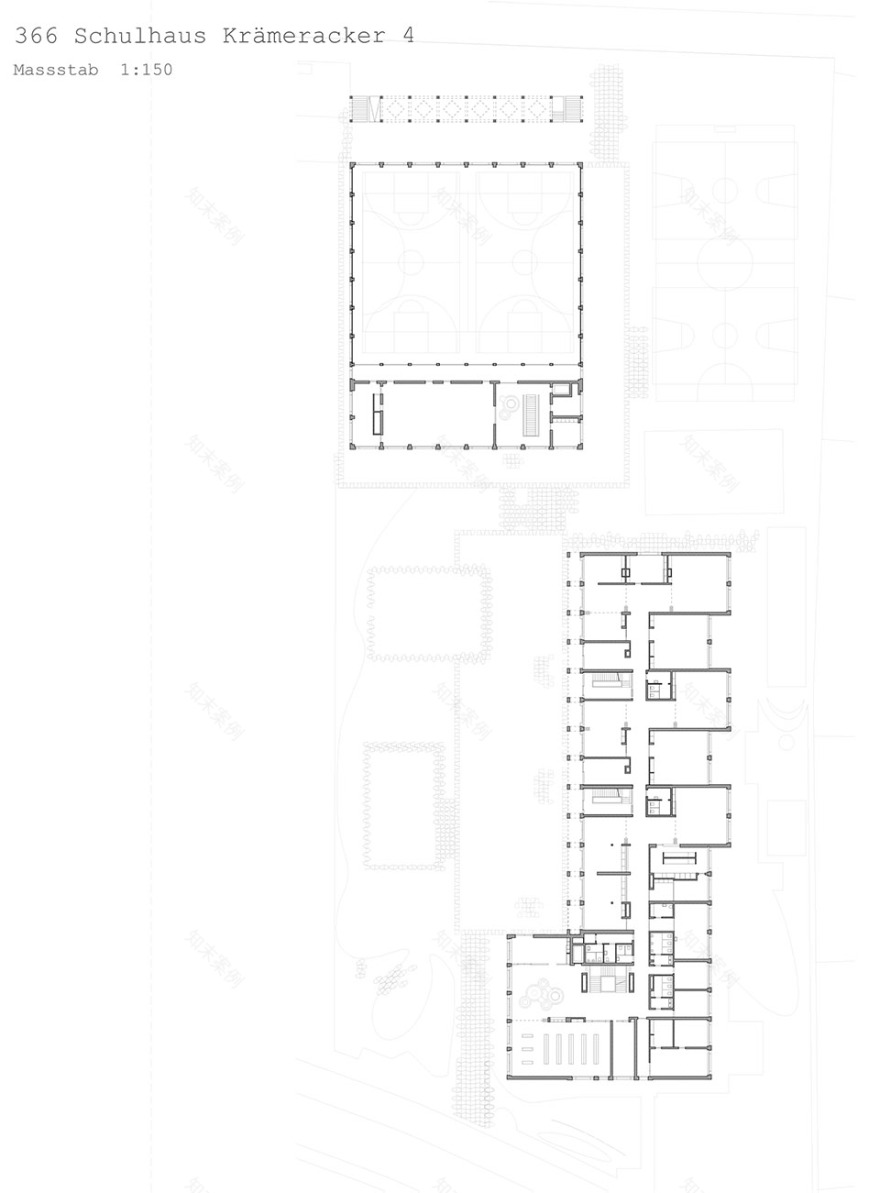
The common rooms are located in the head of the school building: a spacious foyer, the library, special rooms and the teachers’ rooms with their own access to the roof garden. The elongated part of the building houses kindergartens and an after-school care center on the ground floor, and classroom clusters on the upper floors, which can be combined and organized differently with the help of folding walls. The system is based on the constructive structure that spans a room as the smallest element. These elements – classroom, group room, learning landscape and access zone – can be partially connected to form larger units using folding walls. In its most basic form, a cluster consists of three classrooms and two group rooms along with the corresponding learning landscape and circulation zone and is freely adaptable to various uses as all clusters have individual evacuation routes.
▼室内空间结构,interior space structure©Kuster Frey

体育馆几乎呈正方形,就像一座古典风格的大礼堂。多种元素构成了这一风格:没有封闭墙板的环状的柱廊提供了不寻常的开放性;天花板上的浮雕并没有直接表现方向性的支撑结构,而是暗示了天花上的一种围合;木地板使房间看起来更温暖,玻璃砖和陶土饰面的墙面分割也一样,与墙面上的横杆融为一体。体育馆前面是一个多功能厅,内设厨房,可通过入口大厅单独进入。更衣室位于地下,设备储藏室与大厅相连,有效地整合了自行车停车位和室外楼梯。面向小区道路的前庭与邻近公寓楼相协调。
The almost square gymnasium resembles a large, classic-looking hall in character. Various factors contribute to this: A ring of pillars without closed wall panels provides unusual openness; the relief on the ceiling does not directly depict the directional support structure but rather suggests a coffered ceiling; the wooden flooring warms the room, as does the wall division with glass block and terracotta surfaces, in which the wall bars are integrated. In front of the gymnasium is a multipurpose hall with its own kitchen, which can be accessed separately via the entrance hall. The changing rooms are located in the basement, as well as the equipment storage room attached to the hall, effectively integrating the bike parking spaces and outside stairs. The vestibule facing the district road mediates the small scale of the neighboring apartment buildings.
▼从室外看体育馆,gym from outdoor view©Kuster Frey

▼体育馆内部,interior space of the gym©Kuster Frey

教学楼和体育馆的外立面体现了建筑合理的网格状结构。混凝土构件、石灰抹灰表面、网格石和窗户相辅相成,从而使设计与立面的不同之处相呼应。建筑后部体量的凸出和内凹使学校建筑群与周围环境相互交错。然而,外墙本身仍保持相对平整,因此突出部分的混凝土构件就像是灰泥中的镶嵌。另一方面,面向休息区域的主立面则以不同的浮雕为特征,柱子上方的头状饰面为其加冕。底层的墙壁向后退,这样柱子就形成了一个门廊。而体育馆的外立面则采用了更加内敛的浮雕,因此只有面向广场的外立面才有额外的装饰。
The facades of the school building and the gymnasium reflect the rational, grid-like structure of the building. Concrete elements, surfaces with lime plaster, grid stones and windows complement each other, whereby the design reacts to the differences in the elevations. Protrusions and recesses at the rear interlock the school complex with its surroundings. However, the facade itself remains relatively flat, so that the concrete elements of the protruding sections appear as inlays in the plaster. The main facade facing the recess area, on the other hand, is characterized by a differentiated relief, which is crowned by head-like finishes above the pillars. The wall on the ground floor steps back so that the pillars form a porch. The facade of the gymnasium, on the other hand, showcases a more restrained relief so only the facade facing the square is additionally accentuated.
▼立面局部,part of the façade©Kuster Frey


内部和外部都使用了专门开发的陶土构件作为亮点。通风格栅的设计确保了通风所需的截面。类似的石材还被用作室内的隔音材料或外墙的砖石。穿孔比例根据具体要求进行调整。作为艺术与建筑项目的一部分,建筑师专门设计制作了马赛克,并将其镶嵌在地板上。在教学楼的入口大厅和体育馆的门厅,巨型图案欢迎着来访者,而单个的圆圈则象征着各个建筑群的中心。这项工作的灵感来自意大利的天然石材马赛克,由于如今可以用机器将石材切割成各种形状,因此石材价格也变得低廉。门厅和楼梯间新开发的玻璃灯具是在Murano附近手工制作的。尽管使用的是工业化生产的 LED 灯,但由于其内含物、瑕疵和不规则表面,它们仍能提供自然的照明效果。
Specially developed terracotta elements are used as highlights inside and outside. The elements of the air grates are designed to ensure the required cross-sections for ventilation. Similar stones are used as acoustic elements in the interior or as masonry in the facades. The amount of perforation was adapted to the specific requirements. As part of an Art and Architecture project, specially developed mosaics were made and worked into the floors as inlays. Large patterns welcome visitors in the entrance hall of the school building and in the foyer of the gymnasium, while individual circles mark the centers of the respective clusters. This work, inspired by natural stone mosaics in Italy, has become affordable because the stones can be cut into shape by machine today. The newly developed glass rods of the lamps in the foyers and stairwells were hand-made near Murano. Due to their inclusions, imperfections and irregular surface, they provide atmospheric lighting in spite of the use of industrially manufactured LED lamps.
▼室内空间的玻璃砖,glass brick used in interior space©Kuster Frey

被动式建筑体现了建筑的可持续性。学校侧楼和体育馆均采用预制混凝土柱的框架结构设计。建筑核心部分的混凝土墙壁用作支撑,其他墙壁均为非承重墙。房间可通过折叠墙和隔墙结构进行调整,房间的可适应性不断调整,以满足不断变化的需求。混凝土柱之间的土质抹灰墙可以调节房间内的湿度,从而改善室内环境。抹灰外墙的石灰材料完全采用来自当地的天然添加剂。教室中专门设计的空气格栅可以不受天气影响地进行空气流通和夜间降温。因此而不需要机械通风系统。只有多功能厅、更衣室和浴室才使用机械通风系统。供暖通过区域供暖和安装在屋顶的光伏系统提供。
Passive construction measures characterize the sustainability of the buildings. Both the school wing and the gymnasium are designed in skeleton construction with prefabricated concrete columns. The concrete walls of the building cores serve as bracing, while all other walls are non-loadbearing. The adaptability of the rooms through folding walls and the construction of partition walls allow for long-term customizability to meet changing needs. Earthen plaster walls between the concrete pillars regulate the humidity in the rooms, thus improving the indoor climate. The lime material of the plaster facade was obtained regionally using exclusively natural additives. The specially designed air grates in the classrooms allow for weather-independent air inrush and night cooling. It was therefore possible to forgo a ventilation system entirely. Mechanical ventilation is only used in the multipurpose hall, the changing rooms and the bathrooms. Heating is provided via a district heating connection along with a photovoltaic system installed on the roofs.
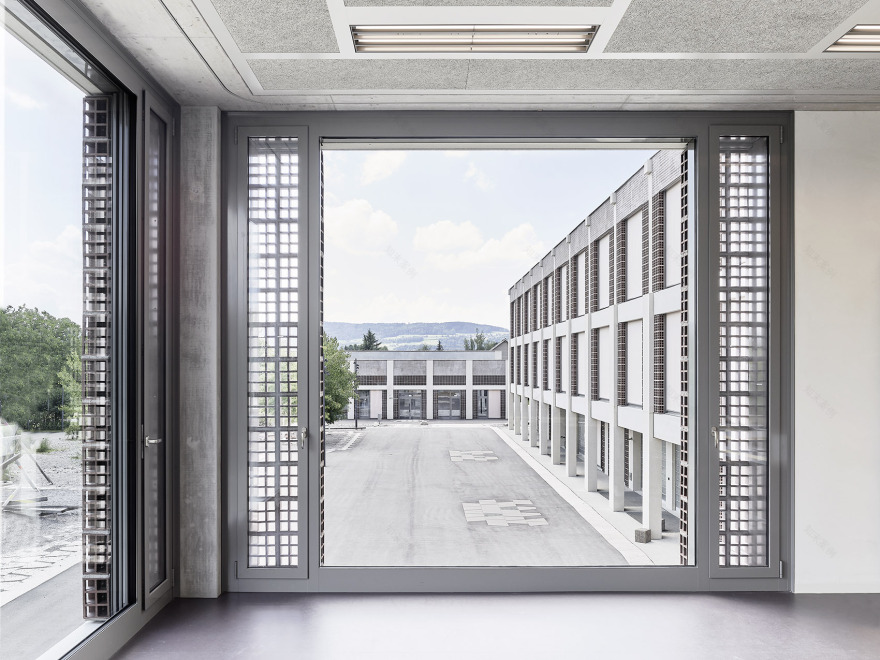
▼从室内看向室外,view from indoors to outdoor ©Kuster Frey
▼场地区位,site map ©Boltshauser Architekten

▼平面、立面与细部,plan, elevation and detail ©Boltshauser Architekten

▼平面、立面,plan, elevation ©Boltshauser Architekten

▼平立剖,plan & elevation & section ©Boltshauser Architekten

Address:Zürichstrasse 33 – 35, 8610 Uster
Use:Day nursery, kindergarten, primary school, secondary school, double gymnasium, multi-purpose room
Type of order:Project competition, 1st prize
Construction management:Primary school administration Uster, Uster
Specialist Planners Involved:
General planning, cost planning, construction management:Boltshauser Architekten AG
Landscape architecture:Ganz Landscape Architects, Zurich
Specialist planning for statics, building physics:Basler & Hofmann AG, Zurich
Specialist planning heating, ventilation:Waldhauser + Hermann AG, Münchenstein
Specialist planning for plumbing:Gemperle Kussmann GmbH, Basel
Specialist planning electrical engineering: IBG B. Graf AG Engineering, Winterthur
Specialist planning facade:Feroplan Engineering AG, Zurich
Specialist lighting design:Reflexion AG, Zurich
Glass block construction:Semadeni Glasbeton AG, Horgen
Art on the building:fläche und form, Carina Kirsch, Grabs
Floor area:8600 m2
Building volume:41 000 m3
南京喵熊网络科技有限公司 苏ICP备18050492号-4知末 © 2018—2020 . All photos and trademark graphics are copyrighted by their owners.增值电信业务经营许可证(ICP)苏B2-20201444 苏公网安备 32011302321234号
苏公网安备 32011302321234号客服
消息
收藏
下载
最近