

创作上传
VIP
收藏下载
登录 | 注册有礼
查看完整案例

收藏

下载

分享
材料的选择
WELLS OF MATERIALS
Atelier Delalande Tabourin (ADT)事务所打造了一座由碎砖石为主要材料的房屋,这种材料源自事务所对当地副产品和砖厂废料再利用的长期研究。本项目包含四项干预手段,将原有建筑物的内部空间进行了彻底的翻新,并在原来的地板上进行了穿孔,打造了一系列具有层次的采光孔和流通空间。
In Versailles, the Atelier Delalande Tabourin (ADT) just completed a house made of brick shards, a material resulting from a long process of research on the reuse of locally sourced co-products and waste materials from local brickworks. The interior organization of the original building was completely modified thanks to four architectural interventions, which, by perforating the existing floorboards, made it possible to create a series of levels of large light wells and new circulations.
▼项目外观,Exterior view © Maxime Delvaux

附加结构是由熟料混凝土制作而成,这些材料取自废弃砖块和被粉碎的碎片,这都是设计者、兼材料再利用研究员 Anna Saint-Pierre 的长期研究成果。由这种材料打造的新的天窗结构对建筑的六个柱子起到了视觉延伸的效果,这些柱子也组成了建筑外立面的构图。
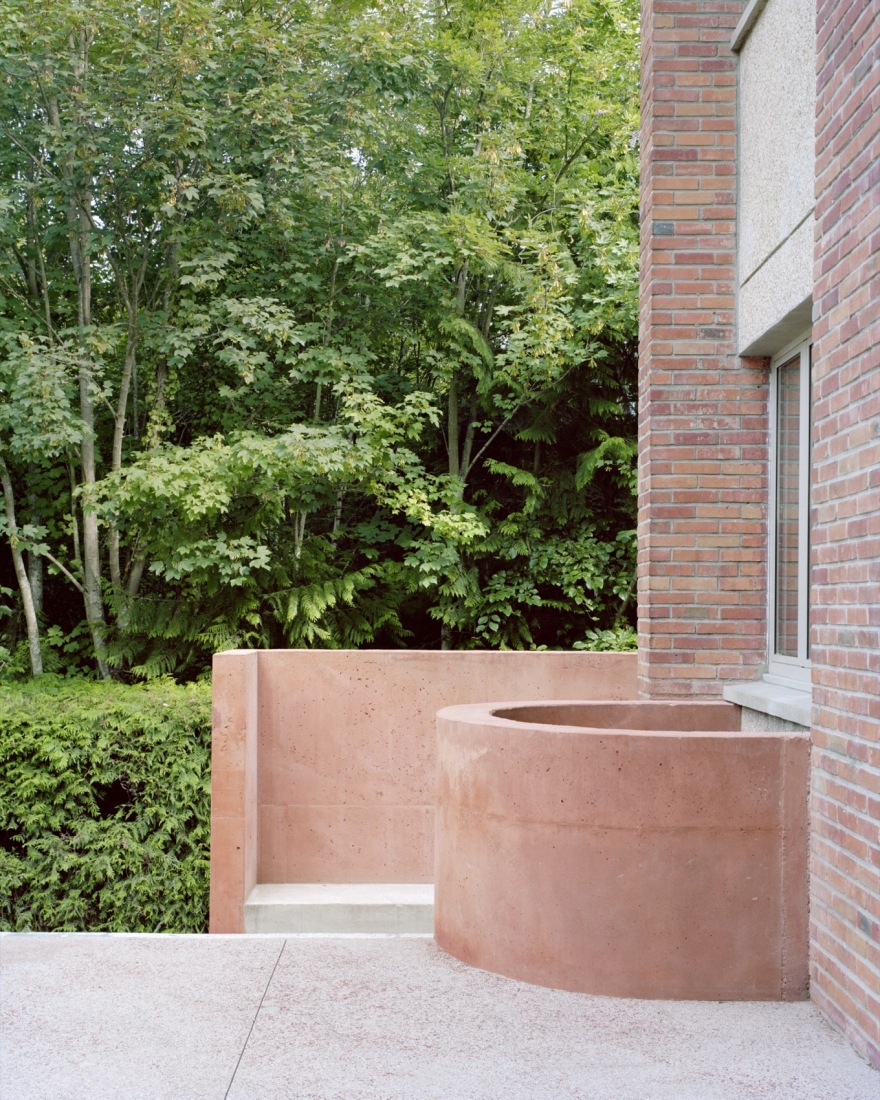
These additions were made of grogged concrete, a material obtained from the crushed shards of defective bricks, the result of a long research process in collaboration with Anna Saint-Pierre, designer, and researcher on materials reuse. The new skylights created with this material are a visual extension of six imposing vertical brick steles that structure the original façade.
▼外观近景,Close view of the facade© Maxime Delvaux
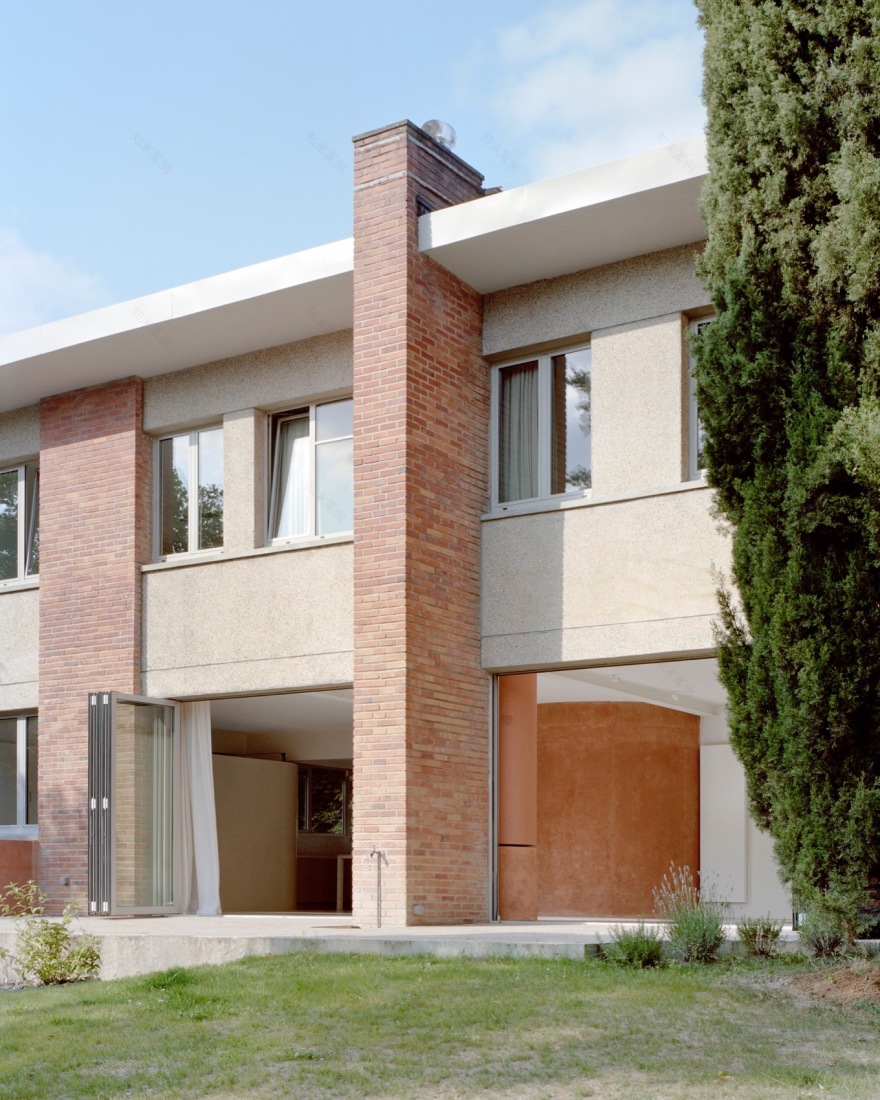
▼入口阶梯,Entrance stairs© Maxime Delvaux


凡尔赛地区的改造典范 A MODEL REHABILITATION IN VERSAILLES
这栋建筑位于凡尔赛小镇一处开发于 20 世纪 50 年代的住宅区中心。建筑由三部分木质结构组成,立面有六个充满力量感的柱子,这些柱子的垂直形态与材料的选择对比鲜明,平衡了建筑庞大的外观体量。
The building to rehabilitate stands in the heart of a 1950s residential zone in the town of Versailles. It is composed of three wooden boards clad on the façade with six imposing brick steles, which, thanks to their verticality and their contrasting materiality, lighten the massive, cubic appearance of the edifice.
▼室内空间概览,Main interior view© Maxime Delvaux
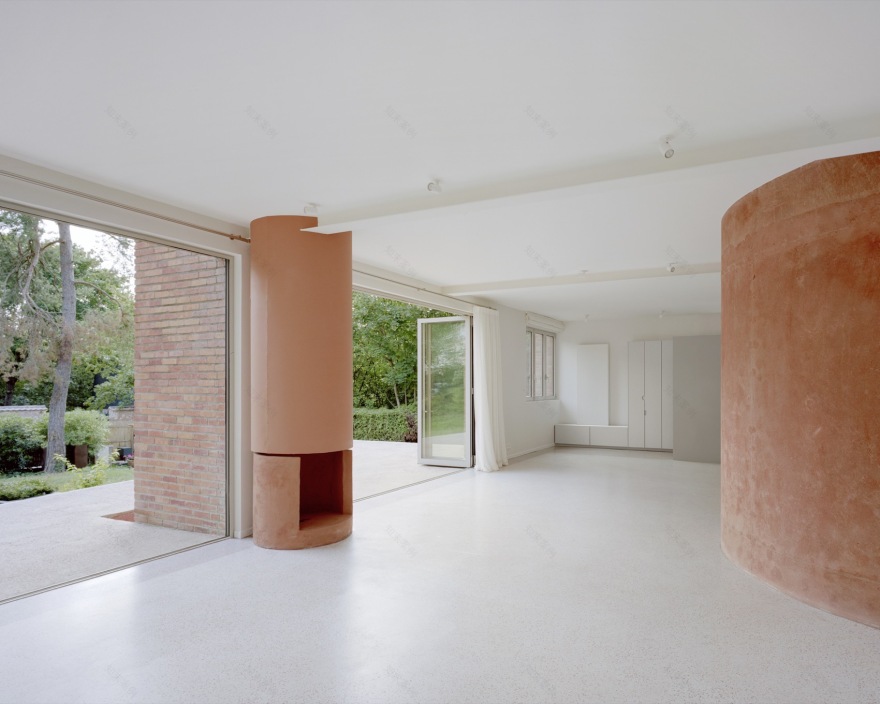

原本的室内空间比较黑暗,难以分辨其中的房间分布,还带有一个宽敞且并未使用过的地下室;起居空间与室外花园也被分隔开来。为了优化这些空间布局,设计者在地板上进行了穿孔,并安装了大型的天窗,引入自然天光使得室内的各种材料被显现出来。他们打破了原有空间布局,引入一些几何圆形,创建了不同的生活空间,同时也提供了一些过渡空间。这种激进的设计手法旨在恢复空间的重要性和情感氛围,因为这些空间原来的设计常常使业主忽略个人的身体感觉。
The interior spaces were dark and the distribution of spaces was hard to read, isolating a wide, unused basement, and disconnecting living areas from the large peripheral garden. In order to answer these spatial challenges, four architectural interventions were created through large skylights perforating existing floorboards, thereby dazzling the material at every level. Breaking with the existing structure, their geometrically circular movement sequences different living experiences whilst also fluidifying transitions. A radical statement also aiming to restore importance and emotion to circulation areas, too often ignored or devoid of any particular physical sensation.
▼几何圆形空间,The geometric circular space © Maxime Delvaux

材料相关的试验
A MATERIALS RESEARCH PROJECT
本项目中所使用的材料均与 Ile-de-France 地区的砖厂进行合作,设计者希望用现代且负责任的方式进行设计。这种较为复杂且具体的物质性属性是 Anna Saint-Pierre 在“资源分析”阶段进行的长期研究的成果。
Working with co-products from brickworks in the region of Ile-de-France, these interventions are designed to extend the material of the existing steles in a contemporary and responsible wink to what is already there. This grogged concrete materiality is the result of a long research process initiated during the “resource analysis” phase with Anna Saint-Pierre.
▼圆形空间内部的螺旋楼梯,The spiral staircase © Maxime Delvaux

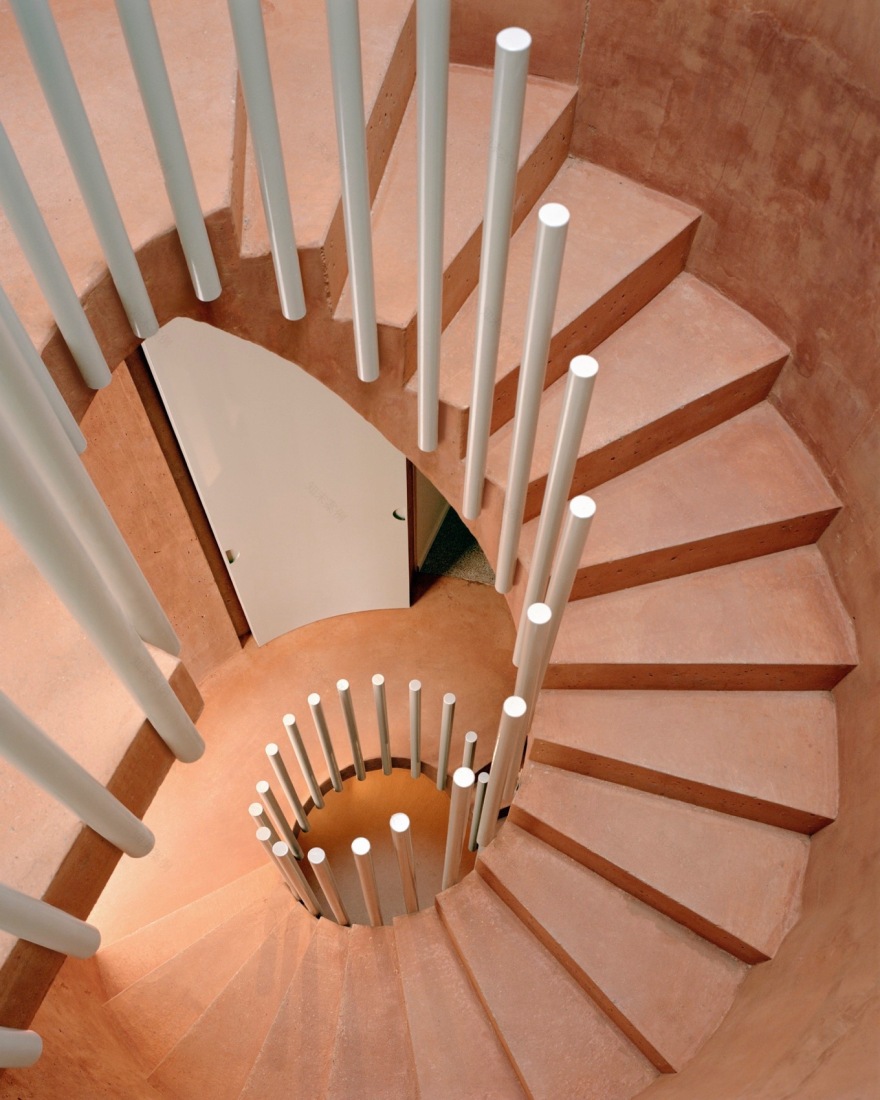
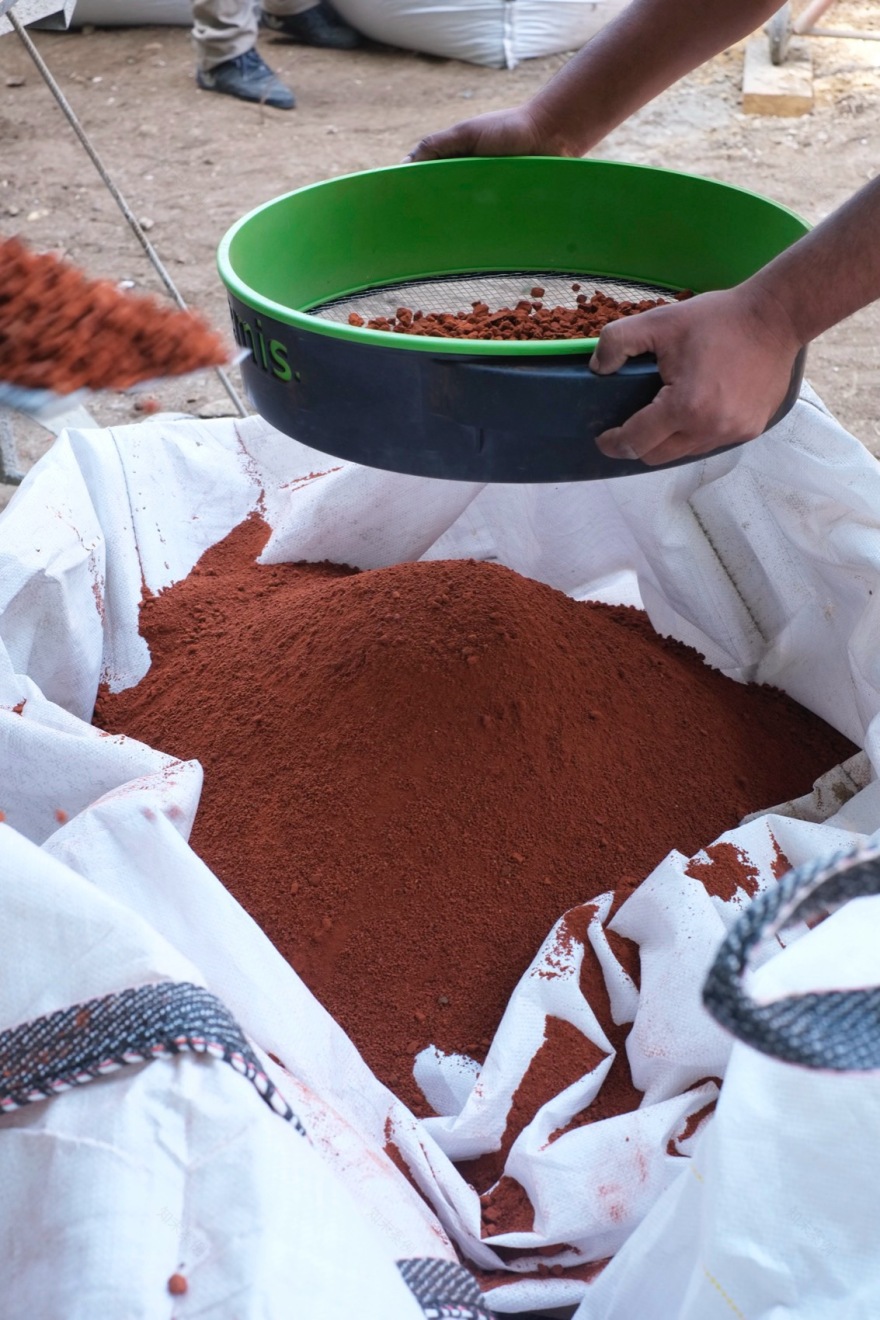
设计者在参观 DeWulf 的过程中,对一些名为“grogs”的碎片产生了兴趣。这些副产品是一些过度烧制、变形的砖块,在现场进行粉碎得到的。在看到这种材料的生产过程后,设计者认为他们需要好好利用这种材料作为本项目的物质基础。
During the visit to the DeWulf brickworks, we were quickly intrigued by an immense pile of shards referred to as “grogs”. This co-product is comprised of all the unsold, deformed and overly fired bricks, which are then crushed on the industrial site. From that moment, it seemed obvious to us that we had to seize upon this deposit as the material basis for our project.
▼圆形空间顶部的天窗,Skylight© Maxime Delvaux


他们与 Cemex 和 Sols 公司合作,进行了一系列的原型设计和测试,以保证室内外地板的粒度。这些地板与采光井相互平行,通过对这些楼层中熟料密度的试验,能够巧妙地向业主展示不同的空间序列。
A long series of tests and prototypes was undertaken in collaboration with the Cemex and Sols companies to determine the granulometry of interior and exterior flooring. In parallel to our vertical light wells, we wished to experiment with the density of grog in these floors to be able to subtly indicate the different spatial sequences to users.
▼窗户设计,Window design© Maxime Delvaux


▼空间其他设计细部,Design details© Maxime Delvaux

保护当地的历史
PRESERVING THE HISTORY OF THE LOCATION
与碎片材料“grogs”一样,ADT 的使用也是希望能够展现建筑中先前结构的痕迹,客厅中的石灰华地板被重复利用以揭示空间改造前的样貌,砖石长椅也是如此。在本项目中,设计者采用了当代且积极的修复手法,延续其物质性的感官品质,增强了空间的情感体验,同时也充分尊重当地的历史。
With this same shards-based material, ADT wished to reveal the building’s former interior organization by, for example, highlighting the traces of the former partitions in the rooms, or by reusing the existing travertine flooring in the living room as a decorative element: see masonry banquette opposite.
▼材质细部,Material details© Maxime Delvaux
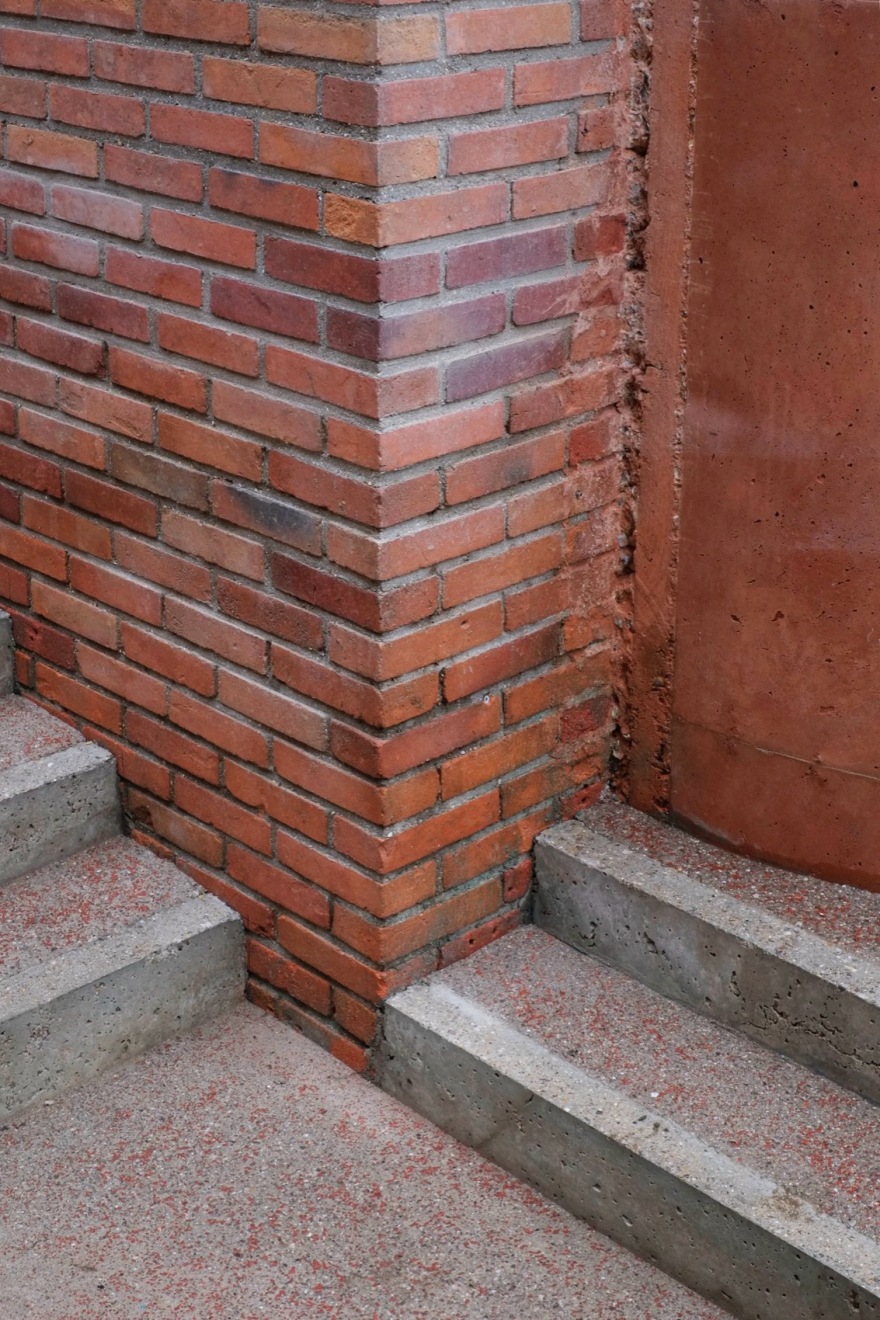
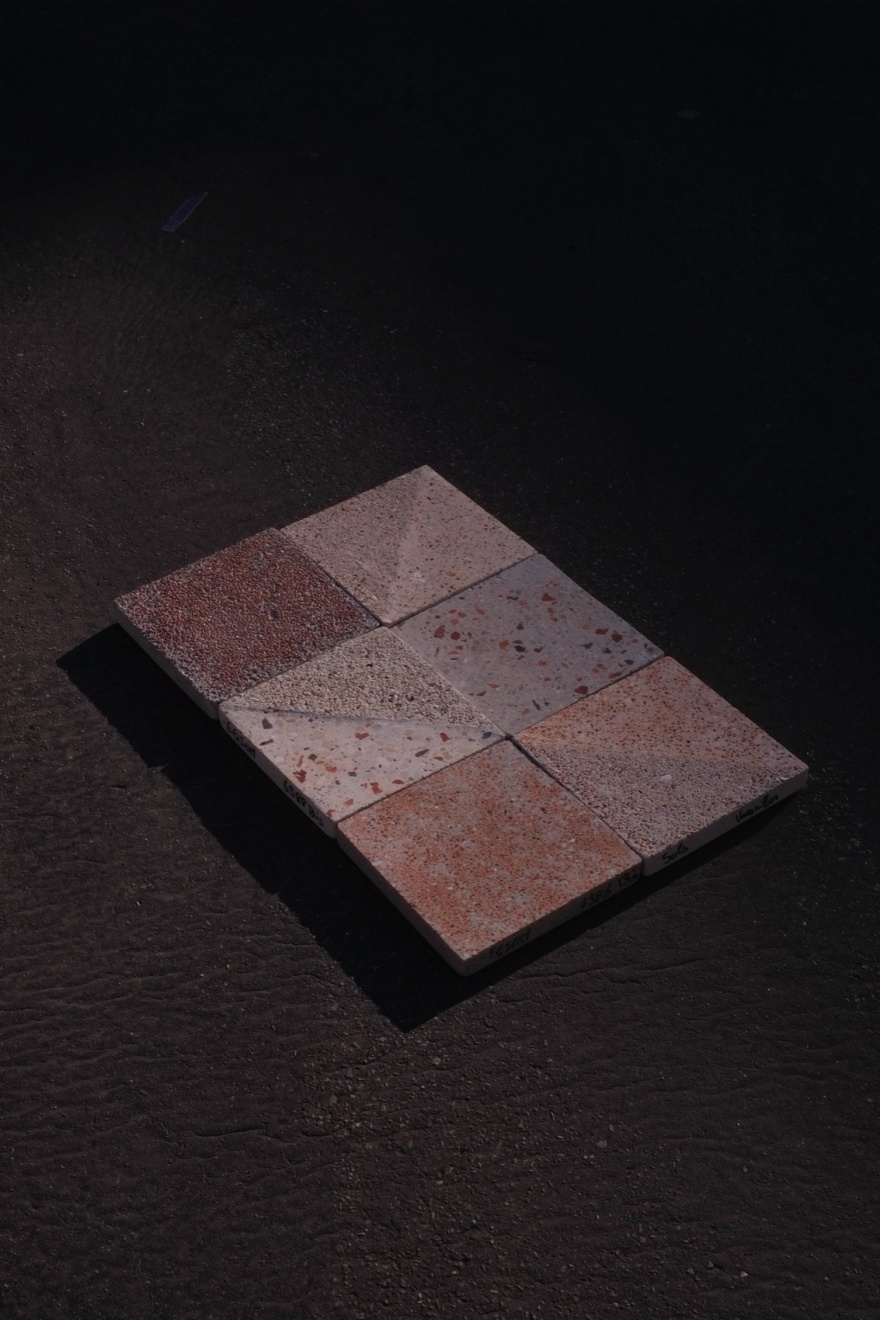
在本项目中,设计者采用了当代且积极的修复手法,延续其物质性的感官品质,增强了空间的情感体验,同时也充分尊重当地的历史。
A contemporary and activist rehabilitation, which, thanks to the sensory qualities of its materiality, enhances a spatial and emotional experience of the place, whilst also respecting its history and local skills.
▼项目区位
site plan© Atelier Delalande Tabouri

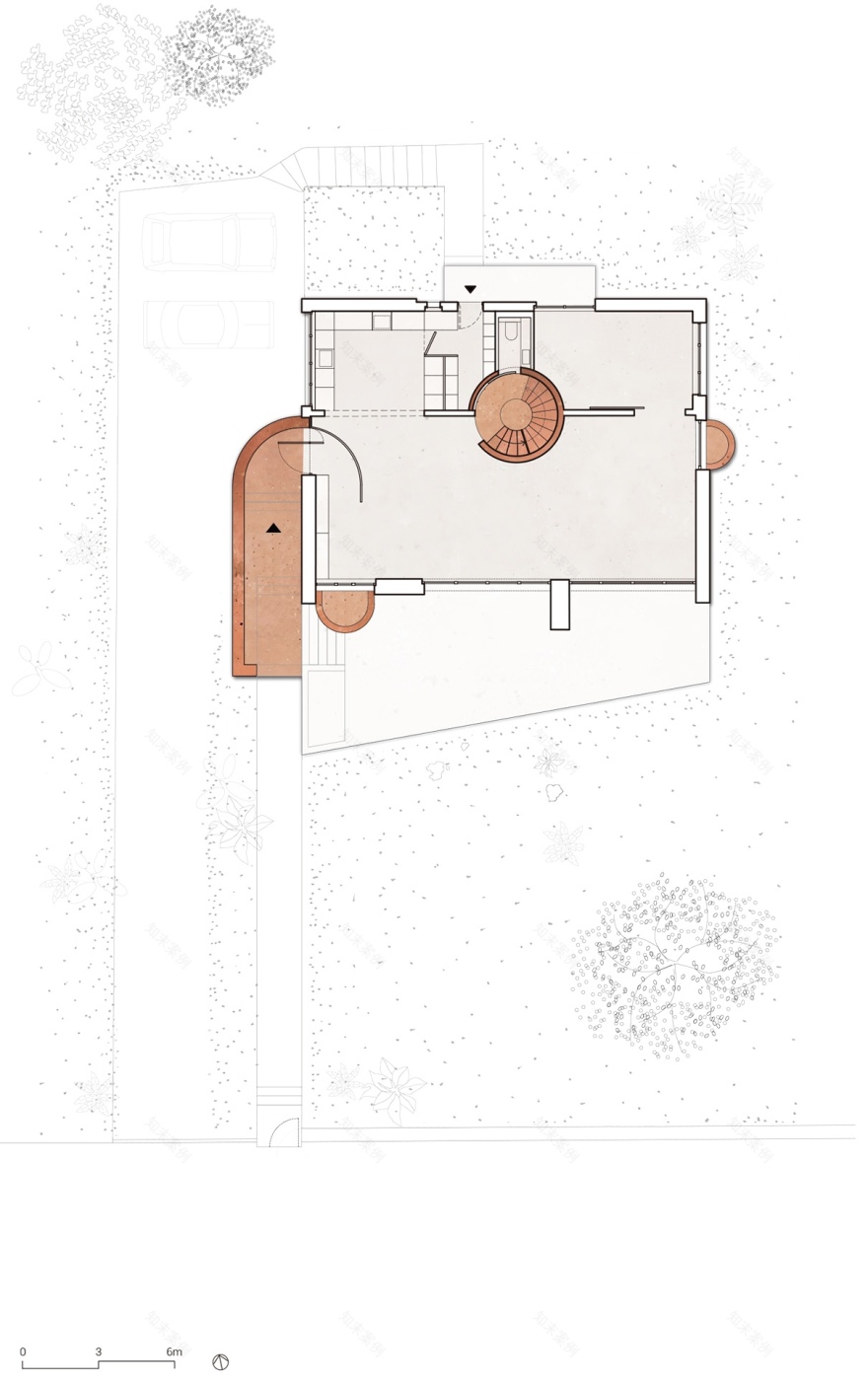
▼平面图,plan©Atelier Delalande Tabouri
▼剖面图,section©Atelier Delalande Tabouri

DATASHEET
9 rue Jacques Lemercier, 78 000 Versailles, France
Housing. Major restructuring of a detached house. Reuse of locally sourced co-products and waste materials from an Ile-de-France brickworks. Creation of three large light wells to make the basement liveable.
Project in collaboration with Anna Saint-Pierre, designer and researcher on materials reuse.
ADT – Atelier Delalande Tabourin (architect)
François-Xavier Jamin (project manager)
Anna Saint Pierre (materials reuse)
Con-Struct (BET Structure)
300 sq m
450, 000 € HT
Delivered in April 2023
Photo credits © Maxime Delvaux


南京喵熊网络科技有限公司 苏ICP备18050492号-4知末 © 2018—2020 . All photos and trademark graphics are copyrighted by their owners.增值电信业务经营许可证(ICP)苏B2-20201444 苏公网安备 32011302321234号
苏公网安备 32011302321234号客服
消息
收藏
下载
最近