

创作上传
VIP
收藏下载
登录 | 注册有礼
查看完整案例

收藏

下载

分享
苏黎世联邦理工学院的 GLC 大楼是为卫生科学和技术交互教学研究服务的建筑,属于苏黎世大学区密集建筑群中的一部分,与 19 世纪中叶 Semper 理工学院和大学建筑群融为一体,这篇建筑群不断发展直到今天。1930 年前后,VAW 水文研究所始建在苏黎世山的中产阶级住宅区下方,1935 年这里增设了土壤工程系,1941 年增设水文系。1948-1952 年间,Heinrich(1901-1982)、Alfred Eduard(1900-1953)、Oeschger 和 Alfred Mürset(1888-1975)对这些建筑进行了扩建,并增加了大型的 Paul Scherrer 物理报告厅。与此同时,建筑师 Fritz Metzger(1898–1973)和 Leopold Boedecker(1890–1967)在山谷的一侧增建了物理系大楼。但是,这个研究所在 1961 年时搬迁到了 Hönggerberg,后有在新址增加了电气工程系——由 Karl Flatz(1915–1995)设计的 ETZ 大楼,于 1980 年开放。按照学校 2012/2020 不动产策略的规划,ETH 计划在水利工程、水文和冰川学研究所(VAW)的所在地为卫生科学技术、信息技术和电气工程系建造一个新的中心,并在 2010/2011 年开设了一场招标竞赛,现在这栋大楼被称为 GLC。
The GLC building of the ETH Zurich serves teaching and research at the interface between health sciences and technology. It is part of the dense conglomeration of buildings that make up Zurich’s university quarter and fits into an ensemble originating in the Semper polytechnic and university building from the middle of the 19th century and which has evolved continuously to this day.
Around 1930, the VAW hydrology research institute was built directly below the middle-class residential quarter on the Zürichberg, with a department of soil engineering added in 1935 and a department of hydrology in 1941. These buildings were extended in 1948–1952 by Heinrich (1901–1982) and Alfred Eduard (1900–1953) Oeschger and Alfred Mürset (1888–1975), and the large Paul Scherrer lecture hall for physics was added. At the same time, the physics building was extended on the valley side by the architects Fritz Metzger (1898–1973) and Leopold Boedecker (1890–1967).
However, the institute in question moved to the Hönggerberg in 1961, resulting in a new-build for the department of electrical engineering at this site: the current ETZ building by Karl Flatz (1915–1995) opened in 1980.
As part of the 2012/2020 Real Property Strategy, the ETH decided to build a new center for the departments of health sciences and technology, information technology and electrical engineering at the site of the hydraulic engineering, hydrology and glaciology research institute (VAW), holding a competition in 2010/2011 for this building which is now referred to by the abbreviation GLC.
▼项目概览,Overall view
© Kuster Frey

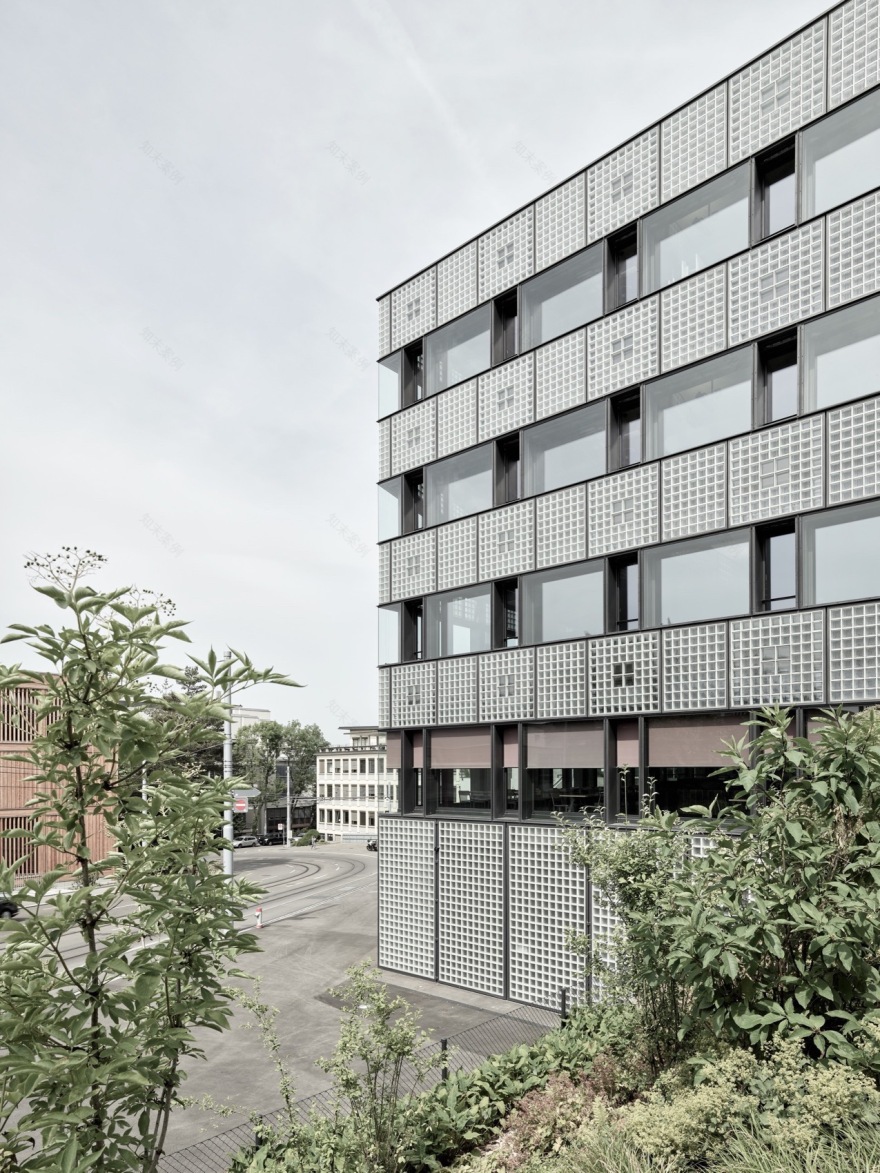
▼街道侧视角,Street view© Kuster Frey

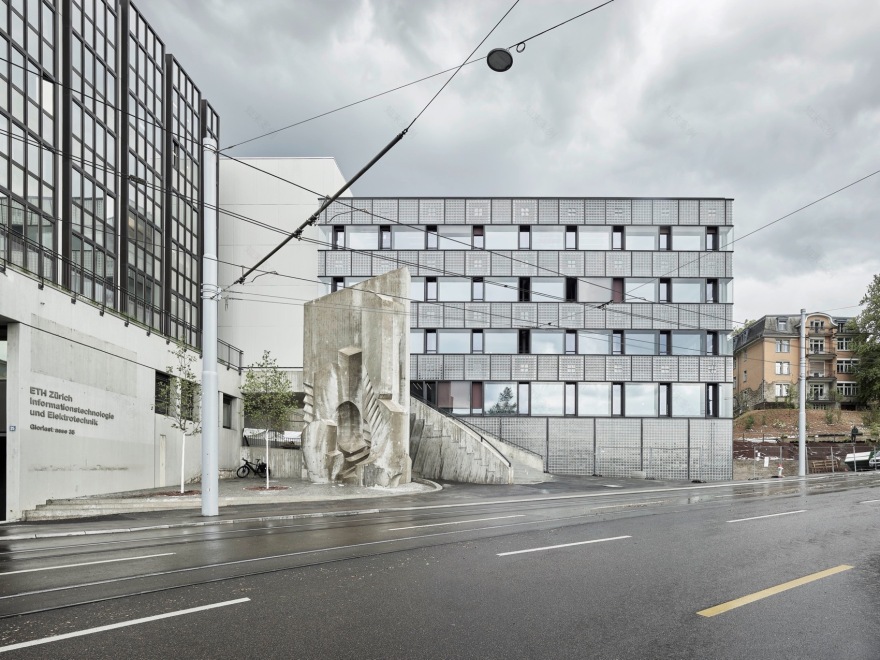
这栋新建筑是苏黎世大学校区 2014 年总体规划中首批项目之一,这项规划在设计和建造过程中逐步确定。
新建建筑长约 110 米,与原有的 ETZ 建筑共同组成了一个庭院,与该大学其它校区的建筑类型相得益彰。
建筑中央的 Paul Scherrer 报告厅是整个新建建筑群的革新。
新旧建筑外观的统一遵循了城市规划的现状,并很好地满足了协同效应。
由于建筑地处山坡的位置,所以其剖面设计非常有挑战性。
为了不影响附近别墅区的湖景视野,街道一侧只能建造五层高的建筑,并且在山坡的一侧只能显露出两层,种种条件要求设计者必须以一种巧妙的方式在宽阔的山坡上打造这栋七层建筑,已满足建造和技术的要求。
The new building complex is one of the first components of the 2014 master plan for Zurich’s university quarter, that was finalized in the course of planning and construction. Together with the existing ETZ building, the roughly 110 meter long new-build forms a courtyard and thus fits in with the existing typology of the university quarter. The listed Paul Scherrer lecture hall in the middle became the centerpiece of the whole new complex. The unification of the new and existing buildings led to a clarification of the urban planning situation and enabled operational synergies. Due to the hillside location, development of the cross-section was particularly demanding. With the condition of not detracting from the view of the lake from the villa quarter, only five stories were possible on the street side. On the slope side, only two floors are visible, which meant that the seven-story building had to be secured on the extensive slope in a sophisticated way that could be exploited for both architectural and technical purposes.
▼远观建筑,Distant view© Kuster Frey

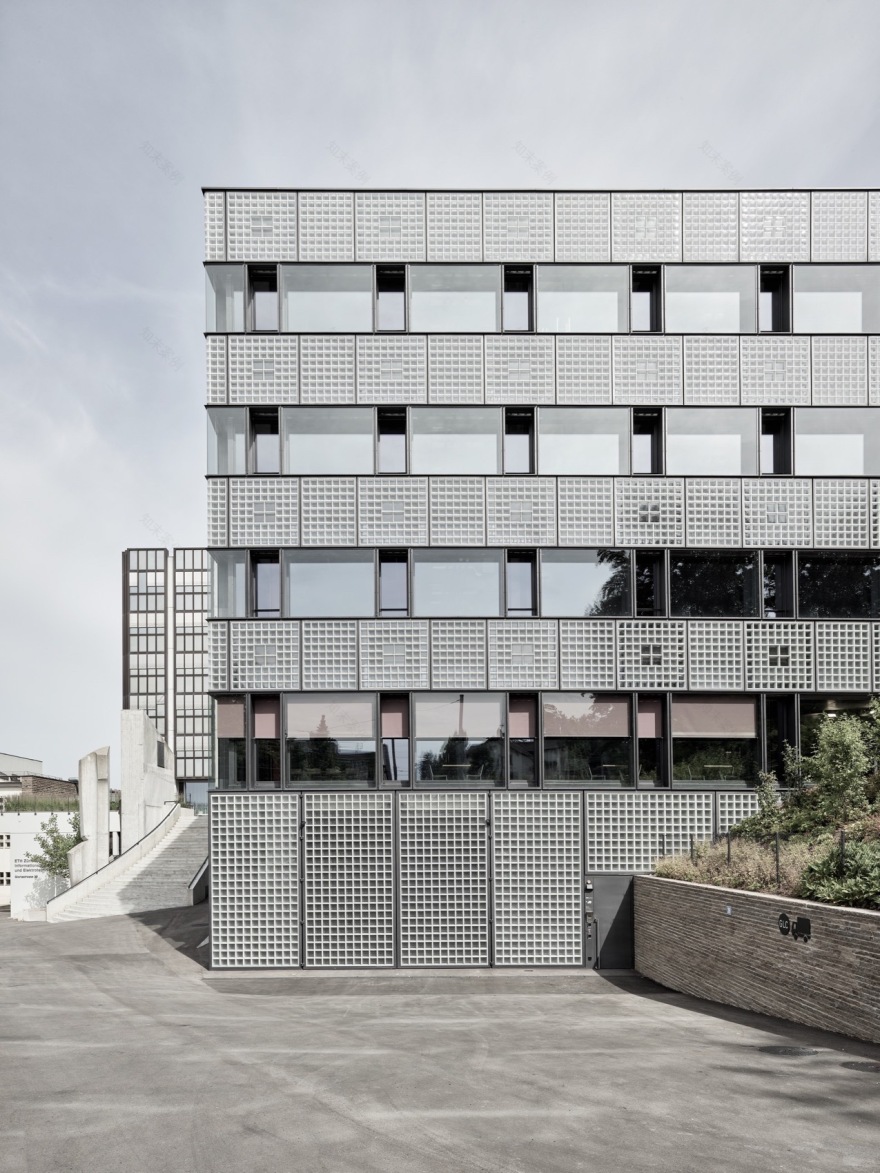
▼建筑立面,Facade© Kuster Frey


新建的 Gloriastrasse 弧线外部楼梯处是造型独特的出入口,这里的设计灵感来源于数学原理、艺术家 Urs Beat Roth 的艺术项目和雕塑家 Fredi Thalmann 的混凝土雕塑。人们可以从较高的楼层通过一系列通道到达内部庭院,这里是该项目新建的部分,既是主要出入口,也是 Paul Scherre 报告厅和 ETZ 电气工程大楼的出入口。
A new curved external staircase along the arc of Gloriastrasse forms a distinctive point of entry. The form, developed on the basis of mathematical principles, was designed in collaboration with the artist Urs Beat Roth as an Art and Architecture project and integrates an existing concrete sculpture by the sculptor Fredi Thalmann. On the upper level, users reach the courtyard via the existing passageway, that forms the new address of the complex. Located here are the main entrance to the new-build and the entrances to the Paul Scherrer lecture hall and the ETZ electrical engineering building.
▼造型独特的出入口,Entrance© Kuster Frey
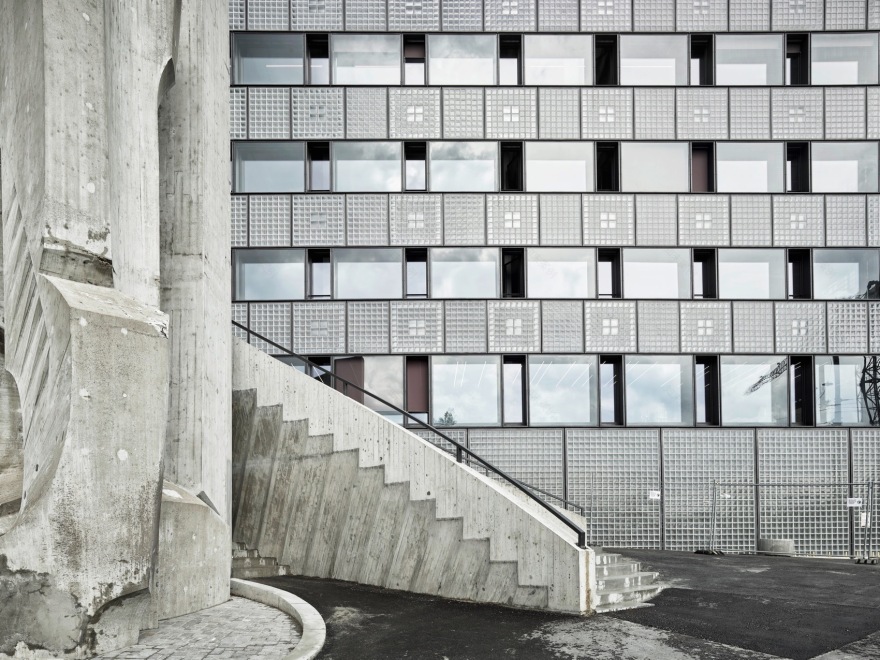
▼建筑入口细部,Entrance detials© Kuster Frey


▼入口楼梯,Entrance stairs© Kuster Frey

▼室外空间,Outdoor space
© Kuster Frey


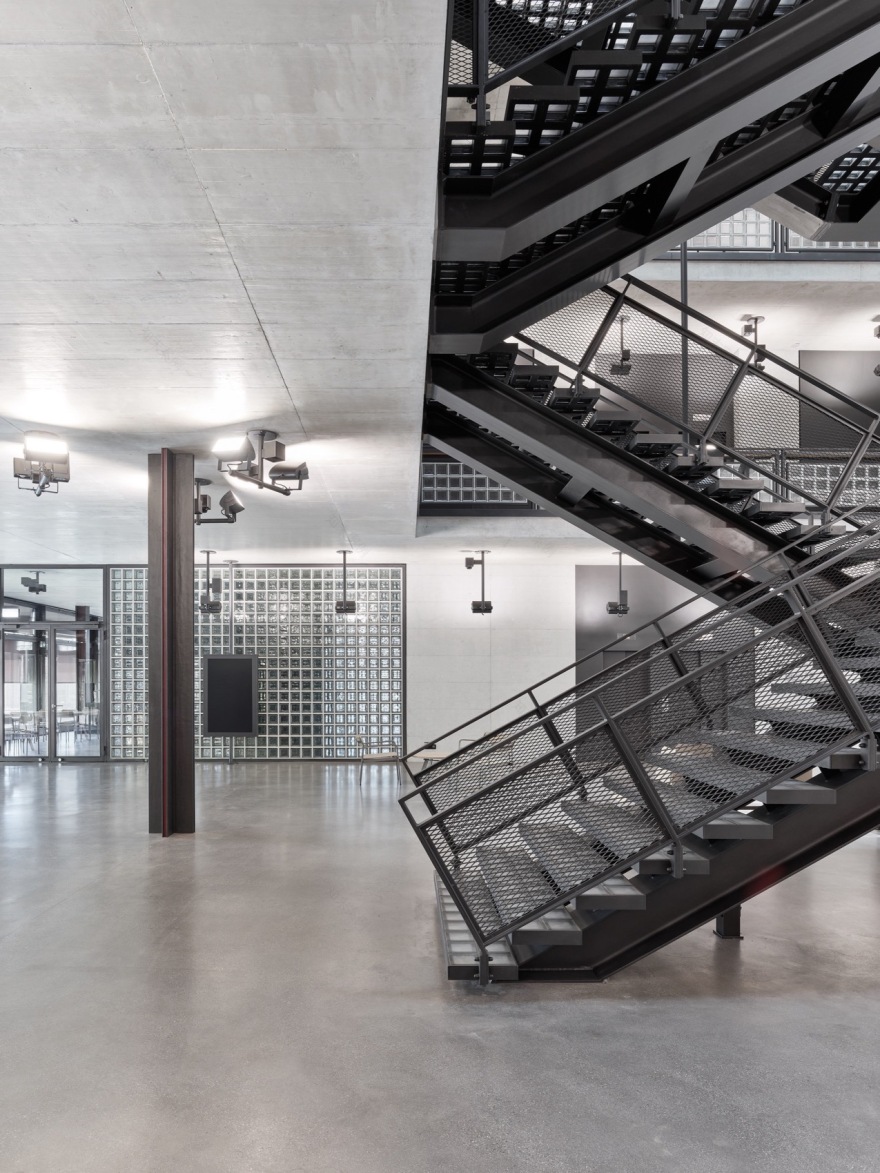
入口楼层设有公共设施,包括了门厅、餐厅、研讨室、小组室和学生自习空间。三楼设有实验室和工作室,建筑还带有三层地下室,在这里设置了专用实验室、设备间和服务室。中庭处设置了有自然照明的天窗,欢迎学生和科学家来到这个空间,精致的双跑主楼梯将入口大厅和上层空间连接在了一起。环形交通空间中设置了富有节奏感的壁龛式休息区,交通空间也与相邻的建筑直接相连。Gloriastrasse 的前楼中布置了教授办公室,宽敞的实验室区则被灵活地布置在了斜坡的另一侧。
The entrance floor contains public facilities including the foyer, restaurant, seminar and group rooms, and workplaces for students.
Three upper floors house laboratories and offices, with three basement floors accommodating special laboratories, equipment and service rooms.
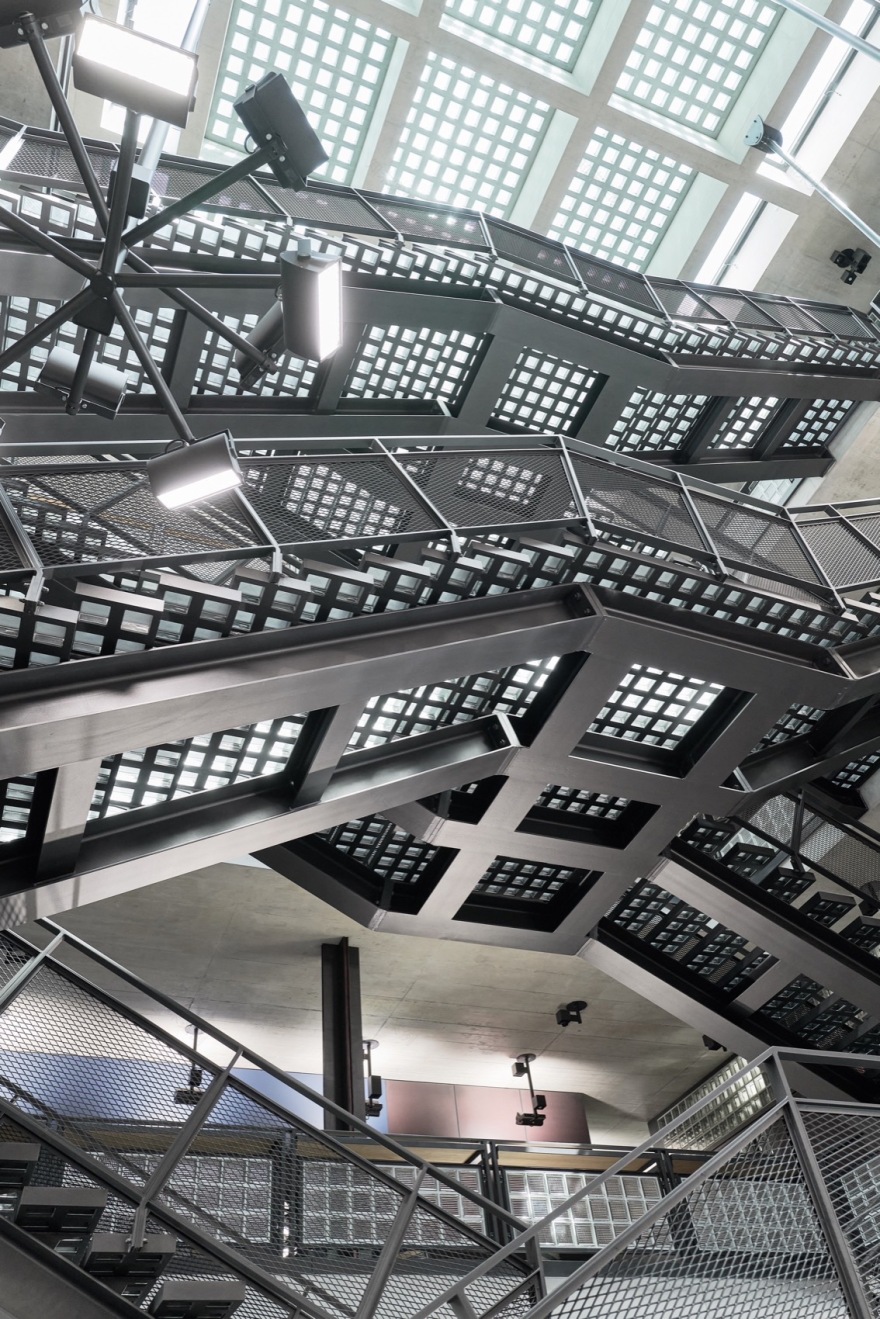
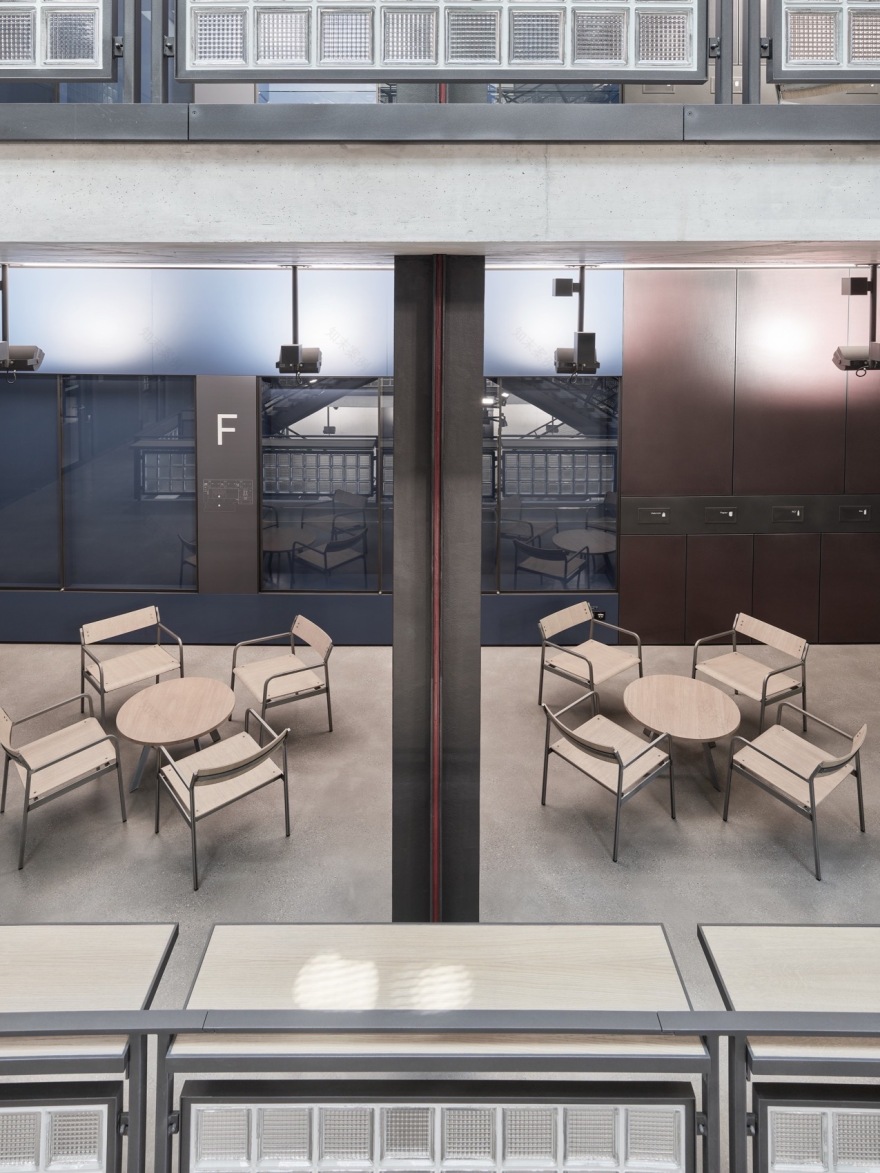
An atrium with zenithal lighting welcomes students and scientists, a virtuoso double main staircase connects the entrance hall with the upper floors.
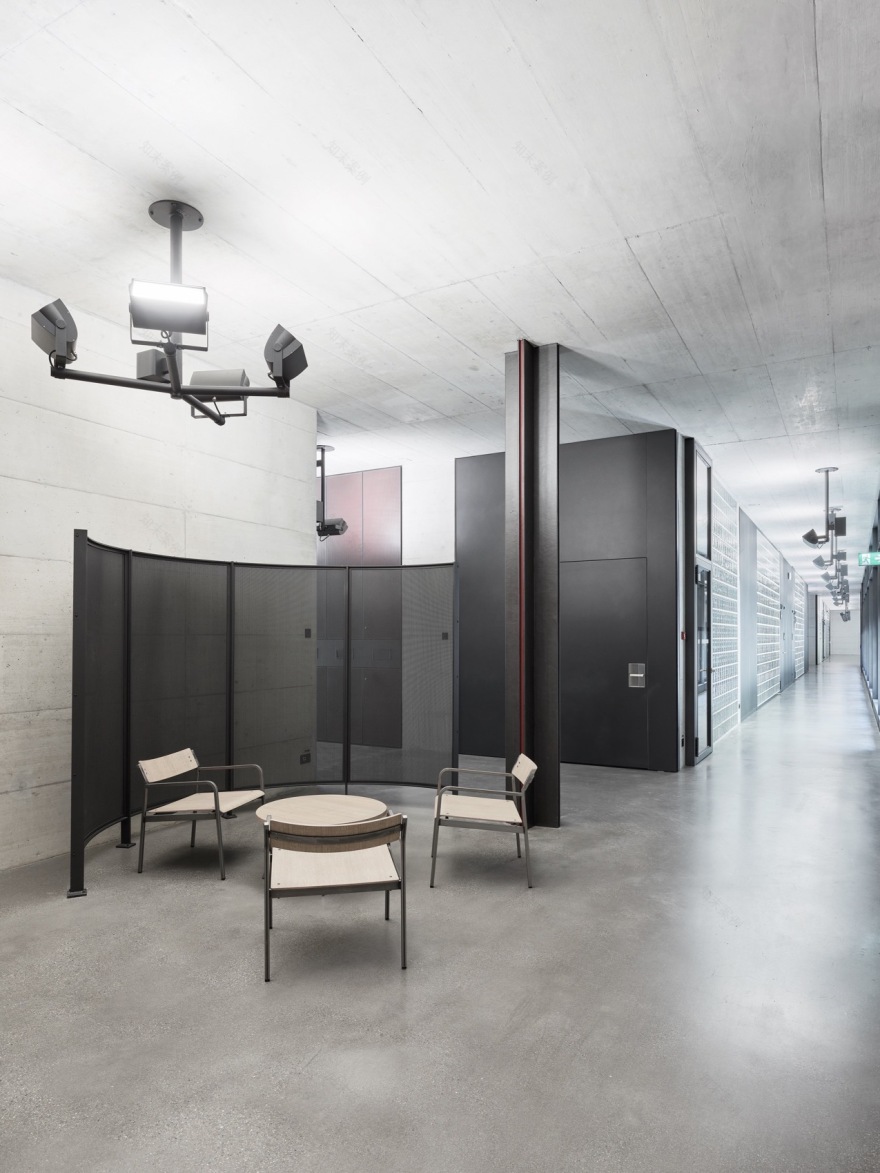
Niche-like lounge areas add rhythm to the annular circulation zones and provide a direct connection to the existing building adjacent.
Professorial offices are located in the front building on Gloriastrasse, with the spacious laboratory areas situated on the side of the slope allowing flexible division.
▼入口接待处,Reception© Kuster Frey
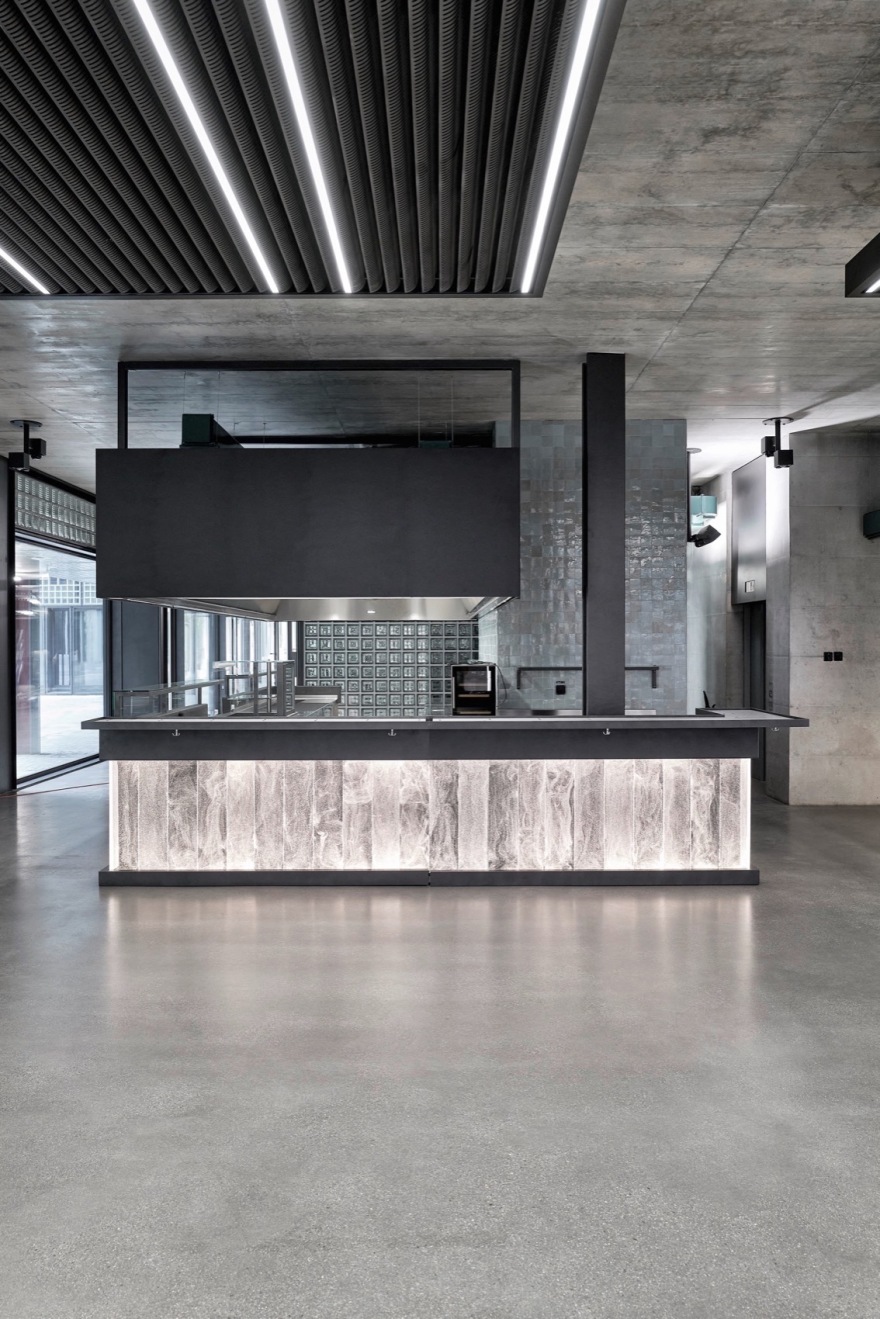
▼通高的空间,High-height space © Kuster Frey


位于地下室的实验室收到与建筑分离的挡土墙保护。新建建筑的玻璃和石材外立面延续了现代主义工业建筑和大学中其他建筑玻璃幕墙的建筑风格,这附近由 Otto Rudolf Salvisberg(1930–1935)设计的远距离供暖电厂和 ETH 机械实验室也是如此,提倡在设计、技术和能源方面重新思考。
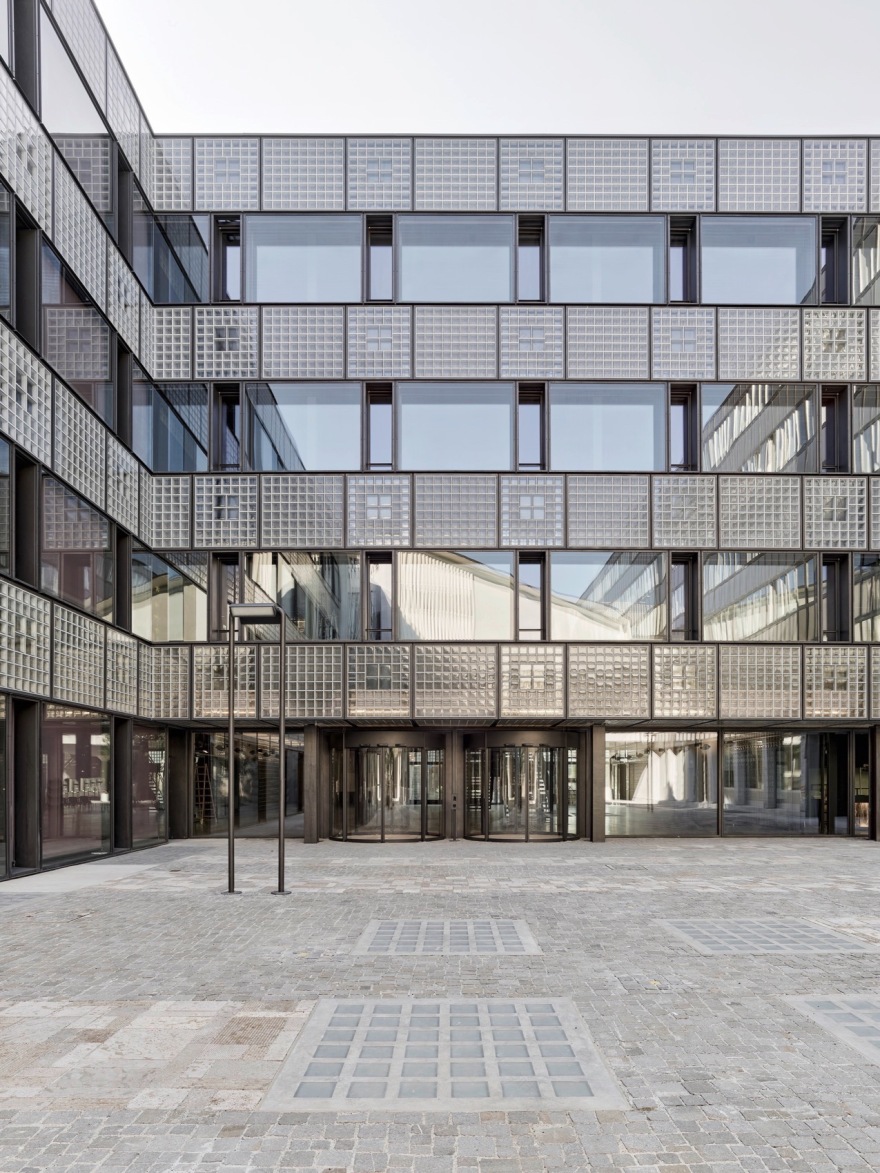
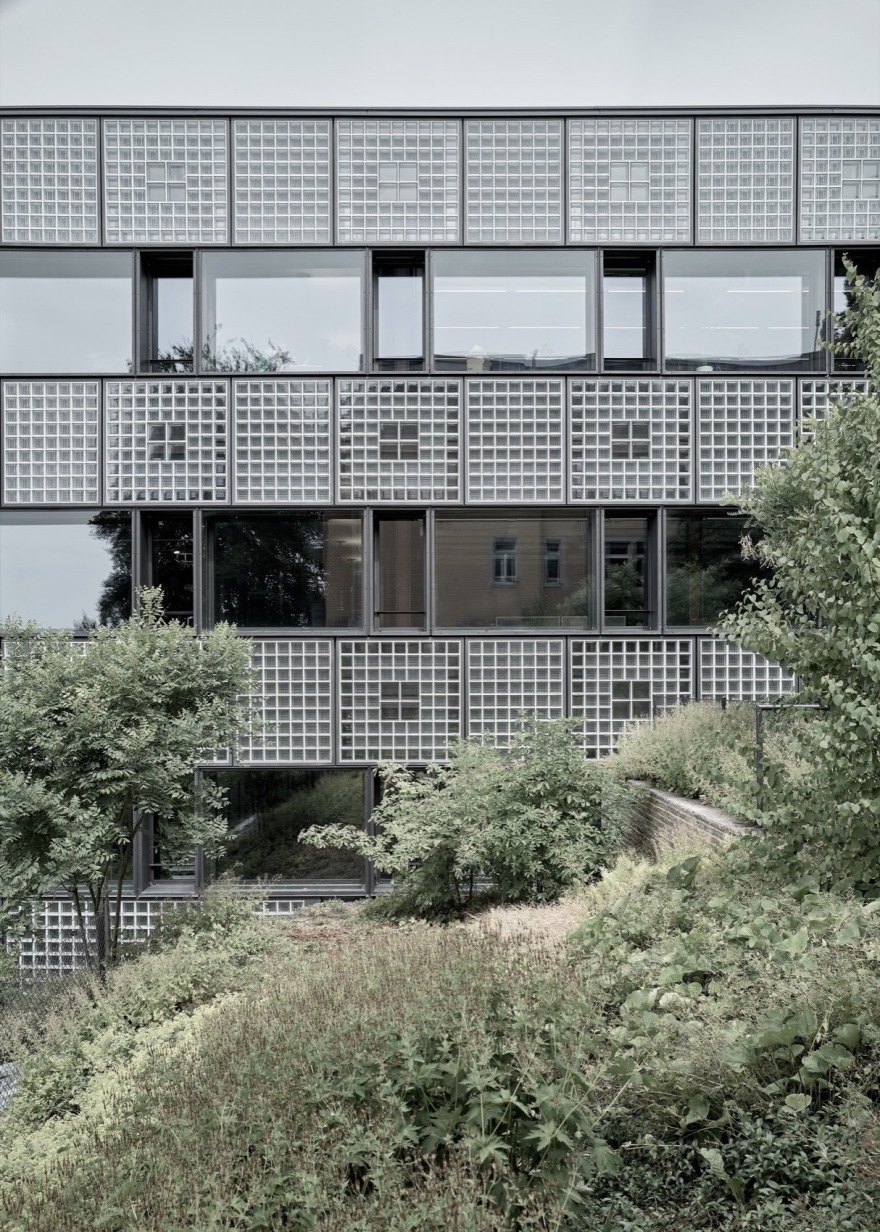
新打造的外立面采用了双层玻璃幕墙,幕墙结构以格子的形式连接在一起,营造出了庄严且具有重量感和三维立体之感。玻璃砖墙和条状呈水平结构,向内凹进的窗扉则呈垂直状态,两者叠加在一起,由钢框架分割为方形的形式。方形格子内包含了不同形式的玻璃状的填充物,较大的格子则与窗扉之间产生了一定的联系,这样能够增强水平感和垂直性。
The laboratories on the basement floors are protected by the retaining wall detached from the building. The glass and stone facades of the new-build follow the long tradition of glass block facades in modernist industrial and university buildings. In particular, the nearby distant heating power plant and machine laboratory of the ETH by Otto Rudolf Salvisberg (1930–1935) were the motivation to rethink this building material in terms of design, technique, and energy.
As a double-skin construction with glass block elements joined in the manner of coffers, the new facade achieves a dignified gravity as well as a three-dimensionality, which the neighboring facade lacks. Glass block parapets and strip windows create a horizontal structure that is superimposed by the vertical order of the recessed casements. Fine steel frames divide the strips into square and rectangular formats. The square elements have brooch-like glass block infills with different formats and structures. The larger blocks in the middle establish a link with the casements, thus strengthening the verticality within the horizontal strip.
▼会议室,Meeting room
© Kuster Frey

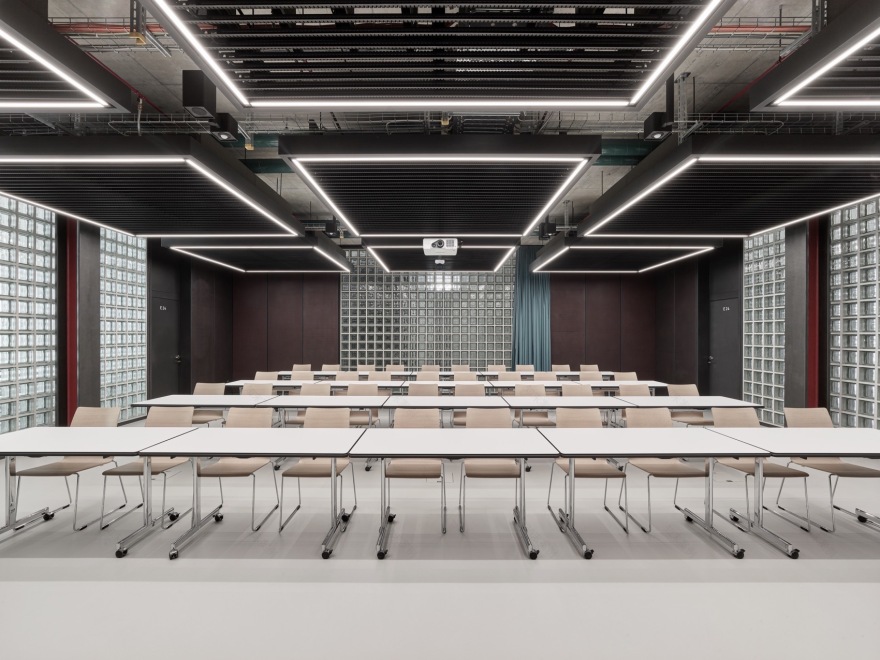
▼用餐空间,Dining area© Kuster Frey

▼餐厅近景,Close view of the dining area© Kuster Frey


▼休闲空间,Leisure space
© Kuster Frey


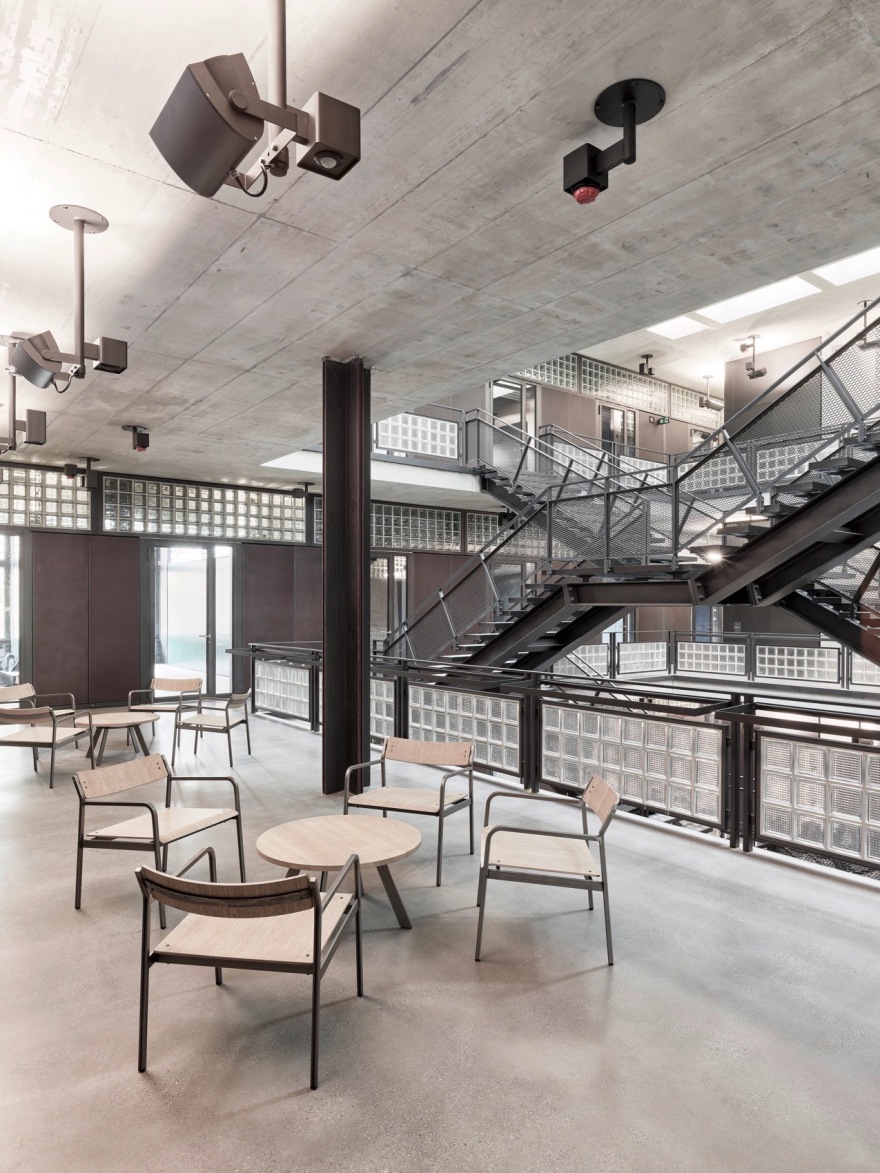
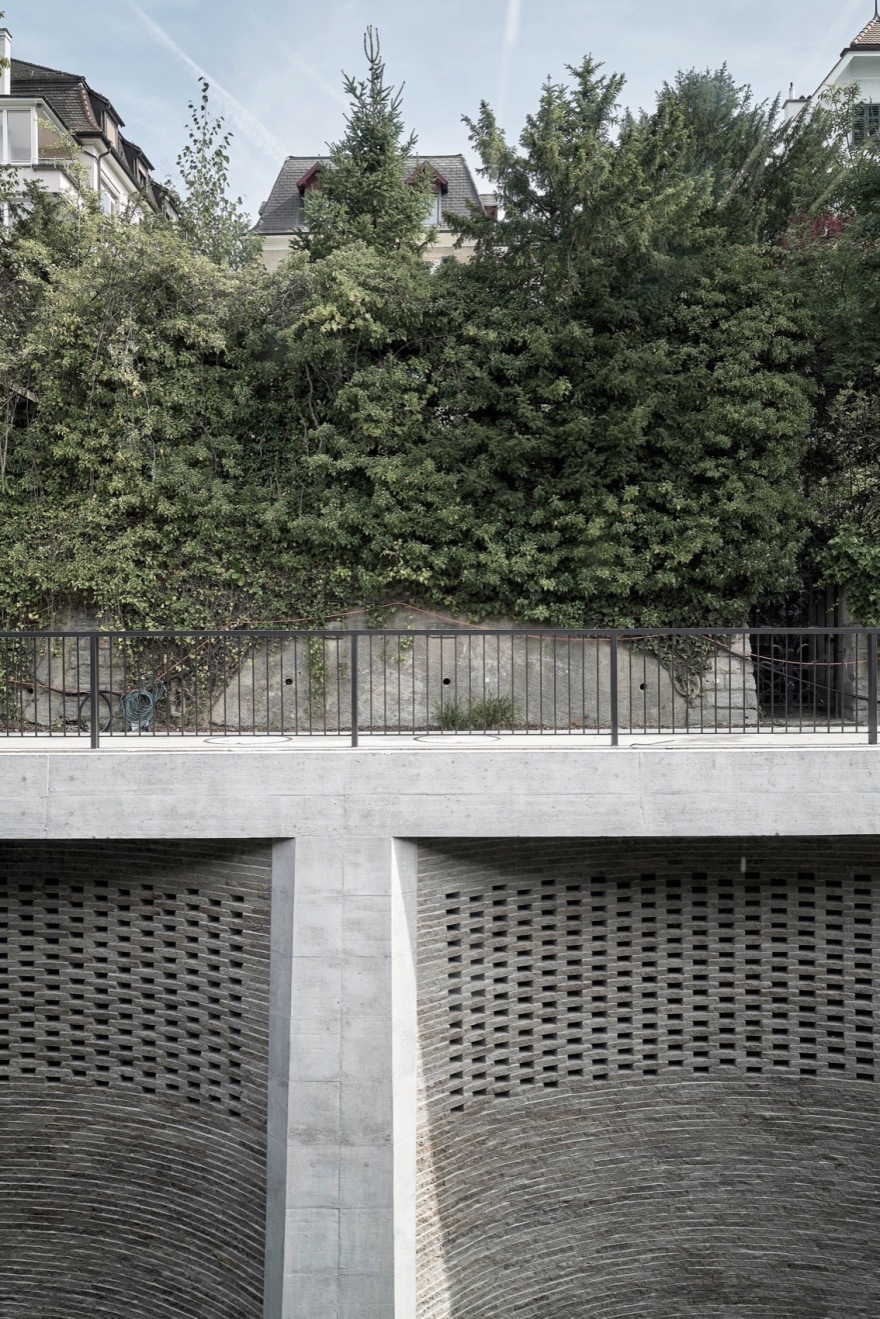
在斜坡的一侧,玻璃幕墙与坚固的沉重结构相对,形成了鲜明的对比。弧形挡土墙的结构令人印象深刻,并顺延到锚固在基岩中的隔墙板。陡峭的弧形墙长 110 多米,高约 18 米,有着清晰的表现力。算上底下部分,能够传递力的挡土墙结构大约有 44 米高。正因如此,新建筑的承重结构能够免受额外的剪切力,且保持灵活。桶形墙中的空腔可作为墙内冷却系统:新鲜空气被吸入并送入通风系统,大量土壤被激活以冷却实验室,这样能够节省大量能源。
On the slope side, the glass facade stands opposite the solid load-bearing slope stabilization structure, making for an effective contrast.
The impressive structure is conceived as an arc-segment shaped retaining wall that transitions into diaphragm wall slabs anchored in the bedrock.
The escarped curved wall is more than 110 meters in length and around eighteen meters high and transfers the forces in a clear and expressive manner.
If one were to include the underground section, the retaining structure which transfers forces directly into the ground, is approximately forty-four meters high.
Thanks to this, the new build remains flexible in its load-bearing structure and the existing buildings are spared additional shear forces.
The cavities in the barrel-shaped wall serve as an in-wall cooling system: fresh air is taken in and fed into the ventilation systems, the vast mass of the soil is activated to cool the laboratories, thus saving considerable amounts of energy.
▼办公室空间,Office space
© Kuster Frey

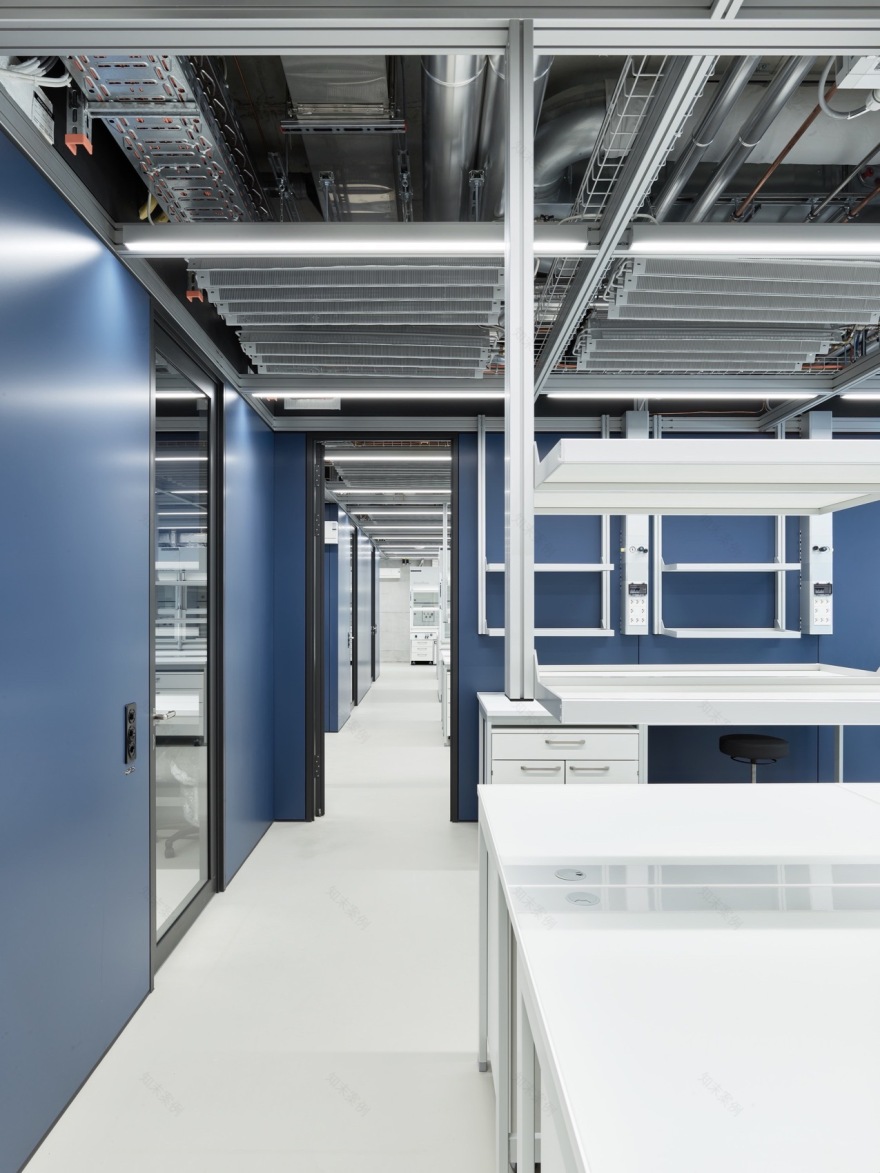
▼讨论区,Discussionspace© Kuster Frey


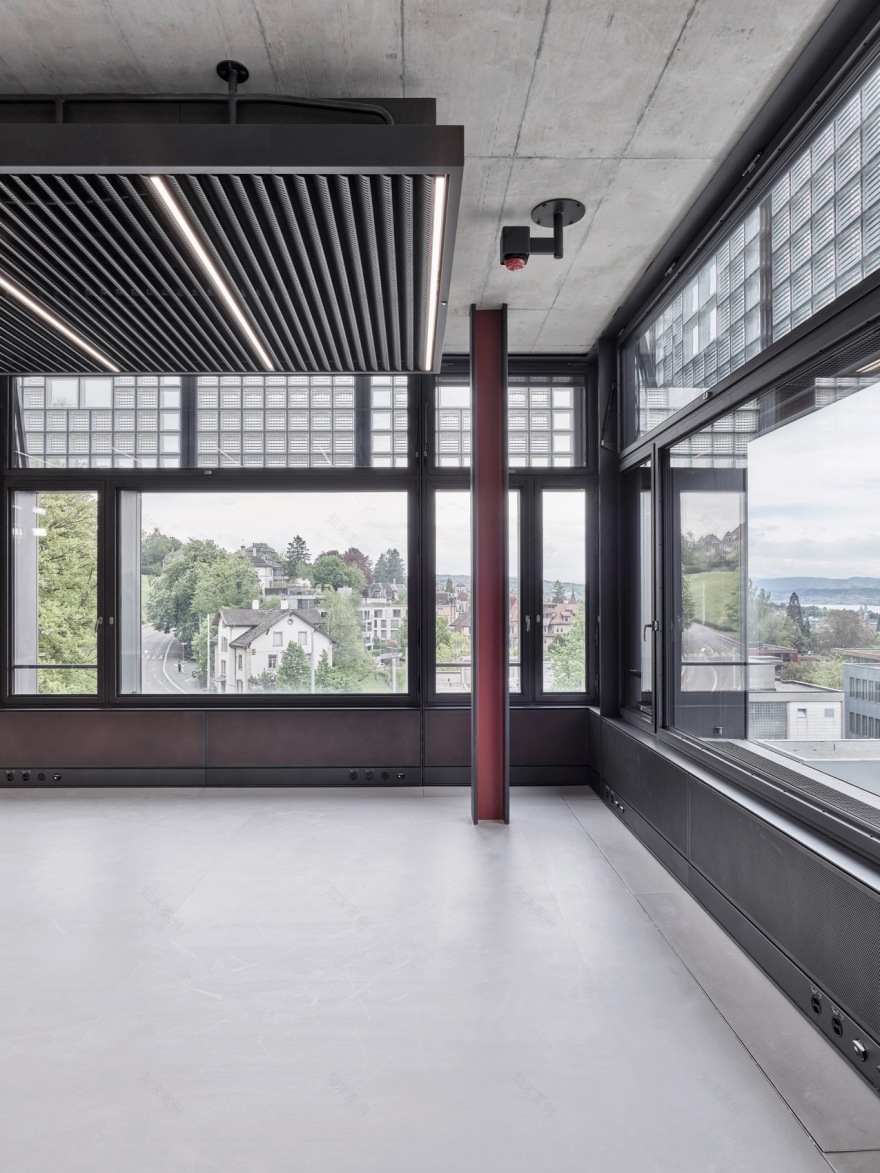
建筑从不同的角度看,其玻璃幕墙的格子外观能够给人一种浮雕的感觉。在内部,这些立面结构还能够充当遮阳板,形成不同程度的透光度和光线。双层玻璃之间的空隙能够调控温度,在夏季保证空气的流通,在冬季则提供缓冲作用;既可以充分利用自然光线,有能够调节室内的气温。
▼冬季轴测图,winter axo©Boltshauser Architekten

In the various views, the coffer-like composition of the glass facades creates the impression of a relief. Inside, it acts as a brise-soleil, creating different levels of transparency and lighting ambiances. The interspace of the double skin is climate-controlled, with air flowing through in the summer and buffered in the winter. As a result, the double-skin facade not only helps make good use of daylight but also plays a role in regulating the indoor climate.
▼室内仰视,Looking up © Kuster Frey


管道等建筑内的服务元素按照可视的层次化进行设计,虽然在入口大厅和走廊处看不到管道,但是在休息室和工作区能够看到一些。这个显著因素,从流动空间到半公共的研讨室、餐厅、学生工作区、办公室和实验室都能够看到。设计者还采用了系统分离手法,将管道的布置纳为建筑设计的一部分,并可视化房间中的技术装置数量,声学元件和灯具都集成在冷却面板中。他们还专门开发了附加的 LED 灯系统,能够根据不同需求容纳额外的技术元件,如火灾报警器和运动探测器。本建筑与 ETH Zentrum 区域供热和制冷网络相连,符合苏黎世联邦理工学院的标准,和 DGNB / SGNI Gold、Minergie-ECO 和 GI Gutes Innenraumklima(良好的室内气候建筑标准)的建筑标准。
A hierarchically graduated visibility of conduits and building service elements defines the character of the spaces. While no conduits are visible in the entrance hall and corridors, they are increasingly present in the lounge and work areas, becoming a defining element, graduated from the circulation spaces and the semi-public areas of the seminar rooms, restaurant, student workplaces and office rooms to the laboratories. In terms of the separation of systems, the arrangement of conduits is an integral part of the architectural design, visualizing the amount of technical installations in the various rooms. Acoustic elements and light fixtures are integrated in the cooling panels. A specially developed additive LED lamp system can hold additional technical elements such as fire alarms and motion detectors as needed. The building is connected to the ETH Zentrum district heating and district cooling grid. It meets the standards of the ETH Zürich and was realized in compliance with and in implementation of the building standards DGNB / SGNI Gold, Minergie-ECO and GI Gutes Innenraumklima (good indoor climate construction standards).
▼项目区位
site plan© Boltshauser Architekten

▼-2 层平面图,floor plan -2
©Boltshauser Architekten

▼地面层平面图,ground floor plan©Boltshauser Architekten

▼1 层平面图,floor plan 1©Boltshauser Architekten
▼2 层平面图,floor plan 2©Boltshauser Architekten
▼剖面图,scetion©Boltshauser Architekten
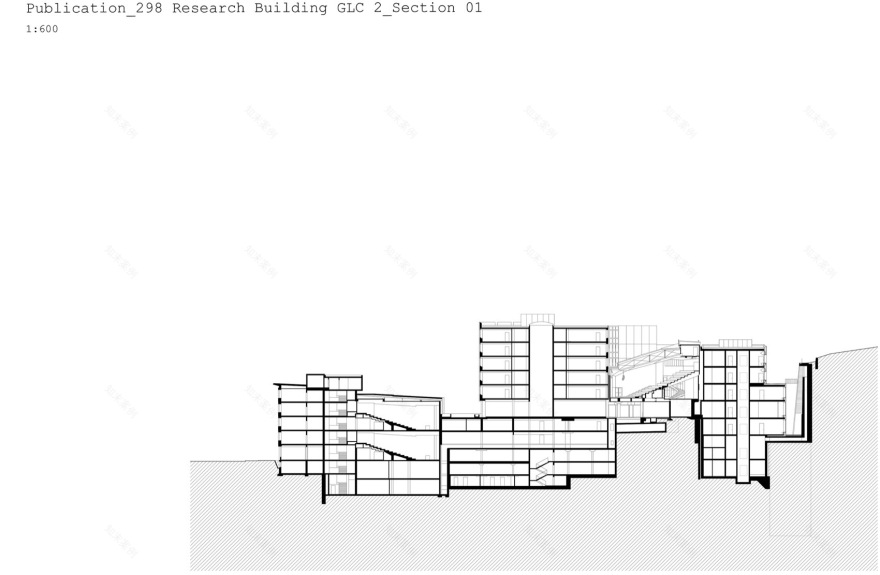

▼结构剖面图,structure axo©Boltshauser Architekten


▼细节剖面图,details section©Boltshauser Architekten

ADRESSE ADDRESS
Gloriastrasse 35, 8093 Zürich
NUTZUNG USE
Entwicklungs- und Laborgebäude R&D and laboratory building
AUFTRAGSART COMMISSION TYPE
Projektwettbewerb, 1. Preis, 1. Rang Project competition, first prize, first place
BAUHERRSCHAFT CLIENT
ETH Immobilien, Zürich
BETEILIGTE FACHPLANER PARTICIPATING PLANNERS
Generalplanung, Kostenplanung, GU-Submission General planner, quantity surveyor, GC submisson
Boltshauser Architekten AG, Zürich
Landschaftsarchitektur Landscape architecture
Mettler Landschaftsarchitektur, Berlin (DEU)
Fachplanung Statik structural engineer
Basler & Hofmann AG, Zürich
Fachplanung Haustechnik, räuml. Koordination HVAC engineering, coordination services
Waldhauser + Hermann AG, Münchenstein
Fachplanung Sanitär Services engineer
Balzer Ingenieure AG, Winterthur
Fachplanung Bauphysik / Energie Building physics / energy consultant
Basler & Hofmann AG, Zürich
Fachplanung Elektrotechnik Electrical engineer
IBG B. Graf AG Engineering, Winterthur
Fachplanung Fassade Facade consultant
Feroplan Engineering AG, Zürich
Fachplanung Nachhaltigkeit Sustainability consultant
Durable GmbH, Zürich
Fachplanung Licht Lighting consultant
Reflexion AG, Zürich
Fachplanung Bauakustik Acoustics consultant
Mühlebach Partner AG, Winterthur
Fachplanung Gebäudeautomation Building automation consultant
SSE Engineering AG, Gümligen
Fachplanung Labore Laboratory planner
Laborplaner Tonelli AG, Gelterkinden
Fachplanung Gastronomie Gastornomy consultant
Promafox AG, Bad Zurzach
Fachplanung Brandschutz Fire protection consultant
Gruner AG, Zürich
Fachplanung Rauchdruckanlagen Smoke pressure systems
Gruner-Roschi AG, Köniz
Fachplanung Türengineering Door engineering consultant
Brütsch Elektronik AG, Uhwiesen;
OSC GmbH, Brüttisellen
Fachplanung Entwässerung, Aussenanlagen Drainage consultant, exterior facilities
Hydraulik AG, Zürich
Fachplanung Verkehr Traffic consultant
Enz und Partner AG, Zürich
Generalunternehmung General contractor
Steiner AG, Zürich
Fassade Facade
Aepli Metallbau AG, Gossau; Ruch Metallbau AG, Altdorf
Glasbausteinbau Glass blocks
Semadeni Glasbeton AG, Horgen
Metallbau Metalwork
Klausner Wetter Metallbau AG, Auw
Signaletik Signage
Atelier Andrea Gassner, Feldkirch (AUT); Nulleins Kommunikationsdesign GmbH, Bern
Kunst am Bau, Aussentreppe Art in Architecture, exterior staircase
Urs Beat Roth, Zürich
GESCHOSSFLÄCHE GROSS FLOOR AREA
22 600 m2
GEBÄUDEVOLUMEN BUILDING VOLUME
106 400 m3
BAUKOSTEN (BKP 1-9) COSTS
194 Mio. CHF
















南京喵熊网络科技有限公司 苏ICP备18050492号-4知末 © 2018—2020 . All photos and trademark graphics are copyrighted by their owners.增值电信业务经营许可证(ICP)苏B2-20201444 苏公网安备 32011302321234号
苏公网安备 32011302321234号客服
消息
收藏
下载
最近