

创作上传
VIP
收藏下载
登录 | 注册有礼
查看完整案例

收藏

下载

分享

翻译
Architect:REISINGER KUTSCHER
Location:Hernals, Vienna, Austria; | ;View Map
Project Year:2024
Category:Research Facilities
VIENNA ONE: REISINGER KUTSCHER transform former production facility into new research hub for life sciences
Landmark circular economy project creates ideal working conditions and significantly reduces CO2 emissions.
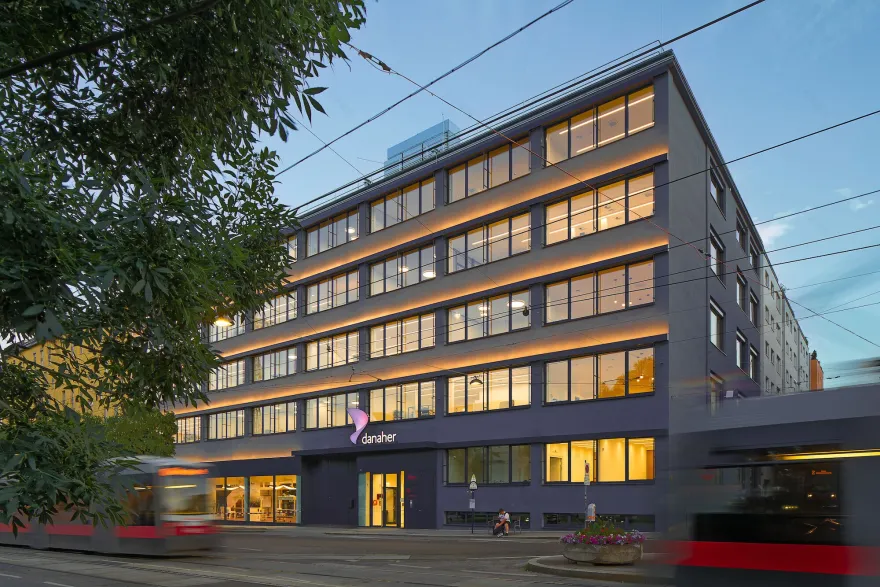
Planners Rita Reisinger and Doris Kutscher of REISINGER KUTSCHER have remodelled the former Leica Microsystems building in Vienna's Hernals district and transformed it into a modern life science hub that combines sustainability and cutting-edge workspaces in a historic setting.
For more than a century, the site was home to an innovative production facility for microscopes. The functional four-storey industrial building dating from the 1960s housed production facilities and office space. Following relocation of the production operations to Germany, Leica Microsystems GmbH, a subsidiary of the Danaher Corporation, a leading global life sciences and diagnostics group, decided to transform the premises into a key life science hub. Three further Danaher subsidiaries are also due to set up operations on the site.

Commitment to sustainability and innovation
From the client's point of view, a new build was never on the radar, for environmental as well as economic reasons: "The refurbishment project allowed us to continue our 124-year history on the Hernals site, save a huge amount of emissions, and generate a better environmental footprint from a solid existing structure," says Michael Mullen, Director of Leica Microsystems Austria and initiator of the project. A further advantage is that unlike a new-build project, "a refurbishment can be carried out step by step", which allows investments to be staggered for greater flexibility.
Leica is committed to sustainability: "We have to measure and be aware of our emissions levels in order to be able to reduce them effectively. Following the refurbishment we now have detailed energy data available, so we can make readjustments at any time. The fully refurbished building provides ideal working conditions for our teams while simultaneously reducing our CO2 emissions by 40 per cent," Mullen explains.

Clever solutions to structural challenges
REISINGER KUTSCHER were commissioned with the redesign and comprehensive refurbishment of the premises. Preserving the substance of the 1960s building, the planners integrated new workspaces for R&D, Product Management, Applications, Sales and Service.
REISINGER KUTSCHER were faced with the challenge of adapting the existing building to modern standards. "Our first task was to check whether the existing structures would be able to withstand additional loads," explains Doris Kutscher, "because the operations in the building involve medical devices that are very heavy." Once the load-bearing capacity had been tested and confirmed, the building was gutted while retaining the load-bearing shell.


Flexibility thanks to modern architecture
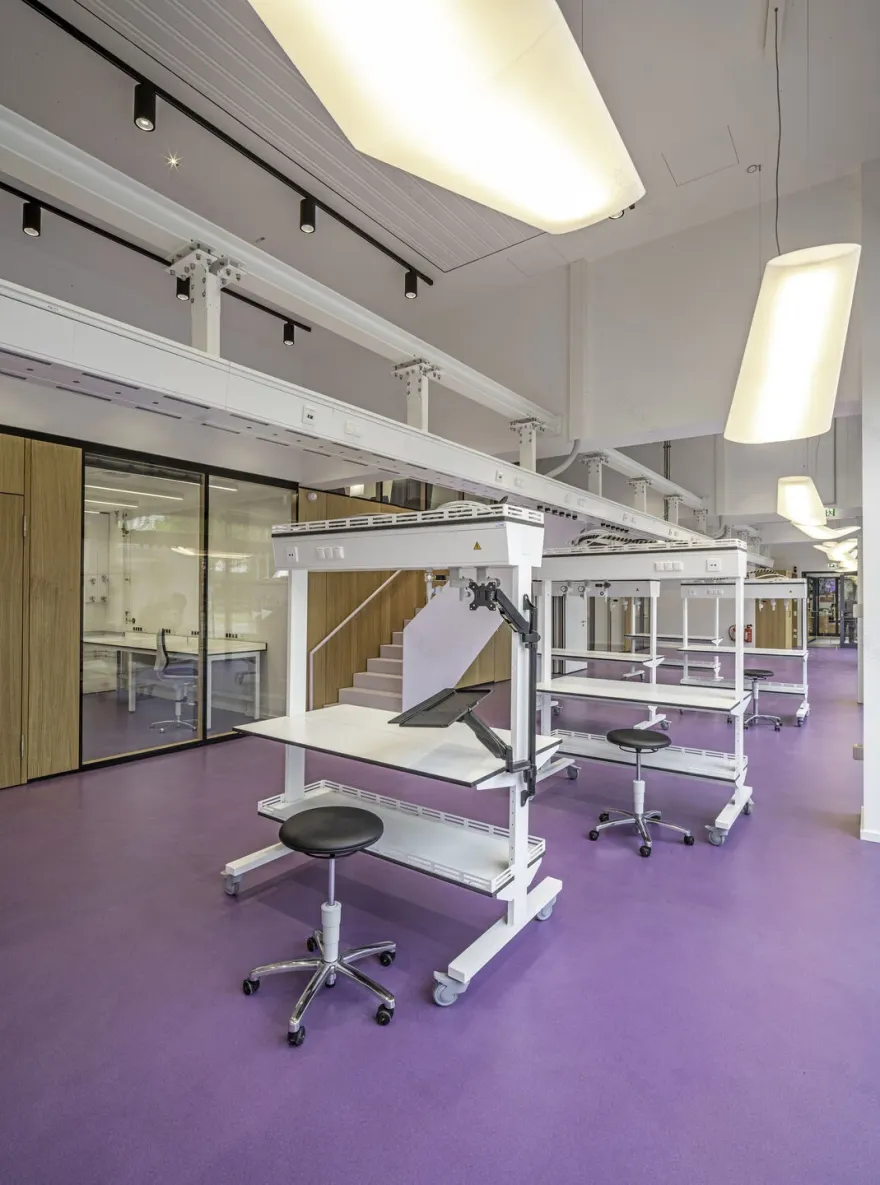
The open skeleton structure allowed for maximum flexibility in terms of the spatial layout, so that individual solutions could be designed for each of the three subsidiaries. Offices, workspaces and research labs were installed in accordance with the client's brief, covering a total floor area of 3400 square metres.
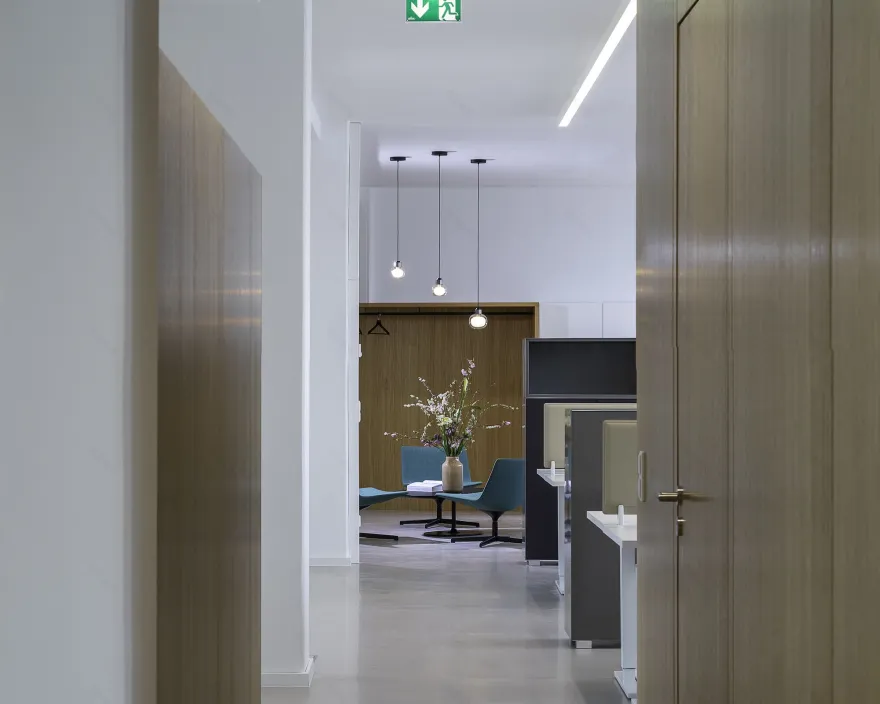
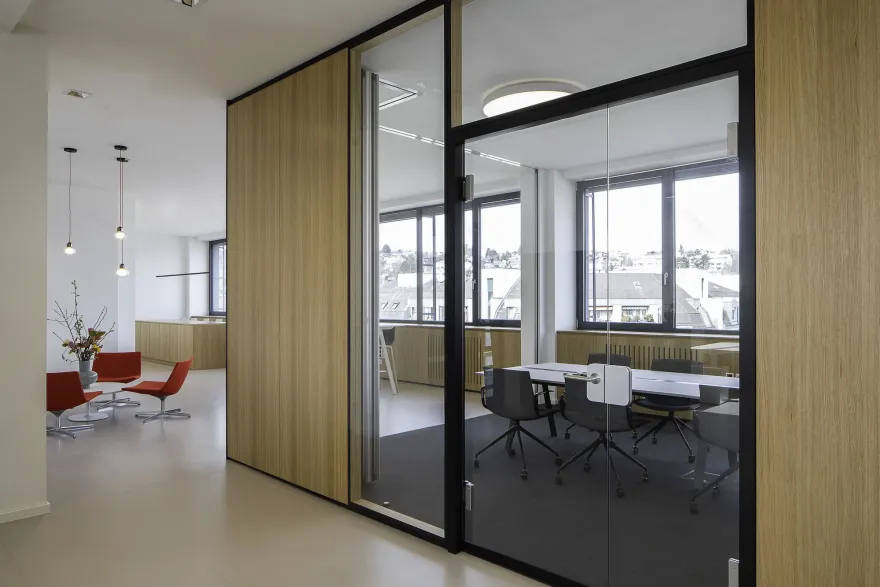
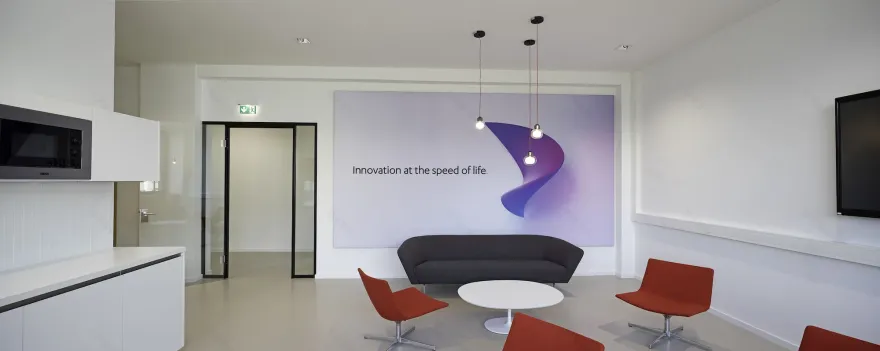
"A key concern of ours was to preserve the large windows, to allow plenty of daylight into the interior," says Rita Reisinger. The offices and labs are laid out along the windowed facades and accessed via central corridors. Partitions, some in wood, incorporate glazed elements that allow daylight to penetrate into the central zones of the building. "The white, beige and natural oak colour scheme makes for a calm working atmosphere, complemented by striking furniture in the colours of the company's logo," Reisinger adds.


Investment in future-proof technologies
External sun blinds have been fitted to protect the workspaces from overheating, while thermal insulation and a photovoltaic facility covering approx. 60% of the building's electricity requirements maximise the building's sustainable credentials. E-charging stations for cars and bikes have also been installed in the central courtyard.


Showroom: a window on the world of science
The ground floor of the building opens up into an inviting showroom, the glass facade forging a link to the urban space outside. This showroom space highlights the latest developments in the life sciences and serves as a communicative interface between researchers and the public.


The planners behind the project
Rita Reisinger and Doris Kutscher, the architectural designers behind the project, have specialised in the refurbishment and redesign of buildings for over 20 years. With a focus on repurposing and upgrading of existing buildings, they have realised numerous building projects in line with the principles of the circular economy. In June 2024 they relaunched their longstanding partnership under the joint brand REISINGER KUTSCHER, leading by example to promote sustainable architecture in modern urban planning.


Team:
Architects: REISINGER KUTSCHER
Photographer: Nuno Oliveira

▼项目更多图片


南京喵熊网络科技有限公司 苏ICP备18050492号-4知末 © 2018—2020 . All photos and trademark graphics are copyrighted by their owners.增值电信业务经营许可证(ICP)苏B2-20201444 苏公网安备 32011302321234号
苏公网安备 32011302321234号客服
消息
收藏
下载
最近