

创作上传
VIP
收藏下载
登录 | 注册有礼
查看完整案例

收藏

下载

分享
Nhà Tú 花园餐厅坐落在一片生机勃勃的绿洲中,设计灵感来自城市和工业景观的融合。该项目由富有远见的建筑师构思,设计旨在将各种对比元素无缝整合,并为当地创造出一处充满活力的绿色目的地。
Inspired by the convergence of urban and industrial landscapes, “Nhà Tú Garden” stands as an oasis of green amidst its surroundings. Conceived by visionary architects, this project aimed to seamless integrate contrasting elements and establish a vibrant green focal point in the area.
餐厅的核心理念是在大花园中创造一座“小花园”。通过在一个巨大的矩型体量中巧妙地置入一处中央天井庭院,餐厅变身为一座室外热带避难所,将日常生活与水景以及翠绿的树叶融为一体。
The core concept driving the restaurant was the creation of a “small garden” within a larger one. Through the ingenious carving out of a central hollow within a substantial box-like structure, architects fashioned an outdoor tropical sanctuary, blending human habitation with water features and verdant foliage.
▼项目坐落于郁郁葱葱的自然景观中,The project is located in a lush natural landscape© Hiroyuki Oki


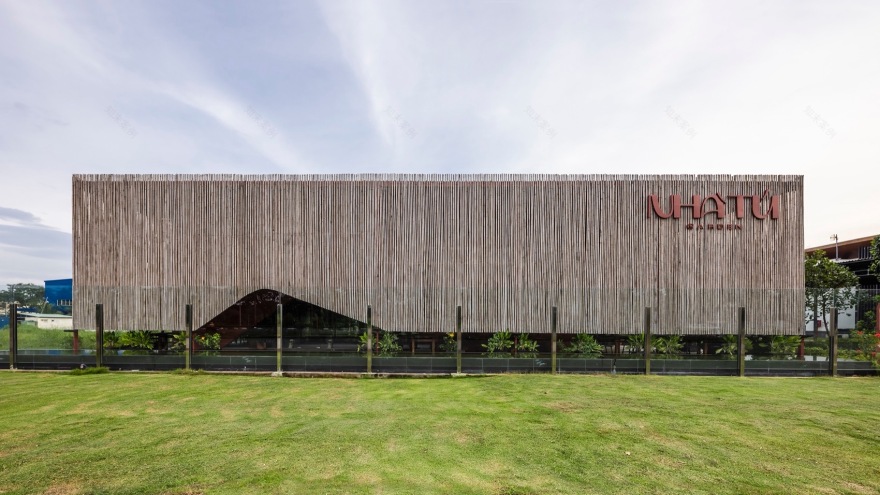
▼建筑立面,Facade of the building© Hiroyuki Oki


多层设计
Layer-on-Layer Design
沿立面延伸的无边水池不仅是视觉中心,而且在温度调节方面起到了至关重要的作用,池水冷却了来自街道的热空气,为室内营造出舒适的体感环境。建筑的四个立面采用了双层结构,外层为竹制遮阳结构,内层则是空洞和庭院等过渡空间,天然的材料与立面的渗透性,促进了人、水和绿化元素之间的连续性。
▼分析图,Analysis diagram© Long Nguyen Design

Moreover, the inclusion of an infinity pool stretching across the front facade not only served as a visual centerpiece but also played a vital role in temperature regulation, mitigating heat radiation from the street into the building. Four elevations were constructed as dual-layer structures, with bamboo shading on the outer layer and transitional spaces like voids and courtyards on the inner layer, fostering continuity between human, water, and greenery elements.
▼沿立面延伸的无边水池,An infinity pool extending along the facade © Hiroyuki Oki
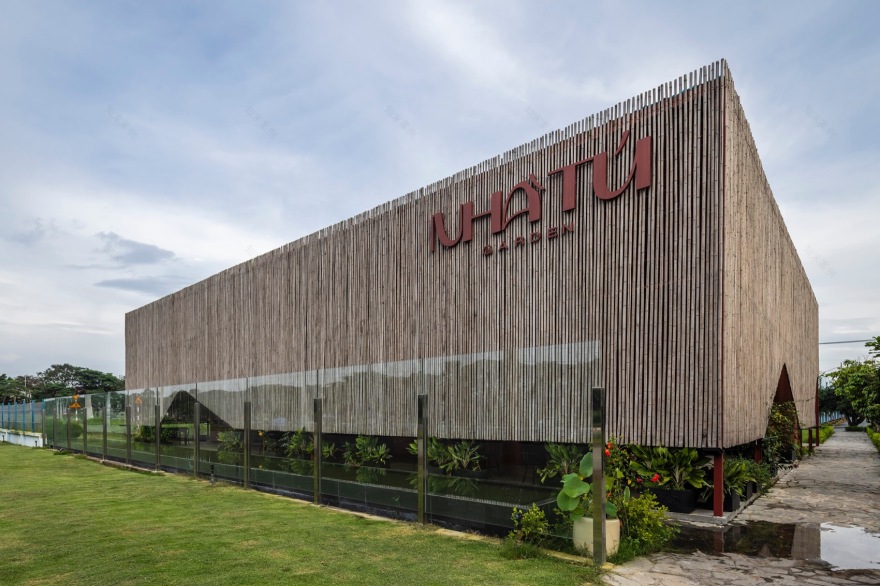
▼水景,The water feature© Hiroyuki Oki


▼面向水池的开口,opening along the pool side© Hiroyuki Oki

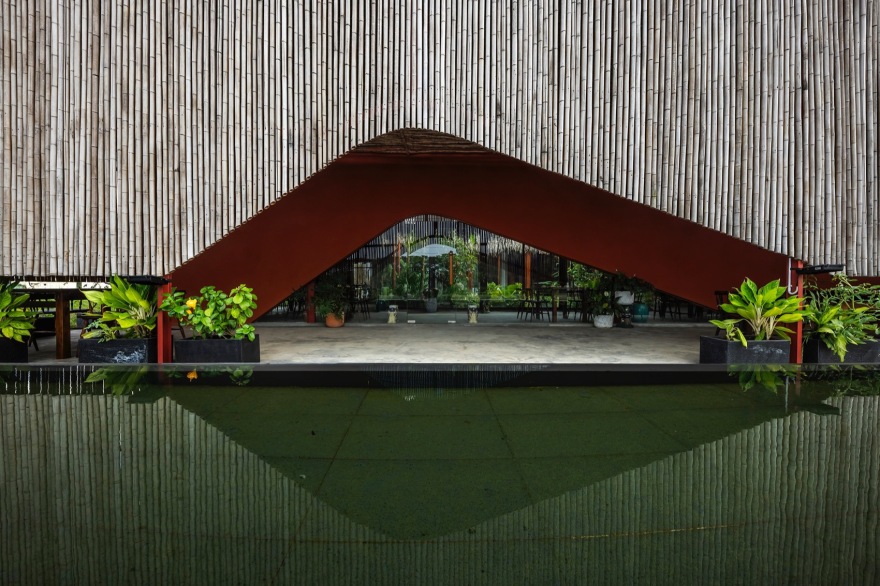
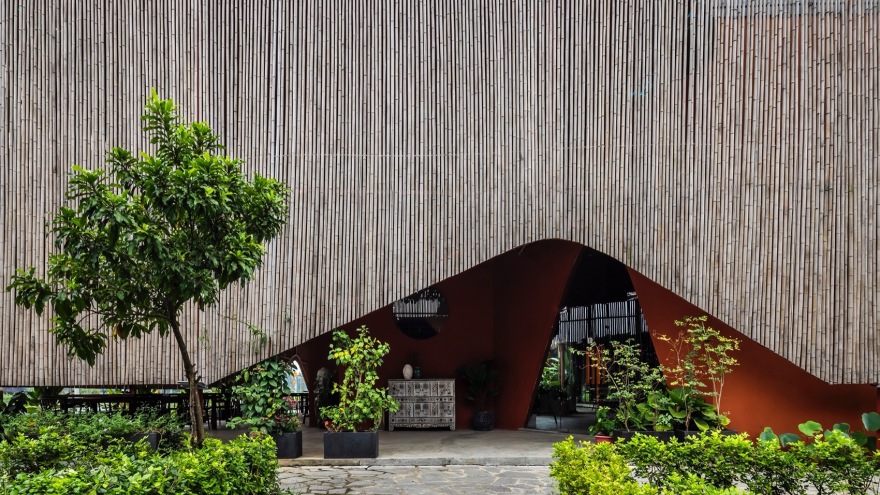
▼入口,Entrance© Hiroyuki Oki
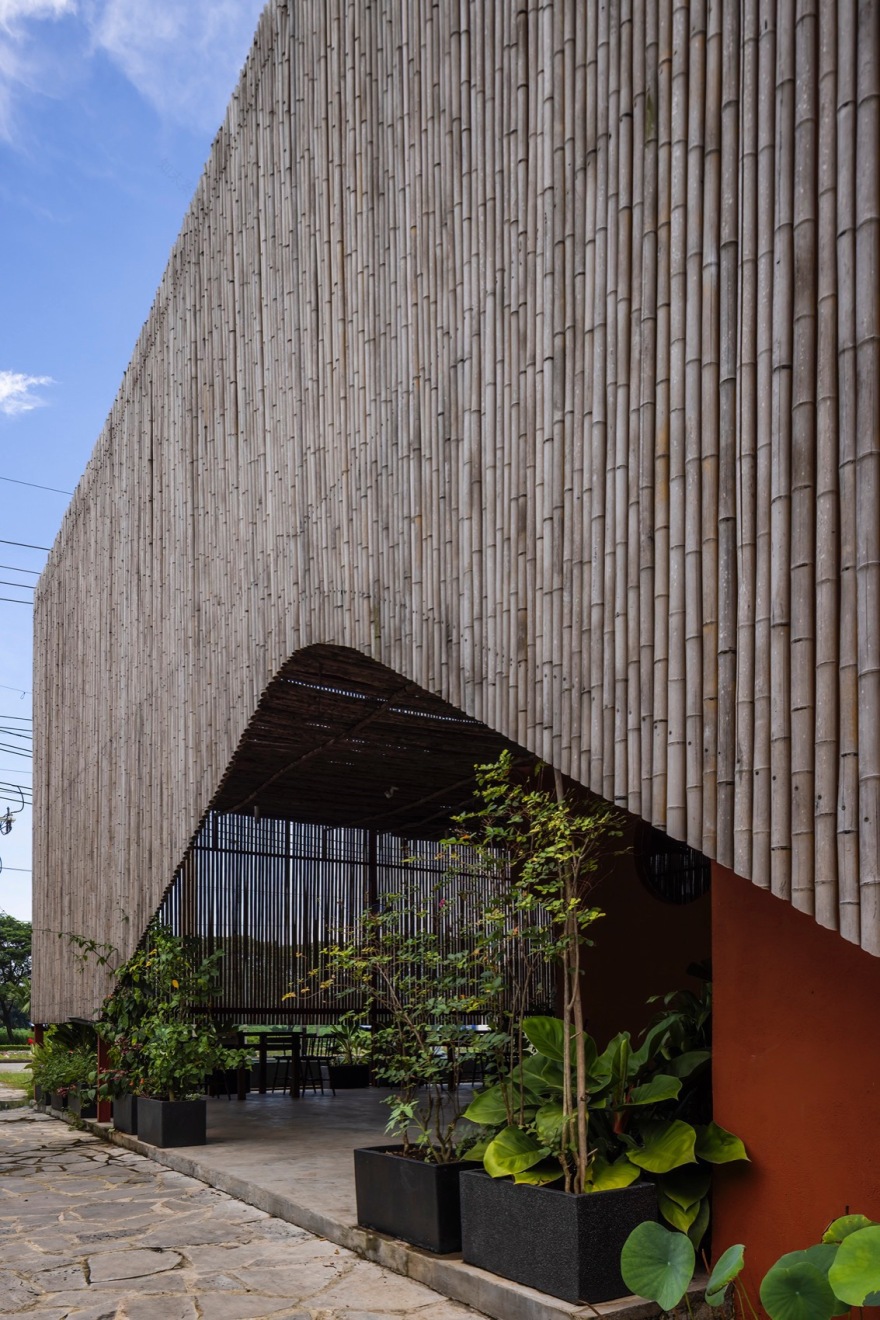

▼竹制遮阳结构,Bamboo shade structure© Hiroyuki Oki

此外,Nhà Tú 花园餐厅还提供了带有隔音和隔热的半室外用餐区,水景元素与立面之间的空隙则充当了主要建筑体块周围的缓冲空气层。餐厅室内,精心安排的座位确保了食客们从餐厅的每个角落都能直接进入到郁郁葱葱的花园中。
Additionally, the incorporation of the “hàng ba” architectural concept in the outdoor dining area provided sound and thermal insulation, while water trenches and voids acted as a buffer air layer around the main building block. Inside, strategically arranged seating ensured every corner of the restaurant offered direct access to the lush garden.
▼半室外用餐区,Semi-outdoor dining area© Hiroyuki Oki

▼半室外用餐区,Semi-outdoor dining area © Hiroyuki Oki


▼两层立面形成了空间与气候的过渡,The two-layer facade forms a transition between space and climate© Hiroyuki Oki
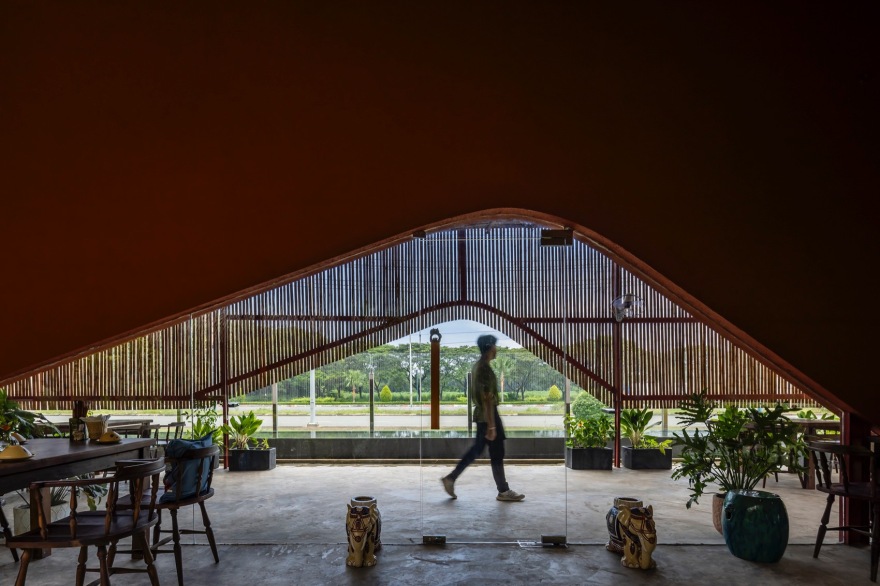
多功能空间
Multi-purpose Space
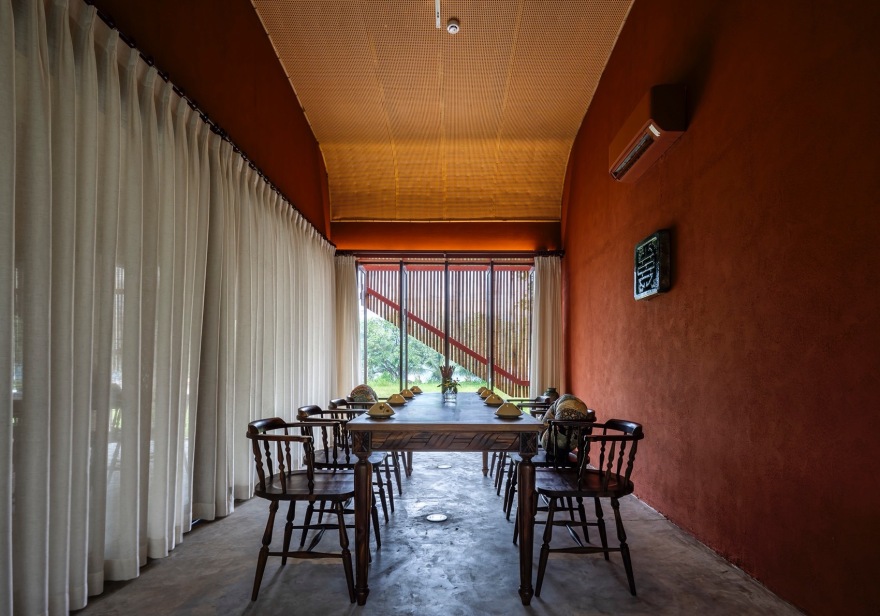
为了迎合不同群体的需求,建筑师在餐厅中设计了一处“多功能空间”,这是一处具有适应性功能的 VIP 用餐区。具有开合旋转功能的玻璃门,使得该空间能够在不同布局之间无缝过渡,以适应不同的群体规模和需求。
▼分析图,Analysis diagram© Long Nguyen Design

To cater to diverse groups, a versatile “multi-purpose space” was devised, featuring a VIP dining room with adaptable functionalities. Utilizing glass doors with opening-closing-rotating features, this space seamlessly transitioned between configurations to accommodate varying group sizes and needs.
▼室内用餐区,interior dining area© Hiroyuki Oki
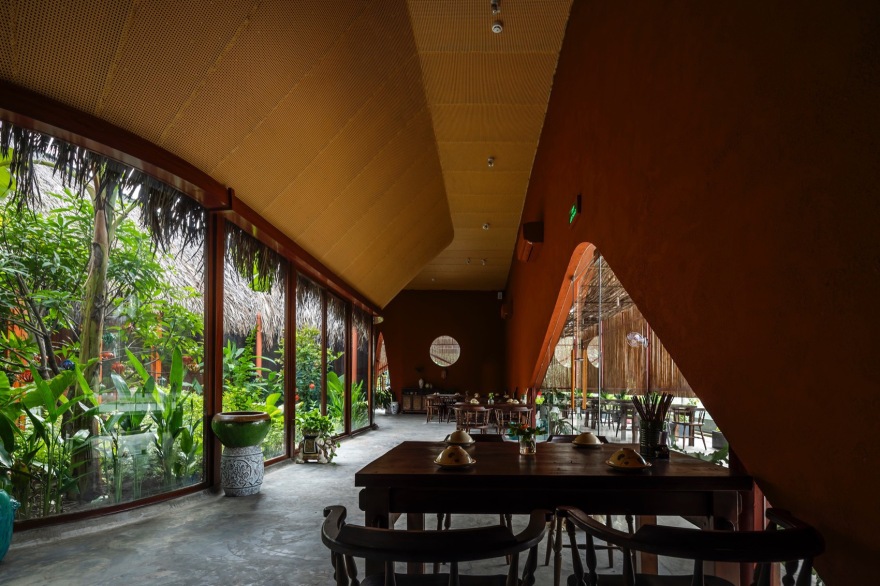


▼多功能 VIP 室,Multi-function VIP room© Hiroyuki Oki
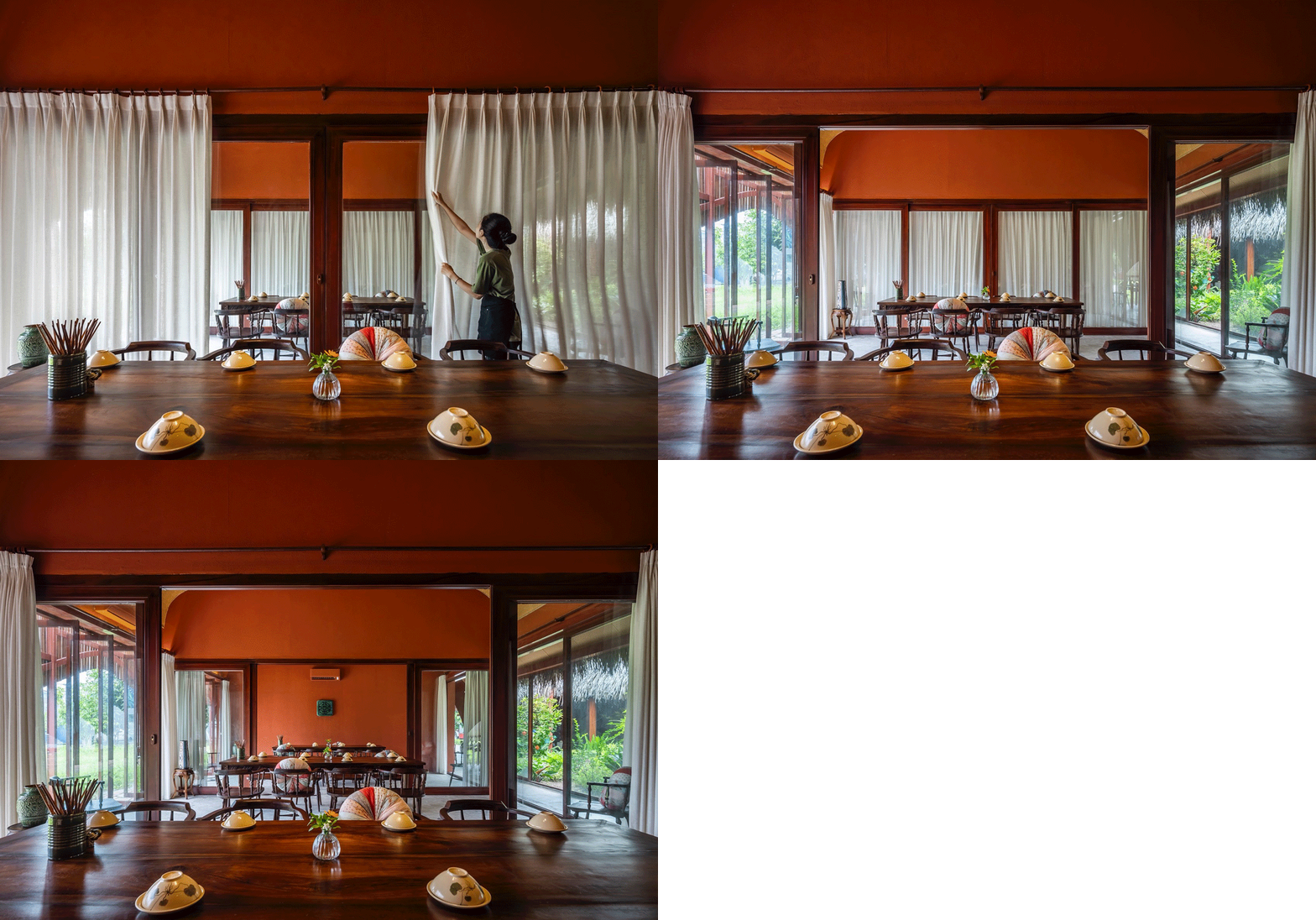
▼多功能 VIP 室,Multi-function VIP room© Hiroyuki Oki


▼用餐区,dining area© Hiroyuki Oki
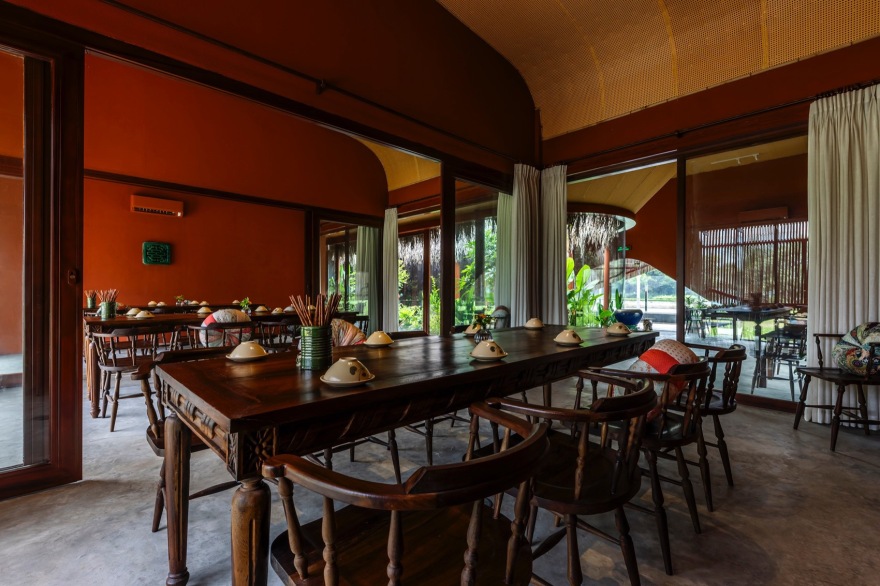
设计极其关注空间功能和用户体验,精心的空间布局在营造良好空间体验方面发挥了至关重要的作用。中央花园的设计让人联想到带有天窗的洞穴,它是整个项目生态系统的心脏,将阳光和微风等自然元素引入到餐厅之中。精心设计的开口促进了室内外空间之间的无缝过渡,促进了自然通风,最大限度地减少了坏天气的干扰。
▼剖面分析图,Analysis section© Long Nguyen Design

Spatial configuration played a crucial role, with careful attention paid to functionality and user experience. The central garden, designed reminiscent of a skylight cave, served as the ecosystem’s heart, harnessing natural elements like sunlight and wind. Thoughtfully designed openings facilitated seamless transitions between indoor and outdoor spaces, promoting natural ventilation and minimizing weather-related disruptions.
▼由室内看中央庭院花园,Viewing the central patio from interior© Hiroyuki Oki


▼庭院入口,Entrance of the patio© Hiroyuki Oki

▼天井庭院,Patio garden© Hiroyuki Oki


▼花园立面,Facade of the garden© Hiroyuki Oki

本土风情 – 现代与传统
Indigenous – Modern and Traditional
从概念设计到落成的过程也面临了诸多挑战,但团队的坚持不懈和创新思维最终造就了项目的成功。建筑的主要结构由预制钢框架构成,辅以手工制作的砖墙和编织复杂的芦苇垫。彰显出现代工业技术和传统工艺的结合。
While the journey from concept to completion was not devoid of challenges, perseverance and innovative problem-solving ultimately led to the project’s success. A combination of modern industrial techniques and traditional craftsmanship was employed, with pre-fabricated steel frames forming the structure’s backbone, complemented by handcrafted brick walls and intricately woven reed mats.
▼走廊,Hallway
© Hiroyuki Oki

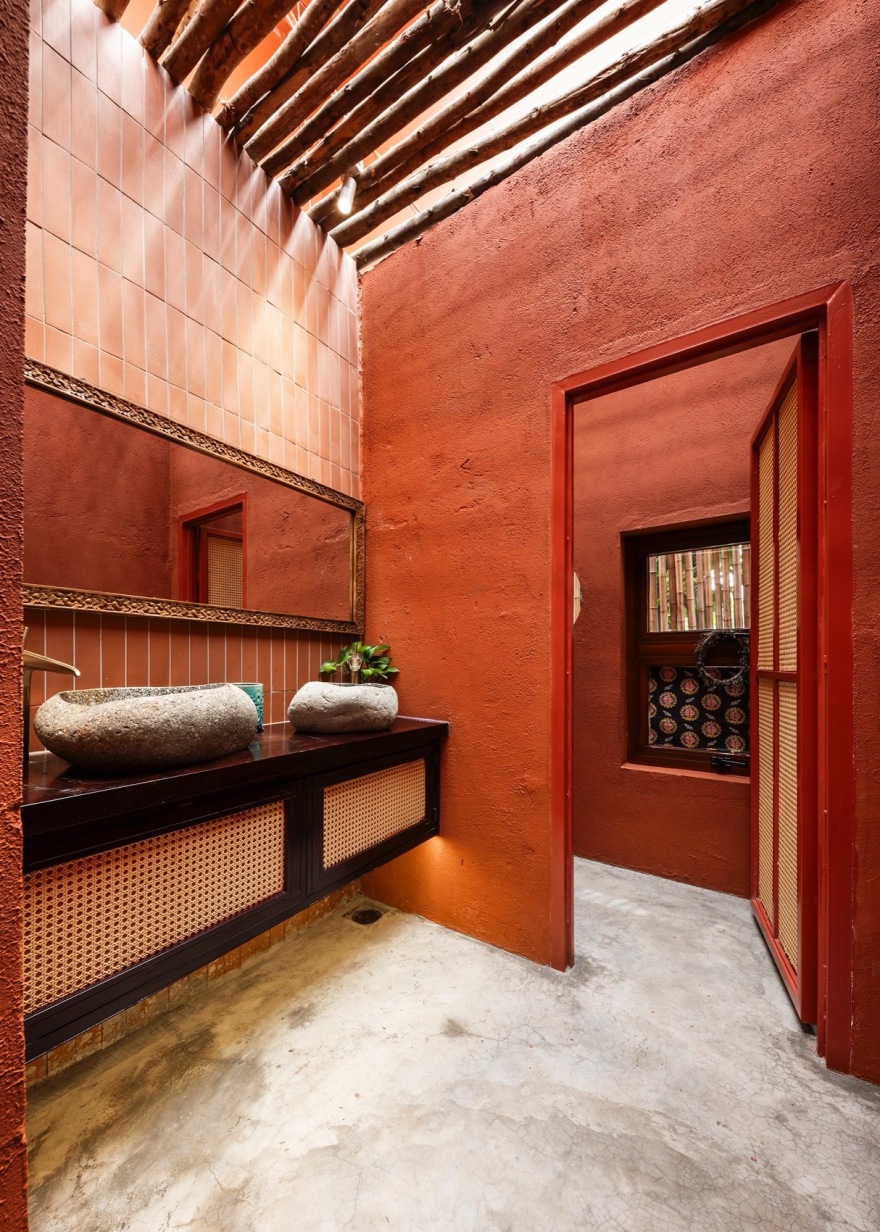
▼卫生间前厅,Front space of the toilets© Hiroyuki Oki

▼卫生间,Toilets© Hiroyuki Oki


Nhà Tú 花园餐厅堪称是建筑创新和环境敏感性的证明,通过创造与周围环境产生共鸣的和谐空间,体现了设计的变革力量。
In essence, “Nhà Tú Garden” serves as a testament to architectural innovation and environmental sensitivity, embodying the transformative power of design by creating harmonious spaces that resonate with their surroundings.
▼顶视图,Top views© Hiroyuki Oki


▼外观夜景,Night views of exterior© Hiroyuki Oki


▼水景与半室外空间夜景,Night view of the pool and semi-door space© Hiroyuki Oki


▼室内夜景,Night view of interior© Hiroyuki Oki
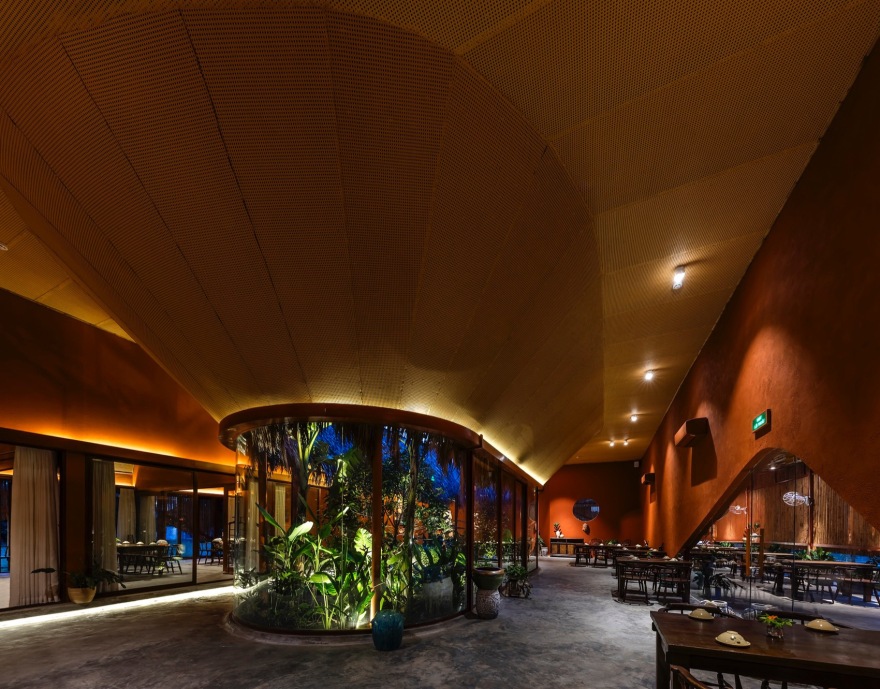

▼室内夜景,Interior night view© Hiroyuki Oki

▼区位图,Location© Long Nguyen Design

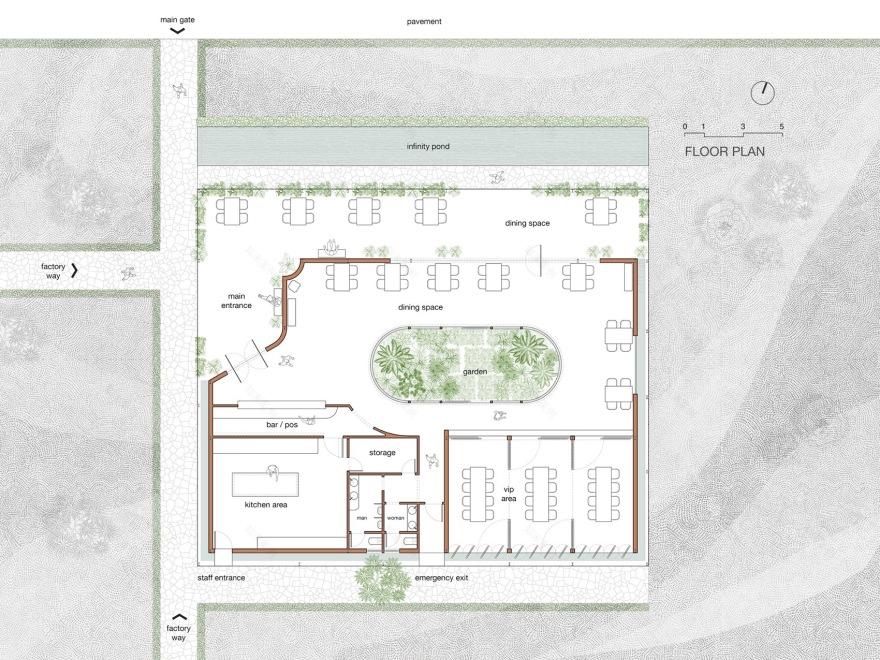
▼平面图,Plan© Long Nguyen Design
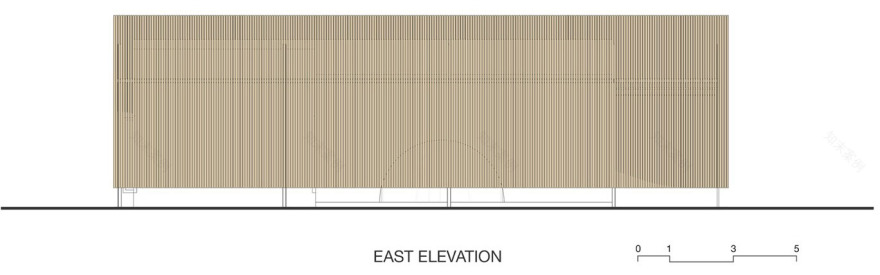
▼立面图,Elevations© Long Nguyen Design



Credit:
Architect: Long Nguyen Design
Branding Agency: Creatalk
Lead Architect: Nguyen Thanh Long
Design Team: Nguyen Thi To Tam, Tran Quang Thanh
Creative Director: Pham Duy Khoi
Photo: Hiroyuki Oki
Owner: Dang Minh Tu
Area: 500 m2
Location: Nhon Trach, Dong Nai, Vietnam
Year Completed: 2024







南京喵熊网络科技有限公司 苏ICP备18050492号-4知末 © 2018—2020 . All photos and trademark graphics are copyrighted by their owners.增值电信业务经营许可证(ICP)苏B2-20201444 苏公网安备 32011302321234号
苏公网安备 32011302321234号客服
消息
收藏
下载
最近