

创作上传
VIP
收藏下载
登录 | 注册有礼
查看完整案例

收藏

下载

分享

翻译
An urchin inspired a resource-efficient biomimetic pavilion in Freiburg, a joint effort between two German universities using new forms of human-machine interaction.

Photography courtesy of ICD/ITKE/INTCDC University of Stuttgart.
Made with Rhinoceros, Grasshopper, and Sofistik software, an early diagram shows the sea urchin–inspired livMatS Biomimetic Shell, a pavilion at Germany’s FIT Freiburg Center for Interactive Materials and Bioinspired Technologies, a collaboration between the University of Freiburg’s Cluster of Excellence Living, Adaptive, and Energy-Autonomous Materials Systems and the University of Stuttgart’s Cluster of Excellence Integrative Computational Design and Construction of Architecture, two research groups co-investigating construction techniques that reduce environmental impact.
Photography courtesy of ICD/ITKE/INTCDC University of Stuttgart.
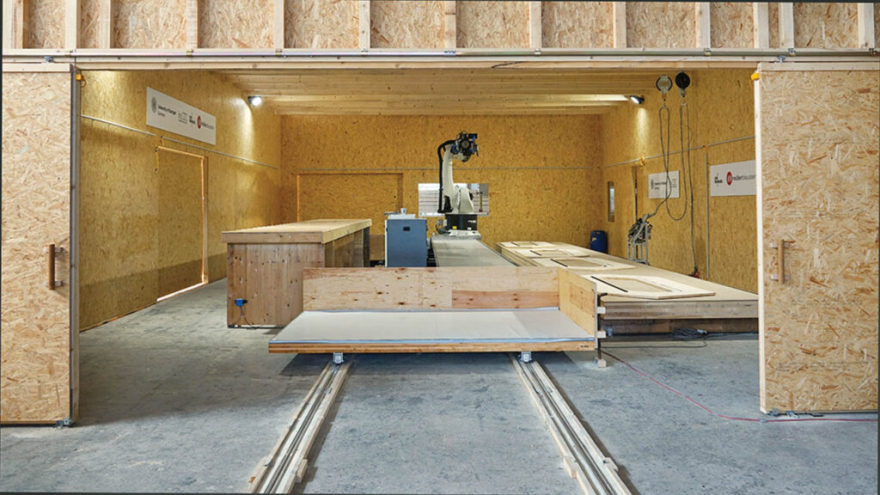
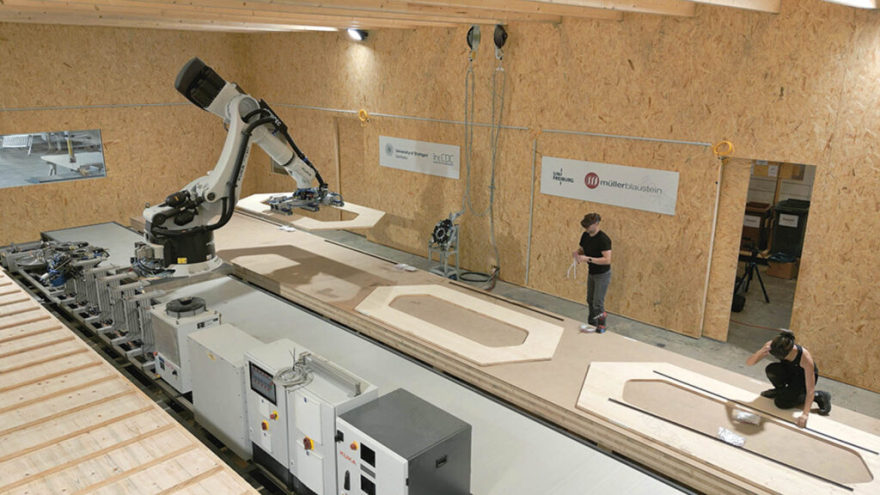
The hollow modules forming the structure were prefabricated in a Blaustein factory using new forms of robotic manufacturing that are more efficient than conventional wood construction.
Photography courtesy of ICD/ITKE/INTCDC University of Stuttgart.
To form the modules, workers used AR headsets and a seven-axis robot that sandwiched together milled spruce panels, insulation boards, waterproofing membranes, lighting and acoustic elements, and larch cover plates.
Photography courtesy of ICD/ITKE/INTCDC University of Stuttgart.
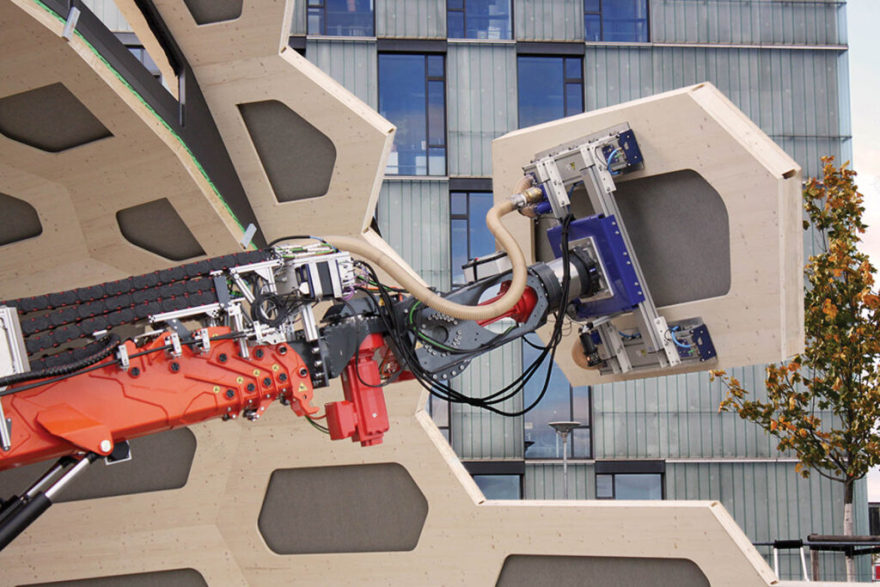
On-site, a robotic spider crane with a vacuum gripper lifted the modules, which measure 52 by 54 feet, while a second screwed them in place.

Photography courtesy of ICD/ITKE/INTCDC University of Stuttgart.

Photography courtesy of ICD/ITKE/INTCDC University of Stuttgart.
Biobased hygroscopic materials are incorporated into the pavilion’s glass clerestory, a weather-responsive shade system that was modeled on the moisture-controlled opening and closing of pine cones.
The Stats Behind the Making of the livMatS Biomimetic Shell
Dozens of students, researchers, and engineers led by professors Jan Knippers and Achim Menges2,152 square feet of floor127 prefabricated wood modules10+ years of sea-urchin research
Photography by Roland Halbe.
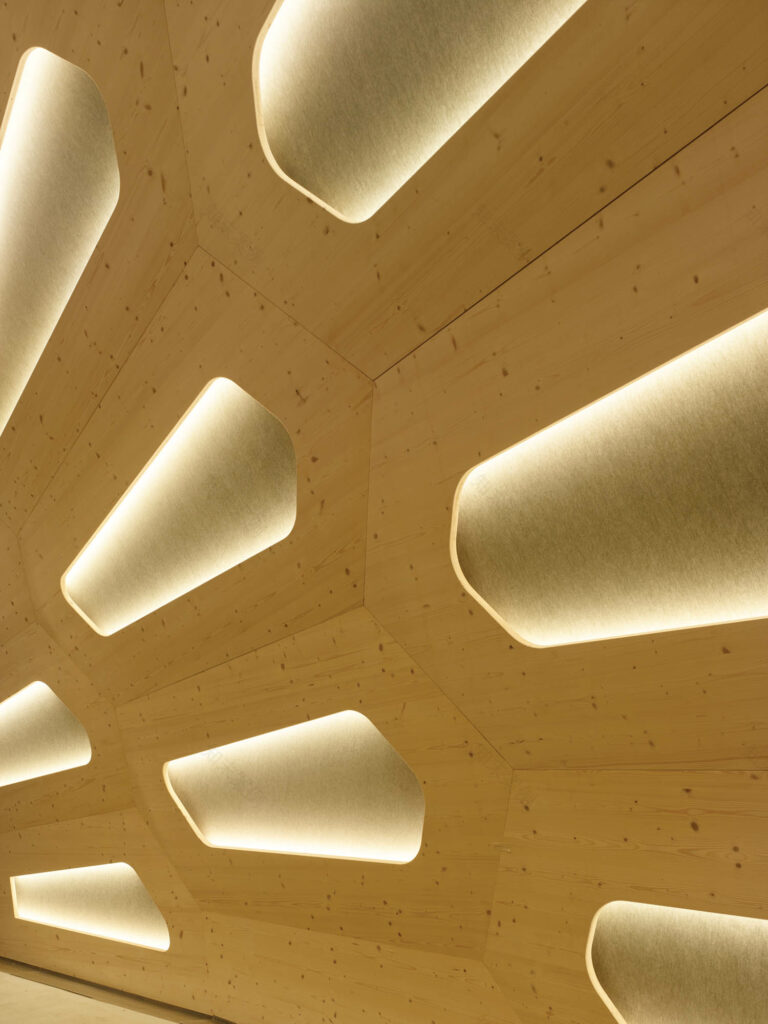
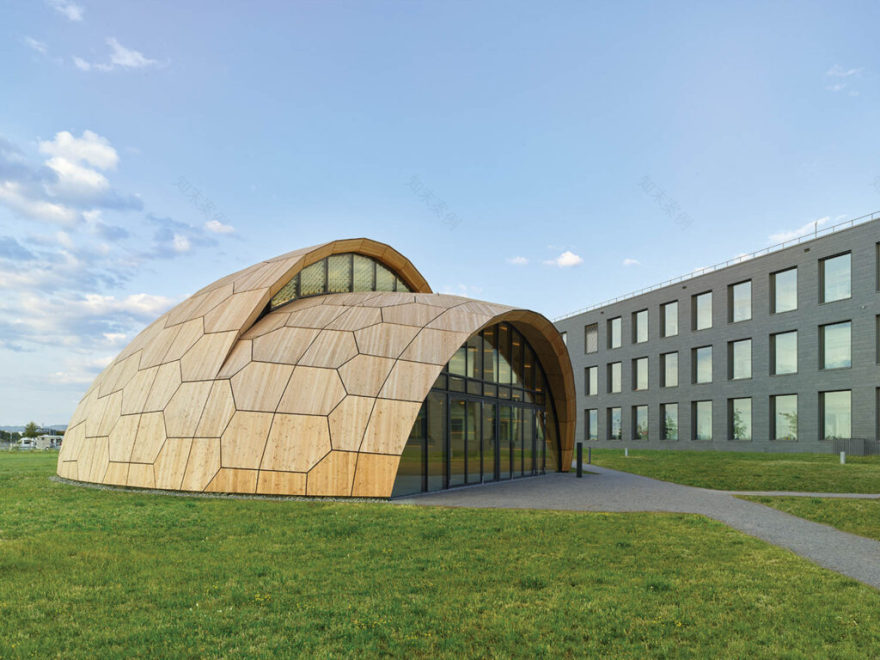
The curved geometries of the prefabricated modules are inspired by the plate skeleton of the sea urchin and integrate LEDs.

Photography by Roland Halbe.
The interior of livMatS Biomimetic Shell, which is 33 feet high and being used as a space for free thinking, has a thermally activated floor slab of recycled concrete, making it comfortable year-round without additional heating or cooling.
Photography by Roland Halbe.
Compared to a typical timber building, the pavilion’s material consumption was reduced by more than half.
南京喵熊网络科技有限公司 苏ICP备18050492号-4知末 © 2018—2020 . All photos and trademark graphics are copyrighted by their owners.增值电信业务经营许可证(ICP)苏B2-20201444 苏公网安备 32011302321234号
苏公网安备 32011302321234号客服
消息
收藏
下载
最近