

创作上传
VIP
收藏下载
登录 | 注册有礼
查看完整案例

收藏

下载

分享
我与世界之间是经线忠实的两端
The world and I are the two faithful ends of the longitude line
项目位于海南省东方市东方大剧院一隅。东方市地处海南省的西边,属于昌化江沿岸的城市。美孚黎(黎族方言支系之一)祖先就是沿着昌化江世代生存。
The project is located in a corner of the Dongfang Grand Theater in Dongfang City, Hainan Province. Dongfang City is located in the west of Hainan Province and is a city along the Changhua River. The ancestors of the Meifu Li (one of the dialect branches of the Li ethnic group) lived along the Changhua River for generations.
This is a project about the construction of the Li Brocade culture of the Meifu Li. The traditional spinning, dyeing, weaving, and embroidery techniques of the Li ethnic group include spinning, reeling, winding, dyeing on the frame, tying, dismantling, manufacturing, and other processes, showing the ancient textile skills, which is an intangible cultural heritage in urgent need of protection.
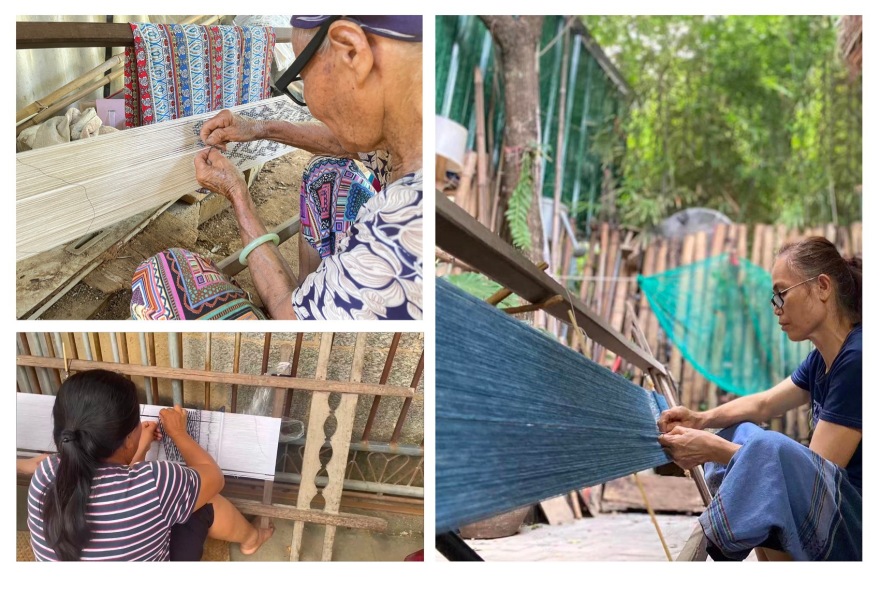
In October 2023, together with the Linglong Space-Time team, we came to the Li villages of Baobai Village and Baicha Village in Dongfang City, Hainan Province, to learn about the Li Brocade production techniques and culture at close range. The Shenzhen Linglong Space-Time team has frequently traveled back and forth to the tribes in the past few years to conduct field investigations and academic research, and is committed to promoting the protection of intangible cultural heritage inheritors and exploring the Li Brocade culture.
The core process of the Meifu Li’s Li Brocade is to dye first and then weave. The dyeing frame is an important tool used in this process. Before dyeing the thread, the weavers weave the totem patterns onto the dyeing frame by tying them. After the thread is dyed, it is the weaving process. During the weaving process, the totem patterns cannot be wrong, and the difficulty can be imagined. During the design period, Ma Yuke, a scholar of the Meifu dialect Li Brocade research, gave us a lot of academic support for Li Brocade research.
This is a cultural construction project about Li brocade in Meifu Li. The traditional spinning and weaving techniques of the Li ethnic group include spinning, winding, dyeing, tying, untying, manufacturing, and other techniques, which show the traditional spinning techniques and are intangible cultural heritage in urgent need of protection.
In October 2023, together with the Linglong Spacetime team, we went to Baobai Village and Baicha Village, two Li villages in Dongfang City, Hainan Province, to get a close look at the craftsmanship and culture of Li brocade. Over the past few years, the Shenzhen Linglong Spacetime team has frequently traveled to the tribes to conduct field investigations and academic research, and is committed to promoting the protection of intangible cultural heritage inheritors and exploring Li brocade culture.
Ikat is the core technique of Li brocade in Meifu Li, that is, dyeing first and then weaving. The Ikat frame is an important tool used in this process. Before dyeing the thread, the weavers first weave the totem pattern onto the dyeing frame by tying, and the weaving process begins after the thread is dyed. In the weaving process, the totem pattern cannot be wrong, and the difficulty can be imagined. During the design period, Ma Yuke, a professional scholar specializing in Li brocade of Meifu Li, provided us with a lot of academic support for Li brocade research.
▼黎锦文化田野调查,field research on Li brocade © 深圳玲珑时空文化创意有限公司,马誉珂
做一个漂流的装置 Make a drifting device
事实上在介入到具体设计之前,我们所面对的场地位置及范围是一直变化的,并不确定。与其不断地适应场地做设计,不如做一个自成体系的装置,保持恒定。设计并没有从一个室内空间角度出发,而是想象在一片海域生成。像祖先生来就孤零零地漂流着面对大海、平原、山川一样。
In fact, before we get involved in the specific design, the location and scope of the site we are facing are constantly changing and uncertain. Instead of constantly adapting to the site to make designs, it is better to make a self-contained device to remain constant. The design does not start from the perspective of an indoor space, but imagines it being generated in a sea area. Just like our ancestors were born, drifting alone facing the sea, plains and mountains.
▼“海边漂流的絣染盒子”,“drifting ikat frame box on the seashore” © 礽建筑+关念工斯

絣染盒子,也是承载“文字”的盒子
The ikat box is also a box that carries ” text “
“如何去面对一片海域呢?”我们想设计一个絣染架的盒子。“是图像还是文字?”这是我们听到图腾纹样不允许织错之后的直觉问题。在黎族,有语言却没有书写文字。于是在我们理解,絣染架上的图腾纹样就承载了他们的“文字”(符号系统)。
一个絣染架的盒子,也就是一个承载“文字”的盒子。而絣染架的尺度恰好是一个长 2.5m~3m,宽 1m 左右的架子。这个尺度和身体的尺度紧密相关,并和部分建筑立面模块有类似之处。在黎族人看来,人是由“身体”+“TIN”组成的,万事万物上都附着了祖先的 TIN。织娘织一件黎锦需要 1-2 年,甚至更长时间。通过走访我们发现,作为絣染工艺的首要工具,絣染架不仅长时间出现在织娘的日常生活中,而且最终作为随葬品,由此伴随织娘的一生。一个絣染架的盒子,也是一个承载信仰的盒子。
“How to face a sea area?” We want to design an Ikat frame box. “Is it a kind of image or text?” This is the intuitive question we had after hearing that the totem pattern cannot be woven incorrectly. The Li people have language but no written text. In our understanding, the totem pattern on the Ikat frame carries their “text” (symbol system).
An Ikat frame box is a box that carries “text”. The scale of the Ikat frame is exactly a frame with a length of 2.5 ~3 meter and a width of about 1 meter. This scale is closely related to the scale of the body and is similar to some building facade modules. In the eyes of the Li people, people are made up of “body” + “TIN”, and everything is attached with the TIN of their ancestors. It takes 1-2 years or even longer for a weaver to weave a piece of Li brocade. Through our visits, we found that as the primary tool for ikat, the ikat frame not only appears in the daily life of the weavers for a long time, but also eventually serves as a funerary object, thus accompanying the weavers throughout their lives. An Ikat frame box is also a box that carries faith.
▼“海上漂流的絣染盒子”,“drifting ikat frame box on the sea”© 礽建筑+关念工斯

插件与结绳建造
Plugin and knotting construction
一个絣染架就是一个立面建构的插件单元。设计中我们搭建了一个木板结构类型,通过穿插的方式将絣染架插入木板之间的间隙处,并以此固定。同时,我们采用了外露的五金合件以及绑带作为加强的固定节点。这个手法的初衷也来自于在文字发明之前,人们通过结绳的方式记事。用于实际使用时置物展示搁板的建构同样也是采用绑扎的方式。当搁板水平放置时可以置物(如展示品),需要收起时,垂挂的轧带也可以灵活变换。
两个盒子底部设计了滑轮方便使用,以及转换场地。可拆解可移动的装置性设计提供了不同场景下多样空间的使用方式。
▼絣染架单元立面穿插分析图,analysis diagram of the interlaced combination of ikat frame units © 礽建筑+关念工斯
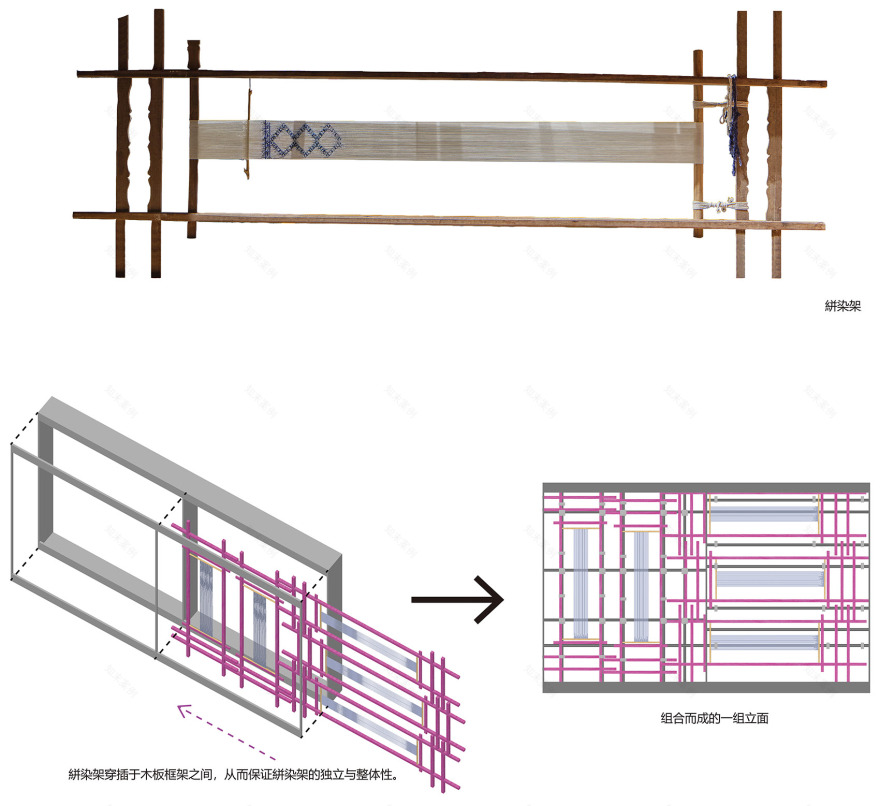
▼絣染架盒子建构轴测图,axonometric drawing of the construction of the ikat frame box © 礽建筑+关念工斯

An ikat frame is a plug-in unit for facade construction. In the design, we built a wooden board structure type, inserted the ikat frame into the gap between the wooden boards, and fixed it in this way. At the same time, we used exposed hardware and straps as reinforced fixed nodes. The original intention of this technique also comes from the fact that people used knotting ropes to record things before the invention of writing. The construction of the display shelf for actual use also adopts the binding method. When the shelf is placed horizontally, it can be used to place things. When it needs to be folded, the hanging rolling belt can also be flexibly changed. Pulleys are designed at the bottom of the two boxes for easy use and site conversion. The detachable and movable device design provides a variety of space usage methods in different scenarios.
▼”漂流回展厅的絣染盒子“,the ikat frame box drifting back to the exhibition hall © 吕博

▼絣染架作为建构单元的立面,The façade of ikat frames as construction units© 吕博


▼以“结绳记事”延展生成的构造方式,the construction method of knotting ropes to form an assembled and disassembled installation box© 吕博


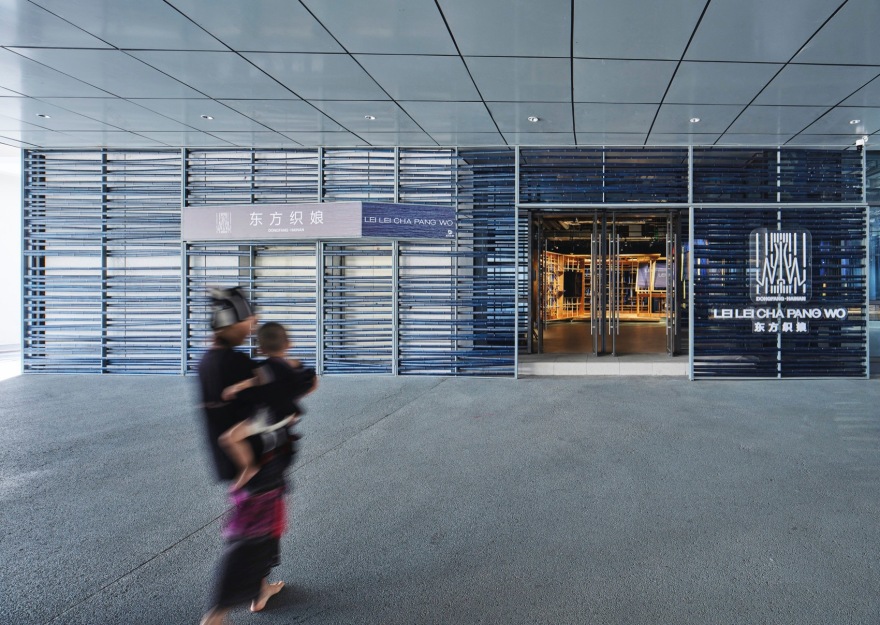
编织而成的立面 Woven façade 用“编织”的方法去搭建立面,通过钢结构做出立面编织的龙骨,然后将 3 米长的竹条前后穿插而成。竹条疏密比例参考了“LEI LEI CHA PANG WO”(美孚方言黎锦筒裙上不同部位名称的黎语发音,分别对应敬祖先、敬自然、敬家人等不同文化内涵)的比例而成。▼拆絣后的棉线与外立面编织立面图,cotton thread after untying and woven facade elevation ©深圳玲珑时空文化创意有限公司,礽建筑+关念工斯

▼外立面编织分析,facade weaving analysis diagram © 礽建筑+关念工斯

The facade is built by the method of “weaving”. The steel structure is used to make the keel of the facade, and then three-meter-long bamboo strips are interlaced front and back. The density ratio of the bamboo strips is based on the proportion of “LEI LEI CHA PANG WO” (the Li language pronunciation of the names of different parts on the Meifu Li brocade skirt, which correspond to different cultural connotations such as respecting ancestors, respecting nature, and respecting family).
▼编织而成的立面,woven facade© 吕博

“漂流”回展厅
“Drifting” back to the exhibition hall
装置语言先行,于是室内的设计更多的是配合装置而出现。分隔空间的界面采用通高的深蓝色遮光布帘,一是作为背景的考虑,其次是方便之后第二期展览设计的灵活布置,这样减少了浪费和施工成本。空间内部有 6 根直径 850mm 的柱子,既然存在我们就不希望将其隐藏掉。柱子边缘向外扩充 150mm 做龙骨支架,并在支架上悬挂 1.2m-1.3m 长的以蓝色为主的草木染棉线。
The installation language comes first, so the interior design is more to match the installation. The interface separating the space uses full-height dark blue blackout curtains, first for background considerations, and second for the convenience of flexible arrangement in the second phase of the exhibition design, thus reducing waste and construction costs. There are 6 columns with a diameter of 850mm inside the space. Since they exist, we don’t want to hide them. The edge of the column is expanded 150mm outward to make a keel bracket, and 1.2m-1.3m long of plant-dyed cotton threads mainly in blue are hung on the bracket.
▼展厅室内概览,exhibition hall interior overview© 吕博

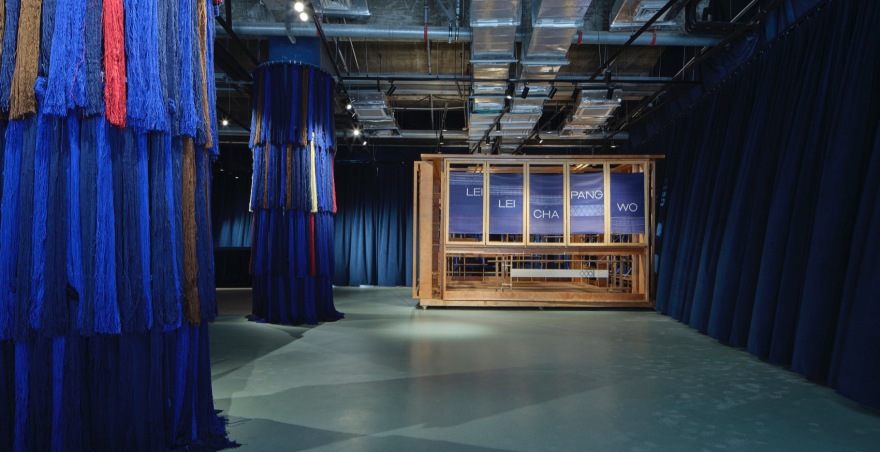
▼两个絣染架盒子置入在“TIN 的道场”,two ikat frame boxes are placed in the “daochang of TIN”© 吕博


▼絣染盒展开动图,ynamic-image-of-the-ikat-box-unfolding© 吕博

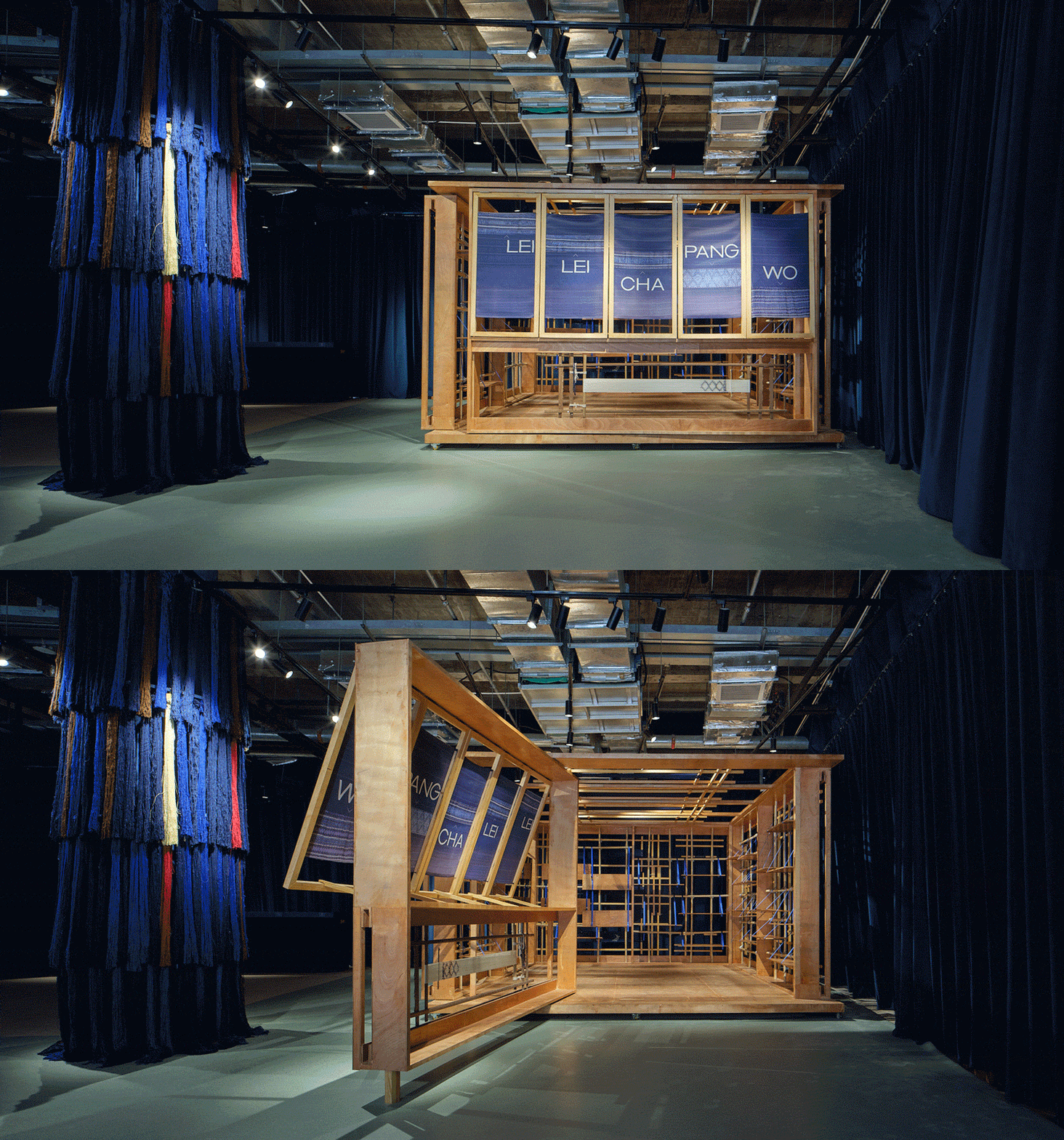
展厅中,两个盒子分别设置为一大一小、一明一暗。其中明盒子更多承载水平放置展品的功能,更具通透性;而暗盒子更多悬挂展示黎锦,并通过蓝色布帘进行封闭和打开,以此承载试衣功能。
In the exhibition hall, two boxes are set as one large and one small, one bright and one dark. The bright box is more for horizontal placement of exhibits and is more transparent. The dark box is more for hanging and displaying Li brocade, and is closed and opened with a blue curtain to carry the function of fitting clothes.
▼展厅室内,exhibition hall interior© 吕博


▼可打开和封闭的盒子作为试衣间,the openable and closable box as a fitting room© 吕博
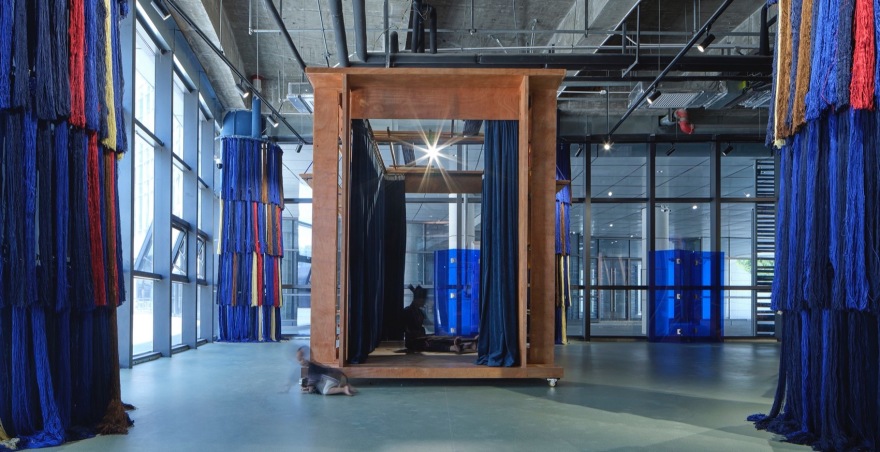
▼展开的絣染架盒子,the unfolded ikat frame box© 吕博


▼展开的絣染架盒子,the unfolded ikat frame box© 吕博
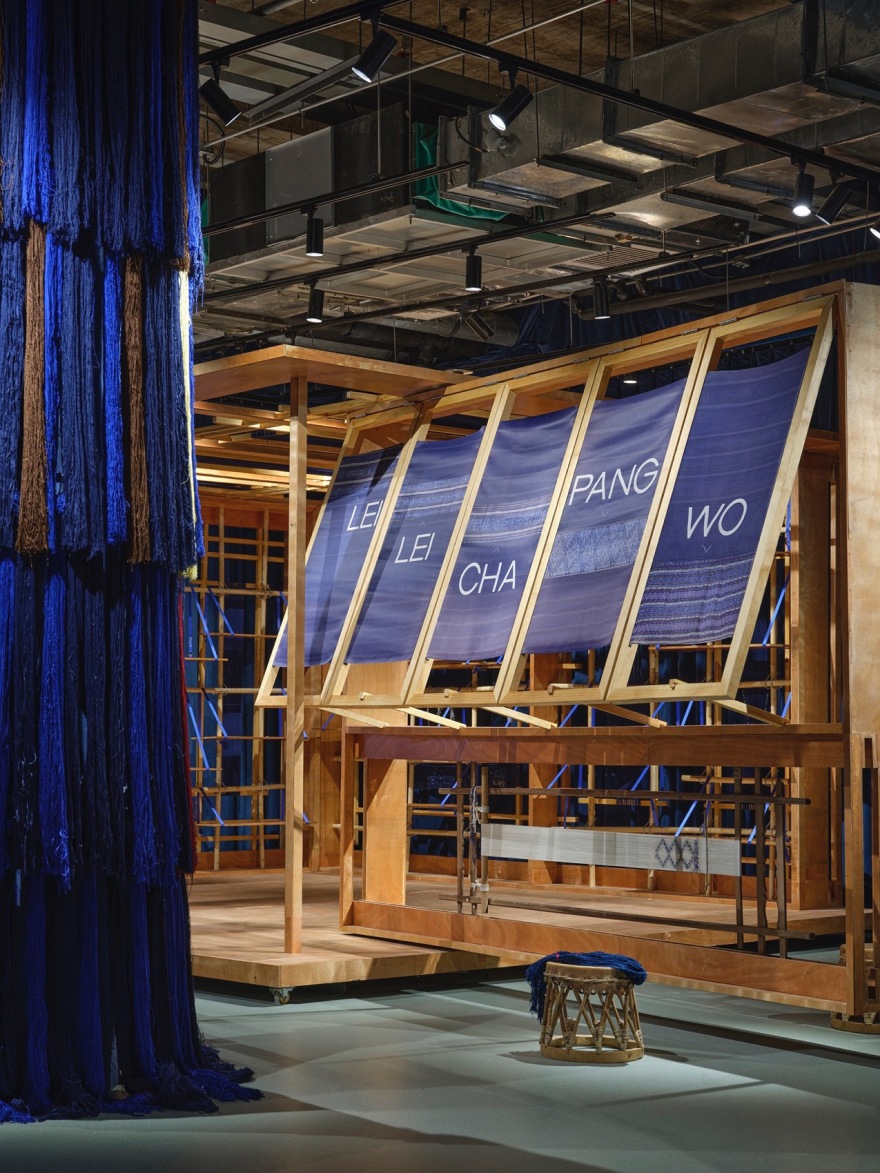
之所以在空间中大量使用蓝色,是因为黎族美孚方言的女性大量使用蓝色与白色的黎锦。黎族人崇尚万物有灵,扩大后的蓝色柱子与布帘,将空间变成了“TIN(黎族人的神明)的道场”。最终,两个装置盒子置入到一个统一的场域中。
The extensive use of blue in the space is because Meifu Li women use a lot of blue and white Li brocade. The Li people believe that all things have spirits. The enlarged blue columns and curtains turn the space into a “daochang of TIN (the deity of the Li people)”. Finally, the two installation boxes are placed in a unified field.
▼置物展示搁板的建构,the construction of the display shelf© 吕博

▼外露的五金合件以及绑带作为固定节点,exposed hardware and straps as fixed nodes© 吕博

▼草木染棉线的柱子,the column of plant-dyed cotton threads© 吕博

▼絣染架与牛皮凳,ikat frame and leather stool© 吕博

▼竹子”沙发“,bamboo sofa© 吕博

▼盒子作为展示陈列功能,the display function of the box ©礽建筑+关念工斯

▼展厅平面图,exhibition hall floor plan©礽建筑+关念工斯

▼装置立面图,installation elevation©礽建筑+关念工斯

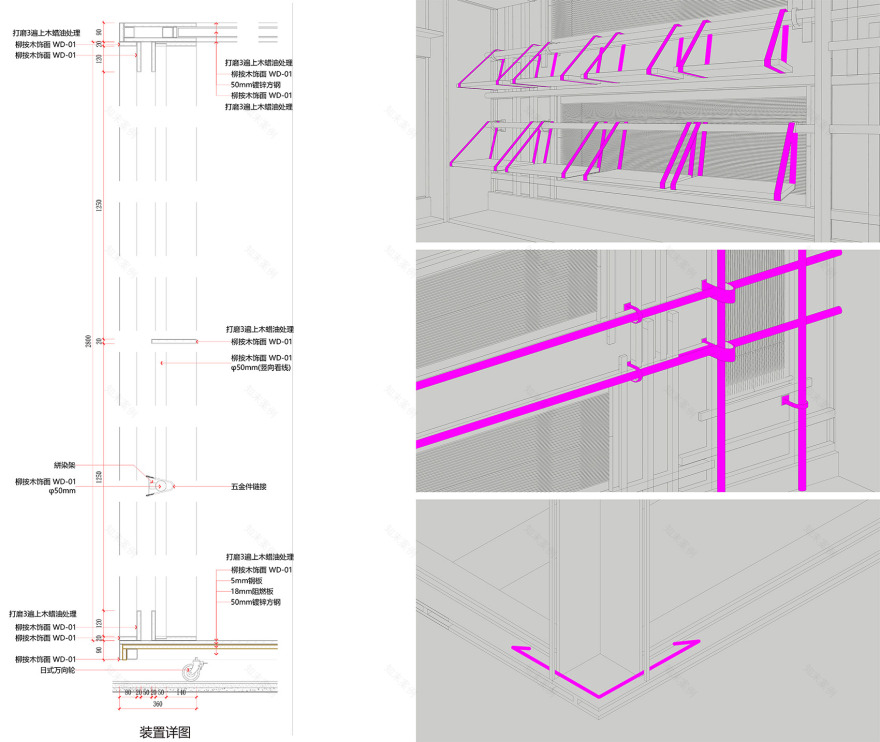
▼装置详图,installation details©礽建筑+关念工斯
项目名称:漂流的絣染盒子
项目类型:室内,立面改造,装置
设计方:礽建筑+关念工斯
项目设计:2023 年 9 月
完成年份:2023 年 12 月
设计团队:章礽然,施新桐,朱克
项目地址:海南省东方市东方大剧院一层展厅
建筑面积:310㎡
摄影版权:吕博
合作方:美孚方言黎锦研究学术支持:马誉珂(中央民族大学师资博士后)
客户:东方乡村振兴投资有限公司,深圳市玲珑时空文化创意有限公司
材料:柳桉板,pvc 地胶,竹条,染色棉线
品牌:pvc 地胶:懿家地板,染色棉线:法英线带,柳桉板:伟业木材
Project name:Drifting Ikat Box
Project type:interior, facade renovation, installation
Design:RENGARCH+NAIVE ADHD
Design year:2023.9
Completion Year:2023.12
Leader designer & Team:Zhang Rengran, Shi Xintong, Zhu Ke
Project location:exhibition Hall on the first floor of Dongfang Grand Theater, Dongfang City, Hainan Province
Gross built area: 310㎡
Photo credit: lv bo
Partner:academic support for the study of Meifu Li brocade: Ma Yuke (Postdoctoral researcher, Minzu University of China)
Clients:Dongfang Rural Revitalization Investment Co., Ltd. + Shenzhen Linglong Spacetime Culture and Creative Co., Ltd.
Materials:Eucalyptus board,pvc floor glue, bamboo strips, dyed cotton thread
Brands:PVC floor glue: Yijia floor, dyed cotton thread: Faying thread tape,Eucalyptus board:Weiye Timber


南京喵熊网络科技有限公司 苏ICP备18050492号-4知末 © 2018—2020 . All photos and trademark graphics are copyrighted by their owners.增值电信业务经营许可证(ICP)苏B2-20201444 苏公网安备 32011302321234号
苏公网安备 32011302321234号客服
消息
收藏
下载
最近