

创作上传
VIP
收藏下载
登录 | 注册有礼
查看完整案例

收藏

下载

分享

翻译
L I M I N A
A sacred space for the secular world

The meaning of religion in modern day has shifted from a narrow perspective of restrained beliefs to a wider discourse on diversity and tolerance - thereby redefining the secular. Recognizing and accepting different religions is the first step towards a liberal coexistence of different belief systems in a society. Prior to present day cultural development of religion into a complex web of belief systems and practices, every religion, at its core, emphasized the virtue of oneness with nature and self. Therefore, architecture here acts as the cradle to bridge people with nature once again, blurring the boundaries between architecture and landscape.
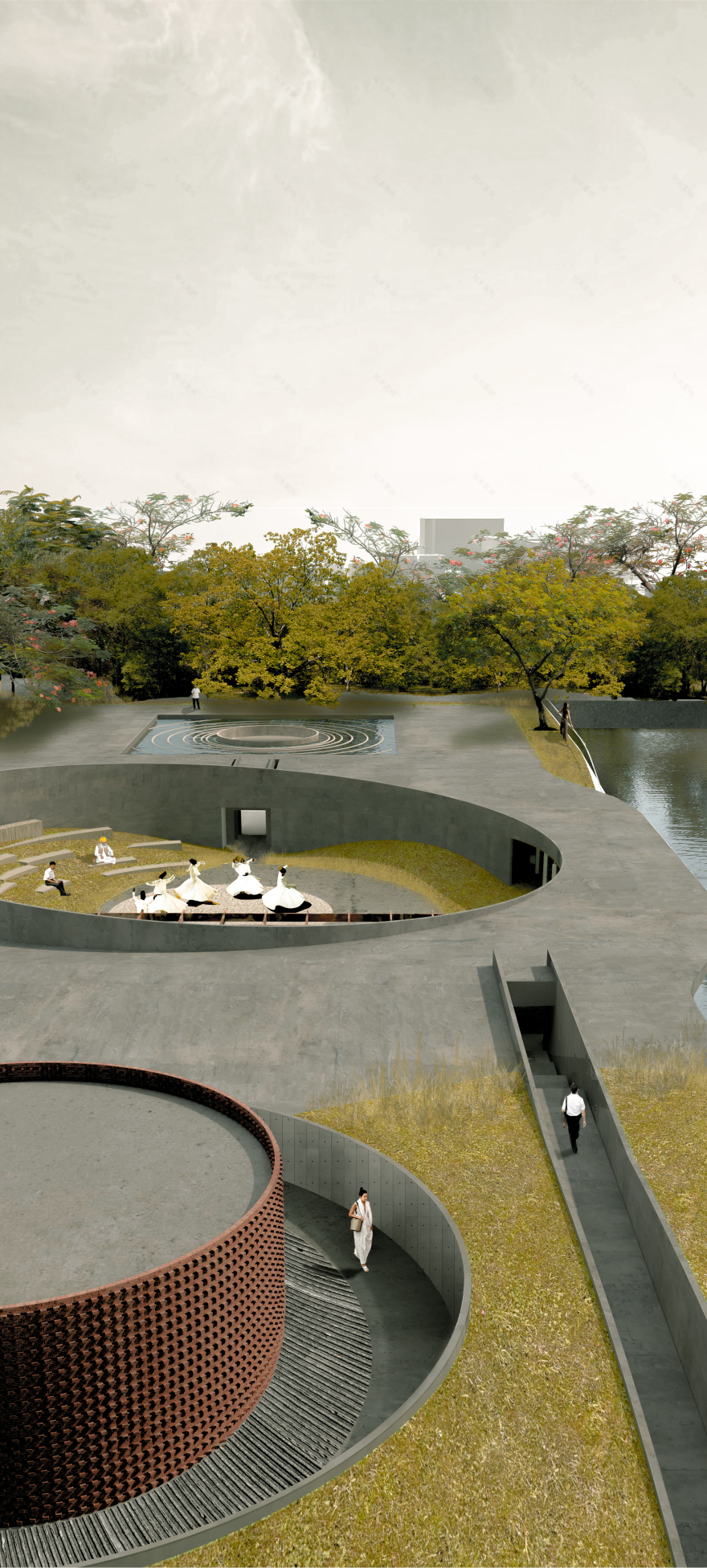
Individual interpretation of the fundamental tenets of religions helps augment the collective consciousness of faith, enabling them to engage in dialogue with people from diverse religious or non-religious backgrounds. Hence the project aims at providing a sequential set of spaces that align themselves with contemplative, congregational and sacral needs of any religion. The respective aid in a constant exchange between self, group and nature.

The movement around an object of sanctity holds significance, defining a circumambulatory path. Hence the sacral prayer hall takes circular form, eliminating particular directional inclination.
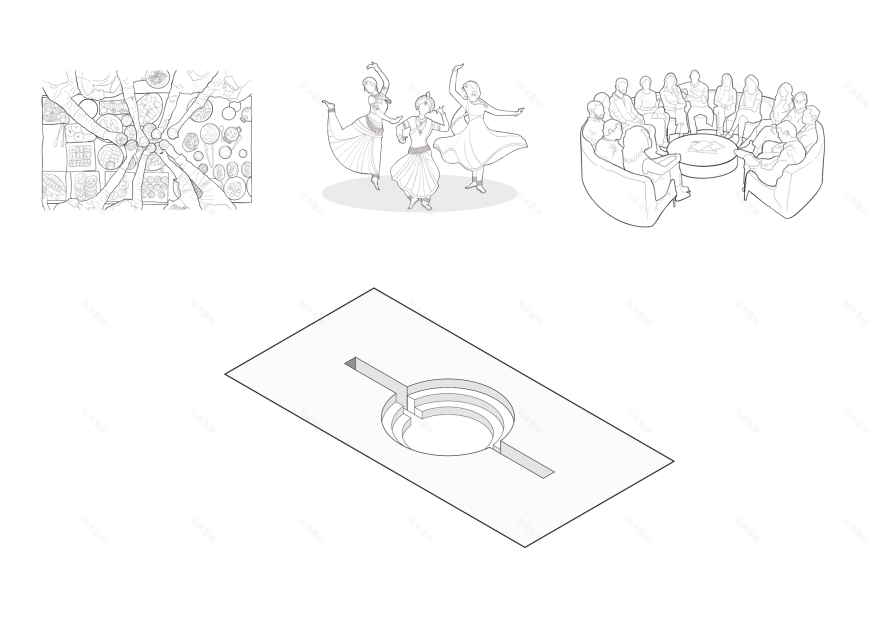
The congregation space allows for activities that transcend the boundaries of religion - food, performance and learning acting as communal binders

The three main spaces (sacral, congregational, contemplative) are guided by light, earth and water as a means to bring an individual in closer relation to their beliefs.

The site sits at the heart of Frazer Town, Bengaluru, India, an urban neighborhood known for its diverse residents coexisting from many years. This becomes the context for the project to be consciously involved in bringing an awareness among people of different religious backgrounds and open up conversations on acceptance and tolerance.

The programmatic elements of the project include a common prayer hall, a contemplative trough, learning spaces and a library that allow for and familiarize people with different religions, a cafeteria which opens into the central congregation space all while unifying the landscape and architecture.

南京喵熊网络科技有限公司 苏ICP备18050492号-4知末 © 2018—2020 . All photos and trademark graphics are copyrighted by their owners.增值电信业务经营许可证(ICP)苏B2-20201444 苏公网安备 32011302321234号
苏公网安备 32011302321234号客服
消息
收藏
下载
最近