

创作上传
VIP
收藏下载
登录 | 注册有礼
查看完整案例

收藏

下载

分享
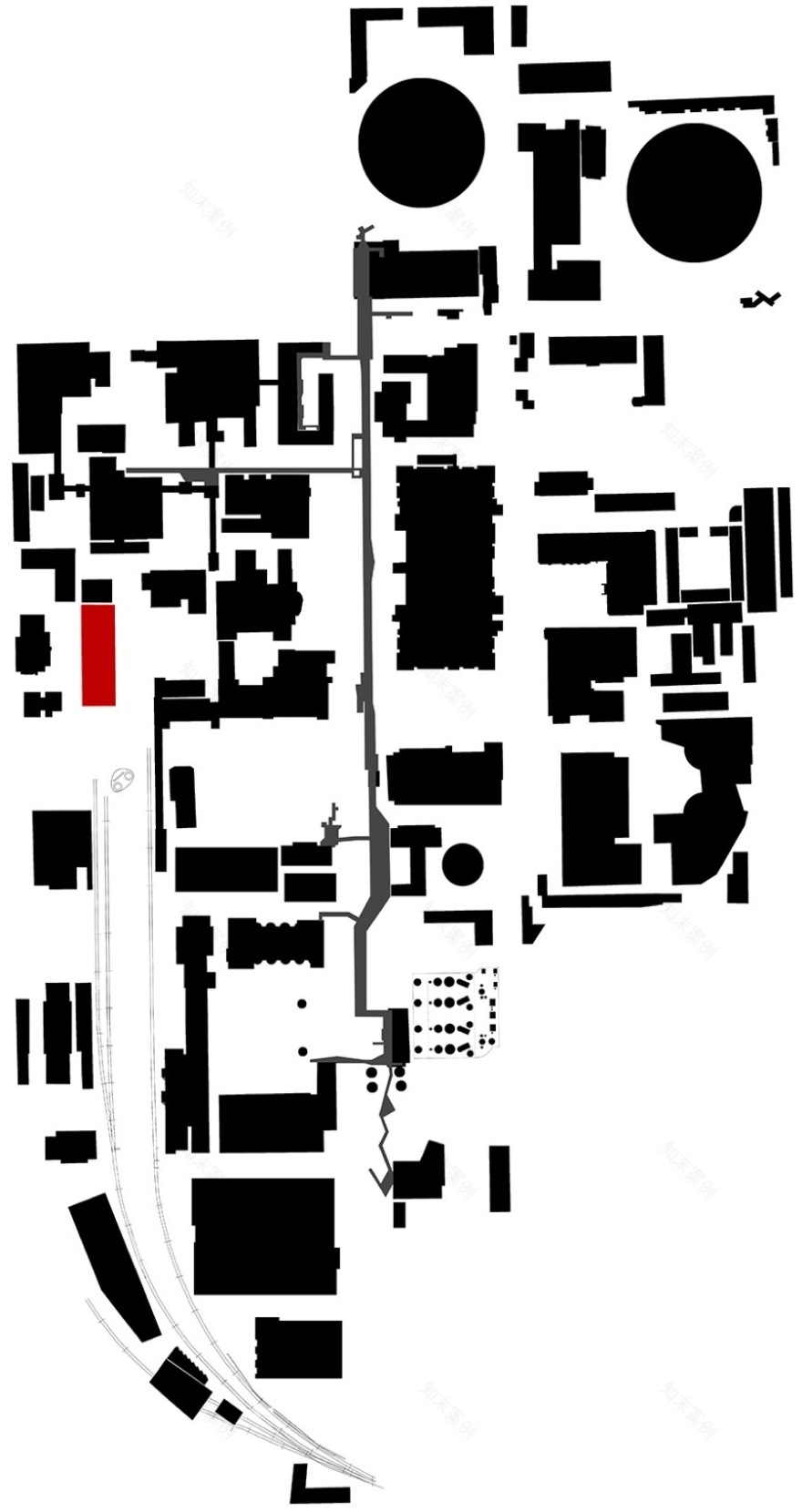
751-798 艺术区是中国最大的艺术区,是北京时装周和设计周的主场。园区始建于上世纪 50 年代,为东德援建,规模巨大的电子元件联合厂。新建的 751 图书馆处于园区内主路 798 路的尽端,面对火车头广场。原址是厂内遗留的洗灰池,上方架设的吊车是池内煤灰抓取运输的吊装设备。
The 751-798 Art District is the largest art district in China, and the main venue for Beijing Fashion Week and Design Week. Established in the 1950s with aid from East Germany, it originally housed a massive electronics component factory. The 751 Library is located at the end of 798 Road, the main road within the district, facing the Locomotive Plaza. The original site was a residual ash-washing pool from the factory, with a crane above for transporting coal ash.
▼建筑南立面,South facade of the building © 田轩昂

▼外立面灯光,Facade lighting© 周利
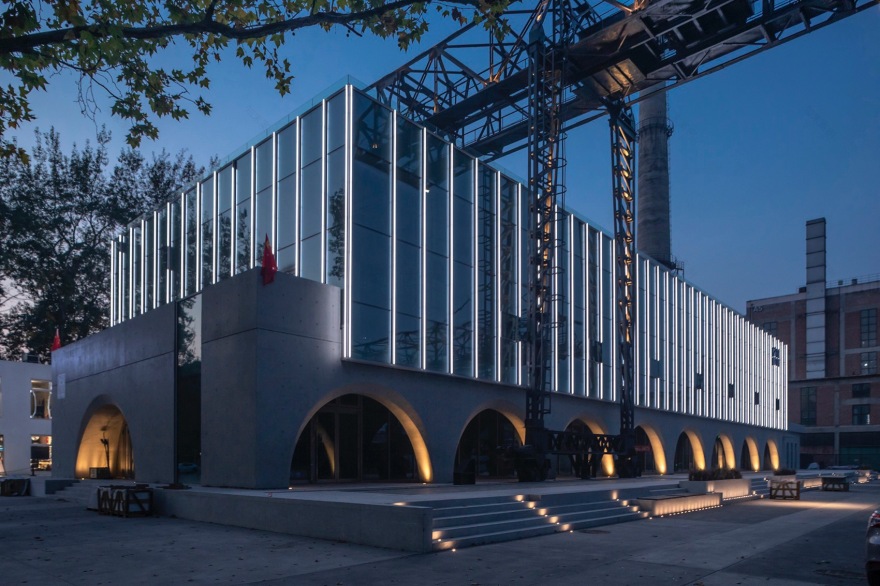
2010 年后,洗灰池和吊车停止使用,场地长时间被封闭管理,798 街 300 米长连续活跃的商业界面至尽端的火车头广场被迫中断。
▼751 园区十字商业街区交点,Intersection of 751 Park“cross”district © 度联体 建筑与艺术
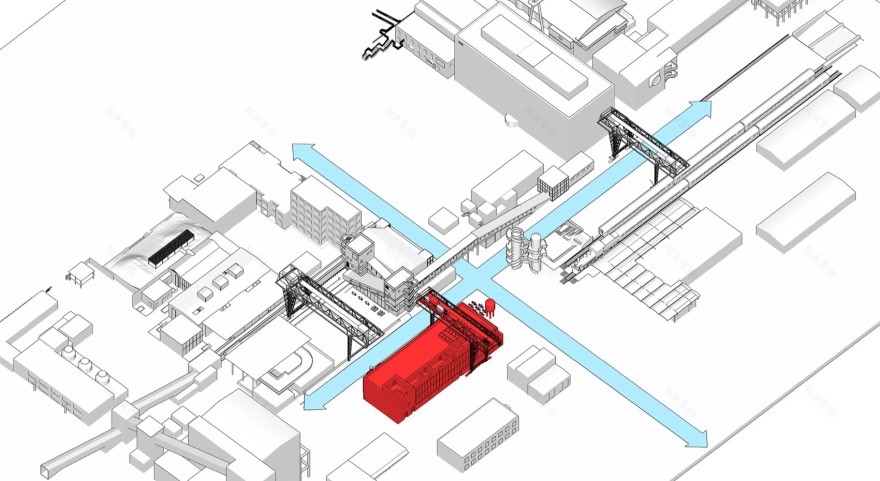
After 2010, the ash-washing pool and crane ceased operations, and the site was closed off, interrupting the continuous 300-meter-long active commercial interface of 798 Street leading to the Locomotive Plaza.
▼原洗灰池,Old ash washing tank © 度联体 建筑与艺术
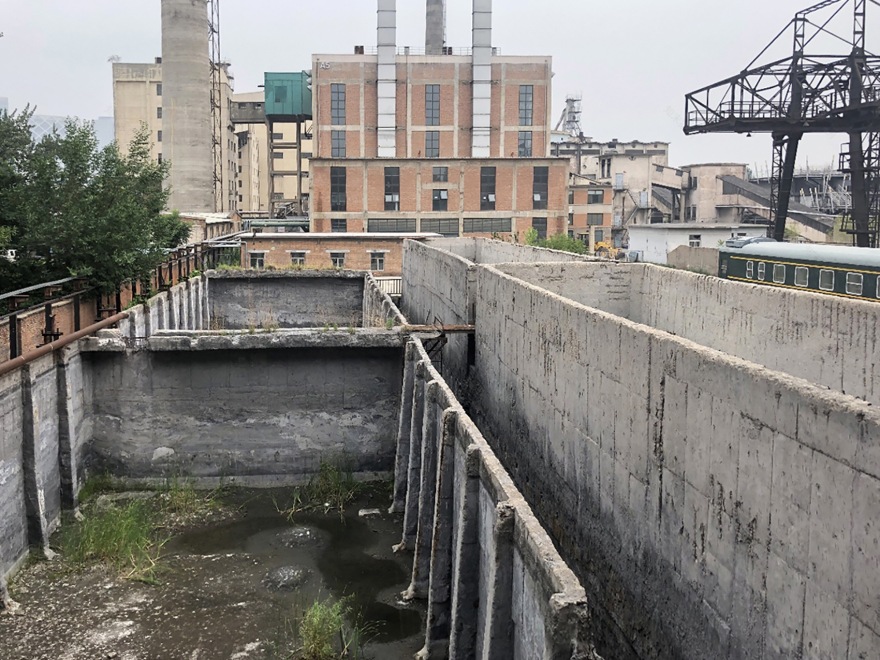

新建图书馆是火车头广场振兴的一部分,意在老的工业遗存背景下,用新建筑、综合业态、彻底开放的公共空间,创造整个园区的高潮。图书馆用地边界与原洗煤池轮廓重合,四周全部开放,与周围的输煤廊、锅炉、铁轨、天车、火车头等工业遗存交相辉映,整体景观与火车头广场融为一体,并向厂区南北“腹地”延伸,形成活跃的“十字”街区。基地内散落的工业构筑物通过新旧的补充织补,再现了既有工业肌理,同时又将工艺导向的工业布局转化为活力城市生活场景,以人性导向的方式表达了对工业文化的有机传承。
The new library is part of the revitalization of the Locomotive Plaza. It aims to create a climax for the entire district by introducing new buildings, diverse business formats, and thoroughly open public spaces against the backdrop of old industrial relics. The library’s site boundary coincides with the original outline of the coal-washing pool, and it is fully open on all sides, creating a harmonious interplay with the surrounding industrial remnants, such as the coal conveyors, boilers, tracks, overhead cranes, and locomotives. The landscape integrates with the Locomotive Square, and extends to the “hinterland” in the north and south of the whole factory area, forming an active “cross” district. The scattered industrial structures on the site are seamlessly integrated with new elements, recreating the existing industrial texture while transforming the industrial layout into a vibrant urban living scene, organically inheriting industrial culture in a human-centered manner.
▼图书馆与区域内工业遗存交相辉映,The library and the old industrial relics in the district complement each other ©田轩昂、周利


▼打造区域公共活动空间,Create public activity spaces © 周利

▼新旧对比,共同打造充满活力的十字街区,Comparing old and new, jointly creating a vibrant cross district © 周利
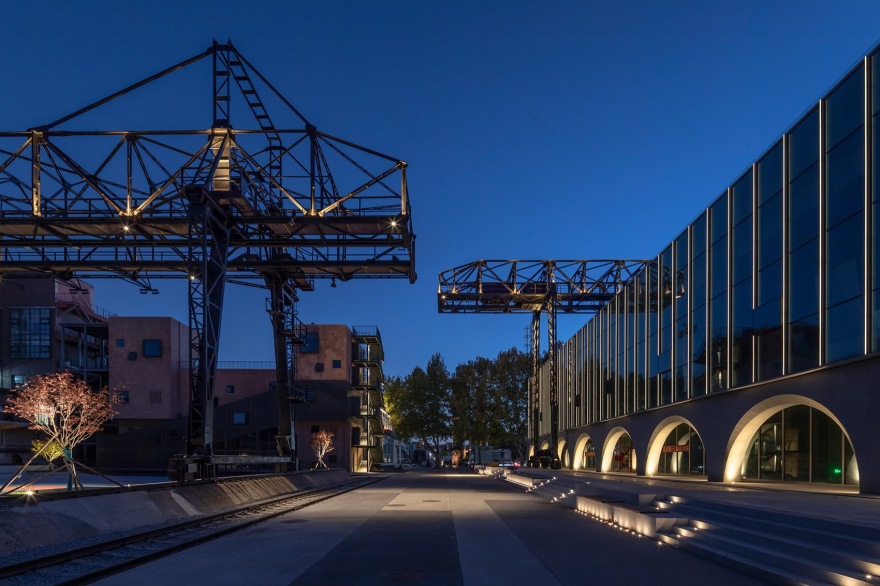
▼面向商业界面的开放公共空间,Open public spaces towards the commercial interfaces ©田轩昂

建筑以图书馆功能为主,是兼顾文化论坛、会议、咖啡餐饮等多种功能的复合型文化综合体。地上三层,地下一层。
The building primarily serves as a library function, but it is also a multi-purpose cultural complex with cultural forums, conferences, and coffee and dining facilities. It has two floors above ground and one below.
▼兼顾论坛、会议、宴会、餐饮的复合型空间,A multi-purpose cultural complex with cultural forums, conferences, and coffee and dining facilities ©田轩昂

立面采用连续的清水混凝土拱券方式与周围粗旷的工业遗迹形成对比,并将保留的天⻋与建筑结合,不仅形成了独特的建筑形象,还利用其可移动的方式与屋顶形空间成互动。玻璃幕墙和大面积天窗将室外壮观的工业景观引入室内,同时也在建筑外立面上形成映射,产生奇妙空间对话。
The facade features continuous fair-faced concrete arches that contrast with the rough industrial remnants of the neighborhood. A preserved overhead crane is integrated into the building, creating a unique architectural image and interacting with the roof-shaped space through its movement. The glass curtain wall and large skylights introduce the spectacular outdoor industrial landscape into the interior, while forming reflections with the building facade, creating a wonderful spatial dialogue.
▼兼工业遗存、玻璃幕墙、清水混凝土共同创造建筑形象,Industrial relics, glass curtain walls, and faced concrete jointly create the architectural image ©田轩昂

▼立面采用连续的清水混凝土拱券方式,The facade features continuous fair-faced concrete arches ©田轩昂

▼室内外相互渗透,创造空间异象,Indoor and outdoor infiltration creates spatial anomalies ©田轩昂


▼清水混凝土与景观水面的戏剧性对话,Dramatic dialogue between faced concrete and landscape water surface ©田轩昂

▼透明中庭空间,Transparent atrium space ©田轩昂
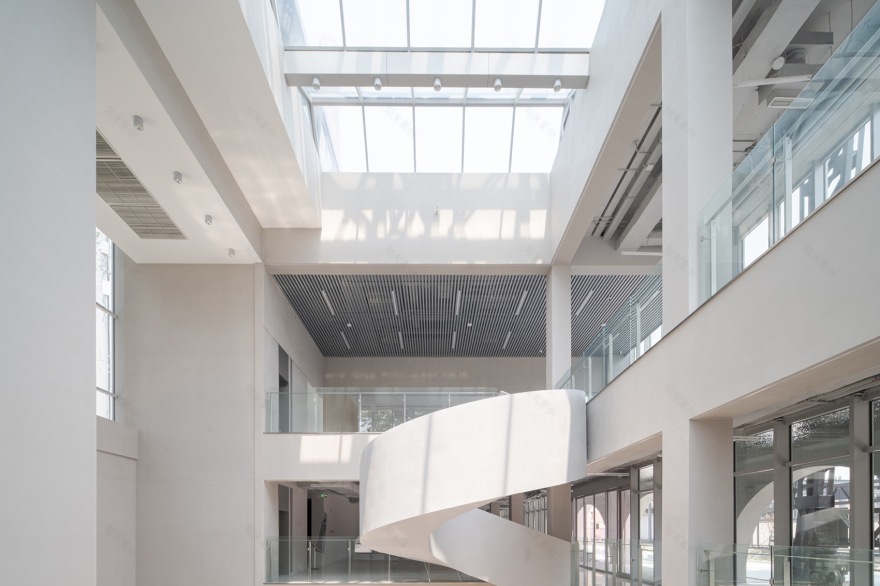
▼三层通高的中庭空间,Atrium space with three levels of height ©田轩昂
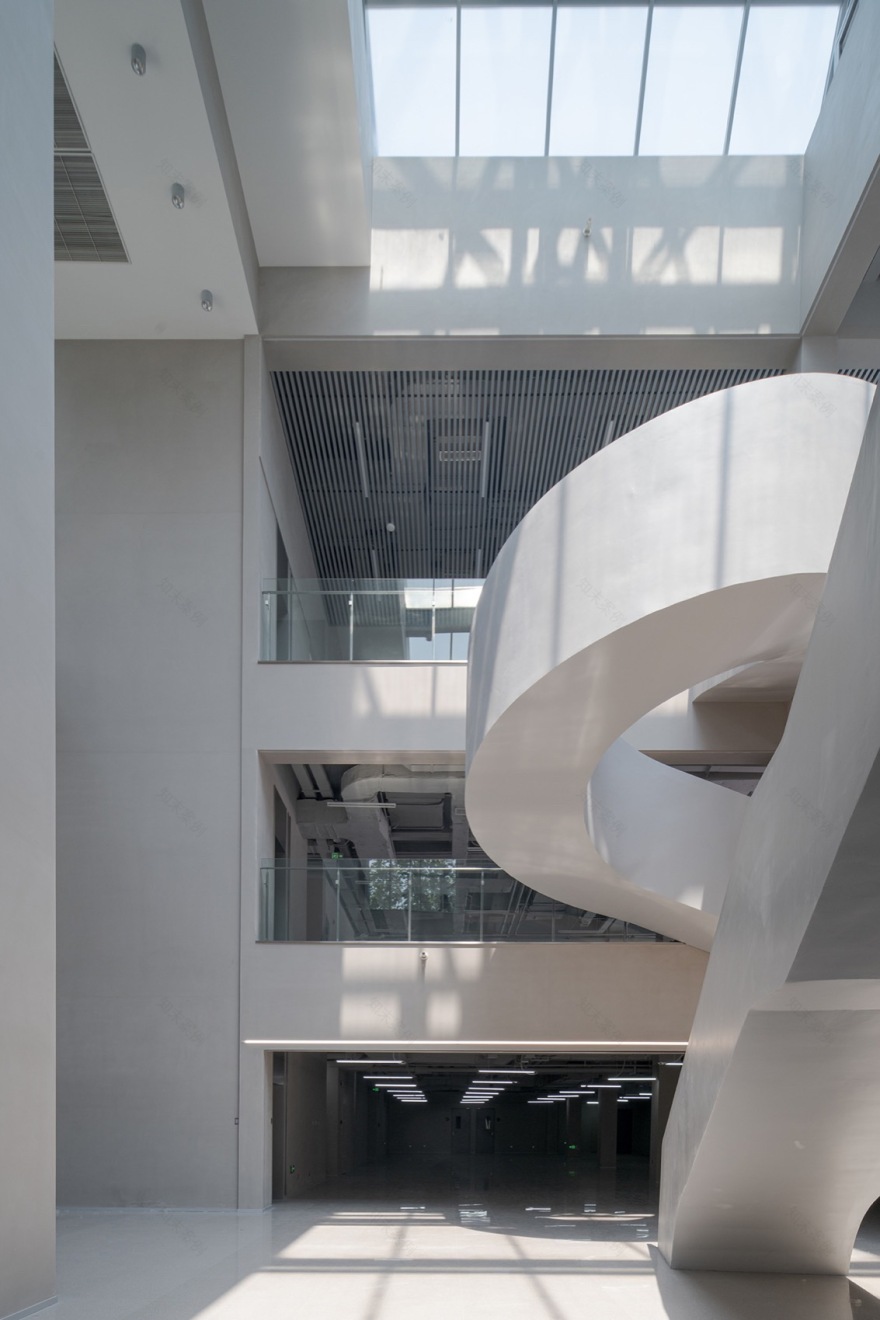
▼室内楼梯细部,Interior staircase details ©田轩昂

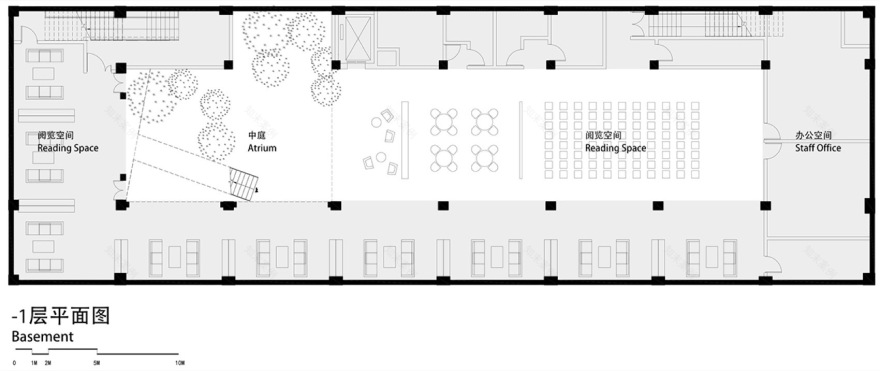
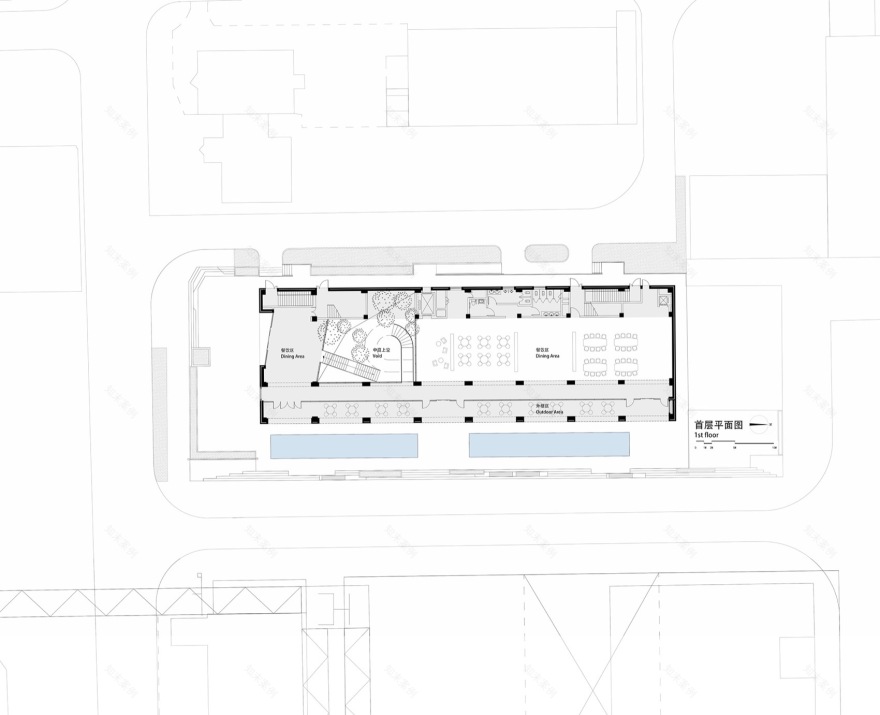
室内设计追求最大的空间开放性,将地下一层的一半的空间打开,创造一个 3 层通高的几乎全透明空间,室外的丰富工业景观最大可能地渗透进室内,在紧凑的空间内重组,创造意外的戏剧性。
The interior design aims to maximize spatial openness by opening up half of the ground floor, creating a three-story, nearly fully transparent space. The rich industrial landscape outside penetrates into the interior to the maximum extent, reorganized within a compact space to produce an unexpected dramatic effect.
▼区域位置,District location © 度联体 建筑与艺术
▼地下空间,Underground floor plan ©度联体 建筑与艺术
▼首层空间,Ground floor plan©度联体 建筑与艺术
▼二层空间,Second floor plan ©度联体 建筑与艺术

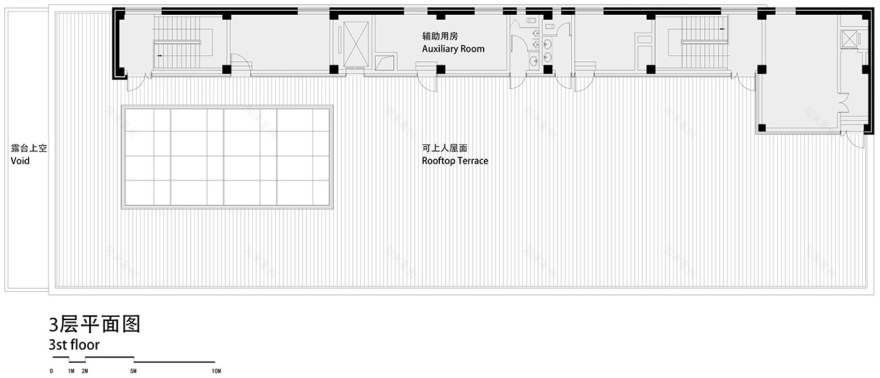
▼三层空间,Third floor plan ©度联体 建筑与艺术
▼剖面图,Section©度联体 建筑与艺术

项目信息
北京 751 图书馆
中国 北京
2020-2024
业主:北京正东电子动力集团有限公司
类型 :图书馆综合体
占地面积:8000 平方米
建筑面积:2700 平方米
地下:910 平方米
地上:1790 平方米
建筑师:程大鹏
设计团队:刘凯 王泽玉 王晨曦
设计顾问:吴文一
合作设计院:北京本土建筑有限公司
照明设计:栋梁国际照明设计(北京)中心有限公司(安红江 邵振华 李晨 魏燕萌)
摄影师:田轩昂 周利
Project Name: Beijing 751 Library
Location: Beijing China
Timeline: 2020-2024
Clients: Beijing Zhengdong Group
Project Type: Cultural Architecture
Gross Built Area: 2700㎡
Architectural Design: DO UNION
Architect:ChengDapeng
Designer Team: LiuKai, WangZeyu, WangChenxi
Design Consultant: WuWenyi
Partner: Bentu Architecture Design Co.
Lighting Design : TORYO INTERNAHIONAL LIGHTING DESIGN CENTER
(An Hongjiang, Shao Denghua, Li Chen, Wei Yanmeng)
Photo Credits: Tian Xuanang, Zhou Li


南京喵熊网络科技有限公司 苏ICP备18050492号-4知末 © 2018—2020 . All photos and trademark graphics are copyrighted by their owners.增值电信业务经营许可证(ICP)苏B2-20201444 苏公网安备 32011302321234号
苏公网安备 32011302321234号客服
消息
收藏
下载
最近