

创作上传
VIP
收藏下载
登录 | 注册有礼
查看完整案例

收藏

下载

分享
可持续设计
Sustainability Statement
本项目的主要设计目标是减少所使用材料的数目和体量,在此基础上塑造一座简约且坚固的建筑,并能够充分展示材料各自的特征。例如,设计者在空间中设置了内门,这一设计在空间中形成了一系列自由流动的独特空间。他们将木梁和OSB护套板裸露在外侧,外墙并没有使用木板和油漆材质,而是采用了砌块表面。
A key ambition at Triangle House was to reduce the number and volume of materials, resulting in a lean yet robust building with a distinctive material character. For example, internal doors were designed out, resulting in a series of free-flowing yet distinct spaces. Timber beams and OSB sheathing board are exposed to the soffit, and blockwork surfaces to external walls celebrated rather than boarded and painted.
▼项目概览,Overall view © Lorenzo Zandri

▼夜览,NIght view © Lorenzo Zandri

▼远观,Distant view © Lorenzo Zandri

▼入口处,Entrance © Lorenzo Zandri

▼立面近景,Close view © Lorenzo Zandri

▼屋檐下的绿植,Green plants under the eaves © Lorenzo Zandri

最重要的一点是,设计者探索了一种高效的外墙建造方式。目前英国地区默认的墙体结构为空心强结构,外墙使用砌块,内墙私用砌块、石膏板和油漆。而本项目采用了140毫米单层空心砌块,外墙使用了矿棉和抹灰,能够起到保温的作用。内墙墙体较薄,起到界定空间的作用。这种设计手法减少了50%所需砌体量,大大减少了碳排放量,和相关供应商的运输量,简化了施工、降低了成本。在本项目中,墙体减薄90毫米后,能够在相同的面积中减少墙体的数量。
▼轴测图,axo © Artefact

▼立面拼贴,collage © Artefact

Crucially, the project explores an efficient way of building external walls. Cavity wall construction remains the default in the UK with facing brick to the exterior, and an inner leaf of block, plasterboard and paint. Triangle House was constructed from a 140mm single leaf of hollow blockwork, sourced from the UK, with mineral wool insulation and render to the outside. The internal walls act as ‘piers’ to allow the walls to remain thin whilst defining the spaces. This strategy reduces the volume of masonry required by over 50%, brings down the embodied carbon, reduces the transport associated with two suppliers, simplifies the construction, lowers the cost and thins the wall by 90mm, allowing you to build less to achieve the same area.
▼立面开窗,Windows © Lorenzo Zandri


▼室内空间概览,Overall view of interior space © Lorenzo Zandri

▼餐厅,Dining area © Lorenzo Zandri
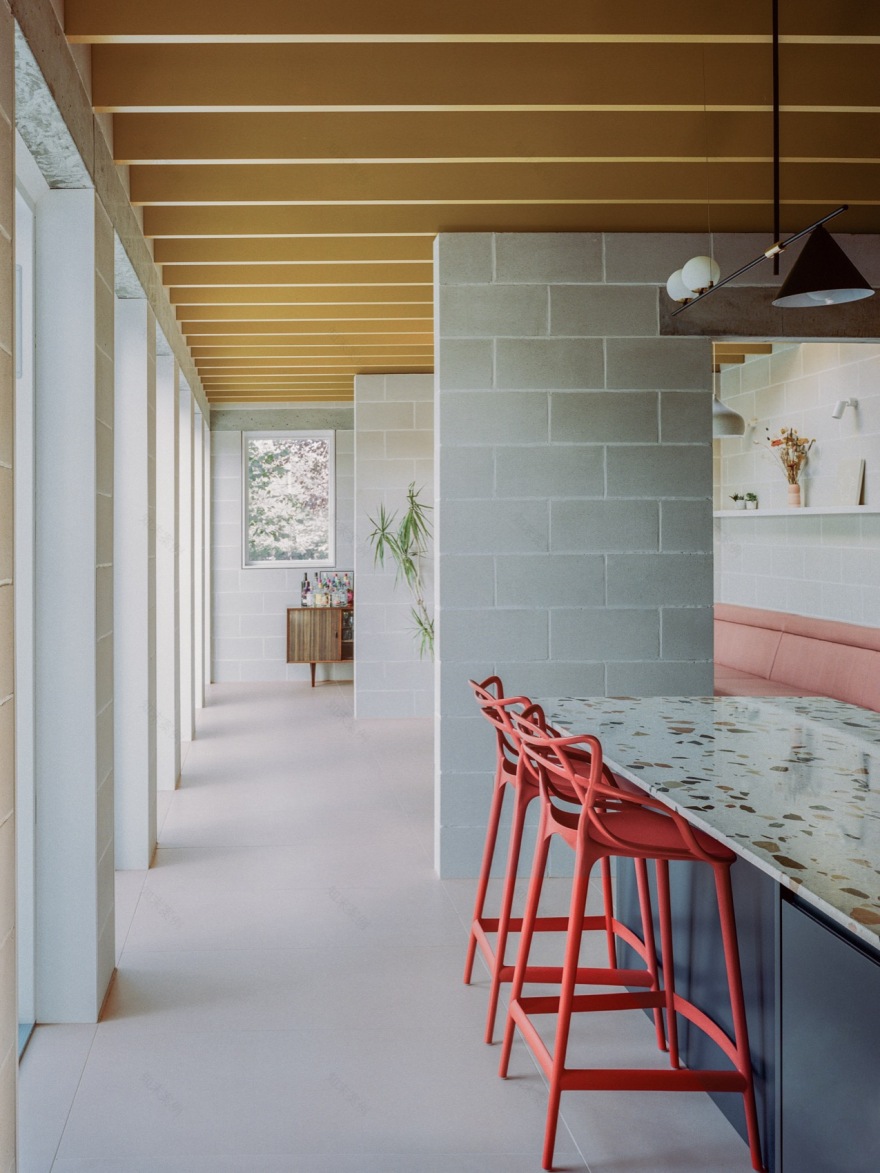
▼厨房,Kitchen © Lorenzo Zandri
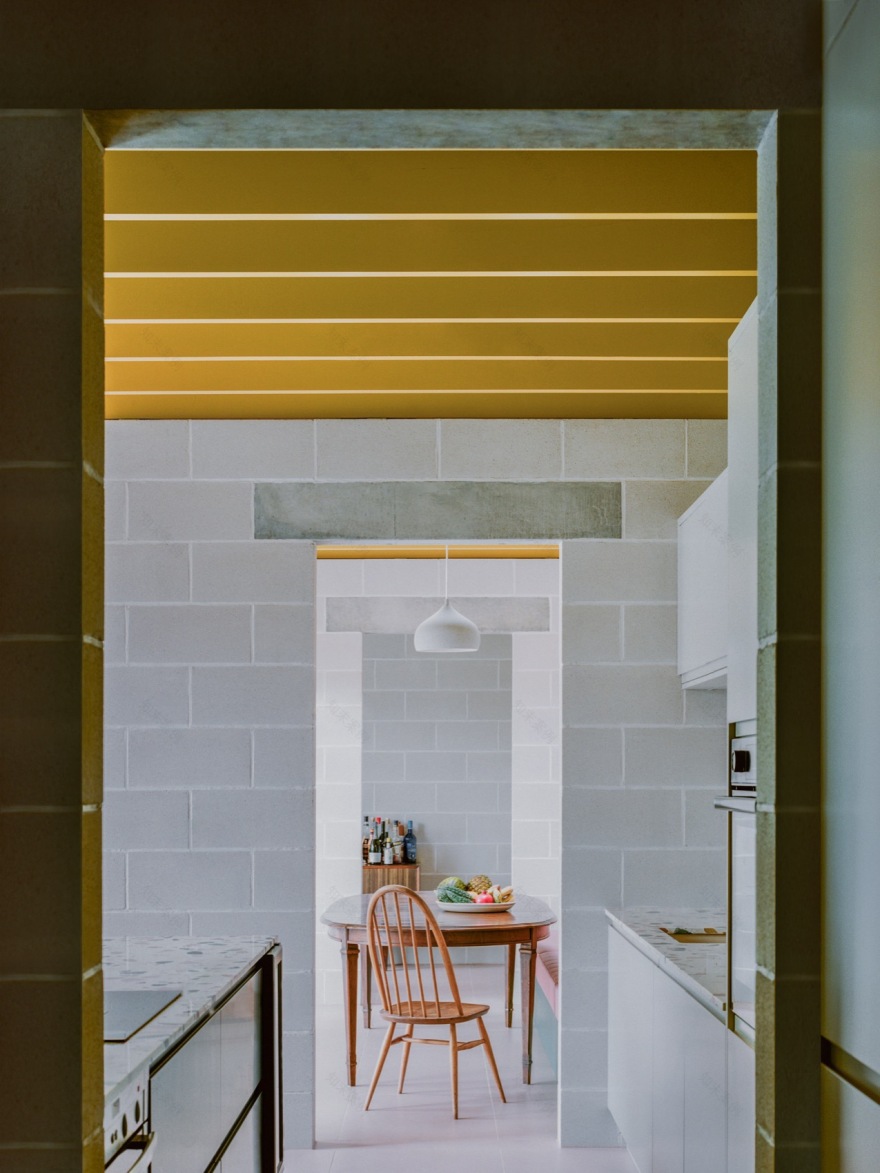
▼起居空间,Living space © Lorenzo Zandri
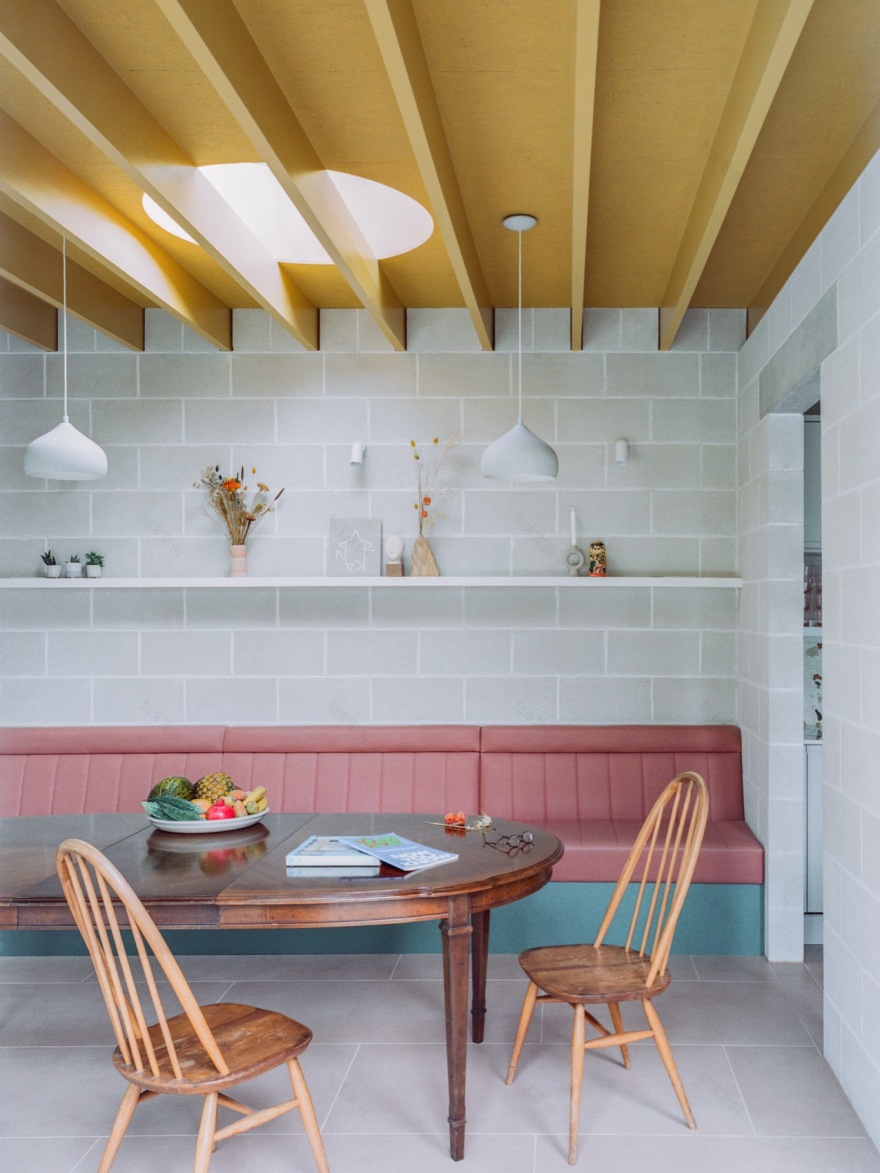

建筑师的陈述
Architect’s Statement
Daniel Marmot, Director, Artefact
设计者在首次来到现场时时一个春日,他们坐在室外花园,沐浴在午后的阳光中与业主共同与讨论这个项目。原有建筑的后侧有一个朝北的部分,现场非常糟糕,其室内空间阴暗,花园的状况也比较差。设计者拆除来这个扩建的部分,重新打造了一个可以可以享受充足光照的新翼楼,还调整了花园的结构,赋予了这栋建筑新的功能。
▼立面细节,facade detials © Artefact
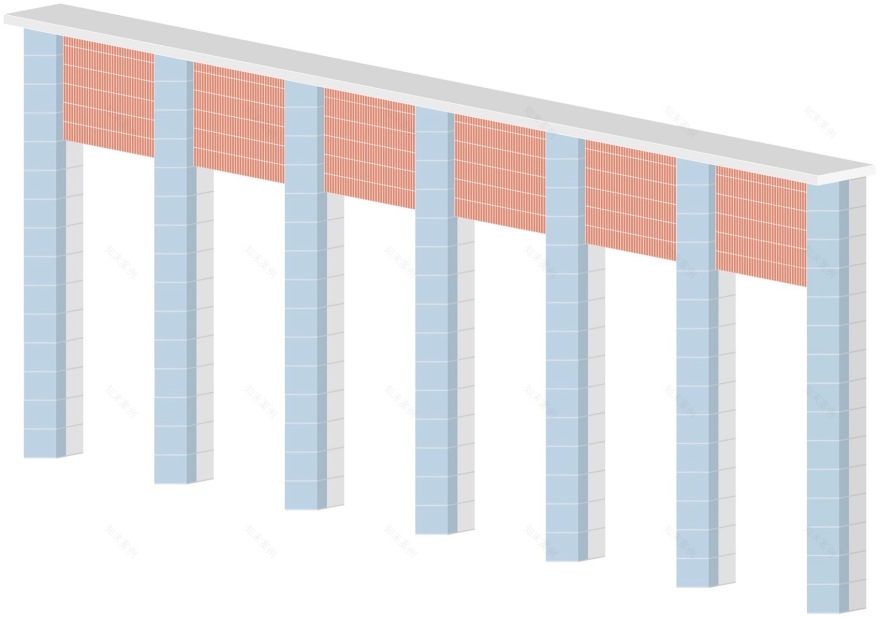
▼雨棚细节,canopy detail © Artefact

When we first visited the site on a spring day, we sat outside at the back of the garden, discussing the project with our clients in the late afternoon sun. The original house had a poorly constructed north-facing extension at the back, resulting in gloomy spaces inside and an awkward, shady garden. By removing the extension and constructing a new wing to the house that extends into the afternoon sun, we re-proportioned the garden and changed the way the house functions.
▼薄墙用作空间隔断,Thin walls used as space dividers © Lorenzo Zandri
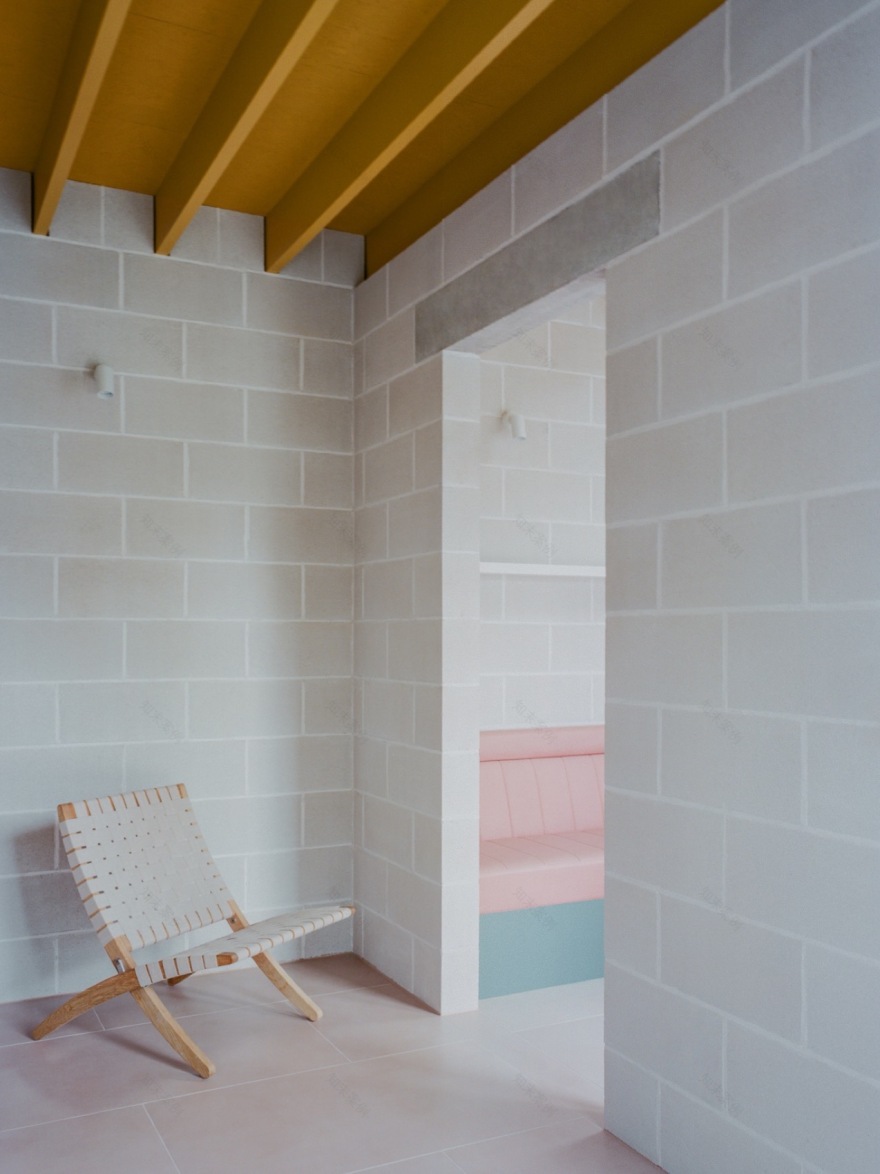
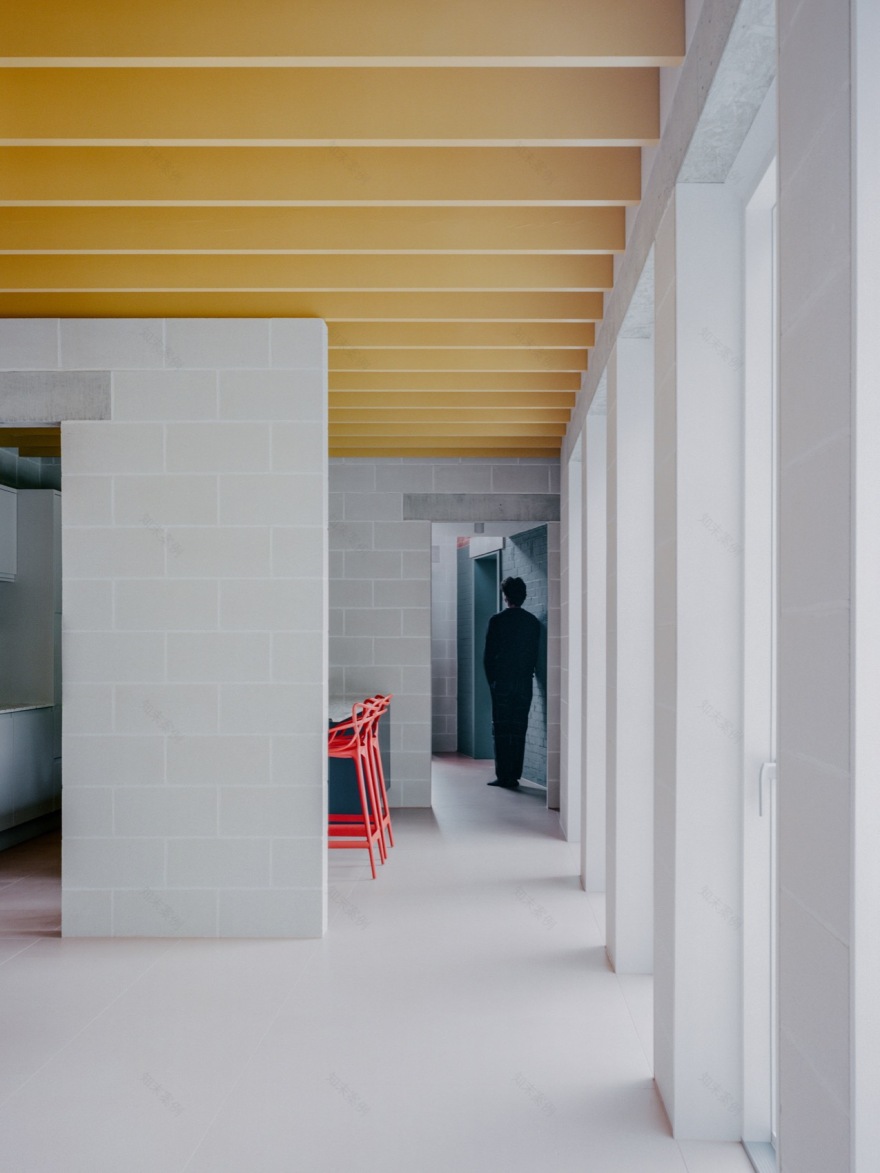
▼从室内看向开窗,Looking at the window from interior space © Lorenzo Zandri

▼走廊空间,Corrdior © Lorenzo Zandri

业主并不喜欢开放式的厨房和起居空间,所以设计者打造了一系列独特的空间布局,并通过内门,将视野从一个空间连接到另一个空间。起居空间与一个大型露台相连,业主能够在此欣赏到落日的美景,他们称这个露台为“Club Tropicana”。花园部分采用了缤纷的色调和Phenomena的设计。最终本项目呈现为一座欢乐、便利的住宅,这在英国郊区的环境中独树一帜。
The client was keen to avoid open plan kitchen and living spaces. Our design created a series of spaces that feel distinct yet connected with openings that frame views from one space to the next. These living space spill onto a large terrace for entertaining in the sunset that the client has nicknamed ‘Club Tropicana’. With a colourful material palette and tropical garden design by Phenomena, we aimed to create an optimistic, transportative house that feels very unusual in a suburban UK setting.
▼项目区位,site plan © Artefact
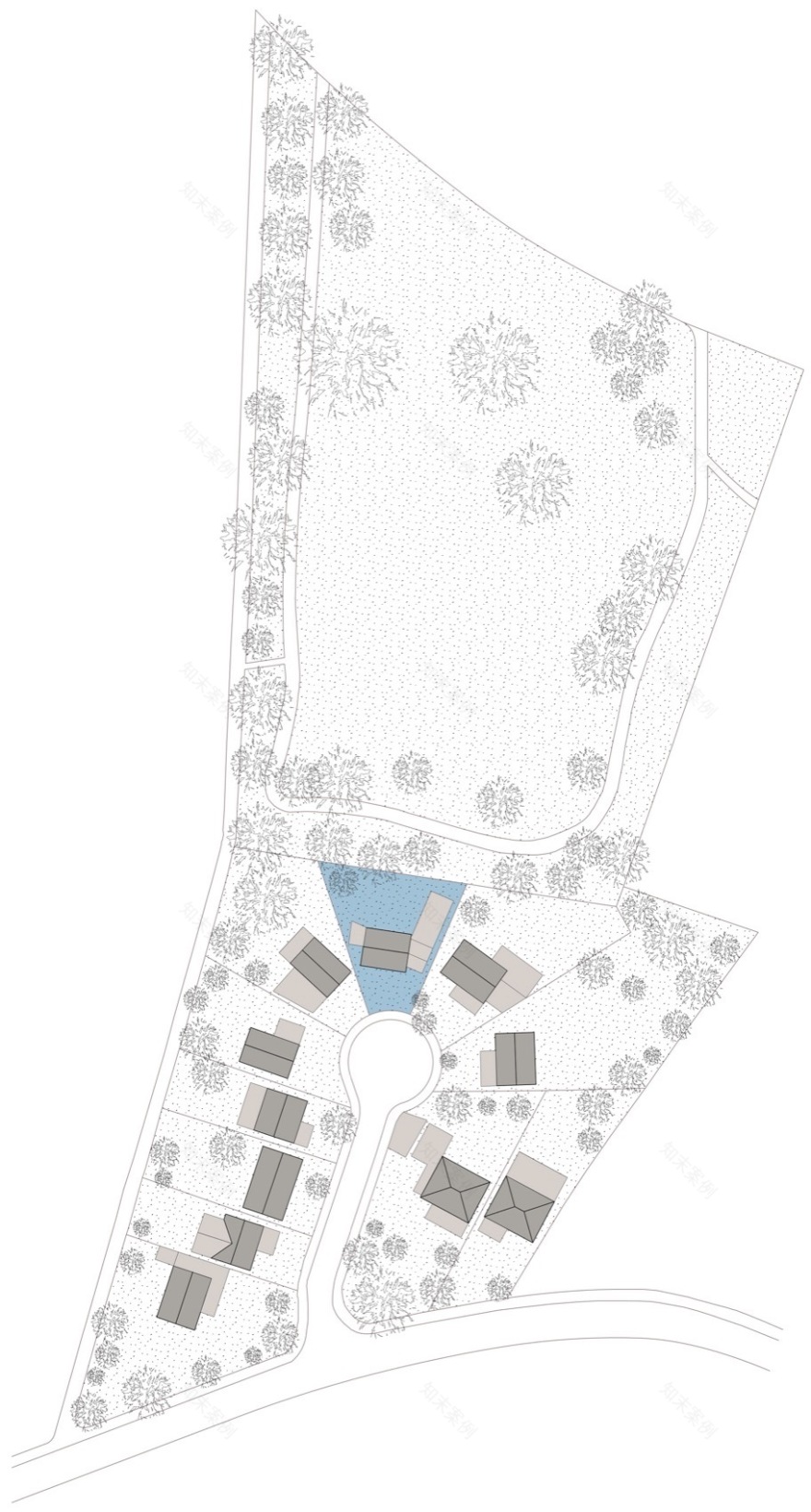
▼首层平面图,ground floor plan © Artefact

▼一层平面图,first floor plan © Artefact

▼细节平面图,detailed Plan © Artefact

Team
Architect: Artefact
Instagram: @artefact__studio
Contractor: JB Building London Ltd
Structural Engineer: Simple Works
Instagram: @simple__works
Photography: Lorenzo Zandri
Instagram: @ lorenzozandri

南京喵熊网络科技有限公司 苏ICP备18050492号-4知末 © 2018—2020 . All photos and trademark graphics are copyrighted by their owners.增值电信业务经营许可证(ICP)苏B2-20201444 苏公网安备 32011302321234号
苏公网安备 32011302321234号客服
消息
收藏
下载
最近