

创作上传
VIP
收藏下载
登录 | 注册有礼
查看完整案例

收藏

下载

分享
项目坐落于攀枝花市联合村的一处远山之地,建筑由停用的村委会和小学校拆建改建。
The project is located in a remote mountainous area called Lianhe Village, Panzhihua City; the building is a renovated and reconstructed structure from a disused village committee and primary school.
▼项目鸟瞰,aerial view© 存在建筑

▼图书馆立面,library facade© 存在建筑


联合村同大多数乡村一样,在历史的进程中,都不可避免地遭受空心化之痛。来到现场,时间仿佛停留在了上一个乡村的时代,村官办公室的忙碌和学生的朗读犹在眼前耳边,但年久失修的简易房屋却已然成为危房。这似乎是时间留于此处的一片遗迹,既是物质性的遗迹,也是文化性的遗迹。我们的建造便是在这片遗迹之上开展。
▼原装与改造后鸟瞰,aerial views of the existed buildings and renovated buildings© 存在建筑、合造社

Like most villages, Lianhe Village has inevitably suffered from the pain of hollowing out in the course of history. Upon arrival at the site, it seems as if time has stood still in the era of the previous village. The bustle of the village official’s office and the reading of students are still vivid in my mind and ears, but the simple houses that have been in disrepair for years have become dangerous buildings. This seems to be a relic left behind by time, both materially and culturally. Our construction is carried out over this relic.
▼图书馆外观,library exterior© 存在建筑


▼图书馆入口,library entrance© 存在建筑

▼连接两个院子的通道,pathway connecting the two courtyards© 存在建筑

在新的乡村振兴的背景之下,这里将成为当地打造“和美乡村”计划中的启动区,由厨房餐厅、博物馆、户外会客厅、图书馆四个公共空间组成,分别对应了原建筑中的教师校舍、村委会办公室、村民晒谷场、小学教室三栋一坝的建筑空间。
In the context of the new rural revitalization initiative, this area will serve as the starting point for the local plan to create a “harmonious and beautiful countryside”. It comprises four public spaces: a kitchen restaurant, a small local museum, an outdoor living room, and a library. These correspond to the architectural spaces of the former buildings, namely the teachers’ dormitory, the village committee office, the villagers’ grain drying yard, and the primary school classroom, which were arranged in a “three buildings, one dam” configuration.
▼远眺博物馆与餐厅,distant view of the museum and restaurant© 存在建筑

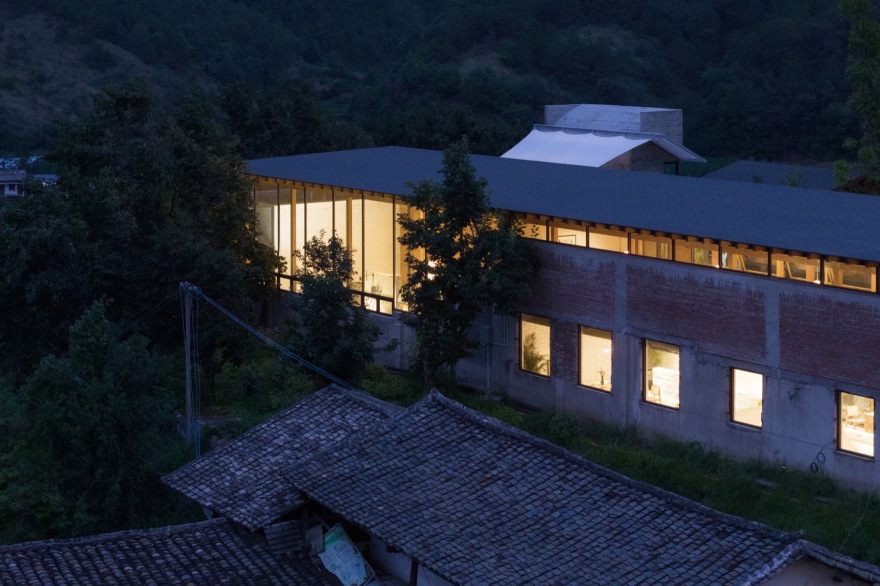

建造的策略来自现场所建立的直觉,即在遗迹中建造。我们希望新的建造是历史的一种延续,而非抛弃,即便旧的建筑已无法适应新的功能。我们保留了现场尚能使用的建筑结构,但将旧建筑中危房的结构板拆除,保留其原先的砖混结构的墙基。而新的建筑结构为木结构体系,建造在原有结构墙基之间的空白处,形成完整独立的新体系。于是,当完成建造之时,整个建筑便拥有了两套相互交织的轴线体系,一套是新建筑的木结构体系,它支撑了整个建筑,并为室内功能留出了自由空间划分的可能性;而另一套轴线来自于老的砖混结构的墙基,它同样参与到了室内功能的格局,成为功能划分的一项重要线索,同时也给历史和记忆留出空间。
The strategy of construction stems from the intuition established on site, which is to build over the relics. We hope that the new construction is a continuation of history, rather than a rejection, even if the old buildings are no longer suitable for new functions. We have retained the usable building structures on site, but removed the structural panels of the dangerous buildings in the old buildings, while preserving their original brick-concrete structure wall foundations. The new building structure is a wooden structure system, constructed in the blank spaces between the original structural wall foundations, forming a complete and independent new system. Therefore, upon completion of construction, the entire building will have two sets of intertwined axis systems: one is the wooden structure system of the new building, which supports the entire building and leaves room for the possibility of free space division for indoor functions; the other set of axes comes from the old brick-concrete structure wall foundations, which also participates in the layout of indoor functions, becoming an important clue for functional division, while also leaving space for history and memory.
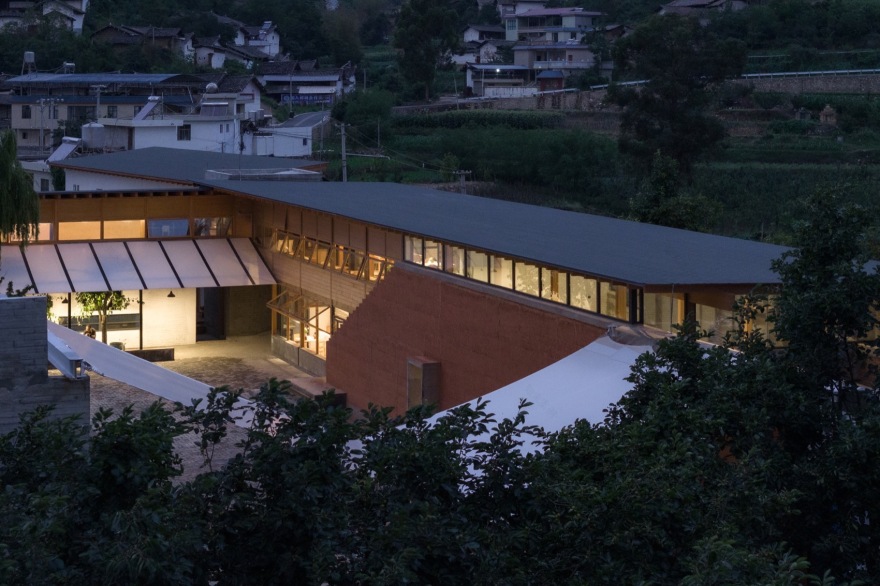
▼内院鸟瞰,courtyard aerial view© 存在建筑

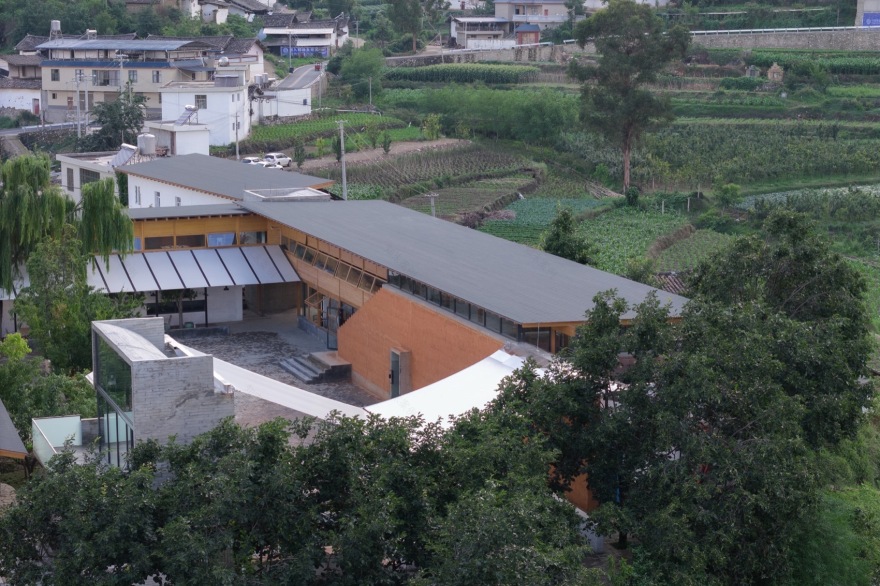
▼内院鸟瞰夜景,courtyard aerial view at night© 存在建筑


▼厨房餐厅外观,kitchen and restaurant exterior© 存在建筑
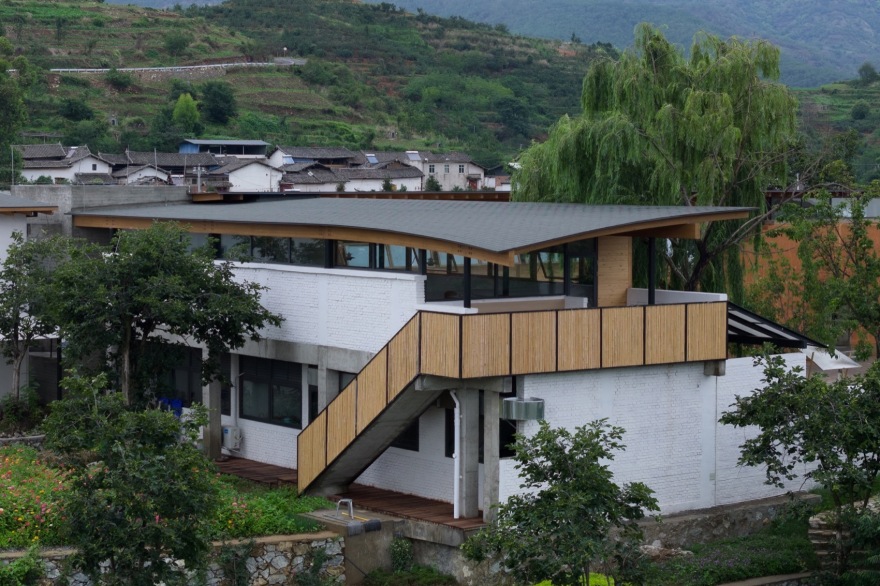

▼庭院围墙,courtyard fence© 存在建筑
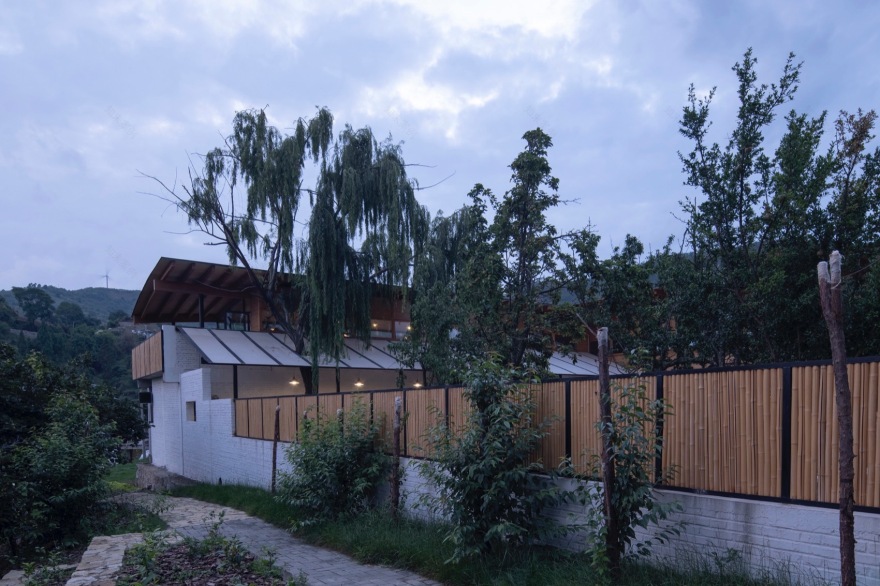
▼庭院概览,courtyard overview© 存在建筑
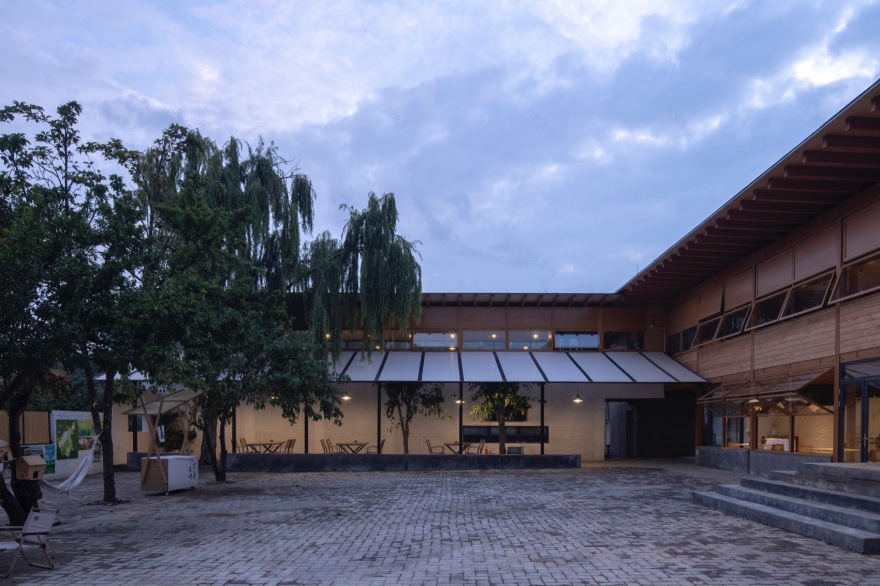


▼一瞥,a glimpse© 存在建筑

▼细部,details© 存在建筑

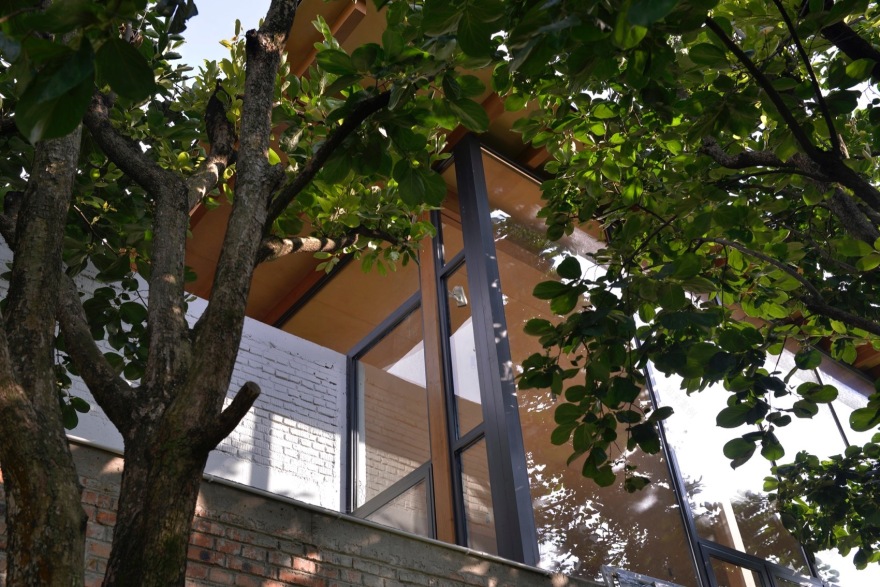
历史与现在的两套轴线,犹如在平行时空中对话,交织在一起,建造于你中有我,我中有你之处。
The two sets of axes, representing history and the present, are like a dialogue in parallel space-time, intertwined and constructed in a place where you are within me and I am within you.
▼餐厅室内,restaurnar interior© 存在建筑


▼餐厅室内,restaurnar interior© 存在建筑

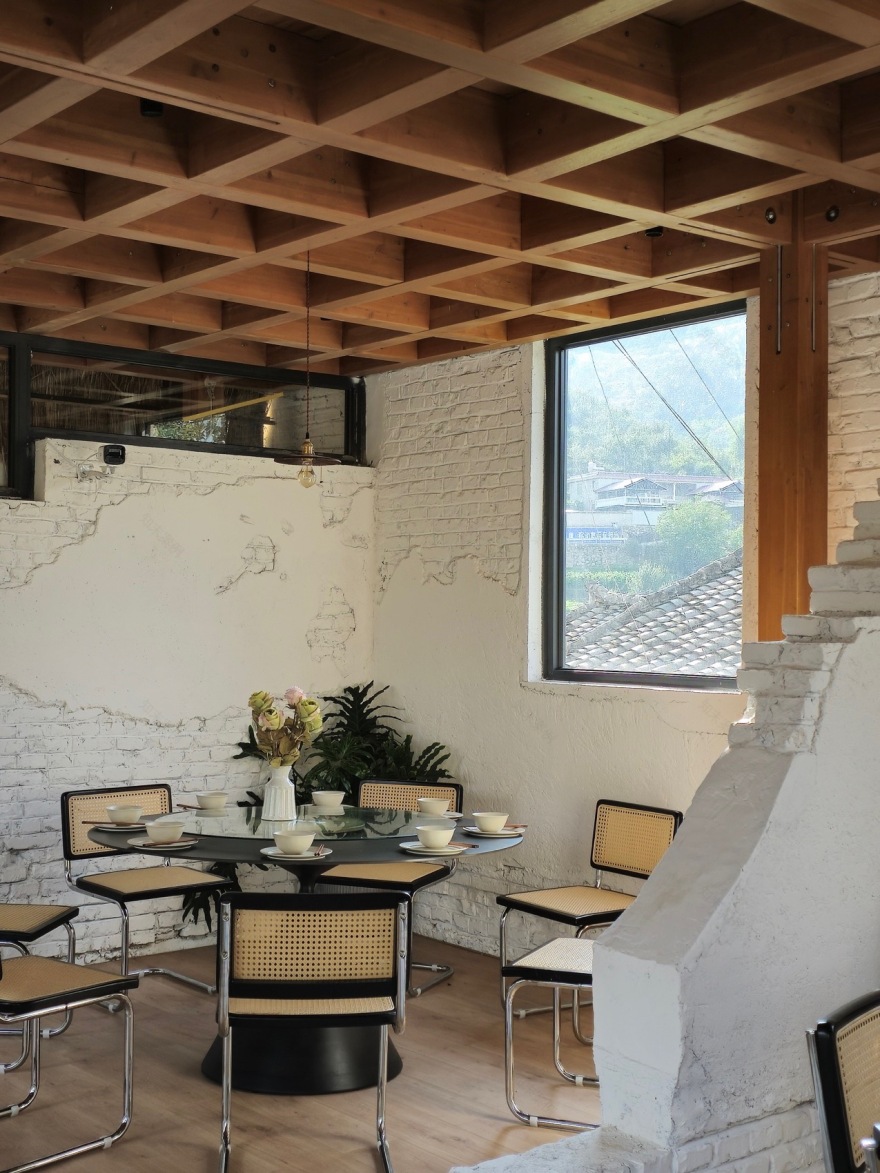
▼博物馆室内,museum interior© 存在建筑


在主体建筑之外,我们还在场地的缝隙处建造了两座清水混凝土的小塔,分别是“握手塔”和“迎客塔”。新建筑的木结构与旧建筑的砖混结构在“握手塔”实现结构的交汇与搭接。迎客塔位于山头的边沿,面向村口,作迎客之势,也成为半户外会客厅的薄膜屋顶的张拉锚点。
Beyond the main building, we constructed two small towers made of as-cast concrete at the gaps in the site, named “Handshake Tower” and “Welcome Tower”. The wooden structure of the new building intersects and overlaps with the brick-concrete structure of the old building at the “Handshake Tower”. The Welcome Tower, located at the edge of the hilltop facing the entrance of the village, serves as a welcoming gesture and also functions as the tension anchor point for the membrane roof of the semi-outdoor living room.
▼握手塔鸟瞰,aerial view of the Handshake Tower© 存在建筑

▼握手塔概览,Handshake Tower overview© 存在建筑


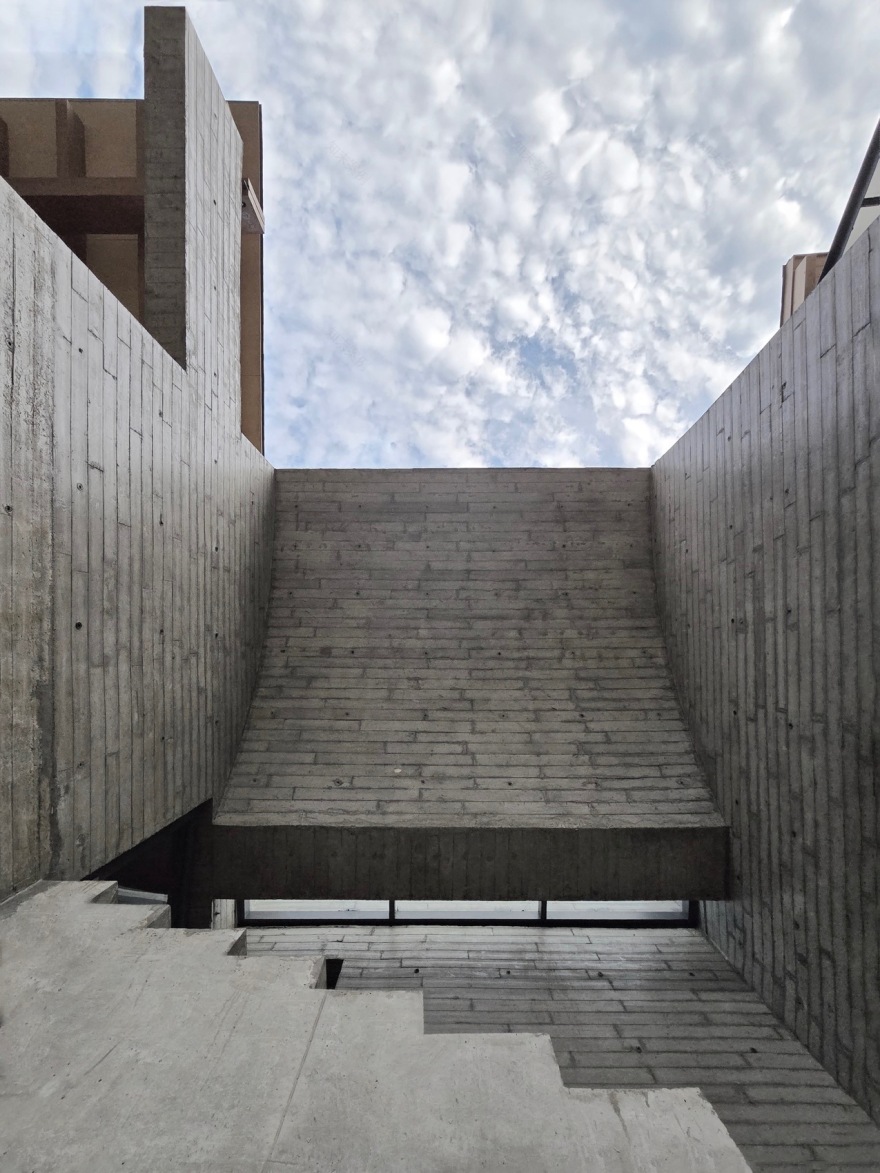
▼握手塔细部,Handshake Tower details© 存在建筑

▼迎客塔鸟瞰,Welcome Tower aerial view© 存在建筑

▼迎客塔,Welcome Tower © 存在建筑

整个建筑的清水混凝土和土建部分均由当地村民建造,而现代木结构和钢膜结构的部分则由工厂定制生产后现场组装。传统的手造施工与工业体系下的新型建造也再次交织,你中有我,我中有你。
The entire building’s exposed concrete and civil engineering parts were constructed by local villagers, while the modern wooden structure and steel membrane structure parts were customized and produced in a factory before being assembled on site. Traditional handmade construction and new construction under the industrial system are once again intertwined, with each incorporating elements of the other.
▼图书馆入口,library entrance© 存在建筑

▼细部,close-up© 存在建筑
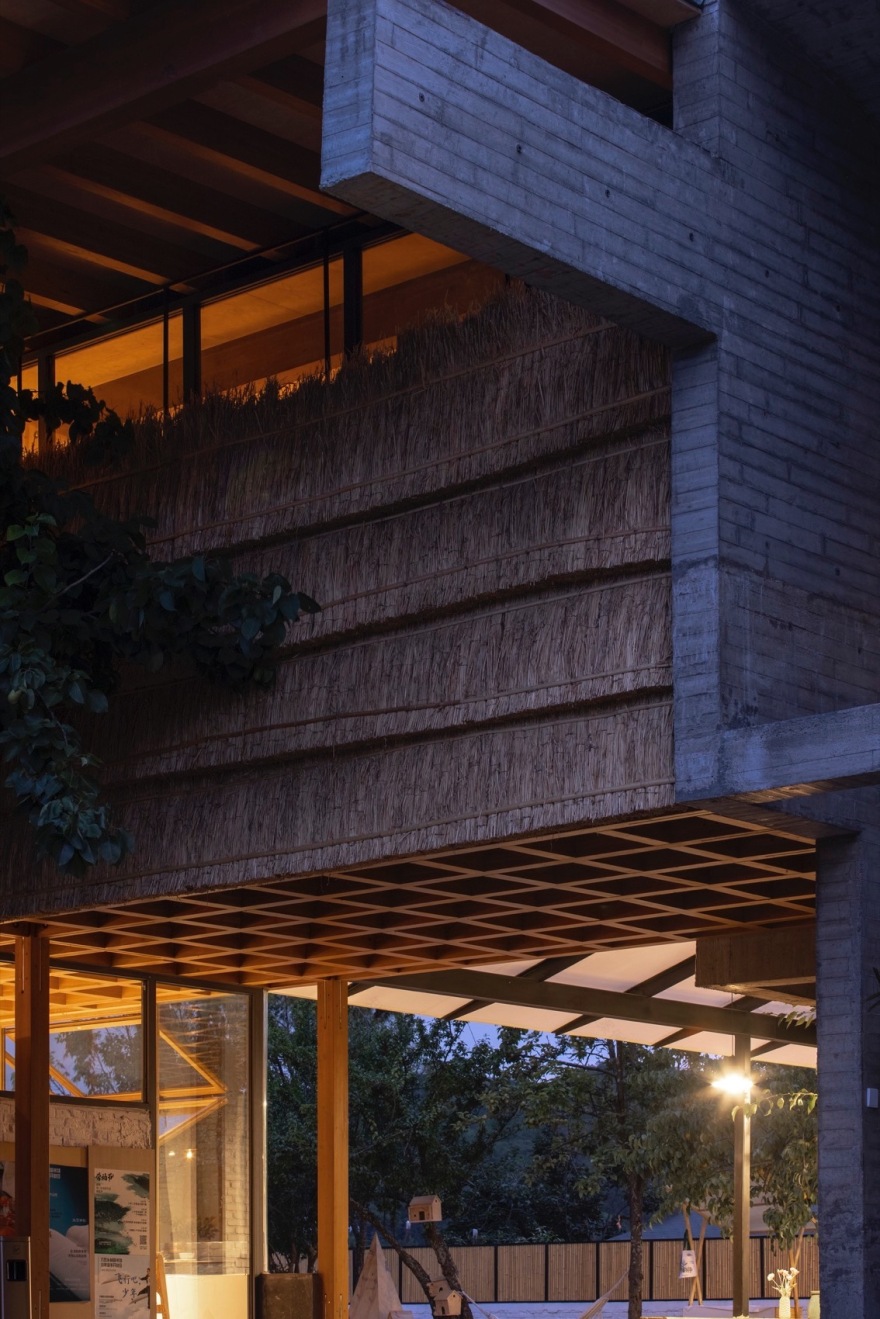
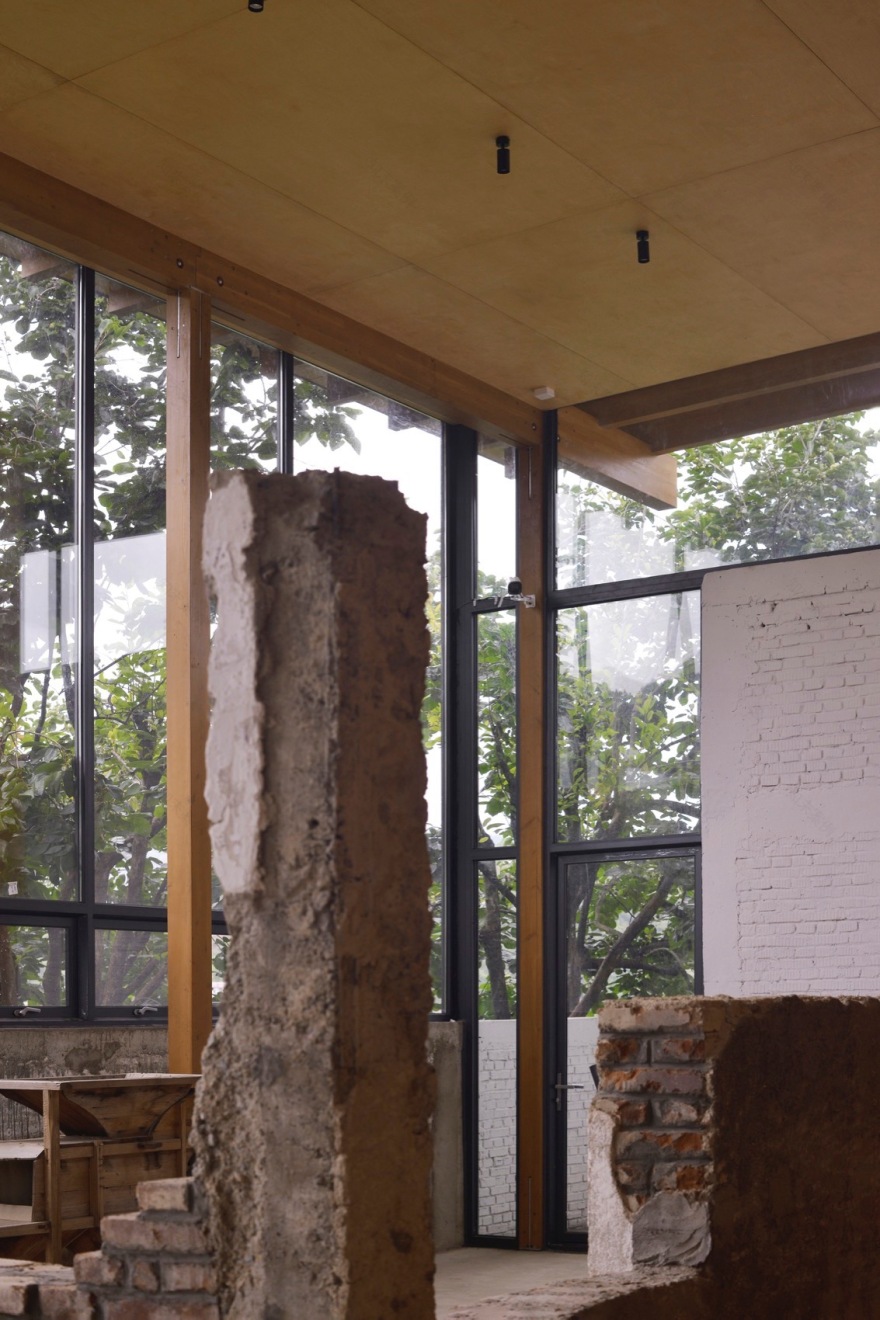
▼图书馆一角,library intererior© 存在建筑
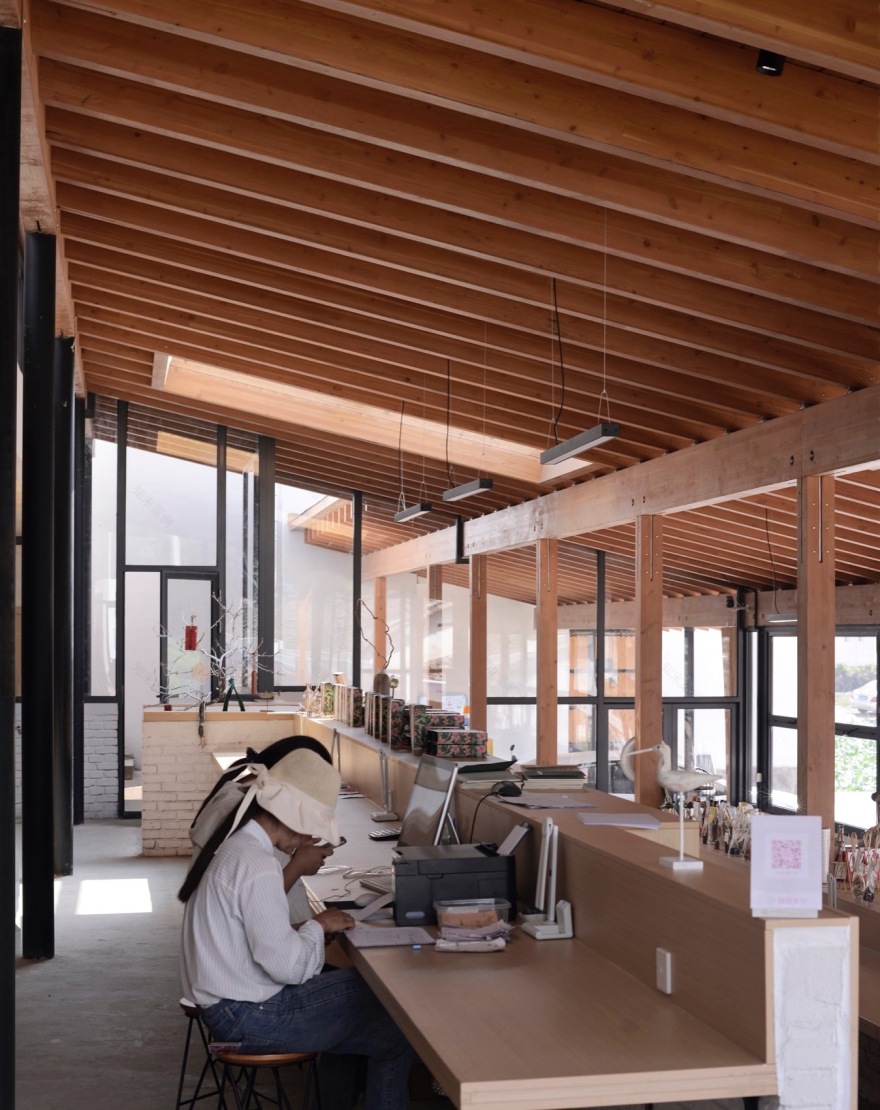
▼图书馆室内概览,library interior overview© 存在建筑

▼模型,models© 合造社

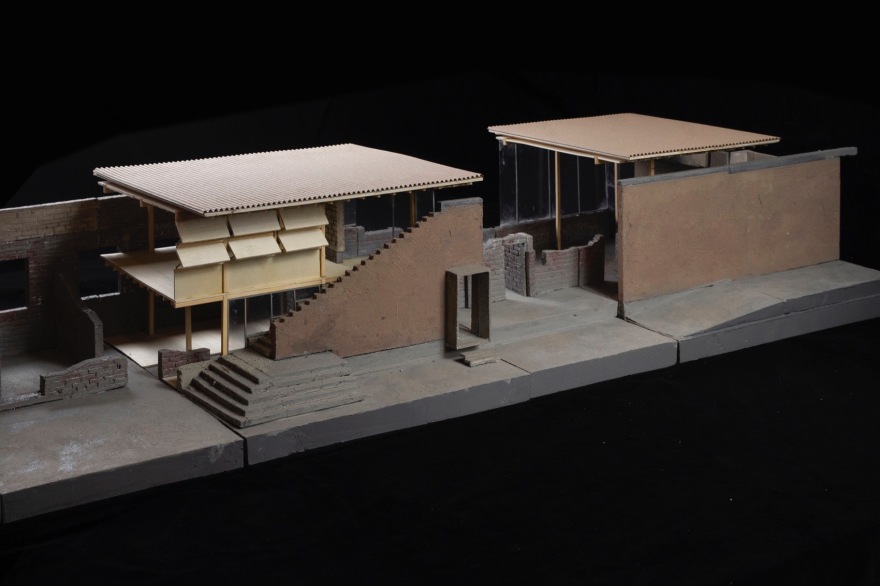
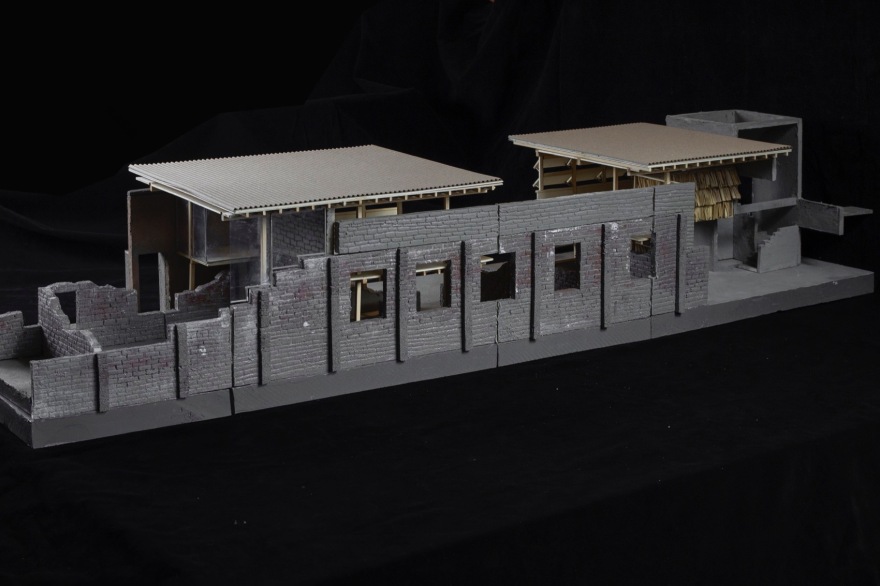
▼模型局部,models close-up© 合造社
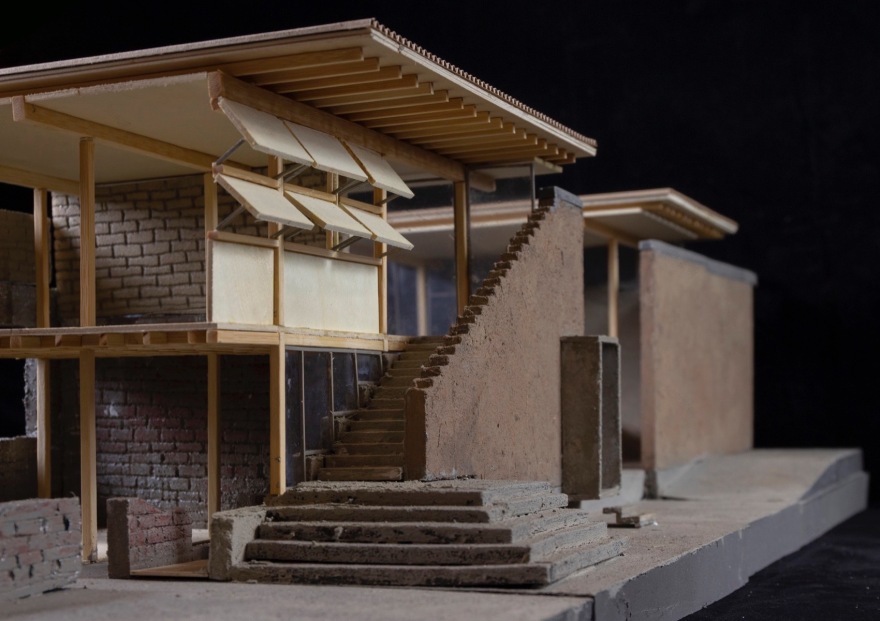

▼单体模型,single models© 合造社


▼图书馆剖透视,library perspective section© 合造社

▼欢迎塔剖透视,Welcome Tower perspective section© 合造社

▼握手塔剖透视,Handshake Tower perspective section© 合造社

项目名称:在遗址中的建造 | 联合村社区中心
项目类型:文化建筑、科教建筑、景观建筑、公共建筑
设计方:合造社建筑设计事务所(成都合造建筑设计有限公司)
完成年份:2022 年 10 月(设计)-2024 年 4 月(建成)
建筑主创:徐浪
建筑团队:徐浪、乔侨、邱枭枫、石佳馥伊、李健、雷韵、易晓典(实习)、王逸伦(实习)、窦怡璇(实习)
项目地址:四川攀枝花盐边县联合村
建筑面积:1800㎡
摄影版权:存在建筑;徐浪
合作方:上海纯粹建筑设计有限公司、栾栌构造设计事务所、四川凌启轩集成房屋有限公司、辽宁金柏胜木结构科技有限公司
客户:盐边县村集体
材料:清水混凝土、木、夯土
Project name: Construction Over Relics, A New Community Center of Lianhe Village
Project type: Cultural Architecture>LEARNING>Public Architecture
Design: CLAB Architects
Design year: October 2022
Completion Year: April 2024
Lead Architects: XU Lang;
Team: XU Lang, QIAO Qiao, QIU Xiaofeng, SHI Jiafuyi, LEI Yun, YI Xiaodian(intern), Wang yilun(intern), Dou yixuan(intern)
Project Location: Lianhe Village, Yanbian, Panzhihua City, Sichuan Province, China
Gross built area::1800 ㎡
Photo credit: ARCH-EXIST PHOTOGRAPHY; XU Lang
Partner: PURE Architects, LuanLu Partner Structure Consulting, Sichuan lingqixuan Integrated Housing Co., Ltd VS. Local craftsmen, Liaoning Kingspine Wooden Structure Technology Co.,Ltd.
Client: Collective Cooperative of Lianhe Village
Material:raw concrete、wood、rammed earth


南京喵熊网络科技有限公司 苏ICP备18050492号-4知末 © 2018—2020 . All photos and trademark graphics are copyrighted by their owners.增值电信业务经营许可证(ICP)苏B2-20201444 苏公网安备 32011302321234号
苏公网安备 32011302321234号客服
消息
收藏
下载
最近