

创作上传
VIP
收藏下载
登录 | 注册有礼
查看完整案例

收藏

下载

分享
如何设计一座“无形”的房子?这是这一项目概念基础的核心探讨。
在缺乏明显上下文的情况下,Design ni Dukaan 试图从客户的需求中寻找设计灵感。然而,客户对房屋外观完全不感兴趣,这促使建筑师反思建筑形态的根本意义。这种思考转变了设计视角,最终采用了一种“由内而外”的设计方法,即将空间的内部体验置于外部形式之上。
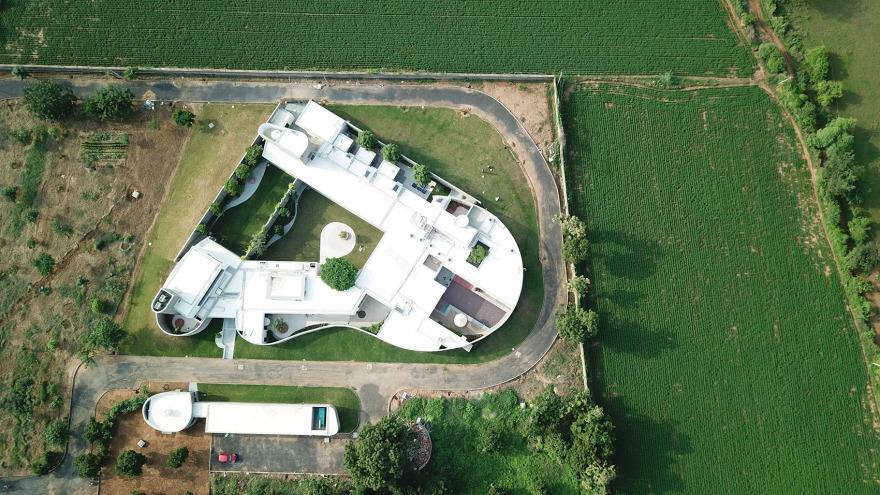
在考虑了尺度、安全性和气候等更为实际的因素后,我们设想了一层包裹着建筑主体的“第二层皮肤”,将各个部分连接在一起,同时定义了一系列庭院,这些庭院成为居住体验中不可或缺的一部分。因此,这座房子不再以外立面为主要特征,而成为一座内向型的“围合空间”。
How does one design a formless house? This was the primary enquiry from which the conceptual foundation for the project was generated. In the absence of a strong context, we were relying on the client’s brief to inspire the design, but his complete disinterest in how the house would look from the outside prompted us to question the very basis of built-forms. This caused a shift in our perception that resulted in an inside-out approach to the design, wherein the experience of space from within took precedence over the external form. Along with the more practical concerns of scale and security and climate, this led us to imagine a second skin wrapped around the structure, holding the separate parts together and defining a series of courtyards that are intrinsic to the experience of the house. And so, it became a house without elevations, an inward-looking “Enclosure”.
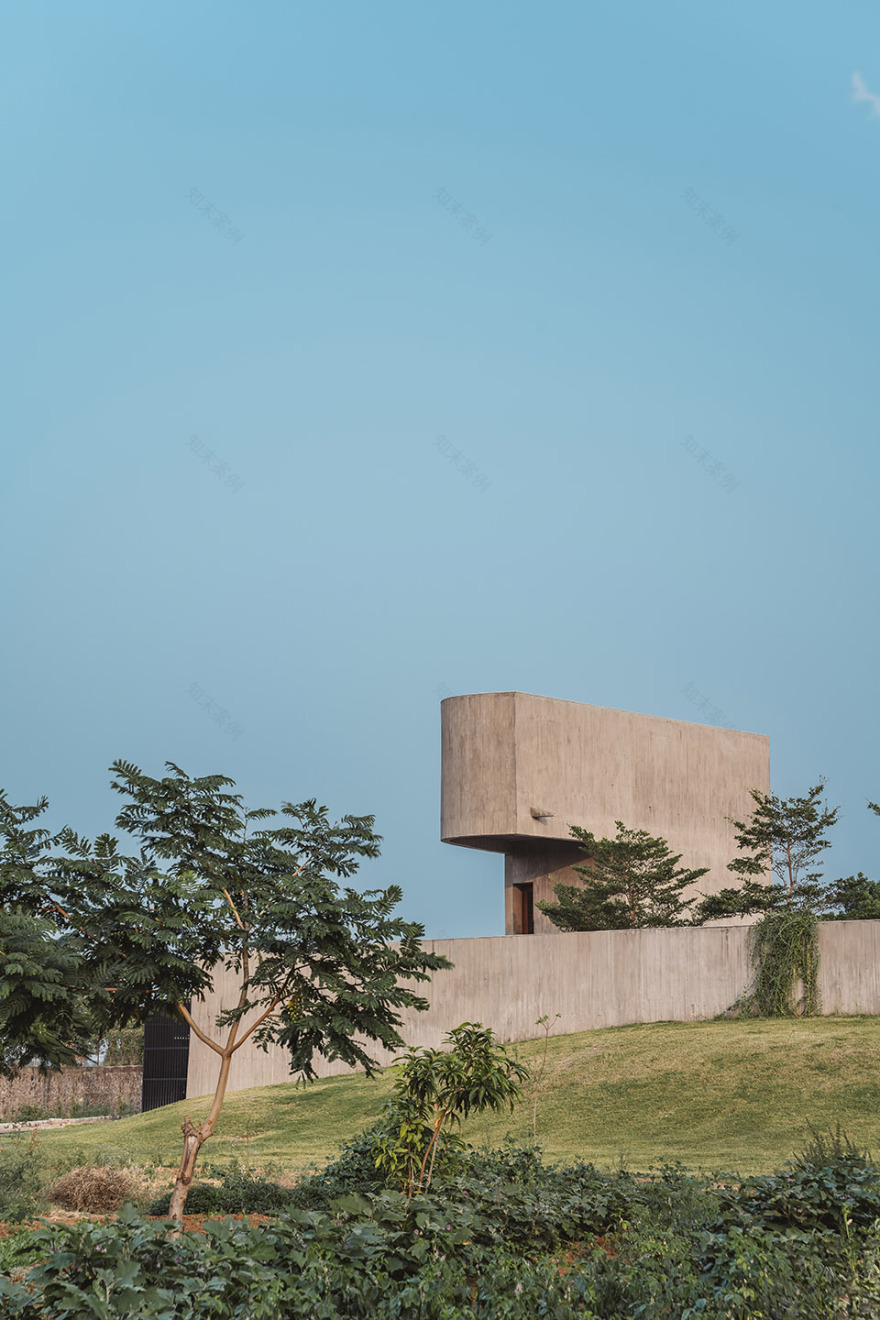
▼建筑外观,exterior of the house©Ishita Sitwala


▼建筑鸟瞰,Ariel view of the house©Ishita Sitwala

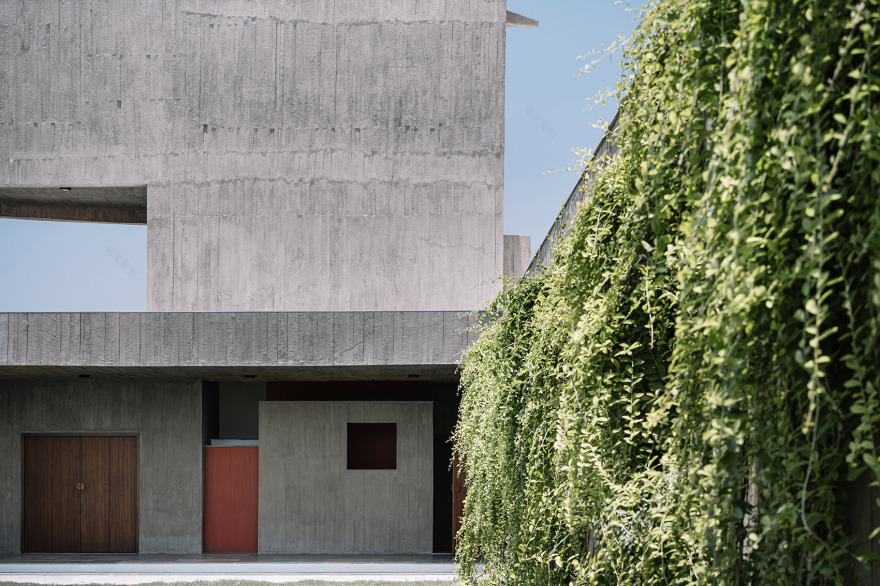
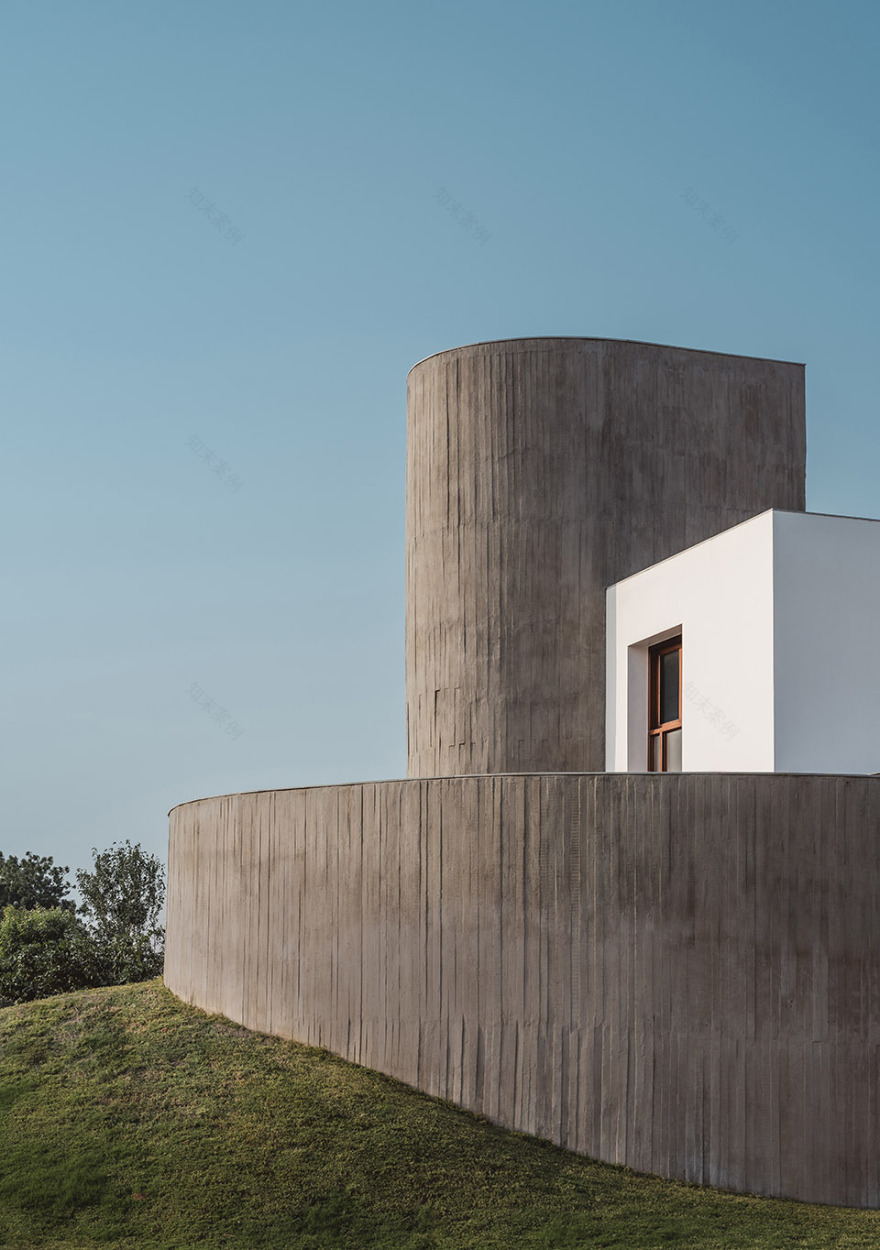
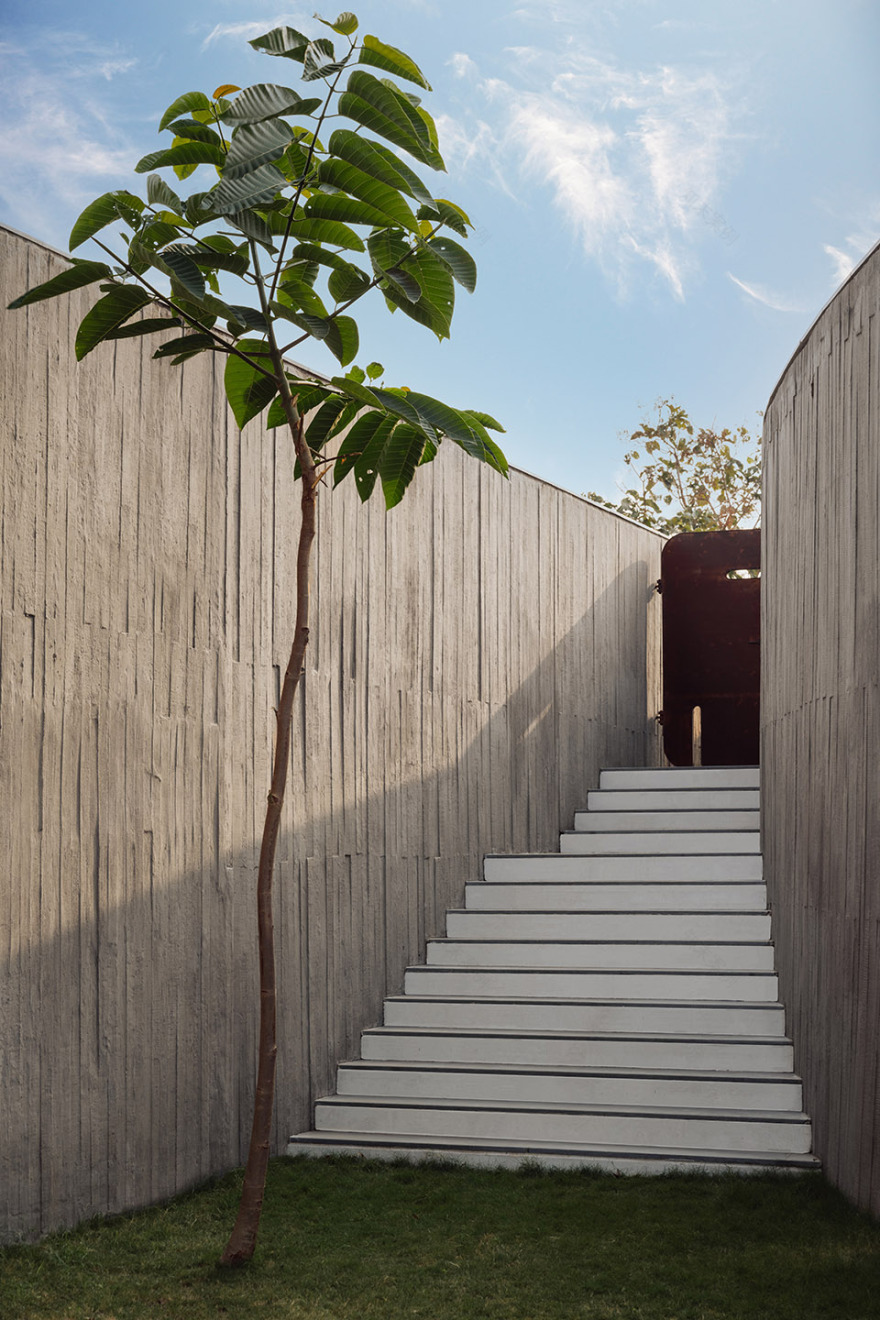
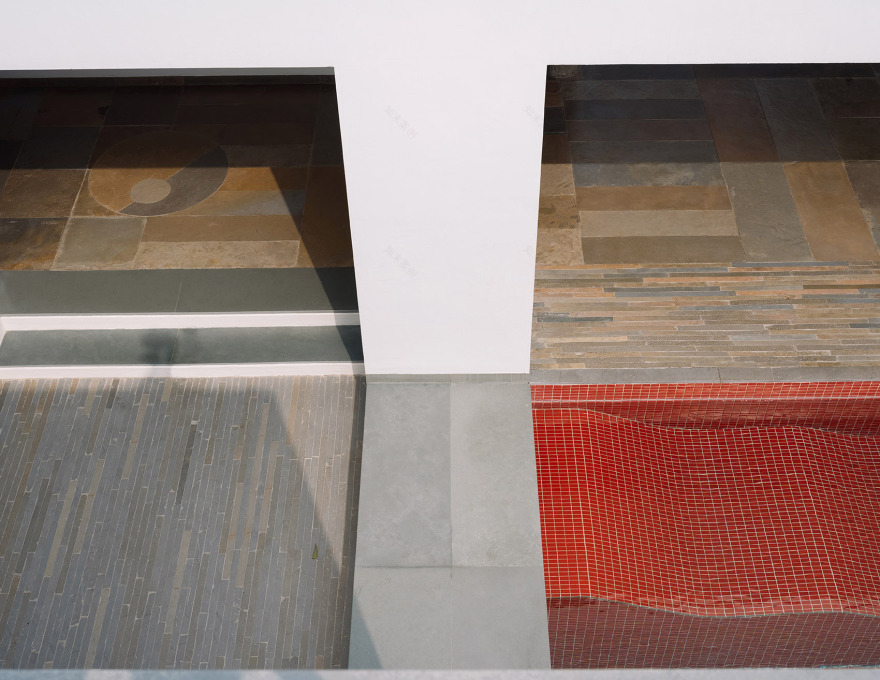
围合结构的材料选择源于对偏远农村地区施工物流的深度探索。在预算限制下,从城市聘请承包商显然不可行。此外,客户本人从农民转型为成功商人,如今回归故土,他坚持雇佣当地工人。作为一次实验,我们邀请了一位村里的承包商用混凝土建造了一段样板墙。结果令人惊艳:由于未经加固的木模板在施工中的移动和变形,混凝土墙表面呈现出一种不可预测却极具美感的纹理。这一发现让我们深受启发。我们决定将这些“可预见的不完美”纳入施工工艺的一部分,并将这一选择延伸到其他材料的使用。例如,走廊的地面使用了室内装修中剩余的石材条,拼接出与混凝土墙纹理相呼应的图案。这种设计充分体现了对材料特性的尊重与巧妙运用,同时也回应了场地与资源的在地性。
The materiality of the enclosure was the product of a parallel enquiry into the logistics of construction in a remote, rural location. Bringing a contractor from the city would be unfeasible for the budget and besides, the client, who himself had gone from being a farmer to a successful businessman now returning to his roots, insisted on employing local labour. As an experiment we asked a village contractor to build a sample wall in concrete, and the outcome: an unpredictable but beautiful texture caused by the shifting and warping of unbolted wooden formwork; was fascinating. We decided to embrace these “anticipated imperfections” as part of the construction process, even extending this choice to the use of other materials, the flooring in the corridors for example, which utilises strips of leftover stone from the interiors to mimic the pattern of the concrete walls.
▼建筑入口,pedestrian entry ©Ishita Sitwala

这座如城堡般的建筑群坐落于一座小丘之上,其外围由两道弧形墙和两道直墙围合而成,墙体在交汇处刻意断开,形成入口或与周围景观相连的隐秘出口。建筑从一个低调的入口雨棚开始,在两道弧形墙的交汇处设立。通过与房间内柔和白色粉刷墙壁和周围绿意的对比,这种粗犷、流动的墙面质感引导着人们穿梭于依次展开的空间,同时框定了若干静谧的停留点。随着植物逐渐覆盖灰色墙体,内外的界限将进一步模糊,形式的概念也会随之消解。
Situated on a mound, the citadel-like compound is bound by these peripheral walls, comprising of two curved and two straight surfaces, disjointed at their intersections to create points of entry or subtle exits into the adjacent landscape. Starting with a discreet entrance canopy where the two curved walls converge, this fluid, raw texture, by virtue of its contrast to the softer, white plastered walls of various rooms and the surrounding greenery, guides movement through the sequentially unfolding spaces of the house or frames deliberate places of pause. When the vegetation eventually grows over this backdrop of grey, the boundaries between inside and outside will further dissolve and diminish any notion of form.
▼建筑入口,pedestrian entry ©Ishita Sitwala


▼建筑外观, exterior of the building©Ishita Sitwala
▼建筑外观, exterior of the building©Ishita Sitwala


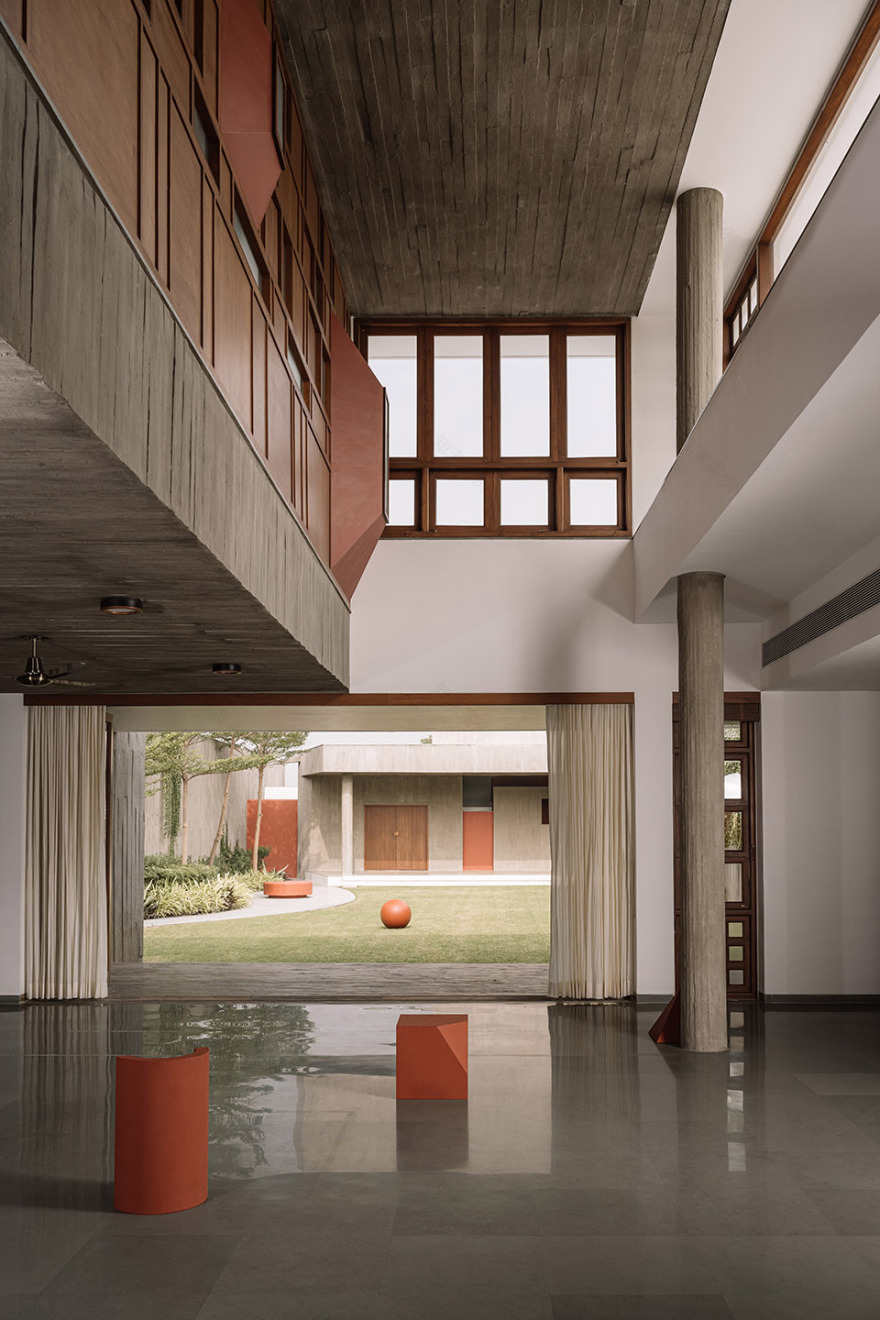
▼入口门厅,entrance foyer©Ishita Sitwala

▼入口门厅,entrance foyer©Ishita Sitwala

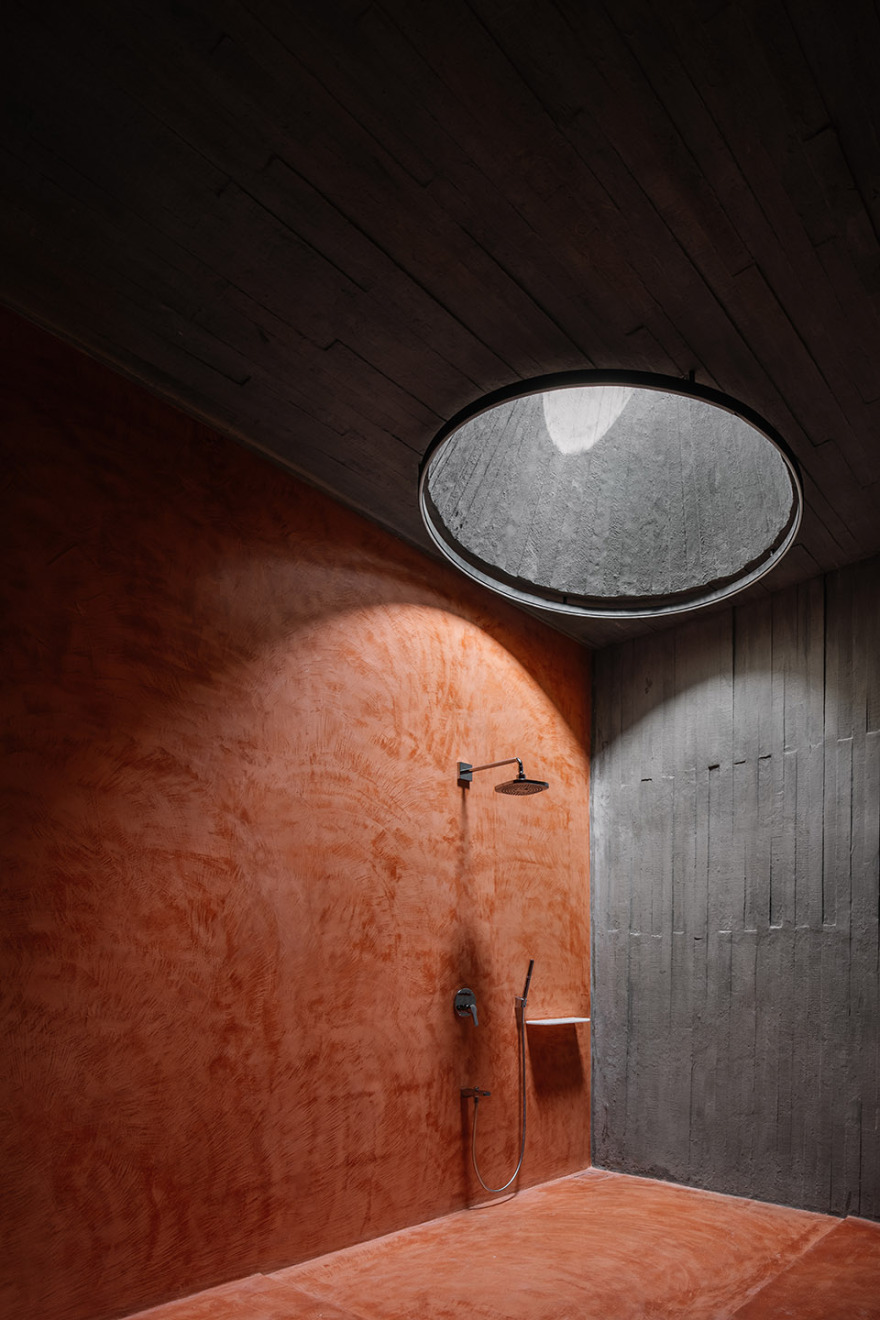
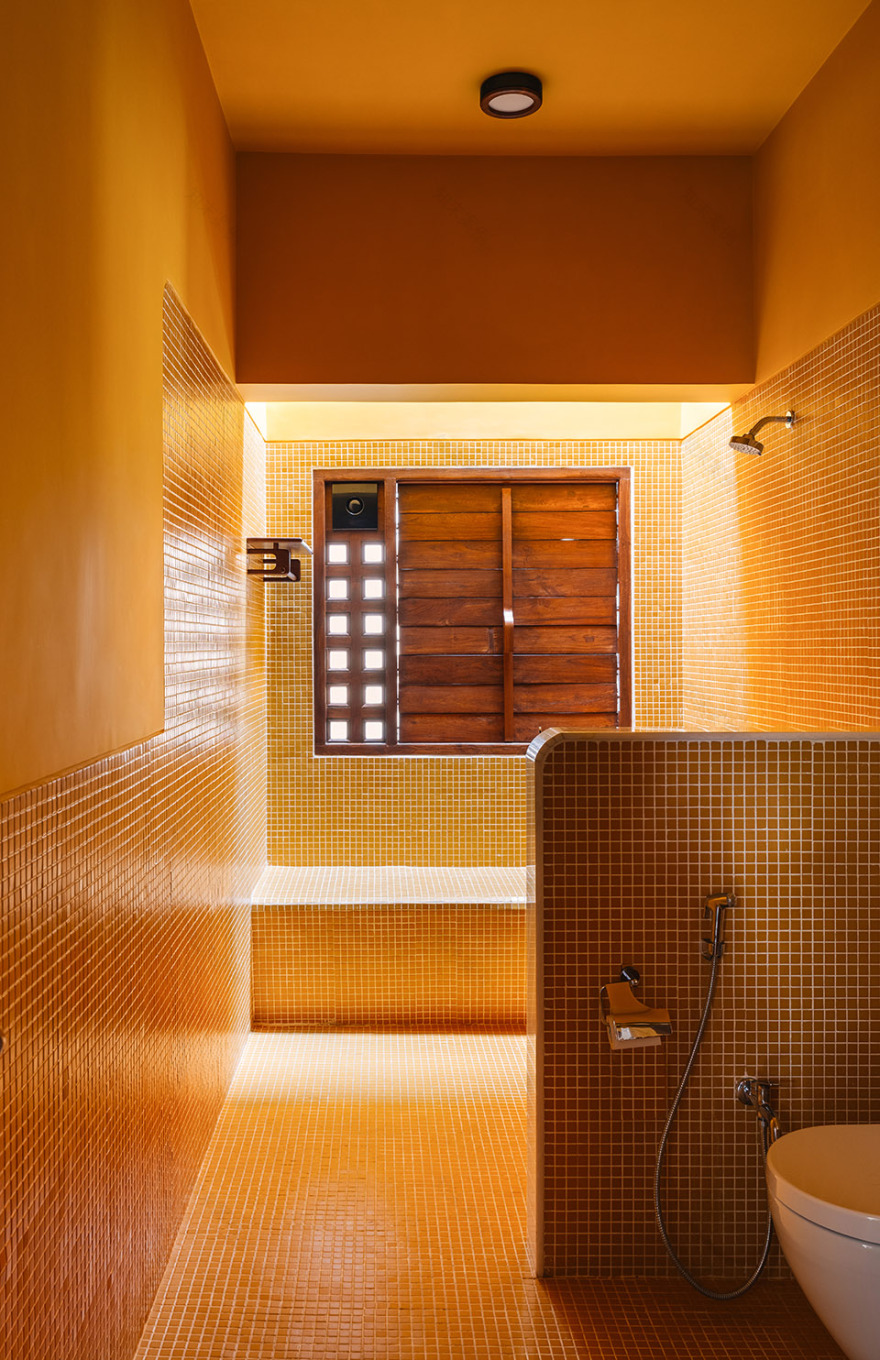
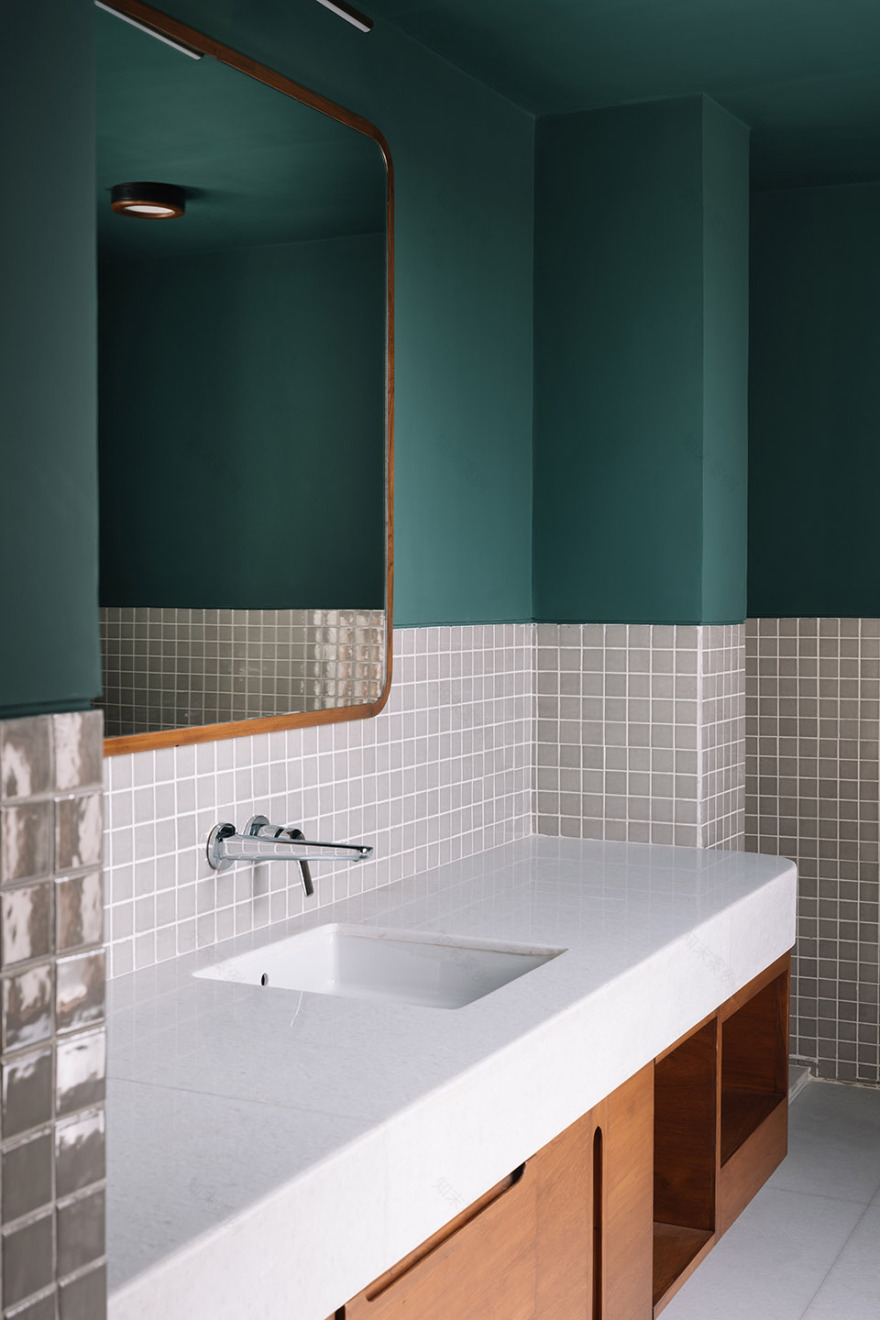
整体材料调性以混凝土、天然褪色的科塔石、白色粉刷墙面及木材为主,偶尔穿插温暖的陶土色调,例如:主入口处,它作为黄铜“Bindu”(象征起点的圆点)的背景;泳池区;季节性开花树木周围的座椅;以及散布于房屋与花园中的雕塑物件。这些元素为整体沉稳的色彩注入一抹温暖。除此之外,唯一的色彩使用集中在住宅的私人空间——浴室。每间浴室都以一种柔和的粉彩色调装饰,并通过类似塔楼的天窗引入戏剧化的光线,为这些空间增添一份独特的视觉体验。
The muted material palette of concrete, discoloured kota stone, white and wood is occasionally punctuated by a warm terracotta tone: at the main entrance (where it forms the backdrop to a brass bindu, signifying the point of origin), in the swimming pool, on seats around seasonally flowering trees, and sculptural objects scattered throughout the house and garden. The only other use of colour is found in the most private spaces of the house, the bathrooms, with each being rendered in a different pastel shade and dramatically illuminated by turret-like skylights.
▼庭院,courtyard©Ishita Sitwala

建筑的平面规划旨在划分住宅的公共、半私密和私密区域,同时通过围绕中央开放空间的流线设计保持整体的连续性。住宅的各个部分都通过带顶走廊与这一庭院相连,同时也连接到更小的私人庭院,从而确保室内获得充足的采光和通风,同时避免强烈的热带阳光和热风的直接影响。
The planning of the footprint attempts to separate public, semi-private and private zones of the house, while still maintaining a continuity of flow around a central open space. All parts of the house open onto this courtyard, via a covered corridor, as well as onto smaller, private courts, ensuring that they get adequate light and ventilation while being protected from the harsh tropical sun and hot winds.
▼室内获得充足的采光和通风,ensuring that they get adequate light and ventilation ©Ishita Sitwala

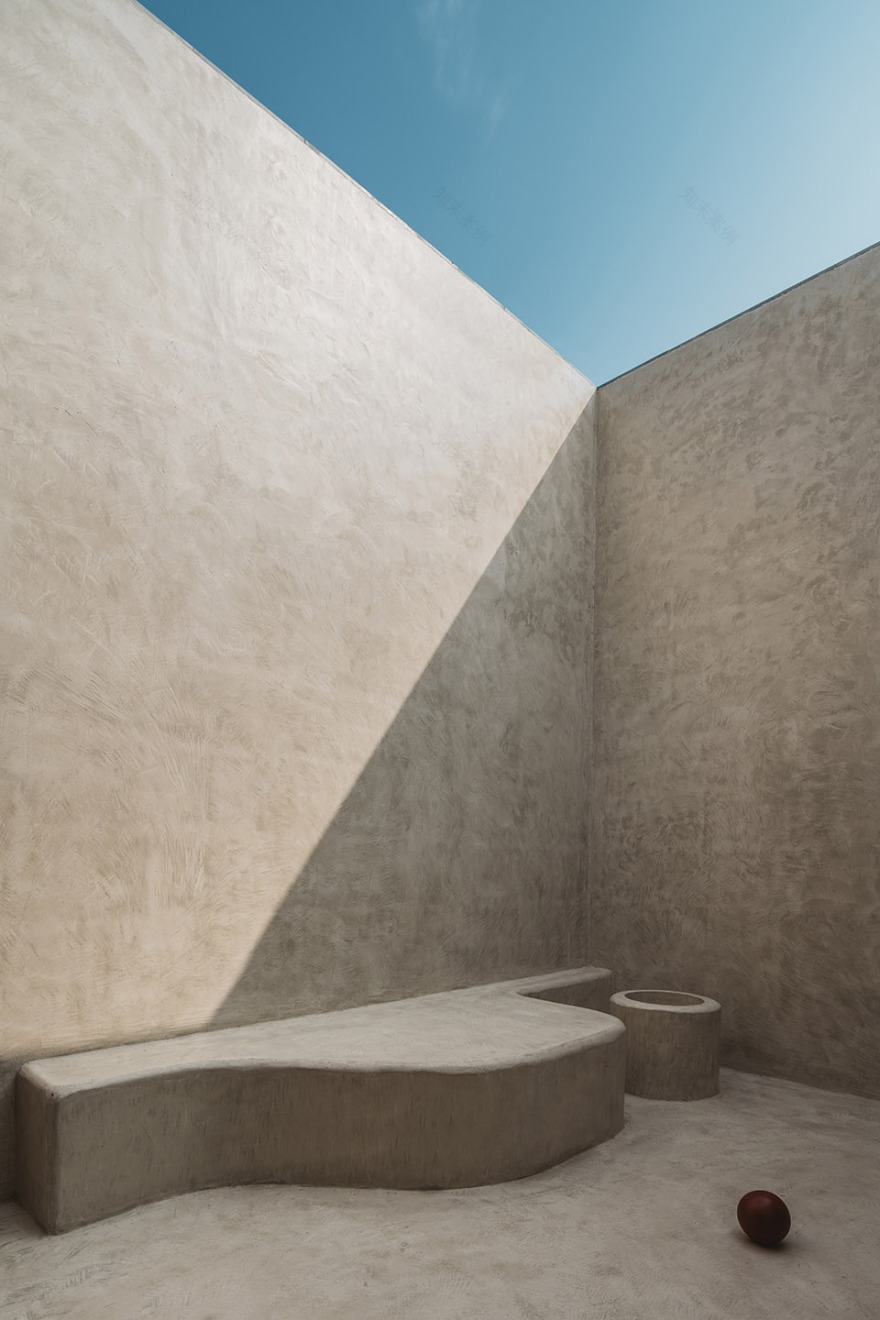
在入口处,普通访客会被引导至一间正式的会客厅,会客厅向南面开口连通一个具有雕塑感的小型庭院,向北延伸至一片宽阔的草坪,这片草坪最终连接到服务区域,非常适合举办大型活动。会客厅的地下设有一个家庭影院,而其上方则是一个小型阁楼,用于更亲密的创意互动与交流。
At the very entrance, casual visitors are directed to a formal lounge which opens onto a small, sculpturally dramatic court to the south and a sprawling lawn to the north that ends in a service area, making it conducive to host large events. Below the lounge is a basement with a home theatre, and above, a loft that lends itself to more intimate interactions with creative people.
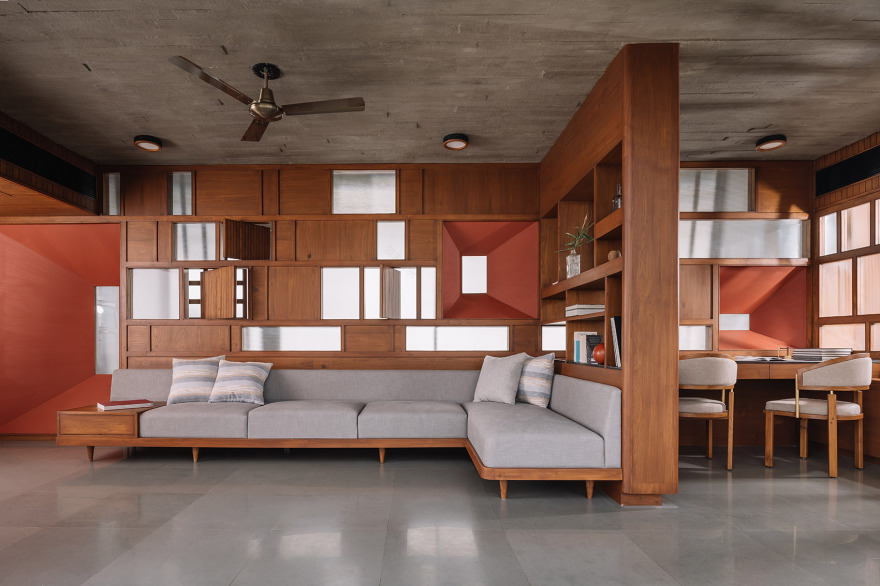
▼客厅和餐厅,living room and dining area©Ishita Sitwala

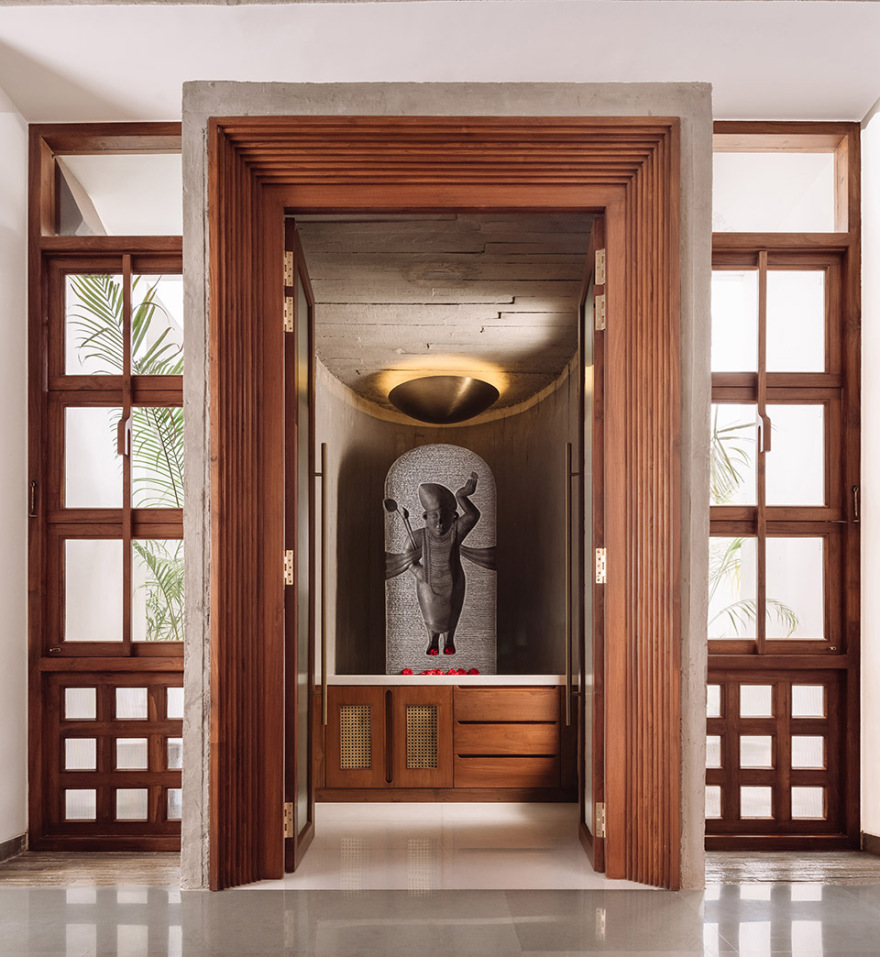
其他来宾则会通过一个设有等候区的入口进入住宅,该等候区还包括一个后期设计中加入的“曼迪尔”(供奉空间)。曼迪尔被设计为一个悬浮的圆柱体,这一设计在实现过程中引发了与结构工程师的多次讨论。工程师希望通过上部吊挂或侧墙支撑来固定它,但我们始终坚信,神的重量只能由大地承载。最终,这一挑战通过采用独立于主体结构的桩基来解决,确保圆柱体的稳固。
Other guests are directed into the house via a waiting area where the mandir, a later addition to the design, is situated. Imagined as a floating cylinder, this object was the focus of many discussions with the structural engineer who wanted to pin it from above or anchor it to abutting walls, and yet we were quite sure that the weight of God could only be borne by Earth. This was eventually resolved by employing pile foundations, independent of the rest of the structure, to hold it.
▼供奉空间,mandir©Ishita Sitwala
▼供奉空间,mandir©Ishita Sitwala

圆柱体内部供奉着一块刻有 Shreenathji 形象的黑色花岗岩石板,而非传统的神像。这块花岗岩石板经过精心挑选,其深邃的颜色象征神的“黑暗特质”。
Within the cylinder sits Shreenathji, not contained in an idol, but rather engraved into a slab of solid black granite, specifically selected to reflect His dark attributes, as though He had left an impression on it.
▼供奉空间,mandir©Ishita Sitwala

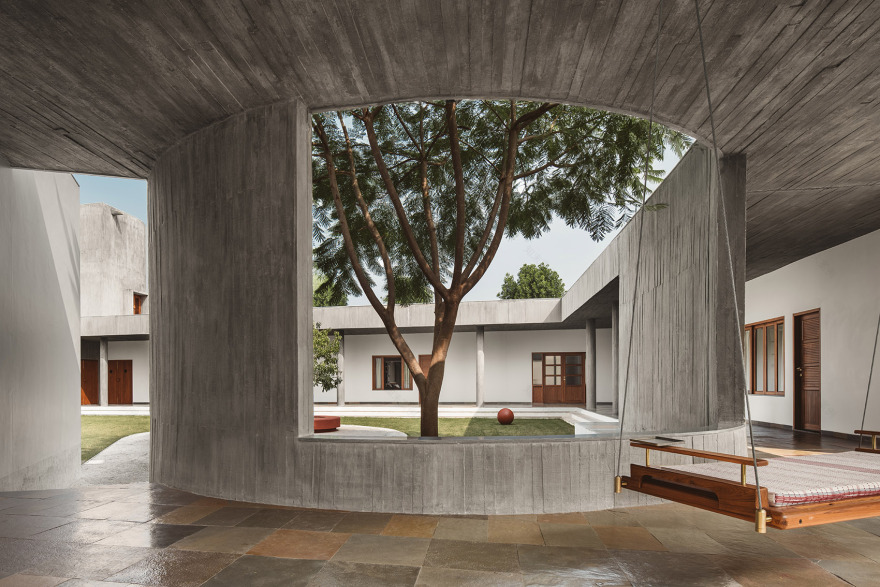
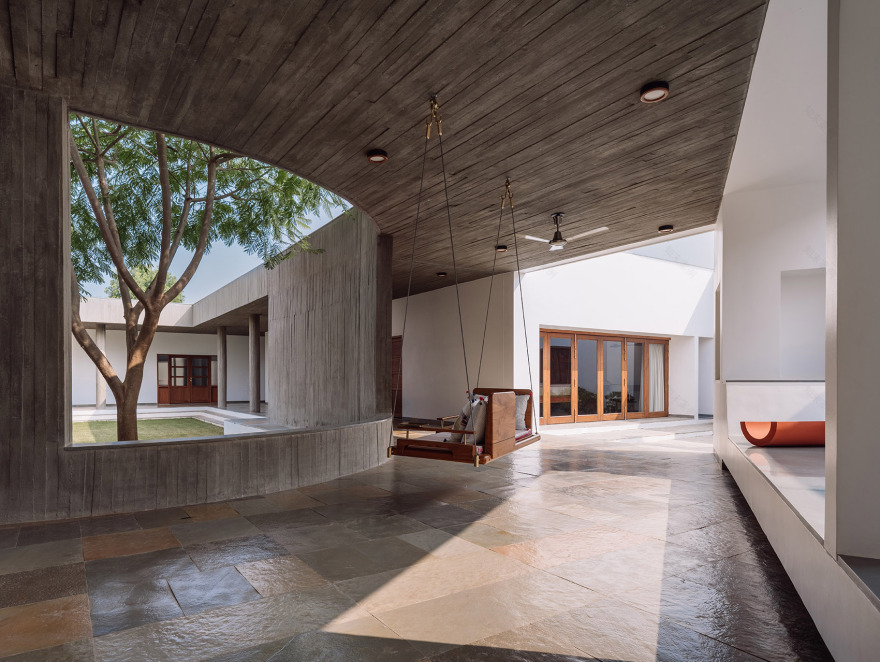
穿过通道,便是一个包含餐厅和非正式休息区的大厅,该区域向外连通两个庭院,并通过厨房与访客休息室相连。再往里走,走廊逐渐变宽,形成一个可以稍作停留的空间,正位于住宅的中心地带。在这里,第三道弧形混凝土墙环绕并框定了一棵凤凰木,同时配置了一个大秋千和内置长椅,这是家人最喜爱的空间之一。
Across the passage from here is a hall that contains the dining and informal seating area, which in turn opens onto two courts, and is hinged to the visitors’ lounge by the kitchen. Just beyond this, the corridor widens, providing a place to pause at the very heart of the house, before proceeding to the more private areas. Defined by a third curved concrete wall that encircles and frames a gulmohar tree, and furnished with a large swing and built-in benches, this is perhaps the part of the house most favoured by the family.
▼第三道弧形混凝土墙环绕并框定了一棵凤凰木
a third curved concrete wall that encircles and frames a gulmohar tree©Ishita Sitwala


▼庭院,courtyard©Ishita Sitwala

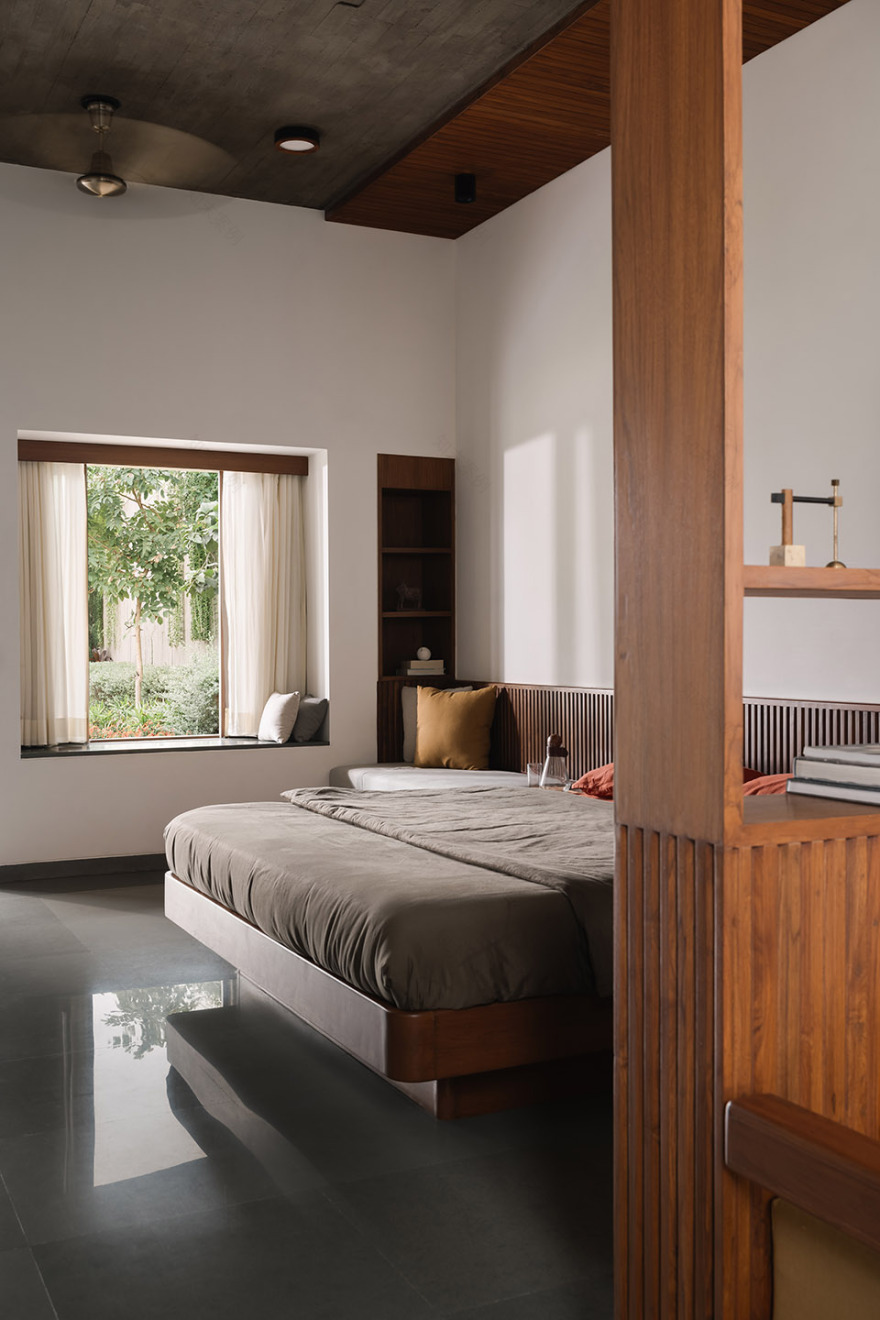
继续前行,进入住宅的过渡空间,以一根悬浮柱标志着起点,向建筑师 Roger Anger 致敬,他曾在奥罗 Ville 的建筑中经常运用类似的元素以营造张力感。通道随后转向,沿着中央庭院的东侧延伸,通往家庭的私密区域。家庭居住区包括主套房和两间子套房。主套房由两部分组成:一间书房,可在需要时转换为接待密友的额外房间;以及客户自己的卧室,配有连接的浴室和开放式淋浴间。子套房则为两位儿子设计,围绕游泳池和健身房形成了一个庭院,使其独立于住宅的其他区域。
Moving forward, the transition into the house is marked by a floating column, an ode to Roger Anger, the architect of Auroville, who often employed such elements as a means to create tension in his structures. The passage then turns and traverses the eastern edge of the central court, leading to the family’s quarters. A pair of rooms that comprise the master suite: a study that can be converted into an extra room for close friends and the clients’ own bedroom with an attached bath and open shower; squared by another set of suites for their two sons, form a patio for the swimming pool and gym, secluding them from the rest of the house.
▼柱廊,colonade©Ishita Sitwala

▼主套房望向庭院,master suit overlook the court©Ishita Sitwala

▼主套房,master suit©Ishita Sitwala


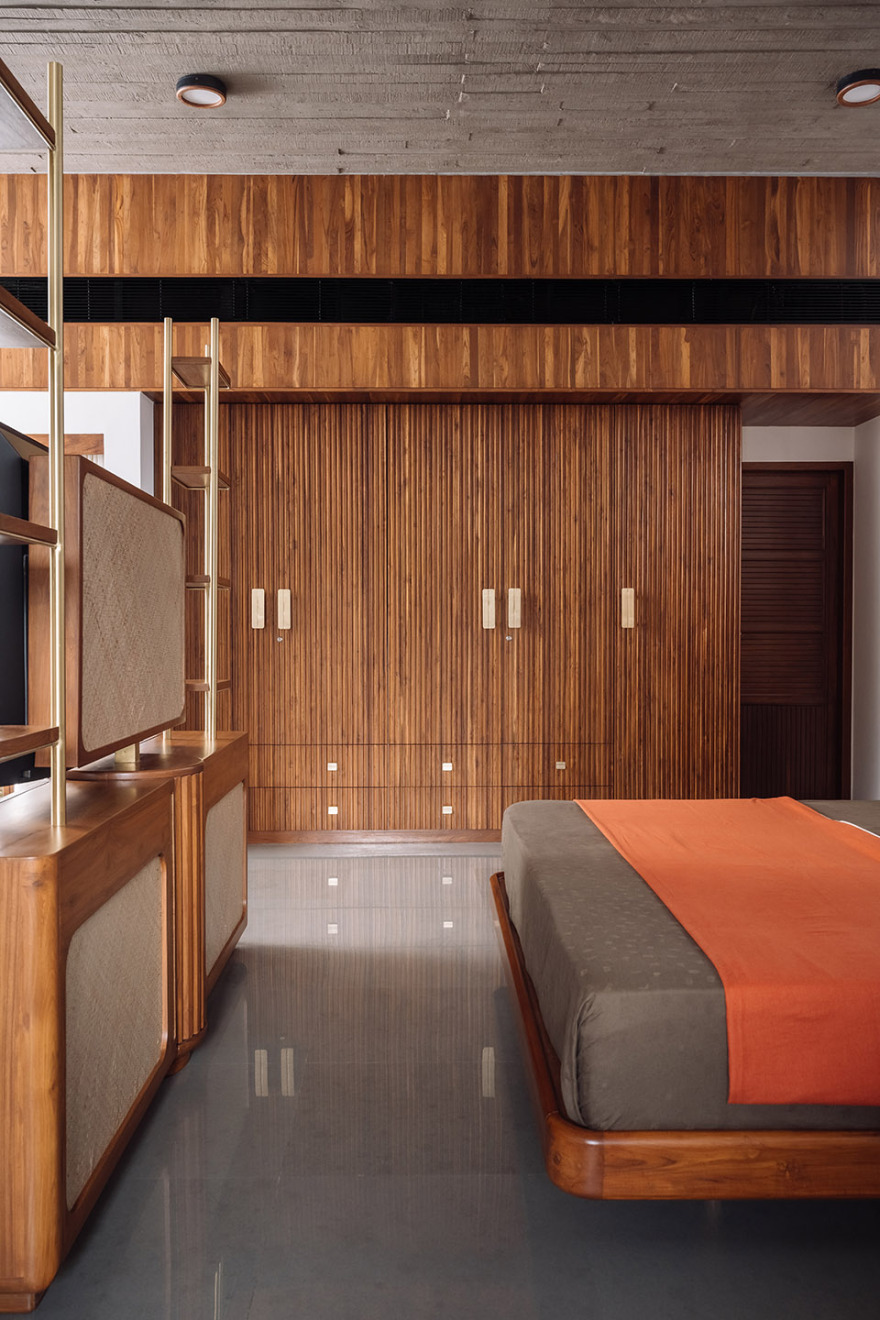
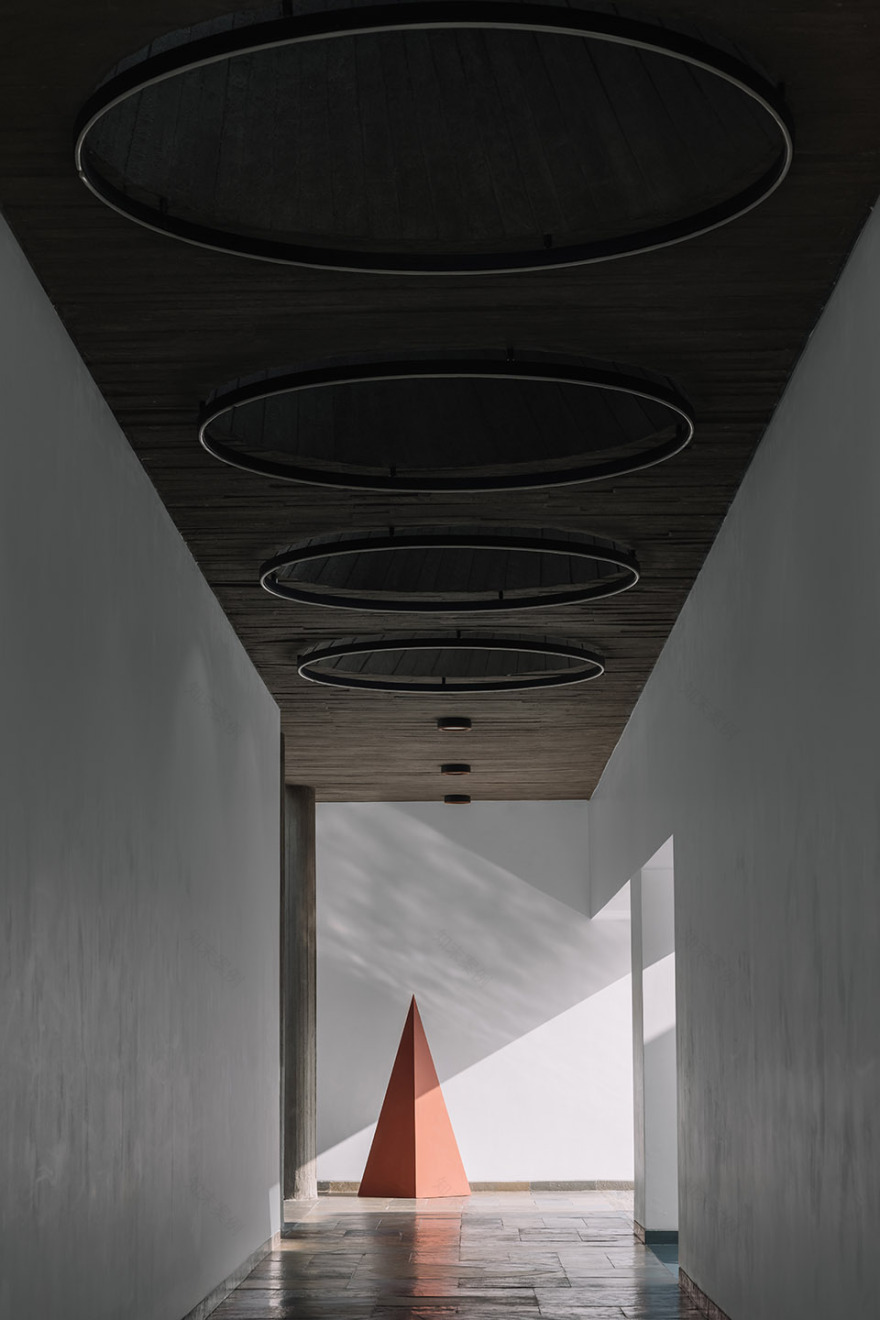
走廊在这些住宅模块之间穿行,配备锥形窗和定制灯具,在通道内创造出戏剧化的光影效果,最终通向另一个庭院,用于分隔两位儿子的房间。长子的房间设有用于展示收藏的空间和一个供他儿子使用的阁楼;次子的房间以一面弧形墙为特征,这面墙标志着建筑的尽端。通过一个小厨房和室外餐区,与这一家庭区域分隔开的是住宅西翼的三间客房。
Conical casements, supplemented by custom-fitted lights, create a dramatic play of shadows in the corridor that crosses between these blocks and culminates in another court that separates the sons’ rooms: the elder’s having a display for his collections and an attic for his son, while the younger’s is characterised by a curved wall that marks the end of the structure. Separated from this area by a pantry kitchen and outdoor dining space, and forming the west wing of the house, are three guestrooms.
▼主套房 2,master suit 2©Ishita Sitwala
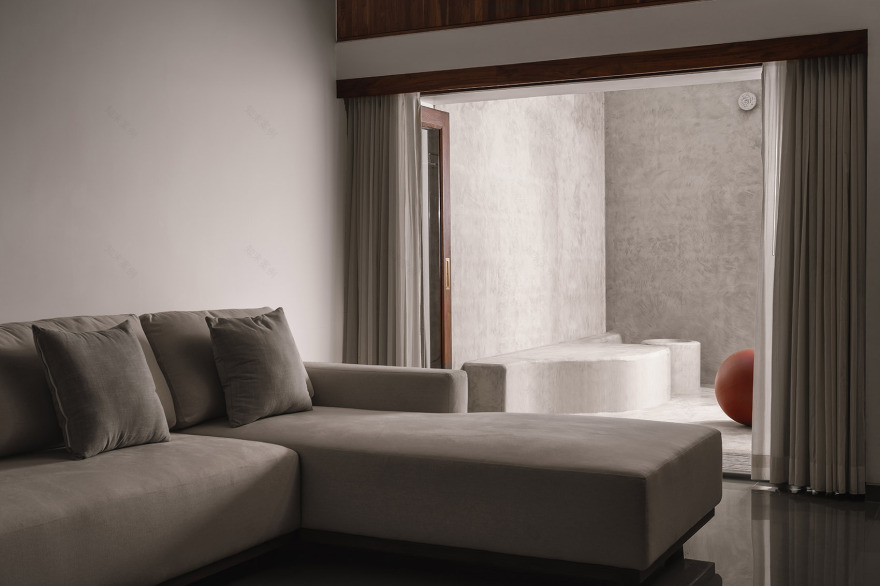
▼主套房 2 内部庭院,internal courtyard in master suit 2©Ishita Sitwala
▼浴室,bathroom©Ishita Sitwala

在许多方面,这个项目在我们工作室的早期发展阶段塑造了其方向。虽然项目经历了多次延误,包括两次封锁,历时七年半才最终完成,但这一过程也为我们提供了反复重新审视建筑本质和设计实践应有形态的机会。在这个过程中,我们不断深入探讨这些问题,同时学会在必要时从既有的概念中抽离或舍弃。这样的经历不仅是一次创作的挑战,更是一次对设计哲学的深刻反思和自我成长的契机。
In many ways this project directed the trajectory of our studio during its formative years. Disrupted by several delays, including two lockdowns, the seven and half years it took to complete gave us the opportunity to repeatedly reassess our ideas of what architecture is, of what a design practise should be, and to delve deeper into these questions while still being able to detach from and discard concepts when required.
▼通往儿子房间的走廊景观,Views of the passageway leading to son’s room©Ishita Sitwala


就在方案即将定稿之际,客户的业务遭遇低谷,项目被搁置了近两年。当项目重新启动时,他们的需求发生了变化,空间需求也有所增加。原本的设计方案中,只有水箱的体量超出了外墙的高度线,但如今我们不得不面对一个艰难的选择:是重新审视已经过多次迭代才完善的方案,还是通过增加体量高度来适应修改后的需求。最终,我们选择了后者,将两个模块提升至高于墙面的高度:艺术家的阁楼和儿童的阁楼。我们将这三处高出的体量——水箱、艺术阁楼和儿童阁楼,想象成三位哨兵,彼此对话。
Just when the plans were being finalised, the client’s business faced a slump, and the project was shelved for almost two years. When it resumed, their requirements had changed and the need for space had increased. Whereas in the original scheme the mass of water tank alone rose above the line of the exterior walls, we were now confronted with the difficult decision of reviewing the plan, which had taken numerous iterations to perfect, or raising other volumes to accommodate the revised brief. We opted for the latter, lifting two more blocks to look beyond the walls: the artists’ loft and the grandson’s attic; and imagined them as three sentinels in conversation, floating above a seamless sea of green once the vegetation had reclaimed the concrete.
▼内部庭院,internal courtyard©Ishita Sitwala

阁楼的构思本身正是这次延期的意外收获。在项目搁置的几年间,工作室里散落的图纸和模型不断引发与来访者的偶然对话,这些人包括音乐家、艺术家、设计师、诗人、作家,当然还有其他建筑师。这些对话逐渐偏离了传统建筑构造的主题,成为更广泛的创作交流。这一过程让我们意识到其重要性,并从那时起将其有意识地融入到项目的讨论中。客户也注意到了这一点,并认可这种跨领域交流的价值。他提出在设计中增加一个空间,供他邀请创新者来此工作与互动。
The idea for the loft itself was a serendipitous result of this delay. Drawings and models, scattered around our studio for years, occasioned tangential dialogues with various visitors: musicians, artists, designers, poets, writers, and of course, other architects; a process that we have actively integrated since then, to broaden the conversation around projects beyond tectonics. The client noticed this too, and recognising the merits of such exchanges, asked us to include a space where he could invite innovators to work.
▼大儿子的房间,带夹层和庭院, Elder son’s room with a mezzanine and a court ©Ishita Sitwala

▼大儿子的房间,带夹层和庭院, Elder son’s room with a mezzanine and a court ©Ishita Sitwala

随着项目的推进,从建筑到室内再到景观设计,每个方面都被精心考量,以发展出一种连贯的设计语言。从家具、五金配件到灯具的每一个细节,所有元素都经过严谨的设计,并由我们的工匠量身定制。这个项目真正成为了一次对“创造”行为的礼赞,而这种对创造力的尊重和追求,也逐渐成为我们设计实践的核心本质。
As the project progressed, everything from architecture to interiors to landscape was addressed to develop a comprehensive design language, and all elements down to the smallest, including furniture and hardware and light fittings, were rigorously detailed and custom-made by our craftsmen. The project was truly a celebration of the act of creation, which has become for us the essence of our design practise.
▼通往夹层的楼梯, staircase towards the mezzanine©Ishita Sitwala

▼通往夹层的楼梯, staircase towards the mezzanine©Ishita Sitwala

▼通往夹层的楼梯, staircase towards the mezzanine©Ishita Sitwala

一场精神旅程是对自身存在的探寻,或者更准确地说,是对存在与虚无及两者关系的探寻,最终达成超越探寻本身的纯粹存在的领悟。在这个项目中,我们经历的旅程与此并无二致,也许最重要的收获便是对自我的否定。我们曾是自身信念的坚定拥护者,而如今,我们也成为了这些信念的最严苛批评者。正是在调和对立的边界上,我们发现了一种真正原创的东西——灵感的本源。我们认识到,这是一种流动,一种持续而迅速的无常。如果我们放下所有已知和对结果的执着,它将引领我们到达从未想象过的地方。正是这种放下与开放,赋予了我们的设计过程丰富性与新意,也让创作焕发出真正的生命力。
A spiritual journey is an inquiry into one’s own existence, or rather an inquiry into existence and non-existence and the relation between the two, culminating in the realisation of pure existence beyond inquiry. The journey we undertook with this project has been no different, and perhaps the most important learning has been one of self-negation. Already the champions of our beliefs, we now became their greatest critics as well, and in the margin that reconciles all opposites we discovered something truly original, the very source of inspiration. There is a flow, we found, a constant and rapid impermanence, and that if we let go of everything we know and every desired outcome, it would carry us to places we could never have imagined. This is what brings richness and newness to our process.
▼小儿子的房间看向泳池, younger son’s room looking towards the pool©Ishita Sitwala

▼浴室, bathroom©Ishita Sitwala

▼楼梯间, staircase©Ishita Sitwala
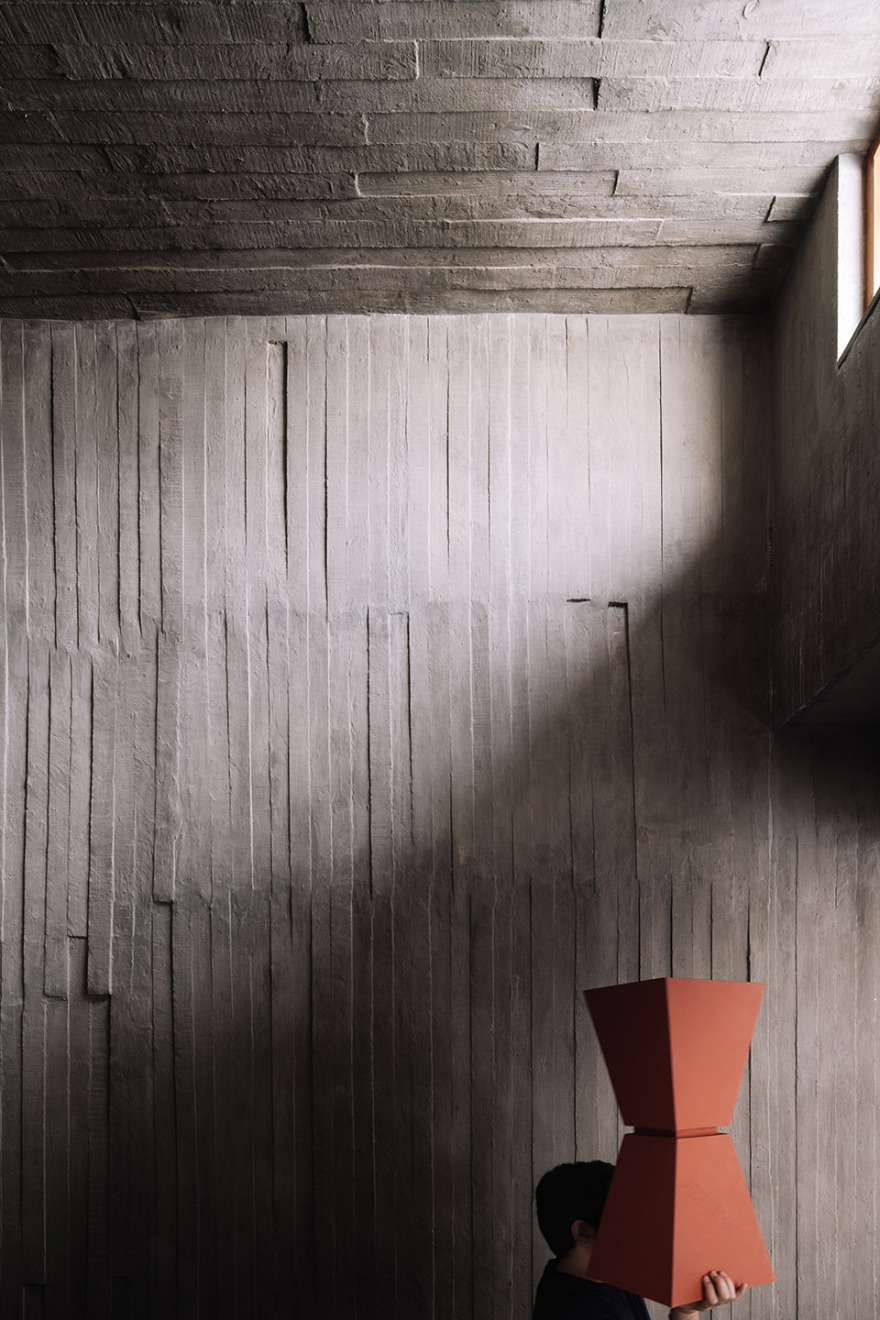

我们与这座房子建立的关系使我们常常回访:有时是为了增添艺术品或手工艺品,有时是为了查看树木的生长情况,有时仅仅是为了看看这个家庭在我们为他们打造的环境中生活的模样。如今,客户已年届七十,对我们来说,他更像一位“教父”。他对我们的信任始终如一,而作为回报,我们从未拒绝过他的任何请求。最近,他的妻子请求我们为她设计一个香料盒,还开玩笑地说,在香料盒完成之前,他们家将不会为我们提供一顿饭。这给了我们一个值得期待的理由——尽管项目似乎需要一个正式的结束,但我们内心深处却希望与这个项目的关联永远不会真正画上句号。
The relation we have developed with this house causes us to return regularly to it: to add art and artifacts, or to check on the trees, or just to see the family living in the environment we built for them. The client is now seventy years old, and has become like a godfather to us. His faith in us has been unshakable, and in return we have never denied him any request. Lately his wife has been asking us to design a spice box for her, and has promised that we will not be served a meal in their home until we do. This gives us something to look forward to, for while there is a need for closure, we secretly wish that our engagement with this project never ends.
▼泳池, pool©Ishita Sitwala

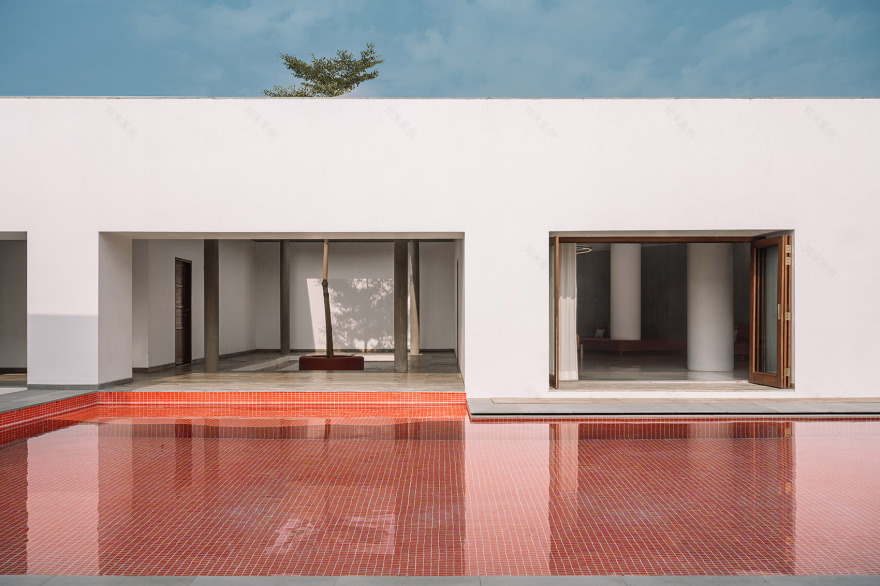
▼泳池局部, pool©Ishita Sitwala

后来在每间客房中都增加了休闲空间,这些扩展部分被有意识地设计成轻盈的玻璃盒结构。这样的设计不仅减少了对建筑基础的额外负荷,还保持了与邻近庭院的视觉连接,增强了空间的通透性和互动感。
A later addition to each of the guest rooms were the lounging spaces – these extensions were then consciously made into lighter glass boxes to prevent any additional load on the foundations of the structure as well as maintain a visual connect to the adjacent courts.
▼客房, the guest rooms ©Ishita Sitwala

▼客房, the guest rooms ©Ishita Sitwala

▼客房, the guest rooms ©Ishita Sitwala
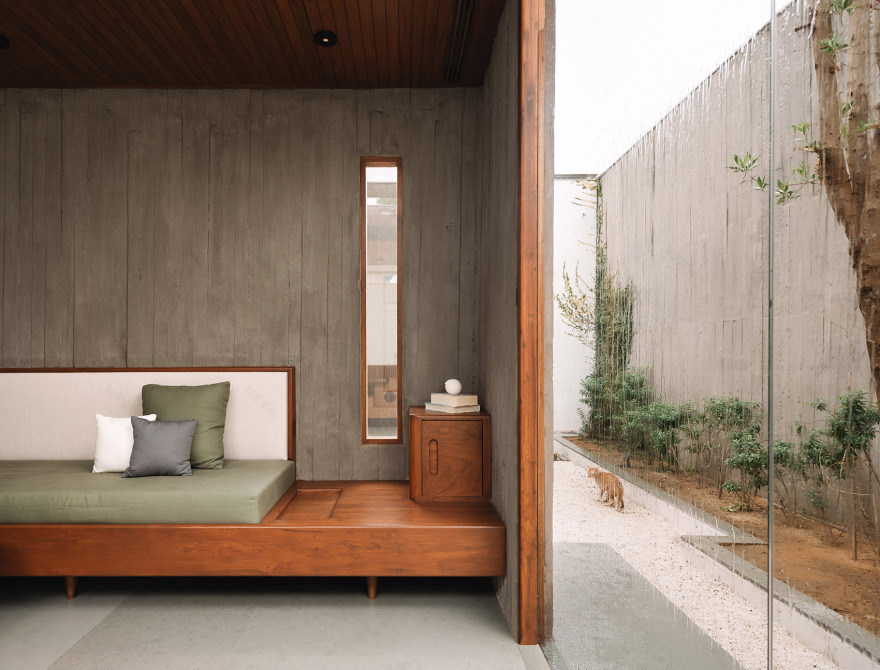
▼客房, the guest rooms ©Ishita Sitwala
▼不同颜色的浴室, bathrooms in various colors©Ishita Sitwala


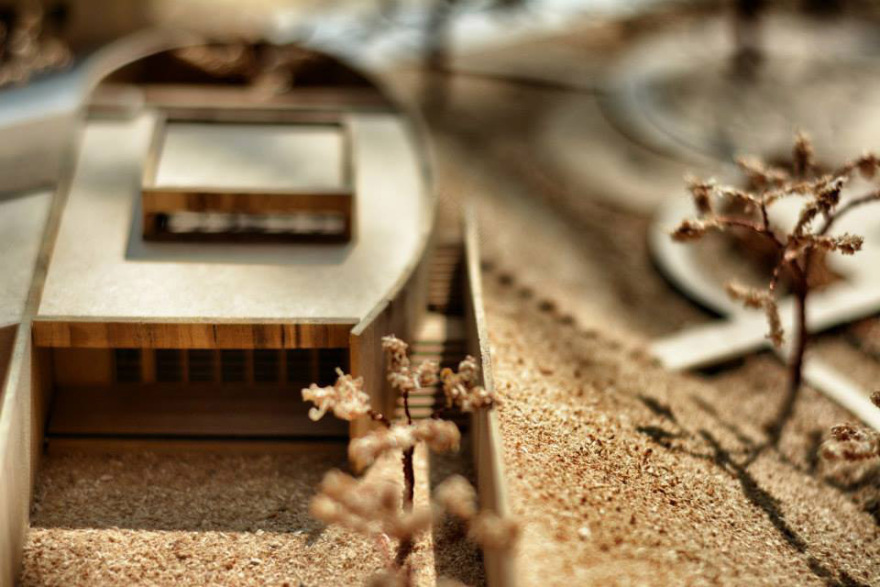
▼模型, model©Design ni Dukaan


Design : ‘Design ni Dukaan’, Ahmedabad.
Principal Architect : Ar. Veeram Shah
Text : Ar. Snehal Gada
Picture credits : Ishita Sitwala, The Fishy Project
HVAC Consultants : Anjaria ssociations
Structural Consultants : Saunrachna Strucon Pvt. Ltd
Contractor : Vastu Engineers










南京喵熊网络科技有限公司 苏ICP备18050492号-4知末 © 2018—2020 . All photos and trademark graphics are copyrighted by their owners.增值电信业务经营许可证(ICP)苏B2-20201444 苏公网安备 32011302321234号
苏公网安备 32011302321234号客服
消息
收藏
下载
最近