

创作上传
VIP
收藏下载
登录 | 注册有礼
查看完整案例

收藏

下载

分享
杜克大学与武汉大学合作创办了昆山杜克大学,占地 200 英亩,距上海 40 英里。
Duke Kunshan University, a joint endeavor between Duke University and Wuhan University, is situated on a 200-acre site in Kunshan, 40 miles from Shanghai.
▼鸟瞰,aerial view © TraceImage


回到 14 年前,面对快速的气候变化和城市化等问题,景观团队通过对社会发展的前瞻性考虑,选择了生态先行,以水系统构建作为目标,建立了一个集排涝、收集、净化、储蓄和利用为一体的系统化水环境,为校园创造了更多韧性。
▼场地变化,Site Change© Futurepolis

▼14 年的承诺,14 year commitment©Futurepolis

14 years ago, rapid urbanization caused Kunshan to face significant challenges with urban flooding and water quality degradation. This development accentuates the unprecedented importance of adept stormwater management. DKU’s landscape design team is entrusted with the imperative to mitigate the ramifications of intense rainfall and urban flooding phenomena within the region. They embraced an ecology-first strategy, pioneering water system design in the region to enhance the campus atmosphere and create a sustainable, serene educational environment.
▼概览,overview© RAWVISION studio
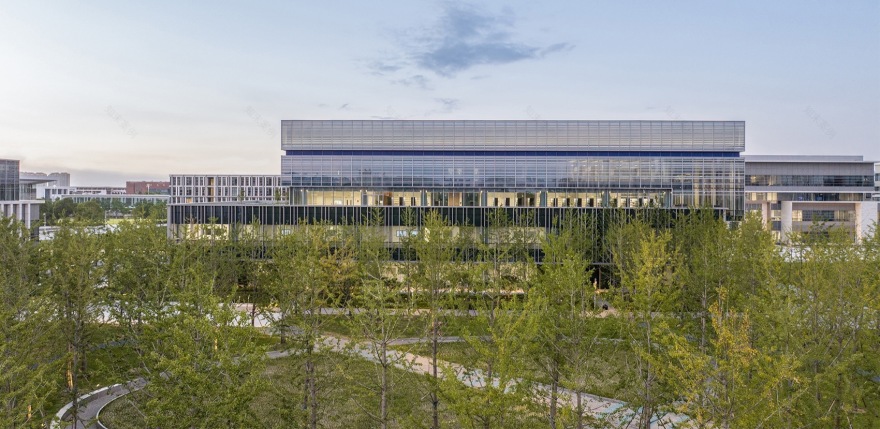
▼景观广场,landscaped square©TraceImage

▼景观细部,landscape details©TraceImage


在空间形态上,随着水位的季节性升降,环湖周边和湖心桥两旁层叠的滨水平台在广场、室外剧场、户外教室、露天茶室、水上通道等形态之间变换,满足庆典、观赏、学习、阅读和休憩等不同的功能要求。在二、七、八月的假期中,学校人数减少后对空间的使用也随之降低。此时的自然水量恰好处于高位,校园空间尺寸在人清水静的氛围中体现出昆山典型水乡格局。而在教学时期,自然水量变少后水位的下降为室外互动增加空间需求,恰好满足校园户外活动的使用。
The spatial design of the campus dynamically interacts with the seasonal fluctuations of water levels, transforming the lake’s surrounding areas and the bridge at its heart into versatile waterfront platforms. These platforms seamlessly transition between squares, outdoor theatres, classrooms, open-air tea rooms, and water channels, catering to various functions like celebrations, viewing, learning, reading, and relaxation. The terrace is meticulously crafted to adapt to the region’s water level variability, permitting select communal spaces to be submerged during February, July, and August, and to reemerge in times of diminished rainfall. This period presents the campus with a serene atmosphere that reflects the typical water town layout of Kunshan. During academic periods, lower water levels due to reduced natural water supply increase space for outdoor interactions, perfectly accommodating the heightened demand for campus outdoor activities.
▼昆山典型水乡格局,the typical water town layout of Kunshan©TraceImage
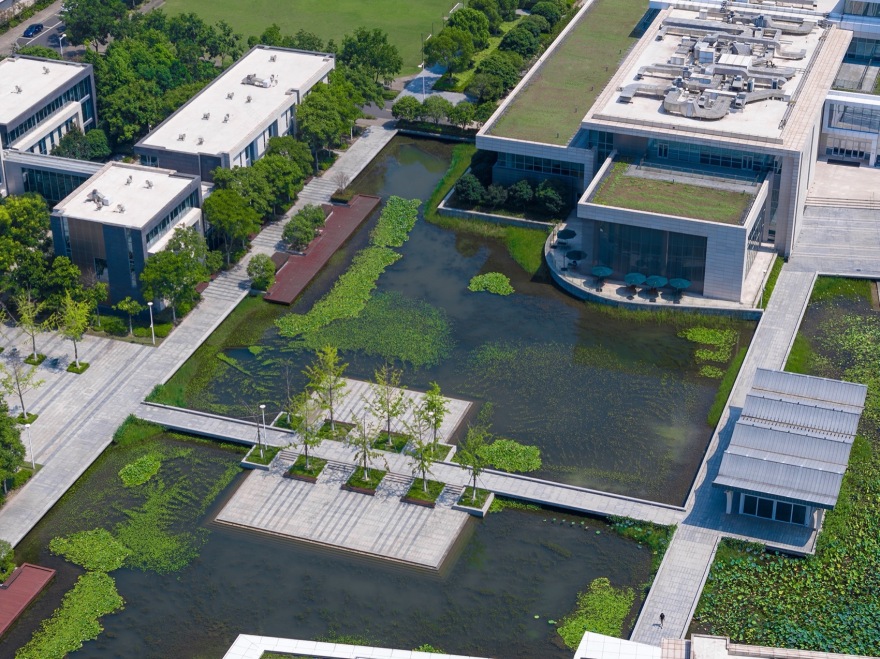


▼步道,bridge©TraceImage

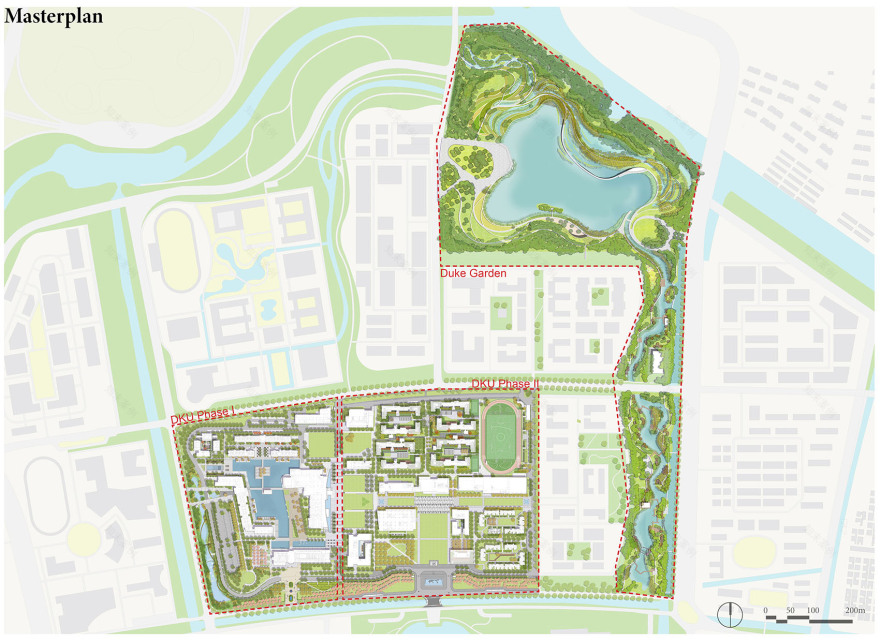
整个项目涵盖了昆山大学校园的一期、二期和杜克花园,景观团队通过对校园发展的前瞻性考虑,选择了生态先行,以水系统构建作为一期的目标,作为昆山地区的探索先驱,为二期和花园的设计也打下了铺垫。
在二期校园中,景观团队考虑了昆山的文化元素进行融合,以轴线布局和规划,链接一期的水系统,在对生态的极致设计中,通过对空间的功能配比和景观层次的划分,孕育出二期的完整和成熟的生态体系,诠释人的活动和自然生长的和谐性。
此外,在校园课程中,老师也会直接讲述如何去理解整个校园的水循环设计。校园的景观设计也成为环境学院课程里的一部分。
The overall project, encompassing phases one and two of the DKU campus and Duke Garden, is committed to fulfilling ecological promises with a forward-looking perspective. Phase I emphasizes water as a key cultural element, harvesting it from roofs and landscapes while filtering pollutants from driveways. Phase II aims for water collection and purification through the 16-acre Duke Garden Lake and Wetland. In addition, the campus’s water cycle system and the landscape design have been integrated into the curriculum of the general courses and the environmental studies program respectively, offering students a tangible understanding of sustainable practices and ecological principles. Water has become a focal point, achieving the original goal of using water as a narrative to showcase ecological education and promote respect for the environment.
▼校园整体俯瞰,campus overall top view©TraceImage

▼完整和成熟的生态体系,a complete and mature ecosystem©TraceImage
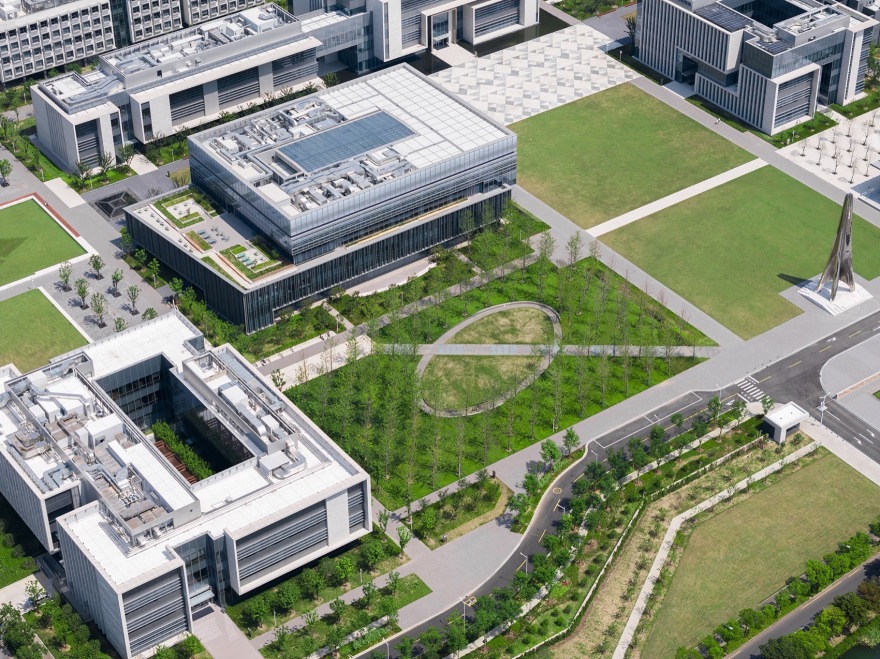
▼水生态为中心的校园景观,Water ecology as the center of the campus landscape ©TraceImage


▼建筑与环境,buildings and landscape©TraceImage


在经济效益中,虽然用于水质净化的地下渗滤系统增加了 300 万元的成本,但建成后的雨水回收及绿地浇洒节省成本为每年 35 万元,相当于八年回收建造时额外投入成本,同时通过海绵城市建设减少了周边管网河道的负担和投资,并提升整个地区环境品质,增加周边土地开发价值。整个校园内的水环境形成一个可控制、可循环、景观随着季节变换的生态系统,也使这个校园成为生态教育的绝佳场所。在过去的发展中,基于大生态理念的设计把校园内的水体融合成一个连贯的系统,这个以水生态为中心的校园景观项目在微观层面上为海绵城市的设计与实施提供了一个样本。
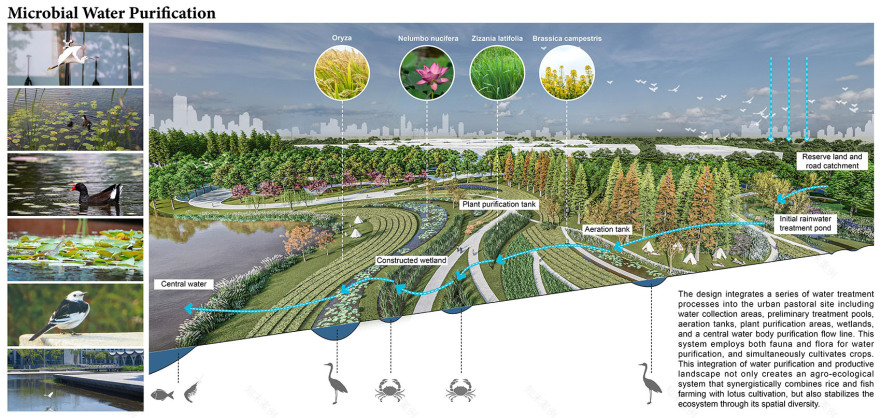
▼复合生态生境,Composite Ecological Habitats ©Futurepolis

▼地下过滤系统,underground filtration system©Futurepolis

Economically, although the underground filtration system for water purification added an initial cost of 3 million yuan, the completed rainwater harvesting and green space irrigation systems have resulted in annual savings of 350,000 yuan. This means the additional investment can be recouped within eight years, demonstrating the project’s sustainability. Moreover, the implementation of sponge city concepts has alleviated the burden on surrounding infrastructure and investment, improving the area’s environmental quality and increasing the value of nearby land developments. The foresight of this approach has proven to be a sustainable blueprint for education, demonstrating Duke Kunshan University’s commitment to integrating ecological stewardship with academic excellence in response to climate challenges. The success of the campus has generated positive feedback from the community towards the Sponge City model and has spurred the design and construction of other Sponge City projects in Kunshan.
▼公共空间绿化,public space greening©TraceImage
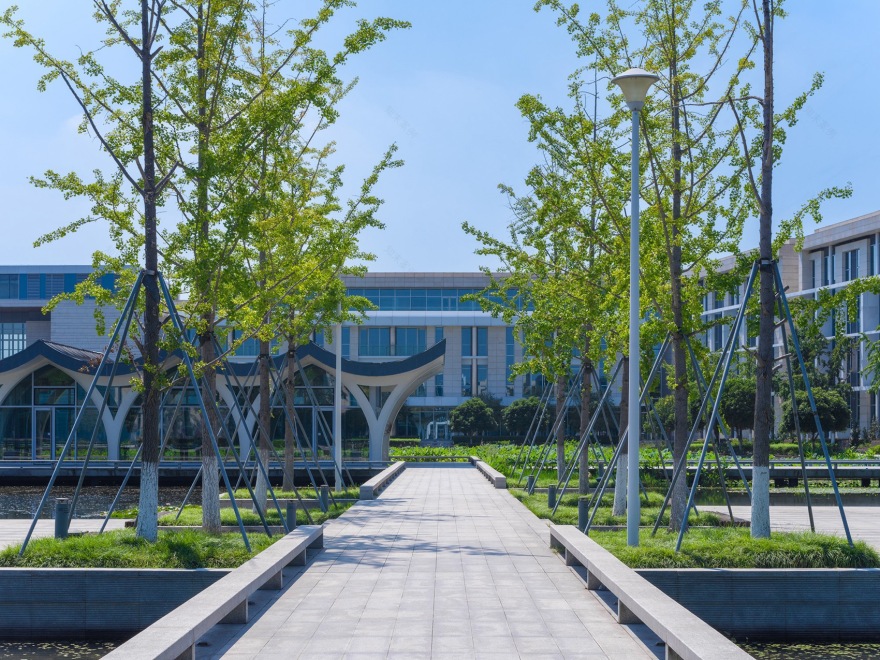
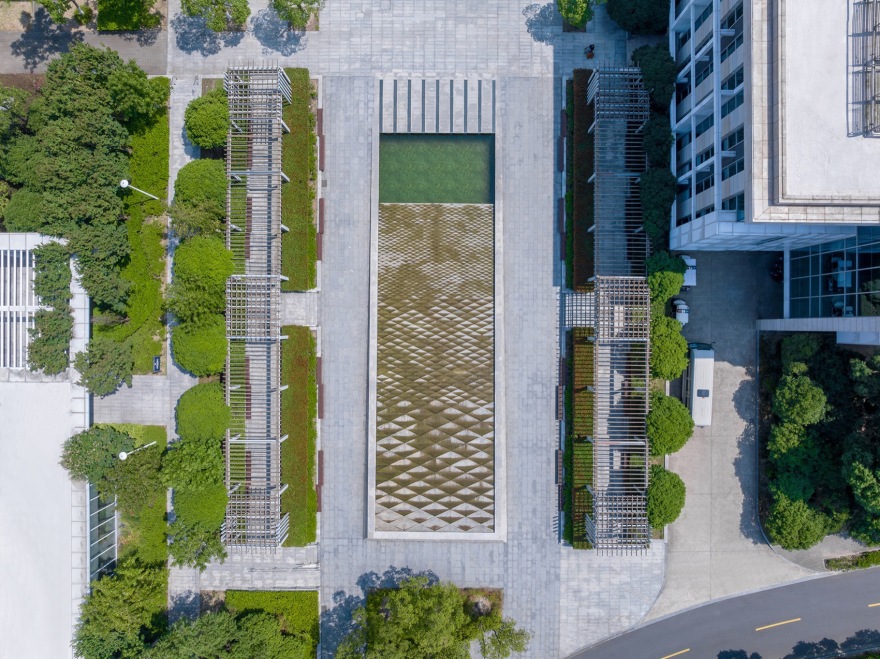
▼夕阳下的校园,The campus at sunset© RAWVISION studio


▼总平面图,master plan©Futurepolis
项目名称:链接时间与空间的流动边界:昆山杜克大学 14 年生态景观设计
项目类型:大学校园园区
设计方:Futurepolis 未来都市
项目设计:2010
完成年份:2023
设计主创:时惠来
设计团队:高伟、周立勋、廖坚毅、范云岚、郑立、李瑞、何千千
项目地址:江苏省昆山市高教区
建筑面积:625333 ㎡
摄影版权:TraceImage、RAWVISION studio、Xiaoping Lu
合作方:美国兰德设计(LandDesign. Inc)、Gensler、Perkins&Will、法国 Biotope 生态工程咨询公司(Biotope Ecological Engineering Consulting Co.)
客户:昆山杜克大学


南京喵熊网络科技有限公司 苏ICP备18050492号-4知末 © 2018—2020 . All photos and trademark graphics are copyrighted by their owners.增值电信业务经营许可证(ICP)苏B2-20201444 苏公网安备 32011302321234号
苏公网安备 32011302321234号客服
消息
收藏
下载
最近