

创作上传
VIP
收藏下载
登录 | 注册有礼
查看完整案例

收藏

下载

分享
项目场地位于上海浦东新区罗山花苑小区内,是一处以荒废的圆形花坛为中心、周围环绕着紫藤廊架、座椅和草地的社区绿地,改造前仅有老人和儿童偶尔使用。这与社区中日益丰富的社团活动和对公共空间的多样化需求之间产生了明显的矛盾。在设计伊始,我们便试图采取微更新的理念,通过轻质介入来重新激活公共空间的活力。
The site lies within the Luoshan Huayuan residential community in Shanghai’s Pudong District. Anchored by a neglected circular planter and framed by wisteria trellises, seating, and a lawn, this communal green space saw only occasional use by older residents and children. As local activities diversified and the community’s demand for flexible and accessible public spaces grew, the gap between potential and reality became increasingly evident—prompting a thoughtful micro-renewal intervention.
▼项目场地鸟瞰,Aerial View of the Site © Studio RE+N

▼项目鸟瞰,Aerial View of the Stage© Studio RE+N

罗山花苑小区建于 2006 年,荒废的社区绿地反映了 2000 年代初期中国城市居住区规划中的典型问题:社区花园普遍以单一功能为导向,缺乏灵活的使用模式,导致空间利用率低且维护不足,无法适应新时期的社区需求。通过场地走访、对周边居民需求收集、多次方案路演等社区参与活动,设计团队与居民、社团、居委、物业等各方利益相关者共同参与方案讨论,确保改造符合社区各方的实际需求、恢复其作为社区公共生活场所的潜力。
▼改造前荒废的圆形绿地与紫藤廊架,The Abandoned Circular Planter and Wisteria Trellises Before Renovation © 四叶草堂

Built in 2006, the residential complex reflects a common issue in early-2000s urban planning: community gardens conceived around a single function, lacking flexibility and long-term care, and ultimately failing to adapt to residents’ evolving needs. The design team sought to reactivate this underused space, restoring its potential as a vibrant hub for communal life. To ensure the intervention genuinely addressed local needs, the team facilitated multiple participatory events—such as site walks, resident interviews, and design presentations. Collaborative efforts with residents, neighborhood associations, property managers, and community groups aligned the project goals with practical demands, ensuring the revitalized space served as a dynamic, inclusive community asset.
▼改造后的舞台和廊架,Renovated stage and trellis© Studio RE+N

▼场地改造后整体效果,Renovated Site Overview© Studio RE+N

设计围绕“舞台”这一核心概念展开,将废弃花坛转化为轻盈的钢结构圆形舞台。舞台表面的翻折形态为不同代际群体提供了灵活的使用方式,促进了各年龄段居民的互动与共处。设计满足坐、躺、站、攀爬等多种需求,为社区提供日常休闲空间。舞台设计上不仅是放学后儿童玩耍的场所,也是家长和老年人休憩的空间,年轻人晒太阳、交流、聚会的地方,同时还能为各类社团活动提供支持,承载社区活动、观演以及周末小型演出,从而重新定义公共性与日常性。地面上的放射式象限布局为儿童提供了多样的游戏网格,同时也连接起舞台与廊架等不同展示区域,象征着场地对周边社区生活的辐射与联系。
▼设计方案鸟瞰,Aerial View of the Design Proposal© Studio RE+N

▼日常活动和社区活动剖面示意图
Sectional Diagram of Daily and Community Activities© Studio RE+N

▼日常和社区活动平面示意图,Plan Diagram of Daily and Community Activities© Studio RE+N
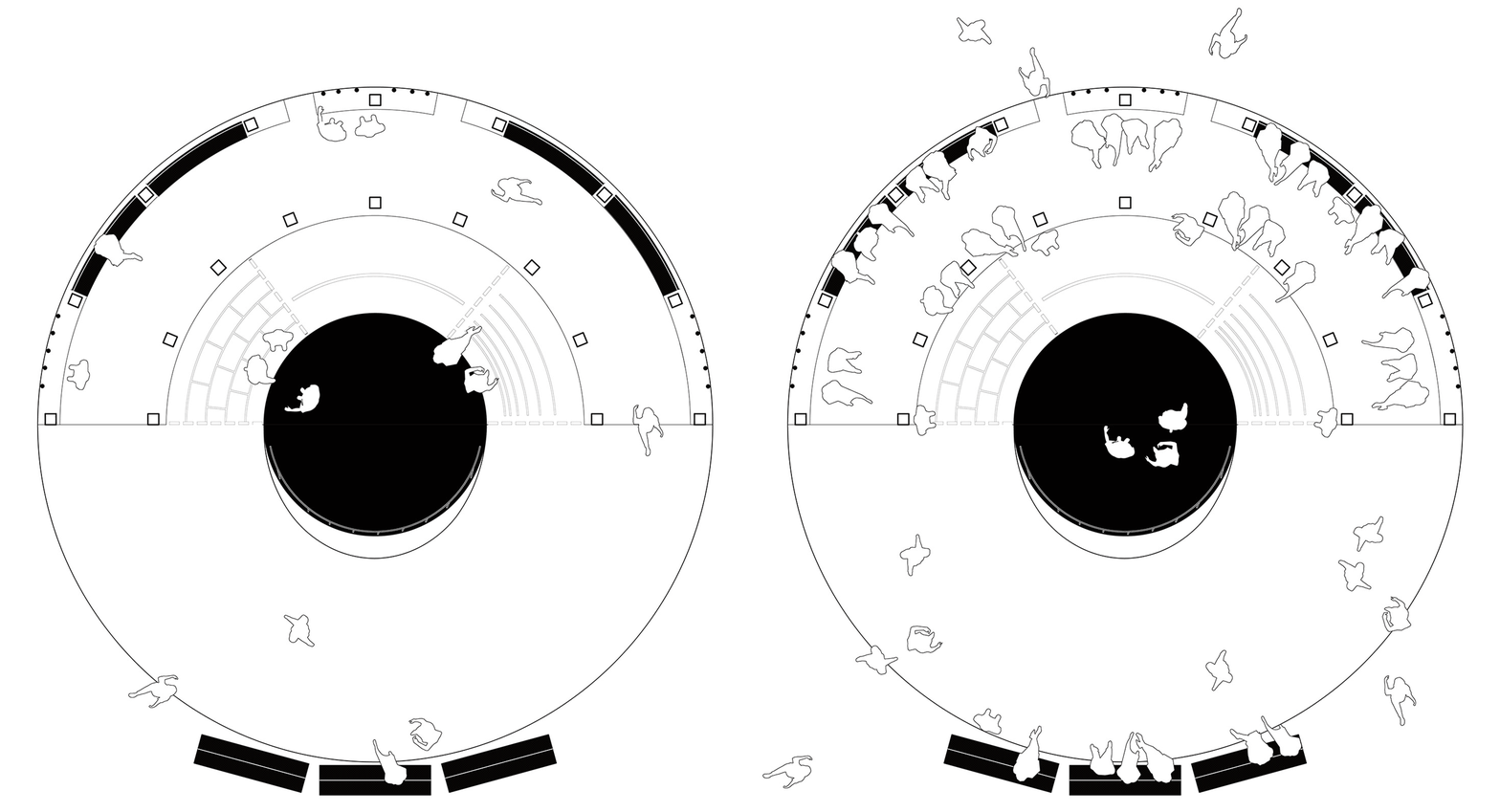
The design is centered around the concept of a “stage,” transforming an abandoned circular planter into a lightweight, steel-framed platform. The stage’s flexible, folded surface provides versatile usage for different generations, fostering interaction and coexistence among residents of all ages. It accommodates a variety of activities such as sitting, lounging, standing, and climbing, offering a daily leisure space for the community. The stage serves not only as a play area for children after school but also as a resting space for parents and seniors, a place for young people to sunbathe, socialize, and gather, while also supporting various community activities. It hosts community events, performances, and weekend shows, thus redefining the relationship between public and daily use. The radial quadrant pattern on the ground provides playful grids for children’s activities and connects the stage with other display areas like trellises, symbolizing the space’s outreach and connection with the surrounding community.
▼舞台和游戏网格上的儿童活动,Children on Stage and Play Grids© Studio RE+N


▼舞台上的日常行为,Daily Activities on Stage© Studio RE+N

▼舞台、地面网格与廊架中的不同活动,Activities on Stage, Play Grids, and Trellises© Studio RE+N

▼舞台、地面游戏网格与廊架相呼应,Stage, Play Grids, and Trellises in Harmony© Studio RE+N

舞台的设计策略不仅着眼于提升场地的实际使用功能,更意在深入探讨社区精神的内核与价值。圆形舞台以其简洁的几何形态与轻盈的漂浮感,模糊了日常使用与仪式性活动的边界,既是社区活动的聚光焦点,也是戏剧演绎的背景衬托。作为一个公共生活的展现平台,为社区居民提供了个性化展现“舞台”,让日常生活的片段与仪式感交织呈现。舞台不仅激发了个体与集体之间的互动与紧密联结,更推动了社区文化与社交活力的复兴,成为承载社区精神与共享记忆的重要空间。
The design strategy for the stage not only focuses on enhancing the practical functionality of the space but also aims to explore the core values and spirit of the community. The circular stage, with its simple geometric form and light, floating appearance, blurs the boundary between everyday use and ceremonial activities. It serves both as the focal point for community events and as the backdrop for theatrical performances. As a platform for public life, the stage provides a personalized “stage” for residents to express themselves, weaving everyday moments with a sense of ritual. The design not only fosters interaction and close connection between individuals and the collective but also revitalizes the community’s cultural and social vitality, becoming an essential space for carrying the community’s spirit and shared memories.
▼孩子在舞台上玩耍,Children Playing on Stage© Studio RE+N

▼举办社区亲子活动,Family Activities of the Community© Studio RE+N

▼全年龄段社区活动,All-Age Community Activities© Studio RE+N

为了满足居民和社团的多样化需求,保留的紫藤廊架不仅更新为休憩空间,引入与舞台同样色彩的黄色座面,同时还通过加建展示系统,成为定期更换展览的展廊。展廊展示“舞台”项目改造的缘起和社区参与的过程,也作为周边社团活动与共创活动、认领花园活动等的展示平台。
To meet the diverse needs of residents and community groups, the preserved wisteria trellis has been updated into both a leisure space—featuring yellow seating that matches the stage’s color scheme—and a rotating exhibition gallery with a new display system. The gallery showcases the origins of the “Stage” project and its community participation process, while serving as a platform for displaying community group activities, co-creation initiatives, and garden adoption programs.
▼改造后的廊架空间,Renovated Wisteria Trellises© Studio RE+N

新建部分通过材质、结构和色彩塑造了轻盈、漂浮的视觉效果,赋予了场地焕然一新的形象,与混凝土材质的保留部分形成新旧对比。
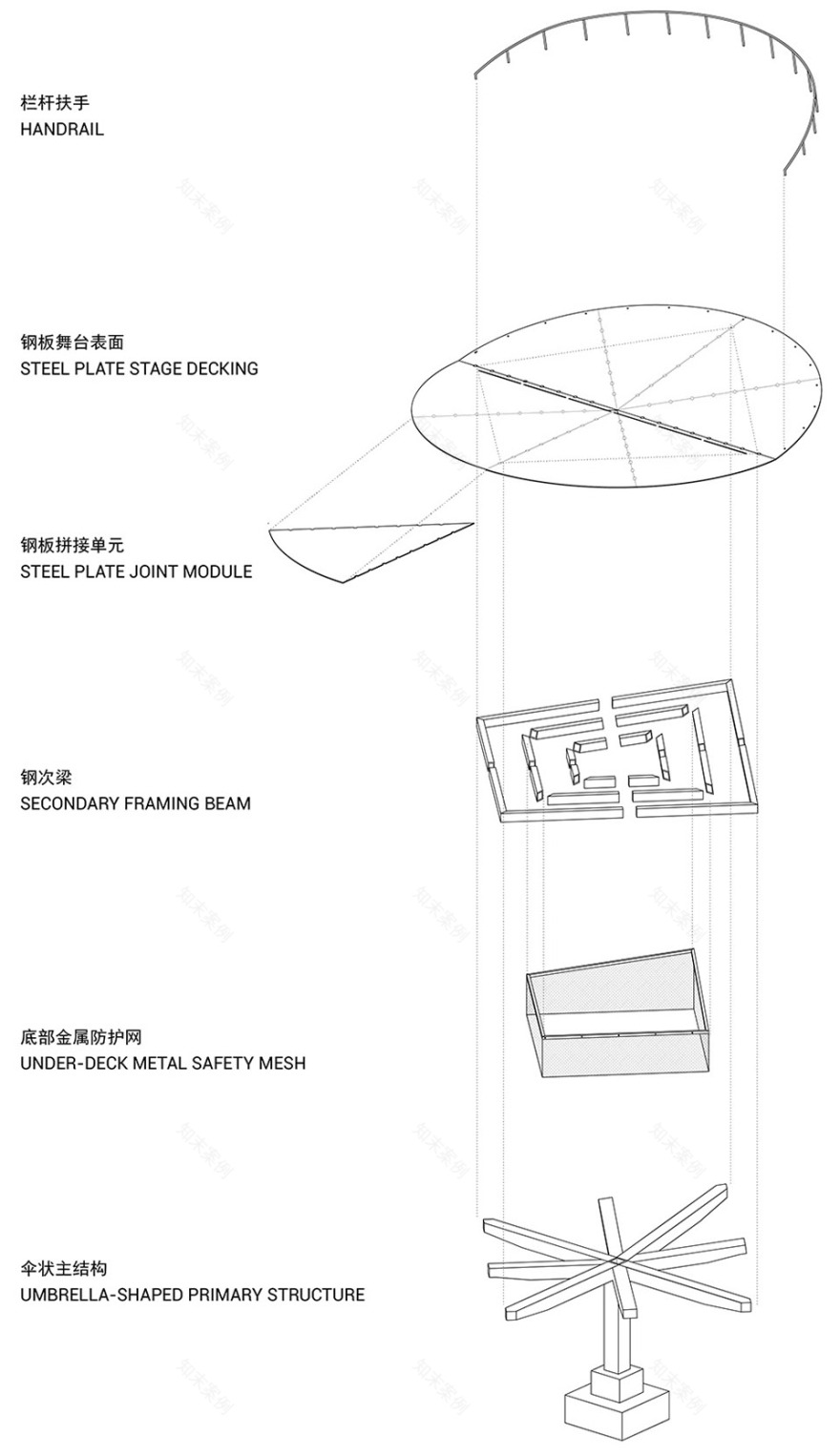
中心舞台采用伞状单柱加变截面悬挑梁的结构实现视觉上的漂浮感。
新增的独立座凳沿用了单排脚柱和折板座面的悬挑结构。
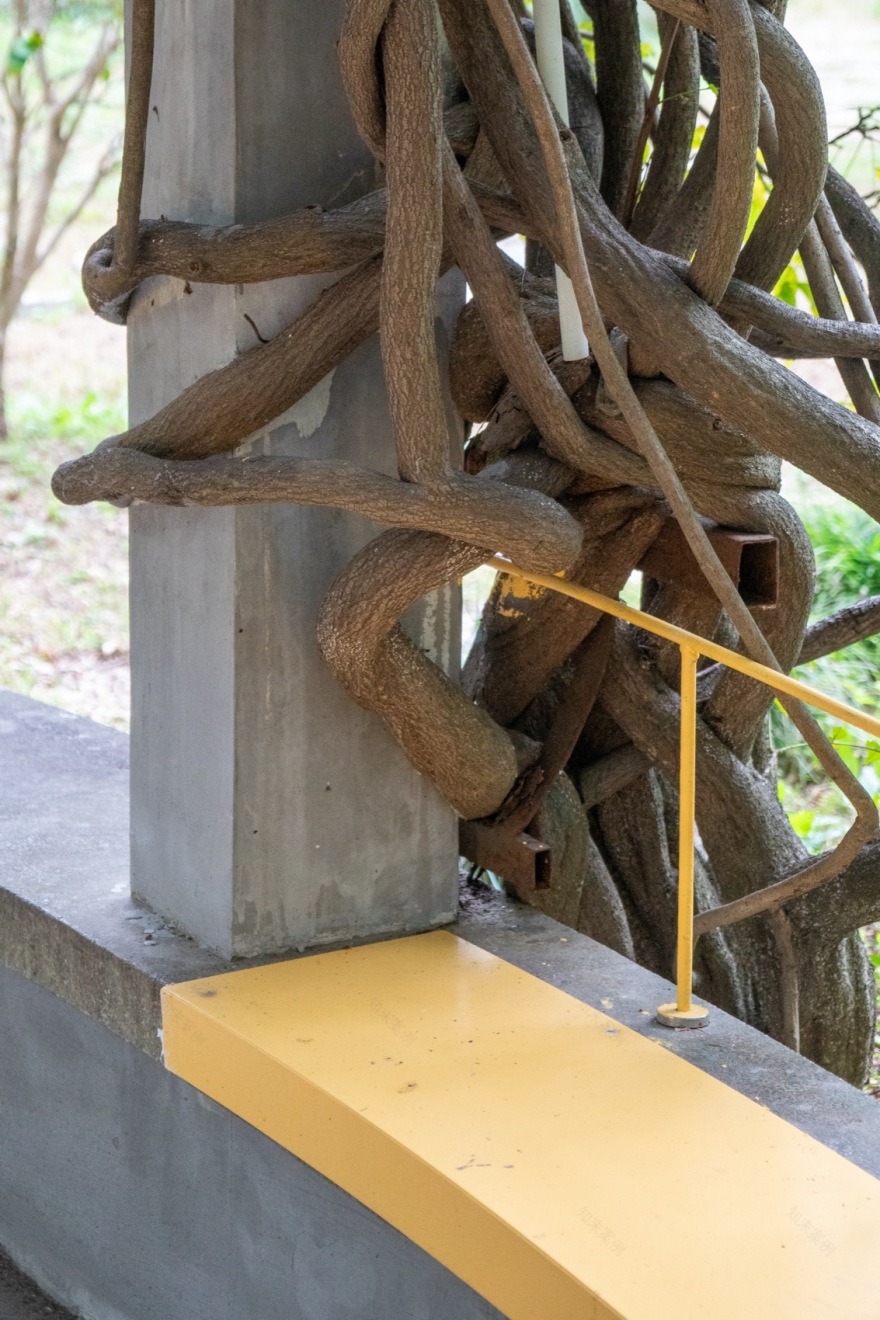
展示系统通过纤细的钢绞线锚固于原有廊架结构,而座位则通过在原有混凝土座位上附加折板金属座面与细杆靠背完成更新。
钢结构、折板、新增地面喷涂均采用黄色,为暗灰色的场地现状注入活力和动感。黄色作为充满能量的颜色,也同时象征着社区的复苏和活力。
舞台底部为砾石铺装和认领花园,钢梁底部的金属网方便社区清理维护,也保证了宠物和儿童使用上的安全。
The new construction achieves a light, floating visual effect through its materiality, structure, and color palette, creating a fresh identity for the site while contrasting with the retained concrete elements. The central stage employs an umbrella-like single column with variable-section cantilever beams to achieve visual levitation. The newly added independent seating follows the same cantilever structure with single-row pedestals and folded plate seats. The display system is anchored to the existing pergola structure using slender steel cables, while the seating is updated by adding folded metal surfaces and thin rod backrests to the original concrete seats. Steel structures, folded plates, and new ground coatings all utilize yellow, injecting vitality and dynamism into the site’s dark gray existing conditions. Yellow, as an energetic color, also symbolizes the community’s revival and vitality. The stage base features gravel paving and an adopted garden, with metal mesh under the steel beams facilitating community maintenance while ensuring safety for pets and children.
▼使用钢拉索在廊架上加建的展示系统
Steel Cable Exhibition System on Trellis© Studio RE+N

预制构件使得现场快速拼装成为了可能,提高了施工效率。直径 4.5 米的圆形舞台由 8 片组成,如同“派”状分割的钢板预先切割、预留好边缘半圆形凹口。场地施工时,这些模块能够快速拼接并进行最终焊接,显著缩短了现场搭建工期。实心圆钢弯折成舞台翘起处的扶手,不仅确保了使用安全,也附加了提供给居民压腿、倚靠等多种功能。
▼加建的各元素类型,Typology of additional features© Studio RE+N

▼舞台结构分析图,Diagram of Stage Structural Components© Studio RE+N
▼舞台施工,construction© 百谷营造


The use of prefabricated components allowed for quick on-site assembly, greatly improving construction efficiency. The 4.5-meter-diameter circular stage was divided into eight pie-shaped steel panels, each with pre-cut circular openings along the edges. During installation, these panels were quickly connected and welded together, significantly reducing the build time. The stage’s elevated edges feature handrails crafted from bent solid round steel bar, ensuring safety while also providing functionalities like leg stretching and leaning support.
▼舞台下部结构与绿化,View of Stage Structure and Landscaping© Studio RE+N

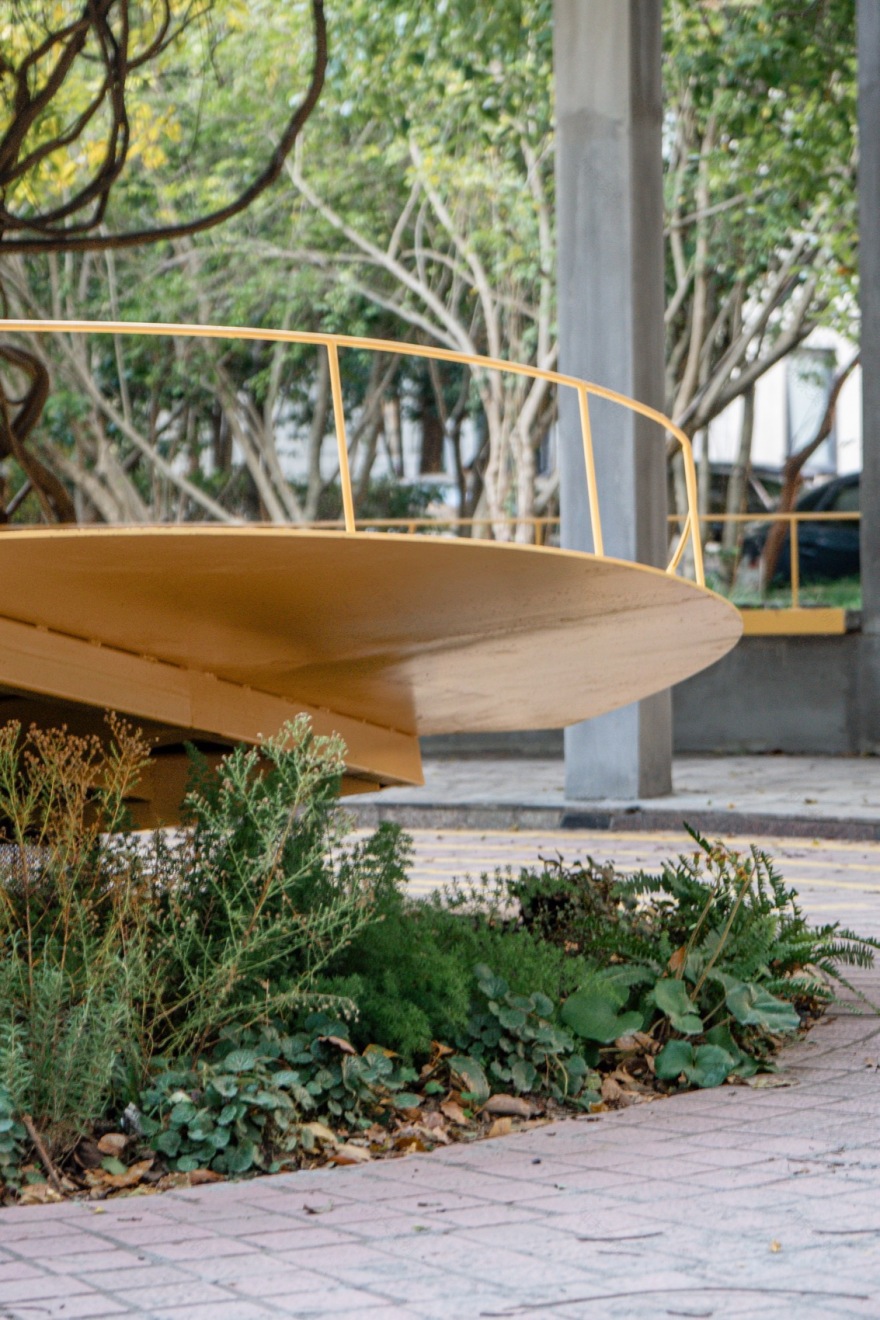
▼金属座面和座凳加建,seatings and benches© Studio RE+N

设计通过小规模更新和低成本改造,最大化场地的社会效益,提升社区公共空间的利用率和凝聚力。舞台的设计不仅关注场地物理形态的转变,更深入探讨了不同人群对公共空间的使用方式与行为模式,希望打造出一个更具包容性和可持续性的社区空间范式。舞台的设计并非终点,而是新的起点——通过激发更多的场地互动和丰富的社群生活,使用者们也在持续参与“舞台”和这片社区花园公共性的重新定义。更多设计过程里未曾设想到使用场景每天在发生。
Through targeted small-scale updates and cost-effective renovations, the design maximizes social benefits while boosting community engagement and public space utilization. The stage design goes beyond physical transformation—it explores how diverse user groups interact with public spaces and their behavioral patterns, working toward a more inclusive and sustainable community paradigm. The stage design serves not as an endpoint but as a beginning: by sparking site interactions and enriching community life, users actively participate in redefining both the “stage” and community garden’s public character. Each day brings new, unexpected uses of the space that extend beyond the original design vision.
▼细部节点,details© Studio RE+N


▼总平面图,Site Plan© Studio RE+N

▼舞台平面图 ,Stage Plan© Studio RE+N
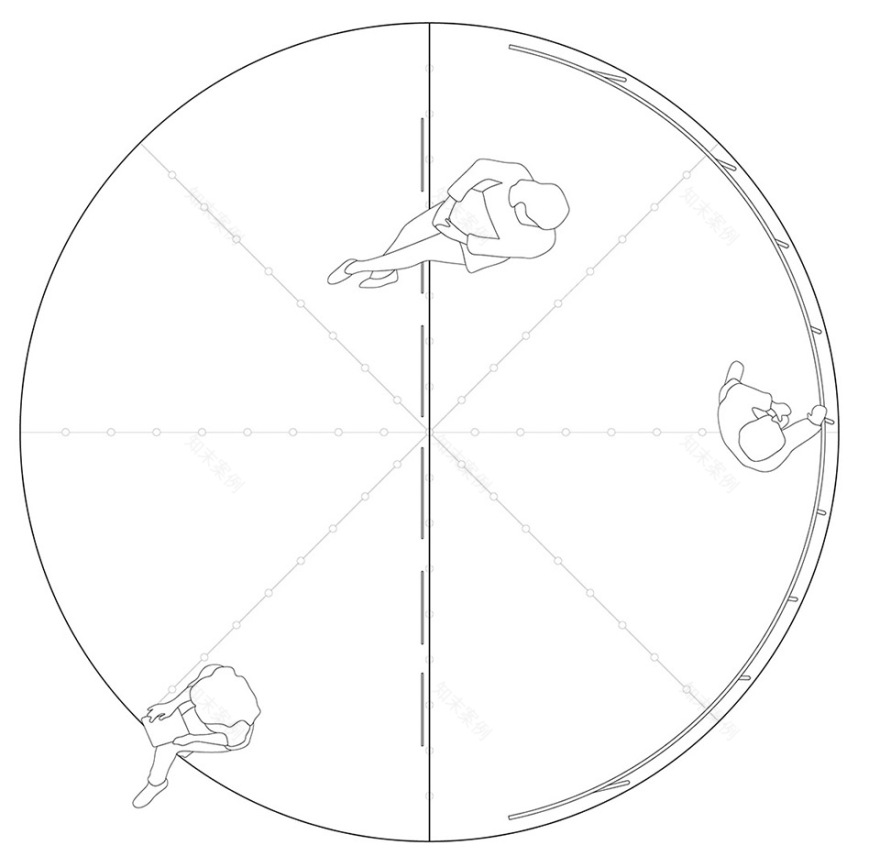
▼舞台剖面图 ,Stage Section© Studio RE+N

项目名称:舞台——上海罗山花苑社区微更新
项目类型:景观、设计
设计方:衍述设计
项目设计:张雨婷、张谱
完成年份:2024
设计团队:曹诗敏、韩建屋
项目地址:上海市浦东新区罗山花苑
建筑面积:场地面积 200㎡
摄影版权:衍述设计
合作方:上海四叶草堂青少年自然体验服务中心 同济大学社区花园与社区营造实验中心
客户:浦东新区花木街道办事处
Project name: THE STAGE ——Shanghai Luoshan Huayuan Community Micro-Renewal
Project type: Landscape 、Design
Design: Studio RE+N
Design year: 2024
Completion Year: 2024
Leader designer & Team: Yuting Zhang、Pu Zhang
Project location: Luoshan Huayuan, Pudong New District, Shanghai
Gross built area: 200 ㎡(site area)
Photo credit: Studio RE+N
Partner: CloverNatureSchool & Lab of community garden & community empowerment
Clients: Huamu Subdistrict, Pudong New District, Shanghai
Materials: Steel
南京喵熊网络科技有限公司 苏ICP备18050492号-4知末 © 2018—2020 . All photos and trademark graphics are copyrighted by their owners.增值电信业务经营许可证(ICP)苏B2-20201444 苏公网安备 32011302321234号
苏公网安备 32011302321234号客服
消息
收藏
下载
最近