

创作上传
VIP
收藏下载
登录 | 注册有礼
查看完整案例

收藏

下载

分享
项目位于巴西南部巴拉那州首府库里提巴市,这套200平方米的公寓由Kuster Brizola Arquitetos的建筑师João Gabriel Küster Cordeiro和Arthur Felipe Brizola精心改造,焕然一新,以满足一对年轻夫妇及其女儿的需求。
Located in the city of Curitiba, capital of the state of Paraná, in the south of Brazil, this 200m² apartment underwent an internal renovation designed by architects João Gabriel Küster Cordeiro and Arthur Felipe Brizola, from Kuster Brizola Arquitetos. The project transformed the property to meet the needs of a young couple and their daughter.
▼项目概览,overall of interior © Eduardo Macarios

公寓的公共区域朝南,为了捕捉来自东方的自然光线,设计团队对布局进行了优化,拆除了原本分隔房间的墙体,扩大了整体空间。中性色调和天然材料(如木材和石材)的运用,为住宅带来明亮且永不过时的氛围。
The property has a common space whose facade faces south, which meant that one of the project’s demands was to capture light coming from the East. The execution involved changes in the layout to adapt the environment, and walls that previously delimited the rooms were demolished to expand the room. The use of neutral colors and natural coverings, such as wood and stone, provided a light and timeless atmosphere for the residence.
▼生活空间,living room © Eduardo Macarios
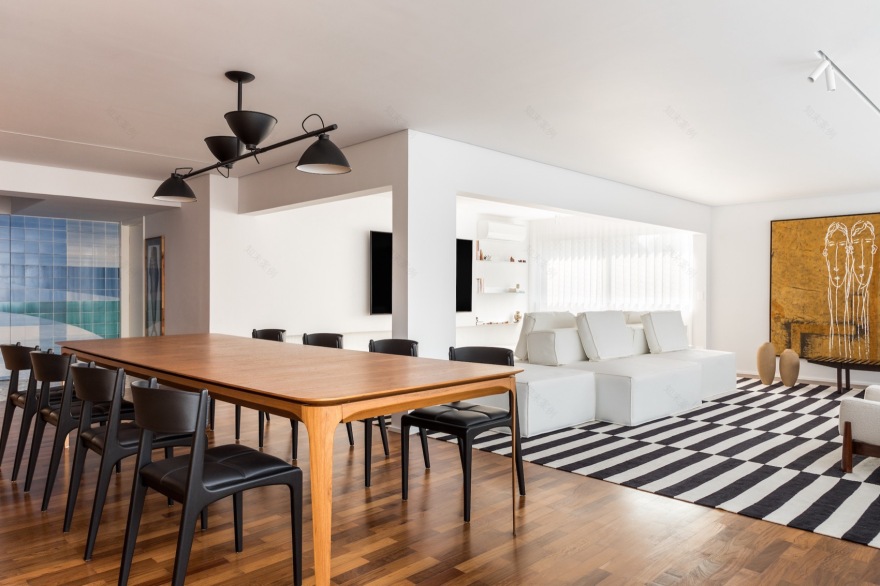
▼由客厅望向餐厅与办公区,viewing the dining area and bedroom from the office room © Eduardo Macarios

▼办公区细部,details of the office © Eduardo Macarios

入口大厅成为空间的视觉焦点,艺术家Rômulo Lass的壁画超越传统功能,成为设计的重要身份标识。壁画贯穿餐厅与厨房,不仅连接这些空间,还巧妙地隐藏了通往卫生间和储藏室的门,整体空间因此更加精致统一。碎石大理石地板为视觉效果增添层次感,并延伸至厨房区域,建立了空间之间的流畅衔接。
The apartment’s entrance hall is marked by the mural by artist Rômulo Lass, which goes beyond traditional functionality and takes on a leading aesthetic role, establishing itself as an important layer of identity in the project. It connects the dining room and kitchen by passing through these spaces, in addition to mimicking the access door to the bathroom and pantry, giving refinement and unity to the spaces. The shard marble floor adds a new layer of visual interest, also establishing itself throughout the kitchen and creating a fluid link between the spaces.
▼入口大厅,entrance hall © Eduardo Macarios

▼瓷砖壁画,tile mural © Eduardo Macarios

▼细部,details © Eduardo Macarios

烹饪是家庭的热爱所在,因此厨房设计得以特别强化,旨在提供独一无二的体验。厨房配备了最先进的设备,包括酒柜、烧烤架和烤炉,还设置了一个以“集市”为灵感的区域,兼具美感与功能性。
Cooking is a true family passion, and received special attention in this project, designed to provide a unique experience. The environment has state-of-the-art equipment, such as a wine cellar, barbecue and grill, as well as a space inspired by a “fair”, which adds charm and functionality.
▼厨房,kitchen © Eduardo Macarios
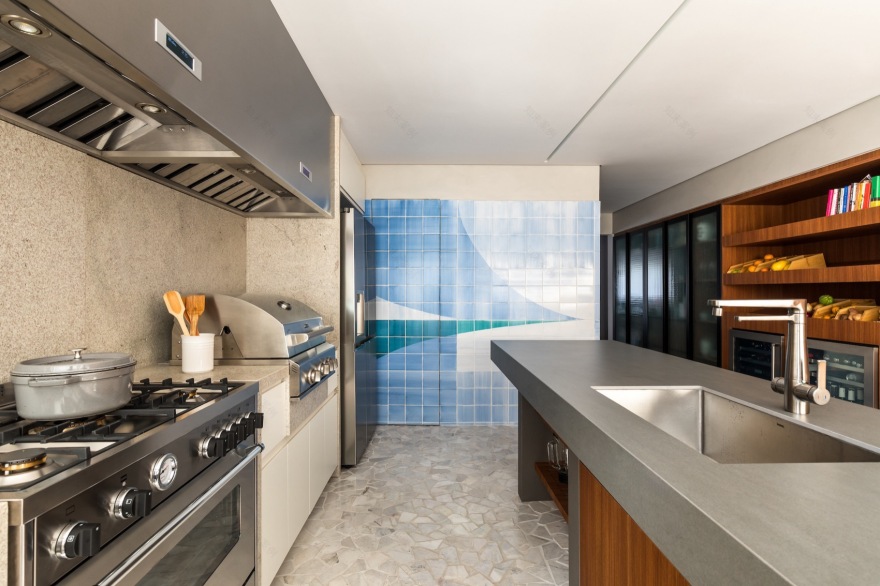
▼以“集市”为灵感的区域,a space inspired by a “fair” © Eduardo Macarios
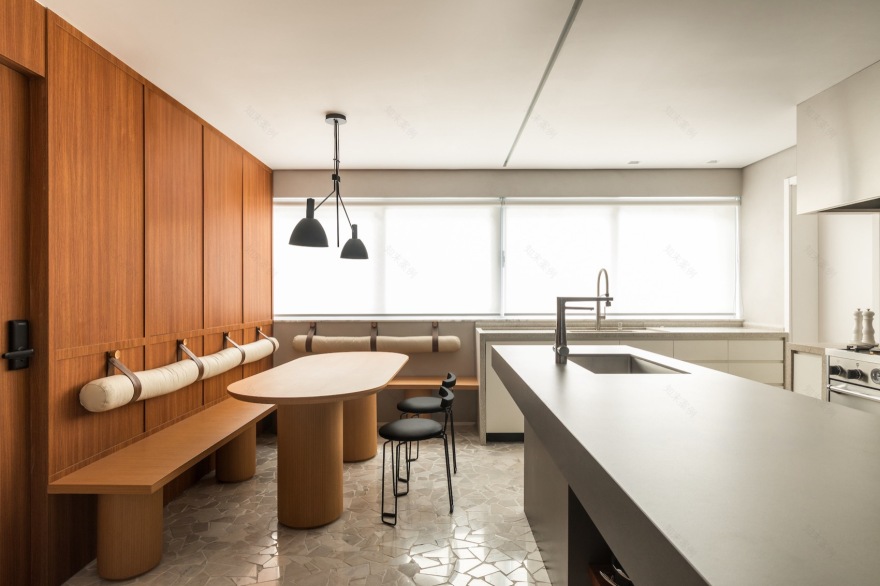
▼细部,details © Eduardo Macarios

客厅的核心是一张岛式沙发,围绕它布置了起居和电视区域。家具选择在当代与现代主义风格间取得了平衡,Cimo扶手椅、Aécio Sarti的绘画以及Domingos Tótora的花瓶为空间增添了温馨且优雅的氛围。与客厅相连的餐厅以Estúdio Bola设计的Helga椅、Lina Bo Bardi设计的吊灯,以及Erwin Zaidowicz的画作为亮点,画作悬挂在餐边柜上方,成为视觉中心。
The living room’s key element is an island sofa, from which the living and TV spaces develop. The choice of furniture sought harmony between contemporary and modernist styles. Among the highlighted pieces are the Cimo armchairs, the painting by Aécio Sarti and the vases by Domingos Tótora, which create a welcoming and relaxing atmosphere, while highlighting elegance and comfort. Integrated into the living room, the dining room stands out with the Helga chair, from Estúdio Bola, the pendant lamp by Lina Bo Bardi and the painting by Erwin Zaidowicz, positioned above the buffet.
▼客厅的岛式沙发,the island sofa of the living room © Eduardo Macarios

▼起居和电视区域,the living and TV spaces develop © Eduardo Macarios

▼Cimo扶手椅、Aécio Sarti的绘画以及Domingos Tótora的花瓶,the Cimo armchairs, the painting by Aécio Sarti and the vases by Domingos Tótora © Eduardo Macarios

▼客厅细部,details of the living room © Eduardo Macarios
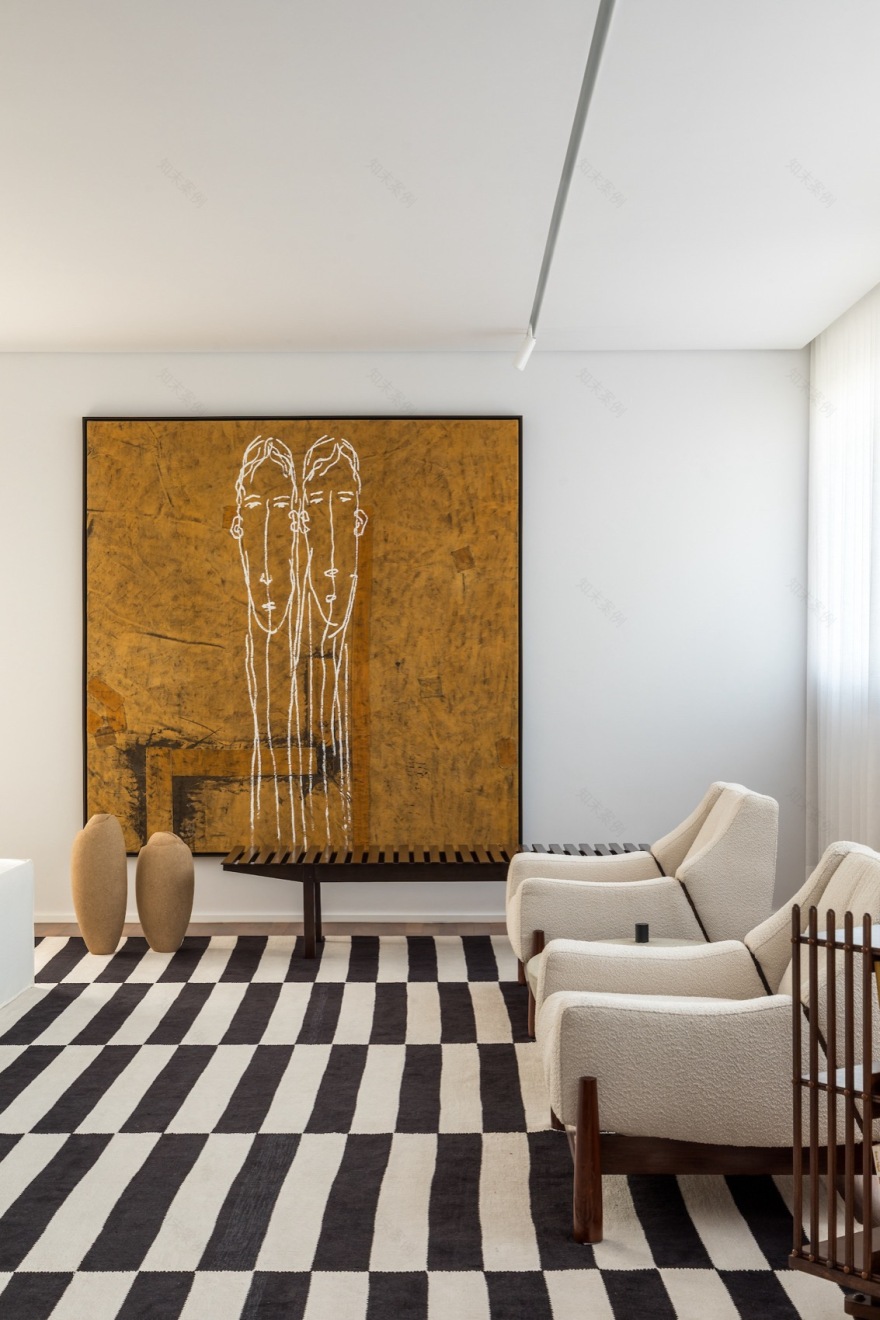

▼家具细部,details of the furniture © Eduardo Macarios


项目的另一大亮点是将客厅的一部分改造成办公区,以满足客户的需求。办公区位于餐厅旁,配备了两扇木质滑门。门关闭时,办公区隐藏为一个与餐厅风格一致的餐边柜;门打开时,办公区与客厅无缝相连,形成流畅的空间过渡。这种隐藏与开放并存的设计,使公寓充满探索趣味。
Another major highlight of the project is an area of the room transformed into an office, designed to meet customer needs. Located next to the dining room, the space has two wooden sliding doors that, when closed, reveal a buffet that complements the dining environment. When open, they connect the office to the living room, creating a fluid transition. This element of surprise is one of the characteristics that make the apartment full of discoveries.
▼餐厅,dining area © Eduardo Macarios

▼两扇木质滑门,the two wooden sliding doors © Eduardo Macarios


▼餐厅细部,details of the dining area © Eduardo Macarios


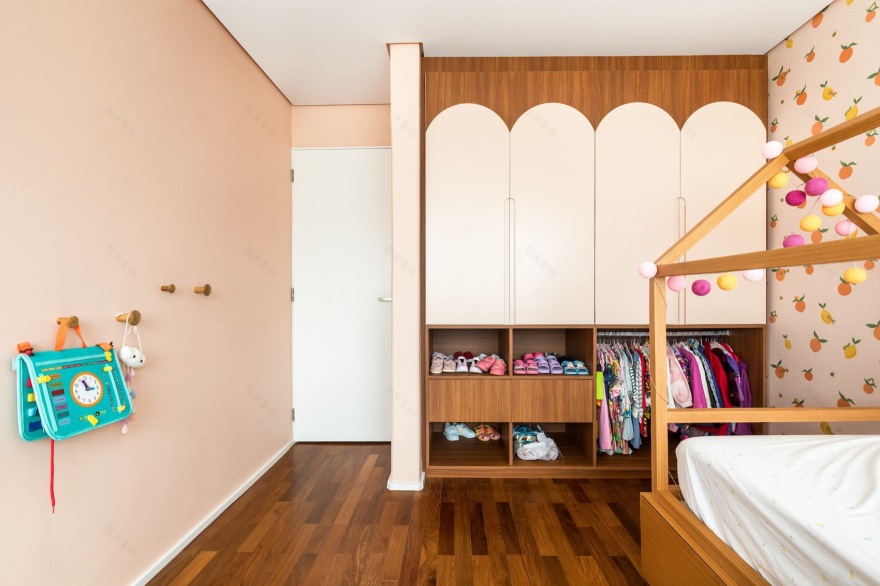
主卧室以木材为主,搭配软包床头板,为休息空间注入温暖舒适感。女儿的房间以蒙特梭利教育理念为基础设计,采用浅粉色和木质调,打造出轻松、温馨的成长环境。
The couple’s bedroom is characterized by the predominant use of wood and the upholstered headboard, which brings the necessary warmth to the rest space. The daughter’s room was designed based on the Montessori method, using shades of light pink and wood to create a light and welcoming environment for the child’s development.
▼主卧室,the couple’s bedroom © Eduardo Macarios

▼女儿房,the daughter’s room © Eduardo Macarios

除了上述艺术家和设计师外,Inove Design、Antiquário Cristiano Ross、Lumini、E Iluminação、Maragno Movelaria和Maestro Engenharia也为项目的完成作出了重要贡献。
In addition to the artists and designers mentioned above, Inove Design, Antiquário Cristiano Ross, Lumini, E Iluminação, Maragno Movelaria and Maestro Engenharia contributed to the execution of this work.
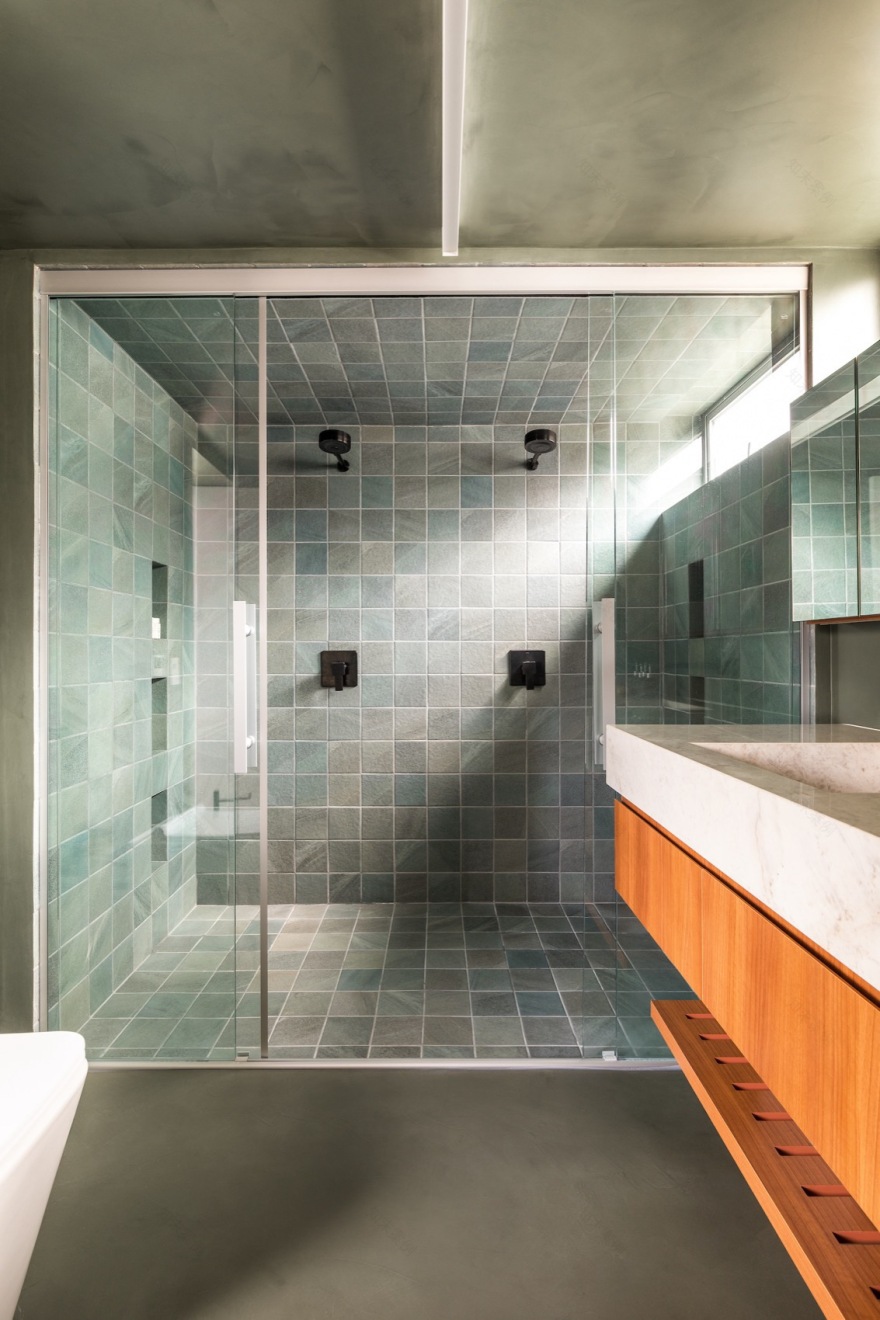
▼浴室,bathroom © Eduardo Macarios

南京喵熊网络科技有限公司 苏ICP备18050492号-4知末 © 2018—2020 . All photos and trademark graphics are copyrighted by their owners.增值电信业务经营许可证(ICP)苏B2-20201444 苏公网安备 32011302321234号
苏公网安备 32011302321234号客服
消息
收藏
下载
最近