

创作上传
VIP
收藏下载
登录 | 注册有礼
查看完整案例

收藏

下载

分享
出品人:向玲 / Producer: Xiang Ling
编辑:石安,亓慧、庞任飞,张笑然 / Editor: Shi An, Qi Hui, Pang Renfei, Zhang Xiaoran
_________
关于“米凹”
About “mearc”
“我们希望以一种不一样的视角对待我们的工作。”
Our intention is to approach our work from a fresh perspective.
“米凹”这个名字起初的灵感源于我们对猫的喜爱——就像猫叫的声音一样。我希望用这样一个可爱且贴近生活的名字作为工作室的名称。至于“mearc”,是在有了“米凹”这个中文名字后,寻找的一个发音相近的英文名。这个名字由五个简单的字母组成,视觉上显得整齐一致,但并没有特别的含义。“米凹”这两个字本身非常美观,笔画清晰,让人联想到平面图、建筑元素,甚至像一个开放的小房子。这也正是我们取名时的初衷——希望以一种不一样的视角对待我们的工作。“米凹”是我们的起点,它象征着我们以独特的方式定义和表达事务所的理念与愿景。
The name “米凹” (mearc) was inspired by our love for cats, resembling the sound of a cat’s meow. We wanted a cute, approachable name for the studio that connects with daily life. “mearc” was chosen as the English equivalent because it phonetically mirrors “米凹.” The name consists of five simple letters, visually neat and consistent, but it carries no specific meaning. The two Chinese characters “米凹” are visually elegant with clear strokes, evoking associations with floor plans, architectural elements, and even an open little house. This was our intention behind the name: to approach our work from a fresh perspective. “米凹” marks our starting point and symbolizes the unique way we define and express the philosophy and vision of our studio.
▼米凹工作室 logo,logo of atelier mearc
创办事务所是一件长期的事情。我们从 2012 年开始组建事务所,那年我正好 30 岁。当时,我刚结束上一份工作,对未来感到迷茫,不知道接下来要从事怎样的工作。然而,从学生时代起,我就一直希望能有一天创办自己的工作室。因此,在辞职后,我背起背包,开始了一次长途旅行。
这次旅行从兰州出发,途经甘南、藏区,从 317 国道进入西藏,再从青藏公路返回,全程约 5000 公里。我以搭车的方式穿行中国西部,在路途中经历了许多不可思议的事情。这段旅程让我深刻意识到,如果有一件事情是你注定要去做的,与其等待,不如尽早开始面对。
Starting a studio is a long-term commitment. We established our studio in 2012, when I was 30. At that time, I had just left my previous job, uncertain about the future and unsure of the path ahead. But since my student days, I had always dreamed of starting my own studio. So, after resigning, I packed my bag and set off on a long journey. I traveled from Lanzhou through Gannan and Tibet, entering Tibet via National Route 317, and returning via the Qinghai-Tibet Plateau Highway, covering about 5000 kilometers. Hitchhiking across western China, I encountered many incredible experiences. This journey made me realize that if there’s something you are destined to do, it’s better to start facing it sooner rather than waiting.
▼周维于旅行时的照片,Photos of Zhou Wei during his travel

通过制作手工模型,逐步感受设计与场地、建筑与人的关系。这是一种反复试探的过程,也是我们寻找设计方向的重要手段。
Through the creation of hand-crafted models, we gradually explore the relationship between the design and the site, as well as between architecture and people. This is a process of repeated trial and error, an essential method for us to discover the design direction.
旅行结束后,我与几位志同道合的朋友共同决定创立事务所。从创立至今,事务所的规模并没有发生太大的变化。我们与许多从一人或两人开始的小型事务所不同,起步时就有 6 人组成的团队。这 12 年来,我们的团队人数保持在 6 到 10 人之间。在工作方法上,我们仍然保持着较为传统的建筑事务所模式。每个项目的开始,都是从手工模型入手,这已成为我们的工作习惯或方法论。所有项目都会先制作小比例的手工模型,逐步放大模型比例,直到方案完善,之后才会进行三维建模和图纸绘制。
我毕业于上海大学美术学院,从小就对手工创作非常感兴趣。在学生时代,更多时候会通过手工方式进行设计探索。而在大学期间,我曾在一家日本事务所实习,这段经历让我养成了从纸和泡沫模型出发的设计习惯。即使到今天,我们事务所的模型依然从手工材料的推敲开始,直至最终的材料建构阶段。
我们设计的初期过程可以说是一种带有“盲目性”的探索。当接到一个项目,无论是室内设计还是建筑设计,我们都会在场地分析的基础上制作大量的小比例模型。通常,这些模型的数量会达到几十个,通过这种方式,逐步感受设计与场地、建筑与人的关系。这是一种反复试探的过程,也是我们寻找设计方向的重要手段。通过不断的尝试,我们得以明确项目的发展路径,逐渐形成最终的设计成果。
After the trip, I and a few like-minded friends decided to start the studio. Since its founding, the studio’s size has remained relatively stable. Unlike many small studios that begin with one or two people, we started with a team of six. Over the past 12 years, the size of our team has stayed between six and ten members. In terms of methodology, we continue to follow a traditional architectural studio model. Each project begins with hand-crafted models, which has become our working habit and philosophy. All projects begin with small-scale hand-made models, which are gradually enlarged until the design is refined. Only then do we proceed with 3D modeling and drafting.
I graduated from the Shanghai Academy of Fine Arts and have had a passion for handcraft since childhood. During my student years, I often explored design through manual creation. In university, I interned at a Japanese studio, where I developed the habit of starting design with paper and foam models. Even today, our studio’s models still begin with hand-crafted materials, evolving through to the final material construction phase.
The early stage of our design process can be described as a form of “blind” exploration. When we receive a project, whether it’s interior design or architecture, we start by creating a large number of small-scale models based on site analysis. The number of models usually reaches several dozen. Through this method, we gradually develop a sense of the relationship between the design and the site, and between architecture and people. This process of repeated trial and error is crucial for us to discover the design direction. Through constant exploration, we refine the project’s development path, eventually leading to the final design outcome.
▼米凹团队照片,Team member of atelier mearc
▼米凹模型室与部分手工模型照片,the model room and some of the handmade model of atelier mearc


理念与工作方法 Philosophy and Methodology “在建筑中实现“内”与“外”的平衡——内,是个体在空间中获得的独特感受;外,则是与更广阔的社会和环境建立联系的桥梁。这种视角让我们的建筑设计不仅关注功能,还承载人与环境、人与社会的深层互动。”
Achieving a balance between “interior” and “exterior” in architecture—“interior” represents the unique experience an individual gains within a space, while “exterior” serves as the bridge connecting to the broader society and environment. This perspective leads us to design architecture that not only addresses functionality but also embodies the deeper interactions between people, the environment, and society.
我们事务所创立之初专注于建筑设计,却在无意中逐渐发展为同时从事建筑与室内设计的事务所,这是我在创立时没有预料到的。当时,我的职业背景完全是建筑师,几乎没有接触过室内项目。然而,一次偶然的机会让我们参与了一个室内设计项目,结果发现这个领域对我们来说非常有趣。通过这个项目,我们接连接手了一系列室内设计任务。在实践中,我们意识到,室内设计通常是在既有建筑的框架内进行的,而这让我们对建筑设计的认识发生了重要变化。例如,有些建筑外观出色,但其内部空间对人的体验并不友好。这促使我们思考,如何在建筑设计中同时兼顾内外两面,无论是建筑的外部表达还是内部空间体验,都能提供更好的解决方案。
我们逐渐意识到,建筑的“内”与“外”不仅是物理空间的区分,还与人的隐私性和社会性需求相关。建筑的内部空间往往服务于个体或隐私性需求,而外部空间则更多地面向社会性或开放性的功能。如何将这两者有机结合,成为我们设计探索的核心方向。
When we first founded the studio, we focused exclusively on architectural design, but unintentionally, we gradually evolved into a practice that also engaged in interior design. This was not something I had anticipated. At the time, my professional background was solely in architecture, and I had almost no experience with interior projects. However, through a chance encounter, we became involved in an interior design project and quickly discovered how engaging this field was for us. This project led to a series of interior design assignments. In practice, we realized that interior design often takes place within the framework of an existing building, which significantly changed our understanding of architectural design. For instance, some buildings may have outstanding exteriors, but their interior spaces fail to offer a human-friendly experience. This prompted us to reflect on how to balance both the interior and exterior aspects of a building, ensuring that both the architectural expression and the interior space experience offer better solutions.
We gradually came to understand that the ‘interior’ and ‘exterior’ of a building are not just physical distinctions but are also linked to people’s needs for privacy and social interaction. Interior spaces often serve the individual or privacy needs, while exterior spaces tend to address social or public functions. The challenge, then, is how to organically combine these two aspects, which has become the core direction of our design exploration.
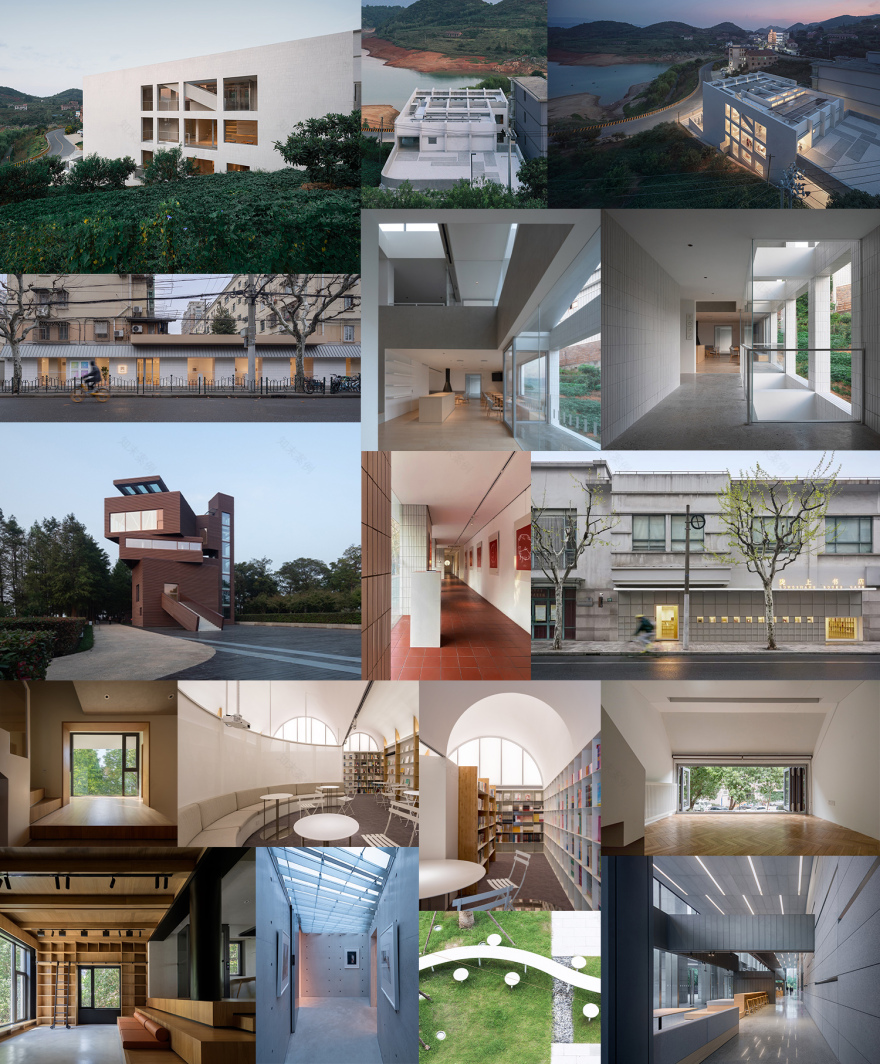
▼米凹工作室部分代表作品,Part of represent works ofatelier mearc
不论是室内设计、空间创作,还是建筑设计,我们始终更愿意从社区的角度出发。
Whether it’s interior design, spatial creation, or architectural design, we always prefer to approach it from the perspective of the community.
我一直非常关注街道与室外空间的关系。在我看来,不论是室内设计、空间创作,还是建筑设计,我们始终更愿意从社区的角度出发。其实,我们的工作室也是在这样的一个社区环境中运作的。过去 12 年里,我们已经搬过三次家,但每一次都只是在 500 米范围内。这个区域对我来说意义重大,因为我出生并成长在这里,离家只有几分钟的路程。社区对我而言,便是城市的缩影。
虽然“城市”是一个宏大的概念,但与人们生活密切相关的,往往是社区的尺度,可能是 2 平方公里左右的区域。如今,所谓的“15 分钟生活圈”就是对建筑和空间体验的一个重要体现。我们的设计理念,正是希望将这种社区的感受融入到每一个空间中。无论是在我们的办公室、为他人设计的展厅,还是社区空间中,我们都希望人们能感受到这个社区的独特氛围和特质。
I have always been deeply interested in the relationship between streets and outdoor spaces. To me, whether it’s interior design, spatial creation, or architecture, we prefer to approach it from the perspective of the community. In fact, our studio operates in such a community environment. Over the past 12 years, we’ve moved three times, but each time it’s been within a 500-meter radius. This area holds great significance for me because I was born and raised here, just a few minutes away from home. The community, for me, is a microcosm of the city.
Although the concept of “city” is vast, what is often most relevant to people’s lives is the scale of the community, typically around 2 square kilometers. Today, the so-called “15-minute living circle” is an important reflection of how architecture and spatial experiences connect to daily life. Our design philosophy aims to incorporate the sense of community into every space. Whether it’s in our office, exhibition spaces designed for others, or community spaces, we hope people can feel the unique atmosphere and qualities of this community.
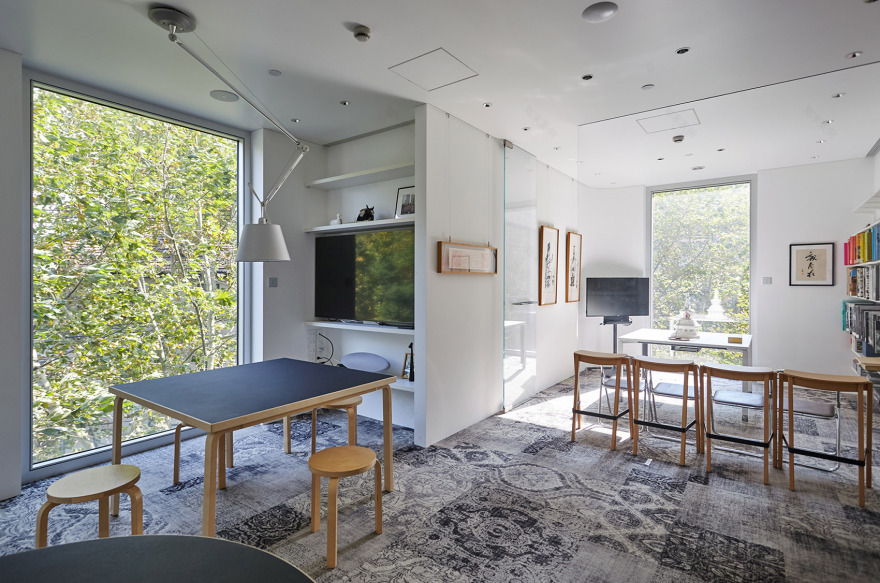
▼米凹工作室办公环境,studio of atelier mearc


实践项目
Projects
营造空间中的“人情味” – 棠之酒店|Creating “human touch” in space – Begonia Inn
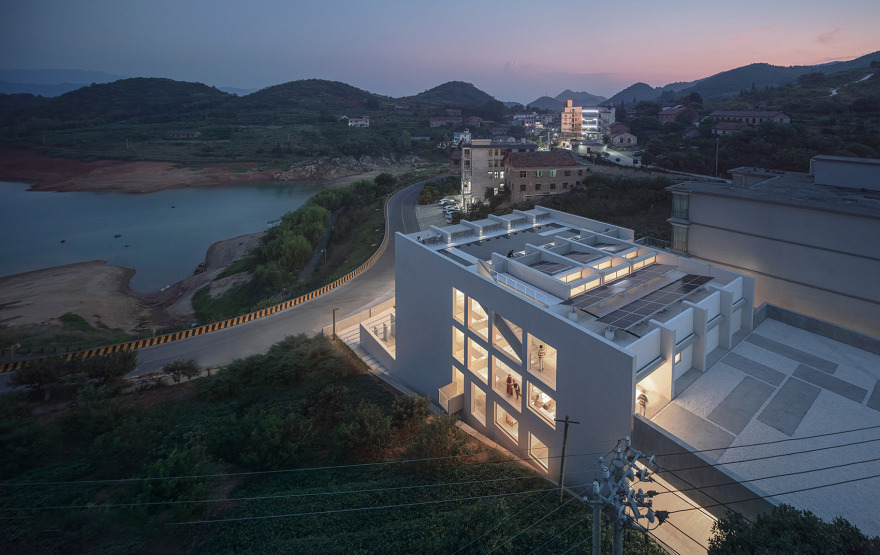
我认为“棠之酒店”的设计体现了一种特定的方式。当时,项目方找到我们,希望对这座总面积 1717 平方米、包含 17 间客房的小型酒店进行设计。项目场地位于东江湖畔,正南侧是一个国家 4A 级景区——高山水库,风景极为优美。因此,16 间客房的布局自然以面向湖景为核心。然而,这个项目的特殊性并不仅在于其得天独厚的地理位置,更在于它所在的村落——一个因景区开发而转型的地方,原本是一个安静的小渔村,如今却充满矛盾。一方面,这里的居民因东江湖景区吸引了城市游客,纷纷将自家住宅改造成农家乐或民宿;另一方面,这里依然保留着梯田耕作和果树种植的乡村生活。这种城乡之间的对立和融合正是我们设计中试图调和的关键点。
酒店设计首先在功能性上满足客房的经济需求,形成 X 轴线。但更重要的是 Y 轴——人与人之间的关系轴线。我们希望通过设计,让城市的游客能够体验乡村的真实生活,同时让乡村居民直观感受到城市人眼中的乡村是什么样子。通过设计营造这样的交汇点,为两个群体提供相遇和对话的机会。
I believe the design of Begonia Inn embodies a specific approach. At the time, the project owner approached us to design a small hotel with a total area of 1717 square meters, containing 17 rooms. The project site is located by the Dongjiang Lake, with the national 4A-level scenic spot, Gaoshan Reservoir, directly to the south, offering an exceptionally beautiful view. As such, the layout of the 16 guest rooms naturally centered around views of the lake. However, the uniqueness of this project lies not only in its exceptional geographic location but also in the village it is situated in—a place that has transformed due to the development of the nearby scenic area. Originally a quiet fishing village, it has now become a site of contradictions. On one hand, local residents, attracted by the influx of urban tourists to the Dongjiang Lake Scenic Area, have turned their homes into guesthouses or B&Bs; on the other hand, the village still maintains traditional rural life, with terraced farming and fruit tree cultivation. This clash and fusion of urban and rural life is the key point we sought to reconcile in our design.
The hotel design first meets the functional economic needs of the guest rooms, forming an X-axis layout. However, more importantly, it emphasizes the Y-axis—the axis of human relationships. We aimed to design a space where urban tourists could experience authentic rural life while allowing the rural residents to directly perceive what the countryside looks like through the eyes of city dwellers. By designing this intersection, we wanted to create opportunities for interaction and dialogue between these two groups.
▼棠之酒店:六片墙之间,湖南郴州,Begonia Inn: Between six walls, Chenzhou, Hunan ©苏圣亮

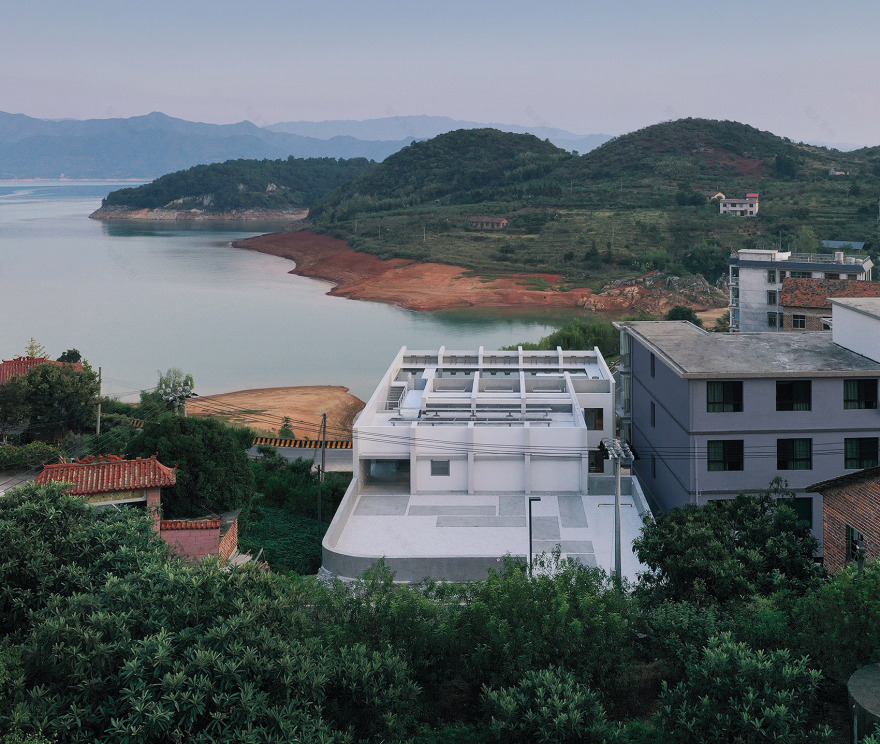
城乡之间的对立和融合正是我们设计中试图调和的关键点。
The clash and fusion of urban and rural life is the key point we sought to reconcile in our design.
在尺度的处理上,这座 1700 多平方米的建筑放置于乡村环境中,必然显得比周围的民宅更为宏大,但其面向的是更为辽阔的湖面景观。因此,我们在设计中尝试用巧妙的手法缩小建筑的感知尺度。例如,这座酒店的入口设置在最高点,当车辆驶入时,映入眼帘的仅是建筑的一层,仿佛这只是一座小型的建筑。同时,湖景并未立即全貌呈现,而是通过建筑设计逐步展开。从入口处的窗口可以窥见湖的一角,走上天台可以眺望远山,而餐厅的视线与湖面的水平线持平。当进入客房时,湖景不会直接映入眼帘,只有走到阳台最外沿,湖面才完整地展现出来。这样的渐进式呈现方式,不仅控制了视觉的节奏,还增强了景观的戏剧性和体验感。
在“棠之酒店”的设计中,我们特别强化了公共空间的吸引力。从接待台到餐厅,从展览区到花园,这些公共区域不仅展示了不同的景观,也蕴含了丰富的故事性。这些空间不仅为旅客之间提供了交流的场所,同时也与当地村民建立了联系。我们说服了业主,将酒店的天台开放给周边几户村民及他们的孩子。在天台上,村民与游客可以彼此接触和交流,原本的风景由自然景观变为人与人互动的故事场域。
通过这样的设计,“棠之酒店”不仅是一座看风景的建筑,更成为了一个“旅行者之家”,一个充满人情味和故事的空间。我想,这正是我们理想中的酒店形式。
▼分析图,Diagram©米凹工作室

In terms of scale, this building, which spans over 1700 square meters, is placed in a rural environment and inevitably appears larger than the surrounding residential houses, yet it faces the expansive lake view. Therefore, we used subtle techniques in the design to reduce the perceived scale of the building. For example, the hotel’s entrance is positioned at the highest point. When vehicles enter, the first view is only of the building’s ground floor, making it seem like a small structure. The full lake view does not immediately reveal itself; rather, it unfolds gradually through the architectural design. From the window at the entrance, a glimpse of the lake can be seen. Walking up to the rooftop terrace offers a view of the distant mountains, while the restaurant’s line of sight aligns with the horizon of the lake. When entering the guest rooms, the lake view does not immediately present itself; only by stepping to the edge of the balcony does the full lake panorama appear. This gradual presentation controls the visual rhythm and enhances the dramatic and immersive experience of the landscape.
In the design of Begonia Inn, we particularly emphasized the appeal of the public spaces. From the reception desk to the restaurant, from the exhibition area to the garden, these public zones not only offer different scenic views but also carry rich narratives. These spaces provide places for interaction among travelers, while also connecting with the local villagers. We convinced the owner to open the hotel’s rooftop to a few nearby villagers and their children. On the rooftop, villagers and tourists can meet and converse, transforming the original scenic area into a space for human interaction and storytelling.
Through this design, Begonia Inn is not just a building for viewing the landscape but has become a “home for travelers,” a space filled with warmth and stories. I believe this is the ideal form of hotel we envisioned.
▼棠之酒店公共休息区,Public lounge area of the hotel ©苏圣亮
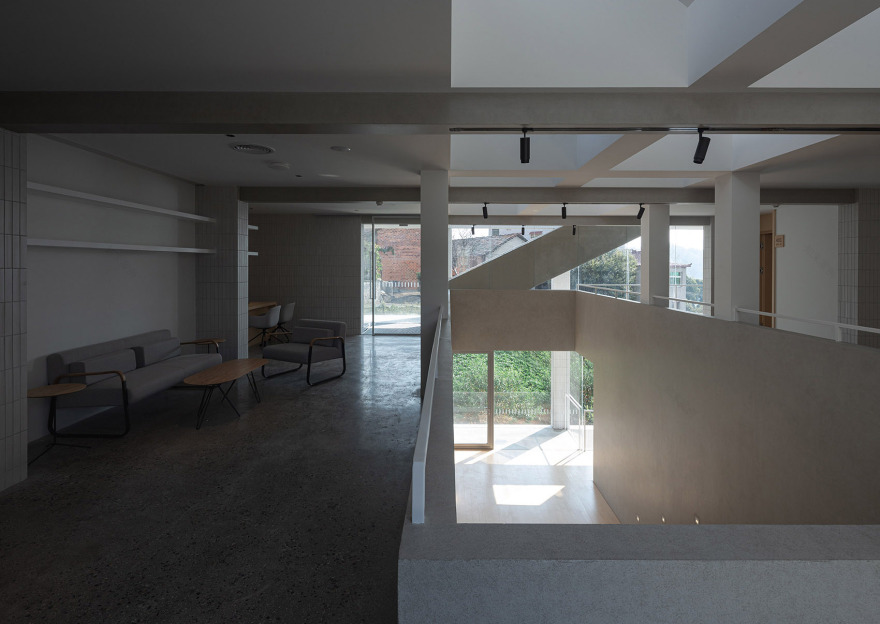
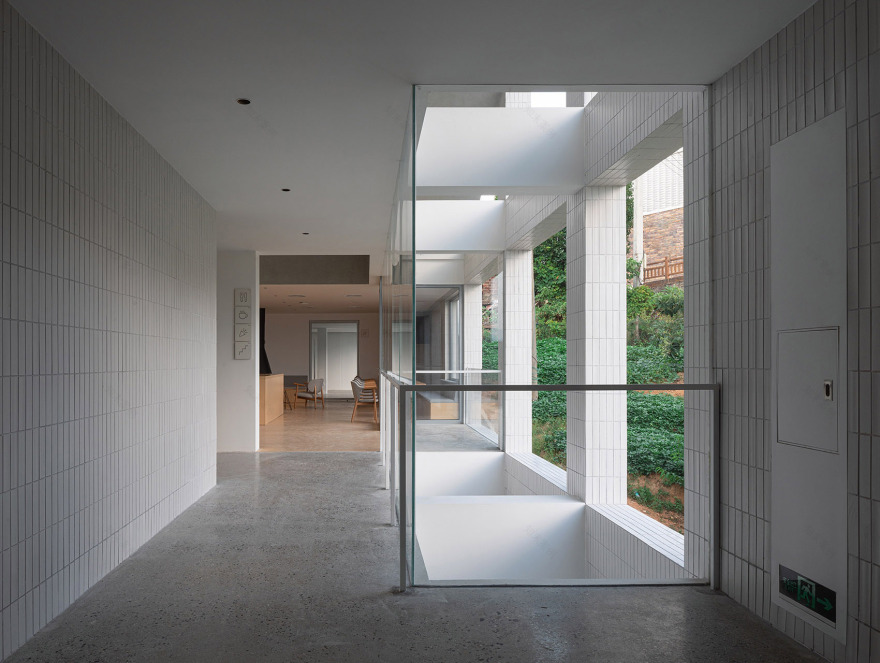
科技带来的舒适感并非城市专属,而是一种每个人都应享有的权利。
Comfort brought by technology is not exclusive to cities; it is a right that everyone should enjoy.
严格来说,“棠之酒店”并不能完全被称为一次乡村的“乡建”实践。从建造过程来看,我们仅在基础混凝土施工时使用了当地工人,其他部分主要依靠城市供应链,材料和工艺都更接近城市建筑。然而,我们给自己设定了一个目标:通过运用两种最普通的当地材料,创造出新的表现效果。这两种材料分别是当地广泛使用的面砖和砂浆混凝土。在项目中,我们不仅专门到景德镇为酒店烧制了一批砖,还引入了专业的混凝土修复公司,为项目进行现浇混凝土的施工与修复。
尽管在技术上大量引入了城市的建材与技术,但我们始终致力于降低酒店的碳足迹。“棠之酒店”采用了太阳能发电,在当地的能源条件下即可实现自给自足的运营。同时,我们在建筑中融入了新风系统、保温材料和隔热技术。这不仅提升了建筑的低能耗性能,还向当地村民传递了一个理念:现代科技可以改变生活。哪怕采用的是他们熟悉的材料,设计看似平实,但科技的介入能让生活更加舒适。更重要的是,这样的舒适感并非城市专属,而是一种每个人都应享有的权利。
Strictly speaking, Begonia Inn cannot be fully considered a “rural” practice. In terms of construction, we only used local workers during the foundation concrete work, while the rest of the project primarily relied on urban supply chains, with materials and techniques closer to urban construction standards. However, we set ourselves a goal: to create a new expression by using two of the most common local materials. These two materials are local bricks and cement mortar, which are widely used in the area. For this project, we not only had bricks specially made in Jingdezhen for the hotel but also brought in a professional concrete restoration company to carry out the cast-in-place concrete construction and restoration. Although we introduced a large amount of urban building materials and technologies, we remained committed to reducing the carbon footprint of the hotel. Begonia Inn utilizes solar power, achieving self-sufficiency in operation based on the local energy conditions. At the same time, we incorporated a fresh air system, insulation materials, and heat insulation technology into the building. This not only improved the building’s low-energy performance but also conveyed a message to the local villagers: modern technology can transform life. Even though the materials used are familiar to them and the design appears simple, the integration of technology can make life more comfortable. More importantly, this comfort is not exclusive to cities but is a right that everyone should have access to.
▼餐厅及咖啡厅与窗外乡村景观,restaurant and cafe with countryside view outside ©苏圣亮。

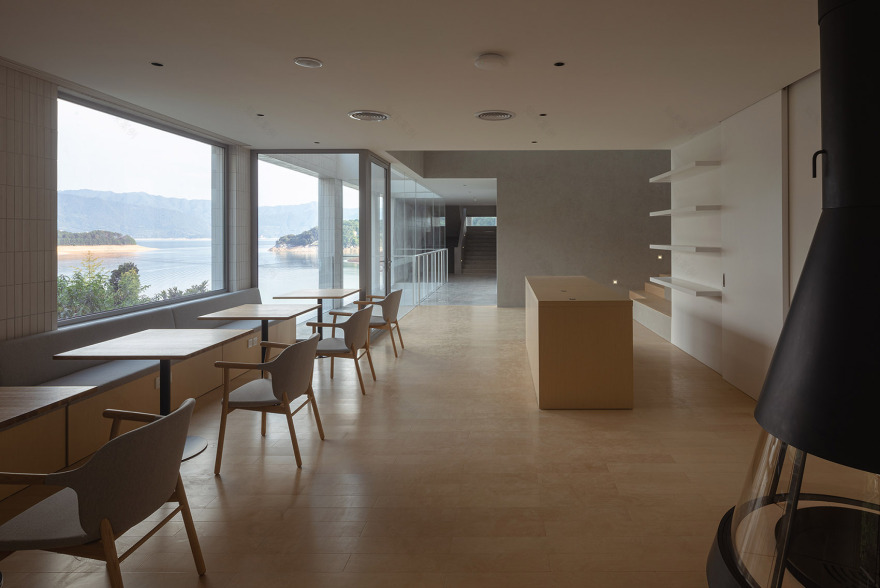
从住客的反馈来看,他们不仅喜欢酒店的客房设计,更愿意在公共区域停留和互动。例如,餐厅里的小壁炉和多个带景观的阳台常常成为旅客聚集的地方。在这些公共区域里,住客之间逐渐建立起联系,甚至开始交流、认识彼此。让我感到欣慰的是,这种氛围正是我在设计之初所期望的——酒店不仅是一个个孤立房间的组合,更是一个充满互动和交流的“家外之家”。
这种状态让我非常开心,也让我对乡村设计有了更多思考。虽然我们还需要更多时间去探索建筑在乡村中的角色,但“棠之酒店”无疑为这种探索提供了宝贵的经验。
Based on feedback from guests, they not only appreciated the design of the guest rooms but were also inclined to stay and interact in the public areas. For instance, the small fireplace and several balconies with scenic views in the restaurant often became gathering spots for guests. In these public spaces, guests gradually formed connections, even starting conversations and getting to know each other. What pleases me is that this atmosphere is exactly what I had hoped for when I first envisioned the design—the hotel is not just a collection of isolated rooms, but a “home away from home” full of interaction and communication. This state of affairs makes me very happy and has led me to further reflect on rural design. While we still need more time to explore the role of architecture in rural areas, Begonia Inn has undoubtedly provided valuable experience for this exploration.
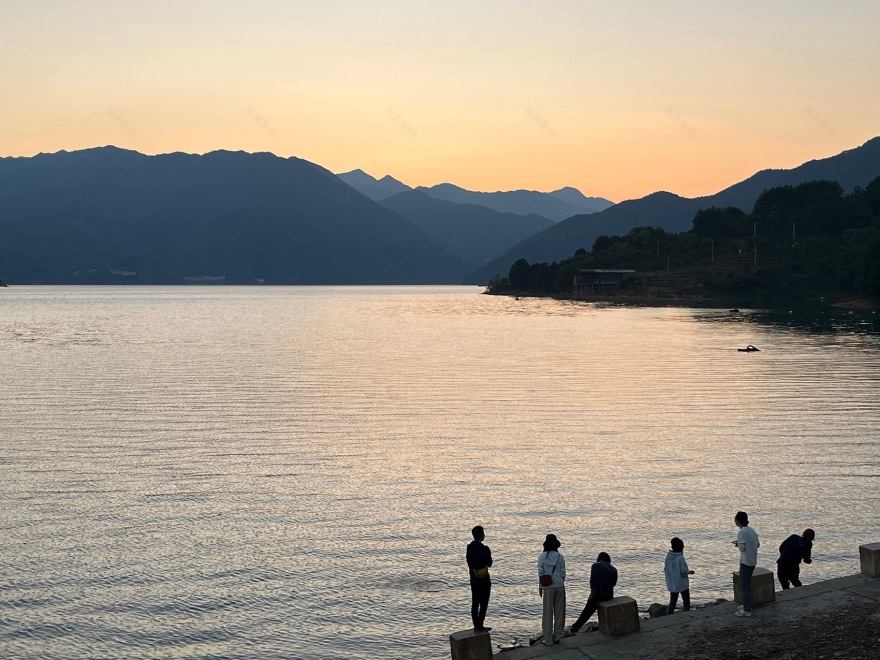
▼晨间的天台景象,rooftop in the morning©苏圣亮

▼东侧俯瞰夜景,屋顶上设有太阳能板,Overlook from eastat night, solar panels on the roof © 苏圣亮
真正属于社区的建筑 – 康晖里|A building that truly belongs to the community– Kanghuili
“康晖里”对我们来说是一个非常重要的项目,它是上海解除疫情封控后的第一个项目,也是我们工作室在封控期间经历了一段相对空白期后接手的首个实际项目。事实上,当时没有一个明确的“市民公共空间”模式可供参考。因此,“康晖里”成为了我们探索当下适合社区需求的公共建筑形态的一个起点。
“康晖里”的建筑面积仅 300 平方米,但我们尽可能将所有可能的社区功能融入其中,包括展览空间、居民调解室、公共活动室、老年人助浴设施、环卫工人休息区、小型社区消防站,以及社区办公空间。此外,我们还设计了一个开放至晚 9 点的自习室,服务于周边的学生和上班族。这种全面且大胆的尝试初期带有一定盲目性,但也为我们提供了机会去观察这些功能在社区中的实际作用,并积累宝贵经验。
“康晖里”只是一个开始,项目完成后,我们基于反馈,陆续在上海完成了十余个类似项目,不断深化对什么样的空间真正适合市民需求的理解,特别是在复杂多元的城市环境中。
Kanghuili is a very important project for us. It was the first project after the pandemic lockdown in Shanghai was lifted, and it was also the first real project that our studio took on after experiencing a period of relative downtime during the lockdown. In fact, at the time, there was no clear model of a “public civic space” to reference. Therefore, Kanghuili became a starting point for us to explore the form of public architecture that is suited to the needs of communities today.
The building area of Kanghuili is only 300 square meters, but we tried to incorporate as many community functions as possible, including exhibition space, a resident mediation room, a public activity room, elderly bathing facilities, a rest area for sanitation workers, a small community fire station, and community office spaces. Additionally, we designed a self-study room open until 9 PM, catering to students and office workers in the surrounding area. This comprehensive and bold attempt was initially somewhat blind, but it provided us with the opportunity to observe how these functions actually work within the community and accumulate valuable experience.
Kanghuili was just the beginning. After the project’s completion, based on feedback, we went on to complete more than ten similar projects in Shanghai, continually deepening our understanding of what types of spaces truly meet citizens’ needs, especially in the complex and diverse urban environment.
▼上海斜土街道康晖里:“室内的茶陵路”,Xietu Sub-District Kanghui Community Space: “Indoor Chaling Road” © 梁山。


只有当人们愿意进入建筑后,他们才会逐渐发现建筑能为他们的生活带来哪些可能性。公共建筑不只是功能的堆砌,而是一种以开放性和邀请性为基础的场所创造。
Only when people are willing to enter a building will they gradually discover what possibilities the architecture can bring to their lives. Public buildings are not just a stack of functions, but a place creation based on openness and invitation.
在设计初期,我们总结出一个经验:这类空间往往更适合老年人或退休人群。因此,项目中特别强化了对老年群体的支持功能,但我们也大胆尝试设计适合年轻人、小朋友和上班族使用的空间。“康晖里”的日常使用像一个排班表,不同时间段服务不同人群。上午主要面向老年人,他们在这里进行书画创作或小型表演,这些活动成果会布置在沿街的开放展览空间,吸引路过的年轻人驻足,甚至进入建筑进一步了解社区中长者的生活。下午和晚上,空间的功能逐渐转向学生和上班族使用。小学生放学后可以在这里写作业,为家庭空间狭小或嘈杂的情况提供了解决方案。晚上,下班的年轻人会选择来这里学习、放松或整理一天的工作。这种灵活的分时共享模式,让建筑在一天中焕发出不同的生命力。
“康晖里”的实践还让我意识到,公共建筑的设计首先需要消除人们的进入障碍。与商业或私人建筑不同,公共建筑需要通过设计传递一种开放、友好的信号,让人们愿意跨入其中。在“康晖里”,我们通过设计一条“室内街道”实现了这一目标。这条路与室外的茶陵路相连,成为进入社区的一条捷径,同时通过沿街的展览空间和座椅邀请路人驻足。展览是吸引人进入的第一步,街道还提供茶水服务,让人感受到如同坐在街边的自然与轻松。
“康晖里”的设计策略核心在于通过建筑邀请人们进入,消解对公共空间的陌生感和恐惧感。只有当人们愿意进入建筑后,他们才会逐渐发现建筑能为他们的生活带来哪些可能性。“康晖里”的实践让我认识到,公共建筑不只是功能的堆砌,而是一种以开放性和邀请性为基础的场所创造。它不仅满足功能需求,更为社区中的不同群体提供互动与联系的机会,成为他们共享的生活场所。
In the early stages of design, we summarized an important insight: spaces like this are often more suitable for the elderly or retired groups. Therefore, we particularly strengthened the supportive functions for the elderly in this project, but we also boldly tried to design spaces for young people, children, and office workers.
The daily use of Kanghuili operates like a schedule, serving different groups at different times. In the mornings, it mainly serves the elderly, who engage in calligraphy, painting, or small performances. The results of these activities are displayed in the open exhibition space along the street, attracting passersby, especially young people, who stop and sometimes enter the building to learn more about the lives of the community’s elderly. In the afternoon and evening, the space’s function gradually shifts towards students and office workers. After school, elementary students can do their homework here, providing a solution for those whose home spaces are small or noisy. In the evening, young office workers come to relax, study, or organize their work from the day. This flexible time-sharing model infuses the building with different energies throughout the day.
The practice of Kanghuili also made me realize that the design of public buildings must first eliminate barriers to entry. Unlike commercial or private buildings, public buildings need to convey an open and welcoming message through design, encouraging people to step inside. In Kanghuili, we achieved this by designing an “indoor street” that connects with the outdoor Chalin Road, providing a shortcut into the community. The street invites passersby to pause with exhibition spaces and seating along the way. Exhibitions are the first step in drawing people in, while the street offers tea service, creating a natural and relaxed atmosphere, like sitting on the street corner.
The core of Kanghuili’s design strategy is to invite people into the building and dissolve the unfamiliarity and fear associated with public spaces. Only when people are willing to enter the building will they begin to see the potential benefits the architecture can bring to their lives. Kanghuili has taught me that public buildings are not just a collection of functions but a creation of places based on openness and invitation. They not only meet functional needs but also provide opportunities for interaction and connection among different groups within the community, becoming shared living spaces for all.
▼室内的街道尺度,Street scale of the interior © 梁山。


城市更新的新趋势 – 外滩 NEO|The New trend of urban renewal – Bund NEO
“我们的设计更多地关注如何提升建筑的物理性能和功能属性,而非单纯地强调形式的转变。”
Our design focused more on enhancing the building’s physical performance and functional attributes, rather than simply emphasizing a change in its form.
外滩 NEO 的这个项目对我们来说是一个极具挑战性的任务。首先,项目的规模远大于我们通常处理的建筑项目,总面积超过了 16,000 平方米。其次,建筑所处的位置非常特殊,它位于上海风貌保护区内,正好位于豫园的保护区内。这意味着它位于上海的老城核心地带,距离上海最古老的城市区域非常近,隔着“北门”就能到达外滩区域。对面就是由 gmp 设计的外滩 SOHO。这个位置使得建筑的方向性和定位变得尤为复杂,涉及城市核心区的对话。
我们在这一过程中做了许多尝试,并与规划局和业主进行了多次讨论。最终,我认为可以采取一个更为保守的策略,即我们并不把自己视作一个新建筑的介入者,而是将目标定位于整理和协调周边城市环境。我们的目标是将周围的建筑、对面的外滩 SOHO、以及豫园的元素在新的建筑设计中予以整合与平衡。因此,我们采用了简洁而清晰的设计语言,使建筑更加和谐地融入周围环境。
在上海这一背景下,城市更新成为一个重要的主题。上海已很少有新建项目,更多的是对现有建筑进行改造。因此,项目的定位——将建筑改造为集酒店、办公和商业功能于一体的综合体——正是符合当时城市更新的趋势。
最初,建筑的功能和形态定位是一个困惑点。我们曾经思考,这座建筑应该以酒店的形式存在,还是以办公或商业的功能为主?然而,最终我们并没有选择其中任何一个,而是选择了一种更保守、更基础的建筑形态。我们的设计更多地关注如何提升建筑的物理性能和功能属性,而非单纯地强调形式的转变。
The Bund NEO project was an extremely challenging task for us. First, the scale of the project was much larger than the typical architectural projects we usually handle, with a total area exceeding 16,000 square meters. Second, the building is located in a very special context—it is within the Shanghai historical preservation zone, precisely within the protected area of Yuyuan Garden. This means it is situated in the core of Shanghai’s old city, very close to the oldest urban area in the city, just across the “North Gate” from the Bund area. On the opposite side is the Bund SOHO, designed by gmp. The location made the building’s orientation and positioning particularly complex, as it involved a dialogue with the city’s core area.
Throughout this process, we made numerous attempts and held several discussions with the planning bureau and the client. Ultimately, I felt that a more conservative strategy was appropriate. Instead of positioning ourselves as interveners in a new building, we aimed to focus on organizing and coordinating the surrounding urban environment. Our goal was to integrate and balance the elements of the surrounding buildings, the opposite Bund SOHO, and the Yuyuan Garden in the new architectural design. To achieve this, we adopted a simple and clear design language, helping the building blend more harmoniously with its surroundings.
In the context of Shanghai, urban renewal has become an important theme. New construction projects are rare in the city, with most efforts focused on the renovation of existing buildings. Thus, the project’s positioning—as a mixed-use complex combining hotel, office, and commercial functions—aligned perfectly with the trend of urban renewal at the time.
Initially, there was some confusion regarding the building’s function and form. We considered whether the building should primarily function as a hotel, or focus more on office or commercial spaces. However, we ultimately did not choose any one of these options. Instead, we opted for a more conservative and fundamental architectural form. Our design focused more on enhancing the building’s physical performance and functional attributes, rather than simply emphasizing a change in its form.
▼外滩 NEO,The Bund NEO © 梁山


模糊商业与公共空间的界限 – 陇上书店|Blurring the boundary between commercial and public space – Longshang Books Cafe
“陇上书店”源于上海市计划每个大学出版社都拥有一家自己的书店。在这个计划中,我们负责了华东理工大学出版社的书店,而同济出版社的书店则是最早的两个项目之一。
我们到华东理工大学出版社时,发现原来的书店已经二十多年没有变化,呈现出一种类似新华书店的老旧状态。虽然当时上海已经涌现出许多具有现代感和独特造型的书店,但我认为新华书店那种传统的空间布局依然有其独特的价值。
因此,在陇上书店的设计初期,我们很快就决定采用排列式的书架布局。这种布局能让人进入书店后迅速找到想要的书籍。每个书架之间的间距大约是 1.2 米,当有人占据空间时,其他人则需要小心绕过,避免打扰他人。这样的设计让每个读者在书店中都有了自己的空间,使得他们能够静心挑选书籍,享受宁静的阅读时光。这种布局方式,正是我们童年时代在新华书店等传统书店中所熟悉的,而我认为这种空间布局应该在现代书店中得以延续。
Longshang Books Cafe originated from Shanghai’s plan for each university press to have its own bookstore. In this initiative, we were responsible for the bookstore of East China University of Science and Technology Press, while Tongji University Press’s bookstore was one of the first two projects.
When we arrived at the East China University of Science and Technology Press, we found that the original bookstore had not changed for over twenty years, presenting an outdated state similar to the old Xinhua Bookstore. While Shanghai had already seen many modern bookstores with unique and contemporary designs, I still believed that the traditional layout of Xinhua Bookstore held its own unique value.
Therefore, in the early stages of the Longshang Books Cafe design, we quickly decided to adopt a grid-style bookshelf layout. This arrangement allows visitors to easily find the books they’re looking for as soon as they enter. The spacing between each bookshelf is about 1.2 meters, so when someone occupies a space, others must carefully navigate around them to avoid disturbing them. This design creates a personal space for each reader, allowing them to calmly browse through books and enjoy quiet reading time. This layout, which we were familiar with from our childhood experiences in traditional bookstores like Xinhua, is something we believe should continue to be part of modern bookstores.
▼上海陇上书店:排列组合,Longshang Books Cafe© 梁山

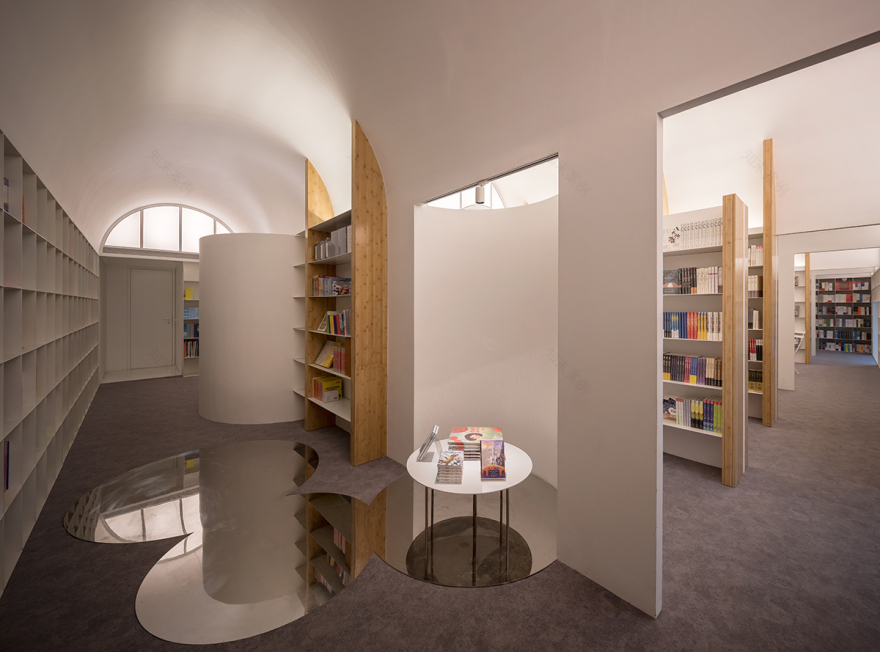
在设计这座书店时,我们并没有将其视作一个商业空间,更多的是将书店作为一个公共空间来考虑。
In designing this bookstore, we did not treat it as a commercial space but rather considered it as a public space.
拱形墙面,则与业主的需求密切相关。业主希望书店内有 20 多个咖啡座位,同时考虑到这是一个大学书店,还希望能够举办活动。因此,我们提出了一个方案,将咖啡座位和书架融为一体。我们并不是单独设置一个沙龙区或咖啡区,而是将座位与书架并排设置。读者可以一边品味咖啡,一边随手取书,而在举行沙龙活动时,其他人也可以参与其中,营造出一种开放互动的氛围。
每个拱形墙面背后都提供了座位,这种设计让空间呈现出一种灵活的使用状态。墙面的形状与空间大小的关系暗示了能容纳的人数,人们从外部就能感受到那里的活动氛围。这种空间布局促使了书店内部人与人之间的相互感知与互动。
在设计这座书店时,我们并没有将其视作一个商业空间,更多的是将书店作为一个公共空间来考虑。我们的目标是为周边的人们提供一个可以阅读、停留、或者周末休闲的地方。
The arched walls were closely tied to the client’s needs. The owner wanted more than 20 coffee seating areas and, considering this was a university bookstore, also hoped to host events. We proposed a design that integrated the seating and bookshelves together. Instead of creating a separate salon or coffee area, we placed the seating alongside the bookshelves. Readers can enjoy a cup of coffee while picking out books, and during salon events, others can participate, fostering an open and interactive atmosphere.
Each arched wall is designed with seating behind it, creating a flexible usage pattern for the space. The shape and scale of the walls imply the number of people the space can accommodate, and passersby can sense the vibrant activity within. This layout encourages mutual perception and interaction between individuals inside the bookstore.
In designing this bookstore, we did not treat it as a commercial space but rather considered it as a public space. Our goal was to provide the surrounding community with a place where they could read, linger, or relax on weekends.
▼“拱形墙”与咖啡沙龙区,The “arch wall”and Coffee Salon© 梁山


个体性与公共性
Individuality and Publicity
0
“住宅应具备一定的‘公共性’。”
A home should have a certain degree of ‘publicness.’
我们事务所在私宅设计方面的经验较为丰富,事实上,这是我非常喜欢的工作。私人住宅设计与个体的生活息息相关,它让建筑师能够与使用者直接对话并产生切实的成果。如果说我在住宅设计中有一贯的坚持,首先是我希望打造多场所性的空间。我一直认为,住宅不仅仅是一个居住的地方,更应提供多样的选择和可能性。当居住者拥有多种选择时,他们会感受到更大的舒适与自由。我一直以来的设计理念便是给居住者更多的可能性,让他们根据自己的需要选择合适的空间来生活。其次,我认为住宅应具备一定的“公共性”。在家庭生活中,公共空间有不同的层级:夫妻两人使用的空间、父母与孩子共享的空间,甚至是接待客人的空间。无论是大别墅还是小公寓,都能体现出不同的公共层级和功能需求。当这些层级被重新梳理后,传统的客厅、餐厅等空间名称可能会被消解,取而代之的是更多灵活、开放的空间安排。
Our studio has rich experience in designing private residences, and in fact, this is one of the types of work I truly enjoy. Residential design is closely connected to an individual’s life, allowing architects to directly engage with users and produce tangible results. If I have a consistent principle in residential design, it is my desire to create multi-functional spaces. I have always believed that a home should not just be a place to live, but should offer a variety of options and possibilities. When residents have multiple choices, they experience greater comfort and freedom. My design philosophy has always been to provide residents with more possibilities, allowing them to select the appropriate space to suit their needs.Secondly, I believe that a home should have a certain level of “publicness.” In family life, public spaces have different levels: spaces used by the couple, spaces shared by parents and children, and even spaces for receiving guests. Whether it’s a large villa or a small apartment, there are different levels of public space and functional needs. When these levels are restructured, traditional names for spaces such as living rooms and dining rooms may be dissolved, replaced by more flexible and open spatial arrangements.
▼茂龄别墅更新,上海,Maoling Villa Renewal, Shanghai© 梁山


▼6 号别墅,上海,Villa 06, Shanghai© 梁山


家不仅仅是居住的地方,更是生活方式的延伸。
A home is not just a place to live, but an extension of one’s lifestyle.
在疫情之后,我们对住宅的思考也发生了一些变化。随着越来越多的人选择在家办公,住宅空间的功能开始融合更多的社会性需求。家不再仅仅是一个私密的栖息地,而是一个兼具办公、社交等功能的场所。这种新的需求反映了社会变化对家庭空间的影响,家不仅仅是居住的地方,更是生活方式的延伸。
这些变化,是我们在设计私宅时的一些新思路。无论是处理大空间还是小空间,我们的设计方式始终一致。对于大空间,我们通常通过合理的空间结构分配来实现功能的多样性;而对于小空间,我们则更多依赖定制家具来组织空间,并处理不同区域之间的关系。无论空间大小,核心思想始终是相同的。
至于材料和色彩,我们的设计思路较为保守。材料的选择对我们来说并非设计的出发点,而是用来营造空间的熟悉感。我们倾向于通过简洁而精致的材料来消解空间的陌生感。无论是木材、大理石,还是面砖地毯,我们更注重通过细节工艺的调整,来展现材料本身的特质。通过这种方式,我们让空间展现出原始材料的自然美感,从而让居住者在不一样的空间组合中产生熟悉与舒适的感受。
After the pandemic, our thinking about residential spaces has also changed. With more and more people choosing to work from home, the functions of residential spaces have begun to incorporate more social needs. A home is no longer just a private sanctuary, but a space that serves multiple functions, including work and social activities. This new demand reflects the impact of societal changes on home spaces—home is not just a place to live, but an extension of one’s lifestyle.
These changes have led to new ideas in our approach to private residential design. Whether dealing with large or small spaces, our design method remains consistent. For large spaces, we typically achieve functional diversity through a well-organized spatial structure; for smaller spaces, we rely more on custom furniture to organize the space and manage the relationships between different zones. Regardless of the space size, the core idea remains the same.
As for materials and colors, our design approach is relatively conservative. Material selection is not the starting point for our design, but rather a way to create a sense of familiarity in the space. We tend to use simple yet refined materials to soften the unfamiliarity of the space. Whether it’s wood, marble, or carpet tiles, we focus more on adjusting the details to highlight the inherent qualities of the materials. In this way, we allow the space to showcase the natural beauty of the raw materials, giving residents a sense of comfort and familiarity within different spatial combinations.
▼L 公寓,上海,Apartment L, Shanghai© 梁山


▼公寓 37,上海,Apartment37, Shanghai© 鲁哈哈

建筑的复杂性应由建筑师来承担,而呈现给使用者的,应该是一个简洁、清晰的空间。
The complexity of architecture should be borne by the architect, while what is presented to the user should be a simple, clear space.
我认为,目前我们还没有真正找到一种适合中国当下公共建筑或社区建筑的典范形式。在这样的背景下,我希望设计出的建筑能够在功能上足够完善,同时赋予小社区一种尊严和认同感。这样的建筑不需要复杂炫目,但应以干净、整洁、简单的方式呈现,成为一个能让人记住的特别场所。
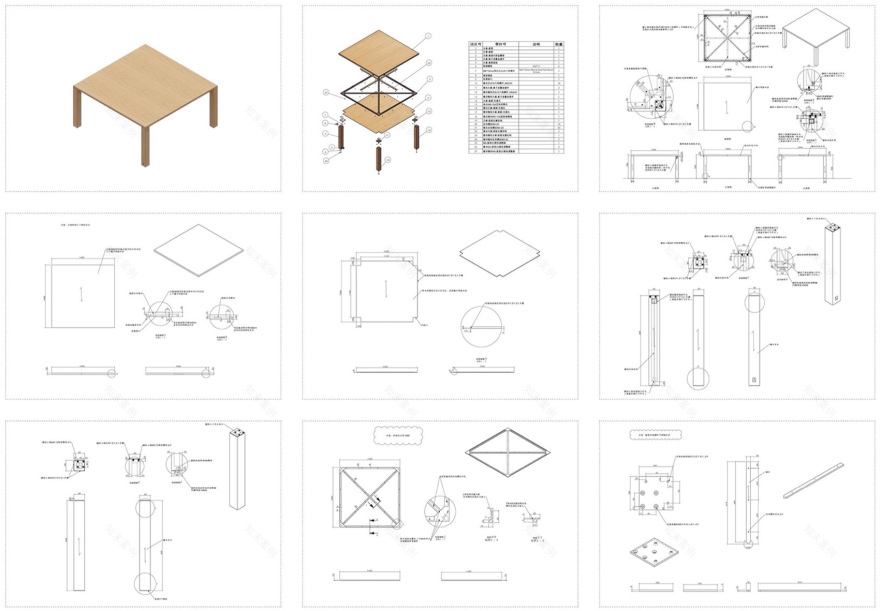
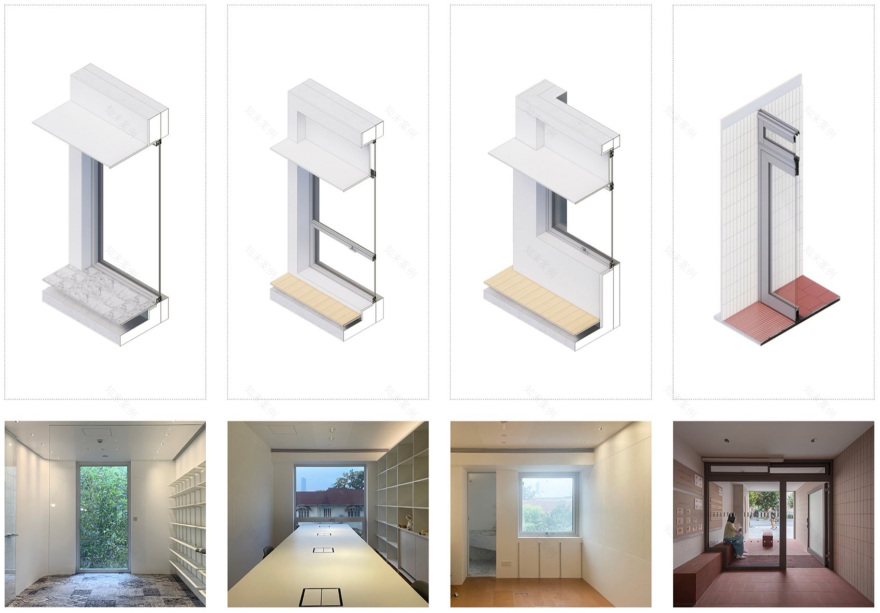
我们目前的工作主要集中在两个方面。从理念上看,我特别着迷于探索个人隐私性与社会开放性之间的关系。这种对比和连接一直是我们设计的核心。另一个重要方向是建造本身。我们非常重视建造技术和过程的优化,并不断尝试新的建造方法。每年,我们都会为自己设定一些研究课题。我们对细部设计非常关注,但我更倾向于一种“隐性”的节点表达方式,而不是刻意将技术细节外显。例如,窗体的安装节点,我们会尽力做到气密性和节能性能的最佳,但不会把这些工艺直接暴露出来。类似地,在房子的踢脚线设计中,我们追求的是墙体与踢脚线交接处的隐形处理。这些节点虽然不被直接感知,却实实在在存在于建筑中。
我认为建筑的复杂性应由建筑师来承担,而呈现给使用者的,应该是一个简洁、清晰的空间。节点和工艺是我们建筑师的职责,而不是需要用户去关注的部分。理想的空间设计,就像隐藏了复杂系统的“简洁容器”,它让人感觉自然流畅,而背后的一切复杂性都已被无形解决。
I believe that, at present, we have not truly found a paradigm form for public or community buildings that fits the current context in China. Against this backdrop, I hope the buildings we design can be both functionally complete and offer a sense of dignity and identity to small communities. Such buildings don’t need to be complex or flashy, but should be presented in a clean, tidy, and simple manner, becoming a special place that people can remember.
Our current work focuses primarily on two aspects. Conceptually, I am particularly fascinated by exploring the relationship between personal privacy and social openness. This contrast and connection has always been the core of our design approach. Another important direction is the construction process itself. We place great importance on optimizing construction techniques and processes, constantly experimenting with new methods. Each year, we set ourselves research topics. We pay close attention to detail design, but I lean toward a more “implicit” expression of the joints, rather than intentionally making technical details visible. For example, in the installation of windows, we strive to achieve the best air-tightness and energy efficiency, but we don’t expose these techniques directly. Similarly, in the design of baseboards, we aim for an invisible treatment of the junction between the wall and the baseboard. These joints, though not directly perceived, are real and exist within the architecture.
I believe that the complexity of architecture should be borne by the architect, while what is presented to the user should be a simple, clear space. The joints and craftsmanship are the architect’s responsibility, not something the user needs to focus on. The ideal spatial design is like a “simple container” that hides complex systems, creating a natural, smooth experience, while all the underlying complexities have been invisibly resolved.
▼“隐性”的节点表达方式,”implicit” expression of the joints © 米凹工作室
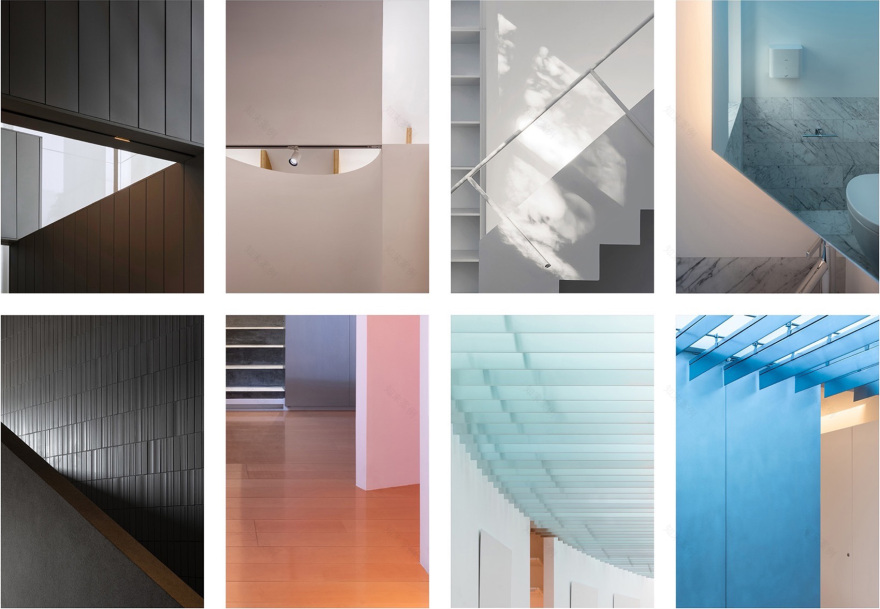
▼研究课题:住宅,家具,系统窗,Research topics: Housing, furniture, system Windows © 米凹工作室

现状与未来挑战
Current and future challenges
“我一直在思考如何在现有的技术条件下,建造出更好的房屋。更好的房屋,可能意味着更舒适、更精致、更友好的居住空间。”
I’ve been reflecting on how we can build better homes given the existing technological conditions. A “better” home might mean a more comfortable, refined, and socially engaging living space.
目前,我对我们工作室的现状感到非常满意。我们已经运营了 12 年,如今,事务所已稳定运营,我感到非常庆幸,特别是能够和我们非常喜欢的同事们一起,做自己热衷的项目。对建筑师而言,能够处于这样一个状态,已经是非常理想的境地。
尽管如此,我们的建筑追求依然面临一些挑战。首先,随着我们工作室的不断发展,我们注意到,工地上工人的手工技艺正在逐渐下降,而社会整体的工业化和产品制造水平却在缓慢提升。这为我们的设计带来了巨大挑战。当前中国的建筑行业正面临着技术进步和手工劳动衰退并存的局面,这是一种独特的现象。我一直在思考如何在现有的技术条件下,建造出更好的房屋。更好的房屋,可能意味着更舒适、更精致、更友好的居住空间。这是一个值得我们不断探索的课题。
另外,近年来随着经济形势的变化,建筑投资的谨慎态度愈发明显,但对建筑的舒适性和品质的要求却在不断提升,这种矛盾在全球范围内普遍存在,尤其是在中国,结合本土的建造技术和产品,它显得尤为复杂。因此,我们的设计思考也在向更低碳、更友好的方向发展,以满足人们对更精致、社会友好的住宅的需求。
I am currently very satisfied with the state of our studio. After 12 years of operation, our studio has reached a stable point, and I feel incredibly fortunate, especially to be working alongside colleagues I deeply enjoy, on projects that I am passionate about. For an architect, being in this situation is truly ideal.
However, our architectural pursuits still face certain challenges. As our studio grows, we have noticed a gradual decline in the craftsmanship of workers on construction sites, while the overall industrialization and product manufacturing levels in society have been improving slowly. This presents a significant challenge for our designs. The current state of the Chinese construction industry is unique, with technological advancements coexisting alongside a decline in manual labor. I’ve been reflecting on how we can build better homes given the existing technological conditions. A “better” home might mean a more comfortable, refined, and socially engaging living space. This is a question that warrants continuous exploration.
In addition, with the changing economic landscape in recent years, there has been an increasingly cautious approach toward construction investments, while the demand for comfort and quality in architecture continues to rise. This contradiction is prevalent globally, but it is especially pronounced in China, where it is further complicated by local construction techniques and products. As a result, our design thinking is shifting towards more low-carbon, socially responsible solutions that can meet the demand for refined, sustainable, and socially conscious housing.
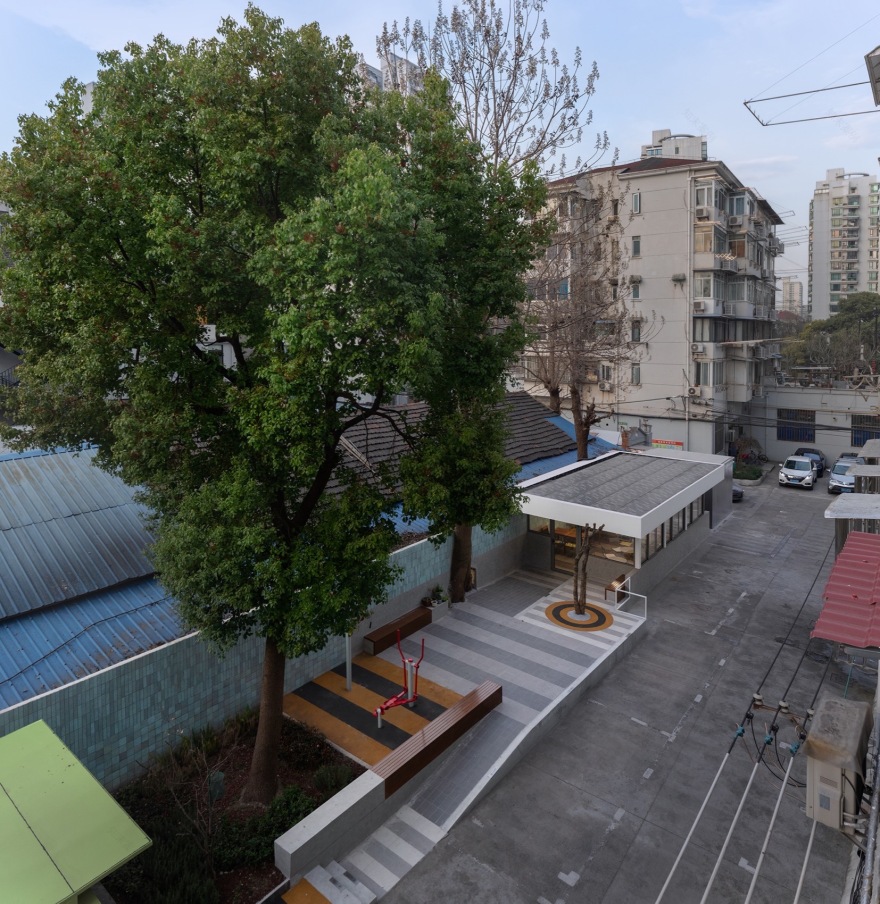
▼申晖小区微更新,上海,Shenhui Community micro renewal, Shanghai© 梁山

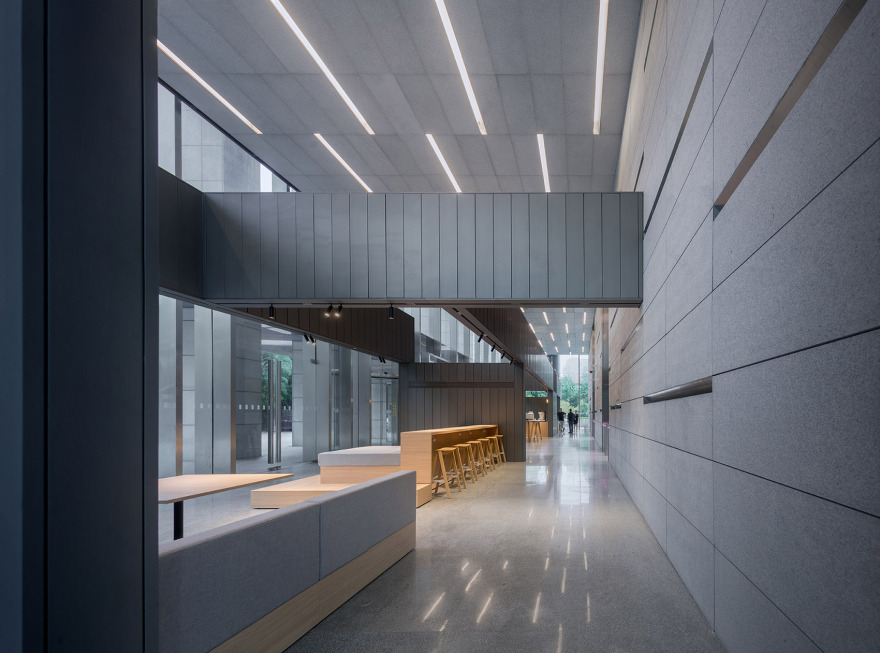
▼黄浦中心公共空间改造,上海,Huangpu Center Office Lobby, Shanghai© 梁山
直接反馈的机制对我非常重要,它能帮助我们不断优化设计,确保最终的建筑效果与初期构思相符。
The direct feedback mechanism is very important to me as it helps us continually refine our designs, ensuring that the final building matches our original vision.
为了解决这些问题,我们逐渐形成了一个全过程的事务所,涵盖从概念设计到施工图的每一环节。我们的施工图——包括建筑、室内设计以及家具的施工图——都是在工作室内部完成的。我们会邀请专业顾问公司参与设计过程,涵盖照明、机电、结构等多个方面,以确保每个环节的细致和完善。
每周,我都会亲自前往工地,与工人、供应商以及相关人员沟通,查看每个节点的施工情况,探讨是否可以进一步改进。这种直接反馈的机制对我非常重要,它能帮助我们不断优化设计,确保最终的建筑效果与初期构思相符。从概念到施工的闭环,不仅帮助我们提升设计品质,也确保我们能够持续创新,并从实际经验中获得宝贵的反馈。
与此同时,我们非常重视与专业供应商的合作,并逐步建立了自己的供应商体系。我们会精心挑选合适的产品,比如窗户、涂料、地板等,通过与供应商的紧密合作,使这些产品与我们的设计更加契合。同时,我们也与施工公司密切配合,确保设计中的每一个细节能够在实际施工中得到有效反馈。我们每年都会设定一个课题,让工作室成员在一个月的时间里进行技术革新,不断提升我们的建造技术。我们的工作室还会对这些设计进行反复测试,确保每个创新都经过实践验证,并在后续的项目中加以应用。
To address these challenges, we have gradually developed a full-process studio that covers every step from concept design to construction drawings. Our construction drawings—encompassing architecture, interior design, and furniture details—are all completed internally within the studio. We invite specialized consultant firms to participate in the design process, covering areas such as lighting, MEP (mechanical, electrical, plumbing), and structural design, to ensure that each phase is executed with precision and completeness.
Every week, I personally visit the construction site to communicate with workers, suppliers, and relevant personnel, review the construction progress at each node, and discuss potential improvements. This direct feedback mechanism is very important to me as it helps us continually refine our designs, ensuring that the final building matches our original vision. The closed loop from concept to construction not only enhances the quality of our designs but also ensures that we remain innovative, gaining valuable insights from real-world experience.
At the same time, we place great importance on collaborating with professional suppliers and have gradually built our own supplier system. We carefully select suitable products, such as windows, paints, and flooring, and work closely with suppliers to ensure these products align perfectly with our designs. We also maintain close coordination with construction companies to ensure that every detail in the design is effectively implemented on-site. Each year, we set a research topic for the studio, allowing team members to focus on technical innovations over the course of a month, continuously enhancing our construction techniques. Our studio also conducts repeated tests on these designs, ensuring that each innovation is practically validated and can be applied in future projects.
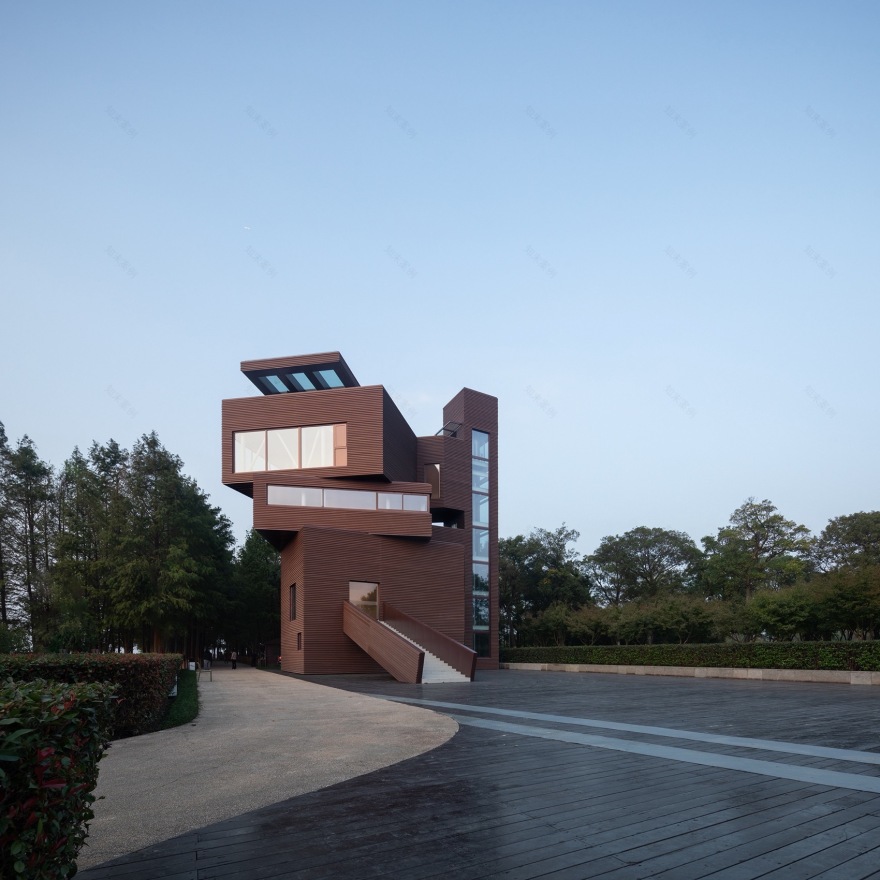
▼昆山瞭望塔,江苏,Watchtower at Kunshan,Jiangsu Province © 梁山


▼上海万科御河企业公馆·长桌,Vanke Yuhe office building·Long table, Shanghai© 鲁哈哈

个人的私密性与自由与社会的公共性之间存在着某种张力,只有对个人需求有了充分了解,才能在公共建筑设计中更好地做出补充和创新。
There is a certain tension between individual privacy and freedom, and the public nature of society. Only by fully understanding individual needs can we better supplement and innovate in the design of public architecture.
在我们当前的工作中,我觉得最持续且有趣的探索领域还是住宅设计。住宅是一个非常难以做到完美的建筑类型,如果要在建筑领域持续深耕并思考,住宅项目无疑是值得专注的方向。住宅设计与人的状态息息相关,每个业主的需求和变化都与社会的发展紧密相连。因此,深入研究住宅建筑,也就意味着可以从中洞察社会的进程和变化,我认为住宅是一个值得深刻研究的建筑类型。
在国内,纯粹做住宅建筑其实是比较困难的,侧重于独立个体的需求的项目数量相对较少。虽然如此,我认为住宅的室内设计同样值得讨论。我们在做住宅设计的同时,也在探索小型公共建筑。其实,这两者是相辅相成的。在小型公共建筑的设计中,探索的空间往往较为抽象,因为它并不针对某个具体的个体,难以获得具体的反馈。然而,当你在住宅设计中进行更深入的研究时,你能获得更多灵感,这些灵感能够反向促进公共建筑设计的发展。通过对住宅的深入研究,你能更清楚地了解现代社会和人们的需求,特别是那些住宅无法满足的需求。正如我们常说的,个人的私密性与自由与社会的公共性之间存在着某种张力,只有对个人需求有了充分了解,才能在公共建筑设计中更好地做出补充和创新。与此同时,公共建筑的设计也会反过来影响住宅设计的思路和方法。两者之间的互动,不断推动着我们在各自领域中的进步。
▼正在进行中的项目,on-going projects © 米凹工作室

In our current work, I feel that the most sustained and interesting area of exploration remains residential design. Residential architecture is a very difficult building type to perfect. If we are to continue to delve into and reflect on architecture, residential projects are undoubtedly a worthwhile focus. Residential design is closely tied to human states; the needs and changes of each homeowner are closely linked to the development of society. Therefore, a deep study of residential architecture means gaining insights into the processes and changes in society, which is why I believe residential design is a building type worth deep exploration.
In China, purely focusing on residential architecture is relatively difficult, as projects that emphasize the needs of individual users are relatively few. However, I still believe that interior design for residential projects is also worth discussing. While working on residential design, we are also exploring small public buildings. In fact, these two areas complement each other. The spaces explored in small public building design are often more abstract because they are not aimed at a specific individual, making it harder to receive direct feedback. However, when you conduct more in-depth research in residential design, you gain more inspiration that can, in turn, promote the development of public building design. Through in-depth study of residential design, you can better understand the needs of modern society and people, especially those needs that residential spaces cannot satisfy. As we often say, there is a certain tension between individual privacy and freedom and the public nature of society, and only by fully understanding individual needs can we better supplement and innovate in public architecture. At the same time, the design of public buildings also influences the approach and methods used in residential design. The interaction between the two constantly drives our progress in each respective field.
▼周维,Zhou Wei

南京喵熊网络科技有限公司 苏ICP备18050492号-4知末 © 2018—2020 . All photos and trademark graphics are copyrighted by their owners.增值电信业务经营许可证(ICP)苏B2-20201444 苏公网安备 32011302321234号
苏公网安备 32011302321234号客服
消息
收藏
下载
最近