

创作上传
VIP
收藏下载
登录 | 注册有礼
查看完整案例

收藏

下载

分享
在《关于城市坐标的双重思考(上)》中,我们回顾了武汉长江中心国际竞赛的方案设计:以场地向公众完全开放为导向的城市网格设计,构建一处“城市聚场”。
In “A Dual Reflection on Urban Coordinates (Part I),” we reviewed the competition design for the Wuhan Great River Center, focusing on a city grid layout that fully opens up to the public, creating an “Urban Convergence”.
▼项目概览
overall©line+

2024 年中,我们荣幸受到项目业主华润置地的设计委托,并承担了全新的设计任务:在业主指定的空间格局基础上,围绕新的业态定位——集艺术中心、商业大平层、酒店和办公于一体的新型城市综合社区。
In mid-2024, we were honored to receive a design commission from the project owner, China Resources Land, for a new design task: to develop a new urban complex community based on the spatial layout specified by the owner, incorporating a combination of an art center, large commercial floorplates, hotels, and office spaces.
▼从竞赛方案到落地方案,From Competition Design to Reality©line+
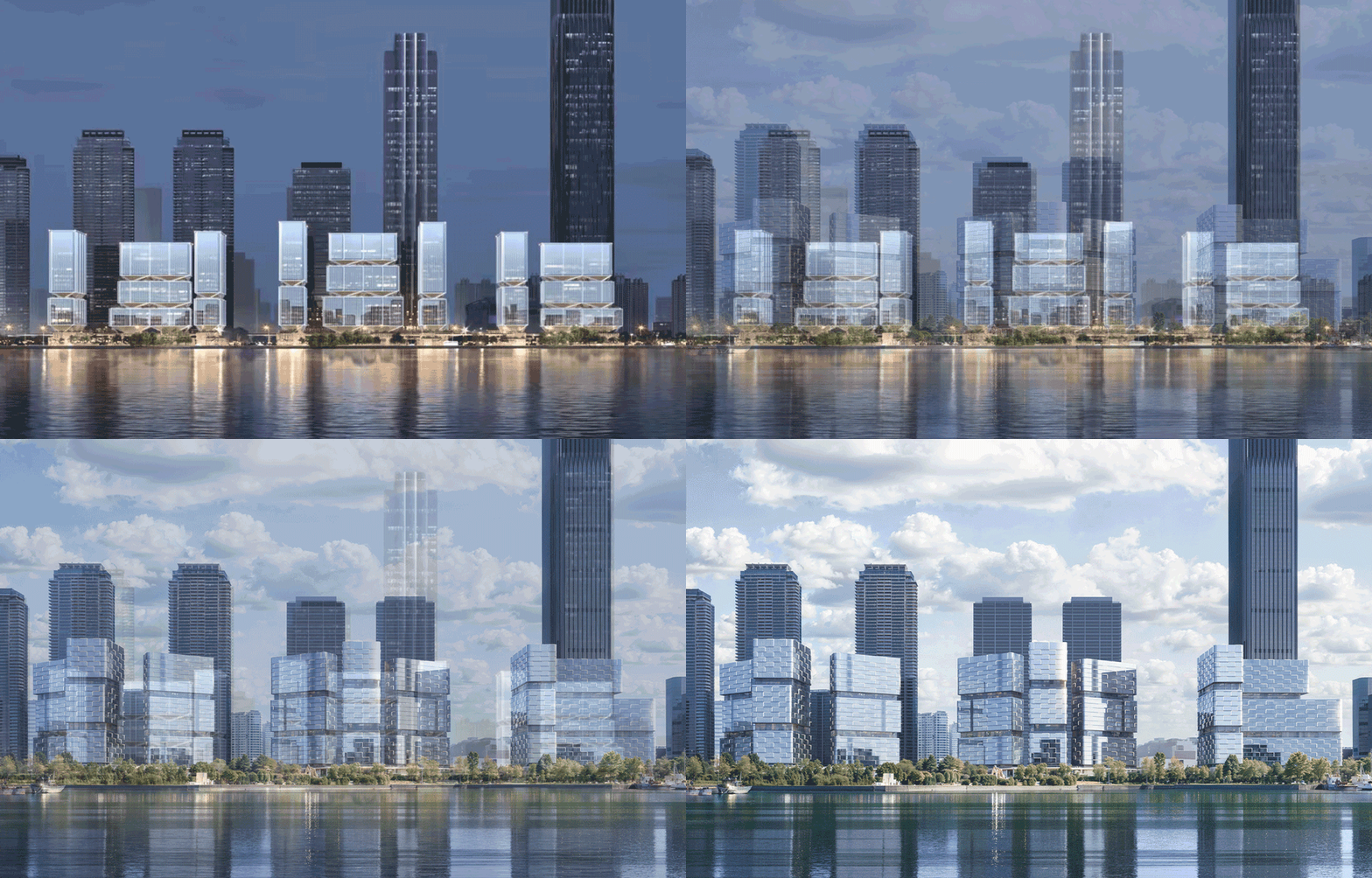
从开放式创作到既定命题,从理念构想到付诸实施,在本文中,我们将进一步反思探讨“何为坐标”与“如何坐标”,在与政府规划、开发需求、未来业主体验及城市公共利益等多方诉求的交织中,寻得某种可行的路径。目前,项目已于 8 月动工,其中艺术中心部分已建成并投入使用。
From open-ended creation to a defined brief, from conceptualization to implementation, this article will further reflect and explore the questions of “What is a Coordinate?” and “How to Coordinate?”. In the interweaving of governmental planning, development demands, future occupant experiences, and public urban interests, we aim to find a feasible path. The project began construction in August, and the art center has already been completed and is in use.
▼夜景,night view©line+

何为坐标?
多元交织,异构街坊
What Is the Coordinate?
A Fusion of Diversity, A Hybrid Block
公共开放是我们对新坐标建筑的理想愿景。在竞赛方案中,“城市聚场”这一理念通过激活街区公共空间的活力属性得以展现;而在落地方案中,随着功能定位的转变与使用需求的细化,“开放”被重新定义为多维空间叙事的整合——既涵盖公共性与私密性的交织,也涉及人群流线与功能模块的复合组织。
Public openness is our ideal vision for the new coordinate architecture. In the competition proposal, the concept of an “Urban Convergence” was manifested through the activation of the vitality of public spaces in the district. In the finalized proposal, with the shift in functional positioning and the refinement of usage requirements, “openness” is redefined as an integration of multi-dimensional spatial narratives—encompassing the intertwining of public and private realms, as well as the complex organization of pedestrian flows and functional modules.
▼总平面图,Site Plan©line+

如何在这些复杂且多元的诉求中寻求动态平衡,以实现城市空间的高效联动、景观资源的共享和场所的公共性,依然是我们对“何为坐标”的底层逻辑。而当项目定位从高端的办公园区调整至综合性社区时,我们对“坐标”的理解定义也从广泛的“城市聚场”回归到更具体的日常性“生境街坊”。
How to seek dynamic balance among these complex and diverse demands, in order to achieve efficient linkage of urban space, shared landscape resources, and publicness of the place, remains the underlying logic of our interpretation of “What is the coordinate.” As the project’s positioning shifted from a high-end office park to a mixed-use community, our understanding of “coordinate” also evolved from the broad concept of “Urban Convergence” to the more specific, daily-life-oriented “Hybrid Block”.
▼鸟瞰,aerial view©line+

▼底层空间,ground floor space©line+

不同于竞赛方案中融入城市网格的布局,业主给定的“双 Y 形+L 形”在横平竖直网格化的城市中呈现出异化的空间结构。我们延续竞赛方案中的立体化分区设计和“生境底盘”概念:近人尺度上,通过尺度优化和空间引导来消解异构布局带来的距离感和疏离感;宏观尺度上,以差异化的建筑形象和高效可达建立城市坐标。“生境底盘”则在其中承担多层级、多流线的枢纽角色,来实现不同业态的交互与不同群体的分流。
▼规划分析,Planning Analysis©line+
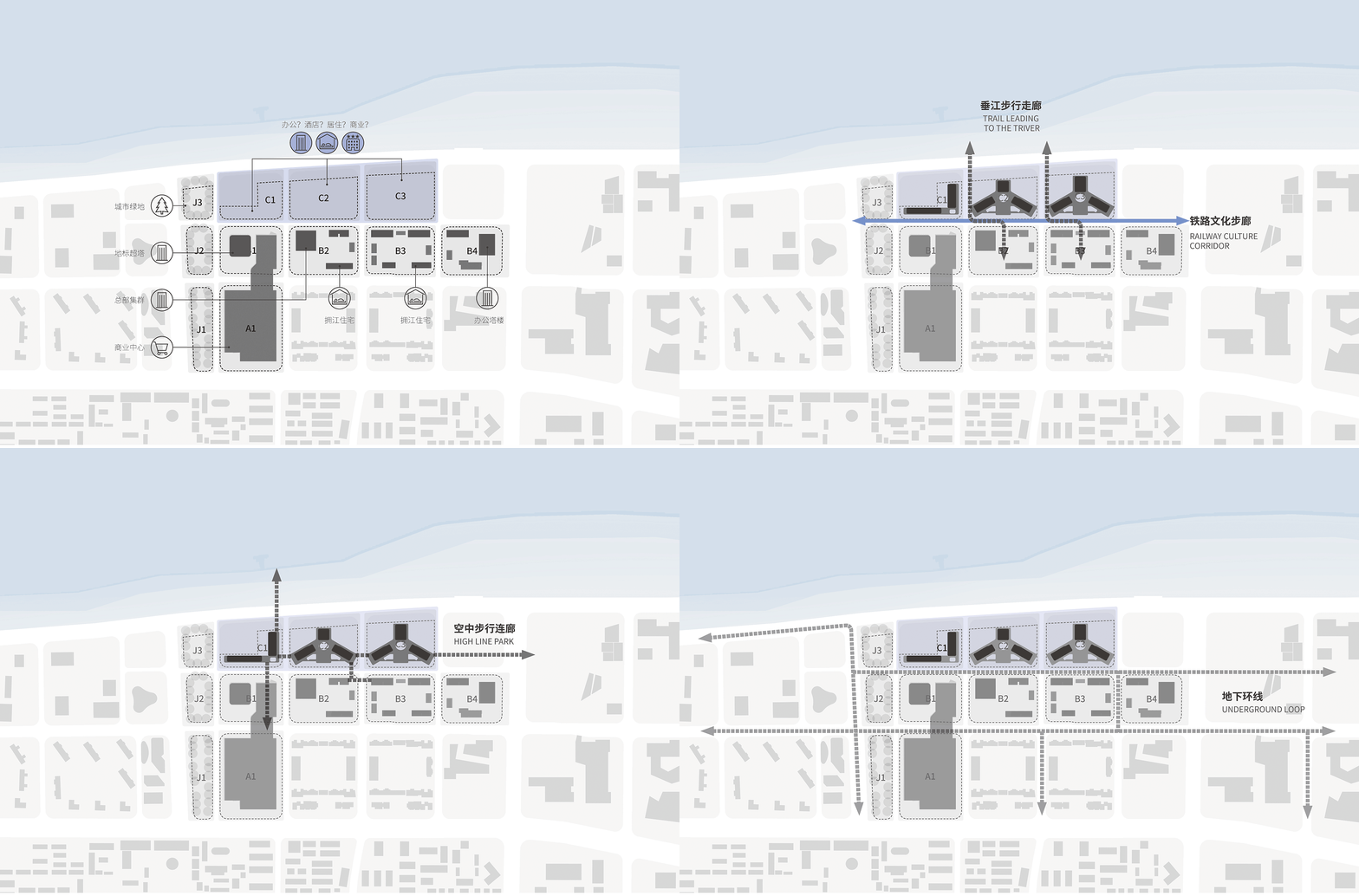
Unlike the competition scheme, which integrates the city grid layout, the “Double Y-shape + L-shape” provided by the client presents an alienated spatial structure within the horizontal and vertical grid of the city. We continue the concept of the competition scheme’s vertical zoning design and “habitat base”: on a human scale, we optimize the scale and guide the space to dissolve the sense of distance and alienation brought by the heterogeneous layout; on a macro scale, differentiated architectural images and efficient accessibility are used to establish the urban coordinate. The “habitat base” plays the role of a multi-level, multi-flow hub to facilitate the interaction of different functions and the diversion of various groups.
▼“生境底盘”,”Habitat Base”©line+

随着项目功能定位的逐渐清晰,不同群体对私密性和公共性的需求也更加明确。因而关于自然生境的营造成为另一条贯穿设计的主线,来化解空间矛盾。通过多层次、柔性化的景观策略,与江景相互渗透,与环境共融共生,让建筑尽可能融入场地与滨水绿带环境,从而在视觉和功能层面实现对周边环境的开放与反哺。
▼自然生境,Natural Habitat©line+
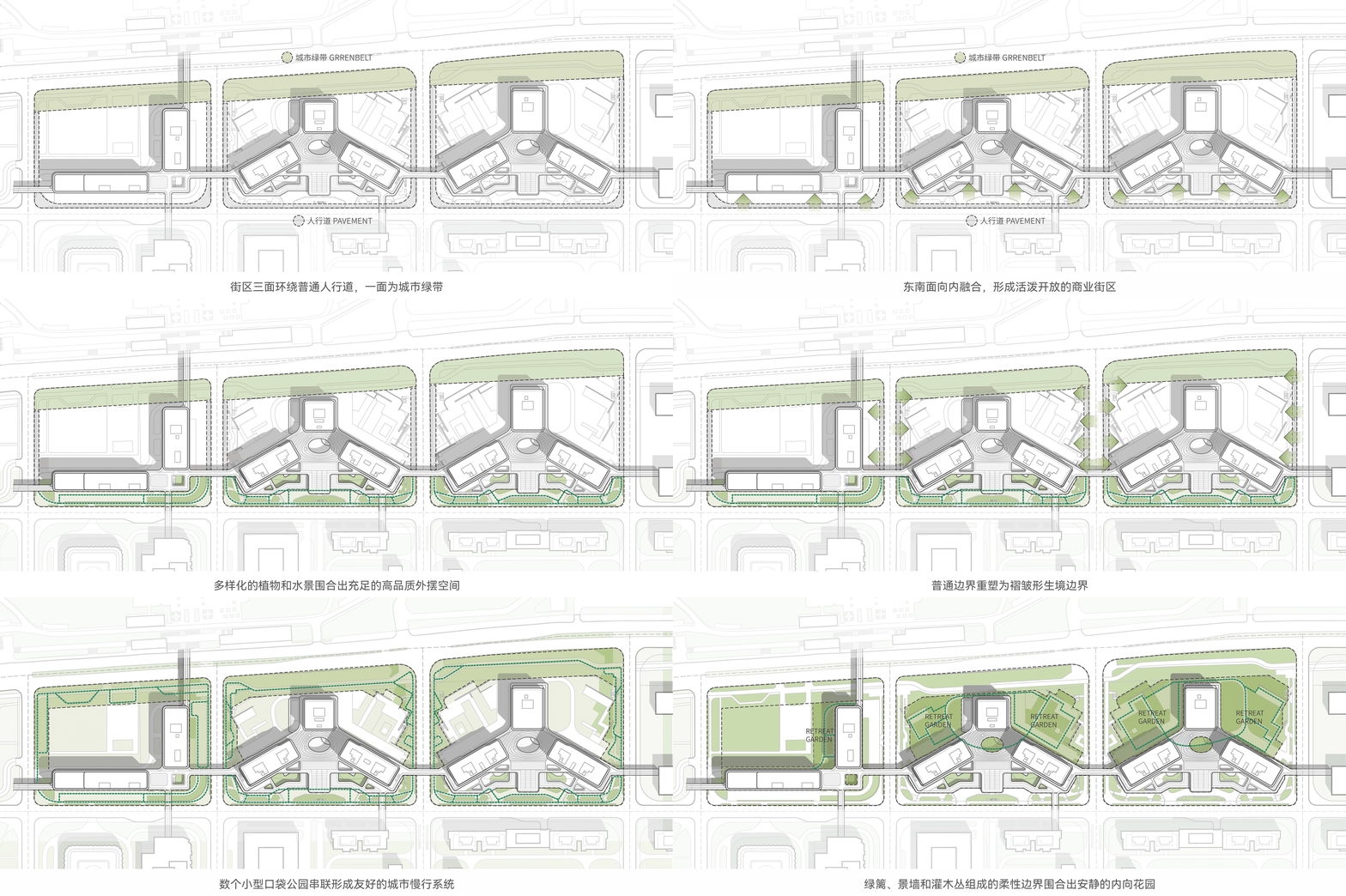
As the project’s functional positioning becomes clearer, the demands for privacy and publicness from different groups are also more defined. Thus, the creation of natural habitats becomes another central theme in the design to resolve spatial conflicts. Through multi-level, flexible landscape strategies that integrate with the river view and the surrounding environment, the architecture seeks to blend seamlessly with the site and the waterfront greenbelt. This approach aims to achieve openness and mutual benefit with the surrounding environment on both visual and functional levels.
▼“生机之环”,”Vital Loop”©line+

如何坐标?
异质,向生,多维,公共
How to Coordinate?
Hybrid, Vital, Multi-dimensional, Public
基于竞赛方案“城市聚场”提出的便捷可达、尺度宜人、业态多元、场所开放的理想原型,“异构街坊”方案深化依然是从城市、街区、空间三个尺度关系着手,从布局调整到尺度协调,从空间策略到复合体验,从完全开放到多层级开放,最大限度融入环境并激发新活力。
Based on the ideal prototype of “Urban Convergence” proposed in the competition scheme, which emphasizes convenient accessibility, pleasant scale, diverse functions, and open places, the “Hybrid Block” scheme deepens this concept by focusing on the relationships at three scales: urban, block, and space. The approach ranges from layout adjustments to scale coordination, from spatial strategies to composite experiences, and from complete openness to multi-level openness, maximizing integration with the environment and stimulating new vitality.
▼鸟瞰,aerial view©line+

异质:肌理相异,但尺度相宜|Hybrid: Distinct Fabric, Compatible Scales
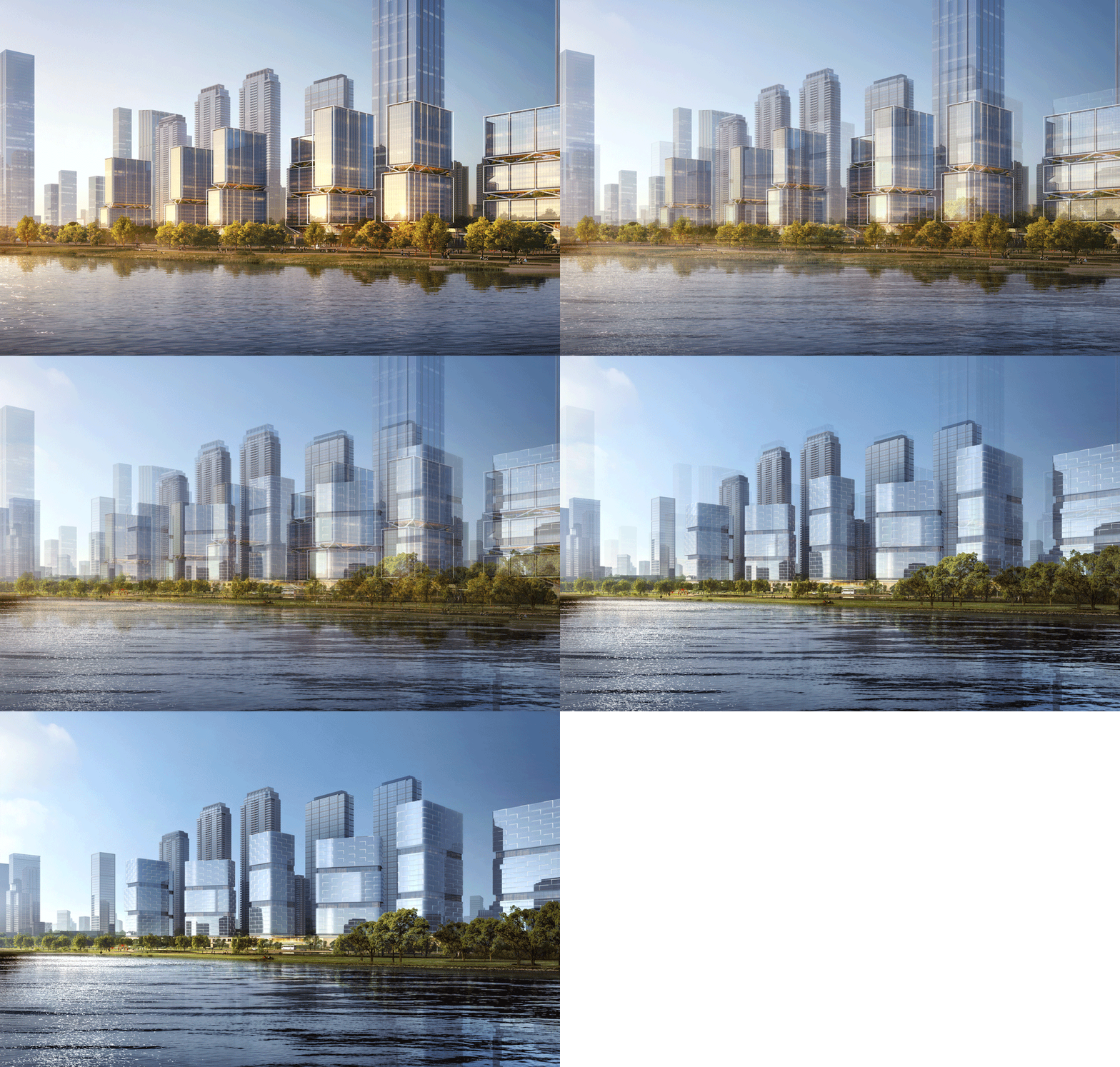
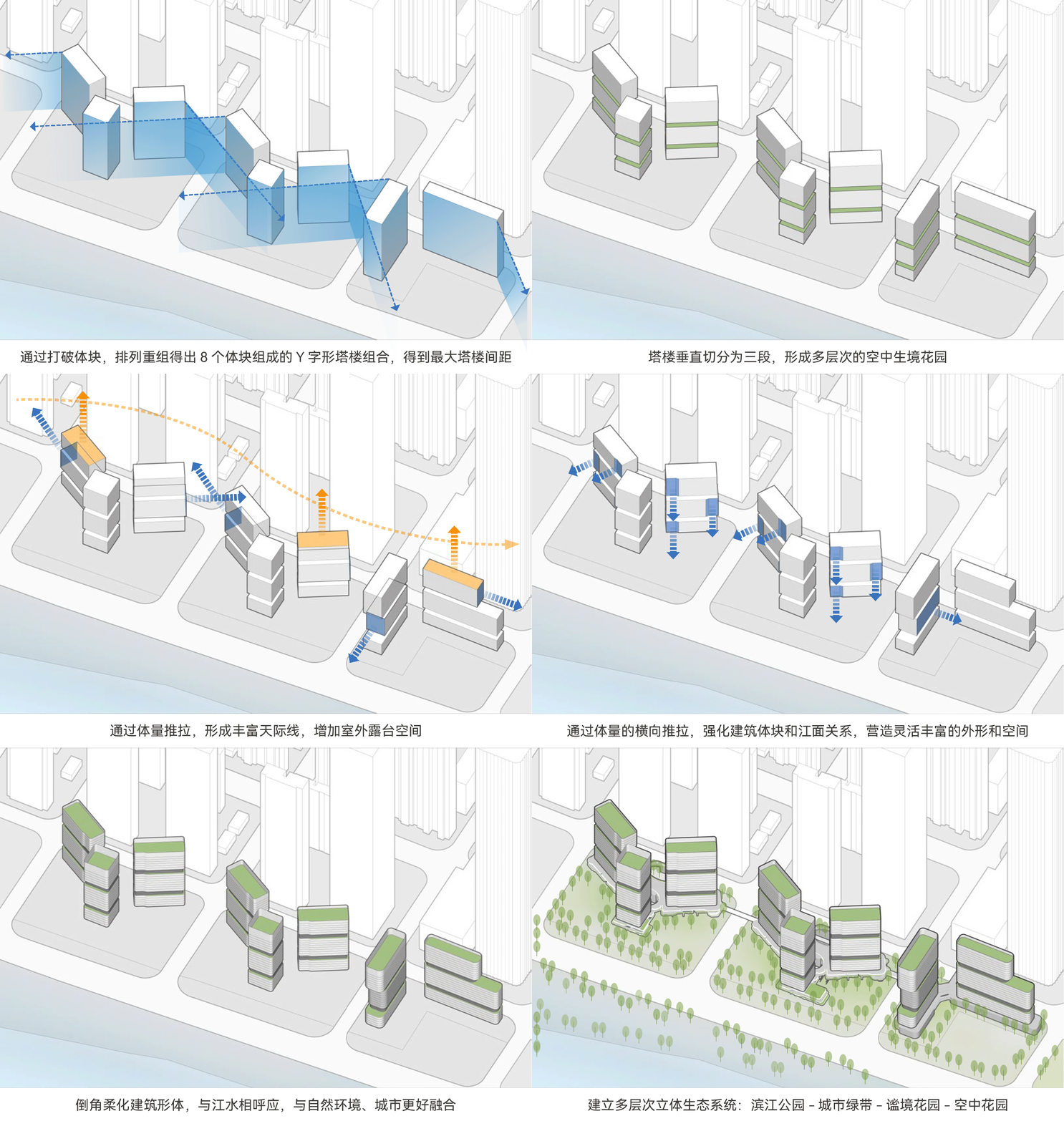
建筑整体延续了竞赛阶段提出的群像式“长江画屏”概念,单体也保持垂直方向的体量三段划分关系。8 座板式塔楼采用体块分段和前后推拉的形式,形成退台,拓展室外露台空间,优化横向尺度,强化建筑与江面在形态上的呼应,塑造灵动而富有韵律的天际线形象。
The overall architecture continues the “Yangtze River screen” concept proposed during the competition phase, with the individual volumes maintaining a three-part vertical division. The eight slab towers adopt a segmented form with forward and backward shifting, creating setbacks to expand the outdoor terrace spaces. This optimizes the horizontal scale and strengthens the architectural form’s resonance with the riverfront, shaping a dynamic and rhythmic skyline.
▼形体生成,Shape Formation©line+
▼滨江远观,Distant view© line+

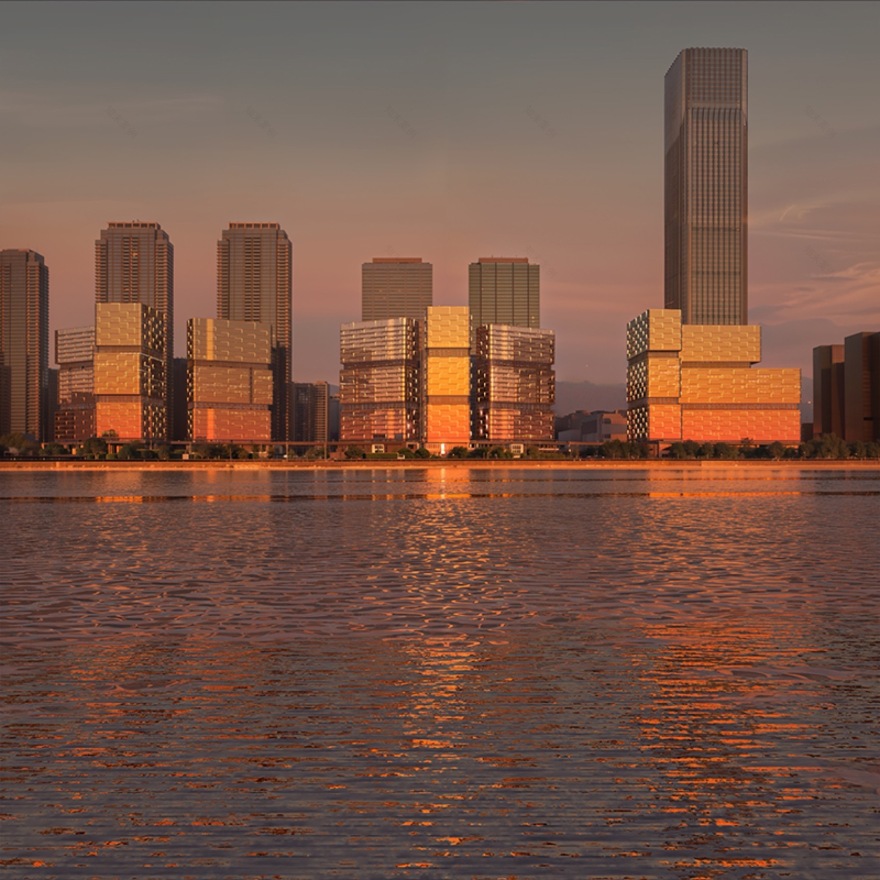
低区的“生境底盘”通过立体化路径串联 8 座塔楼和周边社区、滨江城市绿带,形成多维的公共系统:首层沿街设计为开放街区,10.5 米标高处构建社区高线公园。通过街道近人尺度的商业盒子,水平错动的天街和片板绿化,以及被消解的建筑体量,来营造更具亲和力的城市空间尺度。

The “holographic base” in the lower zone connects the eight towers with the surrounding community and the riverside urban greenbelt through three-dimensional pathways, creating a multi-dimensional public system. The ground floor is designed as an open street block, and at a height of 10.5 meters, a community high-line park is established. Through street-level, human-scale commercial boxes, horizontally shifted sky streets, and fragmented greenery, along with the dissolved architectural volume, the design aims to create a more approachable urban spatial scale.
▼生境底盘,Holographic Base© line+
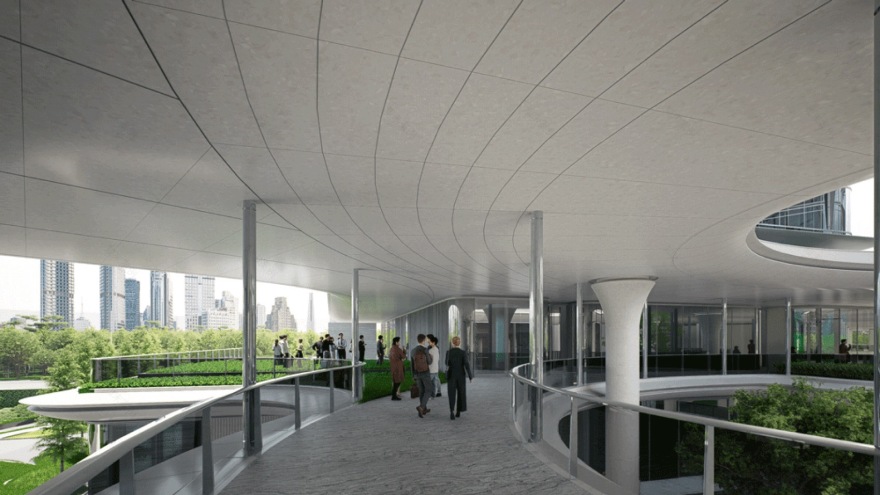
在为武汉这座江城塑造江滨坐标建筑时,我们很自然地联想到了以长江及其水纹作为文化记忆的意象象征。我们将水波涟漪转译为建筑立面的律动语言,玻璃幕墙与辽阔的长江水面交相辉映,再现波光粼粼的视觉效果。
When shaping the riverside coordinate architecture for Wuhan, the River City, we naturally drew inspiration from the imagery symbolizing cultural memories associated with the Yangtze River and its ripples. We translated the ripples into a rhythmic language for the building’s façade, where the glass curtain walls mirror the expansive Yangtze River, recreating the shimmering visual effect of the water’s surface.
▼远观,Distant view© line+


在我们查阅相关文献时发现,单元幕墙上的金属构件与宋代画家马远《水图十二卷》中“长江万顷”的肌理意象不谋而合,也使得传统绘画中长江流水的历史景致以另一种方式在现代城市中重现。
While reviewing relevant literature, we discovered that the metal components on the unitized curtain wall coincidentally align with the textural imagery of “the vast Yangtze River” depicted in the Song Dynasty painter Ma Yuan’s Twelve Scrolls of Water. This connection allows the historical scene of the Yangtze River flowing through traditional painting to be reinterpreted and reintroduced into the modern urban context in a new way.
▼立面概念。Facade Concept© line+

向生:向心布局,生机环线|Towards Vitality: Centripetal Layout, Vitality Circles
来自于前期城市设计概念中的 Y 形布局,使得单地块内的 3 座塔楼呈向心围合的关系,稳定且私密。
Derived from the early urban design concept’s Y-shaped layout, the three towers within the single plot are arranged in a centripetal enclosing relationship, creating stability and privacy.
▼效果图与施工过程,renderings and construction process© line+

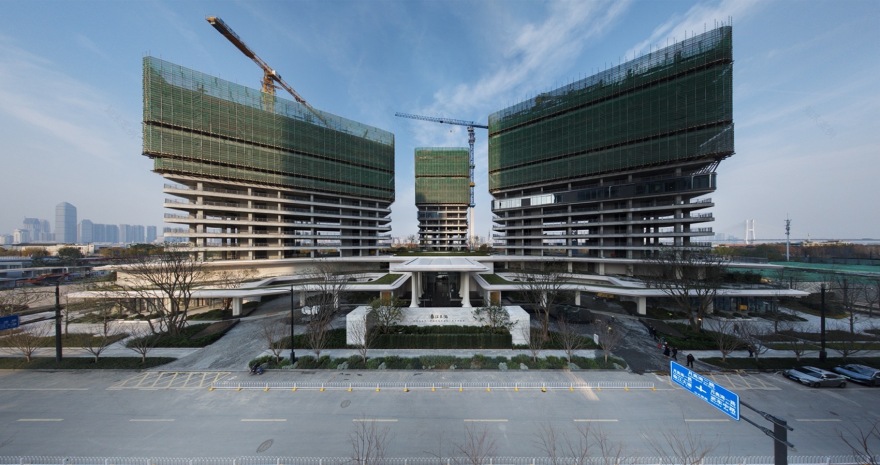
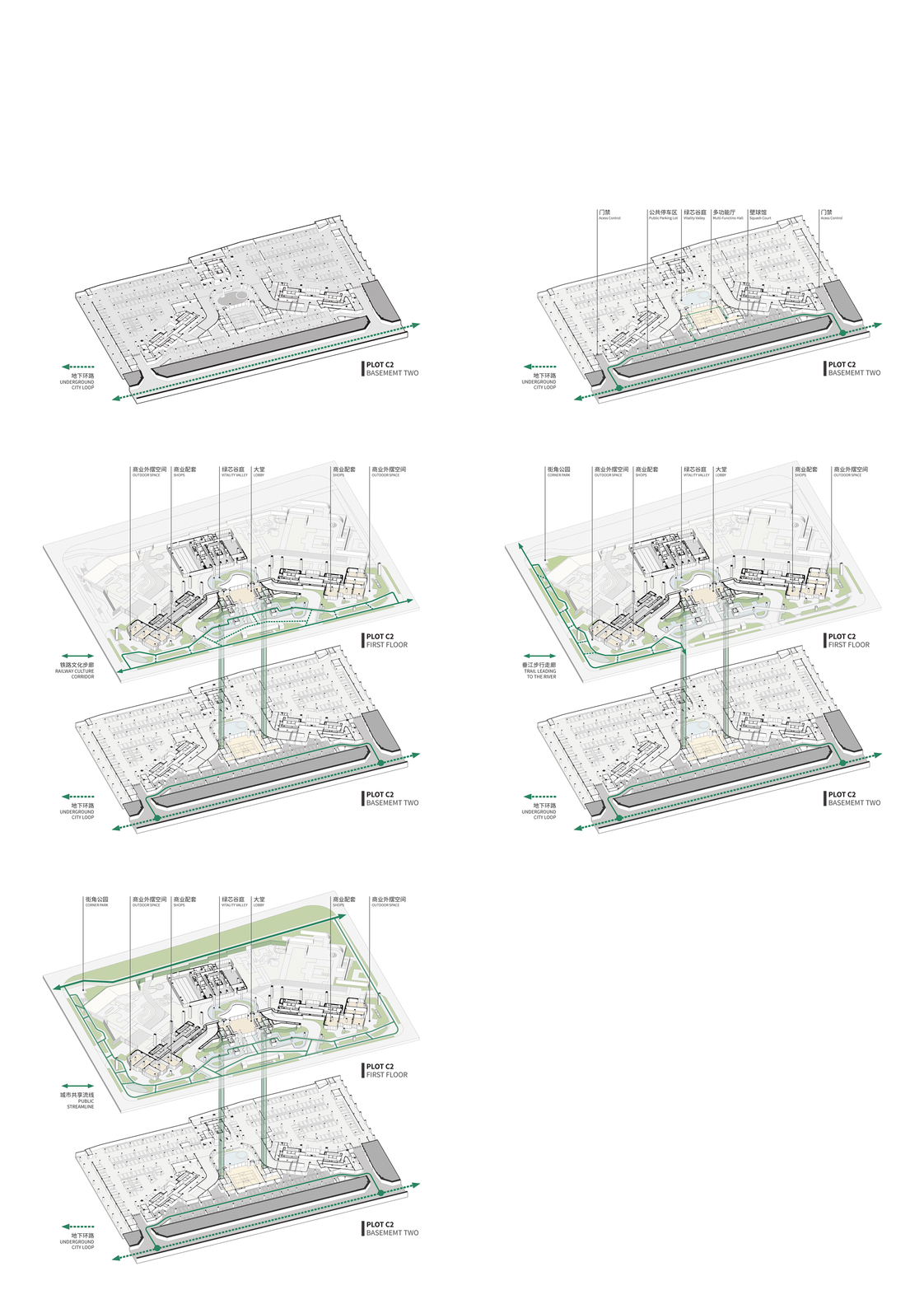
以中央景观庭院为枢纽中心,我们规划了两条“生机环线”:滨水绿带-垂江步行走廊-铁路;文化步廊-开放街区的外环系统,以及联通园区内外的“生机之环”,将空间不同程度的打开,对不同功能需求的人群进行有效分流。
Centered around the central landscape courtyard, we have planned two “Vital Loops”: the outer loop system connecting the waterfront green belt, riverside pedestrian corridor, railway culture corridor, and open street block, as well as the “Vital Ring” linking the interior and exterior of the park. These loops open up the space to varying degrees, effectively channeling different groups based on their functional needs.
▼从方案效果图到落地实景,From Concept Renderings to Reality© 陈曦工作室

▼底层空间,ground floor space©line+


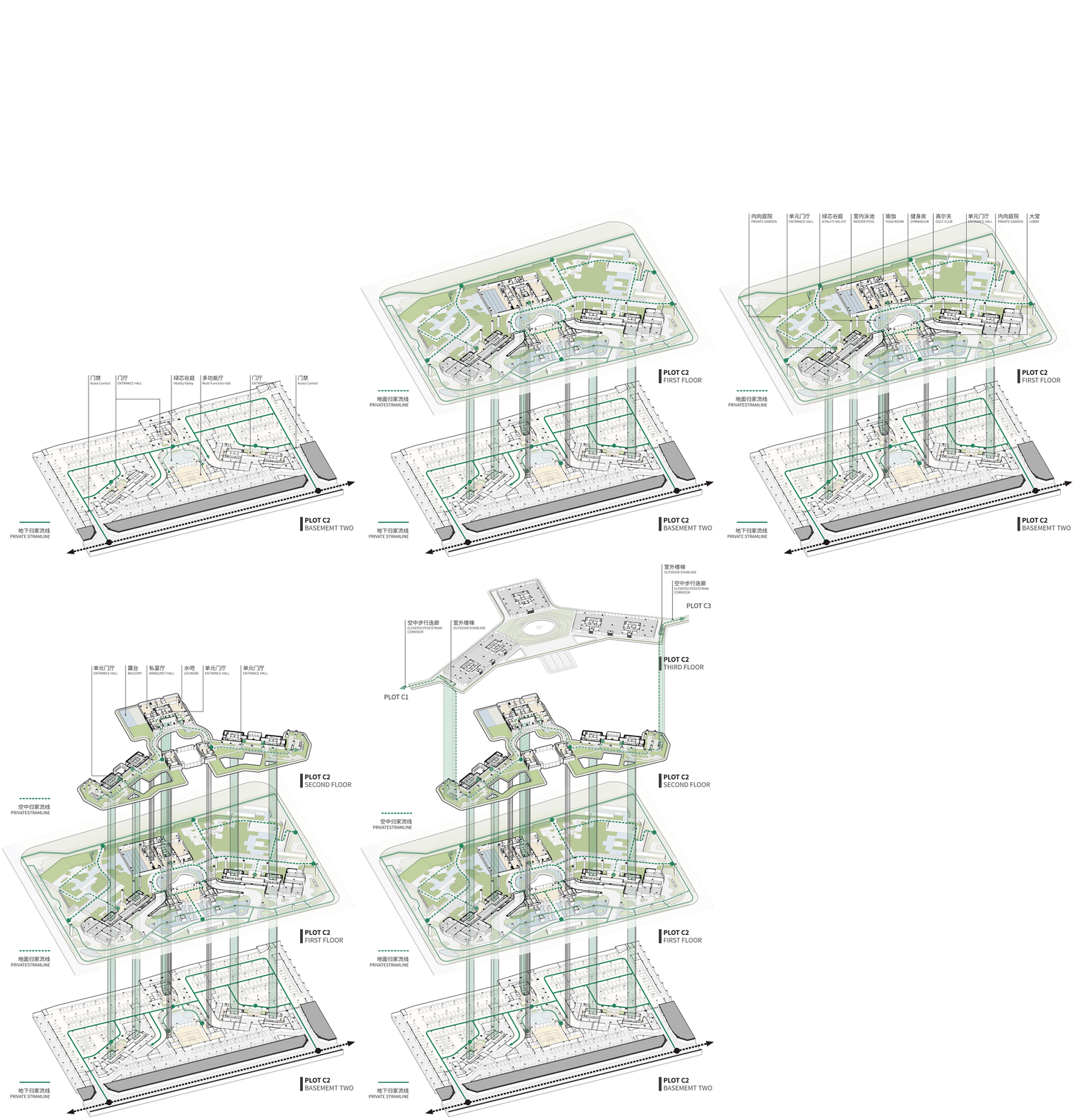
以 C2 地块为例。地下二层的地库空间衔接片区整体规划的地下环路,将部分停车位释放给城市。城市市民可经由公共车库、地下多功能厅的路径,或是通过沿街的艺术中心主入口,抵达“生机之环”中的共享功能空间。地面层则是与城市共享的商业街区、铁路文化步廊、垂江步行走廊。
Take the C2 plot as an example. The underground Level 2 parking space connects to the overall underground ring road of the district, releasing some parking spots for public use. City residents can access the shared functional spaces within the “Vital Loop” either through the public parking lot, the underground multifunctional hall, or via the main street entrance. The ground level features shared commercial streets, the Railway Cultural Walkway, and the Riverside Pedestrian Corridor, all accessible to the public.
▼城市开放流线,Urban Open Circulation©line+
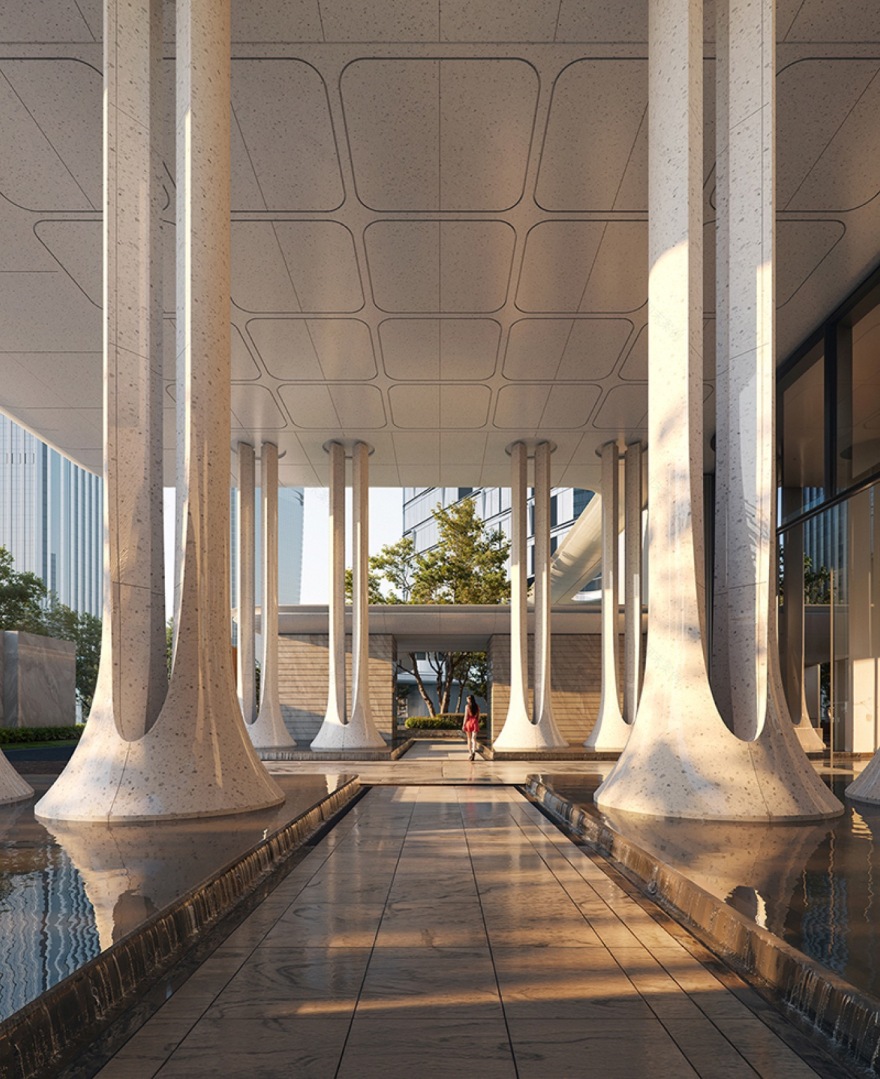
▼艺术中心主入口从方案效果图到落地实景,Main Entrance: From Concept Renderings to Reality© 陈曦工作室

▼停车场入口,Parking Entrance© 陈曦工作室


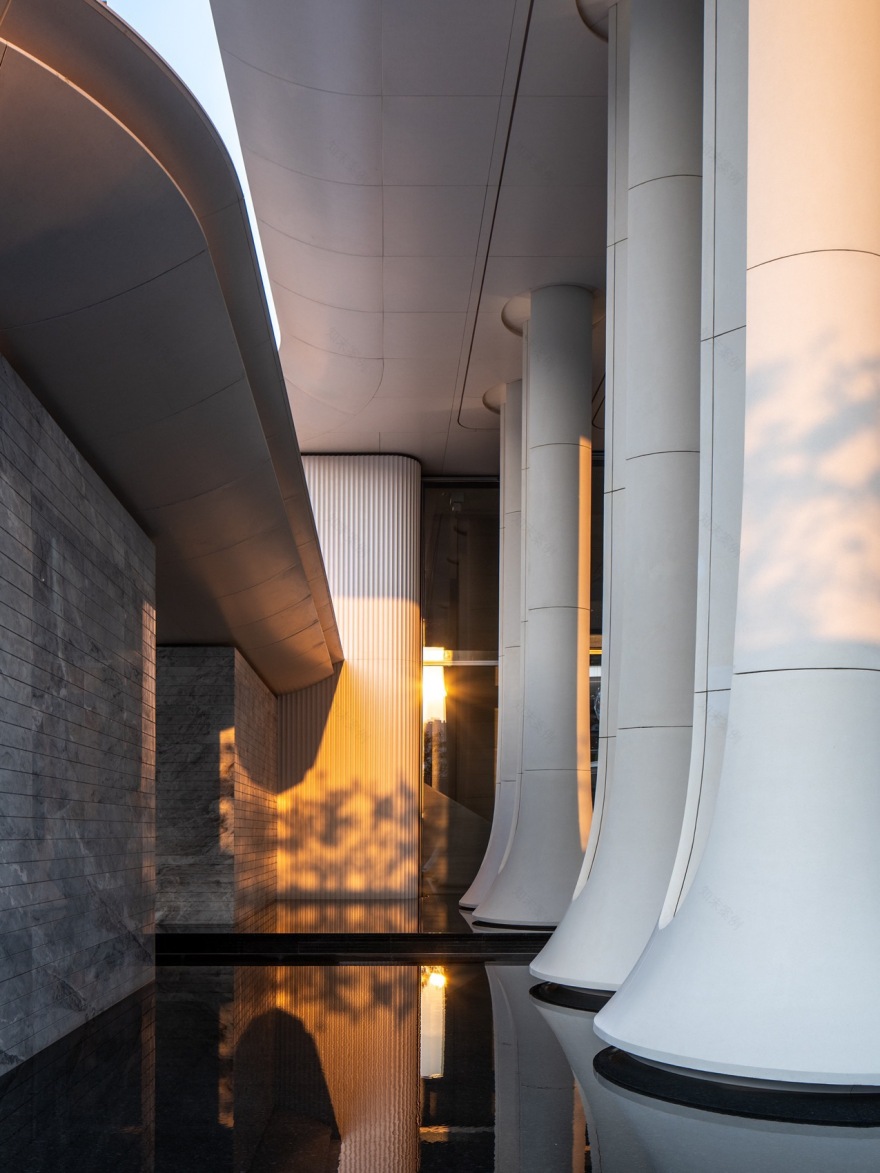
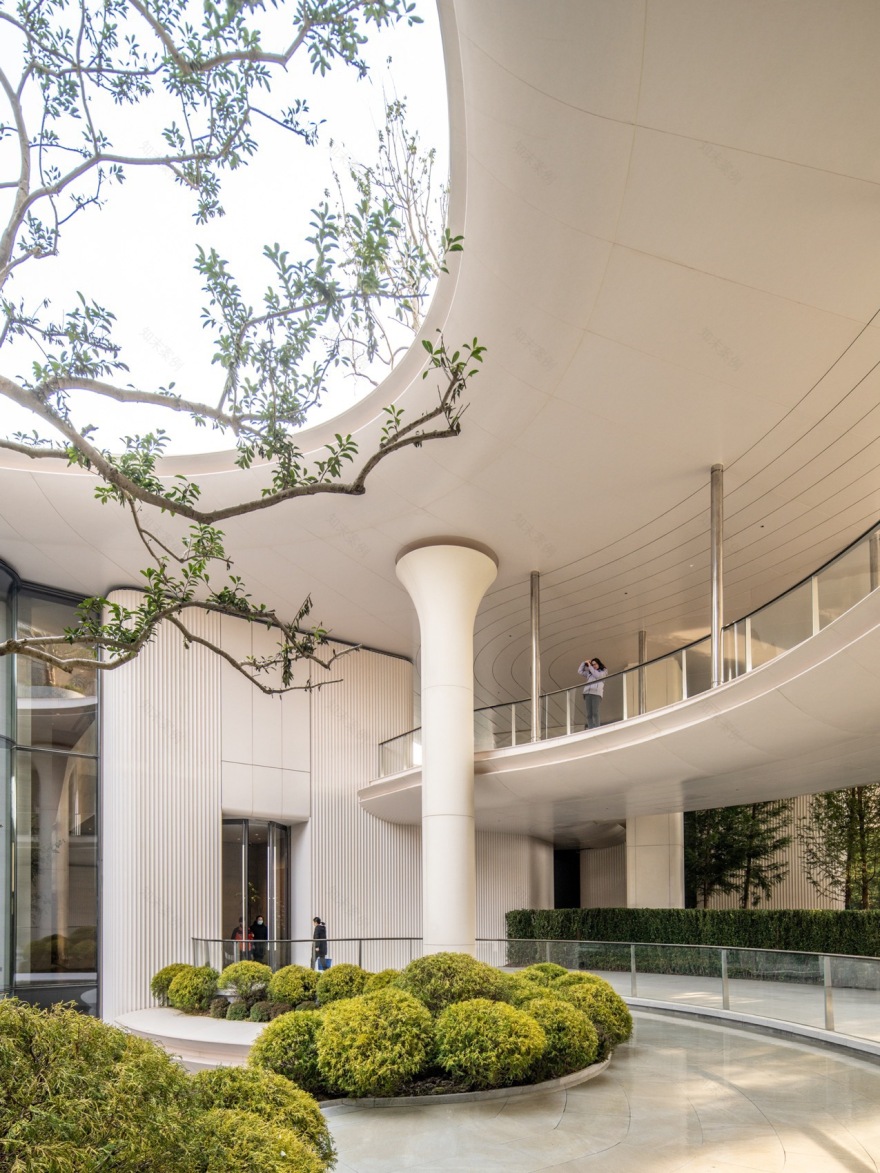
艺术中心主入口,由 8 根白色 UHPC 树形立柱阵列支撑,形成 10.5 米挑高的视觉引导与标志性空间。
The main entrance of the Art Center is supported by an array of 8 white UHPC tree-like columns, forming a 10.5-meter high space that serves as a visual guide and a landmark.
▼从方案效果图到落地实景,From Concept Rendering to Reality©line+ /陈曦工作室

▼落地实景,Reality© 陈曦工作室

▼落地实景,Reality© 陈曦工作室


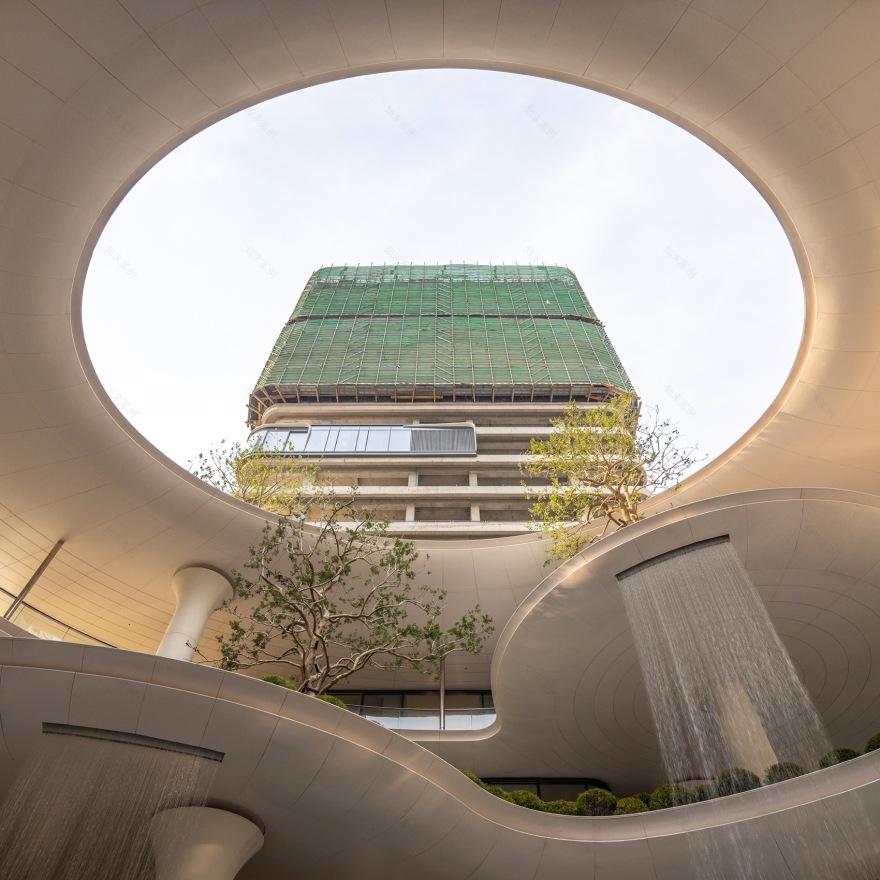
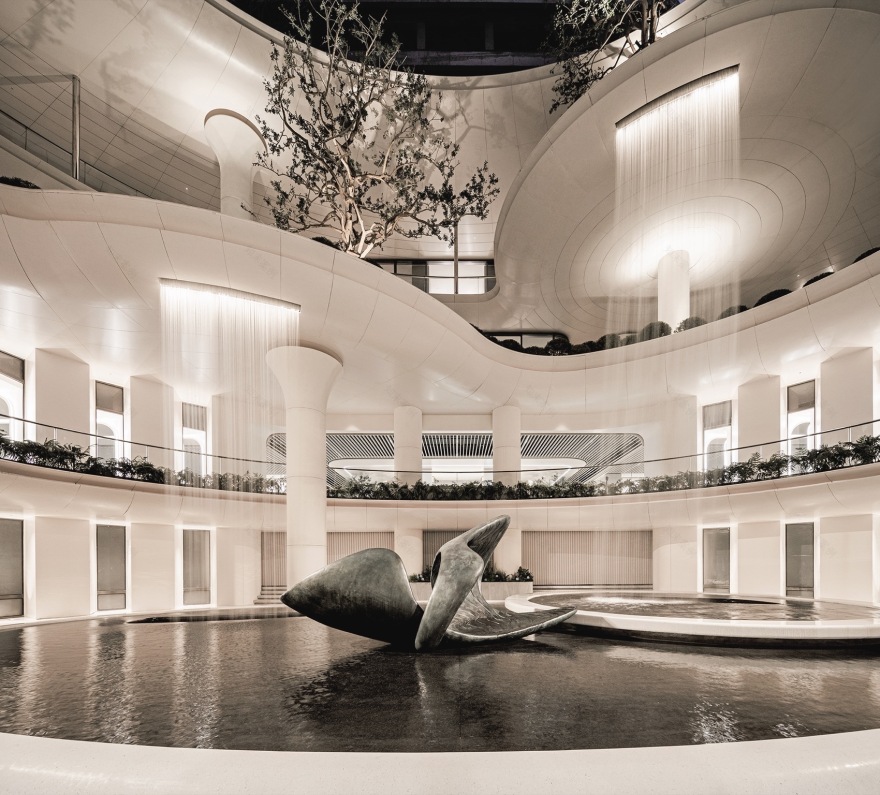
“生机之环”的中央庭院,整合了采光、景观与流线,通过环形路径实现各楼层的高效连通与人流分流。
The central courtyard of the “Vital Loop” integrates lighting, landscaping, and circulation, achieving efficient connectivity between floors and effective crowd flow through a circular path.
▼“生机之环”,”Vital Loop”© 陈曦工作室

多维:从立体空间到复合体验|Multidimensional: From Spatial Composition to Multifaceted Experience
“立体”作为空间策略,通过空中连廊、地下空间等有效解决了空间维度的问题。而面对更复杂的人群和业态功能,“多维”的策略则指向一种更复合的体验。通过融入城市客厅、艺术中心、商业街区等复合业态,营造全天候活力社区,既为项目使用者服务,也为市民提供差异化体验和便利。
▼剖面分析,Section Analysis©line+
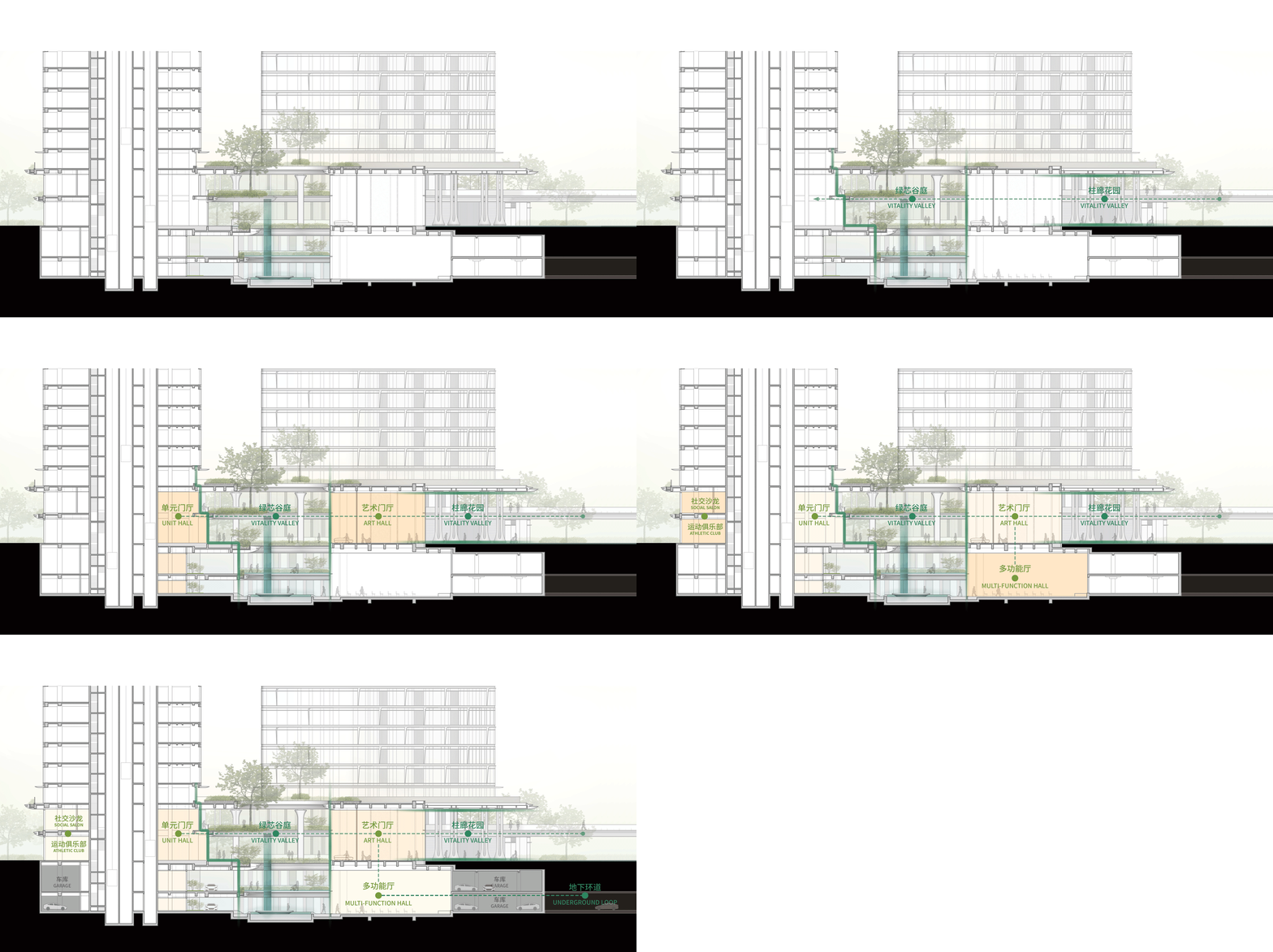
“Three-dimensional” as a spatial strategy effectively addresses the issue of spatial dimensions through features like aerial walkways and underground spaces. In response to more complex crowd and functional demands, the “multi-dimensional” strategy points to a more integrated experience. By incorporating mixed-use elements such as a city living room, art center, and commercial district, the design creates a 24/7 vibrant community that serves both the project’s users and provides differentiated experiences and convenience for the public.
▼从方案效果图到落地实景,From Concept Renderings to Reality©line+
▼贯穿四层的中央庭院,Central Courtyard Spanning Four Floors©line+ /陈曦工作室


▼贯穿四层的中央庭院,Central Courtyard Spanning Four Floors© 陈曦工作室

中庭空间以多层瀑布景观和垂直绿植为视觉核心,同时结合艺术展陈、城市休闲、景观打卡等功能,打造包容性的公共活动空间。
The atrium space is centered around multi-layer waterfall landscapes and vertical greenery, while incorporating functions such as art exhibitions, urban leisure, and scenic check-in spots, creating an inclusive public activity space.
▼多层瀑布景观和垂直绿植,Multi-layer waterfall landscapes and vertical greenery ©line+ / 陈曦工作室


▼墙身大样,Wall Section Details©line+

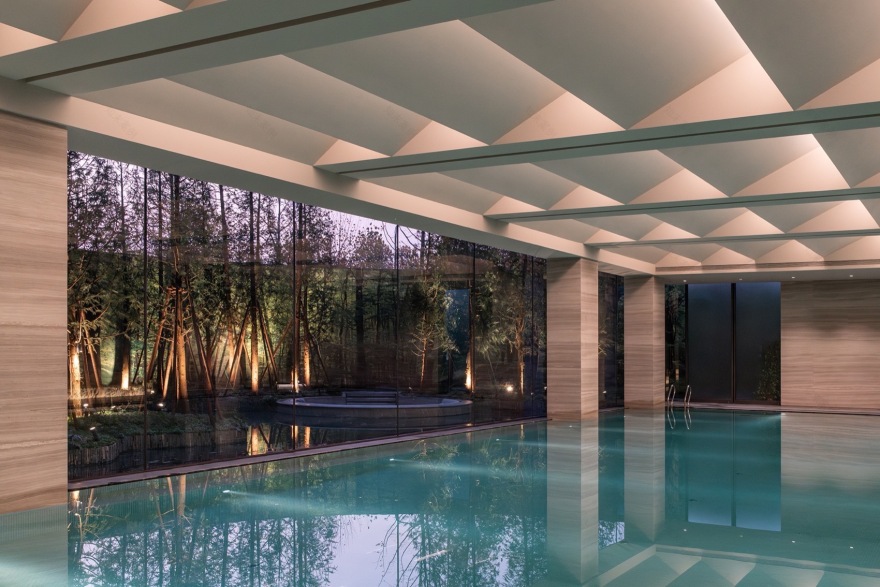
艺术中心、多功能厅、健身房、泳池、会客厅等设施则分布在地下二层至地面层的不同楼层,充分满足广泛的社交、健康需求。
Facilities such as the art center, multifunctional hall, gym, swimming pool, and lounge are distributed across different floors from the second basement to the ground level, fully catering to a wide range of social and wellness needs.
▼泳池空间,Pool Space© 陈曦工作室

▼户外空间,Outdoor Space© 陈曦工作室

▼贯穿四层的中央庭院,Central Courtyard Spanning Four Floors© 陈曦工作室

▼中庭为地下二层提供采光,The Central Courtyard Provides Natural Light to the Basement Level 2©line+

公共:层级化开放性|Public: Hierarchical Openness
在功能组织的关系处理中,私密性与公共性之间的平衡是项目设计面临的另一大挑战。对此,我们规划了一种多层级开放空间体系,以营造项目特有的公共性特质。
The balance between privacy and publicness is another major challenge in the functional organization of the project. To address this, we have planned a multi-level open space system to foster the unique public character of the project.
▼入口,entrance©陈曦工作室 / line+


这里的“公共性”隐含多层级的开放逻辑,面对包括地块内部使用者、周边社区用户与更广泛的城市市民在内的多元化群体需求,设计通过花园景观、公共天街和开放绿廊的分级策略,使各群体的期待与诉求得到均衡而有效的回应。
The “publicness” here implies a multi-level open logic, addressing the diverse needs of various groups, including internal users, surrounding community members, and broader city citizens. The design employs a tiered strategy with garden landscapes, public sky streets, and open green corridors, ensuring that the expectations and demands of each group are balanced and effectively addressed.
▼地块周边社区的共享流线,Shared Circulation for Surrounding Communities © line+
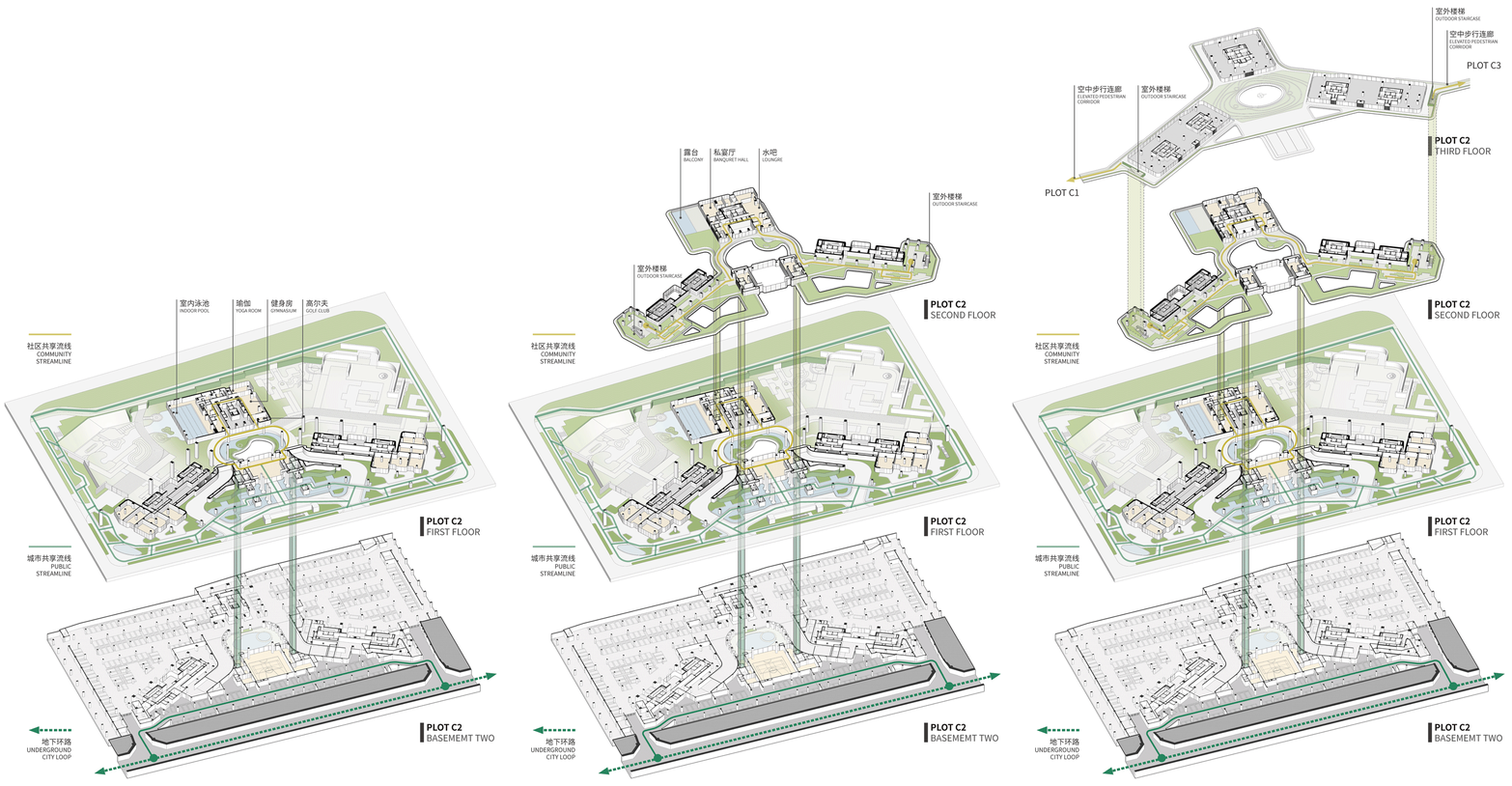
▼共享流线,Shared Circulation
©陈曦工作室
▼地块内部的私密流线,Private Circulation within the Site© line+
▼私密流线,Private Circulation©陈曦工作室

▼私密流线,Private Circulation©陈曦工作室


基于内部空间与外部江景资源的充分联通,高层塔楼选择了可行性更高的密肋井字梁悬挑结构,同时提供一种灵活可变的空间平面,也是为不确定使用场景预留弹性空间。
Based on the full integration of internal spaces and the external river view resources, the high-rise towers adopted a more feasible ribbed grid beam cantilever structure, providing a flexible and adaptable spatial layout, while reserving flexible space for uncertain usage scenarios.
▼工地照,Construction Site© line+

▼室内江景视野,Interior River View©陈曦工作室


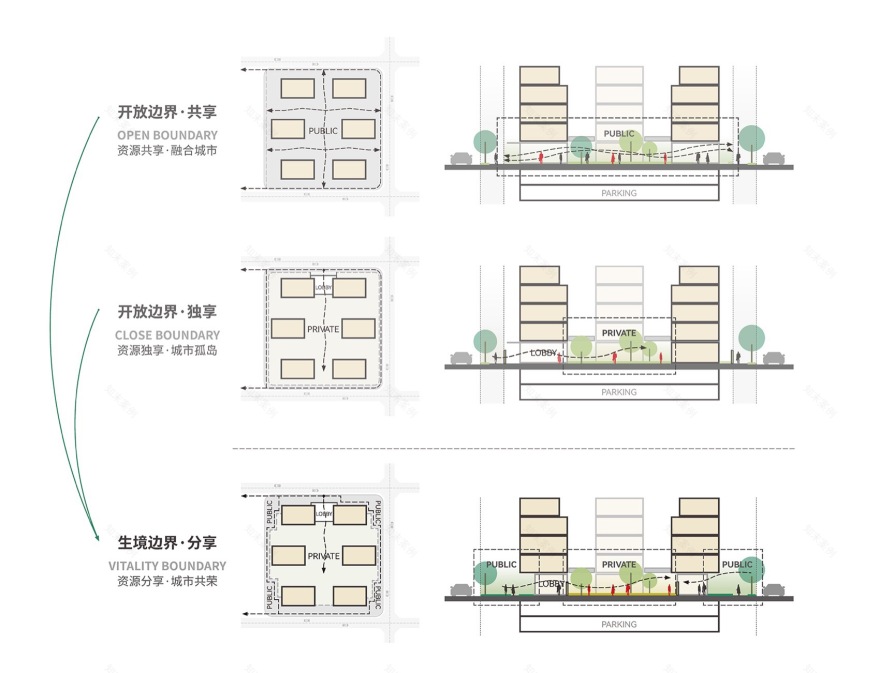
Y 形布局在临江的街角形成了两处空地,我们通过去围墙化策略,形成了大范围的共享和小范围的分享——视线上公共可达的景致共享于城市,高品质的园内景观则分享于园区使用者和周边居民。
▼不同开放程度的边界设计,Boundary Design with Varying Levels of Openness© line+

The Y-shaped layout creates two open spaces at the riverfront street corner. Through a de-wall strategy, we have established a large-scale shared space and a smaller-scale sharing space—visually accessible views are shared with the city, while the high-quality garden landscape is shared with park users and surrounding residents.
▼街角开放空间,Open Space at the Street Corner© line+

江畔城市坐标的新定义
A New Definition of Urban Coordinates Along the Yangtze River
长江滨水区域承载着厚重的历史记忆与独特的地缘文化。在城市化率持续提高但速度放缓的背景下,城市坐标建筑的意义也从单纯的城市形象符号或商业消费中心,拓展为多维度的、高品质的城市链接节点。
The Yangtze River waterfront area carries a deep historical memory and unique regional culture. In the context of continuous urbanization, albeit at a slower pace, the significance of urban coordinate architecture has expanded from a mere symbol of city identity or commercial consumption center to a multi-dimensional, high-quality urban connection node.
▼街景,Street view© line+

从传统以开放形式塑造的“共享坐标”,到如今通过多层级开放性构成的“分享街区”,“长江天际”以城市新型街坊的形态焕发鲜活烟火气与城市记忆。通过融合公共艺术、商业、文化与生活,“长江天际”构建了一座面向未来的城市生活综合体,不仅为公众提供新型生活空间,也重新定义了“坐标”的当代文化意义。
From the traditional “Shared Coordinates” shaped by open forms to the present “Sharing Block” formed through multi-level openness, Great Yangtze River revitalizes the urban fabric with the lively atmosphere of a new city neighborhood and urban memory. By integrating public art, commerce, culture, and lifestyle, Great Yangtze River creates a forward-looking urban living complex that not only provides the public with a new type of living space but also redefines the contemporary cultural significance of “coordinates.”
▼街景,Street view© line+

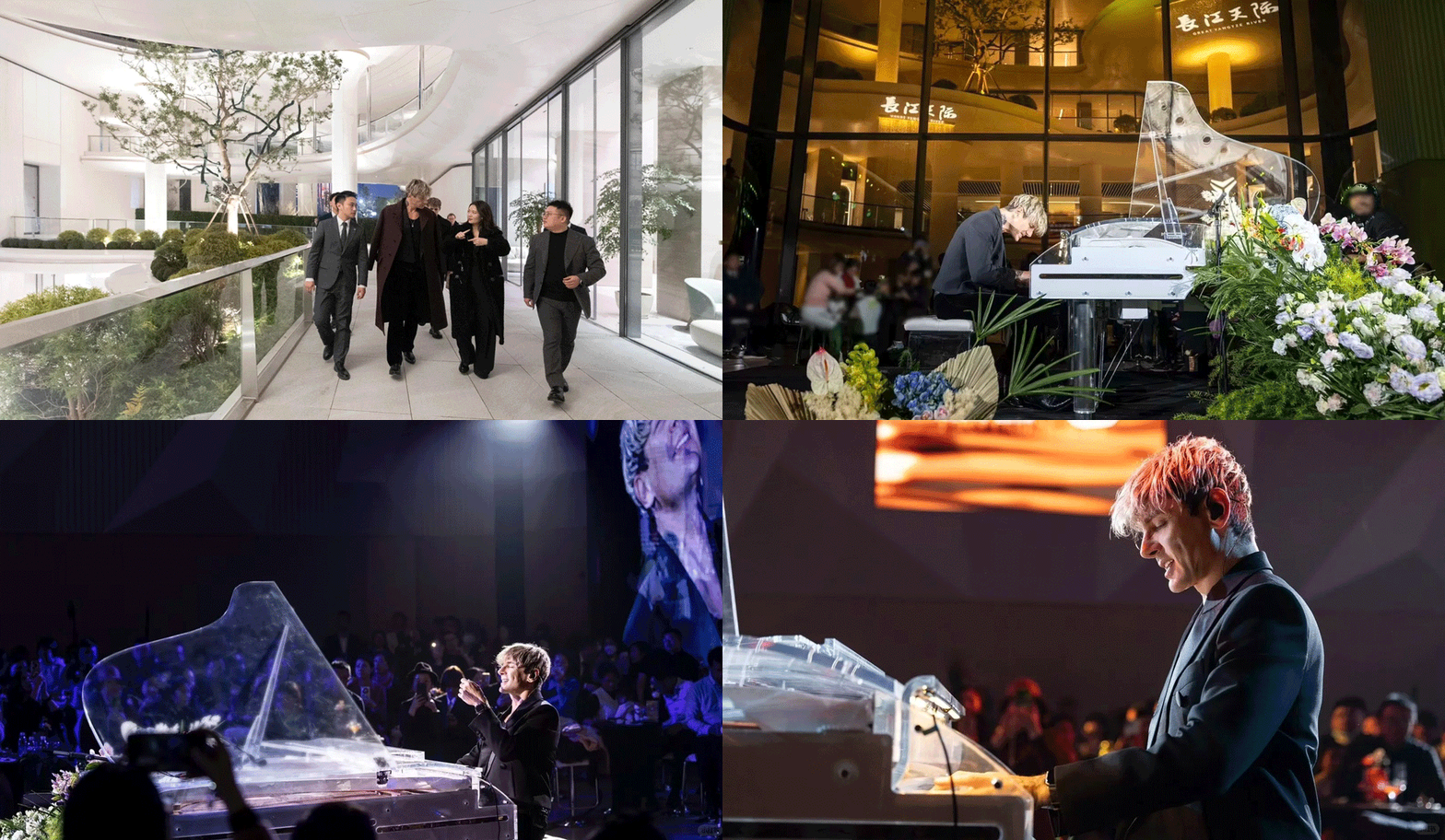
12 月初,艺术中心的率先开放,以世界级钢琴大师马克西姆的首场弹奏会为契机,为公众带来了具有标志性意义的文化体验,并以此为长江天际塑造城市记忆的重要起点。
In early December, the early opening of the Art Center, marked by the inaugural recital of world-renowned pianist Maksim, provided the public with a culturally significant experience. This event served as a key starting point in shaping the urban memory.
▼马克西姆演奏会,Maksim’s Recital
▼工地建造实录,Construction Record©陈曦工作室

历时一年半的滨水城市坐标设计探索,随着项目施工的稳步推进,正逐步转化为实体空间。我们也期待“长江天际”在城市与自然、文化与公共之间,持续创造丰富多元的生活可能性和城市记忆。
After a year and a half of exploration in designing the waterfront urban coordinates, the project is steadily progressing toward becoming a tangible space. We look forward to its continued creation of diverse living possibilities and urban memories, bridging the city and nature, culture and the public.
▼夜景,Night view©陈曦工作室

项目名称:武汉长江天际
建筑方案设计及初步设计:line+建筑事务所
主持建筑师/项目主创:朱培栋
设计团队:吴海文、周洋、邓超、朱雄飞、张群晨、孙金、刘皓
线图绘制:杜梦颖
业主:御江坤(武汉)房地产开发有限公司
室内设计:于舍设计 Yu Studio、香港郑中设计事务所(CCD)
景观设计:Platform 翊象设计
幕墙设计:上海熙玛工程顾问有限公司
灯光设计:bpi 照明设计
施工图设计:武汉正华建筑设计有限公司
项目位置:湖北,武汉
建筑面积:207000㎡
结构:框架结构、钢结构
材料:UHPC、仿石铝板、中空 LOW-E 玻璃
摄影:陈曦工作室、line+
Project Name: Great Yangtze River
Architecture Scheme Design and Design Development: line+ studio
Chief Architect/Project Principal: Zhu Peidong
Design Team: Wu Haiwen, Zhou Yang, Deng Chao, Zhu Xiongfei, Zhang Qunchen, Sun Jin, Liu Hao
Diagram Drawing: Du Mengying
Client: Yujiang Kun (Wuhan) Real Estate Development Co., Ltd.
Interior Design: Yu Studio, Hong Kong Zheng Zhong Design Office (CCD)
Landscape Design: Platform Design Group
Facade Design: cimafacade
Lighting Design: BPI Lighting Design
Construction Drawing Design: Wuhan Zhenghua Architectural Design Co., Ltd.
Project Location: Wuhan, Hubei
Building Area: 207,000 m²
Structure: Frame structure, Steel structure
Materials: UHPC, Stone-like aluminum panels, Hollow Low-E glass
Photography: Chen Xi Studio, line+

南京喵熊网络科技有限公司 苏ICP备18050492号-4知末 © 2018—2020 . All photos and trademark graphics are copyrighted by their owners.增值电信业务经营许可证(ICP)苏B2-20201444 苏公网安备 32011302321234号
苏公网安备 32011302321234号客服
消息
收藏
下载
最近