

创作上传
VIP
收藏下载
登录 | 注册有礼
查看完整案例

收藏

下载

分享
交融之园是承接园区中央南北向的中轴,也是有水系贯穿连接东西向主建筑群的公共开放空间,同时又是南主入口的背景,如何营造既符合国家级科研机构的特质又不失日常生活诉求的景观成为本设计的主题。
Firstly, the southern end of the Fusion Garden, which serves as the backdrop for the main southern entrance, has been designed as a visual focal point from all surrounding perspectives.
▼景观概览,Overall view © 如果视觉
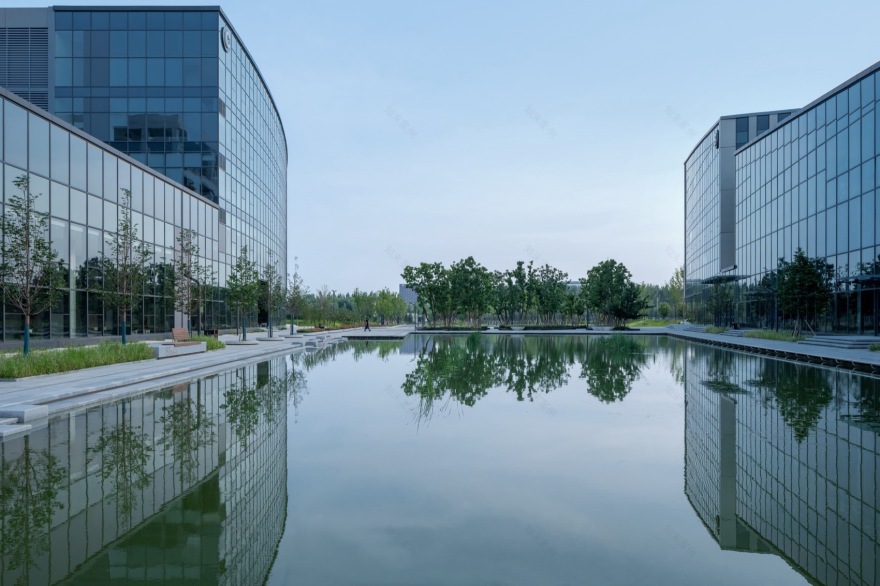

首先将作为南主入口背景的交融之园南端打造成周边全维度的视线焦点,用12组纵生蒙古栎自然散置在50m×60m约3000㎡的广场上,可聚可散、可过可留,近看有浮云状白色座椅,镶嵌树影的异形镜面不锈钢树池,远看是既通透又具有充够绿量的纵生蒙古栎林,匹配两侧建筑的体量。
▼透视分析图,perspective analysis © R-land


Twelve groups of vertically growing Mongolian oaks are scattered naturally across a plaza of approximately 3,000 square meters (50m x 60m). These trees create a flexible space for gathering or passing through, with white, cloud-shaped benches up close and irregular mirror polished stainless steel tree pools embedded within shadows of the trees.
▼12组纵生蒙古栎,12 groups of vertically growing Quercus mongolica © 如果视觉


▼不锈钢树池,Stainless steel tree pool © 章俊华

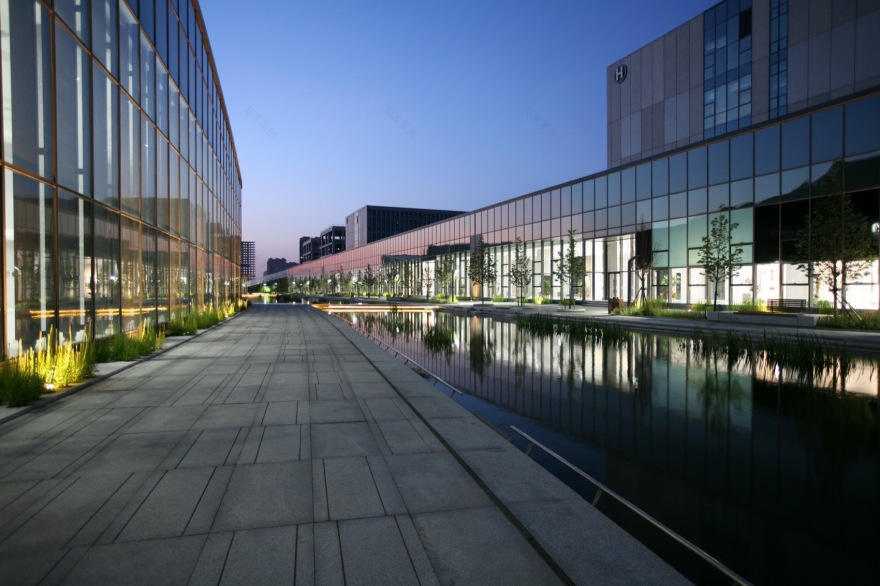
其次,是在狭长的水系中设置了带状的水生植物(黄菖蒲),让原本略显呆板的水面和建筑立面的倒影变的柔软和自然野趣,同时也从视觉角度上很好地缓解了此空间绿量少的缺陷。
From a distance, the vertically growing Mongolian oak forest appears both open and lush, matching the scale of the surrounding buildings. Next, a strip of aquatic plants (yellow flag iris) has been introduced into the narrow water features, softening the reflection of the water and the building façades.
▼滨水景观,Waterfront Landscape © 如果视觉

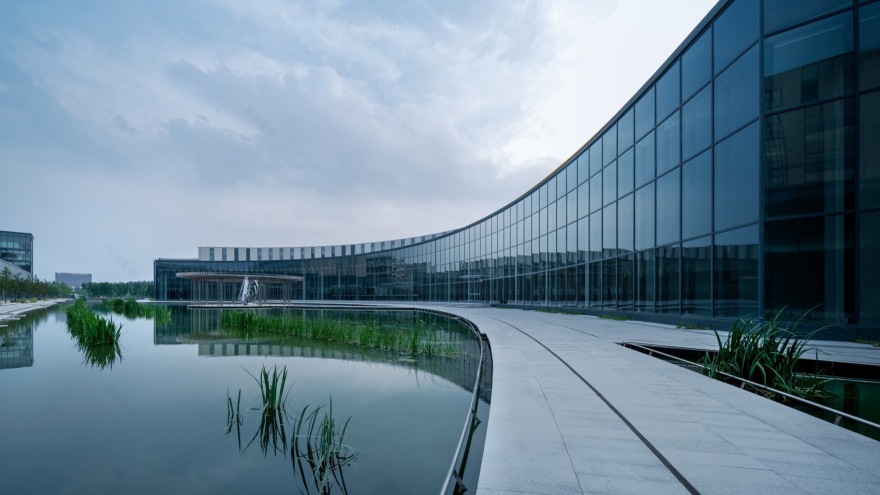

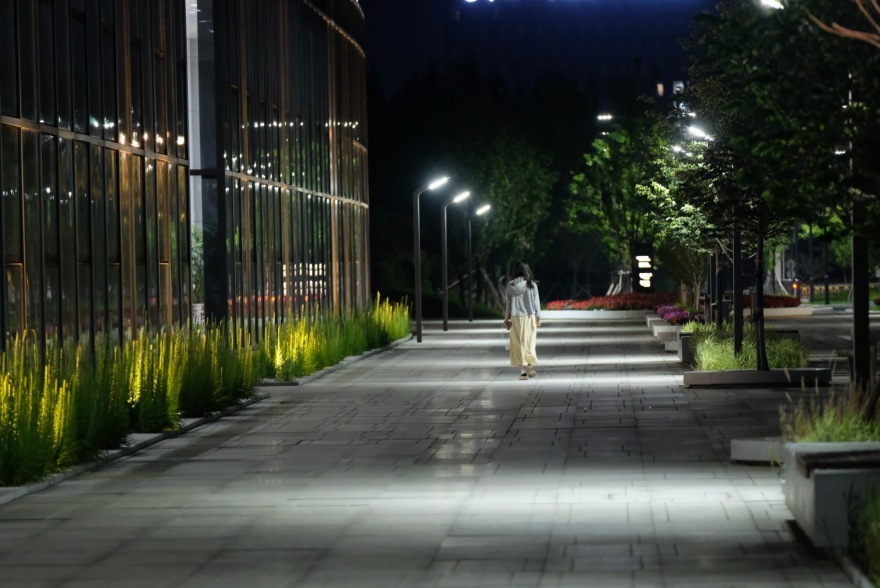
在中央大水面处放置了一个圆形水中平台,中心由4层无数片高低错落的金属板组成的圆廊和太空铝的雕塑,搭建了中央水面的主景。用尽可能少的元素表达对场所氛围的营造。此处的建筑与地面铺装的交汇处,用高于8cm厚的石板及自由组合的圆形种植槽中的蛇鞭菊做收边,以达到对硬质景观的缓冲作用。这里地被的花色、形状已不重要,有与无才是关键的所在。
▼装置图纸,Sculpture drawings © R-land


This introduces a natural, wild beauty and visually compensates for the lack of greenery in the area. In the central water body, a circular platform has been placed, featuring a circular corridor made of countless staggered metal plates and a space aluminium sculpture which serves as the central focal point of the water. Minimal elements are used to create a strong sense of atmosphere. Where the building meets the paving, 8cm thick stone slabs and circular planting troughs with blazing stars (Liatris) act as buffers to soften the hardscape. Here, the colour and shape of the groundcover flowers are less important—the presence or absence of vegetation is key.
▼中央水面的雕塑,Sculpture on the central water surface © 如果视觉


▼雕塑细部,Sculpture details © 赵长江

最后,在亲水性上做了两种不同的处理,东面铺装较宽的一侧做成渐进式的亲水平台,其间散置着长条休憩座椅,而另一侧(西侧)则采用临水泊岸的形式,铺装面上的树池也采用内斜式收边及混凝土台上方设置座椅靠背,让空间显得更加轻盈。
Secondly and finally, two different treatments are applied to enhance the water friendly aspects of the design. On the wider east side, a gradual water access platform is created, with scattered long benches for resting. On the opposite west side, a waterside docking form is used, with tree pools featuring inward sloping edges and backrests added to the concrete platforms making the space feel lighter.
▼亲水平台,Waterfront platform © 如果视觉

▼平台座椅,Platform Seat © 赵长江

▼建筑外侧绿化,Building exterior greening © 赵长江


▼地面铺装近景,Floor paving © 赵长江

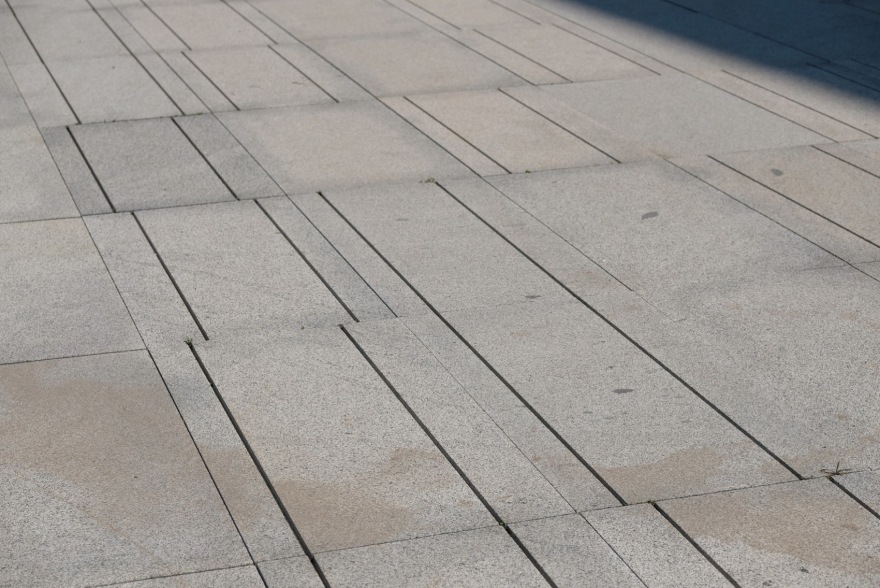
这里没有过度的装饰,新奇的造型,形式感的铺装及多样的材质变化,有的只是在常规的设计中,力求将每个细部处理都做到非常规,无论从面层、收边、拼搭、高差……都力争与场所的品质相吻合。内敛中有放纵,普通中有时尚,简约中有丰盛——常规中的非常规。
There is no excessive decoration, novel shapes, formalistic paving, or diverse material changes here. Instead, the design aims to handle each detail unconventionally within a conventional framework. Whether it’s the surface treatment, edging, assembling, or height differences, every effort is made to align with the quality of the site. Inward restraint paired with outward indulgence, the ordinary enhanced with fashion, and simplicity enriched with fullness—this is the unconventional within the conventional.
▼夜览,Night view © 如果视觉


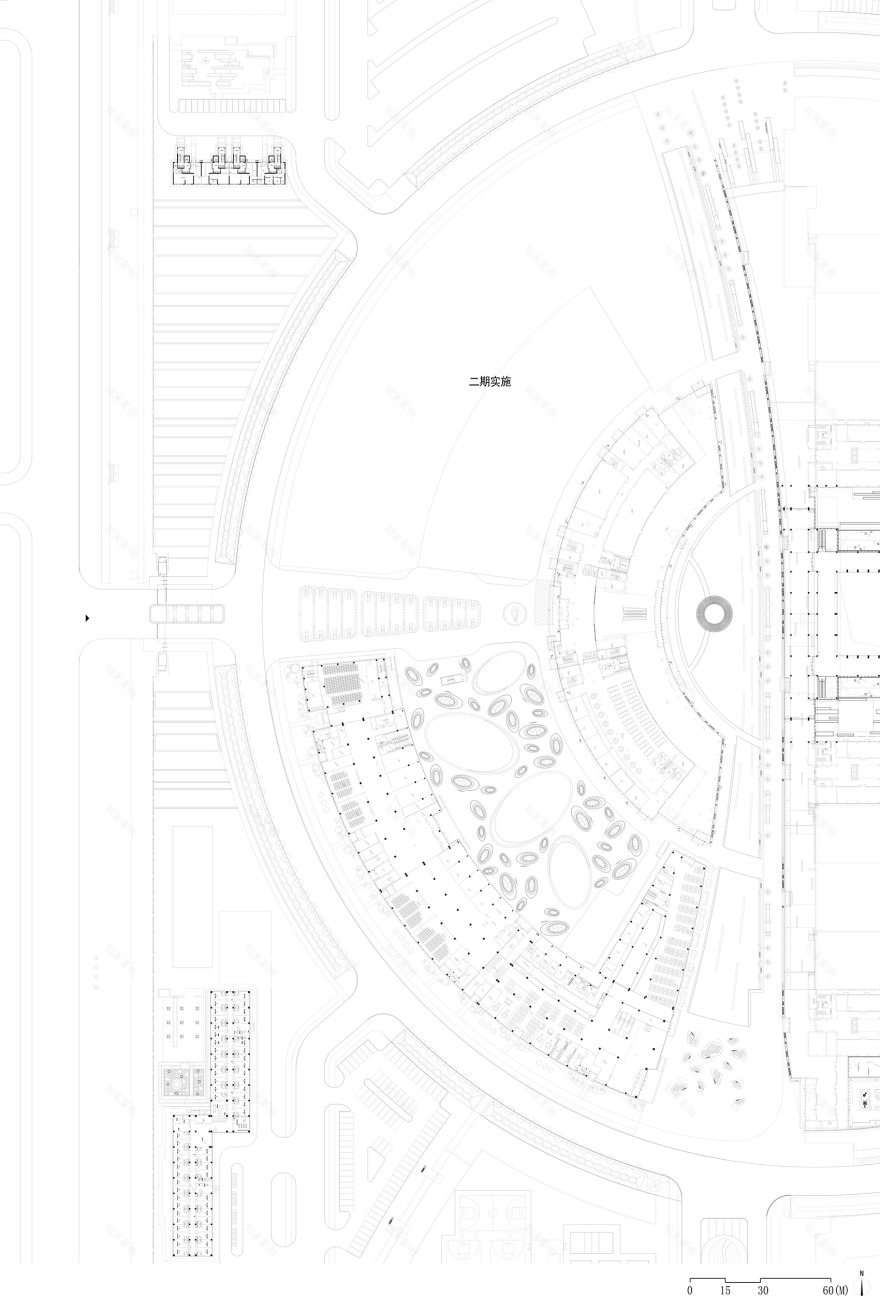
▼总平面图,overall plan © R-land
项目名称:常规中的非常规——沈阳材料科学国家研究中心交融之园
用地面积:1.71ha
项目所在地:沈阳市浑南区创新路280号
委托单位:沈阳万博开发建设有限公司
建筑设计:日本鹿岛建设株式会社(方案设计)
中国中建设计集团有限公司(扩初、施工图设计)
景观设计:R-land北京源树景观规划设计事务所
方案设计:章俊华 赵长江 张鹏 李瑞晶 赵彦莹 史婉蓉
扩初+施工设计:章俊华 赵长江 闫艺沥 于沣 姜崇健 刘立兴 紀倩 戴静 张文旭 郑云凤 白祖华 胡海波
建筑:宋冬梅
水电:徐飞飞;张亚丽
结构:马爱武 沈仕儒
施工单位:中铁十九局集团有限公司
设计时间:2019年11月——2021年12月
竣工时间:2024年05月
摄影:如果视觉+R-land
英文校译:琳赛·洛特(Lindsay Rutter)


南京喵熊网络科技有限公司 苏ICP备18050492号-4知末 © 2018—2020 . All photos and trademark graphics are copyrighted by their owners.增值电信业务经营许可证(ICP)苏B2-20201444 苏公网安备 32011302321234号
苏公网安备 32011302321234号客服
消息
收藏
下载
最近