

创作上传
VIP
收藏下载
登录 | 注册有礼
查看完整案例

收藏

下载

分享
La Fénix at 1950|GLS Landscape | Architecture
项目陈述
Project Statement
旧金山的使命区(Mission District)在过去 25 年间一直是城市改造的核心区域。1950 号 La Fénix 公寓住宅区为因城市化改造而流离失所的家庭和无家可归的家庭提供了 157 套可负担住房,同时也为非营利服务机构提供了办公场所。底层庭院(称为 Zócalo)通过链接各类配套设施,促进社区的互动与联系。“艺术家步道”(Paseo de Artistas)向街道敞开,两侧装饰有壁画,并设有低成本艺术家工作室以及提供免费艺术教育的教室。在“家庭花园”(Jardin de las Familias),一个种植本地植物及西南地区植被的屋顶露台,提供了一个带有全景城市视野的儿童游乐区。该项目由社区非营利组织的合作伙伴主导,通过长期社区成员的意见引导设计方向。
San Francisco’s Mission District has been an epicenter of gentrification for 25 years. La Fénix at 1950 provides 157 affordable homes for displaced and unhoused families in the Mission, as well as a home for nonprofit service providers. The ground level courtyard, or Zócalo, links amenities to encourage community building. The Paseo de Artistas opens to the street and is lined with murals, low-cost artist studios, and classrooms for free art education. At the Jardin de las Familias, a roof deck planted with natives and southwest plantings provides a play area with panoramic city views. A partnership of community nonprofits led the engagement process, allowing the design to be guided by long-term neighborhood constituents.

▲旧金山使命区的可负担住房与全新艺术教育中心:1950 号 La Fénix 公寓住宅区为因城市化改造而被迫搬迁的低收入家庭以及无家可归的家庭提供了 157 套新住宅,Affordable Housing and a New Arts and Education Hub for San Francisco’s Mission District: La Fénix at 1950 provides 157 new homes for low-income families displaced by gentrification, as well as formerly unhoused families. © Patrik Argast
项目说明
Project Narrative
使命区可负担住房倡议的历史
使命区(Mission District)有着多元的文化历史。最早,这里曾是爱尔兰、德国和波兰移民的家园,并在 1920 至 1930 年代成为戏剧区。从 20 世纪 40 年代起,这里开始容纳旧金山最多的拉丁美洲移民。20 世纪 90 年代末的互联网泡沫导致 50%的拉丁裔居民被迫迁离。社区对规划过程中缺乏本地声音感到担忧,非营利组织因此成立了“使命反迁离联盟”(Mission Anti-Displacement Coalition,MAC),通过工作坊的形式鼓励居民参与,共同描绘社区愿景。作为这一基层规划的直接成果,1950 号 La Fénix 公寓住宅区诞生。这是一个 100%可负担社区,其底层空间活跃,为艺术家和本地服务提供支持。
项目场地背景
该项目位于一个城市填充地块,毗邻 16 街 BART 车站,位于使命街交通走廊上。项目所在地曾是凤凰继续高中(Phoenix Continuation High School),隶属于旧金山联合校区(SFUSD)。2014 年,旧金山市住房和社区发展办公室(MOHCD)购得这块土地,将其改造成该市第一个临时使用的导航中心,为无家可归者提供服务。次年,该地块被规划为永久可负担住房。项目以“凤凰”命名,这种神话中的鸟象征着重生,1950 号 La Fénix 公寓住宅区体现了市政府和社区支持弱势居民的决心,同时从使命区泛拉丁文化景观中汲取灵感。
教育、艺术与社会中心的创建
1950 号 La Fénix 公寓住宅区提供 157 套可负担住房,其中 30 套专为曾无家可归的家庭设计,并配备了广泛的服务与社区空间。该项目的规划来自当地非营利组织支持艺术与社会服务的广泛基层参与。一个由社区成员组成的顾问委员会为早期设计概念和可负担性目标提供反馈。社区会议以西班牙语和英语进行,重点收集教育工作者、艺术家、非营利组织和本地企业的意见。
中心庭院“Zócalo”连接了共享设施,包括社区活动室、厨房、洗衣房和青年媒体实验室。庭院还是居民交流和社交的延伸客厅,与艺术家步道(Paseo de Artistas)相连。这是一条新的街区通道,两侧设有低成本艺术家工作室和供青年艺术交流中心(Youth Art Exchange)使用的空间。艺术家步道既是户外工作坊和画廊,也展示了由本地艺术家创作的三层壁画,延续了使命区广场与小巷网络的特色。连接的 Zócalo 和艺术家步道共同举办社交活动、表演艺术课程和节日庆典。
Zócalo 北侧是使命邻里中心(Mission Neighborhood Center)儿童早期教育中心(ECE)的户外活动区,居民可以通过儿童步道(Paseo de Niño)进入。庭院种植了拉丁美洲风格的亚热带植物,围栏上装饰着受中美洲象形文字启发的符号。
“家庭花园”(Jardin de la Familias)是一个位于街道上方六层的屋顶露台。从这里可以俯瞰双峰(Twin Peaks)和旧金山市中心的全景,成为远离街道喧嚣的安全游乐场所和休憩空间。本地耐旱植物和西南植被打造了一个郁郁葱葱的亚热带花园,提升了城市生物多样性,经常吸引蜜蜂和蜂鸟光临屋顶。

▲旧金山拉丁裔社区的文化纽带:项目位于 16 街与使命街 BART 交通枢纽车站旁,自二战以来,这里一直是拉丁裔社区的核心地带,The Cultural Nexus of San Francisco’s Latino community: The project is located at the 16th and Mission Street BART transit station, which has been the heart of the Latino neighborhood since World War II. © Patrik Argast

▲使命区的演变:基层倡议涌现,旨在扶持小型企业和非营利组织,并为低收入居民提供可负担住房和社会活动空间,Evolution of the Mission District: Grassroots initiatives emerge to nurture small businesses and nonprofits and to provide affordable housing and social spaces for low-income residents.
© GLS Landscape | Architecture

▲定义使命区的仪式与材料:墨西哥及中美洲与南美洲文化的丰富融合,激发了当代对使命区的创造性诠释,同时为 1950 号 La Fénix 公寓住宅区提供了设计灵感,Rituals and Materials that Define the Mission District: A rich mix of Mexican, Central and South American cultures inspires creative interpretations of the Mission District today and informs La Fénix. © GLS Landscape | Architecture
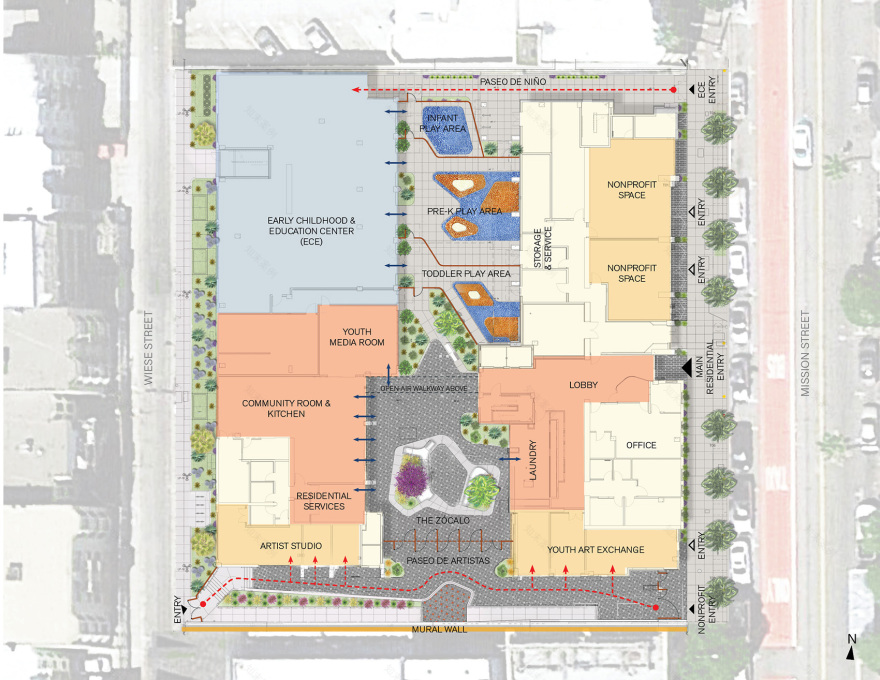
▲整个底层空间(室内外)专为非营利和社区服务而设:一条街区中段的艺术家步道(Paseo de Artistas)通向 Zócalo。上午,这里为儿童托育中心提供活动空间,工作时间以外则供艺术家和居民使用。Entire Ground Level, Indoors and Out, Dedicated to Nonprofit and Community Services: A mid-block Paseo de Artistas leads to the Zócalo, occupied in the morning by the childcare center, and after hours by artists and residents. © Patrik Argast

▲Zócalo——连接居民设施的户外客厅:旋转门将 Zócalo 延伸至艺术家步道,步道上有一幅长达 185 英尺、由三部分组成的壁画,由本地艺术家绘制,The Zócalo – Outdoor Living Room That Connects Resident Amenities: Pivot gates expand the Zócalo onto the Paseo de Artistas which has a 185′ long, 3-piece mural, painted by local artists. © Patrik Argast

▲艺术家步道——街区中段新建的通道,两侧为本地艺术家和非营利组织的低成本工作室:一条无障碍坡道连接使命街与 Wiese 街,沿途有一块宽阔的平台,曾作为表演、招待会和筹款活动的舞台,The Paseo de Artistas – New Mid-block Passage Lined with Low-Cost Studios for Local Artists and Nonprofits: An accessible ramp connects Mission St and Wiese St, with a large landing that has served as a stage for performances, receptions, and fundraisers. © GLS Landscape | Architecture

▲艺术家步道的入口大门,为靠近繁忙交通站点的使命街提供安全保障:这些大门为工作室艺术家的全年画廊展览,以及在 Zócalo 举办的艺术工作坊提供公共入口,Paseo Gates Provide Security at Mission Street Across From the Heavily Used Transit Station: Gates provide a public entry for year-round gallery shows by the studio artists, as well as art workshops held in the Zócalo. © Patrik Argast

▲节庆日连接 Zócalo 与艺术家步道:灵活性是支持诸如音乐、传统舞蹈、狂欢节、“五月五日节”(Cinco de Mayo)等使命区庆祝活动的关键,Zócalo and Paseo de Artistas are Connected on Festival Days: Flexibility is essential to support performances such as music, traditional dance, Carnival, Cinco de Mayo, and other Mission District celebrations. © Chloe Peterson-Nafziger

▲庆祝本地非营利住房提供商成立 50 周年:市政官员、居民和本地企业主齐聚一堂,庆祝数十年来致力于建设可负担住房生态系统的努力,Celebrating the 50th Anniversary of Local Non-Profit Housing Provider: City officials, residents and local business owners come together to celebrate the multi-decade effort building an affordable housing ecosystem. © GLS Landscape | Architecture, Mission Housing

▲儿童早教中心及游乐场:庭院北半部分专为婴幼儿和学前儿童设计,周围环绕着郁郁葱葱的亚热带植被,Early Childhood Education Center and Play Yard: The northern half of the ground level courtyard is dedicated to infants, toddlers and pre-kindergarteners, surrounded by lush subtropical plantings. © Patrik Argast

▲Jardin de la Familias(家庭花园):屋顶花园远离街道的喧嚣,种植了沿海本地植物及多肉植物,能够应对强风、浓雾和偶尔的热浪,Jardin de la Familias, or the Family Garden: The roof garden is a respite from the street with coastal native plantings and succulents that withstand intense wind, fog and occasional heat wave. © Patrik Argast

▲功能丰富的屋顶花园,视野绝佳:野餐区、社区花园和游乐区通过层次丰富的植物布置分隔开来,框出了壮观的景色,Heavily Programmed Roof Garden with Amazing Views: A picnic area, community garden, and play area are defined by textured plantings framing spectacular views. © GLS Landscape | Architecture
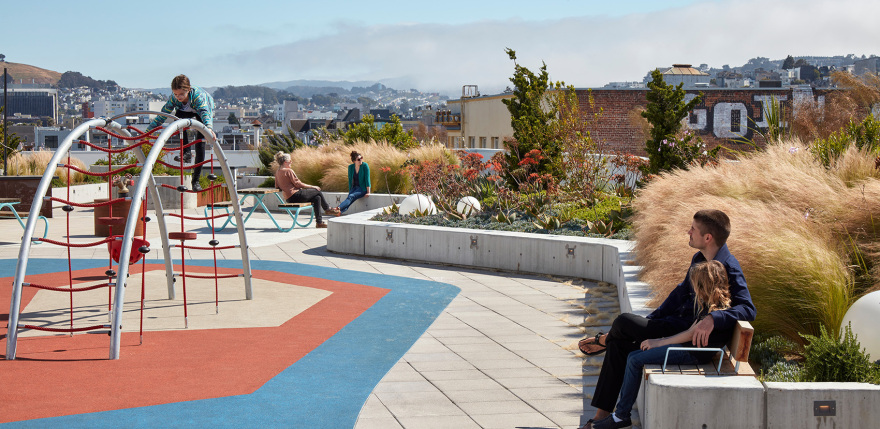
▲市中心为家庭打造的安全游乐空间:高架游乐场俯瞰海岸山脉的壮丽景色,浓雾常年缓缓飘入旧金山,A Safe Play Space for Families in the Heart of the City: The elevated playground overlooks a spectacular view of the coast range with fog dependably rolling into San Francisco. © Bruce Damonte

▲郁郁葱葱的屋顶花园促进幸福感与城市生物多样性:本地的桃金娘、适应气候的龙舌兰、杜松、紫娇花及草类植物交错排列,结合了本地与南方花园的风格,Verdant Rooftop Garden Promotes Well Being and Urban Biodiversity: Native myrica and climate adapted agave, juniper, echium and grasses creates a tough mix of textured plantings, blending local and southern gardens. © Patrik Argast

▲超越可负担住房的成功开发模式:可负担住房景观不仅可以加强社区认同感,还能为更广泛的邻里社区提供服务和设施,A Successful Development Model Beyond Affordable Housing: Affordable housing landscapes can strengthen community identity while providing services and amenities to the greater neighborhood. © Patrik Argast
Project Narrative
History of Mission District Affordable Housing Initiatives
The Mission District has a diverse cultural history. Historically, it has been home to Irish, German, and Polish immigrants, and it served as a theater district during the 1920s and 1930s. Since the 1940s, it has housed the City’s highest concentration of Latin American immigrants. The dot-com boom of the late 1990s displaced 50% of Latino constituents. Alarmed by the lack of local voices in the planning process, neighborhood nonprofits formed the Mission Anti-Displacement Coalition (MAC) to engage neighbors in workshops to articulate their vision for their neighborhood. A direct result of this grassroots planning is La Fénix at 1950, a 100% affordable community with an active ground floor supporting artists and local services.
Site Context
The project was developed on an urban infill site adjacent to the 16thStreet BART Station on the Mission Street transit corridor. The site once housed the Phoenix Continuation High School, a San Francisco Unified School District (SFUSD) facility. In 2014, the San Francisco Mayor’s Office of Housing and Community Development (MOHCD) acquired the land and converted it to the City’s first interim-use navigation center to serve the unhoused. It was slated for permanently affordable housing the following year. Named after the phoenix, a mythical bird that symbolizes rebirth, La Fénix represents the City and community’s dedication to supporting vulnerable residents, drawing inspiration from the Pan-Latino cultural landscape of the Mission District.
Creation of an Education, Arts and Social Hub
La Fénix at 1950 provides 157 affordable homes, with 30 homes for formerly unhoused families, supported by extensive services and community spaces. The program was the result of extensive grassroots engagement led by local nonprofits supporting art and social services. A Community Advisory Committee with strong local ties provided feedback on early design concepts and affordability targets. Community meetings conducted in Spanish and English focused on gathering feedback from educators, artists, nonprofits, and local businesses.
The Zócalo, or central courtyard, links shared amenities such as the community room, kitchen, laundry room, and youth media lab. It’s also an extended living room for residents to connect and socialize. It opens to the Paseo de Artistas, a new mid-block passage lined with low-cost artist studios and space for the Youth Art Exchange. The Paseo functions as an outdoor workshop and gallery featuring a three-story mural by local artists, and continues the network of plazas and alleyways that characterize the Mission District. The connected Zócalo and Paseo de Artistas host social events, performance art classes, and festivals.
North of the Zócalo is the outdoor play area for the Mission Neighborhood Center’s Early Childhood Education Center (ECE), accessed through the Paseo de Niño. Subtropical plantings reminiscent of Latin American landscapes fill the courtyard, and the fence is adorned with symbols inspired by mesoamerican hieroglyphs.
The Jardin de la Familias, or the family garden, is a roof terrace six floors above the hustle of the Mission. With panoramic views to Twin Peaks and Downtown, it creates a safe play space and a respite from the street. Native drought-tolerant and southwest plant species create a verdant subtropical garden and enhance urban biodiversity, with bees and hummingbirds regularly visiting the rooftop.
Project Credits
Gary Strang, FASLA, AIA, Principal-in-Charge, GLS Landscape | Architecture
Wendy Mok, ASLA, Project Manager, GLS Landscape | Architecture
Alyssa Olson, ASLA, Job Captain, GLS Landscape | Architecture
Daniel Simons, FAIA, Principal-in-Charge, David Baker Architects
Caroline Souza, AIA, Project Manager, David Baker Architects
Erin Feeney, Project Architect, David Baker Architects
Anne Cervantes, Community Outreach and Associate Architect, Cervantes Design Associates
Marc Steyer, Structural Engineer, Tipping Structural Engineers
Sean Flahive, General Contractor, Swinerton Builders
Jim Fain, Civil Engineer, Carlile Macy
John Toman, Electrical Engineer, Emerald City Engineers
Hiram Banks, Lighting Designer, Hiram Banks Lighting Design
Adam French, Plumbing Engineer, Emerald City Engineers
南京喵熊网络科技有限公司 苏ICP备18050492号-4知末 © 2018—2020 . All photos and trademark graphics are copyrighted by their owners.增值电信业务经营许可证(ICP)苏B2-20201444 苏公网安备 32011302321234号
苏公网安备 32011302321234号客服
消息
收藏
下载
最近