

创作上传
VIP
收藏下载
登录 | 注册有礼
查看完整案例

收藏

下载

分享
我们认为,历史记忆应该参与当代生活,成为城市与社区的链接枢纽。而设计所要做的,只是如何寻找和如何激发他的潜能而已。
We believe that historical memory should actively participate in contemporary life, serving as a vital link between the city and communities. The role of design, therefore, is to discover and unleash its latent potential.
——徐琦,goa 大象设计总建筑师,XU Qi, Principal, GOA
▼项目概览,Overall of the project ©陈曦工作室

近日,由 goa 大象设计打造的上海西岸金融城 G 地块商业空间全面开放,成为徐汇滨江的一处崭新人气地标。西岸金融城是一个占地 44 公顷的大型混合使用开发项目,其所在的岸线曾是上海近郊重要的工业区,但在城市发展过程中一度成为凋敝的“锈带”。
The Xuhui section of Huangpu River, where the Shanghai West Bund Financial Hub is located, was once a significant industrial shoreline in a suburb. Following the industry decline, a comprehensive plan has been initiated to revitalize the area through a large mixed-use redevelopment project. GOA was responsible for the design of Plot G, the first phase of this ambitious project. Recently, the commercial spaces within this plot have been fully opened to the public, establishing a popular landmark.
▼场地位置,Site analysis ©goa 大象设计

首发建设的 G 地块是一个复杂的综合体,规划包含零售、餐饮、文化、体育、居住等混合功能,场地上的南浦火车站旧址则成为了城市更新的目标。goa 相信,混合使用开发并非将多种功能简单并置,而是通过设计为之提供自发碰撞与融合的机遇。营造总体场所感因此成为了设计的首要考量。
Within the master plan, this plot integrates a diverse mix of functions, including commercial, cultural, and residential spaces. The former site of Nanpu Railway Station has become a focal point for urban regeneration. GOA believes that mixed-use development transcends mere juxtaposition of functions; instead, it should, through thoughtful design, create opportunities for interaction and integration. Consequently, creating a cohesive sense of place has emerged as the primary consideration.
▼“车站”的日常使用者,Daily user of the “station” ©陈曦工作室

▼商业街区、公寓与住宅构成完整的空间序列,Stores, apartments and residential towers ©陈曦工作室

向心的空间,成为活动发生的领域。Centripetal Space, Vibrant Field。
使用者的自发参与和活动是多功能空间焕发鲜活生机的关键。设计为此避免了空旷的空间与冷漠的形式,通过向心性的空间结构与灵活的流线,创造了亲切的场域。
The spontaneous participation of users is the key to infusing vitality into mixed-use spaces. The design consciously avoids vast, empty spaces and unapproachable forms to achieve this. Instead, it creates an inviting public realm through centripetal space and flexible circulation patterns.
▼G09、G11 地块设计草图,Sketch for plot G09 & G11 ©goa 大象设计
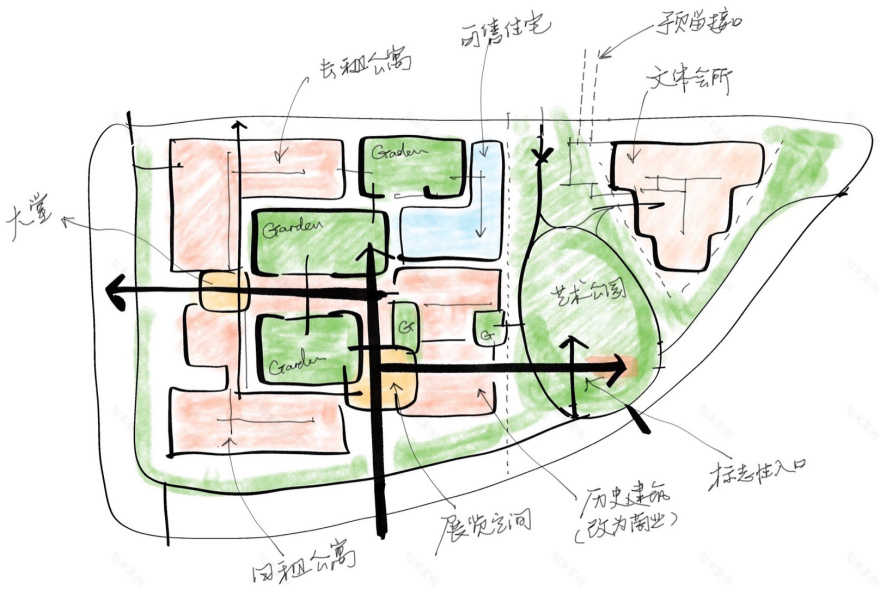
地块的结构与街区的尺度以行人的体验为基准。大部分内部道路是并无确定红线的开放空间,将地块分割成尺度宜人的街区。空间因此具备了鲜明的场所感与可停留性,时常被商户、居民或访客自发利用,成为“市集”、“舞台”或“展厅”。
▼功能与流线分析,Function and circulation analysis ©goa 大象设计
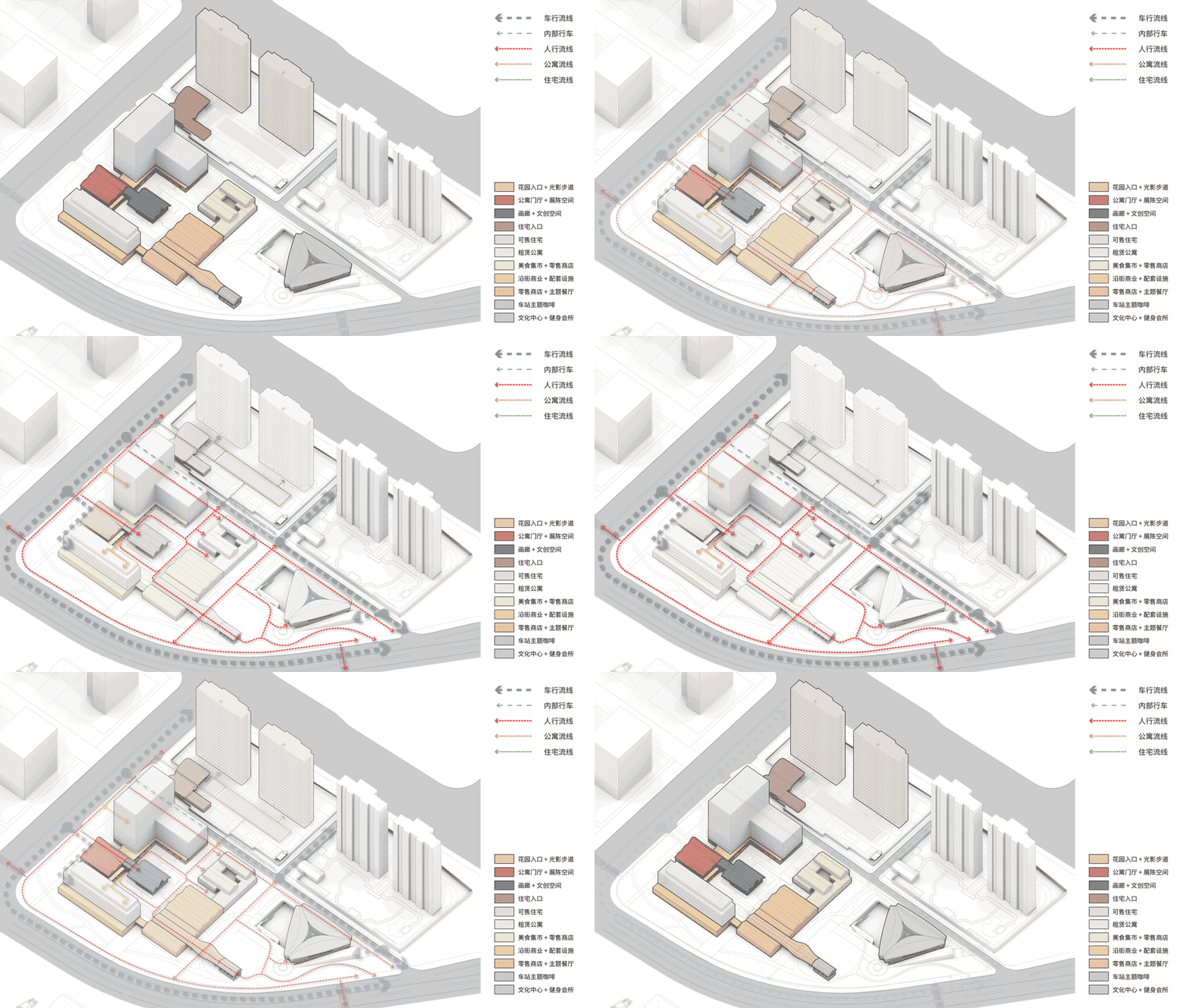
The block structure and scale are calibrated based on pedestrian experience. Most internal pathways are designed without rigid boundaries while dividing the area into human-scaled blocks. This approach creates spaces with a significant sense of place, frequently appropriated spontaneously by merchants, residents, and visitors, transforming into vibrant marketplaces, stages, or galleries.
▼富有活力的内部“街巷”作为室内功能的外延,Vibrant internal pathways extend interior functions ©陈曦工作室

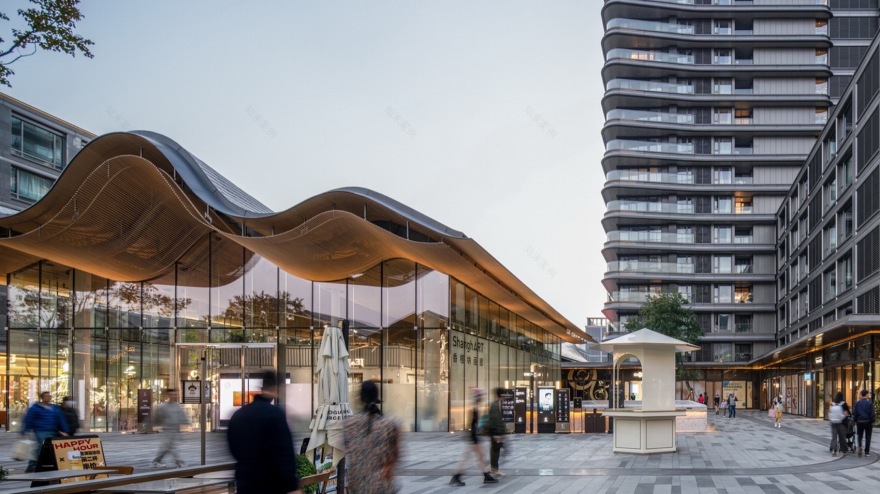
西岸金融城是徐汇滨江绿带与美术馆大道向城市腹地的渗透。设计不但将地标建筑定位为展览空间,更将整个地块作为公共艺术的展场;餐饮与零售商铺凭借细致的策划运营,补足了滨江绿地北段长久以来的需求缺口。巧妙设计的驻留场所与景观生动结合,容纳了“随机”的聚集活动。
The Financial Hub is an urban extension where green spaces and art museums converge into the downtown. The master plan strategically positions the landmark building as an exhibition venue while transforming the entire plot into a canvas for art installations. Through the curation of dining and retail offerings, the project addresses the longstanding service gap near the bank. Gathering spaces seamlessly integrated with the landscape and accommodate congregation activities.
▼香格纳画廊前的水景成为艺术装置的舞台,Water landscape in front of the gallery as a podium for public art ©陈曦工作室
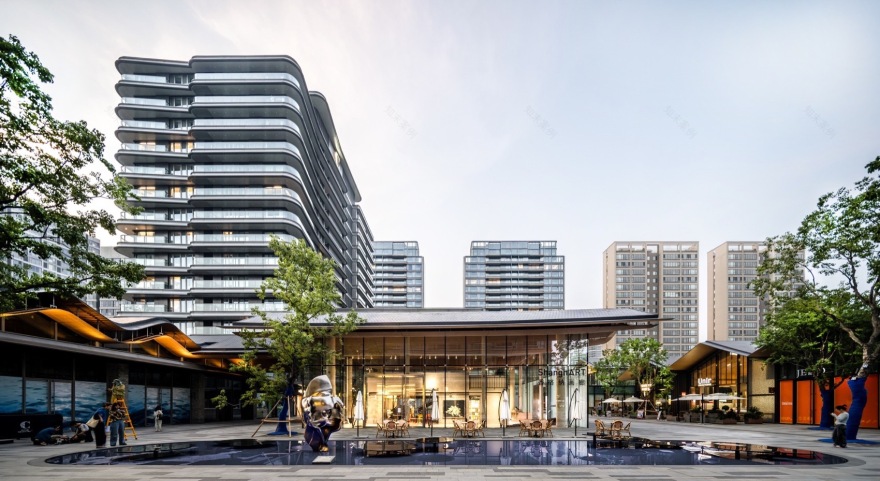
▼人群的停留与活动,Staying people with different activities ©陈曦工作室


破而后立
老车站变身新地标
From Abandoned Station to Landmark
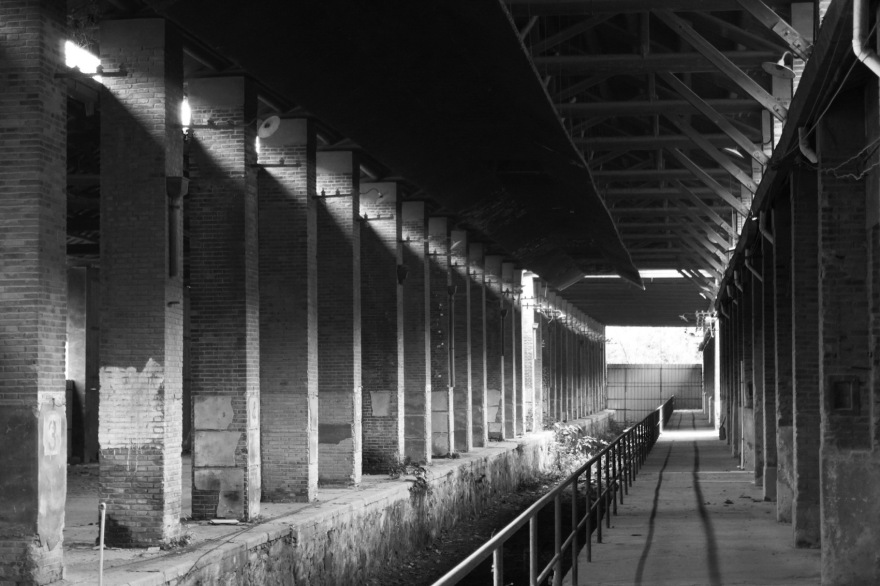
作为西岸金融城规划范围内仅存的历史建筑,建于上世纪 50 年代的南浦火车站旧址赋予了场地独特的禀赋,也成为了设计伊始的挑战——站房、铁轨与仓库组成的超尺度轴线长达 170m,将场地一分为二,阻滞通行的同时不利于布置功能。
As the only surviving historic structure within the master plan, the former Nanpu Railway Station, built in the 1950s, endows the site with unique character while presenting initial challenges. The station’s long axis, comprising the station building, railway tracks, and warehouses spanning 170 meters, bisected the site, impeding circulation and complicating functional planning.
▼新造建筑在延续老车站形态的同时部分使用老砖
New buildings incorporate bricks from the original station while
extending its morphology©goa 大象设计、陈曦工作室
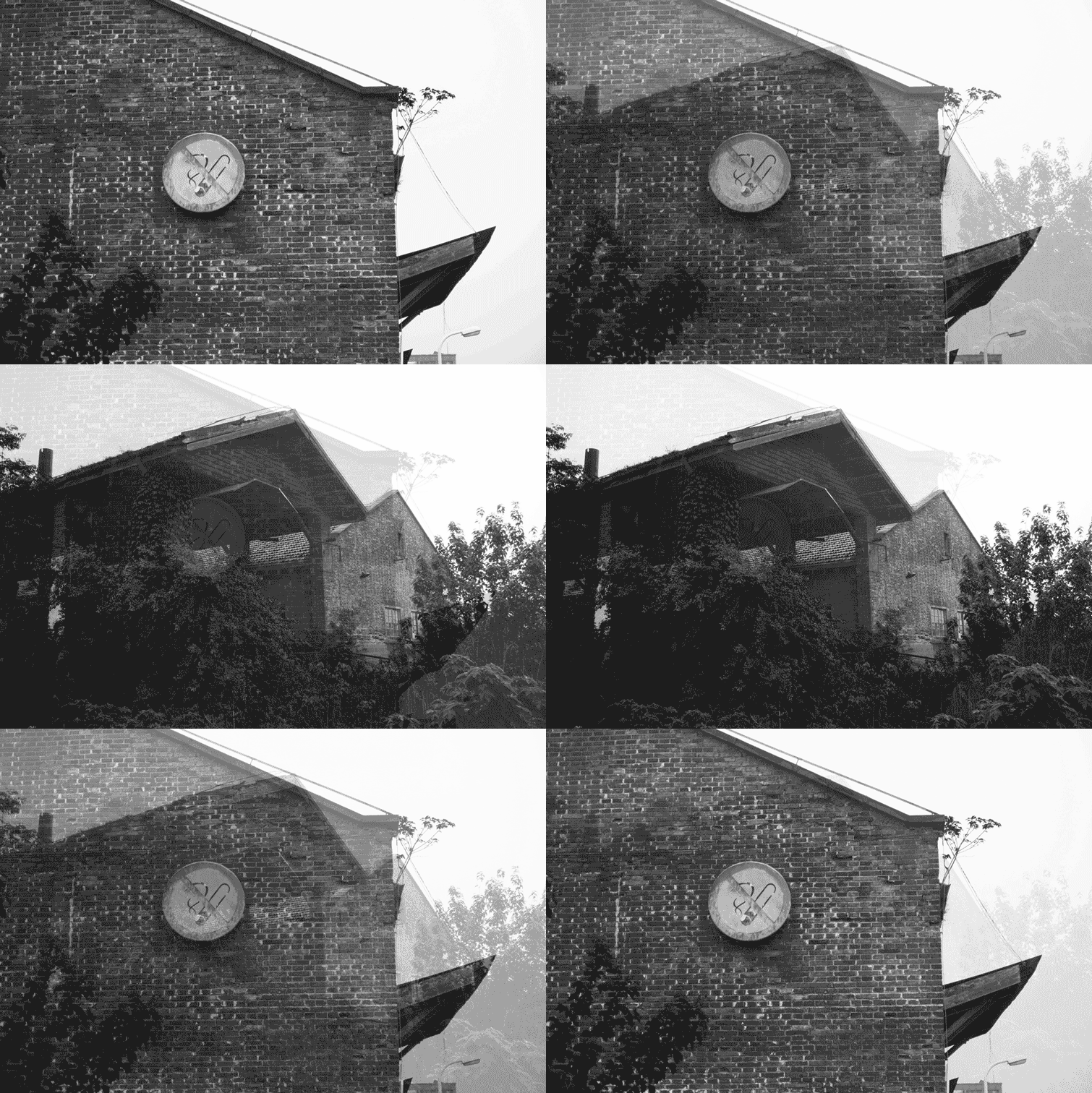

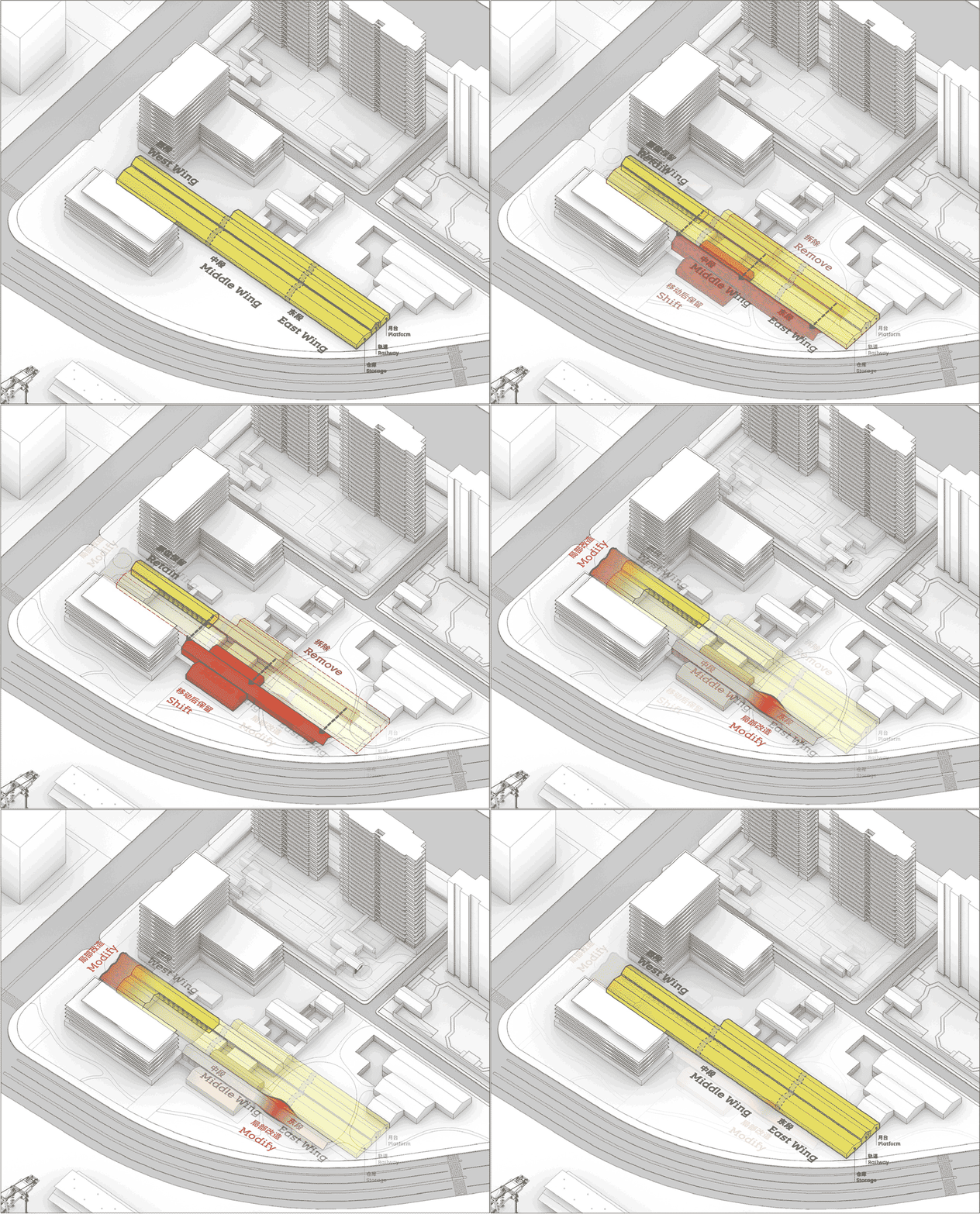
建筑师将南浦车站的空间特质视作历史记忆的锚点,设计并未拘泥于对老建筑外观的复现,而是尝试兼顾空间体验的改善。根据历史建筑的保存状况,建筑师保留了完整的轨道与部分站房、仓库,将过长的轴线切分为两段:西端保持了门厅的功能,东侧则向南平移,围合出大尺度的艺术花园。
The architects embraced the unique qualities of the station as an anchor of its history. Rather than focusing solely on architectural facsimile, the design prioritizes enhancing experience: based on preservation assessments, the complete railway tracks and portions of the station building and warehouses were retained, with the axis segmented into two sections. The western portion maintained its position while the eastern section shifted southward to create an art garden.
▼铁路轴线的切分、平移与再生,Cutting, moving and regenerating railway axis © 陈曦工作室


老站房的另一大记忆特点是站房、仓库与轨道构成的三跨连续坡屋顶,设计将其局部转译为灵动的曲线形式,与传统人字坡屋顶形成连续渐变。住宅与公寓楼栋转角阳台的曲线则与之呼应。
The station building’s distinctive memory lies in its triple-span pitched roof structure connecting the station building, warehouses, and tracks. The design translates this feature into dynamic curved forms, creating a gradual transition from traditional gabled roofs. This curvature finds resonance in the balconies of residential and apartment towers.
▼大尺度挑檐创造休憩交往的灰空间,Grand eaves as gray spaces for rest and interaction ©陈曦工作室


建造的细节中同样保留了历史记忆:老建筑的青砖在移位时得到保留并用于重建;木窗与雨棚等细部特征在新建筑中被重新演绎;铁轨、站钟与时刻表等保存或复刻的老物件则构成了景观设计的中心元素。
Historical elements permeate the details of construction: original grey bricks were carefully preserved and reused during relocation; objects like wooden windows and canopies appear in new structures; and preserved or replicated artifacts, including tracks, clocks, and timetables, become landscape features.
▼以站台为原型的花园入口与“站长小屋”咖啡厅,Garden entrance inspired by platform and themed café ©陈曦工作室

小尺度封闭与大尺度开放
楼下的公园二十分钟
Balance between Closure and Openness
G 地块是西岸金融城唯一同时规划有租赁公寓与可售住宅的片区。在居住小区的封闭与开放之争甚嚣尘上的当下,建筑师的目标并非解决单纯的居住需求,而是在混合使用开发的独特机遇下,基于“鲜活社区”理念进行对居住形态的探索,实现在当前语境下“可行的开放”。
Plot G stands unique in the Financial Hub as the only section incorporating both rental and build-to-sell apartments. Amid recent debates about gated communities in China, the architects aim not merely to address housing needs but to explore residential models through the opportunities of mixed-use development, realizing a “feasible openness” within the current context.
▼高层住宅拥有优越的滨水景观视野。High-rise residences with superior waterfront views ©陈曦工作室
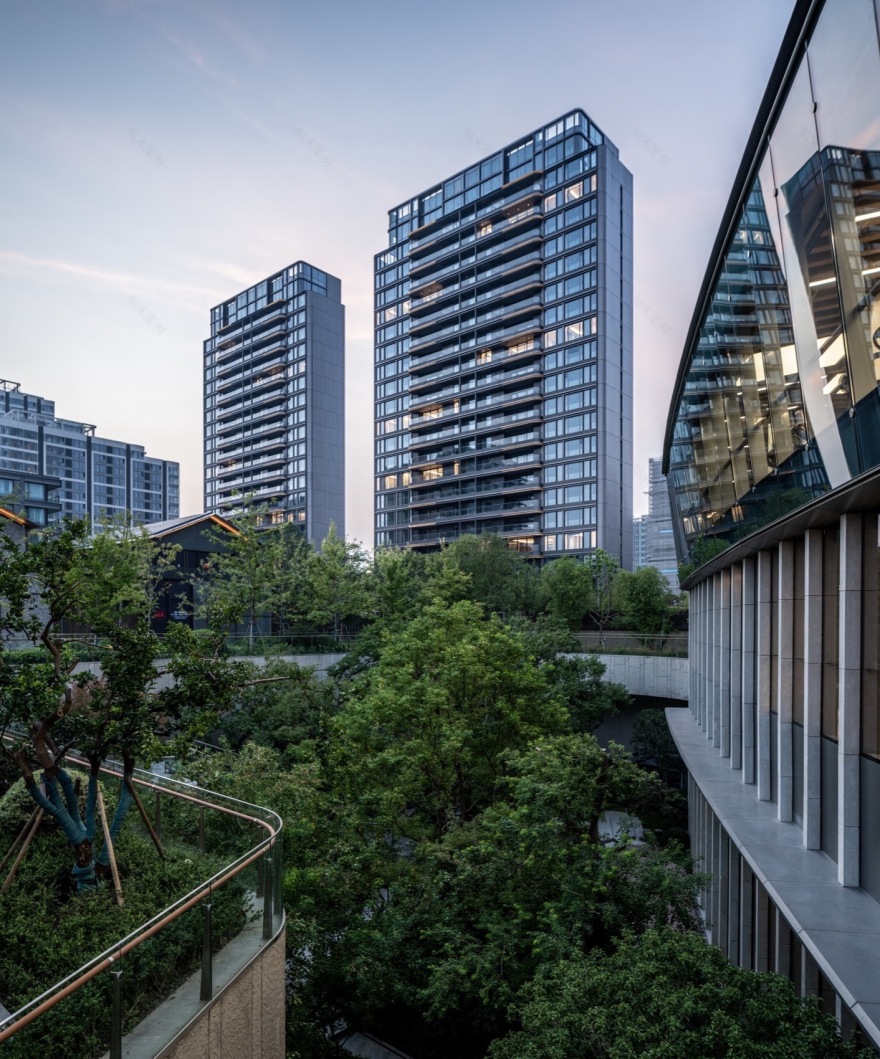

在住区规划中,相比围墙的存废,更重要的是通达性。住宅地块采取了“小尺度封闭、大尺度开放”的渐进策略,将绿地与文体会所等功能从围墙中释放出来。住宅项目「启元」的尺度为 120 x 80m,与上海市中心“窄路密网”的街区尺度相当。得益于细致的流线规划,以历史建筑为核心的公共区域虽位于围墙外,但与居住者近乎零距离,成为住区的“开放边界”与“超级底盘”。
GOA prioritizes accessibility and experience in the residential design. A progressive strategy of “small-scale enclosure, large-scale openness” liberates green spaces and cultural facilities from solid boundaries. The residential development, with its 120m x 80m block size, mirrors the dense street network of downtown Shanghai. Through circulation planning, the public area, though outside the residential perimeter, maintains minimalized distance from residents, serving as a functional “open boundary” for the community.
▼人行入口提供了通往公共区域的便捷路径,High-rise residences with outstanding waterfront views ©陈曦工作室
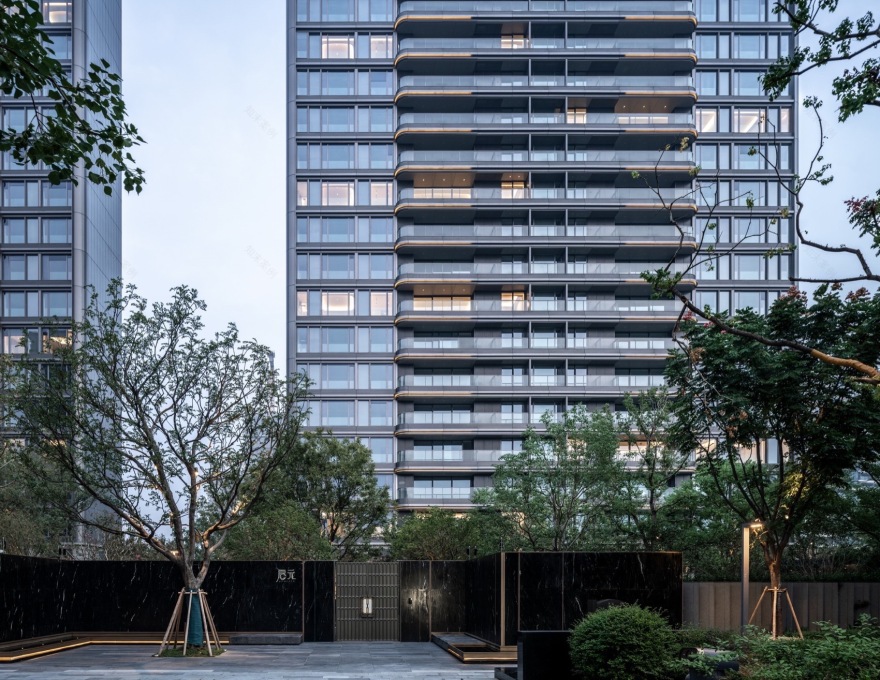
设计充分利用江景资源,打造与徐汇滨江气质相称的高品质住区。入口大堂延续南浦车站屋顶的曲线元素,以跃出水面的鱼尾为灵感,构筑优雅的体量。塔楼的架空层通过连廊连接,与景观相互渗透,使归家流线妙趣横生。
The design maximizes landscape advantages of Huangpu River to create a high-quality residential project. The entrance lobby continues the station building’s roof curvature, drawing inspiration from whale tail to create an elegant shape. The open ground floors of two towers connect via a corridor, blending with landscape to create an engaging homecoming pathway.
▼彼此呼应的曲线建筑语汇,Curved elements that echoes each other ©陈曦工作室


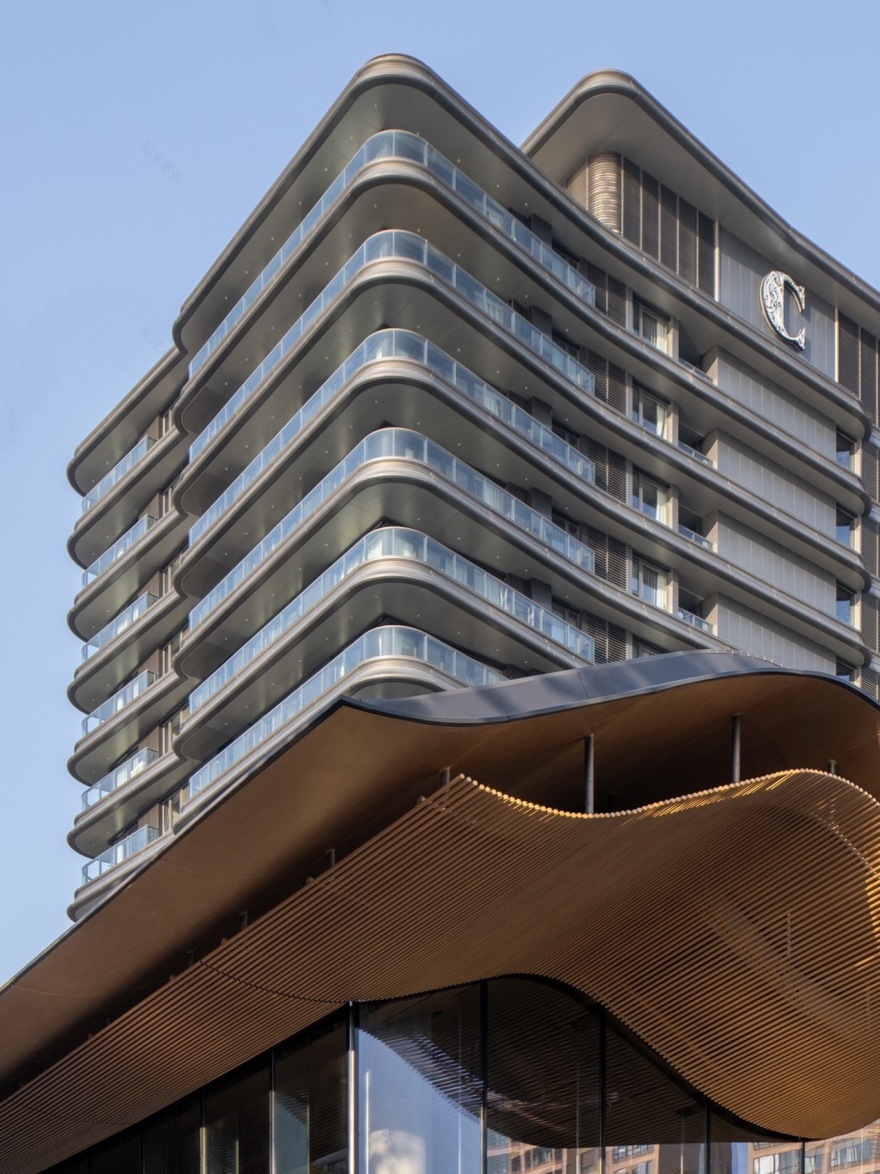
租赁公寓「西岸中环汇」进一步探索开放的尺度,“边界”从围墙退让至直面商业街区的门禁入口,居民因此拥有了便利的归家动线,在保证隐私与安全的同时营造了出则繁华、入则宁静的生活体验。
The rental apartment section retreats its boundaries to secured entrance straightly facing commercial district. This configuration provides convenient access while maintaining privacy and security, offering residents a seamless transition between urban vibrancy and residential tranquility.
▼公寓住户可以选择归家流线穿越门厅或从楼下进入,Apartment residents can choose to cross the lobby or go straight home from downstairs ©陈曦工作室

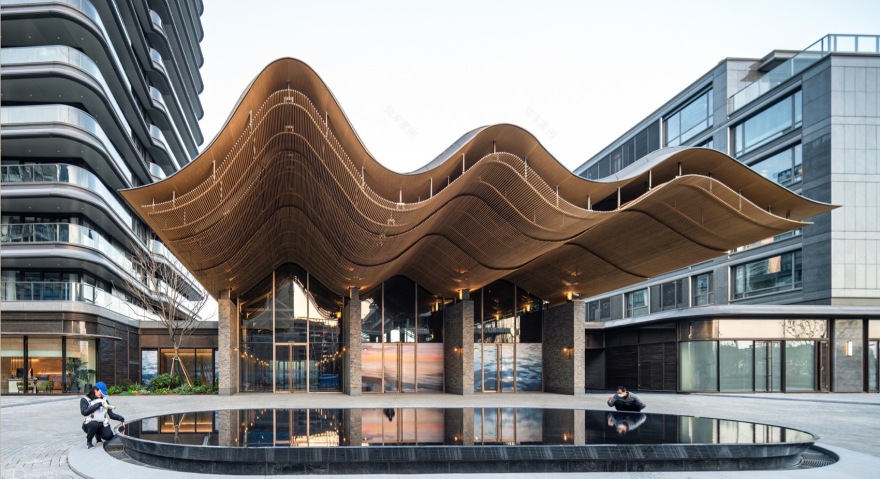
设计利用场地西端的三跨站房设置公寓门厅,兼具商业与展览功能。住户可以穿越“历史建筑”进入电梯,新生的老车站由此成为社区的“公共客厅”——社交、观展、购物等活动无需改变居住者熟悉的归家路线,即可在日常生活的边角中发生。
The western section of renewed station building houses the apartment lobby, integrating commercial and exhibition functions. Residents pass through this “historical building” to access elevators, transforming the revitalized station into a living room where various activities naturally integrate into daily routines without altering the familiar circulation.
▼总平面图,Master plan ©goa 大象设计

▼首层组合平面图,Ground floor plan ©goa 大象设计

▼1-1 剖面图,1-1 section ©goa 大象设计

▼G09 地块正立面图,Front elevation, plot G09 ©goa 大象设计

▼结构与改造策略,Structure and renovation method ©goa 大象设计

项目信息
项目名称:上海西岸金融城 G 地块
项目地点:上海市徐汇区
业主:香港置地
建筑设计:goa 大象设计
室内设计:HWCD,CCD 香港郑中设计事务所
景观设计:翡世景观
施工图设计:上海天华建筑设计有限公司
历史建筑保护顾问:上海章明建筑设计事务所
设计/竣工:2020/2024
建筑面积:97,500㎡
摄影版权:陈曦工作室
Project Info
Project Name: Shanghai West Bund Financial City – Plot G
Location: Xuhui, Shanghai
Client: HongKong Land
Architect: GOA (Group of Architects)
Interior: Harmony World Consultant and Design, Cheng Chung Design
Landscape: FISH DESIGN
Construction Drawing: TIANHUA
Design/Completion: 2020/2024
Floor Area: 97,500 sqm
Photographer: CHEN Xi Studio

南京喵熊网络科技有限公司 苏ICP备18050492号-4知末 © 2018—2020 . All photos and trademark graphics are copyrighted by their owners.增值电信业务经营许可证(ICP)苏B2-20201444 苏公网安备 32011302321234号
苏公网安备 32011302321234号客服
消息
收藏
下载
最近